During the early days of mining in the American West, the merchants were often the ones who became rich in mining camps and towns — not the miners.
Many of the mining camps and towns in Arizona originated during the late 19th century with the advent of the Industrial Revolution and the subsequent demands for copper.
As the population in the Arizona Territory grew, the distribution of food, supplies and other necessities become a factor in camps and towns, as these supplies directly affected the productivity of the mine or mines upon which the town was founded.
Before the railroad arrived in 1880, freight largely composed of mining equipment and supplies from California port cities such as San Francisco, was transported by ocean steamer to the Gulf of California, then by riverboat up to Yuma and distributed to merchants in remote mining towns and camps in Arizona through the use of mule train.
People are also reading…
The arrival of the Southern Pacific Railroad greatly enhanced transport across the Territory. In both cases, the supplies were destined to go to a single general store in a mine or camp.
Unfortunately, some merchants followed the unscrupulous practice of charging inflated prices for merchandise that was sometimes of inferior quality. These merchants were able to sustain this practice because they held a monopoly on the products sold in a mining town or camp.
The oftentimes excessive prices and the easy line of credit with interest that the general store extended to miners caused them to forever be indebted to the general store. The company that owned the store would subtract the debt incurred by the miner from his earnings.
Miners were often forced to remain with their company in order to pay off the debt they’d incurred from the store credit. Many times this involved living from paycheck to paycheck.
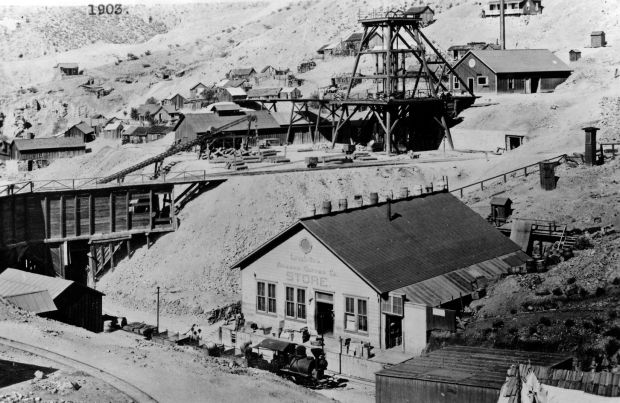
General stores sold household goods such as groceries, dry goods, crockery, tinware, furniture, millinery items and hardware. During the 20th century, many of the large mining companies in Arizona went into the general store business because they were able to transport large amounts of materials great distances at low prices.
These general stores became known as “company stores” and were overseen by the mining company that in many cases ran the town. It was standard practice for a company town to include a company boarding house, company clubhouse, company funeral home and company graveyard.
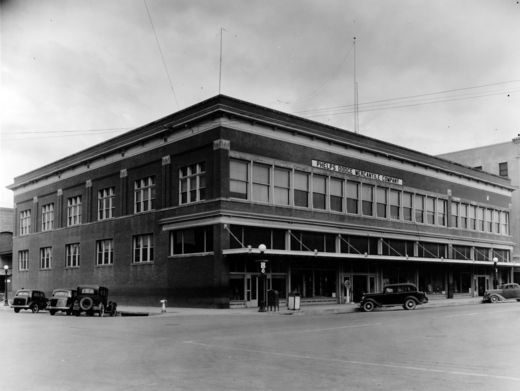
Some company towns furnished their employees with quality merchandise at affordable prices. Phelps Dodge was one of those, and was a major operator of company stores at Ajo, Bisbee, Douglas and Morenci. The store at Bisbee became known as the “Merc” — short for “mercantile” — and stocked an abundance of supplies for miners and their families while also furnishing merchandise for other general stores that operated in the area.
The company store remains a controversial aspect of the history of mining. While it often has a negative reputation as an instrument by which the company got its money back from miners, it also often served as a positive, providing accessible goods and services of higher quality than other sources.
William Ascarza is an archivist, historian and author of five books, including “Southeastern Arizona Mining Towns” and “Arizona-Sonora Desert Museum,” available at Antigone Books, Cat Mountain Emporium, the Arizona-Sonora Desert Museum and the Arizona Geologic Survey’s Arizona Experience Store. Email him at mining@azstarnet.com
Sources: Bailey, Lynn R. 1983. “Bisbee: Queen of the Copper Camps.” Westernlore Press, Tucson: Schwantes, Carlos A. 2000. “Vision & Enterprise: Exploring the History of the Phelps Dodge Corporation.” Tucson. University of Arizona Press; Schweikart, Herman, 1971. “99 General Stores in Arizona.” Community Press, Provo, Utah; Willis, Charles F. “Some observations on Arizona Strikes.” Engineering and Mining Journal. Oct 13, 1917.
 Japanese company invests in mine near Mount Lemmon