MONTGOMERY, Ala. — Alabama is preparing to use a new method of execution: nitrogen gas.
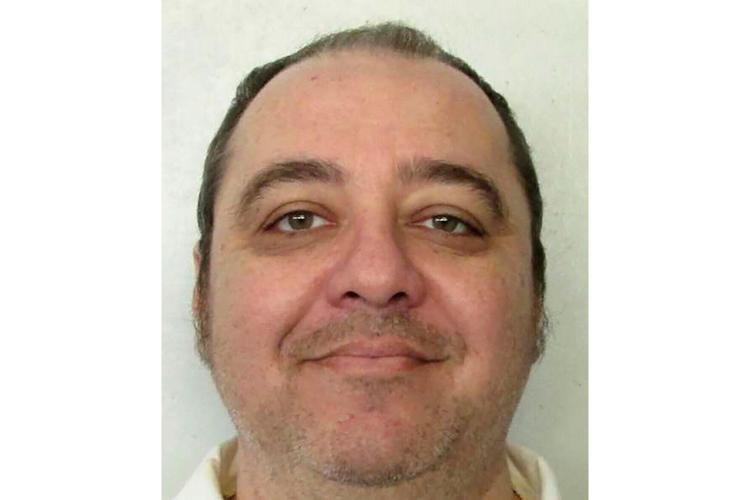
Kenneth Eugene Smith, who survived the state's previous attempt to put him to death by lethal injection in 2022, is scheduled to be put to death Thursday by nitrogen hypoxia. If carried out, it would the first new method of execution since lethal injection was introduced in 1982.

FILE - This undated photo provided by the Alabama Department of Corrections shows inmate Kenneth Eugene Smith, who was convicted in a 1988 murder-for-hire slaying of a preacher's wife.
The state maintains that nitrogen gas will cause unconsciousness quickly but critics have likened the never-used method of execution to human experimentation.
WHAT IS NITROGEN HYPOXIA?
Nitrogen hypoxia execution would cause death by forcing the inmate to breathe pure nitrogen, depriving him or her of the oxygen needed to maintain bodily functions.
HAS IT EVER BEEN USED?
People are also reading…
No state has used nitrogen hypoxia to carry out a death sentence. In 2018, Alabama became the third state — along with Oklahoma and Mississippi — to authorize the use of nitrogen gas to execute prisoners.
Some states are looking for new ways to execute inmates because the drugs used in lethal injections, the most common execution method in the United States, are increasingly difficult to find.
HOW IS IT SUPPOSED TO WORK?
Nitrogen, a colorless, odorless gas, makes up 78% of the air inhaled by humans and is harmless when breathed with proper levels of oxygen.
The theory behind nitrogen hypoxia is that changing the composition of the air to 100% nitrogen will cause Smith to lose consciousness and then die from lack of oxygen.
Much of what is recorded in medical journals about death from nitrogen exposure comes from industrial accidents — where nitrogen leaks or mix-ups have killed workers — and suicide attempts.

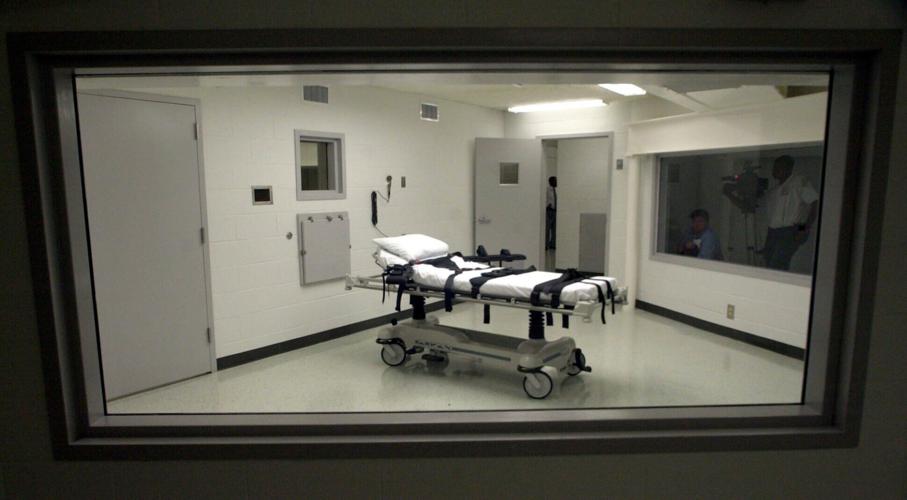
FILE - Alabama's lethal injection chamber at Holman Correctional Facility in Atmore, Ala., is pictured in this Oct. 7, 2002 file photo. Kenneth Smith, 58, is scheduled to be executed Jan. 25, 2024, at a south Alabama prison by nitrogen gas, a method that has never been used to put a person to death. The 11th U.S. Circuit Court of Appeals will hear arguments Friday, Jan. 19, in Smith's bid to stop the execution from going forward. (AP Photo/File)
WHAT DOES THE STATE PLAN TO DO?
After Smith is strapped to the gurney in the execution chamber, the state said in a court filing that it will place a "NIOSH-approved Type-C full facepiece supplied air respirator" — a type of mask typically used in industrial settings to deliver life-preserving oxygen — over Smith's face.
The warden will then read the death warrant and ask Smith if he has any last words before activating "the nitrogen hypoxia system" from another room. The nitrogen gas will be administered for at least 15 minutes or "five minutes following a flatline indication on the EKG, whichever is longer," according to the state protocol.
The state heavily redacted sections of the protocol related to the storage and testing of the gas system.
The Alabama attorney general's office told a federal judge that the nitrogen gas will "cause unconsciousness within seconds, and cause death within minutes."
WHAT ARE THE CRITICISMS?
Smith's attorneys say the state is seeking to make him the "test subject" for a novel execution method.
They have argued that the mask the state plans to use is not air tight and oxygen seeping in could subject him to a prolonged execution, possibly leaving him in a vegetative state instead of killing him. A doctor testified on behalf of Smith that the low-oxygen environment could cause nausea, leaving Smith to choke to death on his own vomit.
Experts appointed by the United Nations Human Rights Council earlier this month cautioned that, in their view, the execution method would violate the prohibition on torture and other cruel, inhuman or degrading punishment.
The American Veterinary Medical Association wrote in 2020 euthanasia guidelines that nitrogen hypoxia can be an acceptable method of euthanasia under certain conditions for pigs but not for other mammals because it creates an "anoxic environment that is distressing for some species."
IS THIS THE SAME AS THE GAS CHAMBER?
Not exactly. Some states previously used hydrogen cyanide gas, a lethal gas, for executions. The last prisoner to be executed in a U.S. gas chamber was Walter LaGrand, the second of two German brothers sentenced to death for killing a bank manager in 1982 in southern Arizona. It took LaGrand 18 minutes to die in 1999.
WHO IS THE INMATE?
Smith was one of two men convicted of the 1988 murder-for-hire of a preacher's wife. Prosecutors said Smith and the other man were each paid $1,000 to kill Elizabeth Sennett on behalf of her husband, who was deeply in debt and wanted to collect insurance money.
Alabama attempted to execute Smith in 2022 by lethal injection. He was strapped to the gurney in the execution chamber being prepared for lethal injection, but the state called off the lethal injection when execution team members had difficulty connecting the second of two required intravenous lines to Smith's veins. Smith was strapped to the gurney for nearly four hours, according to his lawyers, as he waited to see if the execution would go forward.
ARE THERE LEGAL CHALLENGES?
The question of whether the execution can proceed will end up before the U.S. Supreme Court.
The 11th U.S. Circuit Court of Appeals heard arguments Friday in Smith's request to block the execution. After the court rules, either side could appeal.
Smith has argued that the state's proposed procedures violate the ban on cruel and unusual punishment. He has also argued that Alabama violated his due process rights by scheduling the execution when he has pending appeals and that the face mask will interfere with is ability to pray.
In a separate case, Smith is arguing it would violate the constitutional ban on cruel and unusual punishment for the state to make a second attempt to execute him after he already survived one execution attempt. Lawyers for Smith on Friday asked the U.S. Supreme Court to stay the execution to consider that question.
WHAT IS POTENTIALLY AT STAKE?
Lethal injection is the most commonly used execution method in the United States, but death penalty states have struggled at times to obtain the needed drugs or encountered other problems in connecting intravenous lines.
If the Alabama execution goes forward, other states may seek to start to using nitrogen gas.
If the execution is blocked by the court or botched, it could halt or slow the pursuit of nitrogen gas as an alternative execution method.
___
Why executions by firing squad may be coming back in the US
Intro

CHICAGO (AP) — The image of gunmen in a row firing in unison at a condemned prisoner may conjure up a bygone, less enlightened era.
But the idea of using firing squads is making a comeback. Idaho lawmakers passed a bill this week seeking to add the state to the list of those authorizing firing squads, which currently includes Mississippi, Utah, Oklahoma and South Carolina.
Fresh interest comes as states scramble for alternatives to lethal injections after pharmaceutical companies barred the use of their drugs.
Some, including a few Supreme Court justices, view firing squads as less cruel than lethal injections, despite the violence involved in riddling bodies with bullets. Others say it's not so cut-and-dry, or that there are other factors to consider.
When was the last execution by firing squad?

WHEN WAS THE LAST EXECUTION BY FIRING SQUAD?
Ronnie Lee Gardner was executed at Utah State Prison on June 18, 2010, for killing an attorney during a courthouse escape attempt.
Gardner sat in a chair, sandbags around him and a target pinned over his heart. Five prison staffers drawn from a pool of volunteers fired from 25 feet (about 8 meters) away with .30-caliber rifles. Gardner was pronounced dead two minutes later.
A blank cartridge was loaded into one rifle without anyone knowing which. That's partly done to enable those bothered later by their participation to believe they may not have fired a fatal bullet.
Utah is the only state to have used firing squads in the past 50 years, according to the Washington, D.C.-based Death Penalty Information Center.
What has caused the lethal drug scarcity?

WHAT HAS CAUSED THE LETHAL DRUG SCARCITY?
Under Idaho’s bill, firing squads would be used only if executioners can’t obtain the drugs required for lethal injections.
As lethal injection became the primary execution method in the 2000s, drug companies began barring use of their drugs, saying they were meant to save lives, not take them.
States have found it difficult to obtain the cocktail of drugs they long relied on, such as sodium thiopental, pancuronium bromide and potassium chloride. Some have switched to more accessible drugs such as pentobarbital or midazolam, both of which, critics say, can cause excruciating pain.
Other states have reauthorized the use of electric chairs and gas chambers — or are at least considering doing so. That's where firing squads come in.
Are they more humane?

ARE THEY MORE HUMANE?
Supreme Court Justice Sonia Sotomayor is among those who say firing squads are a more humane method of execution.
That idea is based on expectations that bullets will strike the heart, rupturing it and causing immediate unconsciousness as the inmate quickly bleeds to death.
“In addition to being near instant, death by shooting may also be comparatively painless,” Sotomayor wrote in a 2017 dissent.
Her comments came in the case of an Alabama inmate who asked to be executed by firing squad. A Supreme Court majority refused to hear his appeal. In her dissent, Sotomayor said lethal drugs can mask intense pain by paralyzing inmates while they are still sentient.
“What cruel irony that the method that appears most humane may turn out to be our most cruel experiment yet,” she wrote.
But is death by firing squad really painless?

BUT IS DEATH BY FIRING SQUAD REALLY PAINLESS?
In a 2019 federal case, prosecutors submitted statements from anesthesiologist Joseph Antognini, who said painless deaths by firing squads are not guaranteed.
Inmates could remain conscious for up to 10 seconds after being shot depending on where bullets strike, Antognini said, and those seconds could be “severely painful, especially related to shattering of bone and damage to the spinal cord.”
Others note that killings by firing squad are visibly violent and bloody compared with lethal injections, potentially traumatizing victims' relatives and other witnesses as well as executioners and staffers who clean up afterward.
Are firing squads more reliable?

ARE FIRING SQUADS MORE RELIABLE?
If reliability means the condemned are more likely to die as intended, then one could make that argument.
An Amherst College political science and law professor, Austin Sarat, studied 8,776 executions in the U.S. between 1890 and 2010 and found that 276 of them were botched, or 3.15%.
The executions that went wrong included 7.12% of all lethal injections — in one notorious 2014 case in Oklahoma, Clayton Locket writhed and clenched his teeth after midazolam was administered — as well as 3.12% of hangings and 1.92% of electrocutions.
By contrast, not a single one of the 34 firing squad executions was found to have been botched, according to Sarat, who has called for an end to capital punishment.
The Death Penalty Information Center, however, has identified at least one firing squad execution that reportedly went awry: In 1879, in Utah territory, riflemen missed Wallace Wilkerson’s heart and it took 27 minutes for him to die.
Were firing squads ever in wide use?

WERE FIRING SQUADS EVER IN WIDE USE?
Firing squads have never been a predominant method of carrying out civilian death sentences and are more closely associated with the military, including the execution of Civil War deserters.
From colonial days through 2002, more than 15,000 people were put to death, according to data compiled by death penalty researchers M. Watt Espy and John Ortiz Smykla. Just 143 died by firing squad, compared with 9,322 by hanging and 4,426 by electrocution.
Has the Supreme Court weighed in?

HAS THE SUPREME COURT WEIGHED IN?
High court rulings have required inmates who oppose an existing execution method to offer an alternative. They must prove both that the alternative is “significantly” less painful and that the infrastructure exists to implement the alternative method.
That has led to the spectacle of inmate attorneys bringing multiple cases in which they argue the merits of firing squads.
In 2019, the Supreme Court ruled in Bucklew v. Precythe that some pain does not automatically mean a method of execution constitutes “cruel and unusual" punishment, which is prohibited by the Eighth Amendment.
The Constitution "does not guarantee a prisoner a painless death — something that, of course, isn’t guaranteed to many people,” Justice Neil Gorsuch wrote for the 5-4 majority.
Key factors in deciding whether a method is “cruel and unusual” include whether it adds extra pain “beyond what’s needed to effectuate a death sentence,” Gorsuch said.