
WASHINGTON — A judge on Monday set a March 4 trial date for Donald Trump in the federal case in Washington charging the former president with trying to overturn the results of the 2020 election, rejecting a defense request to push back the case by years.
U.S. District Judge Tanya Chutkan rebuffed claims by Trump's attorneys that an April 2026 trial date was necessary to account for the volume of evidence they say they are reviewing and to prepare for what they contend is a novel and unprecedented prosecution.

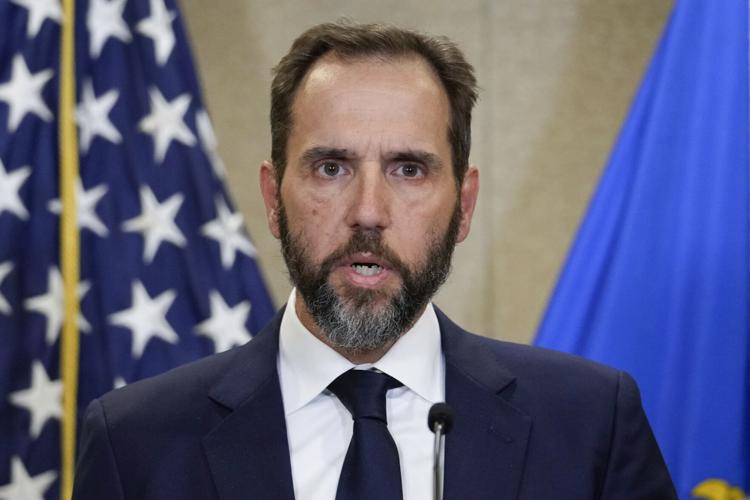
Jack Smith
She agreed to postpone the trial slightly beyond the January 2024 date proposed by special counsel Jack Smith's prosecution team.
"The public has a right to a prompt and efficient resolution of this matter," Chutkan said.
If the current date holds, it would represent a setback to Trump's efforts to push the case back until well after the 2024 presidential election, a contest in which he's the early front-runner for the Republican nomination.
People are also reading…
The March 2024 date would also ensure a blockbuster trial in the nation's capital in the heat of the GOP presidential nominating calendar, forcing Trump to juggle campaign and courtroom appearances and coming the day before Super Tuesday — a crucial voting day when more than a dozen states will hold primaries and when the largest number of delegates are up for grabs.

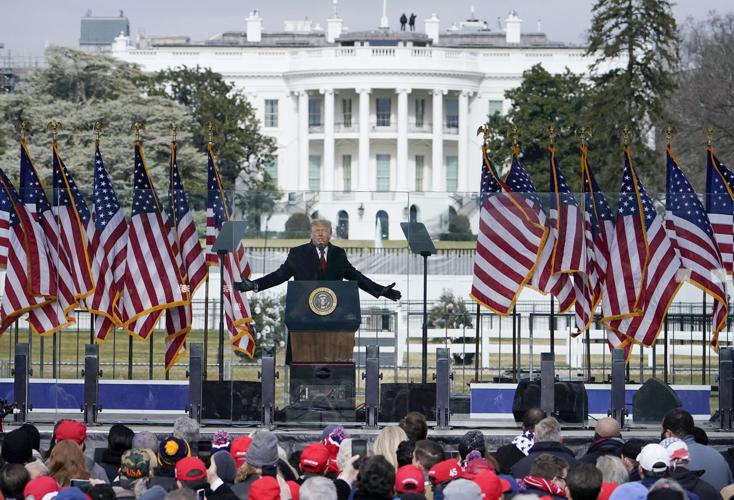
Donald Trump
"I want to note here that setting a trial date does not depend and should not depend on the defendant's personal or professional obligations," Chutkan said.
Chutkan has so far appeared not only cool to Trump's efforts to delay the case but also concerned by social media comments he's made outside court.
This month, she warned Trump's legal team that there were limits on what he can say publicly about evidence in the investigation. She also reiterated her intention Monday for Trump to be "treated with no more or less deference than any defendant would be treated."

Mark Meadows
The Washington case is one of four prosecutions Trump faces.
A March 4 trial would take place just weeks before a scheduled New York trial in a case charging him in connection with a hush money payment to a porn actress.
Meanwhile in Atlanta on Monday, where Trump and 18 others were charged with trying to overturn the 2020 election in Georgia, former White House chief of staff Mark Meadows argued to try to get the charges against him transferred from state court to federal court. U.S. District Judge Steve Jones did not immediately rule.
The judge said that he would try to rule as quickly as possible but that there isn't a lot of relative case law and he needs to give the matter “thorough consideration.” In the meantime, the case continues to progress in Fulton County Superior Court, and the judge said Meadows will have to honor a Sept. 6 arraignment if he hasn't ruled by then.
Trump and the 18 people indicted along with him in Georgia are scheduled to be arraigned next week on charges they participated in a wide-ranging illegal scheme to overturn the results of the 2020 election.
All 19 defendants, including former New York Mayor Rudy Giuliani and Meadows, are scheduled for arraignment on Sept. 6, when they may enter pleas as well, according to court records.
The setting of the trial date came despite strong objections from Trump lawyer John Lauro. He said defense lawyers received an enormous trove of records from Smith's team — a prosecutor put the total at more than 12 million pages and files — and that the case concerned novel legal issues that would require significant time to sort out.
"This is one of the most unique cases from a legal perspective ever brought in the history of the United States. Ever," Lauro said, calling it an "enormous, overwhelming task" to review such a "gargantuan" amount of evidence.
Prosecutor Molly Gaston countered that the public has an "exceedingly" strong interest in moving the case forward to trial and said that the crux of the evidence has long been well known to the defense. Trump, she noted, is accused of "attempting to overturn an election and disenfranchise millions."
"There is an incredibly strong public interest in a jury's full consideration of those claims in open court," Gaston said.
Trump, a Republican, was charged this month in a four-count indictment with scheming to undo his loss to Democrat Joe Biden in the 2020 election.

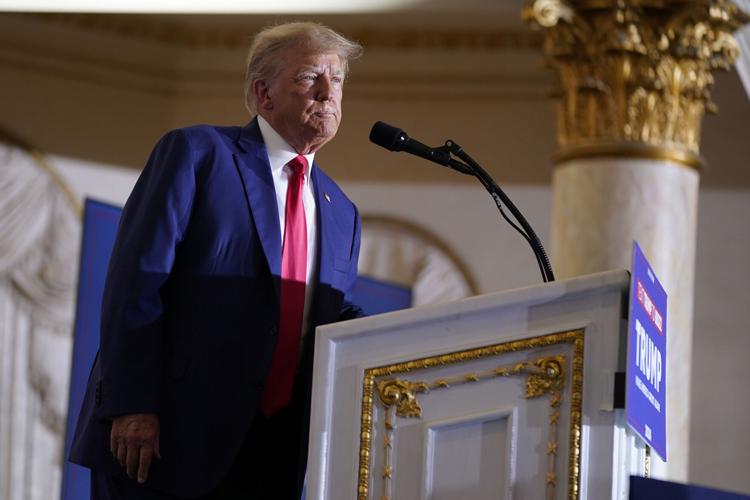
Former President Donald Trump speaks April 4 at his Mar-a-Lago estate in Palm Beach, Fla.
Smith's team brought a separate federal case accusing him of illegally retaining classified documents at his Palm Beach, Florida, property, Mar-a-Lago, and refusing to give them back. That case is currently set for trial next May 20.
Trump also faces state cases in New York and Georgia. Manhattan prosecutors charged him with falsifying business records in the connection with a hush money payment to the porn actress who has said she had an extramarital affair with Trump. Prosecutors in Fulton County, Georgia, charged Trump and the 18 others in a racketeering conspiracy aimed at undoing that state's 2020 election.
A spokesperson for New York's state court system, Lucian Chalfen, said Chutkan spoke Thursday with the judge in Trump's Manhattan criminal case, Juan Manuel Merchan, about their respective trials ahead. Chalfen said no decision has been made regarding postponing or rescheduling the Manhattan trial, which is to begin March 25.
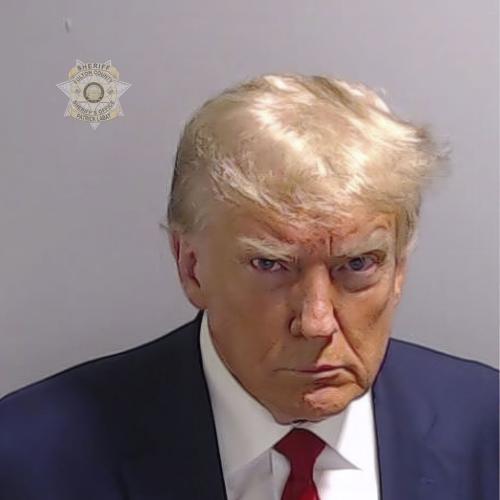
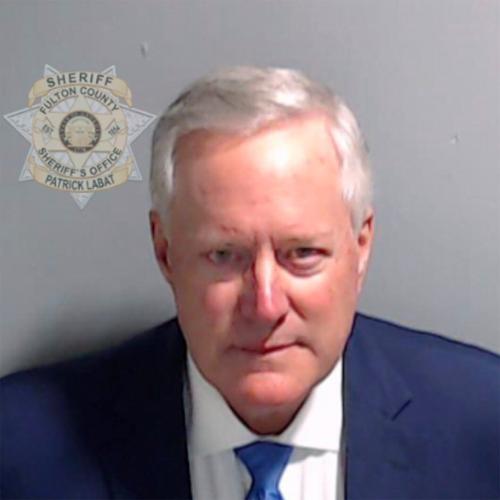
Trump surrendered Thursday in the Georgia case, posing with a scowl for the first mug shot in American history of a former U.S. president. He claims the investigations of him are politically motivated and an attempt to damage his chances of winning back the White House.
A look at the 19 people charged in the Georgia indictment connected to Trump's election scheme
Key people in the Georgia election fraud case

Four of the 18 people charged alongside former President Donald Trump with participating in an illegal scheme to overturn the results of the 2020 presidential election in Georgia have now negotiated deals with prosecutors, pleading guilty to reduced charges in exchange for their truthful testimony in future trials.
Lawyer Jenna Ellis on Tuesday became the latest to turn against Trump, pleading guilty to a single felony charge in exchange for a sentence of probation rather than prison time. Fellow attorneys Sidney Powell and Kenneth Chesebro reached similar deals last week, just as their trial in the case was supposed to start because they had invoked their rights to a speedy trial. Bail bondsman Scott Graham Hall last month was the first to plead guilty.
Trump and the others charged in the case have pleaded not guilty.
The sweeping indictment, brought by Fulton County District Attorney Fani Willis, pictured, in August, capped an investigation that had lasted more than two years and marked the fourth criminal case brought against the former president. Its 41 counts include racketeering, violating the oath of a public officer, forgery, false statements and other offenses.
Here’s a look at the 19 people charged:
Donald Trump

Then-President Trump fixated on Georgia after the 2020 general election, refusing to accept his narrow loss in the state and making unfounded assertions of widespread election fraud there. He also called top state officials, including Gov. Brian Kemp, to urge them to find a way to reverse his loss in the state. In a Jan. 2, 2021, phone call with Georgia Secretary of State Brad Raffensperger, Trump suggested the state’s top elections official could help “find” the votes needed for him to win the state. Willis opened the investigation into possible illegal attempts to influence the election shortly after a recording of that call was made public.
Rudy Giuliani

During several legislative hearings at the Georgia Capitol in December 2020, the former New York mayor and Trump attorney promoted unsupported allegations of widespread election fraud in Georgia. Prosecutors have said Giuliani was also involved in a plan to have 16 Georgia Republicans serve as fake electors, falsely swearing that Trump had won the 2020 presidential election and declaring themselves the state’s “duly elected and qualified” electors.
John Eastman

Eastman, one of Trump’s lawyers and a former dean of Chapman University's law school in Southern California, was deeply involved in some of his efforts to remain in power after the 2020 election. He wrote a memo arguing that Trump could remain in power if then-Vice President Mike Pence overturned the results of the electoral certification during a joint session of Congress. That plan included putting in place a slate of “alternate” electors in seven battleground states, including Georgia, who would falsely certify that Trump had won their states.
Mark Meadows

Trump’s chief of staff visited Cobb County, in the Atlanta suburbs, while state investigators were conducting an audit of the signatures on absentee ballot envelopes in December 2020. Meadows obtained the phone number of the chief investigator for the secretary of state’s office, Frances Watson, and passed it along to Trump, who called her. He also participated in the Jan. 2, 2021, phone call between Trump and Georgia Secretary of State Brad Raffensperger.
Sidney Powell

A lawyer and staunch Trump ally, Powell was present for a now-infamous December 2020 meeting at the White House where participants hatched far-fetched schemes. She also was part of a group that met at the South Carolina home of conservative attorney Lin Wood in November 2020 “for the purpose of exploring options to influence the results of the November 2020 elections in Georgia and elsewhere,” prosecutors said. Additionally, prosecutors alleged Powell was involved in arranging for a computer forensics team to travel to rural Coffee County, about 200 miles southeast of Atlanta, to copy data and software from elections equipment there in January 2021.
Kenneth Chesebro
Prosecutors have said Chesebro, an attorney, worked with Republicans in numerous swing states Trump lost, including Georgia, in the weeks after the November 2020 election at the direction of Trump’s campaign. Chesebro worked on the coordination and execution of a plan to have 16 Georgia Republicans sign a certificate declaring falsely that Trump won and declaring themselves the state’s “duly elected and qualified” electors.
Jeffrey Clark

A U.S. Justice Department official who championed Trump’s false claims of election fraud, Clark presented colleagues with a draft letter pushing Georgia officials to convene a special legislative session on the election results, according to testimony before the U.S. House committee that investigated the Jan. 6, 2021, Capitol riot. Clark wanted the letter sent, but Justice Department superiors refused.
Jenna Ellis

The lawyer appeared with Giuliani at a Dec. 3, 2020, hearing hosted by state Republican lawmakers at the Georgia Capitol during which false allegations of election fraud were made. Ellis also wrote at least two legal memos to Trump and his attorneys advising that Pence should “disregard certified electoral college votes from Georgia and other purportedly ‘contested’ states” when Congress met to certify the election results on Jan. 6, 2021, prosecutors said.
Ray Smith
A Georgia-based lawyer, Smith was involved in multiple lawsuits challenging the results of the 2020 election in Georgia. He also gathered witnesses to provide testimony before Georgia legislative subcommittee hearings held in December 2020 on alleged issues with the state’s election.
Robert Cheeley
A Georgia lawyer, Cheeley presented video clips to legislators of election workers at the State Farm Arena in Atlanta and alleged the workers were counting votes twice or sometimes three times. He spoke to the lawmakers after Giuliani.
Michael Roman
A former White House aide who served as the director of Trump’s election day operations, Roman was involved in efforts to put forth a set of fake electors after the 2020 election.
David Shafer

The chairman of the Georgia GOP, Shafer was one of 16 state Republicans who met at the state Capitol on Dec. 14, 2020, to sign a certificate declaring falsely that Trump had won and also declaring themselves the state’s “duly elected and qualified” electors. He also joined Trump in a lawsuit challenging the certification of the 2020 election in Georgia.
Shawn Still
He was one of 16 Georgia Republicans who signed a certificate falsely stating that Trump had won the state and declaring themselves the state’s “duly elected and qualified” electors. Still was the finance chairman for the state GOP in 2020 and served as a Georgia delegate to the Republican National Convention that year. He was elected to the Georgia state Senate in November 2022 and represents a district in Atlanta’s suburbs.
Stephen Cliffgard Lee
Prosecutors say Cliffgard Lee, a pastor, worked with others to try to pressure Georgia election worker Ruby Freeman and her daughter after Trump and his allies falsely accused them of pulling fraudulent ballots from a suitcase during the vote count. Lee allegedly knocked on Freeman’s door, frightening her and causing her to call 911 three times, prosecutors said in a court filing last year.
Harrison William Prescott Floyd
Also known as Willie Lewis Floyd III, he served as director of Black Voices for Trump, and is accused of recruiting Lee to arrange a meeting with Freeman and Chicago-based publicist Trevian Kutti.
Trevian C. Kutti
Prosecutors allege Kutti, a publicist, claimed to have high-level law enforcement connections. They say Freeman met with Kutti at a police precinct, where she brought Floyd into the conversation on a speakerphone. Prosecutors say Kutti presented herself as someone who could help Freeman but then pressured her to falsely confess to election fraud.
Cathy Latham

Latham was one of 16 Georgia Republicans who signed a certificate falsely stating that Trump had won the state and declaring themselves the state’s “duly elected and qualified” electors. She was also chair of the Coffee County Republican Party. She was at the county elections office for much of the day on Jan. 7, 2021, and welcomed a computer forensics team that arrived to copy software and data from the county’s election equipment in what the secretary of state’s office has said was “unauthorized access” to the machines.
Scott Graham Hall
An Atlanta-area bail bondsman, Hall was allegedly involved in commandeering voting information that was the property of Dominion Voting Systems from Coffee County, a small south Georgia jurisdiction. Also charged in the scheme were Powell, Latham and former county elections supervisor Misty Hampton.
Misty Hampton
She was the elections director in Coffee County. Hampton was present in the county elections office on Jan. 7, 2021, when a computer forensics team copied software and data from the county’s election equipment. She also allowed two other men who had been active in efforts to question the 2020 election results to access the elections office later that month and to spend hours inside with the equipment.