

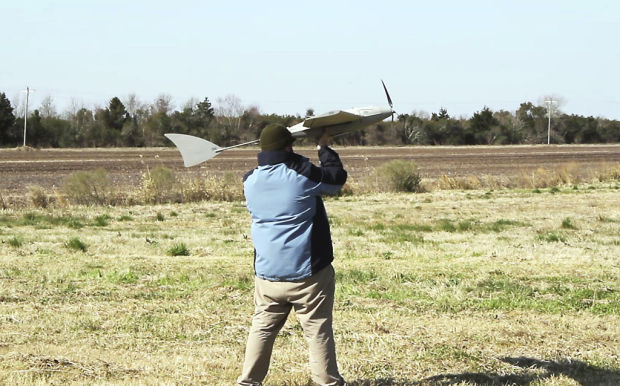
CINCINNATI - Thousands of civilian drones are expected in U.S. skies within a few years, and concerns they could be used to spy on Americans are fueling legislative efforts in several states to regulate the unmanned aircraft.
Legislation involving drones was introduced this year in more than 40 states. Many of those bills seek to regulate law enforcement's use of information-gathering drones by requiring search warrants. At least six states now require warrants, and Virginia has put a two-year moratorium on drone use by law enforcement to develop guidelines.
Domestic drones can help monitor floods and other emergencies, survey crops and assist search-and-rescue operations. But privacy advocates are worried because the aircraft can carry cameras to capture images of people and property.
But the industry's professional association says regulating law enforcement's use of unmanned aircraft is unnecessary and shortsighted. It wants guidelines covering manned aircraft applied to unmanned aircraft and says privacy concerns are unwarranted.
People are also reading…
"Right now police can't come into your house without a search warrant," said Ohio Rep. Rex Damschro-der, who has proposed drone regulations. "But with drones, they can come right over your backyard and take pictures."
Since 2006, the Federal Aviation Administration has approved more than 1,400 requests for drone use from government agencies and public universities wanting to operate the aircraft for purposes including research and public safety. Since 2008, approval had been granted to at least 80 law enforcement agencies.
But the FAA estimates that as many as 7,500 small commercial unmanned aircraft could be operating domestically within the next few years. A federal law enacted last year requires the FAA to develop a plan for safely integrating the aircraft into U.S. airspace by September 2015.
Damschroder's proposed bill would generally prohibit law enforcement agencies from using drones to get evidence or other information without a search warrant.


