
Catalina State Park is one of Arizona’s state park gems, and remarkably the nearest one to a major population center. The park was established in 1983, and consists of 5,493 acres of high desert/lower Sonoran Life Zone. The park entrance sits at about 2,600 feet above sea level in the Santa Catalina Mountain foothills, and a complete system of trails follow contours up and out of the park into the adjacent Coronado National Forest. Mount Lemmon at 9,157 feet is just 9 miles from the park as the raven flies (no crows in this part of Arizona) and readily accessible for hardy hikers. For a couch potato, the state park is also just 5 minutes from an In-N-Out Burger, Wal-Mart and a 12-screen movie theater.
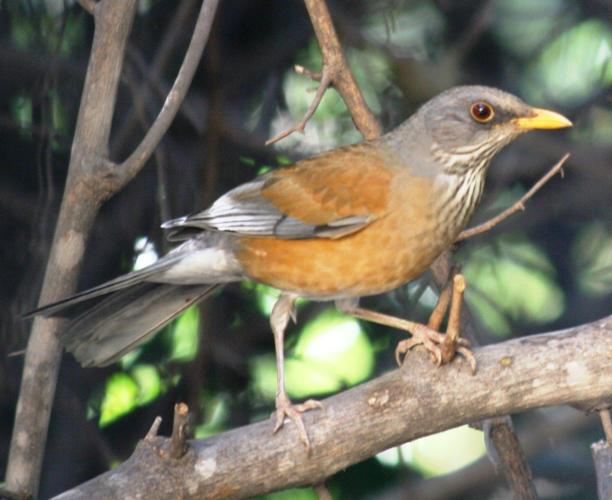
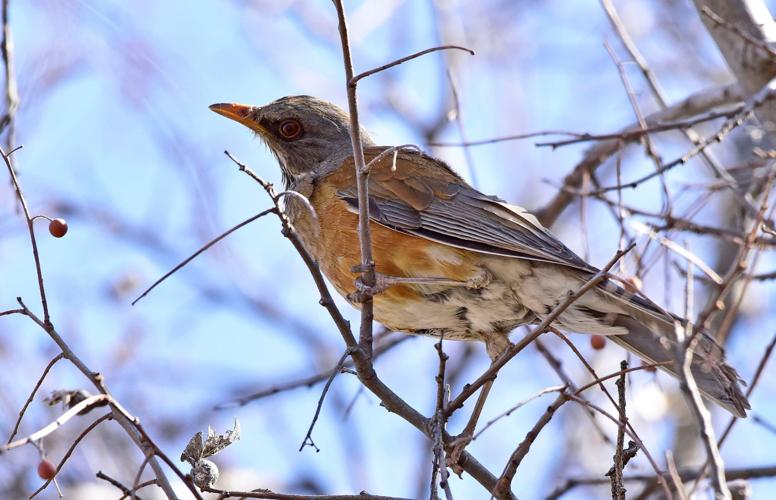
Birders love Catalina State Park’s ease of access, varied habitat and large list of resident and migratory birds. The park is an eBird hot spot with 188 reported species from more than 1,600 individual reports. Notably, this is one of the more reliable sites to find Rufous-winged Sparrows and Crissal Thrashers year-round, two birds that draw distant visitors from across the U.S., Canada and beyond. Unusual rarities can show up here, as well, and recently two species did just that. Late last November, a birder reported a Rufous-backed Robin, a Mexican bird that hung out near the main parking lot gorging on the park’s healthy crop of hackberries for more than three months. The last time a Rufous-backed Robin was seen anywhere close to Catalina State Park was a monthlong stay from Dec. 26, 2007, until Jan. 25, 2008. That was eight years ago, but some of us think it could be the same bird. Rufous-backed Robins are seen from time to time in Arizona, but to give you an idea of the rarity of this visitor, you have to drive to Alamos, Mexico, some 475 miles south of Tucson to find them easily.
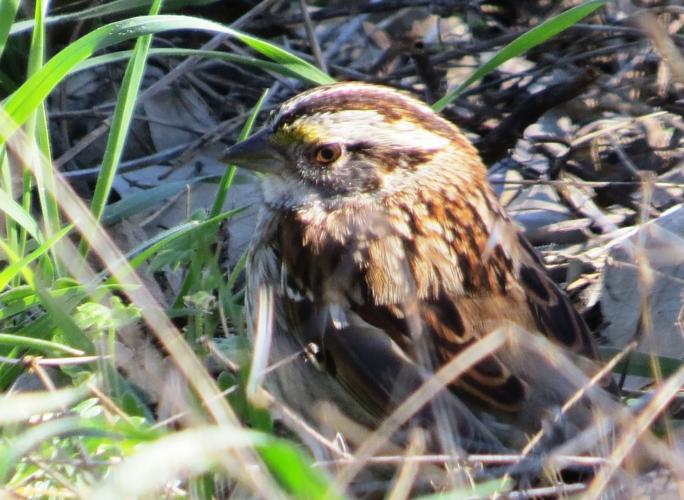
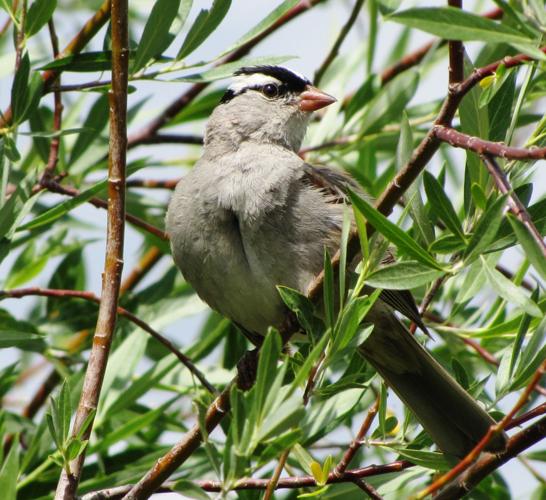
Unlike 2008, we were extra fortunate this year with the simultaneous visit of another park rarity, the White-throated Sparrow. Two or three of these beautiful sparrows joined the robin in late December and continued lingering into March after the robin flew back to Mexico. White-throated Sparrows are seen more often than Rufous-backed Robins in Arizona, but until this visit they have never been reported on eBird, the primary reporting tool, within Catalina State Park. If you are from Canada, the Midwest or eastern U.S., you’re no doubt familiar with this sparrow, since it breeds in all Canadian provinces and either migrates through or winters in Midwest and Southeast states (as well as along the California to Washington coast.) Its presence in the Mountain States or most of Arizona, however, is almost unknown, and it’s considered a rare transient to winter in our part of the state. Like our common winter visitor the White-crowned Sparrow, male and female White-throated Sparrows are identical. Both species are remarkably similar, but the White-crowned Sparrow has a yellow-orange bill and the White-throated Sparrow has a white throat (surprise!) and a bright yellow lore (small feather patch between eye and bill.)
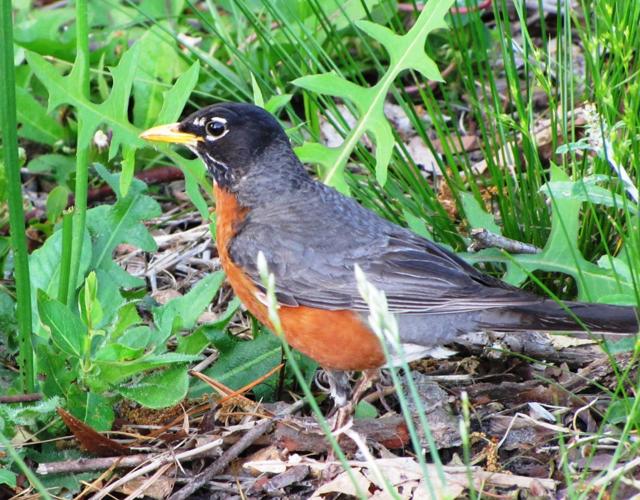
With luck, both of these rarities will return next winter so you’ll have a chance to see them. Year-round sightings of all rare birds in southeast Arizona are reported on the Tucson Audubon website, at www.tucsonaudubon.cor/rba.html. For these two local rarities, always take a close look at their more common cousins, American Robins and White-crowned Sparrows, since rare birds are like undercover agents avoiding detection. Who knows, you might even find one in SaddleBrooke.
If you have questions or comments about SaddleBrooke’s birds, or to receive emailed information about bird walks led by Bob and Prudy, call 825-9895 or email bobandpru@aol.com. Previously published articles can be found at www.birdingthebrookeandbeyond.com.


