
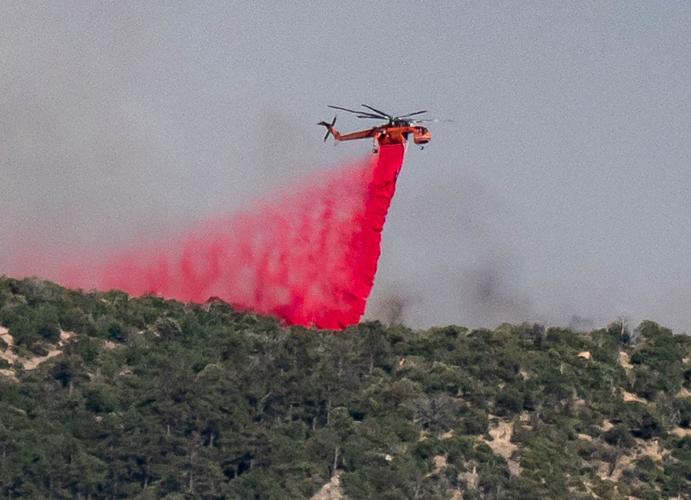
I think for most SaddleBrooke photographers the Bighorn fire was a love/hate relationship. Indeed, it was a terrible fire. The loss is nearly incalculable. I take some comfort that it was not human-caused. I also have only good things to say about the brave firefighters and their leadership.
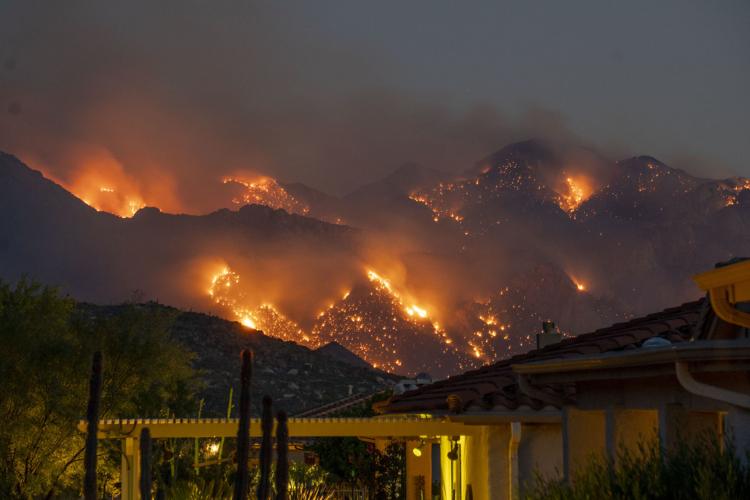
But for many of us, the fire was also something we were drawn to photograph. I use the word “beautiful” carefully, but the fire did have a certain beauty to it.
Photographing the fire during daylight hours is pretty straightforward. You capture the smoke, but it is very difficult to see the flames. Photographing a fire at night becomes a more interesting challenge. It is very difficult to photograph with a SmartPhone, at least using the SmartPhone’s default settings.
I’ve written about this before. The big problem with default camera settings is the camera tries to average the bright spots of fire with the black background. You either end up with relatively small spots of fire, or a very blurred photo.
The way around this is to photograph the fire as astronomers do when they photograph celestial bodies. They use very long exposures, so the telescope’s imaging sensor has time to accumulate really dim light. Their exposures are typically measured in hours.
Photographing wildfires at night is somewhat similar to astrophotography. Put your camera on a very solid tripod and open the shutter. This requires some experimentation, and the length of time the shutter is open really depends on how you want your photograph to look. The longer the shutter is open, the brighter and more dramatic the fire will appear.
This may be off-point a bit but I think it is relevant. The camera settings chosen by the photographer have a huge effect on the emotional impact a photograph has on the viewer. For the artist/photographer, this is what photography is all about. For a news photographer, this is a huge responsibility.
During my photography training, my career path leaned toward Photojournalism—not surprising as I was working in TV news before, during and after college. I love telling a story with photographs or video. But news photography as opposed to photographic art should be as objective as possible.
Consider the dilemma faced by a news photographer covering the Bighorn wildfire. Changing a few camera settings can make a big difference in how the viewer perceives the fire. In reality, this is true for any news photograph or video, but it really is difficult to “get it right” when photographing a wildfire at night.
Back on point. As I have said many times in the past, we have some really excellent photographers in Saddlebrook. Check out some great Bighorn fire photographs at the Photographers of SaddleBrooke website, (go to www.photosb.org), or the SaddleBrooke Photography Club’s website, visit https://saddlebrookephotographyclub.com/.
If you want more info on anything covered in this column, have general questions or comments, or an idea for a future column, please send me an email at PhotographyForEveryone@hagedon.net. And don’t forget to visit the “Saddlebag Notes” photography web pages on their website, (www.saddlebagnotes.com/photography).
 Lloyd to get clarity on Arizona basketball future this week | Greg Hansen


