
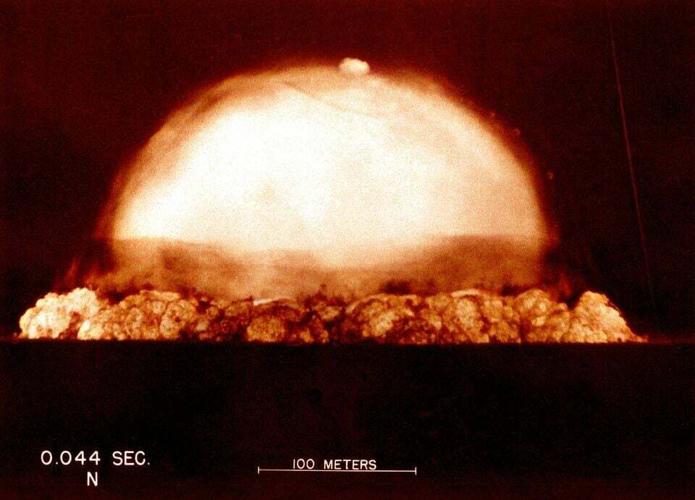
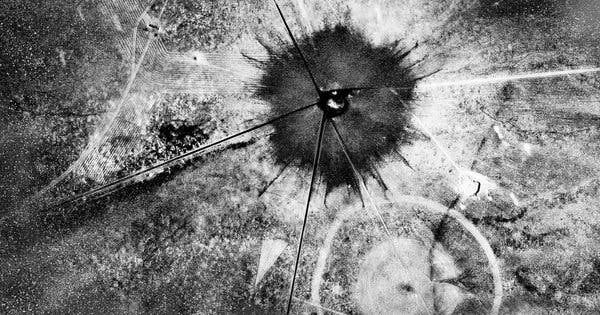
When Robert Oppenheimer's first atomic bomb exploded on July 16, 1945, at 5:30 a.m., it triggered seismographs in Tucson to record an earthquake wave generated by seismic energy radiating through the earth from the northeast. Scientific equipment at the University of Arizona recorded the atomic explosion 280 miles away at the Trinity site in southwestern New Mexico. The light flash from the top-secret test was visible as far as 180 miles away. Advanced systematic studies later determined that the fallout and atomic cloud went further than the Manhattan Project ever imagined in 1945. The study's authors claim that radioactive fallout from the test reached 46 states, Canada, and Mexico within ten days of detonation.
The explosion was far larger than scientists expected. The megaton atomic weapon, packed with 13 pounds of plutonium, had the power equivalent of 21,000 tons of TNT. The irradiated mushroom cloud rose much higher into the atmosphere than scientists anticipated. It reached an estimated 50,000 to 70,000 feet as it drifted across the country. The blast produced more heat and light than the sun, and copious quantities of ash fell for days in the New Mexico desert.
On that July morning in 1945, a spectacular flash of white-hot heat and light bleached the barren landscape around the test site. Tongues of red fire shot out at ground level and splashed across the desert floor. Green, yellow, and scarlet flashes burst from the hulking hemispherical plume as it rose like an enormous, sweltering blister and popped. Immediately, the glowing fissionable cloud gushed upward, boring a hole into the heavens, belligerently tearing for oxygen and room to expand. The cloud stem reared and twisted like a left-handed screw as the mass soared into the predawn sky. The Atomic age showed the world its teeth for the first time.
Moments later, a bellowing, thunderous sound echoed across the Sierra Oscura Mountains, the rocks, and the desert floor for what seemed an eternity to Oppenheimer's staff recording the blast. The sound was deafening as it bounced over and around the Jornada del Muerto. This area in the desert is ominously known from Spanish times as the Dead Man's Trail — the Journey of Death.
In 1945, the U.S. lacked national monitoring stations to track fallout. Historical weather and atmospheric data were not available until 1948. Oppenheimer's team placed crude monitors around small towns within 40 to 50 miles of the testing site. Before the test, officials reportedly did not warn residents in small communities, including ranchers, Navajos, and Mexican settlers, who drank water from cisterns and raised cattle near Trinity. The government made a few preparations to keep civilians safe. Without knowing the size of the explosion or the extent of the damage, government officials planned to assess the fallout's reach later on horseback.
Officials proposed cover stories to tell the public that a remote ammunition depot at a nearby White Sands military base had exploded. According to Dr. Alex Wellerstein, a science professor and historian at the Stevens Institute of Technology in Hoboken, NJ, these actions reflect scientists' ignorance of radiation's effects at the time of the experiment.
1940 census data indicate that up to 500,000 people lived within a 150-mile radius of the test site; some families lived as close as twelve miles from Trinity. Civilians within a 50-mile radius of the test site were stunned and bewildered by the blast. They received no warning before the test, nor were they evacuated afterward. People were exposed to deadly radioactive fallout and developed cancer and other diseases as a result. The full effects of the bomb test on people near the site remain unclear. At the time of the experiment, the government never conducted a full investigation into the effects of radiation. Communities downwind of the blast saw an unusual spike in infant deaths in the months following the explosion. Legal challenges from "downwinders" in the test area continue to this day.
Oppenheimer was openly worried that he had set a course for an apocalyptic future. He quoted a Hindu scripture that he said ran through his mind at the sight of the explosion: "Now I am become Death, the destroyer of worlds." Less poetic, his test director at the site, Kenneth Bainbridge, declared: "Now we are all sons of bitches."
According to Jennifer Granholm, Secretary of Energy in the Biden Administration, "Oppenheimer occupies a central role in our history for leading the nation's atomic efforts during World War II and planting the seeds for the Department of Energy's national laboratories. As time has passed, more evidence has come to light of the bias and unfairness of the process to which Dr. Oppenheimer was subjected, while the evidence of his loyalty and love of country has only been further affirmed."
Oppenheimer, the father of the bomb that ended the war, was nominated for the Nobel Prize in physics three times, in 1946, 1951, and 1967, but never won it. Julius Robert Oppenheimer died of throat cancer on February 18, 1967, at age 62.
The Manhattan Project was a race to see who could gain the power to destroy everyone else first. At the time, America won that race.
-30-
Jerry Wilkerson was a former press secretary for two U.S. Congressmen and a correspondent for CBS NewsRadio 780 Chicago and the Chicago Daily News. He has served as a police commissioner and is a Navy veteran. Email: franchise@att.net
 Faculty concerned about changes to U of A admissions policy


