

The US government has declassified the facts and data in this column. The information is available with minimal clicks on Google. Try it yourself.
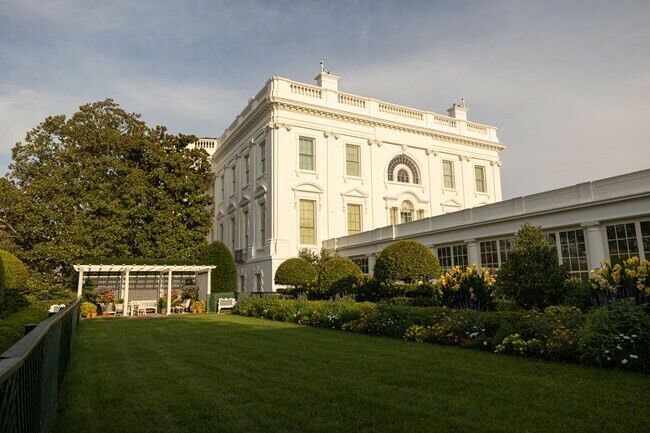
The East Wing of the White House is now history, but the secret complex of tunnels, Secret Service equipment parking, and munitions storage built beneath it remains in use today. When I worked in D.C., I attended meetings and receptions in the East Wing, an impressive setting surrounded by gardens, woods, and distinctive greeting chambers.
In pleasant weather, receptions were held in the East Wing of the Jacqueline Kennedy Garden, located south of the White House East Terrace Colonnade. I remember standing in this garden late one spring afternoon. It was the time of year when Washington smelled good, flowers were bursting with bloom, and the sweet scent of cherry blossoms drifted across the Mall and Ellipse on gentle breezes from the Potomac. A dynamic combination. But I digress. This column is about what remains underground beneath the East Wing.
The White House sits on 18 acres managed by the National Park Service. A new 13-foot-tall black perimeter fence surrounds the historic property. Pressure sensors are installed beneath the grass near the fence, and laser, microwave and infrared motion detectors are also in place. If triggered, the system initiates a SWAT-type response from uniformed Secret Service teams, including Belgian Malinois attack dogs.
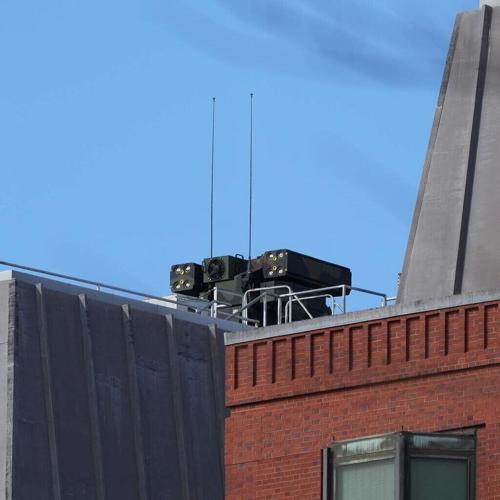
Across Pennsylvania Avenue, northwest of the mansion, a sniper team consisting of a spotter and a shooter, both equipped with a silenced, custom Remington 700 rifle, is stationed on the roof of a residential townhouse facing Lafayette Park. To the northeast, across Lafayette Park, is a tall red-brick building with a gray parapet that conceals an Avenger multi-rocket launcher with eight Stinger missiles and a computer-aimed machine gun that fires six-inch-long bullets that could rapidly take a plane out of the sky.
The Oval Office windows are made of six-inch-thick bulletproof glass. The room's air is kept at a higher pressure than the outside air, helping prevent biological and chemical attacks. Small wooden blocks bearing the presidential seal, called knockdowns, are placed around the room and on the Resolute Desk. When the knockdowns are overturned, counterassault teams are activated. Directly below the Oval is the White House Secret Service control center.
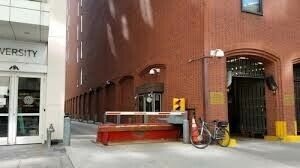
The tunnels under the mansion run in many directions and include a large vehicle tunnel that allows vehicles to enter an underground garage beneath the Treasury Building, then leave the compound via a hidden ramp across Pennsylvania Avenue into an alley on H Street, a block, and a half from the White House. This is how the president can depart the campus without being seen. This tunnel network connects to emergency tunnels that lead from the residence and Oval Office to the Presidential Emergency Operations Center (PEOC) bunker, directly beneath the former East Wing site. The Treasury Building's basement levels have converted old vaults into emergency bunkers. Zigzag hallway tunnels and many locked, solid-steel doors with keypads were designed to dissipate pressure from a nuclear blast.
Beneath the West Wing and below the Treasury Building is the Secret Service's underground garage, where two armored SUVs are on standby for emergency evacuation. Counter-assault team equipment is stored in black cabinets with racks of heavy weapons, including MP5s, Remington 870 Magnum shotguns, gas masks, riot shields and other munitions, including stockpiles of sophisticated ammunition and explosives.
The presidential limousines, code-named “The Beast,” have approximately 20 vehicles in service and are kept at the JOC, Joint Operations Center, the Secret Service’s DC headquarters, in an unmarked office building six blocks away. An ECM truck equipped with electronic countermeasures always follows the president's motorcade. The equipment can block radio signals that could trigger roadside bombs.
This is new to me since I worked in DC. There is now a tunnel under the East Wing that leads to a set of stairs that exit onto the South Lawn of the White House, near the landing zone for the President’s Marine One helicopter.
If the White House is breached, the executive can be taken to Raven Rock Mountain, a massive tunnel facility drilled into a mountain that includes space for a four-lane road. It is less than an hour’s flight from DC, on the Maryland border in Pennsylvania, and serves as the “Underground Pentagon” for government continuity if the Capitol were destroyed by a nuclear weapon. The other safe place for the executive is 40,000 feet up in Air Force One, where the aircraft can remain aloft for days with midair refueling.
Next month, in Part Two, we will discuss the history of the White House's tunnel systems.
Award-winning writer Jerry Wilkerson lives in SaddleBrooke. He is a former press secretary for two U.S. Congressmen and a prior WBBM CBS NewsRadio Chicago and Chicago Daily News correspondent. He is a retired police commissioner and Navy veteran. Email: franchise@att.net.
 Lake Mead's drops raise prospect of unaffordable Hoover Dam electricity


