For generations, the presence of Hoover Dam and its massive power plant routinely translated into cheap electricity for cities, farmers, irrigation districts and other major electrical energy users in Arizona and the Southwest.
By all accounts, the long-plentiful water and power supplies made possible by the dam helped transform the arid Southwest during the second half of the 20th century into a collection of vibrant, fast-growing metropolises whose growth far outpaced that of the rest of the U.S.
"Had the dam never been built, the West would look very different today," wrote Los Angeles Times columnist Michael Hiltzik in his 2010 book "Colossus: Hoover Dam and the making of the American century," recounting the dam's construction and role in the Sunbelt's boom years.
"The growth of the urban areas most dependent on the (Colorado) river for water and power — Los Angeles, Phoenix, Denver, Salt Lake City and San Diego — would have been stunted, leaving them at a fraction of their current size," Hiltzik wrote. "The largest city on the West Coast today might well be San Francisco or Seattle, which get their water and power from different sources."
People are also reading…
Hoover power is today sold to millions of people in Arizona, Nevada and Southern California and Nevada. It's also used to pump Colorado River water uphill to Tucson and Phoenix via the Central Arizona Project canal system, while the other cities Hiltzik mentioned get water or power from other dams along the river.
But now, Hoover Dam may be on the verge of no longer supporting the bounty of cheap energy and readily available water that reshaped the West.
Not only will its electricity likely no longer be cheap, its price may climb high enough over the next year or so to make it "unaffordable" for many of its current users, said Jordy Fuentes, director of the Arizona Power Authority, a state agency that buys Hoover Dam power from the feds and markets it to 71 customers statewide.

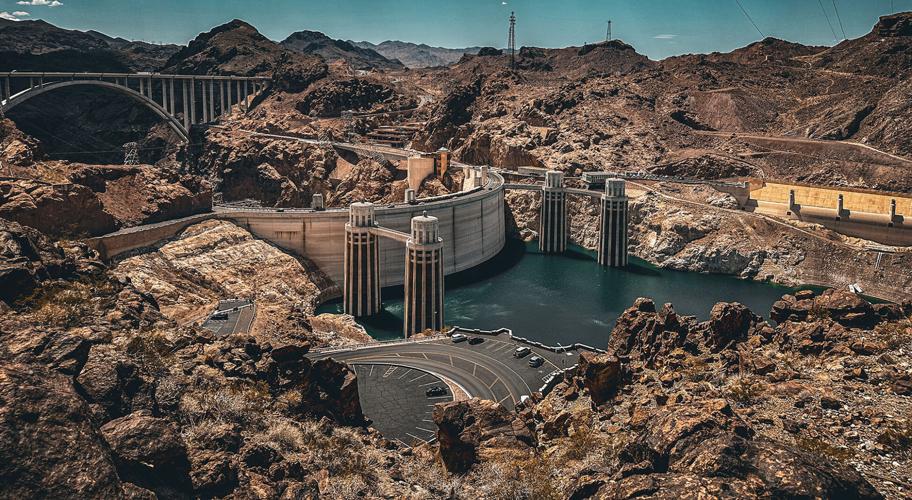
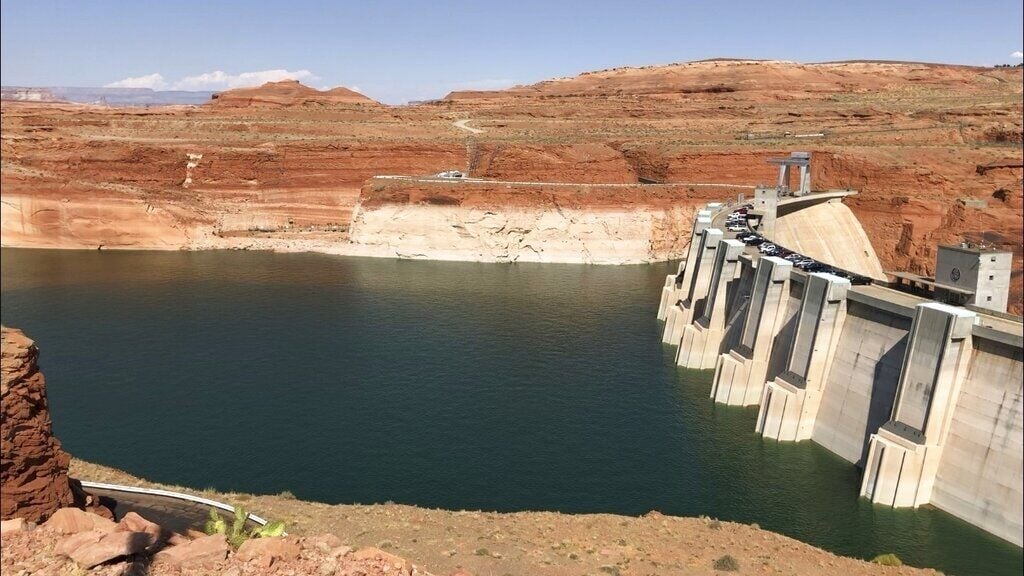
A view of Hoover Dam and Lake Mead from the Arizona side of the dam, which straddles the Arizona-Nevada border. Hoover Dam may be on the verge of no longer supporting the bounty of cheap energy and readily available water that reshaped the U.S. West.
While not all experts agree with Fuentes' dire outlook, it's clear that Hoover Dam's electricity is likely headed for a price boost of some sort. The reason this would happen stems from just-announced plans by the U.S. Bureau of Reclamation to prop up Lake Powell, partly though a sharp cutback in releases of water from Powell at the Arizona-Utah state line to Lake Mead at the Arizona-Nevada boundary.
The reduction will amount to a 20% cut in river water deliveries to Mead.
Less water coming to Hoover, which is connected to Lake Mead, means lower reservoir levels that could well mean less water passing through the dam's turbines. That could drive down the generation of electricity at Hoover's massive power plant by as much as 40% this fall, the Bureau of Reclamation said April 17.
That would come on top of a 30% cut in power supplies from Hoover that has occurred over the past few years due to previous declines in water levels at Lake Mead that were caused by earlier declines in river flows.
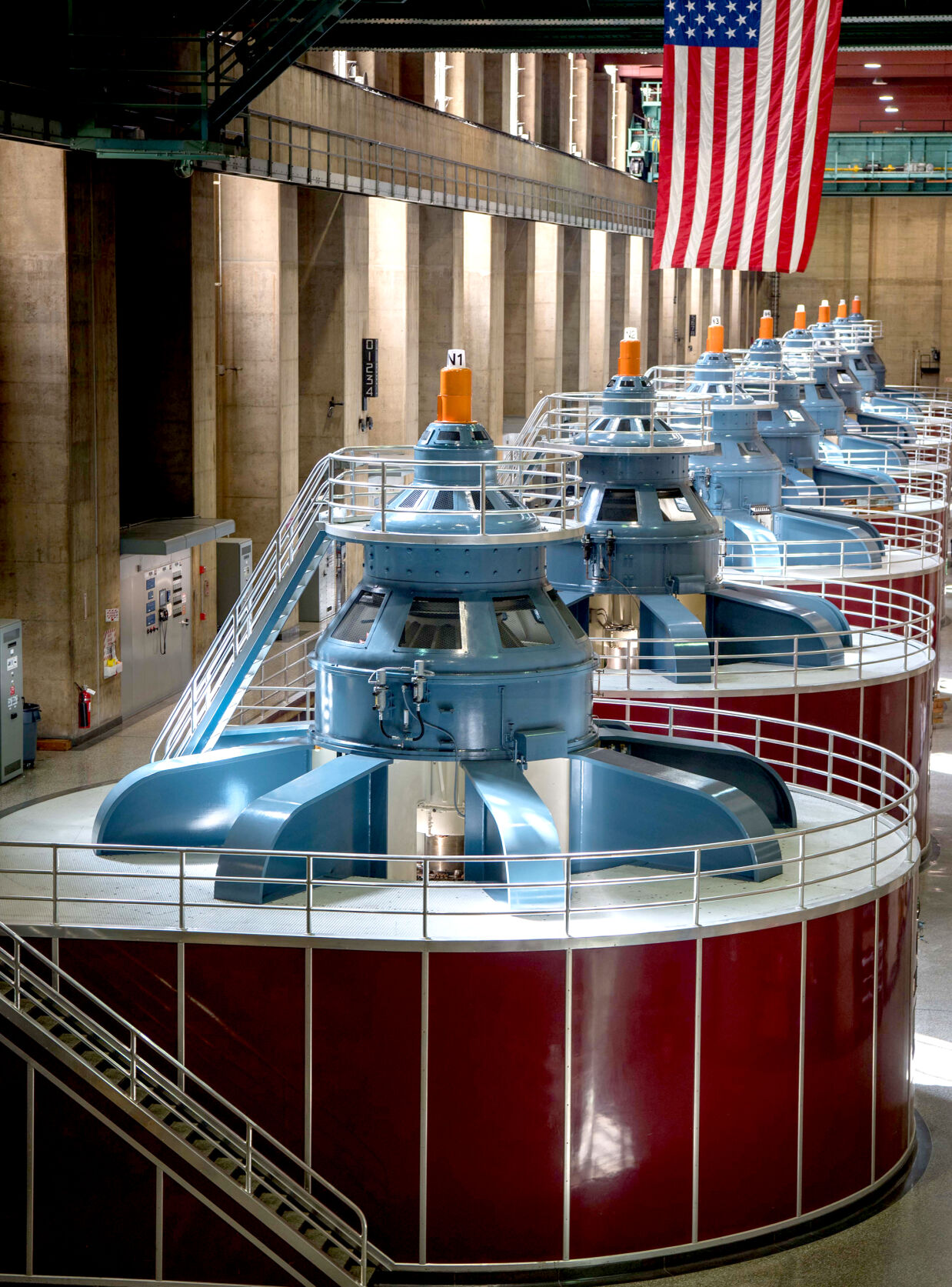
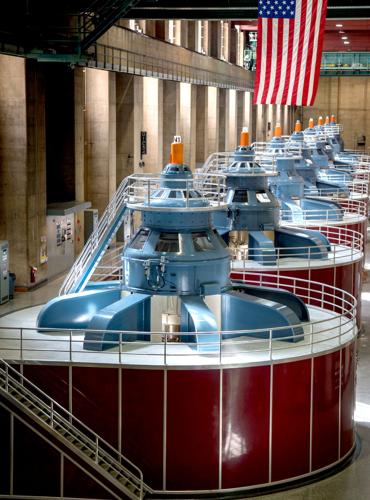
Hoover Dam's generators, inside the dam, create electricity for millions of people across Arizona, California and Nevada. For generations, the dam has provided power at a low cost. But declining Colorado River water supplies and falling water levels at Lake Mead are reducing the supply and boosting the cost of the electricity the dam provides.
As power supplies from the dam are cut, electricity prices for the dam's customers will also rise, experts say. For decades, Hoover Dam was a fountainhead of cheaper, hydroelectric energy that the federal government sold to customers at cost, with no profits earned, unlike for privately generated energy sources such as coal and natural gas.
But now, the dam's power customers will have to pay more for electricity from Hoover, or they'll have to switch to other energy sources that also would cost more than Hoover Dam's traditionally cheaper power, said Fuentes.
His agency's customers include cities, towns, irrigation and electrical districts (which acquire power to be used by farmers to pump groundwater to grow crops), and the operators of the 336-mile-long CAP canal system, which delivers drinking and irrigation water supplies to the Phoenix and Tucson areas.
'A real hit to hydropower customers'
The prospect of the power supply cuts at Hoover dominated a meeting Tuesday of the Power Authority's commission, which sets policy for the agency. Several commissioners took pains to note that Hoover Dam's water supply and its power generation will be curtailed to protect the ability of Glen Canyon Dam at Lake Powell to generate power and deliver water to Arizona, other Lower River Basin states and Mexico.
The cut in Hoover's water deliveries is "a real hit to hydropower customers, just with the way they decided to prop up Powell, to my mind, at the expense of Lake Mead. They’re doing that to avoid minimum power pool at Powell," said Commissioner Philip Bashaw, referring to the bureau's ongoing efforts to keep Powell from falling below 3,490 feet, at which level Glen Canyon Dam would be unable to generate electricity.
"I feel like this commission needs to point that out to the Bureau of Reclamation. This plan is going to have significant impacts on our ability to operate as a commission. This has been something that’s really worrisome to me," said Bashaw, who is CEO of the Arizona Farm Bureau.
As Colorado River water flows have declined since 2000, when Lake Mead was almost full, five of Hoover Dam's 17 turbines have already shut down.
That's cut power production there by 30% to 35%, Fuentes said. If Mead falls below 1,035 feet — it's at about 1,057 feet now — seven more turbines must shut down, reducing Hoover Dam's power-generating capacity by 75%, Fuentes said at Tuesday's commission meeting.
At that point, the dam's electricity would be unaffordable, both for the authority and many of its customers, he said.
Lake Mead will probably fall another 20 feet once the bureau's cutback of water delivery from Lake Powell kicks in, said Bronson Mack, a spokesman for the Southern Nevada Water Authority, which draws Nevada's Colorado River water supply from Mead.
Reclamation's latest monthly forecast shows Lake Mead could fall to below 1,035 by late summer or early fall, if you take into account the expected 20-foot decline caused by the lower water releases.

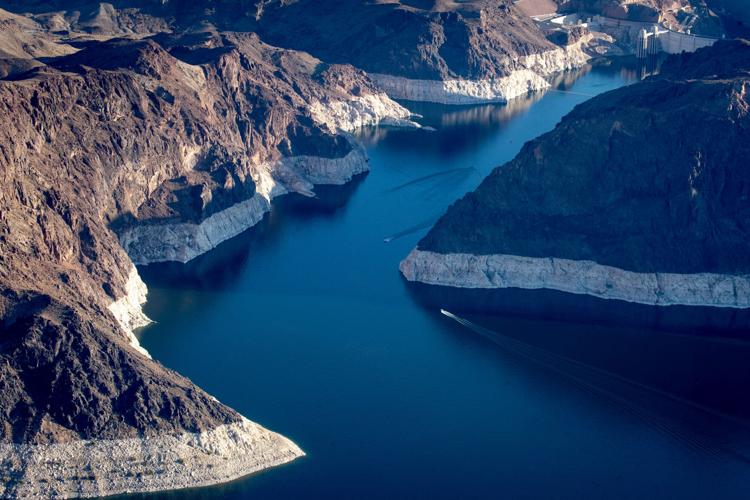
Hoover Dam (top right) and Lake Mead on the Arizona/Nevada border on May 11, 2021. A high-water mark or bathtub ring is visible on the shoreline. The bathtub ring has become a global symbol of the Colorado River's declining water supplies, as it shows the water level isn't as high as it used to be.
"If Hoover power is cut 40%, in an era where summers are getting hotter and longer and where wildfire smoke is keeping us indoors, we know that electricity use is going to continue to rise," said Kyle Roerink, director of the Great Basin Water Network, an environmental group operating in Nevada and Utah. "With increased demand from data centers as well, there can be a legitimate concern that power bills are going to keep going up."
Under a particularly bad scenario for Lake Mead water levels and power generation, power from Hoover Dam could cost 8 times more than it would under higher water levels and power generation, Fuentes said in an interview Friday.
Even without taking the impacts of the bureau's latest action into account, hydropower is no longer as cheap compared to other energy sources as it used to be, he said. Natural gas is really affordable now, and several other energy sources also are cheaper than hydropower, he said.
"You had low-cost hydropower that made it possible for folks to farm, (but now) it costs a lot of money to raise water out of the ground," Fuentes said. "At some point here, we're not far away from it, you get additional (water and power cuts), people will say, 'I'm turning in my contract. I'll buy power on the (open) market. It's cheaper.'
"There is a threshold for affordability to a farmer. If the costs of pumping the water are too high, they have to look to something different, whether they have to grow houses or grow another crop" that requires less water and less groundwater pumping, lowering pumping costs.
Former Reclamation official David Wegner said some of Fuentes' concerns are "a little over the top," in part because how much power rates will go up depends on how much power supplies are cut.
"I understand his position, but I think first off, there will be dialogue between other contractors. There will probably be some negotiating back and forth between other contractors over prices.
"If it's only a 5% hit to power supplies, it's not unaffordable. If it's 50%, it could be unaffordable to the lower end of the spectrum, not millionaires and billionaires. If you're poor, yes, it's unaffordable," Wegner said.
The price jumps could particularly hit farmers who are now using CAP water that cities own the rights to, but recharge on farmland to reduce the stress of pumping down the aquifer. But "if they don’t have CAP water they're going to have to pump groundwater."
'Simple matter of demand and supply'
Arizona's two largest consumers of Hoover power, the CAP and the Phoenix-based Salt River Project utility, don't sound particularly concerned, however, about the prospect of increasing power costs or of cutbacks.
"CAP is aware of the potential cuts and is actively monitoring the situation. Over the past few years, generation from the Hoover Dam has accounted for approximately 7% of (the project's) overall energy portfolio," CAP said in an email to the Star.
"While a decrease in energy from Hoover would necessitate additional purchases to cover the shortfall, current price forecasting suggests there would be a nominal impact to energy costs in 2026," project officials said. "CAP staff updates the Board of Directors with water rate forecasts each quarter, and these forecasts will reflect adjustments to energy from the Hoover Dam as more information becomes available."
Hydropower from Hoover Dam represents only about half of 1% of SRP's total energy demand, said project spokeswoman Patty Likens, so the utility doesn't expect any cuts in Hoover power to "conflict with meeting customer demand or maintaining reliability."
"However, Hoover Dam generators provide other benefits to SRP customers and the western grid," she wrote in an email to the Star. "These benefits include providing ... carbon free energy that supports transmission grid stability and reliability. The carbon free energy produced by Hoover Dam and other Colorado River hydropower facilities contribute to SRP's progress toward (its) 2035 sustainability goals to reduce carbon intensity."
For Southern California's Metropolitan Water District, which serves water to six counties in that area, Hoover power is a major resource, furnishing 40% to 50% of the energy it uses to pump Colorado River water to the Los Angeles area via the 242-mile-long California Aqueduct.
A loss of Hoover Dam power won't create energy shortages because the giant water utility can buy electric power on the open market elsewhere, particularly from solar power and battery storage facilities, said Shane Chapman, the district's assistant general manager.
But Metropolitan Water District customers will ultimately pay higher rates if Hoover power is cut 40% — "it's a simple matter of demand and supply," Chapman said.
"For us, Hoover power is a very inexpensive supply, compared to other resources. We will go into the market for more energy. That will drive that price of energy and capacity up," including the cost to pump water. But people won't notice it in their water bills for another two years, he said.
No easy fix
The long-term solution for Hoover Dam power is to upgrade many of its existing generators so they'll be able to generate electricity even at lower water levels, said the power authority's Fuentes. About a decade ago, Reclamation upgraded five of the dam's 17 generators, which can now keep delivering power even until Lake Mead falls below 950 feet.
But the upgrades needed for the other turbines at the dam will cost lots of money, Fuentes said. Upgrading the first two plants will cost $15 million, and the next two will cost about $12 million, he said. The first two upgrades will be done by about 2028, and the next upgrades aren't due until 2031.
"It's not a quick fix," he said. "The quick fix is we reduce water releases (from Lake Mead to the Lower Basin states of Arizona, California and Nevada, and to Mexico) so we stay above 1,035 feet. Whether that happens — that’s being discussed at a table we are not sitting at."
Behind the series: The Star's longtime environmental reporter Tony Davis shares what inspired him to write the investigative series "Colorado River reckoning: Not enough water."
Contact Tony Davis at 520-349-0350 or tdavis@tucson.com. Follow Davis on Twitter@tonydavis987.

Tony Davis
Reporter




 Arizona could be hurt by cutbacks in Colorado River water releases