
I recently read an article in last month’s edition noting wildflowers as “very invasive” and inappropriate for the cultivated yards of SaddleBrooke.” The article explains that “wildflowers are an unwanted invasion, that, if left uncontrollable, will to go to seed, mov[ing] next door and beyond without permission...”
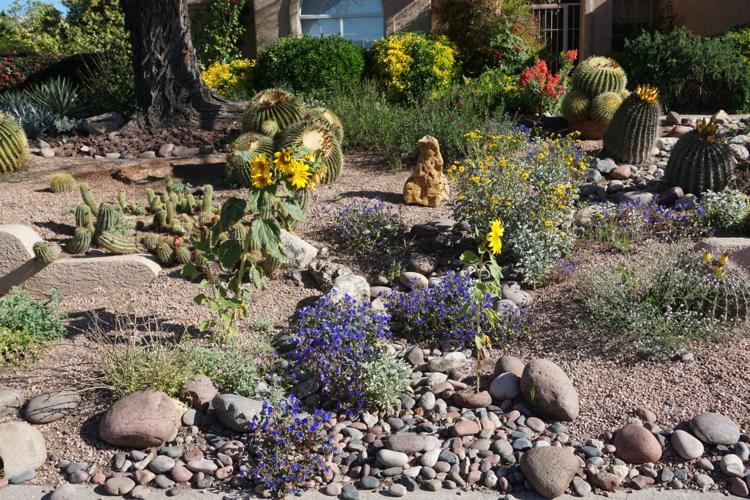
So, what exactly are these plants we call wildflowers? A wildflower is defined as a flowering plant that grows in a natural, uncultivated state. This includes trees, shrubs and cactus. Field guides, such as “100 Desert Wildflowers of the Southwest,” list wildflowers common to SaddleBrooke, including poppies, lupine, penstemon, desert marigold, desert bluebells, fairy duster, brittlebush and globemallow, as well as mesquite, paloverde (our state tree), saguaro (our state flower), ocotillo, cholla, prickly pear, beavertail, hedgehog, barrel cactus and other flowering plants native to the Sonoran Desert. Wildflowers are quite the opposite of invasive non-native plants and weeds. They are protected in the state of Arizona and one of the state’s prime attractions. The unwarranted fear that if you’re lucky enough to have some in your yard, you need to eliminate them before they spread like cancer into your neighbor’s is not only difficult to fathom—it makes no sense. Many wildflowers actually are difficult to propagate, let alone spread.
In our yard, when they die, we collect the seeds to ensure their return, and I have never seen any sign of them in any of our neighbors’ yards. At the same time, plants in general are programmed to disperse, and you no doubt see plenty of non-wildflower volunteers in your own yard, including salvia, hollyhocks, snapdragons, nasturtiums, vegetables, prickly pear, cholla, oleander, mesquite, willow, hopseed bush and bird of paradise.
Many of the plants commonly cultivated in our yards are non-native exotics like bougainvillea (from Brazil), aloe and oleander (from Africa) and lantana (from the West Indies). Incidentally, both oleander and lantana are quite poisonous, especially to children.
SaddleBrooke does have rules about what you can and cannot plant, and Appendix A of the ALC’s (Architectural and Landscaping Committee) Requirements lists 37 prohibited trees and plants. These plants are prohibited for one or more of ten reasons, such as being invasive, creating heavy litter, allergenic, pest prone, size or excessive water use. Wildflowers are not found on this list. Nor are there any CC&Rs or other rules against landscaping with wildflowers. To the contrary, SaddleBrooke’s landscaping goal is to “complement and reinforce the Sonoran Desert environment”, and the ALC Guidelines strongly recommend the use of native and drought tolerant plant species.
Renowned horticulturalists like Mary Irish, the U.S. Department of Agriculture, local nurseries, landscapers and gardening publications, such as Sunset Magazine’s Gardening in the Southwest, all recommend that residential Arizona landscaping incorporate wildflowers, praising their beauty, drought tolerance and pest and disease-free characteristics.
Wildflowers are native to and complement the Sonoran Desert environment, our community’s landscaping goal. They meet our ALC’s strong recommendations for xeriscaping with native and drought-tolerant plants. They aren’t prone to disease and pests. They are not on any Federal, Arizona or SaddleBrooke list of prohibited, noxious or invasive plants, and in fact have even appeared as a cover photo for the SaddleBrooke Source Book. Instead of killing them, we should be promoting them. Perhaps instead of cultivating questionable non-natives like oleander and lantana, we should be planting desert bluebell, California poppy, globemallow and penstemon. At the very least, wildflowers should be advocated as part of our community landscaping.
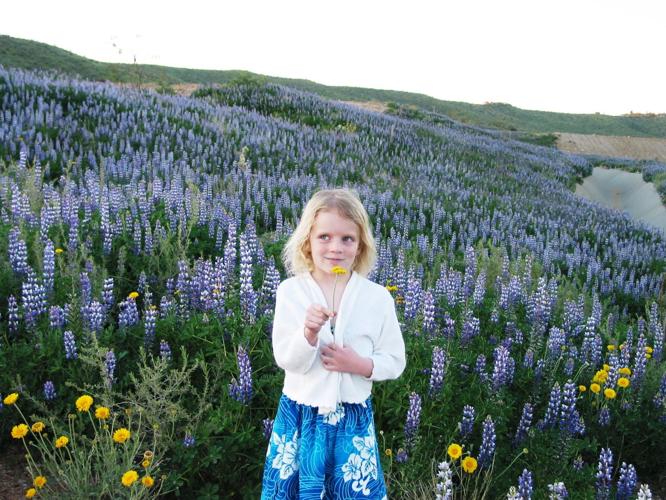
Years ago, SaddleBrooke was awash with springtime wildflowers. One of the photographs accompanying this article shows my granddaughter standing on a slope in the Preserve, surrounded by lush lupine. That spot, near Ocotillo Canyon Drive and Stony Ridge, still exists, but the wildflowers have long since disappeared thanks to the widespread use of pre-emergent weed killers throughout our community. Wouldn’t it be lovely to find flowers like that in SaddleBrooke once again?
 101 homes to be built on NW Tucson corner


