


The Southwest Folklife Alliance, in partnership with Regeneración, has opened the newly renovated Louis Market — formerly a local Chinese grocery store — as a Center for Cultural Organizing in South Tucson neighborhoods.
The center, at 4001 S. 12th Ave., recently held a grand opening celebration, highlighting the confluence of Mexican, Chinese and Indigenous communities living in the region.
“We’ve been building trust and working together for about 10 years to support community-led work on the south side, figuring out how to align institutional resources with grassroots leadership,” said Nelda Ruiz, co-director of Regeneración, a community-led effort, and project manager and educator with Southwest Folklife Alliance.
The organizations have been working to develop a community land trust on the south side that would give residents more agency and access to development in the area.
The new Louis Market Center for Cultural Organizing will be a step in that direction, Ruiz said. It is one of many ongoing grassroots initiatives on the south side of Tucson rooted in advocacy for food justice, shade equity, green space development and cultural preservation.
“Our work has always been responsive to the needs of our communities,” she said.
A new community asset
The Southwest Folklife Alliance, a cultural organizing and traditional arts nonprofit, purchased Louis Market in 2023 as a way to build community wealth and long-term neighborhood stability, Ruiz said. The center will offer residents along the South 12th Avenue corridor a multi-use space for heritage-based entrepreneurship opportunities and events.
Through the La Doce Community Land Trust, the organization will transfer ownership of the center to the community in the next three to five years.
La Dolce will focus on urban agriculture because of the need for green shade equity on the south side, Ruiz said. Part of the future renovations will include creating a garden space in the center and developing green infrastructure.
Those renovations are based on what people in the surrounding community say they want in the cultural center.
The building’s largest space, which used to be the Chinese market, will be an event space and pop-up market for skill-sharing workshops, like Armando Barrios, a summer leadership institute hosted by Regeneración on centering culture in community organizing and policy.

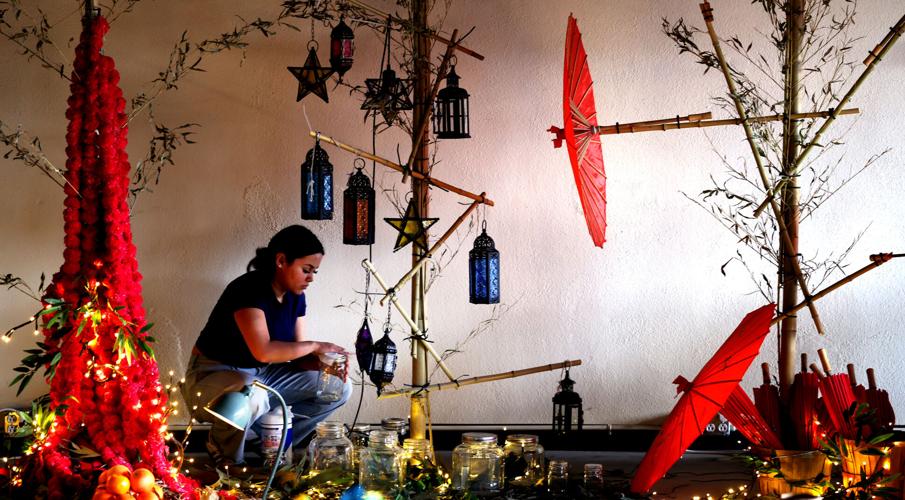
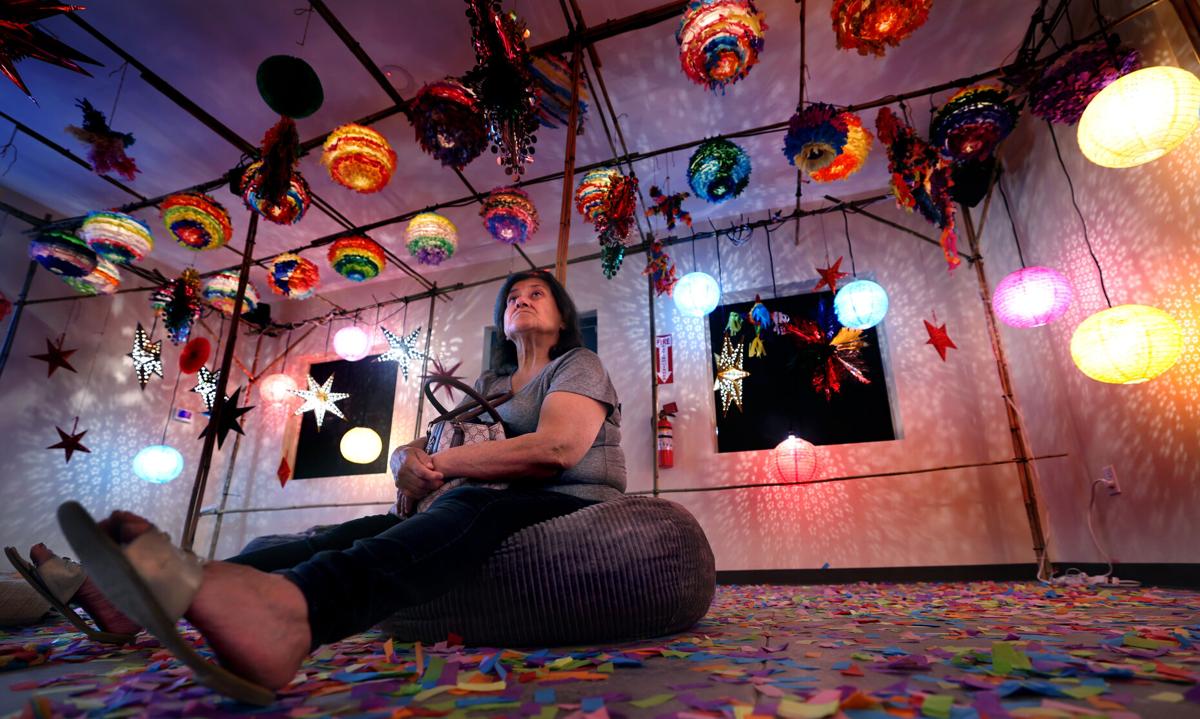
Michelle Lizarraga cleans items in the main display of an art installation, Rasgos Asiáticos, at the Louis Market Center For Cultural Organizing. The show is installed by Virginia Grise collaborating with Tanya Orellana, Daniel Gower, David Arevalo, Joan Osato and Nelda Ruiz.
The office space will be equipped with computers and printers, and a conference room will be available for community members to use.
Future phases of the center’s development will also include a commercial kitchen to support cooking demos, Tucson Meet Yourself vendors and local workers in the informal food economy. And organizers plan to add a ceramic studio and workspace.
Regeneración and the Folklife Alliance are still raising funds for the remaining renovations.
Generations of community stewardship
The idea for building the center and developing a land trust stems from the longstanding work Regeneración has done in the southside community.
The group started as a youth-led organization in 2010 with a focus on food justice and sustainability, and has grown with its members, Ruiz said.
“Back when we started, it was access to affordable, healthy organic food,” she said. “So a lot of our work revolved around making sustainability accessible.”
Much of the group’s work is rooted in traditional ecological knowledge and Indigenous land management systems, she said.

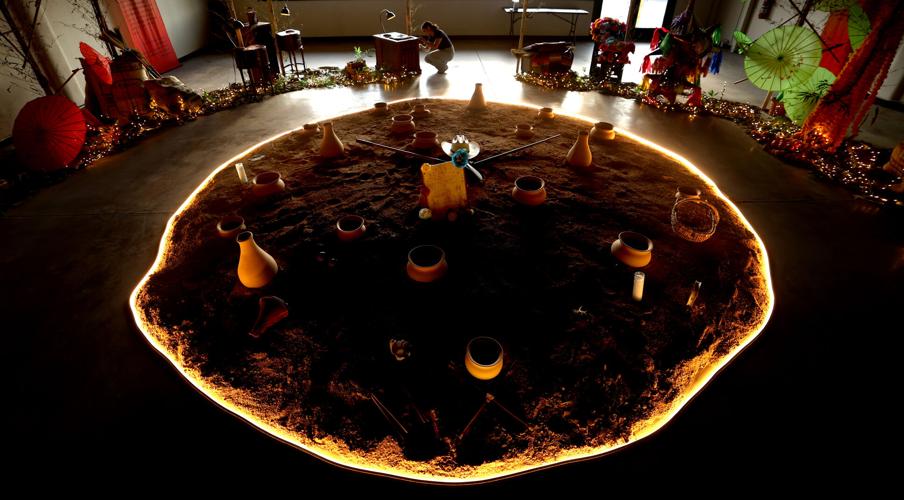
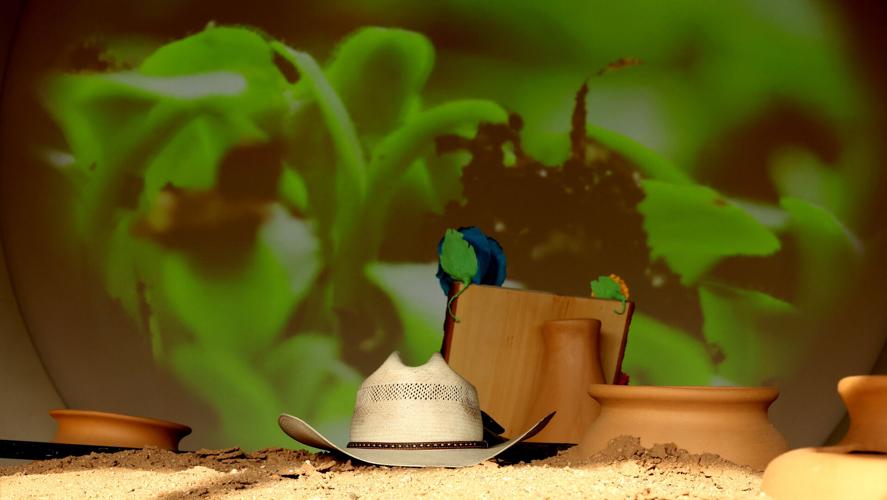
A circle representing the earth in the art installation show Rasgos Asiáticos at the Louis Market Center For Cultural Organizing. The circle holds items representing the cultures of the area.
Members have documented traditions in kitchens along South 12th Avenue and identified challenges in the informal food economy. And they have mapped existing green spaces, finding that the lack of tree canopy cover on the south side is one of the largest in all communities in Tucson.
“We have no shade. We have no tree canopy. As it is, we barely have sidewalks, but people in their homes are still making beauty,” Ruiz said.
Regeneración has also seen how increasing property values have made the area unaffordable for some residents who have lived in southside neighborhoods for generations, she said. So the group began establishing the community land trust to act as a buffer against gentrification.
“We’ve been hearing since 2010 about the fear of people being displaced from their homes, of rising property taxes,” she said. “It’s just people weren’t calling it gentrification back then, but people have been talking about gentrification for a long time.”
Regeneración found that residents hoped that collectively owning land and being able to be part of deciding what infrastructure and development comes in would be transformative for the community.
Now that dream is coming to life through the renovation and future ownership of the Louis Market.
Illuminating shared history and present action
In addition to creating a collectively-owned space, the Louis Market Center for Cultural Organizing is celebrating communities that call the region home.

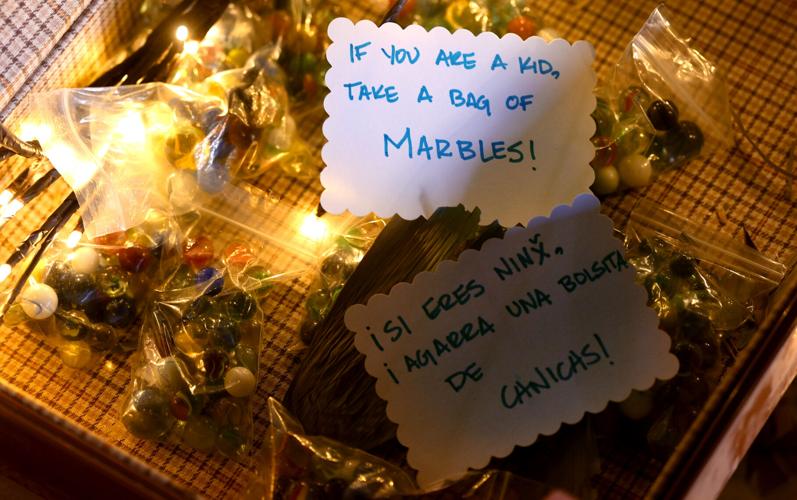
An offer of free marbles for kids in the art show Rasgos Asiáticos at the Louis Market Center For Cultural Organizing.
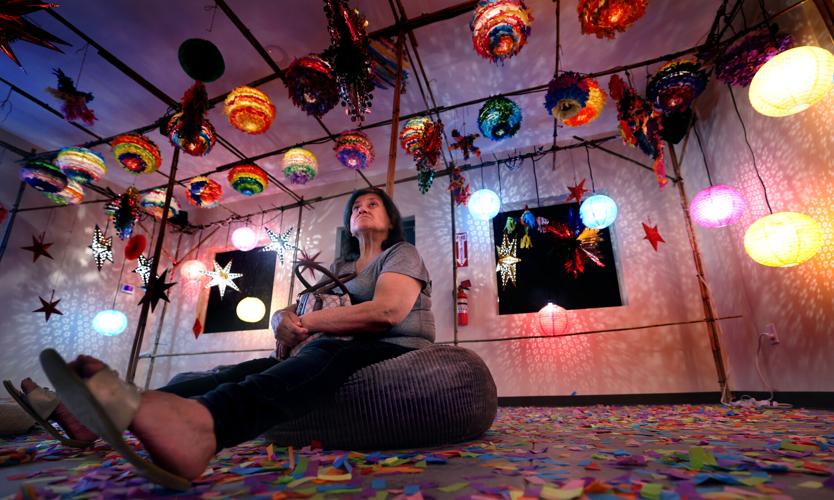
The grand opening featured an art installation from the project Rasgos Asiáticos, created by multidisciplinary artists Virginia Grise and Tanya Orellana.
The installation featured processions of local community groups and organizations that have worked with Regeneración, including the descendants of the Chinese grocery store and FUGA Tucson bike group.
Each group left an offering representing what they want the future of the Louis Market to be.
The project recognizes connections between Chinese and Mexican history in Mexico and in the borderlands, and the ways migration has impacted those communities and complicated identities.

A slide show plays behind some of the items on the display representing the earth in the show Rasgos Asiáticos at the Louis Market Center For Cultural Organizing.
“The community on the south side of Tucson, and south Tucson, have been incredibly welcoming to me and my work,” said Grise, who helped found A TODO DAR Productions, an organization that creates convivial projects focused on how communities generate wealth and how the arts play a role.
Iterations of the project are designed for each space where it is featured, and the Louis Market installation embodies the longstanding community of support in Tucson’s south side.
“It’s really important that they’ve chosen to call it the Center for Cultural Organizing,” Grise said. “Culture and organizing are not separate; they’re together.”
The installation and the cultural center honor traditional foodways and collective grassroots activities, like neighborhood clean-ups or demands for safer streets.
“The center becomes the place where people can gather; but the work of organizing in their communities, the work of preserving culture through language and through art has been an ongoing work of folks on the south side of Tucson,” Grise said.
Recognizing community solidarity
Community initiatives, like the center, also highlight how connections between Mexican and Chinese communities in the borderlands region often go unrecognized, said Feng-Feng Yeh, founder of the Chinese Chorizo Project.
“These communities relied on one another,” she said
The Louis Market was once a Chinese grocery store, although located in a predominantly Mexican neighborhood in South Tucson.
Yeh’s work explores the common threads between Chinese and Mexican cultures through art and cuisine.
The Chinese Chorizo Project launched in 2022, and Yeh has been reviving the food, which originated in Chinese grocery stores operating in Tucson from 1881 to 1991.
“It’s a food that Chinese grocers made to cater to the neighborhoods that they lived within, and quite often, they were predominantly Mexican,” she said.
It’s a legacy of the cultural belonging these spaces created for immigrant communities in Tucson and the borderlands.
“We depend on our relationships to survive and to be resilient and to make cities,” Yeh said. “We were once very reliant on these intimate daily interactions and how modern life and capitalism have taken that from us. So, how we can take that back is to rebuild these relationships again.”
Regeneración is stewarding the transformation of the Louis Market by sharing the history of solidarity among descendants and neighbors connected to the space, she said.
“I really look forward to seeing how that space grows and evolves and continues to serve the neighborhood and the Tucson community,” she said.
The Louis Market is currently open from 5 to 7 p.m. Mondays through Saturdays until May 28, and the Rasgos Asiáticos installation will be up through May 28.

