

Had a pedicure? Pan-fried yourself in a tanning bed? Been zapped by lasers to remove hair from your nether lands?
Then you, in all likelihood, have put yourself in harm's way.
Before going under the blade for breast implants or a face-lift, patients generally do research to make sure their surgeon is properly qualified and knows what to do if problems arise.
But people are more cavalier about treatments that seem less invasive. So they put themselves in the hands of strangers with iffy training who lance toes with unsterile tools, wield dangerously powerful rays of light and sandblast tender skin.
Fortunately, the vanity gods are merciful. Most of the time, nothing bad happens.
But as the number of nail salons, indoor tanning users and cosmetic laser spas proliferates, casualties are mounting. Those beauty services have led to bacterial and fungal infections, allergic reactions, burns, scars, damaged eyesight and cancer.
People are also reading…
The American Society for Dermatologic Surgery reports that in a survey, nearly half of its 2,400 members said they were seeing an increase in injuries caused by nonphysicians doing high-tech beauty treatments — some who have had no more than one day of training.
For the consumer, the trick is in knowing how to identify the trustworthy from the not. And it can be quite a trick.
Even when stringent rules are in place, few states keep up with inspections and enforcement. And many people who have been hurt are reluctant to take formal action.
What makes it worse is that credentials can be misleading. Some technicians without medical degrees may be very well-trained and experienced, while doctors in non-skin-related specialties who have taken up lasers for profit are winging it.
"Everywhere you look, it's laser this, laser that," says Dr. Eric Bernstein, a laser surgeon. "More and more, they're getting into the hands of inexperienced people."
So the onus remains on the consumer — to check credentials, get recommendations from others who have used the service and weigh the potential benefits from any cosmetic treatment against the risks.
Otherwise, things could get ugly.
Nails
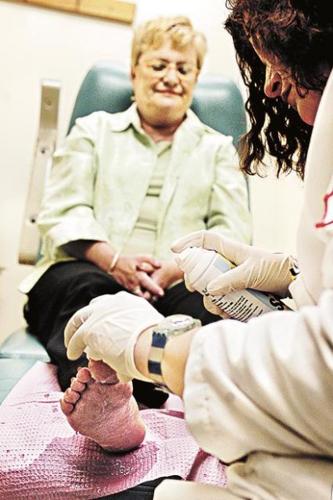
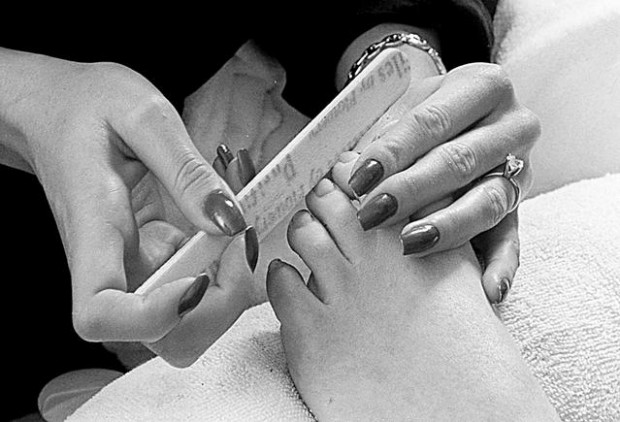
No matter how carefully done, a pedicure exposes you to risk because it messes with the skin and cuticle around nails, which serve as a kind of protective seal.
"Cuticles are there for a reason. They're not meant to be touched," says Tracey Vlahovic, a podiatrist on the faculty of Temple University's School of Podiatric Medicine. "By pushing back the cuticle, you compromise the integrity of the tissue."
You may believe that high-priced nail spas with cushy chairs, sultry orchids and complimentary chardonnay are much more sanitary than a neighborhood nail salon where a mani-pedi costs $30 and the staff watches soap operas.
Not necessarily.
Some low-budget salons are extremely conscientious. And conversely, $60 worth of foot pampering doesn't guarantee you'll be fungus-free.
At one elegant day spa in New Jersey, an overzealous nail technician nearly cost Christine Finken her toe.
Finken, a conference organizer, began getting pedicures three years ago after she was diagnosed with breast cancer. "When I was getting chemotherapy and had no hair, I would go to treat myself," says Finken, 54.
But in April, a technician cut her while trimming the cuticles on the big toe of her right foot. That night, her toe ached. A week later it was swollen and infected.
Eventually, she ended up seeing Vlahovic, who cut away alarming chunks of her toe and nail, put her on antibiotics and gave her a lecture, which at this point Finken hardly needed.
"I'm very anti-pedicure," says Vlahovic. Of the 30 or so new patients she treats at her weekly clinic, a half-dozen have fungus. Several times a month, she says, a woman will come in with a yeast or bacterial infection. All because of pedicures.
Laser
The concept couldn't be more seductive.
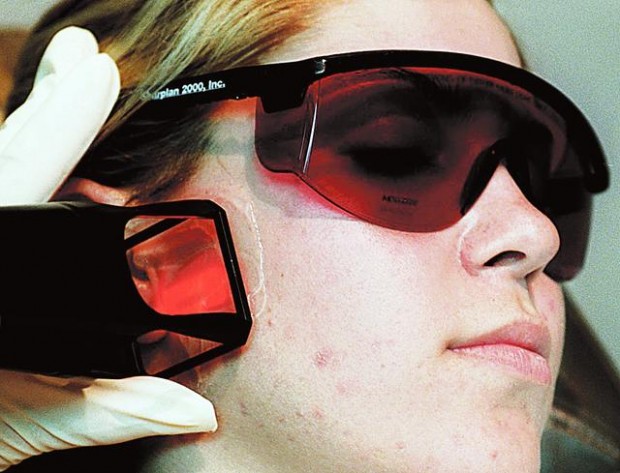
Instead of turning to medieval depilatory torture devices such as sharp blades, noxious ointments, or hot wax and muslin, you go for a little light treatment. Someone points a wand at your unwanted hair, and poof! Gone. Painlessly. Almost forever.
Or so you would like to believe.
As more people seek cosmetic laser treatments to remove hair, spider veins, tattoos and wrinkles, more are being harmed.
"We're seeing a tremendous increase," says Dr. Roy Geronemus, past president of the American Society of Dermatologic Surgery. "It used to be we'd see a few a month. Now we're seeing a few a week. It's coming from homes, spas, salons, people working out of makeshift offices all pretending to be medically qualified."
Plastic surgeons and dermatologists command premium prices for their expertise in cosmetic lasering, generally charging several hundred dollars for each treatment. And because multiple treatments usually are required, the bills can be stratospheric.
Terry Bowling was thinking more about budget than safety three years ago when she went to the Steliotes Dental Spa near Pittsburgh, which was offering a special discount on laser hair removal.
She was greeted by a woman in a long white coat. "I thought she was the doctor." Bowling asked, she says, if her deep tan was a problem and was told no.
Wrong. The light intensity needs to be adjusted for different tones of skin. As soon as the treatment began, Bowling's skin began to blister. The pain was hideous.
Doctors counted hundreds of burns on Bowling's body. Although the marks have faded, her legs have a permanent checkerboard pattern that becomes more visible when she goes out in the sun.
Tanning
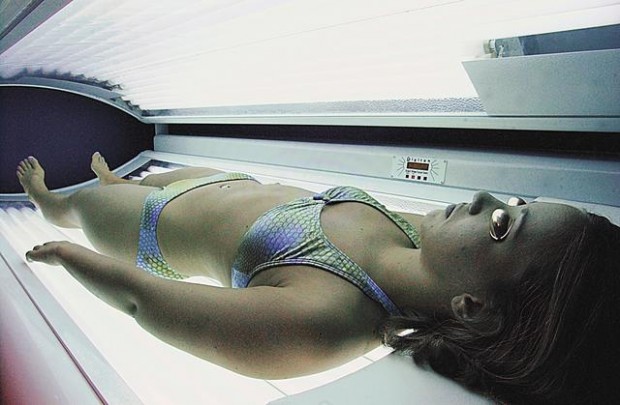
The dangers of indoor tanning continue to be bitterly debated by the medical community and the tanning-salon industry. "The evidence that ultraviolet radiation causes skin cancer is overwhelming and convincing," began a recent paper by the Skin Cancer Foundation. "Despite this information, the use of indoor tanning devices which emit ultraviolet light … has never been more popular."
To the $2 billion-plus indoor tanning industry and the 30 million people who put themselves into UV cocoons every year, the benefits of getting Vitamin D, an endorphin rush and a prettier color on cheeks at both ends outweigh any fear of cancer down the road.
"The message is not getting across to minors because minors and people in their 20s feel that they're indestructible," says Leonard Dzubow, former head of Dermatological and Mohs Surgery at the Hospital of the University of Pennsylvania and a member of the Skin Cancer Foundation. "When you're that young, it's hard to project what the consequences will be."
Though dermatologists are nearly unanimous in their belief that any kind of tanning increases the risk of skin cancer, they do not agree on how to address the problem.
"Millions of people are tanning," says Steve Feldman, a professor of dermatology, pathology and public health sciences at Wake Forest School of Medicine. "The dermatologists are seeing the ones who get skin cancer. But a lot of people do it and don't have anything major happen to them."
Feldman says that in the absence of hard evidence, doctors may be overreacting. In tanning, as in nonphysician laser treatment, the majority of people have no problem, he says.
"I'm not saying tanning isn't bad for you. It is. Do I think people should go to tanning beds? No. Do I think government should ban them? No."