

It is tiny, and very, very hot, but it's not the burn that gives the chiltepín — which grows primarily in the Arizona-Sonora borderlands — its rep as the "mother of all chiles." It's because the small red berrylike seed pod is thought to be the oldest known species of the chile genus.
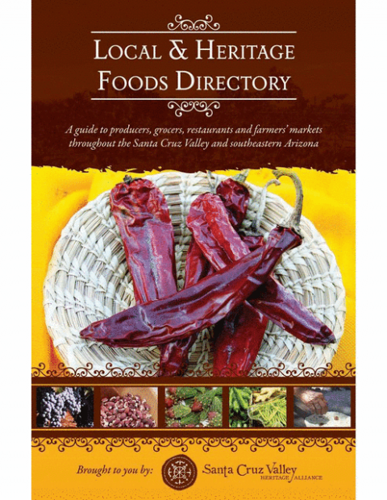
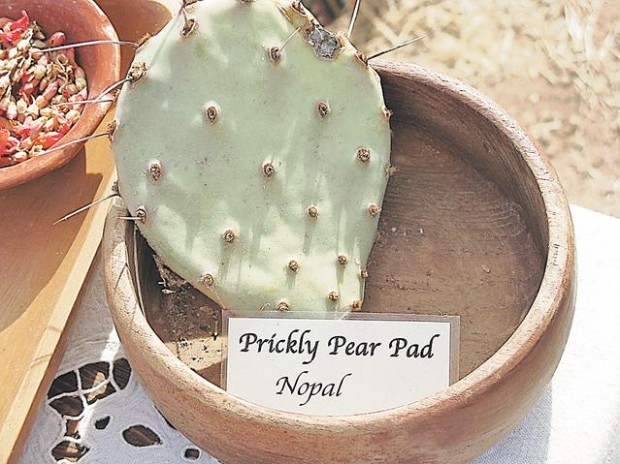
Information on chiltepín and some other local heritage foods, such as prickly pear and tepary beans, is included in a directory published by the Santa Cruz Valley Heritage Alliance and released two weeks ago.
The guide, the first of its kind for Southern Arizona, is aiming to connect all levels of the local food-supply chain, from farmers to restaurants, said Vanessa Bechtol, executive director of the Santa Cruz Heritage Alliance.
"This directory makes buying easier," said Bechtol. "Restaurants can contact the local producer."
People are also reading…
The publication, titled Local & Heritage Food Directory: A guide to producers, grocers, restaurants and farmers's market throughout the Santa Cruz Valley and southeastern Arizona, includes locations and schedules for regional farmers markets and a seasonal availability chart.
In total the organization featured 90 businesses, most of them private, but the guide also includes nonprofit organizations and government agencies, said Bechtol, who expects to build on this initial listing.
For stores like Food Conspiracy Co-op, specializing in organic and local food, the guide will help increase its providers list, said Torey Ligon, outreach coordinator for the store.
"What I hope to do with this directory is to pass it on so that all our different department managers have a copy . . . and any farmers or producers we are not currently working with, I'm sure they will certainly get in touch with them," she said.
The store has copies of the directory available for its customers, said Ligon. "Since it's right in line with our values and it highlights many of the same farmers and producers that we work with," said Ligon.
Janos Wilder, chef of Janos Restaurant and advocate for locally grown food, said the directory is a very useful source book.
Even though he already uses locally grown food at his restaurant, he found some growers and ranchers he wasn't familiar with.
"I haven't reached any of them, but I'm going to," he said.
Wilder said the new guide is good not only for restaurants and stores but also for producers and farmers, who now know what other places serve local food.
"They could expand their businesses, " he said.
Gary Paul Nabhan, research social scientist with the Southwest Center at the University of Arizona, considers the heritage-food ways, farming and ranching practices of the Santa Cruz Valley eclectic.
"Building on many cultural influences and many improvisations pioneered by innovators here in our midst," as cited in one of the articles included in the guide.
Bechtol said that if the Santa Cruz Valley Heritage Alliance identifies more businesses that are eligible to be included, it will release a second edition in the next year or two.
She said the organization can add new businesses to the online directory edition at any time.
Did you know?
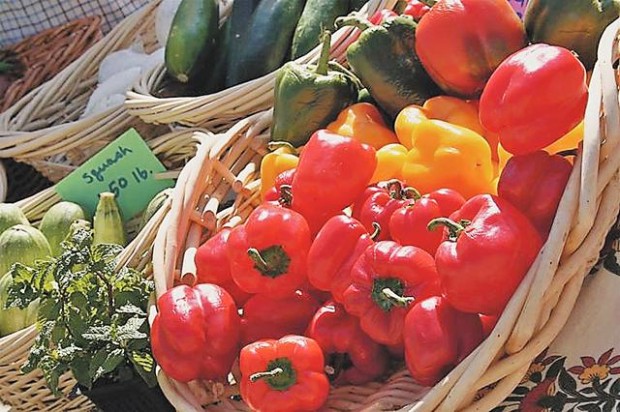
The Santa Cruz Valley is perhaps the oldest continually cultivated region in the U.S., with an agricultural heritage extending back more than 4,000 years. Food from the desert include seed pods of mesquite trees, wild greens, and cactus fruits, buds and pads. Chiltepín grows wild in the canyons near Tumacácori and several traditional Indian foods are cultivated here, including tepary beans, different types of squash and melon and a drought-resistant variety of corn. The region produces a unique dark honey made from the nectars of mesquite blossoms. Red and white wines are produced by wineries near Sonoita, Elgin and Nogales.
Source: Santa Cruz Valley Heritage Alliance