

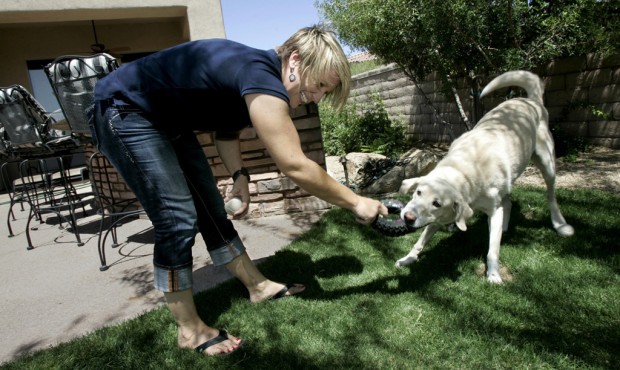

Going away on vacation and letting a pet sitter care for furry and feathered loved ones can leave animal lovers with knots in their stomachs.
It takes a trusted pet sitter to alleviate those worries.
Good pet sitters do more than feed and water animals while their owners are away. They also spend time with the pets, groom them, give them exercise and take them to the vet if they get sick.
But just because someone calls herself or himself a pet sitter doesn't mean they are qualified to care for critters.
"It's really important for people to do their research," said Seneca Nunn, owner of Nunn Better Professional Pet Care in Tucson. Over this long Memorial Day weekend, she has 27 sitters checking in on animals for as many as 100 clients each day.
Before choosing a sitter, Nunn recommends pet owners call multiple agencies to find someone who fits their criteria.
People are also reading…
"A lot of times clients are embarrassed to say, 'I cook for my dog or warm up their food or add hot water.' It's important to find someone who will do that. Some people are, 'Hey, show up any time.' That's fine too, but I think it's important for the client and the pet to be really comfortable with the sitter," said Nunn, who even has her sitters do what she calls "dry runs" with new clients to get the pets used to a stranger visiting and feeding them. She tells pet owners "to go to the grocery store or go to dinner and we'll come in and feed them."
Both Nunn and Inge Koopman-Leyva of the Humane Society of Southern Arizona agree it's important for a pet-sitting agency to be bonded and insured.
Koopman-Leyva also suggests sitters have a background in pet first aid. The Humane Society periodically offers a four-hour course in pet first aid.
"Especially if the animal has any kind of medical issues, the sitter should have some kind of additional training in animal medical care."
Before leaving their pet in the care of a sitter, an owner should talk to their veterinarian about treating the animal if it is brought in by a sitter, Koopman-Leyva said.
When interviewing prospective sitters, she recommends asking them for references and calling the other clients, as well as asking for a sitter's telephone number, address and a copy of their identification.
"You don't want it to be somebody who will steal your dog or try to breed your dog if it's not spayed or neutered," she said.
Bottom line, she said: "People need to go with their gut instinct. If it doesn't feel right, don't do it."
Hiring A Dog Sitter
The Humane Society of the United States and The Bark, a magazine for dog enthusiasts (www.thebark.com), has some advice for selecting a pet sitter:
1 Ask veterinarians, dog trainers, friends and people at the dog park for recommendations. The National Association of Professional Pet Sitters (www.petsitters.org) provides a nationwide referral network searchable by zip code. Pet Sitters International is another resource (www.petsit.com).
2 Interview several sitters by phone and in person and find out:
• What training the sitter has completed.
• What kinds of notes she or he keeps on their animal clients, such as likes, dislikes, fears, habits, medical conditions, medications and routines.
• What will happen if the pet sitter experiences car trouble or becomes ill.
• What related services, such as in-home grooming, dog walking, dog training and play time, will be provided.
• What specific times the sitter agrees to spend with the pet.
• How the sitter makes sure the owners have returned home.
• Whether the pet sitter provides a written service contract spelling out services and fees.
3 Ask for each sitter's references - and call them.
4 Request written proof of bonding or liability insurance coverage.
5 Watch how the prospective sitter interacts with animals during dog walks or play time and how comfortable the pets seem with the sitter.
6 Be clear about expectations, including: how many hours a day a pet sitter is expected to be in the home; length of dog walks; where animals sleep; grooming regime; feeding schedule; and house responsibilities such as collecting mail and taking out the trash.
7 Ask if your sitter can provide status reports via email, text or online.
SOURCES: www.humanesociety.org and www.thebark.com
Pet owner responsibilities
A pet sitter isn't the only one with responsibilities. Once a sitter is chosen, start by hiring her or him during a short trip, such as a weekend excursion. That way any problems can be worked out before leaving the pet in their care during longer periods.
Before planning a trip, the pet owner should:
• Book early. Good pet sitters are in demand during holiday and vacation seasons.
• Ensure the pet is well socialized and allows strangers to handle him or her.
• Affix current identification tags to the pet's collar.
• Maintain current vaccinations for the pet.
• Leave clear, written instructions detailing specific pet-care responsibilities and emergency contact information, including contact information for their veterinarian and the location of the nearest 24-hour emergency vet. Leave the pet sitter's name with the vet, as well.
• Leave pet food and supplies in one place.
• Buy extra pet supplies in case you're away longer than planned.
• Leave a key with a trustworthy neighbor as a backup, and give the neighbor and the pet sitter each other's phone numbers.
• Show the pet sitter the home's important safety features and emergency procedures such as the location of the circuit breaker, how the security system works and how to shut off the water and gas valves.
• Carry the pet sitter's telephone number with you on vacation so you can check in during the trip.
SOURCES: www.humanesociety.org and www.thebark.com
Choosing a boarding kennel
If an in-home pet sitter is not an option, facilities specializing in overnight boarding are available. When looking for a kennel:
• Ask a friend, neighbor, veterinarian, animal shelter or dog trainer for a recommendation.
• Ask whether the kennel is accredited by the Pet Care Services Association.
• Check with the Better Business Bureau to see if any complaints have been lodged.
• After making preliminary inquiries, select several boarding kennels for an on-site tour.
During a visit, ask to see all of the places your pet may be taken while boarded in the facility and consider the following questions:
• Does the facility look and smell clean?
• Is there sufficient ventilation and light?
• Is a comfortable temperature maintained?
• Does the staff seem knowledgeable and caring?
• Are pets required to be current on their vaccinations, including the vaccine for canine kennel cough, if boarding a dog?
• Does each dog have his own adequately sized indoor-outdoor run or an indoor run and a schedule for outdoor exercise?
• Are outdoor runs and exercise areas protected from wind and rain?
• Are resting boards and bedding provided to allow dogs to sleep off the concrete floor?
• Are cats housed away from dogs?
• Is there enough space for cats to move around comfortably?
• Is there enough space between the litter box and food bowls?
• How often are pets fed?
• Can the owner bring a pet's special food?
• What veterinary services are available?
• Are other services available such as grooming, training and bathing?
• How are rates calculated?
SOURCE: The Humane Society of the United States website
Contact reporter Kimberly Matas at kmatas@azstarnet.com or at 573-4191.