

The business community needs to create an ongoing effort to promote the importance of international trade and engagement, said the president and chairman of the Export-Import Bank, especially if the country is to compete against trade powerhouses such as China.
“There’s a big threat out there, and if we don’t have the tools to enable our entrepreneurs and businesses to go out and sell overseas, we’re going to put ourselves at a disadvantage,” said Fred Hochberg during a visit to Tucson on Wednesday.
One of those tools is the Export-Import Bank itself, which allows U.S. exporters to compete in foreign markets through loans, credit guarantees and insurance.
The 81-year-old bank, whose charter expires June 30, is facing strong opposition from some Republicans in Congress and conservative advocacy groups, who have called the agency “corporate welfare” and accuse it of putting taxpayer money at risk to subsidize large companies.
People are also reading…
Proponents say that while large companies such as Boeing, Caterpillar and General Electric do benefit, eliminating the bank would put American companies at a loss against countries with similar institutions.
For local companies that depend on the bank, the argument is much simpler.
“If we did not have access to Ex-Im financing, this company, and the 60 employees that work here in Tucson, probably wouldn’t be in business,” said Dennis McCarthy, chief financial officer at Competitive Engineering Inc.
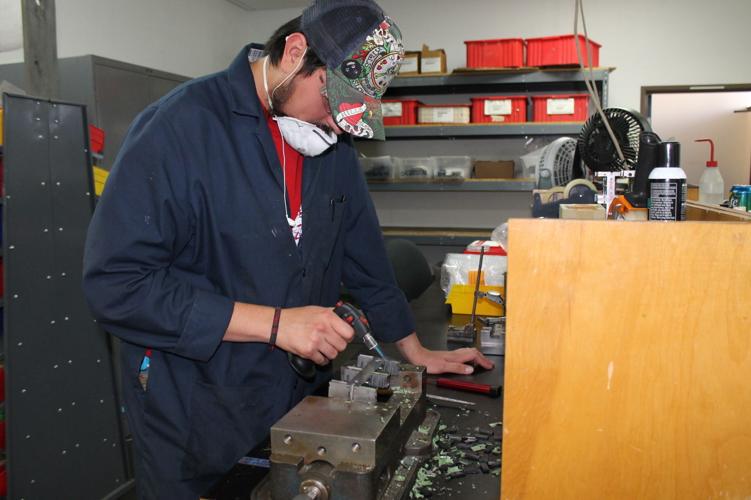
The company, which exports precision machined parts to the Philippines and Mexico, has about $14 million in sales. Depending on the year, 60 percent to 80 percent of those sales are international, McCarthy said.
While opponents of the bank say private lenders would take its place once it disappears, that doesn’t make McCarthy sleep any easier.
“It’s one thing to say, in some abstract way, that the free market would provide it. But give me the name and address of the bank that would provide that financing; then I would be more comfortable,” he said.
Even for companies that don’t depend on the bank to such an extent, the agency’s services allow them to compete internationally.
“It lets us give net terms to foreign buyers so we can be more competitive in the marketplace. Otherwise we would be forced to ask for prepayment or letters of credit and they’re not willing to do that,” said Amy Hammarstrom, vice president of General Rubber.
The Tucson-based company has sales between $9 million and $15 million and employs 80 people throughout its operation.
Up to 70 percent of its sales are international, Hammarstrom said, and having the backing of the bank means the company can use payment on credit as a sales tool when it talks with foreign companies.
“We can negotiate with them freely on all our other terms and ship with net payment terms,” she said. “That way it doesn’t inhibit them from wanting to buy from us and just go on to the next guy, who’s either willing to take the risk or has some other kind of insurance.”
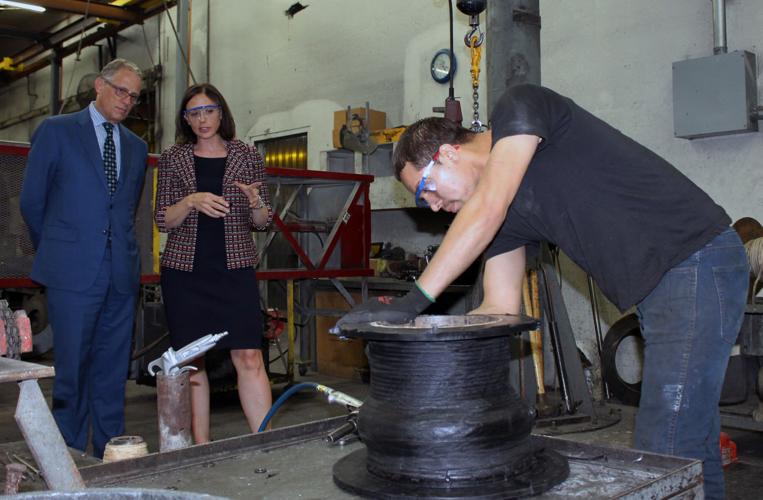
During a tour of General Rubber on Tuesday, chairman Hochberg emphasized that while the United States is late to exporting, the sector’s importance to the economy is key, and he is optimistic about the bank’s future.
“Exports have never been higher as a percentage or our economy and even in absolute dollars they’ve never been higher,” he said.
Asked Wednesday about what would happen if the Export-Import Bank goes away, Hochberg had a sharp response.
“If we don’t reauthorize the bank, if we don’t make sure that we backstop our exports, we’re going to lose sales and we’re going to lose jobs,” he said. “Not just to China, we’re going to lose them to Korea, to Japan, to Germany.”
