

Skip to main contentSkip to main content
Register for more free articles.
Log in Sign up
Back to homepage
Subscriber Login
Keep reading with a digital access subscription.
Subscribe now
You have permission to edit this collection.
Edit
Arizona Daily Star
98°
  • Sign in
  • Subscribe Now
  • Manage account
  • Logout
    • Manage account
    • e-Newspaper
    • Logout
  • News
    • Sign up for newsletters
    • Local
    • Arizona
    • Business
    • Crime
    • Nation & World
    • Markets & Stocks
    • SaddleBrooke
    • Politics
    • Archives
    • News Tip
  • Arizona Daily Star
    • E-edition
    • E-edition-Tutorial
    • Archives
    • Special Sections
    • Merchandise
    • Circulars
    • Readers' Choice Awards
    • Buyer's Edge
  • Obituaries
    • Share Your Story
    • Recent Obituaries
    • Find an Obituary
  • Opinion
    • Submit a Letter
    • Submit guest opinion
    • Letters to the Editor
    • Opinion & Editorials
    • National Columnists
  • Sports
    • Arizona Wildcats
    • Greg Hansen
    • High Schools
    • Roadrunners
  • Lifestyles
    • Events Calendar
    • Arts & Theatre
    • Food & Cooking
    • Movies & TV
    • Movie Listings
    • Music
    • Comics
    • Games
    • Columns
    • Play
    • Home & Gardening
    • Health
    • Get Healthy
    • Parenting
    • Fashion
    • People
    • Pets
    • Travel
    • Faith
    • Retro Tucson
    • History
    • Travel
    • Outdoors & Rec
    • Community Pages
  • Brand Ave. Studios
  • Join the community
    • News tip
    • Share video
  • Buy & Sell
    • Place an Ad
    • Shop Local
    • Jobs
    • Homes
    • Freedom RV AZ
    • Marketplace
    • I Love A Deal
  • Shopping
  • Customer Service
    • Manage My Account
    • Newsletter Sign-Up
    • Subscribe
    • Contact us
  • Mobile Apps
  • Weather: Live Radar
  • Facebook
  • Twitter
  • Bluesky
  • YouTube
  • Pinterest
  • Instagram
© 2026 Lee Enterprises
Terms of Service | Privacy Policy
Arizona Daily Star
News+
Read Today's E-edition
Arizona Daily Star
News+
  • Log In
  • $1 for 3 months
    Subscribe Now
    • Manage account
    • e-Newspaper
    • Logout
  • E-edition
  • News
  • Obituaries
  • Opinion
  • Wildcats
  • Lifestyles
  • Newsletters
  • Comics & Puzzles
  • Buyer's Edge
  • Jobs
  • Freedom RV AZ
  • 98° Sunny
Share This
  • Facebook
  • Twitter
  • Bluesky
  • WhatsApp
  • SMS
  • Email

Collection: Read more on big cats seen in Southern Arizona

  • Arizona Daily Star
  • Aug 3, 2022
  • Aug 3, 2022 Updated Aug 5, 2022
Photos: Suburban bobcat sightings around Tucson

Photos: Suburban bobcat sightings around Tucson

Over the years, readers of the Arizona Daily Star have sent in photos of bobcats. They've seen bobcat families, bobcats drinking, bobcats napp…

'Kiss jaguars goodbye' in Arizona if border wall cuts off access from Mexico

Two new sections of 30-foot-high border wall will be the end of the line for jaguars in Arizona, environmentalists and a former federal official say.

The planned expansions of the wall — one under construction, a second funded and nearly ready for contracting — will block the jaguar’s access to most of its federally designated prime habitat in Arizona.

And if access from Mexico is cut off, “you can kiss jaguars goodbye” in Arizona, said Steve Spangle. He oversaw federal management of the endangered cats in this country for 16 years, as head of the U.S. Fish and Wildlife Service’s Arizona Ecological Services office, before retiring in 2018.

“Without genetic rescue from Mexico, you are not going to have jaguars in the U.S. They can’t self-sustain here. Once that flow is cut off, I don’t think we’ll ever see jaguars here again,” Spangle said.

Those wall sections would also likely constitute a violation of federal law protecting critical jaguar habitat, Spangle said — if the Department of Homeland Security hadn’t obtained waivers from that law to streamline the wall’s construction.

Five male jaguars have been photographed in Arizona since 1996. That had raised hopes among jaguar advocates that a species previously thought extinct in the United States could be reestablished.

But once those 137 miles of new wall are built, access from Mexico will be blocked to 83% of the jaguar’s critical U.S. habitat in Arizona, according to calculations made by Myles Traphagen, a Tucson biologist, conservationist and ardent wall opponent.

Another 26 miles of wall, which would run through the San Rafael Valley south of Patagonia, have received federal waivers of environmental laws granting clearance for construction, but no money. If that section is ever built, 93% of critical jaguar habitat in Arizona will be blocked, said Traphagen, who is borderlands program coordinator for the Wildlands Network.

From a legal standpoint, the cutoff of access would likely amount to “adverse modification” of critical habitat, prohibited under the Endangered Species Act, Spangle said.

But because of waivers granted under a 2005 federal law allowing exemptions for the wall from such laws, there will be no formal, federal review of whether the wall construction would violate the Endangered Species Act.

“Critical habitat would be rendered completely useless. I don’t see how you can avoid that,” Spangle said. “The whole jaguar critical habitat was established to promote connectivity between Mexico and the U.S. This would ruin the function for which the whole critical habitat was established. If you compromise the very function for which critical habitat was designed, that would rise to the level of adverse modification.”

No construction ready for N.M. habitat – yet

In New Mexico, where two other male jaguars were photographed in 1996 and 2006, the spotted cat is a little better off — for now.

Customs and Border Protection has requested money for building sections of wall in critical habitat in that state, but the funding hasn’t been approved. Federal money has been allocated for wall sections adjoining critical habitat, however.

“That will have an impact on the cats, when it comes to construction impact and lighting,” Traphagen said.

Across the Mexican border, the wall will be a huge blow to the recovery of jaguars in Sonora, said Randy Serraglio, a conservation advocate for the Tucson-based Center for Biological Diversity.

Not only do most biologists believe that the jaguars seen in the U.S. all came up from Mexico, but several jaguars photographed in Arizona and New Mexico have been documented in Mexico. That shows the cats’ survival in the two countries is clearly and inextricably linked, environmentalists have said.

“This is the classic story of extinction. You fragment the places where a species lives and roams, box it into smaller and smaller pieces of land that are no longer viable for its survival, and finally it succumbs to the pressure and winks out,” Serraglio said. “They must be allowed the breathing room to expand northward and find safe territories in the U.S.”

Through various federal lawsuits, the Center for Biological Diversity got the jaguar listed as endangered and forced the wildlife service to designate its critical habitat and approve a recovery plan.

The center also sponsored contests in schools to get various jaguars named, including El Jefe who roamed the Santa Rita Mountains southeast of Tucson for three years.

But the center has been unable through other lawsuits to stop border wall work, although it continues to press its case.

“The jaguar is part of Tucson’s identity now. The border wall is a senseless tragedy in many ways, but losing jaguars really hurts,” Serraglio said. "The thought of trying to explain to our kids and grandkids that El Jefe was one of the last of his kind just breaks my heart."

Border Wall

The new border wall sections are 30 feet tall and spaced too closely at 4 inches apart to let large mammals squeeze past.

Josh Galemore / Arizona Daily Star
Wildlife crossings planned, agencies say

The reason conservationists say jaguars won’t be able to get through the new wall sections is that they will be 30-foot-tall steel bollards, 6 inches in diameter and spaced far too closely at 4 inches apart to let large mammals squeeze past. In many cases, these new wall sections will replace steel vehicle barriers 4 to 6 feet tall that stopped cars and trucks but not wildlife from crossing.

Federal officials, however, say they’re still planning efforts to allow jaguars and other large animals to get past the wall.

CBP and the Fish and Wildlife Service are collaborating “to identify strategies to accommodate larger mammals, such as jaguars, while still meeting U.S. Border Patrol’s operational requirements,” CBP spokesman Matthew Dyman told the Star in an email.

The wildlife service continues to work with CBP and other partners to identify locations and strategies for wildlife passages that could accommodate larger species like the jaguar, wildlife service spokeswoman Beth Ullenberg said. Larger wildlife passages would allow for continued use of habitat on both sides of the border, Ullenberg said.

As for Traphagen’s calculations on critical jaguar habitat, the service hasn’t fully reviewed his work and can’t comment on it, Ullenberg said. The wildlife service also didn’t respond to a question about Spangle’s comments on the wall violating federal critical habitat restrictions.

CBP didn’t respond to questions from the Star about how sections of wall now under construction could be somehow modified or retrofitted to accommodate large mammals. The border protection agency also plans to build numerous smaller, 8.5-inch-by 11-inch wildlife crossings to allow smaller mammals and reptiles to get through the wall.

Designs of crossings haven’t been publicly released. But environmentalists and Spangle are skeptical or downright scornful of their chances of working. Serraglio called the idea of using wildlife crossings to accommodate jaguars “just preposterous, utterly ridiculous.”

“One wonders, are they going to hand out maps south of the border and will the maps be in English or Spanish?” Serraglio said. “The wildlife would have to find the opening. If the opening is well lit and patrolled all the time, a jaguar is not going to walk through there anyway.”

Spangle said that without seeing a design for the crossings or knowing their size or how many would be built, he would be pretty skeptical of their feasibility for allowing jaguars through.

“We don’t know if a jaguar would find a small hole or use it if they did find it. They go where they go.”

Spangle didn’t speak out much on the wall on the job

Spangle’s comments contrast with his past stances on the wall. He didn’t speak out much on it while on the job, telling the Star that when he started his job back in 2002, “we weren’t asked to consult on any of that stuff.”

Under President Trump, before Spangle retired in March 2018, “there was nothing for us officially to comment on because there was no formal” review allowed of the wall’s impacts, he said. “We pretty much were ordered to refer any border wall inquiries to public affairs in Washington. We just stayed away from it.”

The service's inability to do anything about the wall was a source of frustration for him and his staff, he said. He called the Real ID Act's allowance for waivers "a time saver, a project saver in some cases. The Real ID Act was designed to cut off the whole environmental review process."

"We're dedicated public servants, whose mission in life is to conserve the species under our care," he said. "My staff very much didn’t like the idea of the Endangered Species Act and the National Environmental Policy Act being waived. It took away our opportunity to have input -- not necessarily to stop but to modify projects."

At the same time, he said, he’s sure that at some point he was asked publicly about the wall, “and I explained that fragmentation is one of our biggest problems wildlife faces. Further fragmentation (by the wall) imperils them, for sure.”

Real ID Act laid the groundwork for wall in jaguar habitat

The groundwork for wall construction was laid in 2005, when Congress voted overwhelmingly to pass the Real ID Act that allowed Homeland Security to waive dozens of environmental laws to expedite border wall projects.

The act amended and broadened an earlier law giving the department powers to waive “all legal requirements” for fence construction, but only in the San Diego area. It passed at a time that concern was widespread about border security not only due to undocumented immigration and illegal drug smuggling, but about the possibility of terrorists coming into the U.S. after the 9/11 attacks.

In its latest of several waivers for the wall, Homeland Security acted on March 16 of this year to waive the Endangered Species Act and more than 30 other laws for construction of the latest 90 miles of Arizona wall, including the 26 miles not yet financed.

Other laws waived include the National Environmental Policy Act, which normally requires environmental impact statements for projects of this scope; the Clean Water Act, the National Historic Preservation Act, the Clean Air Act, the Migratory Bird Treaty Act, the National Forest Management Act and the National Park Organic Act, the Wilderness Act and several laws protecting Indian rights.

In his waiver announcement, Acting Homeland Security Secretary Chad Wolf wrote, “The lack of adequate barriers, either due to a complete absence of barrier or ineffective primary or secondary fencing that no longer meet Border Patrol’s operational needs, continues to be particularly problematic as it pertains to the trafficking of illegal narcotics in the Tucson Sector” of the Border Patrol where the fencing will be built.

In fiscal year 2019, in over 1,200 “drug-related events” in the Tucson Sector, the Border Patrol seized more than 59,000 pounds of marijuana, 150 pounds of cocaine, 155 pounds of heroin, 2,700 pounds of methamphetamine, and 12 pounds of fentanyl, Wolf wrote.

The waiver, however, fails to mention the overall pattern of drug smuggling in Southern Arizona, which is strikingly apparent at federal court in Tucson.

The vast majority of hard drugs come through ports of entry, such as Douglas, Naco and Nogales, where smugglers try to blend in with thousands of vehicles and pedestrians crossing the border for legitimate reasons every day, federal court records show. Only in very rare cases do Border Patrol agents catch hard drugs smuggled through the desert where the border wall is being built.

In the desert areas of Southern Arizona where the wall is going up, marijuana is far and away the most common drug seized, court records show.

To longtime large cat biologist Sergio Avila of Tucson, the section of the 2005 law allowing waivers prevents public involvement on a project built on public lands with public funds.

It also eliminates scientific research on projects through the Endangered Species Act, he said. That’s because the lack of environmental reviews means the wildlife service lacks the ability it usually has under federal law to conduct detailed analyses of the effects of projects like the wall on endangered species.

“It doesn’t take into consideration wilderness areas. It has been used to prevent competitive bidding for construction. The public loses their voice,” said Avila, who is outdoors program coordinator for the Sierra Club’s Southwest Region.

“And now that the waiver has been invoked here, it renders any argument about critical habitat moot,” he said.

Arizona isn’t critical for the jaguar, Game and Fish says

But it is “misplaced to say Arizona is critical to jaguar recovery,” said Jim DeVos, assistant director of the Arizona Game and Fish Department, which is charged with managing wildlife in the state.

“It’s been decades, almost 50 years since there was a female jaguar in Arizona,” said DeVos, referring to the 1963 shooting death in the White Mountains of the last female jaguar documented in the state.

“The department and the Fish and Wildlife Service have said it’s important to work on jaguar recovery, but it’s important to focus our time and energies and funding in areas where jaguar recovery can occur. That’s in Mexico itself,” DeVos said.

Game and Fish has consistently opposed the designation of jaguar critical habitat in Arizona, because its officials don’t believe there is a viable jaguar population here due to the absence of females.

“Look at current conditions. We are at about 7 million people in Arizona. We have an interstate system that crisscrosses the area,” DeVos said. “We can’t recreate wild Arizona given our population.”

Game and Fish is abdicating its responsibility “to a transnational species” by saying the recovery should be undertaken mainly in Mexico, the Wildlands Network’s Traphagen countered.

Serraglio called DeVos’ statements misleading and disingenuous.

“The U.S. Fish and Wildlife Service decided the habitat here is critical for jaguar recovery. That’s why they designated it, after a long process, thorough scientific review and yes, a couple of court actions,” Serraglio said.

Bobcat plays with its kitten in Tucson backyard

Conservationists: The death of the jaguar Yo’oko is a call to action

We were heartbroken to hear the news that one of only two jaguars known to be living in Arizona has died. As reported in the Star June 22, a photo of a jaguar pelt surfaced with markings that match a jaguar that roamed the Huachuca Mountains in 2016 and 2017.

We know that the pelt was “Yo’oko,” as he was named last year by students of Hiaki High School here in Tucson, because the pattern of each jaguar’s markings is unique.

Yo’oko’s death pierces deeply due to his fame and familiarity. But when it comes to the small vulnerable population of northern jaguars that spans the Arizona-Sonora border, every jaguar counts.

Our organizations have been working for decades to protect jaguars and secure safe places for them to live and roam. There are proven steps we can take to make sure that someday jaguars like Yo’oko can live free from persecution and the threat of extinction.

Yo’oko’s death highlights the intense poaching pressure that jaguars face. The Northern Jaguar Project works with ranchers in Sonora, Mexico, to reduce conflicts between jaguars and livestock in the area where the core of the northern jaguar population lives.

That effort includes contracts with ranchers who agree not to harm jaguars or the deer and javelina the big cats prey upon while allowing cameras to be placed on their ranches to detect jaguars and other wild cats. In return, the ranchers receive monetary rewards for photographs of wild cats on their properties.

It’s an elegant exchange that requires patience, education, outreach and cooperation, and it’s proven to protect jaguars. The ranchers near the Northern Jaguar Reserve report that the increase in native food sources for big cats has led to a reduction of attacks on livestock, and none by jaguars. Spreading such programs throughout Sonora will save the lives of jaguars like Yo’oko that do not live near the reserve.

The Center for Biological Diversity has won multiple court victories since the 1990s to protect U.S. jaguars and their habitat. Jaguars once ranged throughout the Southwest until they were wiped out by hunting and government predator control programs. Thanks to the center’s work, it is now illegal to kill a jaguar, and 764,000 acres of habitat have been protected as critical to the survival and recovery of jaguars in the U.S.

Sky Island Alliance mobilizes hundreds of volunteers to work with government agencies and private landowners on both sides of the border to restore habitat and maintain pathways for wildlife that are essential for jaguar movement. Our work to inventory, protect and restore springs and streams enhances water security for wildlife and people, which is especially critical in this arid landscape.

Our organizations continue to fight vigorously against threats to jaguar recovery. These threats include the proposed Rosemont Mine, which would destroy the former home territory of the famous jaguar, El Jefe, in the Santa Rita Mountains in Tucson’s backyard. And they include the border wall, which would block critically important wildlife movement corridors and end any chance for jaguars to disperse north and repopulate the millions of acres of quality habitat that remain available to them in the U.S.

We firmly believe that people can coexist with a thriving jaguar population in the border region. For thousands of years, the indigenous peoples of the Americas have revered jaguars as majestic, powerful spirits of the wild. Whoever killed Yo’oko could learn a lot from them.

Yo’oko the pioneer jaguar may be dead, but the spirit of Yo’oko Nahsuareo — “Jaguar Warrior” in the Yaqui language, the full, proud name given to him by Hiaki High School kids — will live forever. We can honor his spirit by redoubling our efforts to protect jaguars and the connected open spaces they need to survive.

Videos: Mountain lion sightings in the Tucson area

Videos: Mountain lion sightings in the Tucson area

Mountain lion sightings are frequently reported in the foothills surrounding Tucson and nearby neighborhoods.

Tucson lawsuit seeks to protect jaguars from Rosemont Mine

A Tucson environmental group sued two federal agencies Monday in an effort to protect the habitat of jaguars in Southern Arizona from the proposed Rosemont Mine.

The Center for Biological Diversity asked a federal judge to rule the U.S. Forest Service and the U.S. Fish and Wildlife Service violated federal law in their analysis of the environmental impacts of the proposed copper mine in the Santa Rita Mountains.

The center alleges Fish and Wildlife violated the Endangered Species Act and the Administrative Procedure Act by issuing new regulations defining damage to habitat and by revising the critical habitat designation for the jaguar, according to the lawsuit filed in U.S. District Court in Tucson.

The service did not take into account all relevant factors, nor did it provide a “rational connection” between the facts and the service’s 2016 opinion that the mine would not jeopardize jaguars, ocelots and other species, according to the lawsuit. As a result, the June decision by the Forest Service that the mine would comply with environmental laws, which was based in part on the Fish and Wildlife Service opinion, is unlawful, the environmental group says.

The mine would turn thousands of acres of the Coronado National Forest into a “wasteland,” Marc Fink, a senior attorney with the center, said in a news release Monday.

“Even though the agencies found it would permanently damage endangered species and precious groundwater resources, they’re letting the mine proceed,” Fink said.

“Wildlife officials should be focused on jaguar recovery, not green-lighting a massive mine that will destroy the animals’ habitat and suck the Santa Ritas dry.”

The center said the mine would destroy most of the territory where the jaguar known as El Jefe has been photographed, as well as a corridor that allows jaguars to move between Arizona and Mexico.

The center also alleged the mine would damage nearby watersheds by permanently filling 18 miles of streams and depleting groundwater.

A spokeswoman for Hudbay Minerals Inc., the company seeking to build the mine, declined to comment on ongoing litigation, as did a spokesman for Fish and Wildlife in Arizona.

In 2016, the Fish and Wildlife Service said the conservation measures agreed to by the mining company would ensure the mine would not jeopardize the continued existence of endangered species. In the case of jaguars, those measures include minimizing noise, limiting vehicle speeds, monitoring jaguar activity and reporting annually to the Fish and Wildlife Service.

In the lawsuit filed Monday, the center said those measures are “not reasonably specific, binding, or certain to occur.”

The U.S. Army Corps of Engineers has not yet announced publicly whether the proposed mine satisfies the Clean Water Act.

Video of Chiricahua jaguar 'Sombra' released by environmental group

A new video released by a Tucson-based environmental group shows a jaguar in the Chiricahua Mountains southeast of Tucson.

The Center for Biological Diversity video shows a jaguar nicknamed Sombra first blinking a couple of times, turning his head back and forth and finally walking away from the camera over about 15 seconds.

The video, whose footage was shot in late June, also packed in glimpses of two black bears, a coati, a mountain lion and a deer from a trail camera in the Chiricahuas into 38 seconds total. The center didn’t disclose the specific location where the video footage was shot.

The jaguar was first photographed in an adjoining mountain range in November.

Shortly after the center released the video Thursday morning, an Arizona Game and Fish biologist disclosed in an email that the jaguar is a male. Until then, its sex wasn’t publicly known, raising hopes among environmentalists that this could be the first wild female jaguar discovered in the United States since 1963.

This video comes about 19 months after the Center for Biological Diversity and another nonprofit group, Conservation CATalyst, jointly released a 41-second video of a male jaguar in the Santa Rita Mountains southeast of Tucson. That jaguar, named El Jefe, hasn’t been photographed or videotaped since September 2015.

The latest cat is the seventh male jaguar found since 1996 in the U.S. — six in Arizona and one in New Mexico. The absence of a female has been a key part of Game and Fish’s case that a robust jaguar population isn’t established in Arizona. The center and some University of Arizona jaguar researchers have said the continued influx of male jaguars could be a harbinger of female arrivals later.

But center officials still took heart that this was the same jaguar photographed in November in the Dos Cabezas Mountains, north of the Chiricahuas. That photo, two later ones and this video were taken on U.S. Bureau of Land Management land in the two adjoining mountain ranges near the New Mexico border, at least 50 miles north of Mexico, where jaguars are more plentiful.

“This beautiful cat has now appeared in images taken seven months apart,” said Randy Serraglio, a center conservation advocate. “It seems that it’s established residence in excellent habitat more than 50 miles north of the border, which is great news for jaguar recovery.”

Game and Fish biologist Tim Snow told Serraglio in an email Thursday that the jaguar’s sex was confirmed in a photo taken in the Chiricahuas in April.

That photo also showed spotting patterns on the animal’s left shoulder that are very similar to those in the November 2016 photo, Game and Fish spokesman Mark Hart said later. A second photo of the jaguar was taken in the Dos Cabezas in May, showing that the cat has moved back and forth between the two ranges.

“It’s disappointing but not a surprise that it was a male,” Serraglio said. “It would have been a long shot for a female to be so far north of border although not impossible.”

Sombra was recently named by students at Paulo Freire Freedom School, a public charter school with Tucson campuses.

Similarly, El Jefe was named in fall 2015 by Valencia Middle School students here. In both cases, the Center for Biological Diversity helped organize the naming efforts at the schools.

A third male jaguar, named “Yo’ko” by students at Hiaki High School on the Pascua Yaqui reservation, has been photographed repeatedly since December 2016 by trail cameras in the Huachuca Mountains in Southeastern Arizona.

Jaguar named Sombra caught on video in Chiricahua Mountains in Arizona

 A Chiricahua Mountains jaguar Thursday became the second wild jaguar in Southern Arizona to enter the video world.

The Center for Biological Diversity released a video showing the nocturnal animal first blinking a couple of times, turning his head back and forth and finally walking away from the camera. Most of the big cat's 15 seconds on camera show his head and upper body, but during the last few seconds, the animal's hind area appears.

The video, shot in late June, also has shots of an adult and baby black bear, a deer, a mountain lion and a coati, covering 38 seconds total. The jaguar is apparently the same animal as the one photographed last November in the neighboring Dos Cabezas Mountains to the north, the center said.

Both that photo and the video were shot using cameras on U.S. Bureau of Land Management land and the spot patterns from each one matched, said Randy Serraglio, a conservation advocate for the center.

This jaguar video comes about 19 months after the center released a 41-second video of a male jaguar in the Santa Rita Mountains southeast of Tucson. That jaguar, named El Jefe by students at Felizardo Valencia Middle School, hasn't been photographed or videotaped since September 2015.

The Chiricahuas jaguar was recently named Sombra by students at the Paolo Freire Freedom School, a public charter school with campuses in the University of Arizona area and downtown Tucson.

One reason the center is releasing jaguar videos is that "People are just thrilled to know that these beautiful cats are out there in their backyard,"   Serraglio said. "it’s important that people take pride in that and develop the political will to really protect these animals.

"When people see thee thrilling images, it inevitably builds support for conservation. Every time we put out these video people say, 'Gee, I didn’t know there were jaguars in Arizona,'" Serraglio said.


Video by Russ McSpadden, Center For Biological Diversity.

New jaguar roams Southern Arizona, photo indicates

A male jaguar — likely the sixth documented in the Southwest since 1996 — was photographed last week on Fort Huachuca, authorities said Wednesday.

The jaguar is believed to be separate from the male jaguar known as “El Jefe,” who was photographed from 2012 to 2015 in the Santa Rita Mountains, authorities said. It was the first confirmed jaguar sighting ever at Fort Huachuca, said Angie Camara, a Fort Huachuca spokeswoman.

This jaguar, photographed in the evening on Dec. 1, appeared to weigh about 150 to 200 pounds, compared to more than 200 pounds for more mature adults, said Mark Hart, an Arizona Game and Fish Department spokesman. The jaguar that roamed the Santa Ritas weighed about 210 pounds, he said.

The discovery adds fuel to the longstanding dispute between environmentalists and state game officials over whether Arizona has a viable jaguar population worth protecting, or whether the jaguars seen represent only a fringe population with little or no biological significance.

The latest sighting shows “that these cats will continue returning to the United States and will survive here as long as we protect the habitat they need,” said Randy Serraglio, a conservation advocate for the Center for Biological Diversity.

This jaguar’s presence in Arizona shows that males are starting to re-establish themselves here, since only one confirmed jaguar sighting occurred from 1976 to 1996, said Rob Peters, Defenders of Wildlife’s senior Southwest representative.

“I’m convinced after looking at data and talking to different jaguar experts that there was originally a population that straddled the border and clearly included reproduction in the U.S.,” Peters said.

But Game and Fish spokesman Hart said, “We continue to hold that we are on the northern periphery of their range, and that the primary reason is that there have been no credible sightings of females here since the 1940s.”

Jim deVos, an assistant Game and Fish director, has said that the number of jaguars documented here in the past century is too small for Arizona to be an important factor in regional jaguar conservation. Jaguars are much more common in Mexico, although the species is also listed as endangered there.

“The jaguars are a unique component of Arizona’s wildlife, but when you look at the species as a whole, I’m hard-pressed to say we play a significant role given the lack of animals in the past 50 years or 100 years,” deVos told the Star last spring.

The new photo was taken by a trail camera managed by fort officials. Both they and Game and Fish declined to be specific about where on the 73,000-acre Army fort the photo was taken. Fort spokeswoman Camara would say only that it was found “in the heart of the Huachuca Mountains,” amidst the steep, rocky, heavily forested terrain that is characteristic of that Southern Arizona range near Sierra Vista.

The photo apparently was first made public Tuesday afternoon by the Cochise County District of the Boy Scouts of America, on its Facebook page.

Cochise Boy Scout officials didn’t respond to questions about how they got the photo. One referred a reporter to Fort Huachuca’s Facebook page for details on the jaguar. Camara said she doesn’t know how the scouts got it. Game and Fish and the U.S. Fish and Wildlife Service, which manages endangered species, then put out a news release on the jaguar mid-morning Wednesday.

Hart said the game department got its first look at a jaguar photo from the Huachucas on Monday. It issued the news release shortly after the Star contacted the agency about the photo Wednesday morning. Hart said the agency had been working on an announcement since the previous day.

Environmentalists, fort officials and game and wildlife officials were all thrilled by the discovery. The last confirmed jaguar sighting in Arizona occurred in September 2015, when the final round of photos and video footage of “El Jefe” was taken by remote cameras in the Santa Ritas. That jaguar was first photographed in November 2011 in Southern Arizona’s Whetstone Mountains before moving to the Santa Ritas, southeast of Tucson.

“It’s exciting, but right now our first priority is making sure the jaguar is safe and our folks here are safe as well,” Camara said. “We want to make sure we are not doing anything that would put the animal or our personnel at risk.”

Hart said Game and Fish wants to ensure the welfare of the jaguar and the general public. The agency doesn’t want people to go up into the mountains to look for the jaguar and wants to avoid illegal “take” of an endangered species. Under federal law, take means killing, harming or harassment of an endangered animal, and Hart said pursuing or stalking the animal would also be illegal.

“We don’t want people going up there other than those who routinely use that area,” he said. “We don’t want to disturb the natural movement of the jaguar. It’s a dangerous cat, larger than a mountain lion.”

The jaguar photo on the Boy Scouts’ Facebook page drew more than 100 comments, most expressing happiness and concern for the animal’s welfare. It was shared by 2,200 people.

Jennifer Setzler, whose Facebook page didn’t say where she lives, posted, “Beautiful. Please don’t go looking for it and get it shot.”

Chris Evans of Toronto posted, “Hopefully there is a breeding pair, repopulating the Southwest.”

Ruth Cullen Hall of Bozeman, Montana, posted, “Let it be. Too many people would like to shoot one.”

But Jennifer Jones, a Sierra Vista resident, was less thrilled about the discovery, making an apparent reference to Endangered Species Act restrictions when she posted, “Just so you all know, if another one shows up that’s the end of Ft. Huachuca and everyone’s job.”

Enviro group prepared to sue over Rosemont biological opinion

The Center for Biological Diversity gave formal notice Wednesday that it may sue to overturn a recent federal biological opinion that could clear the way for construction of the Rosemont Mine.

In a 12-page written notice, the group warned Wednesday it will sue in 60 days if the U.S. Fish and Wildlife Service doesn’t reverse what the center contends is an illegal and biologically flawed opinion on the mine.

If the U.S. Forest Service, Army Corps of Engineers and Environmental Protection Agency rely on the opinion to approve the mine in the meantime, they too would be violating federal law, the center says.

The legal notice is the group’s first step in challenging the wildlife service’s 434-page Rosemont biological review that it released in late April. The opinion concluded that while the mine will trigger significant impacts affecting a dozen endangered and threatened species, none of the impacts would be severe enough to jeopardize the species’ existence or illegally destroy or modify their critical habitat.

The center lashed out against that opinion on a number of fronts, particularly on impacts to the endangered jaguar that was photographed repeatedly in the Santa Rita Mountains — often not far from the mine site — for three years ending in October 2015.

“If we want jaguars … to roam wild again in the mountains of the American Southwest, we must protect places like Rosemont,” said Randy Serraglio, a conservation advocate for the Center. “Rosemont is not only prime jaguar habitat … it’s also a critically important movement corridor for all jaguars that attempt to return to ancestral territories in the U.S.”

Steve Spangle, a field supervisor for the wildlife service, said the service won’t comment on pending litigation. Hudbay Minerals Inc., the Toronto-based company proposing to build the mine, also declined to comment on the legal notice.

Spangle has said in repeated interviews that the wildlife service used the best available science to make its determinations.

The notice comes at a crucial time in the 11-year conflict over what would be the country’s third largest copper mine.

The Army Corps of Engineers has said it will make its decision on the mine in the next few weeks, while the Forest Service says it will decide by the end of the summer. The EPA has said it may try to kick these decisions up to higher levels of federal authority in Washington, D.C., if it finds them unsatisfactory.

Depending on the decisions, the center may need to sue over one, both or neither.

In its notice, the group alleged that:

  • Wildlife service management overturned the scientific judgment of its professional staff on impacts to the endangered jaguar. The wildlife service concluded that the jaguar would have adequate room to roam on critical jaguar habitat even with the mine present. A wildlife service biologist had warned that the mine’s construction would block movement through a crucial corridor and result in illegal “adverse modification.”
  • The opinion failed to adequately take into account damages to habitat for water-based species such as the Gila chub and Gila topminnow, the Chiricahua leopard frog and the northern Mexican garter snake — even though the opinion agreed that mine construction could significantly damage their habitat.
  • The wildlife service relied extensively on groundwater models that the center said had significant deficiencies, cited by other agencies’ scientists and the environmental group’s consultant.
  • The wildlife service relied heavily on various conservation measures, including creation of a Cienega Creek watershed conservation fund and the planned purchase of a 1,580-acre private ranch near Sonoita, that have been criticized by other agencies as inadequate, possibly or probably ineffective and in some cases unenforceable.
  • By allowing the mine to be built in critical habitat for four species, the wildlife service has in effect revised its previously approved habitat designations for those species without following proper procedures laid out in the Endangered Species Act.

The Center for Biological Diversity is a national nonprofit conservation organization.

Researchers: Santa Ritas jaguar not just visiting

An adult male jaguar — the only known wild jaguar in the United States — found a home in the Santa Rita Mountains and didn’t just visit from Mexico, a new study concludes.

Remote cameras put into the wild for a research project photographed the jaguar — later dubbed El Jefe — 118 times over 34 months, says the study, done by University of Arizona and U.S. Geological Survey researchers. On average, the jaguar was photographed once every 7.9 days in the Santa Ritas southeast of Tucson.

After the federally funded research ended last June, the jaguar, now believed to be about age 7, continued to show up regularly through mid-October of last year on photos. Those were taken by remote cameras operated separately under the direction of UA and the nonprofit group Conservation CATalyst, with support from the activist Tucson-based Center for Biological Diversity.

Since then, El Jefe has gone AWOL. Authorities and environmentalists say they don’t know where it went. One heavily discussed possibility is that the animal headed south to breed in Sonora, where female jaguars are known to live, although Melanie Culver, lead investigator of the UA/federal study, said it’s possible it went elsewhere in Arizona.

No female jaguars have been documented in this country since one was shot in the White Mountains in 1963. Jaguars are listed as an endangered species.

Researchers presume this jaguar is a resident in the Santa Ritas “because he was photographed by our cameras every month of the year from November 2012 to February 2015,” the study said.

The Star obtained a draft of the study this week from the U.S. Fish and Wildlife Service under the federal Freedom of Information Act. Culver, who works for the U.S. Geological Survey, said she expects that agency to release a final version to the public at the end of next week. The wildlife service oversaw the research project, which was financed by the U.S. Department of Homeland Security.

Other findings of the study, which put remote cameras in 16 Southern Arizona mountain ranges:

  • The cameras took 13 photos of three male ocelots over the three years, which is notable because the study wasn’t designed to detect ocelots, which are also listed as endangered. Seven photos of one ocelot were from the Santa Ritas. Six photos of two ocelots came from the Huachuca Mountains.
  • Of the 16 mountain ranges, the Santa Ritas had the biggest diversity of species. That could be because that range drew by far the most research effort — 57 camera sites. But the Coyote Mountains, southwest of Tucson near Three Points, tied for the third highest species diversity with only three camera sites. So the number of sites and species aren’t necessarily linked.
  • El Jefe had an estimated home range of nearly 35 square miles, unusually small for a jaguar. Its range is probably small because the area has a high density of jaguar prey such as deer and the predator has no competition. The study said this estimate should be taken cautiously since the study wasn’t designed to determine this.

The study started and finished in an atmosphere of controversy. When the three-year, $771,000 effort was announced in 2011, then-Gov. Jan Brewer denounced it as a waste of taxpayers’ money that should be spent on border security.

The wildlife service and environmentalists said the study would be a worthwhile effort to gain information about a rarely seen animal in this country. Since the middle 1990s, five jaguars have been photographed or otherwise documented in Southern Arizona and Southwest New Mexico.

Now, to many opponents of the proposed Rosemont Mine, the jaguar has become a symbol of the habitat that would be cleared for the mine. Rosemont would be built on private and public land in the northern Santa Ritas, near where the jaguar and one ocelot have been captured on camera.

The wildlife service concluded in two rounds of biological reviews that the mine won’t jeopardize the jaguar’s existence or illegally destroy its habitat. But a lower-level service biologist and the Center for Biological Diversity have disagreed.

Randy Serraglio, a conservation advocate for the center, said the new report proves the Santa Ritas’ jaguar habitat is worthy of protection.

“Jaguars are under a lot of pressure in Mexico from poaching and development,” Serraglio said Wednesday. “They need places to disperse and be safe. The whole point of critical habitat is to provide places for them to do that.”

The findings refute the service’s view that El Jefe “doesn’t matter because he wandered into the U.S.,” said Serraglio, a longtime mine opponent. “They keep talking about the important ones being in Mexico, but this cat is connected to the ones in Mexico.”

The wildlife service’s Steve Spangle, however, said his training as a biologist tells him a jaguar that isn’t breeding isn’t contributing to the population, and the service looks at populations, not individuals. All this jaguar’s presence shows is that the habitat is good enough to support a single animal, he said.

“He’s an unpaired male,” Spangle said. “It’s a good sign for ecosystem health. It is not a significant factor for the overall population.”

Researcher Culver said that while the jaguar could have gone south to breed, it’s also possible that it’s a non-breeding animal from the Mexican population who simply left it.

Tracking Tucson jaguar: Rejected border detection dog gets second chance

Mayke was born in Germany, expensively schooled and tediously trained to head off smugglers at the U.S.-Mexico border.

But on the way to Texas, the chocolate-colored border detection dog lost her nerve.

"The problem was, she was afraid of big trucks. She would just freeze right up," said Chris Bugbee, a carnivore biologist who claimed the 65-pound Belgian Malinois when border authorities rejected her in 2012.

Today, Mayke helps Bugbee track a different kind of border crosser: El Jefe, the only known jaguar living in the United States.

Bugbee studies the jaguar for Conservation CATalyst, a partner of the Center for Biological Diversity that focuses on conserving cats.

He and his canine companion spend their days tracking El Jefe in the quiet Santa Rita Mountains north of Tucson, Arizona.

Mayke discovered some of the first genetically verified jaguar droppings in the U.S., the biologist said.

"Chris has taught her when she finds jaguar poop to bark, and she barks and barks and barks and barks," said Bugbee's wife, Aletris Neils, a big cat biologist and Conservation CATalyst's executive director.

"Mayke would never work for anybody else the way she does for Chris," she said. "That relationship is really special."

Mayke also sniffed out several of El Jefe's resting places. Jaguars are great wanderers, and Bugbee figures El Jefe — Spanish for "the boss" — has at least 100 sleeping places in the mountains.

El Jefe, thought to be about 7, crisscrosses most of the 300-square-mile Santa Rita Mountains and beyond, Bugbee said. Scientists believe the jaguar came from a population in Mexico and then struck out on his own. The big cat is seen roaming the territory in a February video released by the Center for Biological Diversity, thanks to cameras set up by Bugbee with Mayke by his side.

Besides jaguar hiding spots, Mayke has discovered something else in her four years with the biologist: her confidence.

Bugbee said Mayke has gone from avoiding every "little hill" to bounding from boulder to steep boulder as she aids in his quest.

"She will do absolutely anything for him," Neils said. "She has become a 4-wheel drive dog — she lives to work and trusts him completely."

Only wild jaguar in US captured on video south of Tucson

The video footage shows a jaguar padding its way through the brush of the Santa Rita Mountains and climbing nimbly over rocks along a flowing stream.

Conservation CATalyst and the Center for Biological Diversity released the 40-second video Wednesday, saying the jaguar is the only one of its kind living in the wild in the United States and the video was the first time footage of a U.S. jaguar in the wild was released publicly.

“Studying these elusive cats anywhere is extremely difficult, but following the only known individual in the U.S. is especially challenging,” Chris Bugbee, a biologist with Conservation CATalyst who collects data on the jaguar, said in a news release.

“We use our specially trained scat detection dog and spent three years tracking in rugged mountains, collecting data and refining camera sites; these videos represent the peak of our efforts,” Bugbee said.

The adult male jaguar, which has been photographed dozens of times since 2013, was dubbed “El Jefe,” or “The Boss,” in October by Valencia Middle School students, whose mascot is a jaguar.

“Just knowing that this amazing cat is right out there, just 25 miles from downtown Tucson, is a big thrill,” Randy Serraglio, conservation advocate with the Center for Biological Diversity, said in the news release.

“El Jefe has been living more or less in our backyard for more than three years now,” Serraglio said. “It’s our job to make sure that his home is protected and he can get what he needs to survive.”

The video was shot three to four months ago on separate days, Serraglio said in an interview.

“The footage was collected well after it was shot,” Serraglio said. “When you have remote cameras in the field, you only check them so often.”

The video footage shed light on El Jefe’s grooming behavior and gave researchers a sense of his preferred corridors, he said.

“These glimpses into his behavior offer the keys to unlocking the mysteries of these cryptic cats,” Aletris Neils, executive director of Conservation CATalyst, said in the news release.

The conservation groups said the proposed Rosemont Mine in the Santa Rita Mountains would devastate El Jefe’s habitat and set back the recovery of jaguars in the United States.

“At ground zero for the mine is the intersection of three major wildlife corridors that are essential for jaguars moving back into the U.S. to reclaim lost territory,” Serraglio said in the news release. Jaguars are more common in Mexico.

When asked if the release of the video was part of the conservationists’ battle with Rosemont, Serraglio said they “want people to know there are jaguars in Arizona and that they belong here.”

In a statement sent via email, Patrick Merrin, vice president of the Hudbay Rosemont Project, said:

“Our project will sit on roughly 5,000 acres of the 138,760 acres of the Santa Rita mountains, and constitutes a very small fraction of the jaguar’s 50-mile plus range.

“We will continue to work with the federal agencies to establish appropriate conservation and mitigation measures for the jaguar and other plants and animals.”

El Jefe is the only verified jaguar in the country since another jaguar, Macho B, was euthanized in March 2009 after being injured during his capture in the Atascosa Mountains southwest of Tucson.

One of the people involved in the capture pleaded guilty to violating the U.S. Endangered Species Act.

Misdemeanor charges were brought against another person involved in the capture but ultimately were dismissed as part of an agreement with the U.S. Attorney’s Office.

Watch now: Bobcat kitten plays with mother behind Tucson residence

Watch Now: Collared bobcat raises kittens in Tucson neighborhood

Related to this collection

Jaguar that roamed Santa Ritas reappears in Sonora, conservationists say

Jaguar that roamed Santa Ritas reappears in Sonora, conservationists say
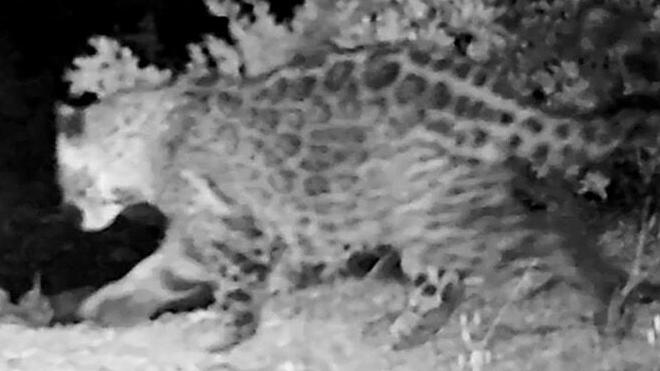
For Star subscribers: A jaguar known as El Jefe last photographed in the Santa Rita Mountains southeast of Tucson in 2015, is the same cat photographed in November in Sonora, conservation groups say.

Arizona Daily Star
  • Facebook
  • Twitter
  • Bluesky
  • YouTube
  • Instagram
  • Arizona Daily Star Store
  • This is Tucson
  • Saddlebag Notes
  • Tucson Festival of Books

Sites & Partners

  • E-edition
  • Classifieds
  • Events calendar
  • Careers @ Lee Enterprises
  • Careers @ Gannett
  • Online Features
  • Sponsored Blogs
  • Get Healthy

Services

  • Advertise with us
  • Register
  • Contact us
  • RSS feeds
  • Newsletters
  • Photo reprints
  • Subscriber services
  • Subscription FAQ
  • Licensing
  • Shopping
© Copyright 2026 Arizona Daily Star, PO Box 26887 Tucson, AZ 85726-6887
Terms of Use | Privacy Policy | Advertising Terms of Use | Do Not Sell My Info | Cookie Preferences
Powered by BLOX Content Management System from bloxdigital.com.
  • Notifications
  • Settings
You don't have any notifications.

Get up-to-the-minute news sent straight to your device.

Topics

News Alerts

Breaking News
