

Donor prevents pay cuts for cops; no pot tourism promotion; pain care lobby
- Updated
Odd and interesting news from the West.
- By JULIE CARR SMYTH AP Statehouse Correspondent
- Updated
COLUMBUS, Ohio (AP) — As Ohio's overdose epidemic has climbed toward a record high, an army of lobbyists representing makers of prescription painkillers and their allies poured more than $3.5 million into Ohio political coffers.
Pharmaceutical companies and allied groups belonging to the Pain Care Forum lobbying collective gave nearly $2.5 million to federal candidates from Ohio from 2006 through 2015, according to data analyzed by The Associated Press and the Center for Public Integrity.
State-level giving of more than $1 million was directed at candidates of both parties, including governors, attorneys general, Ohio Supreme Court justices and legislative leaders, and committee chairs in power positions over Ohio health law. Republican Party committees received about $137,000, while Democratic ones got $41,000.
The investigation by AP and CPI found that the Pain Care Forum worked in Washington over the past decade to quietly derail efforts to curb U.S. consumption of pain-killing drugs, such as OxyContin, by promoting the vital role of prescription painkillers in Americans' lives. That went hand in hand with a 50-state strategy.
Participating drug companies, associations and alliances also have other business before Ohio's Legislature, but a steady flow of contributions from companies employing an average of 37 Ohio lobbyists at the Statehouse has meant their interests remain well represented when pain care issues arise.
A huge chunk of the campaign cash identified through the analysis went to then-House Speaker John Boehner, of southwest Ohio, who received about $875,000 over the decade, according to the data. Among state candidates, Republican Gov. John Kasich topped the list, with about $46,000. Top state givers among forum members were Pfizer, Abbott Labs, Merck and Johnson & Johnson.
Kasich has championed a host of remedies to Ohio's opioid problem, beginning with creation of the Governor's Cabinet Opiate Action Team within days of his 2011 inauguration. He has worked with state leaders since then to extend access to treatments and increase availability of the overdose drug naloxone and launched an education campaign for schoolchildren called Start Talking.
A glimmer of good news: Painkiller prescriptions in Ohio have fallen from 11,261,528 in 2013 to 9,955,858 last year, according to the data.
Despite all that, accidental drug deaths continued to skyrocket. Ohio overdose deaths have gone up annually over the past decade, from 1,515 in 2006 to 2,744 in 2015, according to the analysis. That 81-percent increase is the 7th highest among U.S. states over the period, the analysis found.
When a new record was announced last month, Kasich said it made him "feel terrible." He stressed that the state is making progress.
After Kasich, the second highest recipient of Pain Care Forum contributions was state Sen. Dave Burke, a Marysville Republican and pharmacist.
Burke received about $32,000 from forum participants from 2006 to 2015, according to the data, which represent a minimum figure for contributions. Burke chairs the Senate Medicaid committee, services on the budget-writing Finance committee and helped champion Ohio's recently enacted medical marijuana law. Dozens of state lawmakers — including every House Speaker and Senate President and chairs of relevant committees — also received donations.
- By STEVE STOUT The (Ottawa) Daily Times
- Updated
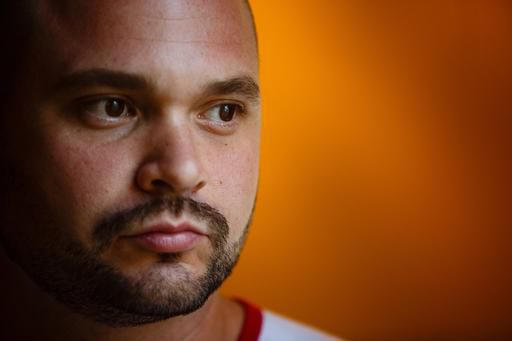
PERU, Ill. (AP) — As a young U.S. Marine in the late 1960s, Roger Reynolds, of Ottawa, fought for his country in the jungles of Vietnam.
"The time I spent in Vietnam turned me into a crazed, heartless killer," admitted Reynolds.
"I caused a lot of death and destruction while I was over there and, on Valentine's Day, 1969, I shot and killed my best friend during a night fight in the jungle. That mission — my buddy's death — has become my eternal nightmare. I know it will never leave me."
With little memory of his last days in Vietnam, Reynolds came home to La Salle County — like many returning combat servicemen and women — suffering from post-traumatic stress disorder.
Part of his personal salvation came years later, as he helped form a peer-led, community-based group at the Veterans Administration Clinic in Peru for local veterans affected by PTSD.
These days, as a steel-minded leader of that group, Reynolds, 68, fights for the proper mental and physical care of fellow former servicemen with the men themselves and the VA.
At weekly meetings, he is the organizer of discussions that range from personal family problems to medical issues, from recurring nightmares of combat trauma to dark depressions.
In the private gatherings, the veterans share their fears, pain, heartaches and, perhaps most importantly, fellowship.
The articulate Reynolds explained, "Once home, returning vets, especially those of us who experienced combat, often miss the big picture of their lives by dwelling on the small details of their problems. Many combat veterans never return to the civilian life with the personality and the mental stability they had before they went into the service."
He said, "This a not a social gathering. This group is designed for problem solving. We talk about things that many of us haven't even shared with our families. There is no pity or shame given here. There is only compassionate understanding and genuine support. Here, at these meetings, we provide each other with the tools, the courage, we vets need to live our everyday lives."
Reynolds said he regularly goes to official conferences or medical appointments with his fellow veterans to offer support, guidance and advice as to how to effectively navigate the often maddening maze of the VA program.
"We insist that VA officials treat us with respect and compassion," he said. "We were trained to fight (in war) and now, we will stand and fight for each other. We know how to fight."
Group member Jerry Zibert, a Vietnam Army veteran from Spring Valley, said, "The good thing about the personal stories we share in this group is that we all can relate to the other person's problems."
He said the interaction gives each of them hope, courage and vital information how to cope in daily situations.
Zibert said, "I first met Roger in a local hardware store. Although I was a stranger to him, he knew instantly that I needed help. He bought me into this group and now, I have found the weekly meetings have helped me tremendously." Zibert said he rarely misses a meeting.
"Many of us feel alone," said Zibert. "Our discussions, our confessions gives each of us vets strength to face our fears — to find a path out of dysfunctional problems some of us have. We lean on each other in here."
During the sessions, Reynolds constantly reminds fellow veterans a person must take care of themselves before they can help someone else.
"I have done that," he has told them. "At times, I have forgot to take care of myself. I have been in dark places. I have had thoughts of taking my own life. It was my friends who saved my life. Please, always take care of yourself first, then go on to help others."
Reynolds called his work with the PTSD group his "life's calling."
He said, "This is what I was always meant to do. My time here is to help my brothers with their problems and to find answers for them to survive each and every day. Vets with PTSD often miss the big picture of their life by focusing on the small details of their personal problems.
Together, we try to solve problems before they become unmanageable — because when that happens, tragedy happens.
"This group has saved lives, but we haven't always been successful. A few years ago, we lost a member from here who took his own life. I took it hard, because I didn't pick up on his pain. I have sworn to myself and to the others that we will not lose another member of this group."
During his session, Reynolds points to each and every man, asking them how their life is going and how (and what) they are feeling. No person in the sessions escapes from giving him a response. The discussion then goes around the room with profane humor, unabashed love and compassionate understanding.
"What we do is crack the shell open and that it is very often hard to do," said Reynolds. "We allow them to get out of the dark to let the light in. Together, we work on solutions without a judgment. I bare my soul so others can find the courage and strength to talk, to find the path to an improved existence."
Group member Robert Pobanz, of Ottawa, an Army Vietnam combat veteran, praised the sessions.
"In here, I have found the tools to deal with issues in my life," he said. "How to cope. We work together. There is trust. When I am here, I never feel alone."
Reynolds said, "I love every one of these guys. We have a bond. When they hurt, I hurt. When they're sad, I'm sad. And when they're happy, I'm exuberant. I would do anything in my power to protect them, to help them. But there is so much anger. There is so much pain. And society — the VA itself — has a hard time understanding that. At our meetings, there are tears, but there is never any shame. Trust is paramount to each and every man here.
"We stand and walk together. I know there will never be an end to my personal nightmare, but I also know there's no end to my commitment to these men — my brothers. We're linked by our combat experiences. We're linked by our nightmares. And now, we're linked by our strength. At one point, we were all prepared to give our lives for our country. We're connected by the horrors of war and our love of this country. Yes, our war combat is over, but our fight is not.
"I have become my brother's keeper and that is just fine with me."
___
Source: The (Ottawa) Daily Times, http://bit.ly/2bS3Jxz
___
Information from: The Daily Times, http://www.mywebtimes.com
This is an AP-Illinois Exchange story offered by The (Ottawa) Times.
- By HANNAH YANG Post-Bulletin
- Updated
AUSTIN, Minn. (AP) — Where there's soil, hope can grow.
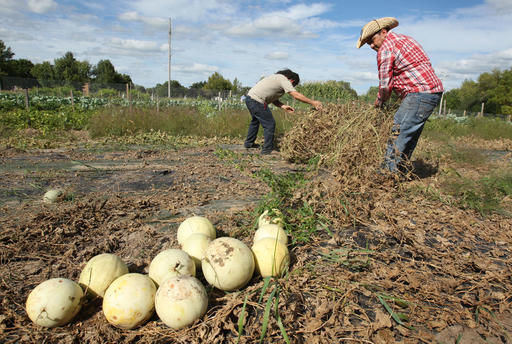
A small farm near Woodson Kindergarten is the site of the La Sureña Cooperative, a family-run organization of seven, the Post-Bulletin (http://bit.ly/2cJLv0a ) reported.
Despite its small size, its potential and opportunity is bountiful for the town. Just in its second year, La Sureña grew both physically, but also in its customer base relationships with Hy-Vee and Share Ground in St. Paul.
All in neat rows are fresh vegetables like the tomatillo, tomatoes, bell pepper, jalapeno pepper, Serrano pepper, green beans and the dragon tongue bean. All are ready for picking and transporting.
The Latino Economic Development Cooperative helped the family support their agricultural business. Giving crucial instruction, the family was able to learn how to begin the process of starting their own venture, and what was needed to keep the cooperative growing.
"They were essential in almost every aspect of starting La Sureña," said Julieta Cervantes, La Surena secretary. "They trained us how to interact with the community, how to find markets, how to grow operations, best agricultural practices . and the opportunity to make our goals possible."
In Gerrero, Mexico, Cervantes' grandparents were farmers and worked with whatever land they had. Just a few basic tools, and the help from their families. So, when Cervantes' mother came to the United States with her green thumb and work ethic, a small patch of land was rented to grow food for her family.
"After many years and only last year, did that little patch of land grow to where we could start to provide for the community," Cervantes said. "As for my stepdad (Guillermo Martin), he had to learn a lot about agriculture. He did not have a clue of the process from planting to harvesting vegetables."
At first, the garden was meant for the family, but eventually grew into something that the community needed and wanted. Eventually, sales and orders from partners came, whether delivering boxes to the Austin Hy-Vee, to Shared Ground Marketing Cooperative.
La Sureña looks to grow its clientele and the amount of produce grown, and improve efficiency. The cooperative is hoping to expand its operations. The organization is leasing 1 acre from the city. There's discussion about possibly growing to 5 acres for 2017.
For now, the cooperative only operates during the summer. The dream would be to run all-year round.
"We are currently working on renting or buying five acres of land to be able to accommodate the demand from Hy-Vee, Share Ground and our local customers," Cervantes said. "Our 1-acre farm is not enough to keep up with demand. We already started to look for expansion options and make more efficient operations."
Although Austin is still a relatively small town — a little more than 24,000 people, according to the U.S. Census — the community itself is diverse with a strong immigrant population.
La Sureña looked to reach out to different parts of the immigrant population because information about nutrition may differ from culture to culture and generation to generation. Cervantes explained that if more families were given more access to quality food, it would make the community healthier and bring people together through a common bond.
Although a small town, possibilities are endless for La Sureña and for the people who are growing their new lives there.
"The families can expand their horizons, even in a small town by inspiring and providing people hope that they can also achieve their dreams," Cervantes said. "Even in a small town by inspiring and providing people hope that they can also achieve their dreams, even when they have left everything they have known behind in their respective countries."
___
Information from: Post-Bulletin, http://www.postbulletin.com
An AP Member Exchange shared by the Post-Bulletin.
- By JULIE CARR SMYTH AP Statehouse Correspondent
COLUMBUS, Ohio (AP) — As Ohio's overdose epidemic has climbed toward a record high, an army of lobbyists representing makers of prescription painkillers and their allies poured more than $3.5 million into Ohio political coffers.
Pharmaceutical companies and allied groups belonging to the Pain Care Forum lobbying collective gave nearly $2.5 million to federal candidates from Ohio from 2006 through 2015, according to data analyzed by The Associated Press and the Center for Public Integrity.
State-level giving of more than $1 million was directed at candidates of both parties, including governors, attorneys general, Ohio Supreme Court justices and legislative leaders, and committee chairs in power positions over Ohio health law. Republican Party committees received about $137,000, while Democratic ones got $41,000.
The investigation by AP and CPI found that the Pain Care Forum worked in Washington over the past decade to quietly derail efforts to curb U.S. consumption of pain-killing drugs, such as OxyContin, by promoting the vital role of prescription painkillers in Americans' lives. That went hand in hand with a 50-state strategy.
Participating drug companies, associations and alliances also have other business before Ohio's Legislature, but a steady flow of contributions from companies employing an average of 37 Ohio lobbyists at the Statehouse has meant their interests remain well represented when pain care issues arise.
A huge chunk of the campaign cash identified through the analysis went to then-House Speaker John Boehner, of southwest Ohio, who received about $875,000 over the decade, according to the data. Among state candidates, Republican Gov. John Kasich topped the list, with about $46,000. Top state givers among forum members were Pfizer, Abbott Labs, Merck and Johnson & Johnson.
Kasich has championed a host of remedies to Ohio's opioid problem, beginning with creation of the Governor's Cabinet Opiate Action Team within days of his 2011 inauguration. He has worked with state leaders since then to extend access to treatments and increase availability of the overdose drug naloxone and launched an education campaign for schoolchildren called Start Talking.
A glimmer of good news: Painkiller prescriptions in Ohio have fallen from 11,261,528 in 2013 to 9,955,858 last year, according to the data.
Despite all that, accidental drug deaths continued to skyrocket. Ohio overdose deaths have gone up annually over the past decade, from 1,515 in 2006 to 2,744 in 2015, according to the analysis. That 81-percent increase is the 7th highest among U.S. states over the period, the analysis found.
When a new record was announced last month, Kasich said it made him "feel terrible." He stressed that the state is making progress.
After Kasich, the second highest recipient of Pain Care Forum contributions was state Sen. Dave Burke, a Marysville Republican and pharmacist.
Burke received about $32,000 from forum participants from 2006 to 2015, according to the data, which represent a minimum figure for contributions. Burke chairs the Senate Medicaid committee, services on the budget-writing Finance committee and helped champion Ohio's recently enacted medical marijuana law. Dozens of state lawmakers — including every House Speaker and Senate President and chairs of relevant committees — also received donations.
- By STEVE STOUT The (Ottawa) Daily Times
PERU, Ill. (AP) — As a young U.S. Marine in the late 1960s, Roger Reynolds, of Ottawa, fought for his country in the jungles of Vietnam.
"The time I spent in Vietnam turned me into a crazed, heartless killer," admitted Reynolds.
"I caused a lot of death and destruction while I was over there and, on Valentine's Day, 1969, I shot and killed my best friend during a night fight in the jungle. That mission — my buddy's death — has become my eternal nightmare. I know it will never leave me."
With little memory of his last days in Vietnam, Reynolds came home to La Salle County — like many returning combat servicemen and women — suffering from post-traumatic stress disorder.
Part of his personal salvation came years later, as he helped form a peer-led, community-based group at the Veterans Administration Clinic in Peru for local veterans affected by PTSD.
These days, as a steel-minded leader of that group, Reynolds, 68, fights for the proper mental and physical care of fellow former servicemen with the men themselves and the VA.
At weekly meetings, he is the organizer of discussions that range from personal family problems to medical issues, from recurring nightmares of combat trauma to dark depressions.
In the private gatherings, the veterans share their fears, pain, heartaches and, perhaps most importantly, fellowship.
The articulate Reynolds explained, "Once home, returning vets, especially those of us who experienced combat, often miss the big picture of their lives by dwelling on the small details of their problems. Many combat veterans never return to the civilian life with the personality and the mental stability they had before they went into the service."
He said, "This a not a social gathering. This group is designed for problem solving. We talk about things that many of us haven't even shared with our families. There is no pity or shame given here. There is only compassionate understanding and genuine support. Here, at these meetings, we provide each other with the tools, the courage, we vets need to live our everyday lives."
Reynolds said he regularly goes to official conferences or medical appointments with his fellow veterans to offer support, guidance and advice as to how to effectively navigate the often maddening maze of the VA program.
"We insist that VA officials treat us with respect and compassion," he said. "We were trained to fight (in war) and now, we will stand and fight for each other. We know how to fight."
Group member Jerry Zibert, a Vietnam Army veteran from Spring Valley, said, "The good thing about the personal stories we share in this group is that we all can relate to the other person's problems."
He said the interaction gives each of them hope, courage and vital information how to cope in daily situations.
Zibert said, "I first met Roger in a local hardware store. Although I was a stranger to him, he knew instantly that I needed help. He bought me into this group and now, I have found the weekly meetings have helped me tremendously." Zibert said he rarely misses a meeting.
"Many of us feel alone," said Zibert. "Our discussions, our confessions gives each of us vets strength to face our fears — to find a path out of dysfunctional problems some of us have. We lean on each other in here."
During the sessions, Reynolds constantly reminds fellow veterans a person must take care of themselves before they can help someone else.
"I have done that," he has told them. "At times, I have forgot to take care of myself. I have been in dark places. I have had thoughts of taking my own life. It was my friends who saved my life. Please, always take care of yourself first, then go on to help others."
Reynolds called his work with the PTSD group his "life's calling."
He said, "This is what I was always meant to do. My time here is to help my brothers with their problems and to find answers for them to survive each and every day. Vets with PTSD often miss the big picture of their life by focusing on the small details of their personal problems.
Together, we try to solve problems before they become unmanageable — because when that happens, tragedy happens.
"This group has saved lives, but we haven't always been successful. A few years ago, we lost a member from here who took his own life. I took it hard, because I didn't pick up on his pain. I have sworn to myself and to the others that we will not lose another member of this group."
During his session, Reynolds points to each and every man, asking them how their life is going and how (and what) they are feeling. No person in the sessions escapes from giving him a response. The discussion then goes around the room with profane humor, unabashed love and compassionate understanding.
"What we do is crack the shell open and that it is very often hard to do," said Reynolds. "We allow them to get out of the dark to let the light in. Together, we work on solutions without a judgment. I bare my soul so others can find the courage and strength to talk, to find the path to an improved existence."
Group member Robert Pobanz, of Ottawa, an Army Vietnam combat veteran, praised the sessions.
"In here, I have found the tools to deal with issues in my life," he said. "How to cope. We work together. There is trust. When I am here, I never feel alone."
Reynolds said, "I love every one of these guys. We have a bond. When they hurt, I hurt. When they're sad, I'm sad. And when they're happy, I'm exuberant. I would do anything in my power to protect them, to help them. But there is so much anger. There is so much pain. And society — the VA itself — has a hard time understanding that. At our meetings, there are tears, but there is never any shame. Trust is paramount to each and every man here.
"We stand and walk together. I know there will never be an end to my personal nightmare, but I also know there's no end to my commitment to these men — my brothers. We're linked by our combat experiences. We're linked by our nightmares. And now, we're linked by our strength. At one point, we were all prepared to give our lives for our country. We're connected by the horrors of war and our love of this country. Yes, our war combat is over, but our fight is not.
"I have become my brother's keeper and that is just fine with me."
___
Source: The (Ottawa) Daily Times, http://bit.ly/2bS3Jxz
___
Information from: The Daily Times, http://www.mywebtimes.com
This is an AP-Illinois Exchange story offered by The (Ottawa) Times.
- By HANNAH YANG Post-Bulletin
AUSTIN, Minn. (AP) — Where there's soil, hope can grow.
A small farm near Woodson Kindergarten is the site of the La Sureña Cooperative, a family-run organization of seven, the Post-Bulletin (http://bit.ly/2cJLv0a ) reported.
Despite its small size, its potential and opportunity is bountiful for the town. Just in its second year, La Sureña grew both physically, but also in its customer base relationships with Hy-Vee and Share Ground in St. Paul.
All in neat rows are fresh vegetables like the tomatillo, tomatoes, bell pepper, jalapeno pepper, Serrano pepper, green beans and the dragon tongue bean. All are ready for picking and transporting.
The Latino Economic Development Cooperative helped the family support their agricultural business. Giving crucial instruction, the family was able to learn how to begin the process of starting their own venture, and what was needed to keep the cooperative growing.
"They were essential in almost every aspect of starting La Sureña," said Julieta Cervantes, La Surena secretary. "They trained us how to interact with the community, how to find markets, how to grow operations, best agricultural practices . and the opportunity to make our goals possible."
In Gerrero, Mexico, Cervantes' grandparents were farmers and worked with whatever land they had. Just a few basic tools, and the help from their families. So, when Cervantes' mother came to the United States with her green thumb and work ethic, a small patch of land was rented to grow food for her family.
"After many years and only last year, did that little patch of land grow to where we could start to provide for the community," Cervantes said. "As for my stepdad (Guillermo Martin), he had to learn a lot about agriculture. He did not have a clue of the process from planting to harvesting vegetables."
At first, the garden was meant for the family, but eventually grew into something that the community needed and wanted. Eventually, sales and orders from partners came, whether delivering boxes to the Austin Hy-Vee, to Shared Ground Marketing Cooperative.
La Sureña looks to grow its clientele and the amount of produce grown, and improve efficiency. The cooperative is hoping to expand its operations. The organization is leasing 1 acre from the city. There's discussion about possibly growing to 5 acres for 2017.
For now, the cooperative only operates during the summer. The dream would be to run all-year round.
"We are currently working on renting or buying five acres of land to be able to accommodate the demand from Hy-Vee, Share Ground and our local customers," Cervantes said. "Our 1-acre farm is not enough to keep up with demand. We already started to look for expansion options and make more efficient operations."
Although Austin is still a relatively small town — a little more than 24,000 people, according to the U.S. Census — the community itself is diverse with a strong immigrant population.
La Sureña looked to reach out to different parts of the immigrant population because information about nutrition may differ from culture to culture and generation to generation. Cervantes explained that if more families were given more access to quality food, it would make the community healthier and bring people together through a common bond.
Although a small town, possibilities are endless for La Sureña and for the people who are growing their new lives there.
"The families can expand their horizons, even in a small town by inspiring and providing people hope that they can also achieve their dreams," Cervantes said. "Even in a small town by inspiring and providing people hope that they can also achieve their dreams, even when they have left everything they have known behind in their respective countries."
___
Information from: Post-Bulletin, http://www.postbulletin.com
An AP Member Exchange shared by the Post-Bulletin.
Most Popular
-
U.S. to drastically alter Colorado River releases, Arizona officials warn
-
 Lloyd to get clarity on Arizona basketball future this week | Greg Hansen
 -
Tommy Lloyd's recruiting chops nationally known | Greg Hansen
-
U of A coach Tommy Lloyd's new contract spells out direct relationship with Garimella
-
Tucson boy fatally shoots alleged robber

