Skip to main contentSkip to main content
Register for more free articles.
Log in Sign up
Back to homepage
Subscriber Login
Keep reading with a digital access subscription.
Subscribe now
You have permission to edit this collection.
Edit
Arizona Daily Star
78°
  • Sign in
  • Subscribe Now
  • Manage account
  • Logout
    • Manage account
    • e-Newspaper
    • Logout
  • News
    • Sign up for newsletters
    • Local
    • Arizona
    • Business
    • Crime
    • Nation & World
    • Markets & Stocks
    • SaddleBrooke
    • Politics
    • Archives
    • News Tip
  • Arizona Daily Star
    • E-edition
    • E-edition-Tutorial
    • Archives
    • Special Sections
    • Merchandise
    • Circulars
    • Readers' Choice Awards
    • Buyer's Edge
  • Obituaries
    • Share Your Story
    • Recent Obituaries
    • Find an Obituary
  • Opinion
    • Submit a Letter
    • Submit guest opinion
    • Letters to the Editor
    • Opinion & Editorials
    • National Columnists
  • Sports
    • Arizona Wildcats
    • Greg Hansen
    • High Schools
    • Roadrunners
  • Lifestyles
    • Events Calendar
    • Arts & Theatre
    • Food & Cooking
    • Movies & TV
    • Movie Listings
    • Music
    • Comics
    • Games
    • Columns
    • Play
    • Home & Gardening
    • Health
    • Get Healthy
    • Parenting
    • Fashion
    • People
    • Pets
    • Travel
    • Faith
    • Retro Tucson
    • History
    • Travel
    • Outdoors & Rec
    • Community Pages
  • Brand Ave. Studios
  • Join the community
    • News tip
    • Share video
  • Buy & Sell
    • Place an Ad
    • Shop Local
    • Jobs
    • Homes
    • Freedom RV AZ
    • Marketplace
    • I Love A Deal
  • Shopping
  • Customer Service
    • Manage My Account
    • Newsletter Sign-Up
    • Subscribe
    • Contact us
  • Mobile Apps
  • Weather: Live Radar
  • Facebook
  • Twitter
  • Bluesky
  • YouTube
  • Pinterest
  • Instagram
© 2026 Lee Enterprises
Terms of Service | Privacy Policy
Arizona Daily Star
News+
Read Today's E-edition
Arizona Daily Star
News+
  • Log In
  • $1 for 3 months
    Subscribe Now
    • Manage account
    • e-Newspaper
    • Logout
  • E-edition
  • News
  • Obituaries
  • Opinion
  • Wildcats
  • Lifestyles
  • Newsletters
  • Comics & Puzzles
  • Buyer's Edge
  • Jobs
  • Freedom RV AZ
  • 78° Sunny
Share This
  • Facebook
  • Twitter
  • Bluesky
  • WhatsApp
  • SMS
  • Email

Read Star's coverage of Tucson casita story

  • Dec 13, 2021
  • Dec 13, 2021 Updated Dec 13, 2021

Tucson will now allow backyard casitas

Casitas will now be allowed on residential lots in Tucson following the City Council’s recent approval of a new ordinance.

The change will go into effect in mid-November and will allow residents to build the small houses — also called accessory dwelling units or ADUs — on lots across the city. Supporters said the decision is one step toward increasing the number of housing options in Tucson.

Casitas have been lauded as a better alternative to nursing homes for senior citizens. The units are built alongside existing houses and have full kitchens, so they can allow elderly people to live independently while still being close to caretakers.

Steve Kozachik

Tucson City Councilman Steve Kozachik voted against the measure.

Supporters said casitas can also help large families that need more living space, be used to house young adults who might struggle to afford an apartment and create more rental options citywide.

“I think that it’s not going to solve our housing crisis in and of itself,” said Ann Chanecka, the deputy director of Housing and Community Development in Tucson. “I think right now given the incredibly high rising cost of housing and not having the stock to meet the current demand, we need all of the tools we can use.”

City staff have been developing the ordinance for over a year through a process that involved numerous public meetings and surveys to gauge support. The proposal was also endorsed by two city commissions before its approval recently.

Still, the council’s vote wasn’t unanimous, and even those who supported the motion raised issues with the new ordinance.

Councilman Steve Kozachik represented the only dissenting vote. He said the new rule takes a “one-size-fits-all” approach and fails to consider how casitas might have disparate impacts on different parts of the city.

Among his concerns was a rule that allows casitas to be between 750 and 1,000 square feet depending on lot size. Kozachik said houses in historic neighborhoods around the University of Arizona are smaller than that, so the new “secondary structures” could be larger than the main homes.

“Around campus many of the lot sizes are small. The homes are small. This proposal allows ADUs that are, in many cases, larger than the primary dwelling units around campus,” Kozachik said during the meeting. “All of what’s being proposed is going to have a very different impact depending on where it’s being built in Tucson,

Councilman Richard Fimbres took issue with a “group dwelling” regulation. That zoning rule limits the number of unrelated people who can live on a residential lot or in a particular structure, like a main house or casita.

Fimbres said the city doesn’t have enough staff to enforce the provision and voiced concerns that if the rule is broken, casitas could be used for disruptive student housing in residential areas.

The impact of casitas on property values was continuously brought up during the meeting. If homes lose value as a result of the ordinance, the city could be required to reimburse the owners.

Council members reduced the allowable height of casitas by 4 feet during the meeting as a step to prevent any loss of value. The final ordinance requires casitas to be no taller than 12 feet or equal to the height of the main house, whichever is greater.

“The concern was that you have a two-story building behind the one-story primary structure and that could potentially lead to delisting,” said Dan Bursuck, the lead planner for Tucson’s Planning and Development Services. “I think this does address some of those height issues people were concerned about.”

City officials also added a “sunset provision” that requires the ordinance to be renewed in five years, so it can be reversed if it causes problems. Casitas built between now and 2026 will be protected even if the new rule expires.

Kozachik raised questions around affordability, saying “absentee” landlords who own much of the housing property in some Ward 6 neighborhoods are unlikely to use casitas to house elderly relatives or low-cost rentals.

“There’s nothing in this proposal that addresses affordability,” Kozachik said. “Right now all we’re adding is a rental on an already high-priced parcel in an exploding housing market.”

Kozachik floated the idea of providing low-interest construction loans that would make building casitas cheaper for those who agree to rent them at reasonable rates.

The Tucson Industrial Development Authority may offer loans in the coming years, according to Shay Jimenez who sits on the nonprofit organization’s board. City staff are also developing a program that would finance new casitas that are rented to low-income residents.

Tucsonans who already have casitas might be entitled to extra cash as early as next spring. Housing and Community Development plans to fund repairs and provide technical assistance to help residents bring the units into compliance.

The ordinance will go through a review period for the next two years, allowing the city to adjust the new rules if any significant issues crop up.

“What we’ve seen in other communities is that they rarely get it totally right the first time,” Bursuck said. “After a couple years, they’ll look at that and see what may need to be changed, make those adjustments and kind of move forward that way.”
Watch now: Famous Tucson spots said to be haunted

Tucson City Council delays law allowing backyard casitas

Tucsonans might not be able to start building backyard casitas until January following the city council’s decision to pause an earlier vote that allowed the structures in residential areas.

Casitas, also called Accessory Dwelling Units or ADUs, are small homes that are built alongside existing houses. Proponents said they offer more living space for large families, are a better alternative to nursing homes for the elderly and could create more low-cost rental options.

The city council adopted an ordinance on Oct. 19 to allow casitas on Tucson’s residential lots for the first time in decades. Staffers spent a year developing the change and it was endorsed by two city commissions before its final approval.

But council members froze the ordinance last Tuesday in order to reconsider some provisions at their meeting on Dec. 7. No changes were actually made to the rules, but the vote means that residents — who would have been able to start building casitas this week — will have to wait until at least next month to start construction.

Further delays could push that date back to Jan. 6 if the council adopts the changes that are up for consideration in three weeks. Adjusting the original ordinance that has already passed would restart the 30-day waiting period between when a new rule is approved and when it goes into effect.

“It felt a little rushed and it’s really important we get this right,” said Councilman Paul Cunningham about the original ordinance. “Under no circumstances do I want to repeal the ADU. I’m looking at this one tweak because I think it makes sense for a lot of neighborhoods.”

Cunningham asked the council to consider a small reduction to the allowed casita sizes. The proposal is mainly designed to limit the use of ADUs for student housing and reduce the chance that too many people will live on any one residential lot.

Those issues can be created by developers who buy college-area land, build casitas and rent them out as “mini-dorms” alongside occupied homes on the same lot. It leads to residential neighborhoods becoming overcrowded, according to city officials.

A “group dwelling” rule already exists to limit the number of unrelated people who can live on a given lot. Councilman Steve Kozachik said the provision won’t help.

“With respect to the group dwelling ordinance, the sad reality is that it’s virtually unenforceable because nobody from the city is knocking on doors saying ‘prove to me that you’re not related,’” Kozachik said.

The size reduction won’t stop people from breaking the group dwelling rule, but could lessen the impact in neighborhoods near the University of Arizona; most lots in that area are small and would only be allowed to have casitas large enough for one person.

Council members who opposed reconsideration floated the idea of letting the original ordinance go into effect and then introducing new rules down the line if issues cropped up. The problem with that approach is it can leave the city open to lawsuits under Proposition 207.

The 2006 law puts city officials on the hook for any money lost by homeowners as the result of new restrictions. If the city decreases the size limits after residents build casitas, Tucson could have to pay for the renovations or any decreases in property value.

“This is not about trying to stop ADUs. It’s simply saying let’s respect the areas that are going to be the most negatively impacted by the larger sizes and leave ourselves the room to expand upwards,” Kozachik said. “We can’t do it in the reverse later on when we’re subject to 207 challenges.”

Councilmembers Karin Uhlich and Lane Santa Cruz represented the two votes against reconsideration.

Uhlich said the experts who comprise the city’s planning commission already grappled with these issues and still voted unanimously to endorse the original ordinance. She said she felt “like we did the best that we could to serve this need citywide.”

Santa Cruz was visibly frustrated with the motion to reconsider, calling it “such a waste of our time” following the yearlong development process that went into the original plan.

“I’m exhausted from continuing to talk in circles around this item. It’s a mistake to bring this ordinance up for reconsideration,” she said. “I want to get to all of the other housing affordability and housing stock that we need, and it’s unfortunate that we get so wrapped up around this particular issue.”

The casitas ordinance will be revisited by the City Council in three weeks. If the changes are approved, residents will not be able to build casitas until early January.

Tim Steller's opinion: Casita boom should be welcome in expensive Tucson

If you cruise the alleys of midtown Tucson, you’ll see something you don’t see in many American cities.

Some properties have back walls, or fences, then the yard stretches for another 10 to 20 feet of unused land to the alley. The lots are just that big.

After arriving in Tucson in 1997, it took me a long time to get used to the ponderous backyards of Tucson neighborhoods developed in the 1940s to 1960s.

These are the areas that would be ripest for exploitation in Tucson’s potential casita boom. That’s what I’m calling the proposed new city code that would allow property owners to put up a new “accessory dwelling unit” almost anywhere in Tucson.

The proposal is aimed at increasing the stock of more affordable housing, especially for multigenerational families.

The ramifications could be big. As one resident, Michael McCrory, wrote in a July 22 letter to the city planning commission, “This amendment is really a rezoning of all residential property in the city to increase density.”

That makes it a big deal that could affect almost any of us. A planning commission hearing is set for Sept. 15, at which the commission could recommend passage of the proposal to the city council.

Overall, I find the prospect appealing. Guest houses, or casitas, or granny flats — that whole category now known in their bureaucratic acronym as accessory dwelling units, or ADUs — are already common across Tucson, many of them unpermitted but serving their purposes down through the years.

Renters live there, friends and family flop there, or boxes of belongings slowly fill them up. It’s a longstanding local land-use tradition.

City codes allow all residential properties to add on “sleeping quarters.” They’re additional buildings, no more than half the size of the main house, no taller than 12 feet, and offering only a kitchenette, not a full kitchen. But only a portion of properties are allowed to have have full guest houses built on them.

Apparently mine is one of them. When we bought the house years ago, one of the attractions was a fully permitted guest house, with a full bathroom, kitchen and even laundry.

A friend of ours lived there for two years before a family member moved in. By coincidence, we’ve used the place exactly as the city is hoping people will use accessory dwelling units under the new code — as affordable housing and for extended family.

It’s long happened all over town without anyone thinking much about it. But in recent years casitas have become a popular tool for expensive cities to use to incrementally expand the housing stock. Among the cities that allow them: San Jose, San Diego, Austin, Portland and Flagstaff.

Tucson, for so long thought of as a cheap place to live, suddenly isn’t anymore. Rents have surged, powered in part by scarcity. That has driven the median home purchase price up by 21.7% in the last year, an insane rise.

Nobody’s under the illusion that casitas in the city’s backyards are going to solve Tucson’s housing crunch, but they could help.

The current proposal allows anyone with a property 7,000 square feet or less to put up a guest house up to 750 square feet. Properties bigger than 7,000 square feet would be allowed to have a casita up to 1,000 square feet.

Of course, a 1,000 square-foot home is not really a casita — it’s a casa. And that’s one of several legitimate concerns residents of some midtown neighborhoods have brought up about the proposal.

For reference, the fully equipped guest house on my property is 600 square feet.

Another big concern: vacation rentals. Property owners could take advantage of this new city code, intended to expand affordable and multigenerational housing only to put the new guest house on AirBnb.

“There isn’t any guarantee that any ADUs become housing, much less affordable housing,” Barrio Centro resident Joe Audino said at a July 28 city planning commission hearing. “Since we can’t regulate short-term rentals, this could become a preponderance of AirBnbs.”

It’s true — state law, as it stands, bans cities from regulating vacation rentals, other than making them pay local taxes and register with the city. It’s another terrible pre-emption law, in which the state Legislature’s GOP majority decided it knew better how to run Arizona’s cities than their Democratic mayors and councils.

Another concern: The guest-house code could serve as another attraction for the big investors that have been buying Tucson properties, helping drive up prices.

“They’ll become another item in aggregating absentee landlords’ portfolio,” predicted Laura Tabili, a Rincon Heights neighborhood resident.

These are legitimate worries, but we shouldn’t let them block a good idea. After all, even if somebody makes money off of building a casita, it could still be a good thing for our housing stock.

And in other cities that have invited more guest-house construction, they haven’t taken over the cities. Tucson planners put together a chart of the number of ADU permits issued in seven cities over four years. The biggest number, 531, was in Portland in 2018.

More typical was Austin, which issued between 334 and 379 permits during those four years.

During the process of stakeholder and planning commission meetings on the proposal, which began late last year, older participants have tended to be more pessimistic and younger residents more optimistic about the prospect.

Sharayah Jimenez, principal designer for a drafting and design company she formed, called Cuadro, has high hopes for our potential casita boom.

“What I like about it is the flexibility of it. There isn’t necessarily an end user in mind,” she said. “It’s that flexibility that is really needed right now.”

She noted that small projects like guest houses are often too much trouble for big investors.

Among the ways the city is considering making it easier for homeowners to take advantage of the new proposal it to offer free templates for guest house designs.

Daniel Bursuck, the city planner who has been running the ADU project, noted that Stockton, California, offers three pre-approved designs — for a studio, a one-bedroom, and a two-bedroom guest house.

This should be a requirement for Tucson’s program. Also, the city should have an owner-occupancy requirement at least at the beginning of the program, to see how much it’s used. The owner could be required to live either in the main house or the new guest house.

The experience of other cities has shown that this sort of requirement may be too conservative. In Flagstaff, they had to get rid of the owner occupancy requirement to get many people to take advantage.

But with these tweaks, Tucson really needs to try this. The housing crisis here demands we take some risks. And with all the underused land we have in Tucson, this is a pretty small risk that fits into our landscape and traditions.

Tucson considers allowing casitas with kitchens to ease affordable housing shortage

Deena Hitzke knows all about the affordable housing crisis in Tucson, where the average rent for a one-bedroom apartment is up around 14% since last year.

She’s the director of elder services at the Administration of Resources and Choices, a Tucson-based nonprofit that provides resources for elderly victims of abuse and distressed homeowners.

It's part of Hitzke's job to help displaced elderly people find homes.

“We have noticed a growing homeless population among elders, many who have an income average of $700 a month. So, they’re really cost-burdened and often forced to live with an abusive partner or adult children,” said Hitzke, who added that the shortage of affordable housing in Tucson can leave seniors living in unsafe apartment complexes, potentially vulnerable to predatory neighbors.

The shrinking affordable housing market in Tucson is why Hitzke, along with more than 60% of about 275 Tucson residents surveyed, are in favor of a proposal that would allow homeowners to build accessory dwelling units with a full-sized kitchen — which city code hasn’t permitted since 1948 — and rent them out at a relatively low cost. An ADU (also called a casita, mother-in-law suite or cottage) is a small apartment, either attached or detached, to a host home on the same property.

There are already plenty of these structures, some up to code and some not, in backyards across Tucson, and Hitzke says it’s “an excellent solution for elders.”

“More of the people we’ve placed in ADUs have been able to sustain that much longer for safety reasons, but also because they’re happy and content with the place,” she said. “Usually the person who owns the property living in the main house will help them out a little and a natural caregiving relationship emerges.”

A “serious” affordable housing plan

Increasing the affordable housing supply for Tucson’s aging population — and everyone else struggling to keep up with the rising cost of living — while mitigating urban sprawl is the ideal result of passing the ADU proposal.

Last November, Mayor Regina Romero and the Tucson City Council directed Planning and Development Services to draft an amendment to city code that would permit the dwellings. Since then, the Planning Commission has held multiple public work sessions, including one late last month.

It will hold at least one more public hearing on Sept. 15 before sending it to the city council for a vote.

Arthur C. Nelson, a professor of urban planning at the University of Arizona’s College of Architecture, Planning and Landscape Architecture, has studied ADUs as an affordable housing solution since the 1990s. The benefits to the community, he said, are multifaceted, and include both cheaper building costs compared to constructing a new building and boosted economic development as a result of increased population density.

“ADUs are one approach,” to housing affordability, Nelson said. “But if local governments don’t have them in their suite of approaches, then they’re not serious about meeting affordable housing concerns.”

Over the past decade, other cities such as Portland, Minneapolis and San Diego, have adopted accessory dwelling unit policies with those goals in mind. But with only dozens or hundreds of those dwellings permitted per year in cities with a policy in place, “it’s not a huge development boom,” Daniel Bursuck, a lead planner for the city, said at the most recent ADU work session.

No tools to stop Airbnb?

Some of those cities, like Minneapolis, don’t require homeowners to live on the property because when it did, “it was severely limiting people and their ability to build these,” Bursuck said. He also noted that Flagstaff currently has an ADU policy with an owner-occupancy requirement, but is considering removing it.

As it stands now, Tucson's proposal does not include an owner-occupancy requirement.

And the absence of an owner-occupancy requirement coupled with a 2016 Arizona law stripping local governments of their ability to regulate Airbnbs and other short-term rentals, could make it easy for wealthy investors to undermine the intent of the ADU proposal.

“We know that’s an issue — that these could be rented on Airbnb, but I’d say that’s an issue across our housing stock in general,” Koren Manning, a planning administrator for the city, said. “Some of them definitely could be rented on Airbnb. We don’t think that would be the majority, but at this point we don’t have the tools to stop that.”

That concerns residents like Lee Marsh, president of the Rincon Heights Neighborhood Association.

The 30-something software developer owns a duplex near the UA campus with his partner, Theah Erickson. The couple is already renting out half of their duplex, and they’re interested in converting the carport in the back of their property into an accessory dwelling unit should the proposal pass.

“We’d be able to charge some rent — we wouldn’t have to charge too much — to get an adequate return on investment,” said Marsh, who estimated the ADU build-out would cost around $80,000. Although he likes the idea of adding another revenue stream — he and Erickson want to retire early — he doesn’t want to build one if the larger ADU program doesn’t actually increase affordable housing stock in Tucson.

“If the ultimate outcome of this is that these big property management companies come in and start putting an ADU on every single one of their properties and start charging even more for rent, then I don’t think it accomplished the goal we’re after here.”

That's why both Marsh and Erickson are in favor of an owner-occupancy requirement, even if it’s a temporary measure.

“I think that’s an adequate obstacle to prevent this from being a glut for profiteers who want to build a bunch of mini-dorms," said Marsh, who lives across the street from a student apartment complex and next door to a group of small houses rented out to college students. “I definitely think the ADU proposal can be part of the solution, but it will depend so much on how it’s implemented.”

“A counterbalance”

That’s where a partnership between the Pima County Community Land Trust and Cuadro, a drafting and design firm in Tucson, could come in.

“We need to diversify, and not just be putting low-income people in big public housing projects. We need low-income folks in established neighborhoods and to give them more housing options,” Sharayah Jimenez, principal designer for Cuadro, said.

She's been analyzing affordable housing in Tucson since the Great Recession, and thinks ADUs are a way to make that happen.

Jimenez recently received a three-year grant from the Vitalyst Health Foundation that will support ways “to ensure permanent affordability.” Some of those solutions, she said, could include incentives for homeowners to build ADUs or bring existing structures up to code in return for a commitment to offering affordable housing.

Another practice some municipalities have already implemented is allowing the community land trust to buy land from a homeowner. That arrangement lets the owner keep their home and gives them enough cash to build an ADU they might not otherwise be able to afford. It also allows the trust to preserve the price of the land in the interest of housing affordability for up to 99 years.

“There are a lot of people in the community right now who have the means to build a structure, but there are also way more people who don’t have the financing options to build something like this. This type of model makes it so people can afford to build their own structures," said Rachel Beaty, program coordinator for the Pima County Community Land Trust. “The added benefit is that the community land trust grows, too. So, we’d have more properties and homes locked into affordable rates.”

Jimenez and Beaty both recognize some of the challenges Arizona’s limits on regulating real estate investors will present, but to them, that’s what makes passing the ADU proposal all the more urgent.

“We want to get into neighborhoods and help try to stabilize them before a nonprofit like the community land trust can’t even afford to buy into them,” Jimenez said.

According to June's monthly report from the Tucson Association of Realtors, the supply of single-family homes for sale has decreased 46% since June 2020. The average sale price of one, however, is close to $400,000 — up 30% from last year.

If the ADU proposal passes in a market like that, “Without a program like ours to counterbalance the people who can do it on their own, you are going to see just what people are fearing: little casitas rented out through Airbnb,” Beaty said. “The people we’re trying to serve are trying to meet a need with their family.”

Deena Hitzke, the elder services worker who thinks ADUs are a sustainable housing option for aging Tucsonans, also happens to be a homeowner who could benefit from an ADU incentive program.

She has a dwelling behind her house, but her family's been using it for storage after finding out it would cost thousands of dollars to bring the one-bedroom apartment up to code.

“I feel horrible that I have the capacity to provide probably two or three people a place to live and I can’t afford to do that,” Hitzke said. “There’s so many barriers in the way that I’ve given up on it. But I feel guilty because I keep running across people who would be great tenants.”

Jonathan Hoffman: Tucson should OK 'Accessory Dwelling Units' (aka casitas)

The following is the opinion and analysis of the writer:

The city of Tucson is going through a process by which it will change the city code to allow Accessory Dwelling Units (ADU) on residential lots.

A residential lot is a piece of real estate with a home on it. An ADU is a small house, or casita, that is added as a sort of accessory to an existing home. It can take the form of a stand alone building, an addition or a converted garage or basement.

Currently, it is legal to add a small structure to function as “sleeping quarters,” but it may not be a functioning extra house or apartment. The defining difference is that a kitchen is not allowed. An ADU would have kitchen facilities, making it a fully functional living space.

So, how is this different from just sticking another house on the lot? ADUs will be subject to all the regulations of the home regarding setbacks, structure heights, lot coverage, etc. There are also additional constraints. For example, detached ADUs may not be built in front of a primary structure. They will also be limited to a maximum size of 1,000 square feet, and they could be smaller. The 1,000-square-foot limit insures that they stay in the realm of “accessory dwelling” to the primary residence.

Financially speaking, building an ADU on one’s property increases the property value while the cost can be recovered through rental fees. In the long term, rental fees would serve to supplement income. The presence of an ADU may make the property more attractive to buyers.

There are other benefits to the financial situation. With an ADU, an aged or disabled homeowner could supply onsite accommodations for a caregiver. A caregiver with a single client could accept living quarters as part of his or her compensation. An individual or couple who no longer needed, or wanted, a large home could move to the ADU and rent the primary residence, or offer its use to a friend or relative. An elderly parent could move in with a child’s family while maintaining some independence in a separate building. There are many options.

For a renter, an ADU provides another option for individuals or couples in that they could trade normal living space for a preferred location.

How would ADUs benefit the community? Nobody likes “sprawl.” People often speak of “infill” as a solution, but what does infill actually look like? It looks fine when it’s an apartment house downtown on some abandoned commercial property, but when it’s in an existing residential neighborhood, your neighborhood for example, not so much.

ADUs might be a way to introduce some infill to neighborhoods that would not change the character of those neighborhoods. I think this might work because the existing residents would be doing it, and they have an interest in maintaining the reason they live there in the first place.

There is always some risk in these sorts of changes. There may be unintended consequences. The best way to minimize the risk is to keep decision making in the hands of those directly affected, without undue interference. In this case, the property owner.

On the other hand, the best way to ruin the project is to allow people who will not suffer the consequences of bad ideas to institute bad ideas.

I found an example of that sort of thing in a recent article in the Arizona Daily Star. In it, a member of Tucson’s Commission on Equitable Housing and Development said, “Some communities have created incentive programs where you get some sort of subsidy or some sort of tax incentive for building an ADU with a commitment to help somebody from Section 8.”

I do not think it appropriate for the government to use this sort of program as a social engineering tool. If the homeowner wishes to rent to Section 8 (federally subsidized) tenants, that is his prerogative. The government should not use tax money to influence him one way or the other.

Our commissioner also stated, “I’m really interested in trying to steer the city to create a program like that where we can really also have as a goal the creation of mixed-income communities.”

I’m not sure what “mixed-income communities” are, other than the plain English understanding of the words. Are they something that actually exists in nature? I only ask because I’ve never seen a sign promoting a housing development that said, “Luxury homes from the $500,000s with many $100,000 starter homes sprinkled among them!”

I don’t know where the idea originated, but I’m confident that it wasn’t among homeowners.

This ADU program provides property owners more freedom to use the property that they theoretically own, with side benefits for the community at large. Let’s not pollute it with social engineering schemes.

Tucson considers making room for more casitas

Calling it an effort to provide more affordable housing, Tucson is considering amending the city code to allow accessory dwelling units, casita-like structures where people can live.

Amending the city’s development code to authorize the dwellings called ADUs for residential use is also part of the city’s push to support multigenerational living options and promote infill development.

The smaller units are add-ons to main residences with their own kitchens and restrooms and are typically under 1,000 square feet. Tucson’s code currently states accessory structures to residences cannot serve as dwelling units.

The council initiated the process of amending city code to allow for the accessory units in November. City staff are in the process of gathering public input and will bring the results to the planning commission in June, hold a public hearing in July and ultimately bring official adoption before mayor and council in September for consideration.

Adding ADUs to the code would allow for their use as living spaces while setting design standards for them. The small dwellings can be a separate structure in a backyard or attached to a residence.

City staff’s currently proposed regulations include putting the maximum size of the units at 1,000 square feet, allowing one ADU per a residential lot and requiring one parking space per ADU.

In addition to providing a less costly housing option, allowing ADU use for living spaces could increase the city’s overall housing supply.

ADUs are a viable way to increase housing options, said Randy Rogers, CEO of Tucson Association of Realtors.

ADUs “are one of many ways that we can start to cut into our deficit in available housing for individuals,” he said. “The best-case scenario for ADUs is that they are enabling a homeowner to possibly stay in their home when maybe it gets more expensive around, or to house a family member.”

Most ADUs are rented to family members or close acquaintances, according to Sharayah Jimenez, a member of Tucson’s Commission on Equitable Housing and Development and principal designer at the design firm Cuadro.

With the option to rent ADUs to ones’ parents or grandparents, the units can also provide more flexible housing options for seniors, allowing them to stay close to family or caregivers as they age.

“It definitely supports multigenerational households; it also supports aging in place. We see a lot of elderly folks wanting to downsize but still stay in their neighborhood, and this housing option supports that,” Jimenez said. “Because of that, this is the only housing type where we actually see people renting for $0 and for extremely reduced rents.”

However, Rogers doesn’t see ADUs driving down the increasing cost of housing in Tucson on a large scale.

“I don’t think, at the heart of things, this is going to have much impact on the overall cost of housing. We’re probably not going to have thousands of these,” he said. “The reality is this is going to be a good thing for the people who have the ability to do it based on city requirements. For those that can do it, it will provide some reduced housing costs.”

While the overall housing market may not see prices drop, Jimenez hopes the city considers implementing incentive programs to provide ADUs to low-income individuals.

“Some communities have created incentive programs where you get some sort of subsidy or some sort of tax incentive for building an ADU with a commitment to help somebody from section eight,” she said. “I’m really interested in trying to steer the city to create a program like that where we can really also have as a goal the creation of mixed income communities.”

Alongside the benefits of ADUs, the city’s public outreach mission has gathered potential downfalls. Public meetings have raised concerns of increasing property taxes with ADUs adding to homes’ assessed values, parking access, enforcement of ADU regulations, ADUs being used for Airbnbs and the possibility of the units turning into student housing.

City Councilmember Steve Kozachik says within the area he represents, including neighborhoods surrounding the University of Arizona, he has seen many absentee developers turning single-family homes into temporary student housing options.

“With so few owner-occupied houses, finding the right tools to assure we’re not just digging that hole any deeper and creating an opening for more mini dorms is a high priority for me,” Kozachik said. “While I totally support the idea of finding ways for people to age in place, or to hire a caregiver who’d live in a small structure on the same parcel as the main residence, we have to do it in a way that threads the needle of not simply opening the door for someone to build added capacity on a property with the intent of marketing it all as student housing.”

Public meetings have also garnered concern about contributing to the heat island effect, which occurs in metropolitan areas where man-made structures reflect more sunlight and create higher temperatures. The current proposed regulations for ADUs include requiring cool roofs, or roofing systems with high solar reflectance.

But the city hopes authorizing ADUs will instead support climate resilience by providing smaller living spaces to promote density in the city instead of urban outgrowth.

“Density is just inherently more sustainable than sprawl; you’re using less public infrastructure per square foot,” said Jimenez of the housing commission. “I really believe that allowing for more density like this ordinance will do is part of our pathway out of our really inefficient development patterns, which has been just sprawl. If we keep continuing at this rate, we won’t have any desert left.”


The Royal family wanted a house that reflected its desert surroundings.

These photos of cactus blooms will make you fall in love with Tucson

Cactus blooms

Cactus blooms
Pama Knight

Cactus blooms

Cactus blooms

These cactus blooms were taken by reader Jim at his home in the Dove Mountain area.

Jim

Cactus blooms

Cactus blooms
Allison Henderson

Cactus blooms

Cactus blooms

These cactus blooms were taken by reader Jim at his home in the Dove Mountain area.

Jim

Cactus blooms

Cactus blooms
Cathy Gile Sawin

Cactus blooms

Cactus blooms
Jacqueline Lea

Cactus blooms

Cactus blooms

These cactus blooms were taken by reader Jim at his home in the Dove Mountain area.

Jim

Cactus blooms

Cactus blooms
Harold Harris

Cactus blooms

Cactus blooms
Janette Rogers

Cactus blooms

Cactus blooms
Jim

Cactus blooms

Cactus blooms
Claudia Libieth Torres

Cactus blooms

Cactus blooms
Clare Flewelling

Cactus blooms

Cactus blooms
Elaine Roach

Cactus blooms

Cactus blooms
Jen P-One

Cactus blooms

Cactus blooms
Judy Moses

Cactus blooms

Cactus blooms
Sharon Bookbinder

Blooming saguaro

Blooming saguaro

A saguaro blooms in the Catalina Foothills. Blooms can be unpredictable, but peak blooms usually occur from mid-May to mid-June.

photos by Doug Kreutz / Arizona Daily Star

Cactus blooms at the Arizona-Sonora Desert Museum

Cactus blooms at the Arizona-Sonora Desert Museum
Liz Kemp

Prickly pear in bloom

Prickly pear in bloom

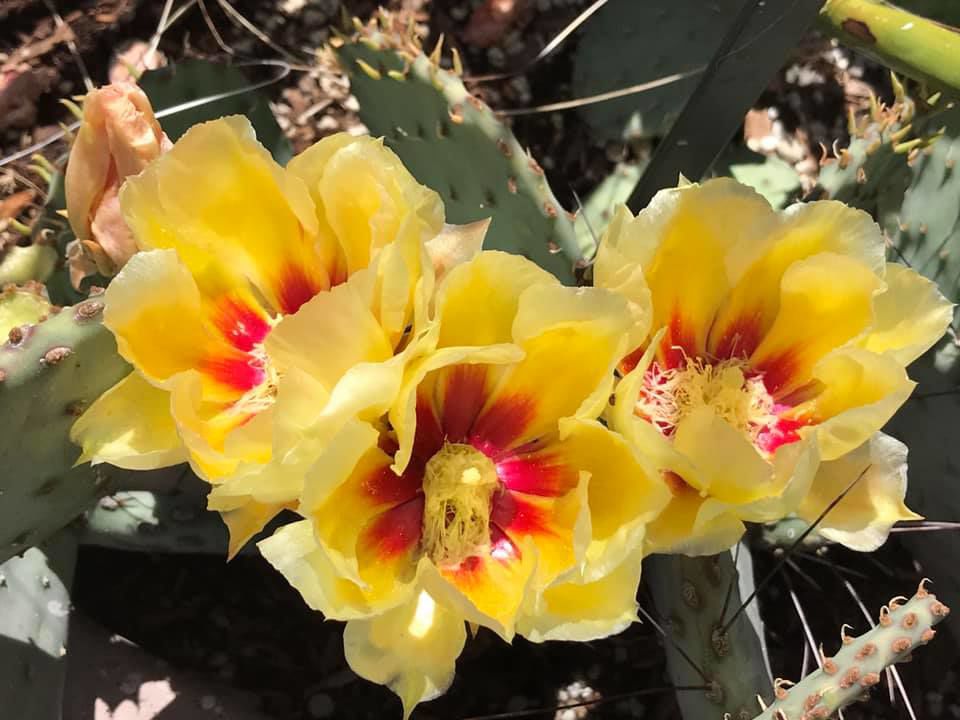
Another prickly pear’s bloom has a splash of red.

Doug Kreutz/Arizona Daily Star

Cactus blooms

Cactus blooms
Jeanandchris Niccum

Prickly pear

Prickly pear

A small prickly pear cactus in colorful bloom.

Doug Kreutz/Arizona Daily Star

Brilliant bloom

Brilliant bloom

Saguaros are blooming brilliantly in parts of the Tucson Valley. -- Credit: Doug Kreutz/Arizona Daily Stars

Doug Kreutz/Arizona Daily Stars

Prickly pear cactus

Prickly pear cactus

A prickly pear cactus in brilliant bloom.

Doug Kreutz / Arizona Daily Star

Prickly pear cactus

Prickly pear cactus

Yellow prickly pear blooms and hikers in Tucson Mountain Park.

Doug Kreutz / Arizona Daily Star

Saguaro and ocotillo

Saguaro and ocotillo

A blooming saguaro with an ocotillo in bloom nearby.

Doug Kreutz / Arizona Daily Star

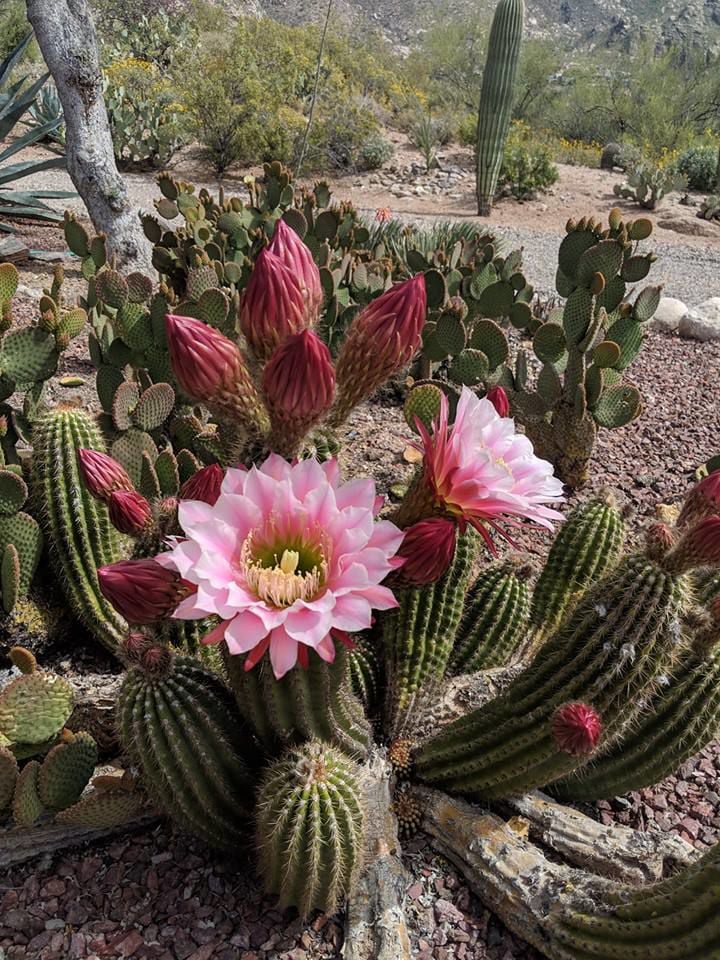
Hedgehog cactus

Hedgehog cactus

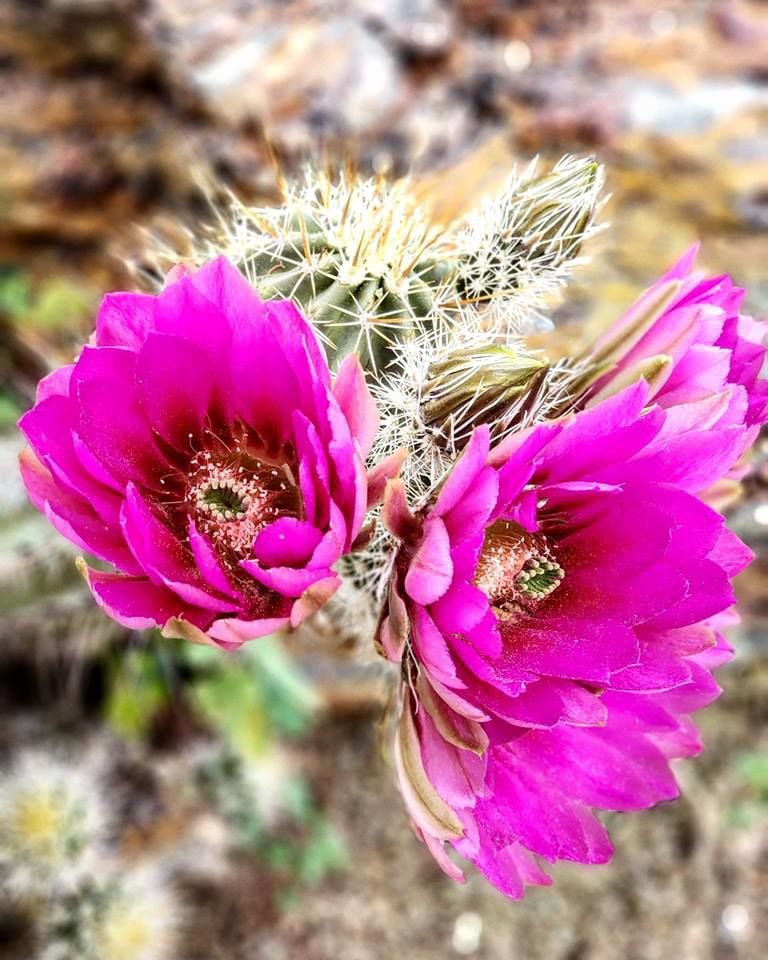
A hedgehog cactus shows off its bright blooms. 

Doug Kreutz / Arizona Daily Star

Cholla cactus

Cholla cactus

A cholla cactus with yellow blooms.

Doug Kreutz / Arizona Daily Star

Cholla cactus

Cholla cactus

A cholla cactus with red blooms. 

Doug Kreutz / Arizona Daily Star

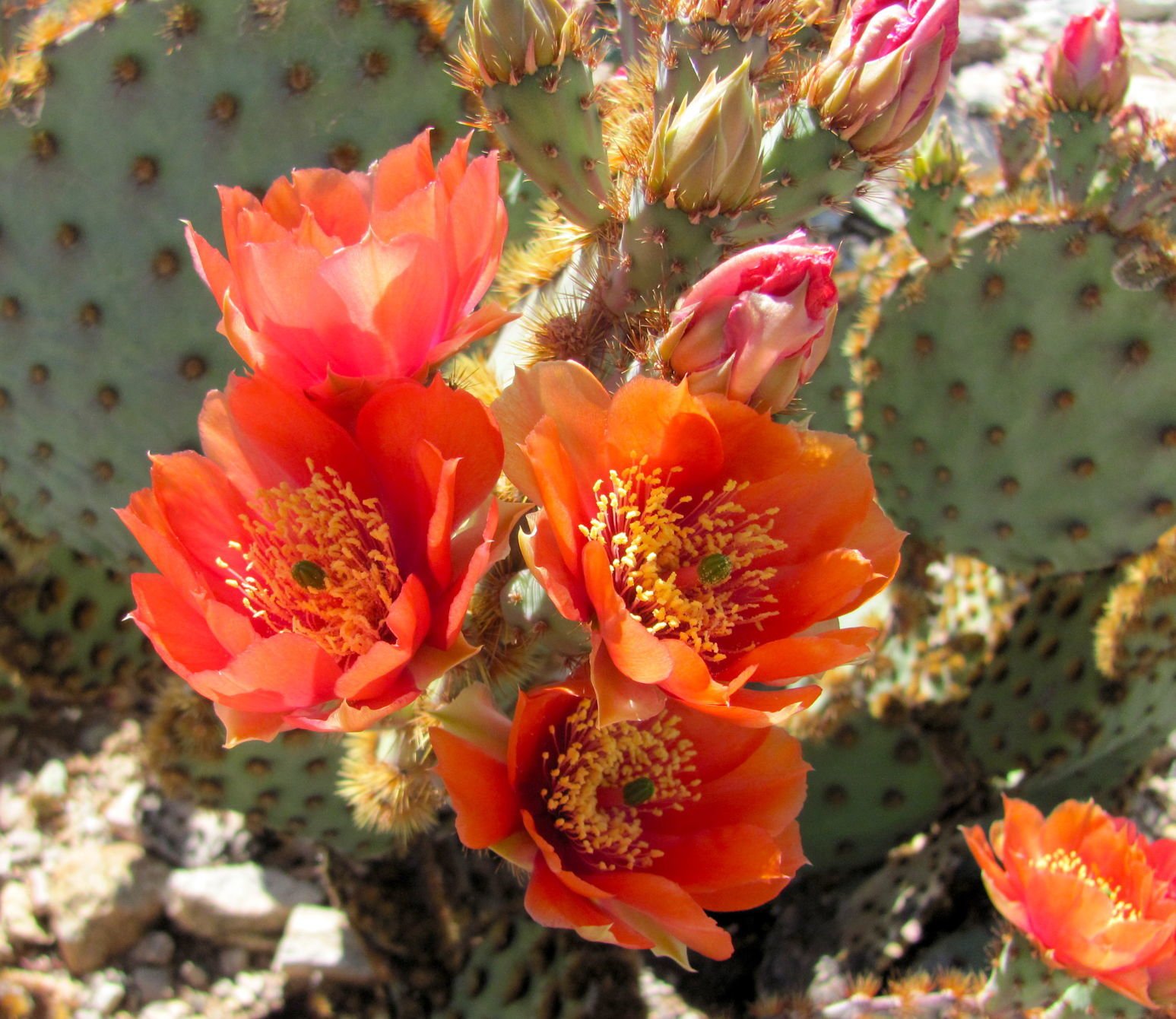
Prickly pear

Prickly pear

A prickly pear cactus with red blooms in the desert west of Tucson. 

Doug Kreutz / Arizona Daily Star

Bees and blooms

Bees and blooms

Bees visit the blooms of a saguaro cactus.

Doug Kreutz / Arizona Daily Star

Yellow prickly pear flowers

Yellow prickly pear flowers

Yellow flowers of prickly pears add color and beauty to Tucson Mountain Park west of the city.

Doug Kreutz / Arizona Daily Star

07 VAM outside birding trail

07 VAM outside birding trail

Red cactus blooms decorate the Birding Trail.

Prickly pear cactus

Prickly pear cactus

Blooms and buds of flowers to come on a prickly pear cactus.

Doug Kreutz / Arizona Daily Star

Cactus blooming

Cactus blooming

Saguaros will be blooming this month at Saguaro National Park . -- Credit: Doug Kreutz / Arizona Daily Star

Doug Kreutz / Arizona Daily Star

Bonanza of blooms

Bonanza of blooms

This cactus in the Catalina Foothills is in a blooming mood — and it’s just getting started. Still more buds than blooms. 

Doug Kreutz / Arizona Daily Star

Sabino Canyon saguaro

Sabino Canyon saguaro

A blooming saguaro in Sabino Canyon with more buds waiting to open.

Doug Kreutz / Arizona Daily Star

Multiple blooms

Multiple blooms

A saguaro with multiple blooms in Sabino Canyon. 

Doug Kreutz / Arizona Daily Star

Cactus Flower

Cactus Flower

Tucson Arizona

By frank worth

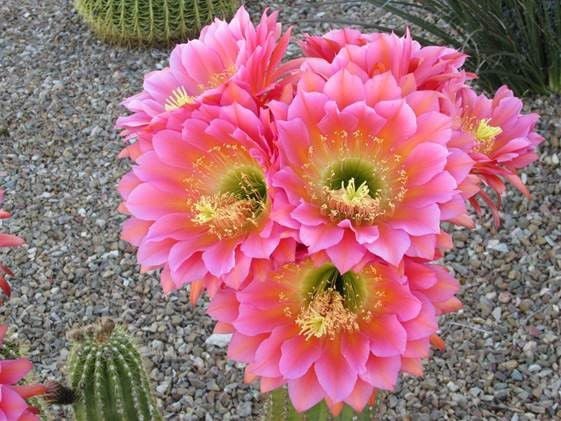
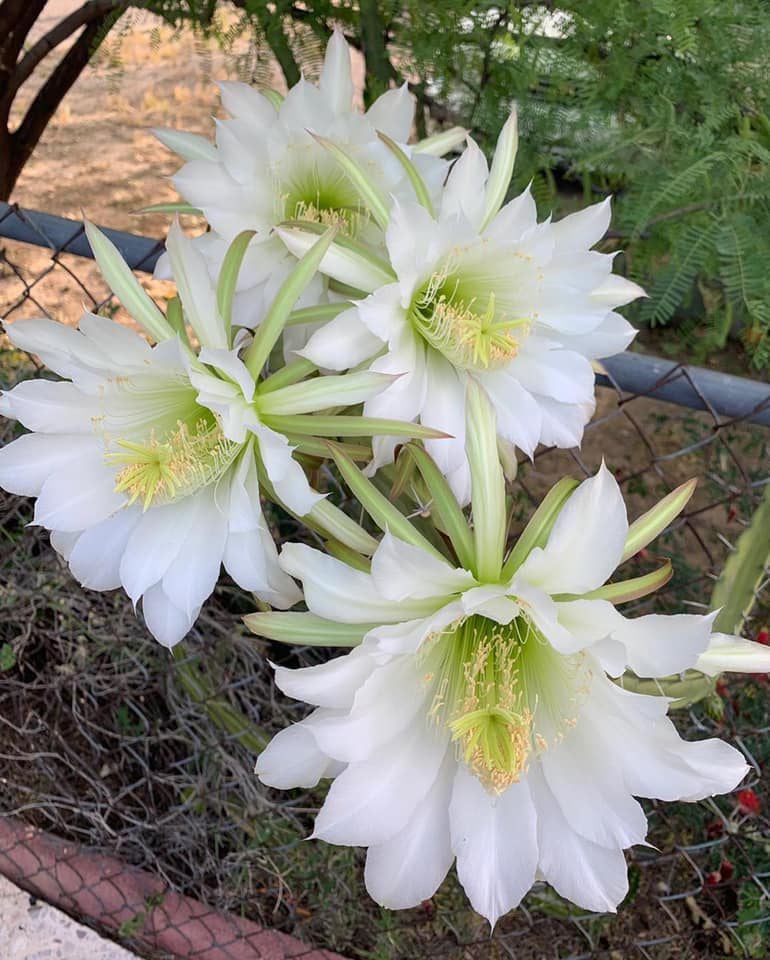
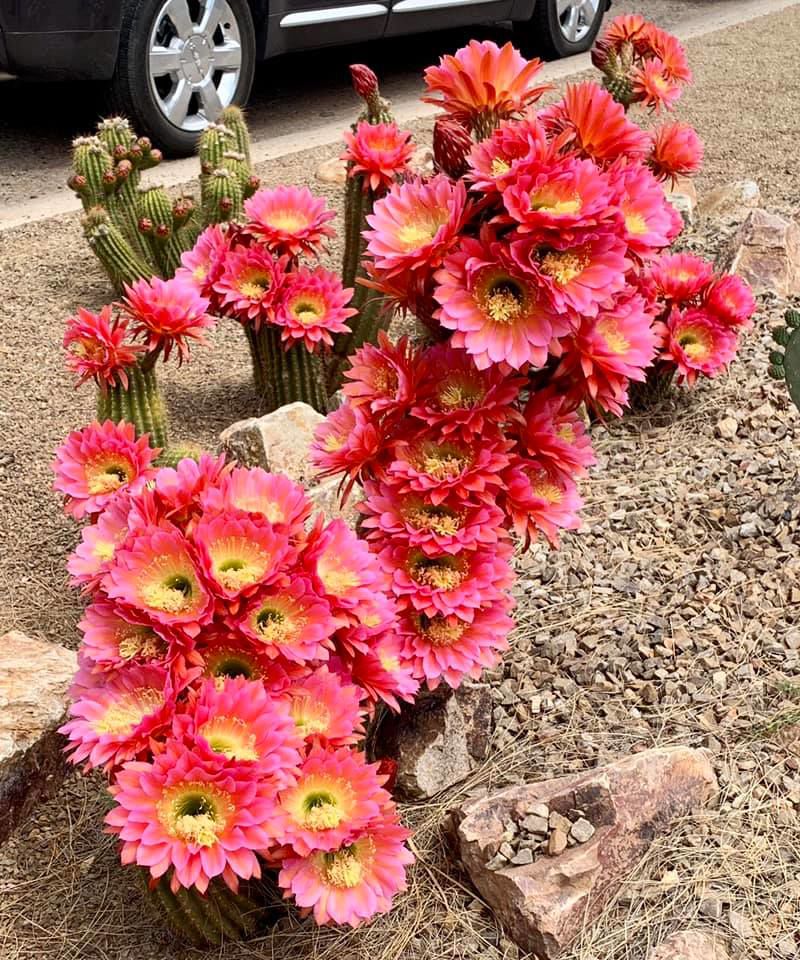
Trichocereus cactus in bloom

Trichocereus cactus in bloom

Trichocereus cactus in bloom

By jamie r

Cardon in bloom

Cardon in bloom

Cardon in bloom on 3rd Street bike path

By Mary Black

Barrel Cactus in Bloom

Barrel Cactus in Bloom

Late bloom on a barrel cactus

By Keith Johnston

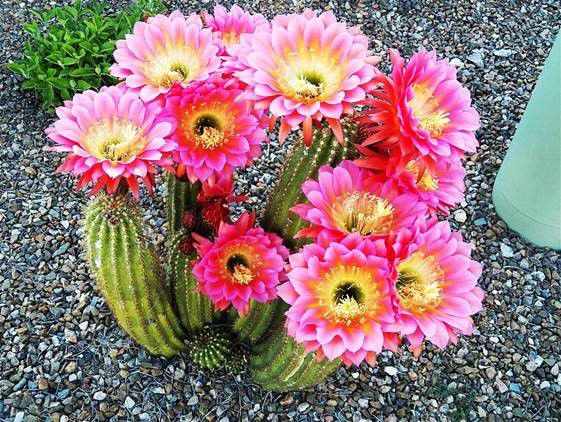
Foothills flowering cactus

Foothills flowering cactus

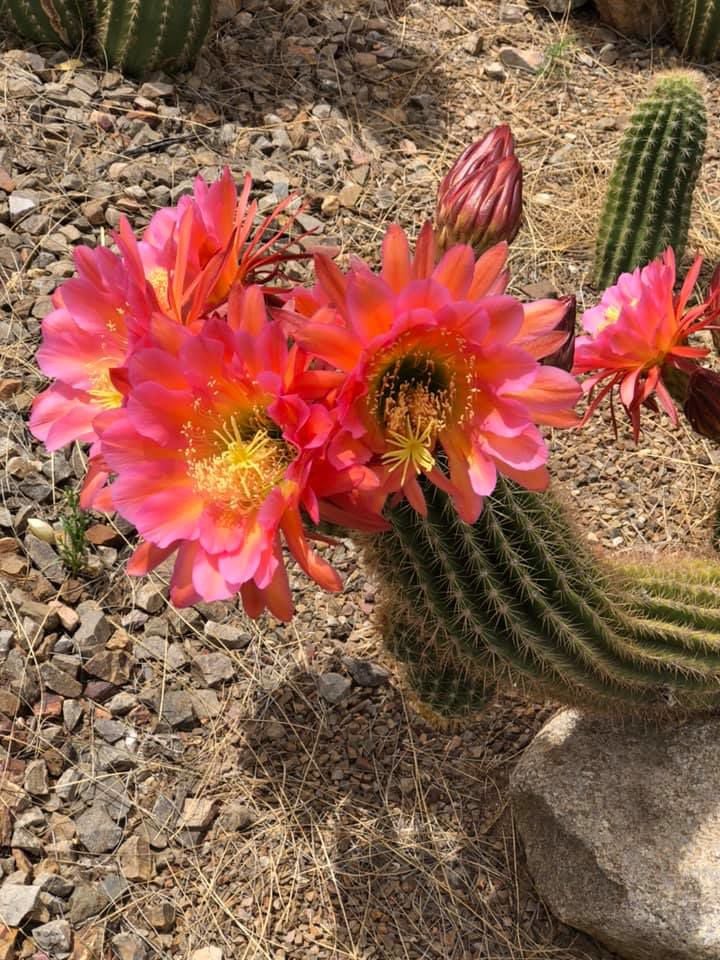
Cactus wreathed in pink blooms

By Kerry Gilbraith

Related to this collection

Tweaked rules for Tucson casitas will now go into effect next month

Tweaked rules for Tucson casitas will now go into effect next month

Under the updated rules, casitas can be as large as 10% of their lot’s total square footage. For example, an 8,000 square foot lot could contain a casita as large as 800 square feet.

Arizona Daily Star
  • Facebook
  • Twitter
  • Bluesky
  • YouTube
  • Instagram
  • Arizona Daily Star Store
  • This is Tucson
  • Saddlebag Notes
  • Tucson Festival of Books

Sites & Partners

  • E-edition
  • Classifieds
  • Events calendar
  • Careers @ Lee Enterprises
  • Careers @ Gannett
  • Online Features
  • Sponsored Blogs
  • Get Healthy

Services

  • Advertise with us
  • Register
  • Contact us
  • RSS feeds
  • Newsletters
  • Photo reprints
  • Subscriber services
  • Subscription FAQ
  • Licensing
  • Shopping
© Copyright 2026 Arizona Daily Star, PO Box 26887 Tucson, AZ 85726-6887
Terms of Use | Privacy Policy | Advertising Terms of Use | Do Not Sell My Info | Cookie Preferences
Powered by BLOX Content Management System from bloxdigital.com.
  • Notifications
  • Settings
You don't have any notifications.

Get up-to-the-minute news sent straight to your device.

Topics

News Alerts

Breaking News