

Ask Rosie - Waterless tank woes; getting rid of grease stains; fixing cracks
- Updated
Get tips on making fixes around the house.
- By Rosie Romero Special to the Arizona Daily Star
- Updated
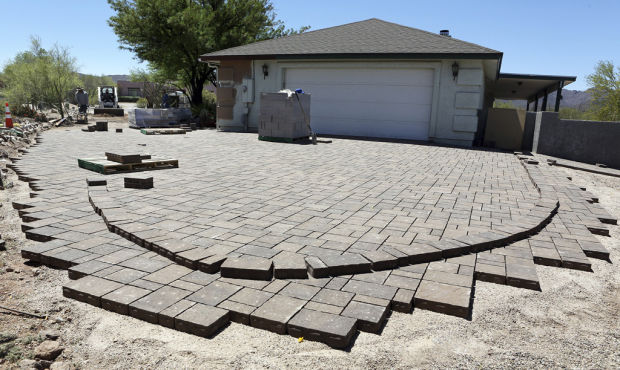
Q: I have some oil or grease stains on a few of the pavers on my patio. Do you have any suggestions for how I can clean them?
A: I’ve found that Prosoco Consolideck Oil and Grease Stain Remover can be effective in removing most stains from concrete and pavers. It’s a poultice based product that you pour out onto the stain and let it sit there. When it dries and turns to power, it can be brushed off or sprayed with a pressure washer. If you’re not satisfied with initial results, you can apply it again to a dry surface.
For more do-it-yourself tips, go to rosieonthehouse.com. An Arizona home building and remodeling industry expert for 25 years, Rosie Romero is the host of the syndicated Saturday morning Rosie on the House radio program, heard locally from 8-11 a.m. on KNST-AM (790) in Tucson and from 9-11 a.m. on KGVY-AM (1080) and -FM (100.7) in Green Valley. Call 888-767-4348.
- By Rosie Romero Special to the Arizona Daily Star
- Updated
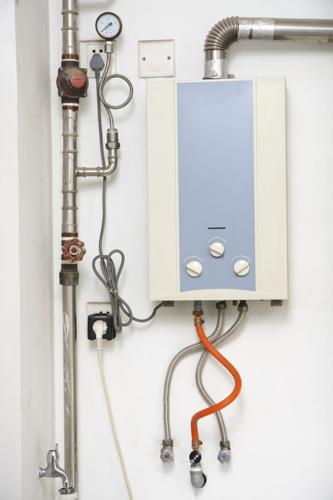
Q: I bought a home built in 2007 that already had a tankless water heater – the kind that is supposed to produce hot water instantly. But when you turn on the faucet, the hot water runs for five to 10 seconds, then the water gets cold, and then switches back. What’s wrong? Does my system need servicing of some kind? I do not have a water softener system, by the way.
A: Tankless systems can produce heated water quickly on demand. But this flash heating process has a tendency to produce mineral deposits that clog the internal equipment in the tankless system. This kind of damage can be particularly bad in Arizona where we have very hard water with lots of minerals in it. To prevent calcium buildup in your system, you must have a water softener. You will probably need to install one if you continue using a tankless system. You probably should call a plumber to look at your device to see if it’s operating properly.
For more do-it-yourself tips, go to rosieonthehouse.com. An Arizona home building and remodeling industry expert for 25 years, Rosie Romero is the host of the syndicated Saturday morning Rosie on the House radio program, heard locally from 8-11 a.m. on KNST-AM (790) in Tucson and from 9-11 a.m. on KGVY-AM (1080) and -FM (100.7) in Green Valley. Call 888-767-4348.
- By Rosie Romero Special to the Arizona Daily Star
- Updated
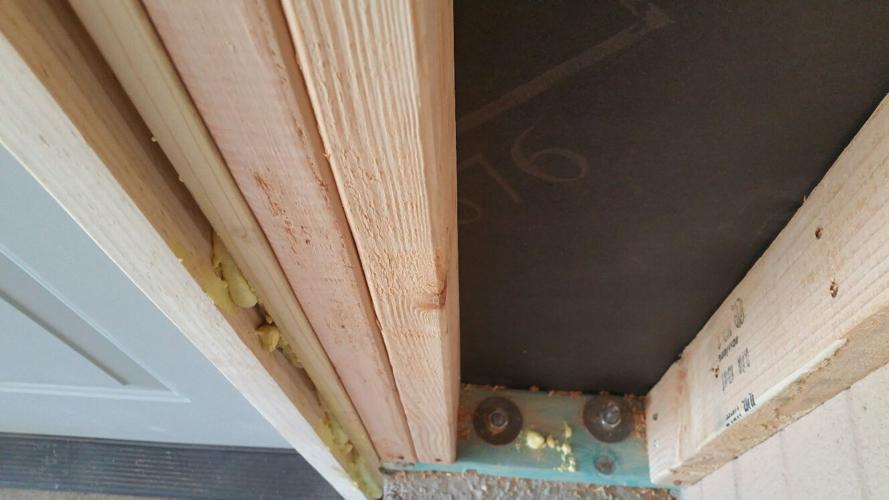
Q: I bought a 1950s-era house a couple years ago. My problem is that the previous owner added a room onto the existing carport. Now whenever there’s a heavy rain in monsoon season, the room floods. I’ve tried to fix it by tearing out some landscaping and adding drainage, but that didn’t work. I thought about installing a French drain that would take the water down to the street. But the grade of the house is only about a foot above the street. How can I fix this?
A: You might be able to fix this problem by shoring up the structure of the roof and then cutting off the studs at the bottom of the wall where you’re having a problem. You could then put concrete blocks on the slab to create a stem wall. Then you can waterproof the wall on the outside. You could probably try to do all this yourself, but it might be better to seek the help of a licensed contractor because additional steps might need to be taken.
Basically, changing a carport into a garage — and then building an addition on the finished structure — always requires building a masonry stem wall of about 6 to 8 inches high along the perimeter of the concrete slab of the carport. To build wood-framed walls on top of the stem wall, a series of 2x4 plates, studs and a bearing post must be tightly installed. That’s all part of the procedure that needs to be followed in order to get a building permit from the city for the change.
For more do-it-yourself tips, go to rosieonthehouse.com. An Arizona home building and remodeling industry expert for 25 years, Rosie Romero is the host of the syndicated Saturday morning Rosie on the House radio program, heard from 8-11 a.m. on KNST-AM (790) in Tucson and from 9-11 a.m. on KGVY-AM (1080) and -FM (100.7) in Green Valley. Call 888-767-4348.
- By Rosie Romero Special to the Arizona Daily Star
- Updated
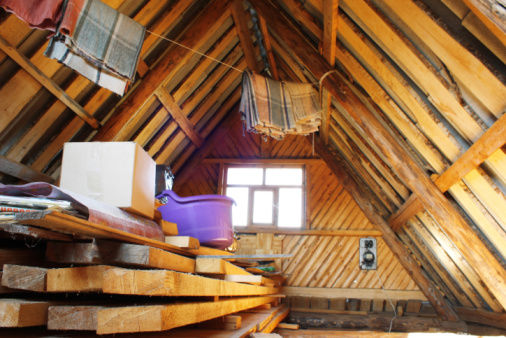
Q: Three years ago, I bought a house from a do-it-yourselfer who had cut into the garage trusses in order to build an attic storage area with pulldown stairs. I don’t think he got a building permit for the work, but now I want to have it done correctly, even though it could cost about $5,000. But I’m nervous about going to the city about getting a permit. What will they say about the rest of the house?
A: As long as you get your plans drawn up by a structural engineer, you should have no problems. Cities want to work with you to correct these unpermitted types of issues in your house, and they won’t run around your house to look for other problems to complain about.
For more do-it-yourself tips, go to rosieonthehouse.com. An Arizona home building and remodeling industry expert for 25 years, Rosie Romero is the host of the syndicated Saturday morning Rosie on the House radio program, heard from 8-11 a.m. on KNST-AM (790) in Tucson and from 9-11 a.m. on KGVY-AM (1080) and -FM (100.7) in Green Valley. Call 888-767-4348.

- By Rosie Romero Special to the Arizona Daily Star
- Updated
Q: I have a 23-year-old manufactured home that has 20-year shingles on the roof. Some of the shingles are now missing and some of the sand is missing as well from some remaining shingles. However, there is no leaking during rainstorms. I had some conflicting bids, however, on how to fix the roof. Some roofers say I need to strip everything off and replace the roof. One repair person said he would repair some of the missing shingles and the roof would probably last for a few more years. What should I do?
A: If the roof is not leaking, then I’d probably go with repairing the roof and seeing if you can get more wear out of it. It’s not unusual for a 20-year roof with shingles to last for several more years.
For more do-it-yourself tips, go to rosieonthehouse.com. An Arizona home building and remodeling industry expert for 25 years, Rosie Romero is the host of the syndicated Saturday morning Rosie on the House radio program, heard from 8-11 a.m. on KNST-AM (790) in Tucson and from 9-11 a.m. on KGVY-AM (1080) and -FM (100.7) in Green Valley. Call 888-767-4348.
- By Rosie Romero Special to the Arizona Daily Star
- Updated
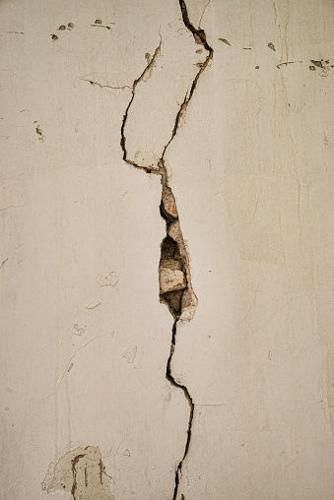
Q: About six years ago, I put in patios and stucco-covered walls in my yard. Now the front wall has a narrow crack that runs between the concrete blocks underneath the stucco from the bottom to the top of the wall. It’s a very thin crack about the thickness of the lead in a mechanical pencil. What’s happening and how can I fix this?
A: If the crack is that thin, there’s probably nothing structural going on with your wall. Just clean out the crack thoroughly, while removing any loose material and dirt. Then you can fill the crack with latex caulk mixed with sand. Feather in the mixture with your finger and then use a damp sponge to smooth out the area. After the area thoroughly dries, you can use regular paint on the wall to cover up the caulking — not elastomeric paint.
For more do-it-yourself tips, go to rosieonthehouse.com. An Arizona home building and remodeling industry expert for 25 years, Rosie Romero is the host of the syndicated Saturday morning Rosie on the House radio program, heard locally from 8-11 a.m. on KNST-AM (790) in Tucson and from 9-11 a.m. on KGVY-AM (1080) and -FM (100.7) in Green Valley. Call 888-767-4348.
- By Rosie Romero Special to the Arizona Daily Star
- Updated
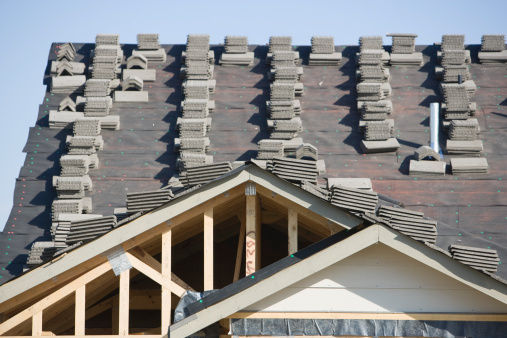
Q: My peaked roof was recently redone with 30-year shingles and I also had my flat roof foamed. Now I’d like to put solar panels on the roof, but I’m worried about what effect that will have on the warranty for my roofing job. Will my warranty be any good anymore?
A: This change can definitely affect your warranty. You need to have the solar company contact the roofing company in advance to demonstrate how and where the solar installation will be done. Generally, only the warranty on the area covered by panels would be affected. The rest of the roof should still be under warranty.
For more do-it-yourself tips, go to rosieonthehouse.com. An Arizona home building and remodeling industry expert for 25 years, Rosie Romero is the host of the syndicated Saturday morning Rosie on the House radio program, heard locally from 8-11 a.m. on KNST-AM (790) in Tucson and from 9-11 a.m. on KGVY-AM (1080) and -FM (100.7) in Green Valley. Call 888-767-4348.
- By Rosie Romero Special to the Arizona Daily Star
- Updated
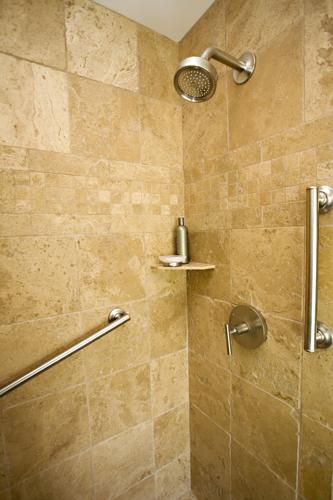
Q: The screws have rusted on the grab bars in our bathroom. The heads of the screws are now gone, and I need to remove the screw shaft to install news screws. Any tips? Also, should I use brass or stainless steel screws with my stainless grab bars? The stainless steel screws rusted after 10 years.
A: Attempting to remove the body of the damaged screw from the existing mounting location will more than likely do more damage to the surrounding wall surface than you may be willing to repair. Instead, you can probably move the mounting plates slightly so that the new screw location will be adjacent to the existing ones. We recommend using stainless steel screws again as they are more durable and stronger than brass screws. To help slow corrosion, use high-quality stainless screws and inject some clear silicone caulking into the predrilled pilot hole before inserting the screw. Then put a small amount of silicone on the screw’s head itself to protect it.
For more do-it-yourself tips, go to rosieonthehouse.com. An Arizona home building and remodeling industry expert for 25 years, Rosie Romero is the host of the syndicated Saturday morning Rosie on the House radio program, heard locally from 8-11 a.m. on KNST-AM (790) in Tucson and from 9-11 a.m. on KGVY-AM (1080) and -FM (100.7) in Green Valley. Call 888-767-4348.
- By Rosie Romero Special to the Arizona Daily Star
- Updated
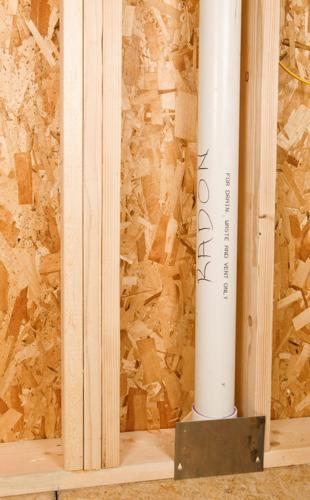
Q: My home is located in the Colossal Cave area near Vail and there’s a lot of fractured granite on the site. You really have to use a jackhammer to build here or to plant a tree. I’ve heard that all that granite could create a radon hazard inside a house. So what should I do?
A: Heavy presence of granite on a site can be a warning sign of radon, a cancer-causing radioactive gas. But there are safe, inexpensive tests available you can do in your house to find out. After running a test, you send the results to a lab to be analyzed. If it is determined that there is a high concentration of radon in your house, the problem can be fixed. Typically, a 4-inch diameter PVC exhaust pipe is installed in a closet and runs from below your concrete slab up to your attic. An exhaust fan on top of the pipe runs continually to blow away the radon, according to Arizona Foundation Solutions, a firm that treats radon problems.
For more do-it-yourself tips, go to rosieonthehouse.com. An Arizona home building and remodeling industry expert for 25 years, Rosie Romero is the host of the syndicated Saturday morning Rosie on the House radio program, heard locally from 8-11 a.m. on KNST-AM (790) in Tucson and from 9-11 a.m. on KGVY-AM (1080) and -FM (100.7) in Green Valley. Call 888-767-4348.
- By Rosie Romero Special to the Arizona Daily Star
- Updated
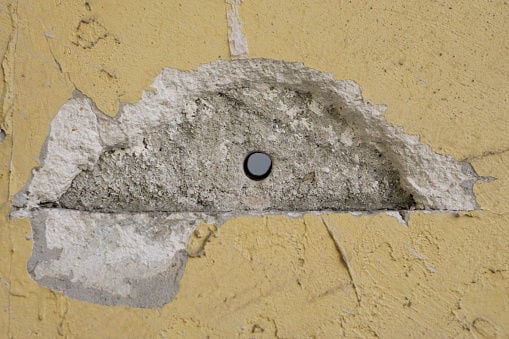
Q: I was trying to install an outside light and accidentally drilled a hole in the wrong place on the smooth stucco exterior finish of my house. So now I have a 1-1/2-inch diameter hole to fill. What can I do to fill it so it’s not visible?
A: It’s going to take some extra effort to make a hole that big “invisible” after it has been drilled into smooth stucco that doesn’t have some texturing. You need to start by plugging the hole with a dry, powdered product that you can buy at the hardware store. Mix the powder with a little water and fill the patch with the mixture. Then let it set and dry for a couple of days until the mixture cracks at the edges where the mixture and the stucco meet. Fill it again going six to eight inches out beyond the hole and let it dry again. Then smooth out the area. Finally, you will roll elastomeric stucco caulk over the area and let it set. Then you can repaint the stucco.
For more do-it-yourself tips, go to rosieonthehouse.com. An Arizona home building and remodeling industry expert for 25 years, Rosie Romero is the host of the syndicated Saturday morning Rosie on the House radio program, heard locally from 8-11 a.m. on KNST-AM (790) in Tucson and from 9-11 a.m. on KGVY-AM (1080) and -FM (100.7) in Green Valley. Call 888-767-4348.
- By Rosie Romero Special to the Arizona Daily Star
- Updated
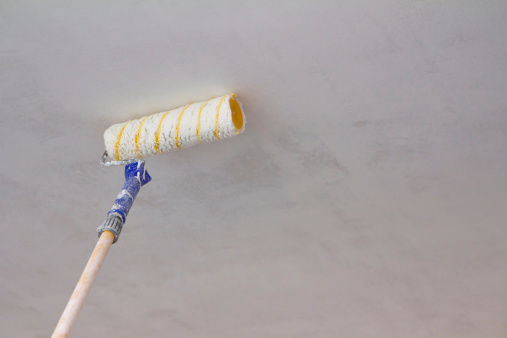
Q: We recently got a quote for $5,400 for putting energy-savings paint on the ceilings inside our home. We have an 1,870 square-foot house that has no attic so we can’t upgrade the insulation in the attic. But we thought that possibly painting the interior ceilings could help reduce our utility bills in the summer. What do you think?
A: There is no such thing as “energy-saving” paint for use inside homes. That $5,400 quote would be a complete waste of money. Even if you could save 2 percent of your bill every month, you would never get your money back on this expensive paint job.
For more do-it-yourself tips, go to rosieonthehouse.com. An Arizona home building and remodeling industry expert for 25 years, Rosie Romero is the host of the syndicated Saturday morning Rosie on the House radio program, heard locally from 8-11 a.m. on KNST-AM (790) in Tucson and from 9-11 a.m. on KGVY-AM (1080) and -FM (100.7) in Green Valley. Call 888-767-4348.
- By Rosie Romero Special to the Arizona Daily Star
- Updated
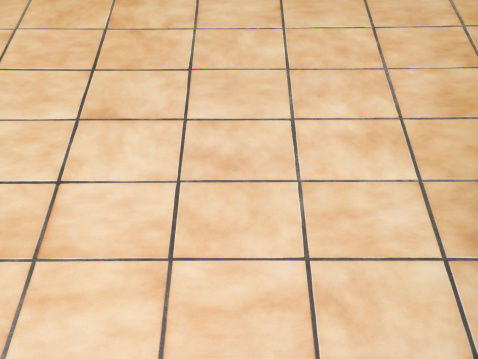
Q: I have 200 square feet of ceramic tile in a room in my house. Is there anything I can put over that? I want to cover it up instead of replacing it. Can I put tile over tile?
A: Yes, that’s usually possible to do, but what you are covering up has to be absolutely solid with no cracks and no hollow sounds in the old flooring. But you’ve got to realize that once it’s done, your new floor level can be half an inch higher than the old floor. That means your cabinet toekicks will be shorter; the dishwasher and refrigerator may not fit in their old spaces. Doors to the room may even need trimming. If you can live with those adjustments, covering the old tile will be faster and less messy than removing it. They actually sell tiles that are made to lay on your old tile.
For more do-it-yourself tips, go to rosieonthehouse.com. An Arizona home building and remodeling industry expert for 25 years, Rosie Romero is the host of the syndicated Saturday morning Rosie on the House radio program, heard locally from 8-11 a.m. on KNST-AM (790) in Tucson and from 9-11 a.m. on KGVY-AM (1080) and -FM (100.7) in Green Valley. Call 888-767-4348.
- By Rosie Romero Special to the Arizona Daily Star
- Updated
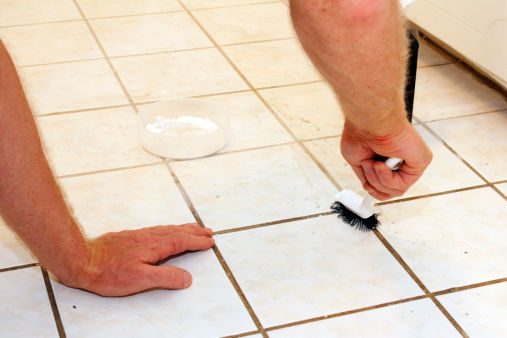
Q: I want to clean the grout lines between the tiles in my house. I have a lot of tile with half-inch grout lines that look very dirty. I’ve gotten down on my hands and knees and tried to use a toothbrush and vinegar to clean it. But that did very little. Can I stain the grout? And how do I do that?
A: Staining grout can be a difficult and messy job, but it can greatly improve the appearance of your flooring. To start, equip yourself with protective gear: safety goggles for your eyes, heavy gloves, kneepads and old clothes. Then you buy sulfamic acid powder, a colorless compound that is safer than most other cleaning agents. Mix the powder with water, according to directions. Apply a heavy layer on the grout. Let it set 30 minutes; then remove it, and you’ll find you’ve got up all the dirt that stained the grout. After wiping up the mixture, let the grout dry for 24 hours. Then you’re ready to apply colored grout stain to the floor.
Generally, this process is an excellent repair for a home. As you apply the stain, you’re actually sealing all the pores in the grout so that any time you spill something in future, the spilled liquid will sit right on top of the grout and be easy to wipe up.
For more do-it-yourself tips, go to rosieonthehouse.com. An Arizona home building and remodeling industry expert for 25 years, Rosie Romero is the host of the syndicated Saturday morning Rosie on the House radio program, heard locally from 8-11 a.m. on KNST-AM (790) in Tucson and from 9-11 a.m. on KGVY-AM (1080) and -FM (100.7) in Green Valley. Call 888-767-4348.
- By Rosie Romero Special to the Arizona Daily Star
- Updated
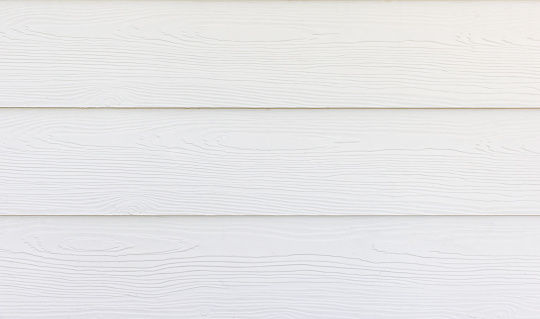
Q: My two-story house has stucco on the bottom and sheets of fiberboard siding on top. Lately, the sheets of siding have been pulling away from the seams where nails are holding them in place. Could it be because of a leak problem that’s causing the sheets to swell? And how can I fix this?
A: It may just due to a lack of paint on the siding walls. You definitely want to control this problem or you could end up with serious damage to the house. Have a paint company come out to assess the problem with the siding. It’s possible you could stop it by resecuring the loose siding, caulking all the joints and nail holes and then putting a good coat of 100 percent acrylic paint on the exterior of your home.
For more do-it-yourself tips, go to rosieonthehouse.com. An Arizona home building and remodeling industry expert for 25 years, Rosie Romero is the host of the syndicated Saturday morning Rosie on the House radio program, heard locally from 8-11 a.m. on KNST-AM (790) in Tucson and from 9-11 a.m. on KGVY-AM (1080) and -FM (100.7) in Green Valley. Call 888-767-4348.
- By Rosie Romero Special to the Arizona Daily Star
- Updated
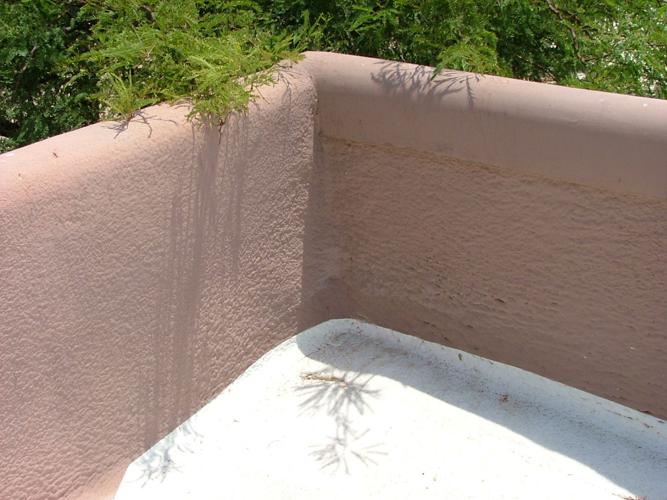
Q: I have a house that was built in the 1970s and that has a flat roof with a small parapet wall around it. Can I have a pitched roof put on top of the flat roof? Do homeowners ever do that?
A: Yes, you can do it. Probably you want to have one part of the roof slope toward the front of the house, and the other half sloping toward the backyard. The main objective in this kind of remodel is to find the load bearing walls where you can build the trusses. You’ll want to insulate inside, under the new roof and then you may be able to use that area for storage. What you need to do first is have a remodeler come out and tell you how the work could be done.
For more do-it-yourself tips, go to rosieonthehouse.com. An Arizona home building and remodeling industry expert for 25 years, Rosie Romero is the host of the syndicated Saturday morning Rosie on the House radio program, heard locally from 8-11 a.m. on KNST-AM (790) in Tucson and from 9-11 a.m. on KGVY-AM (1080) and -FM (100.7) in Green Valley. Call 888-767-4348.
- By Rosie Romero Special to the Arizona Daily Star
- Updated
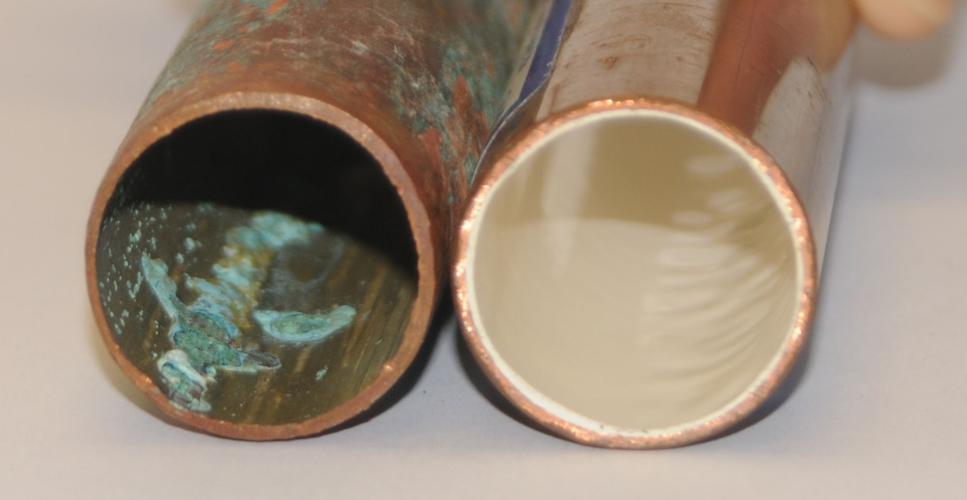
Q: Tree roots have intruded into our sewer line that leads from the house to the street and then connects with the municipal drain. The plumber has recommended removing the roots to clean out the drain. Then he would either inject an epoxy coating down the pipe that would run up to the city connection or do something called “pipe bursting,” a way of replacing broken pipe underground without digging a trench. Our house is about 26 years old. Which method should we choose?
A: I would lean toward going with the epoxy lining because it would tend to be less intrusive. But you do want to be sure that the new lining connects up properly with the city line.
For more do-it-yourself tips, go to rosieonthehouse.com. An Arizona home building and remodeling industry expert for 25 years, Rosie Romero is the host of the syndicated Saturday morning Rosie on the House radio program, heard locally from 8-11 a.m. on KNST-AM (790) in Tucson and from 9-11 a.m. on KGVY-AM (1080) and -FM (100.7) in Green Valley. Call 888-767-4348.
- By Rosie Romero Special to the Arizona Daily Star
- Updated
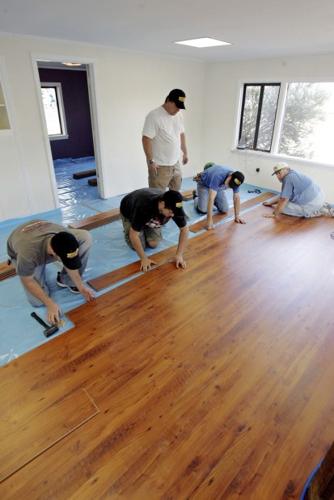
Q: I have a wood laminate floor in my house and no matter how often I clean it, a half-hour later it looks dirty again. How can I fix that?
A: You need to use a heavy-duty cleaner on the floor and strip it down to the original wood. Then you can refinish the flooring. But do a small test area first to see how it works before you redo the entire floor.
For more do-it-yourself tips, go to rosieonthehouse.com. An Arizona home building and remodeling industry expert for 25 years, Rosie Romero is the host of the syndicated Saturday morning Rosie on the House radio program, heard locally from 8-11 a.m. on KNST-AM (790) in Tucson and from 9-11 a.m. on KGVY-AM (1080) and -FM (100.7) in Green Valley. Call 888-767-4348.

- By Rosie Romero Special to the Arizona Daily Star
- Updated
Q: I’m rebuilding the manifold for the irrigation system I use for my backyard and patio. In the past there have been a lot of problems with the old system that was put in by the previous owner. He crammed a PVC pipe into the valve box that was squeezed in between a wall and the patio and actually bent the pipe to get it in. The pipe leaked and that attracted tree roots that have grown into the valve box and are starting to damage the wall. Do you have any suggestions?
A: It would be good to relocate the manifold and associated valves to an area with more room for a larger valve box. Carefully laid out, there should be no need for excess PVC piping and valve access will become much easier. You could also install the manifold and valves above ground.

- By Rosie Romero Special to the Arizona Daily Star
- Updated
Q: I recently looked at a piece of property to buy and when I went out into the area where the backyard would be located there was a depressed area and in the middle of it there seemed to be huge cracks. Is there any way that could be fixed?
A: If that is a true fissure in the soil on the lot, you probably won’t have any luck in fixing it. There are some areas in Arizona where there are fissures that just can’t be repaired. Before buying that property, you may want to look at the National Geological Survey webpage, azgs.az.gov, which has mapped out and recorded areas where there are serious fissures.

- By Rosie Romero Special to the Arizona Daily Star
- Updated
Q: I moved to Arizona a couple years ago from California, and I’m wondering if there is any way to chill the water coming out of the tap in the summertime. I was shocked the first time I took a shower here in the summer because I didn’t even need to turn on the hot water. I thought that the hot and cold water lines had been reversed.
A: You can buy a pressurized holding tank to install in the house and use it as a cooling station for water. When your pipes empty, it will recharge the line with cooler water. You could do the same thing by buying another water heater tank — the cheapest you can find — and using it to hold water until it cools. But doing that can be expensive and you have to find space in your house for the tank because putting the tank in the garage wouldn’t cool the water enough.
For more do-it-yourself tips, go to rosieonthehouse.com. An Arizona home building and remodeling industry expert for 25 years, Rosie Romero is the host of the syndicated Saturday morning Rosie on the House radio program, heard locally from 8-11 a.m. on KNST-AM (790) in Tucson and from 9-11 a.m. on KGVY-AM (1080) and -FM (100.7) in Green Valley. Call 888-767-4348.
- By Rosie Romero Special to the Arizona Daily Star
Q: I have some oil or grease stains on a few of the pavers on my patio. Do you have any suggestions for how I can clean them?
A: I’ve found that Prosoco Consolideck Oil and Grease Stain Remover can be effective in removing most stains from concrete and pavers. It’s a poultice based product that you pour out onto the stain and let it sit there. When it dries and turns to power, it can be brushed off or sprayed with a pressure washer. If you’re not satisfied with initial results, you can apply it again to a dry surface.
For more do-it-yourself tips, go to rosieonthehouse.com. An Arizona home building and remodeling industry expert for 25 years, Rosie Romero is the host of the syndicated Saturday morning Rosie on the House radio program, heard locally from 8-11 a.m. on KNST-AM (790) in Tucson and from 9-11 a.m. on KGVY-AM (1080) and -FM (100.7) in Green Valley. Call 888-767-4348.
- By Rosie Romero Special to the Arizona Daily Star
Q: I bought a home built in 2007 that already had a tankless water heater – the kind that is supposed to produce hot water instantly. But when you turn on the faucet, the hot water runs for five to 10 seconds, then the water gets cold, and then switches back. What’s wrong? Does my system need servicing of some kind? I do not have a water softener system, by the way.
A: Tankless systems can produce heated water quickly on demand. But this flash heating process has a tendency to produce mineral deposits that clog the internal equipment in the tankless system. This kind of damage can be particularly bad in Arizona where we have very hard water with lots of minerals in it. To prevent calcium buildup in your system, you must have a water softener. You will probably need to install one if you continue using a tankless system. You probably should call a plumber to look at your device to see if it’s operating properly.
For more do-it-yourself tips, go to rosieonthehouse.com. An Arizona home building and remodeling industry expert for 25 years, Rosie Romero is the host of the syndicated Saturday morning Rosie on the House radio program, heard locally from 8-11 a.m. on KNST-AM (790) in Tucson and from 9-11 a.m. on KGVY-AM (1080) and -FM (100.7) in Green Valley. Call 888-767-4348.
- By Rosie Romero Special to the Arizona Daily Star
Q: I bought a 1950s-era house a couple years ago. My problem is that the previous owner added a room onto the existing carport. Now whenever there’s a heavy rain in monsoon season, the room floods. I’ve tried to fix it by tearing out some landscaping and adding drainage, but that didn’t work. I thought about installing a French drain that would take the water down to the street. But the grade of the house is only about a foot above the street. How can I fix this?
A: You might be able to fix this problem by shoring up the structure of the roof and then cutting off the studs at the bottom of the wall where you’re having a problem. You could then put concrete blocks on the slab to create a stem wall. Then you can waterproof the wall on the outside. You could probably try to do all this yourself, but it might be better to seek the help of a licensed contractor because additional steps might need to be taken.
Basically, changing a carport into a garage — and then building an addition on the finished structure — always requires building a masonry stem wall of about 6 to 8 inches high along the perimeter of the concrete slab of the carport. To build wood-framed walls on top of the stem wall, a series of 2x4 plates, studs and a bearing post must be tightly installed. That’s all part of the procedure that needs to be followed in order to get a building permit from the city for the change.
For more do-it-yourself tips, go to rosieonthehouse.com. An Arizona home building and remodeling industry expert for 25 years, Rosie Romero is the host of the syndicated Saturday morning Rosie on the House radio program, heard from 8-11 a.m. on KNST-AM (790) in Tucson and from 9-11 a.m. on KGVY-AM (1080) and -FM (100.7) in Green Valley. Call 888-767-4348.
- By Rosie Romero Special to the Arizona Daily Star
Q: Three years ago, I bought a house from a do-it-yourselfer who had cut into the garage trusses in order to build an attic storage area with pulldown stairs. I don’t think he got a building permit for the work, but now I want to have it done correctly, even though it could cost about $5,000. But I’m nervous about going to the city about getting a permit. What will they say about the rest of the house?
A: As long as you get your plans drawn up by a structural engineer, you should have no problems. Cities want to work with you to correct these unpermitted types of issues in your house, and they won’t run around your house to look for other problems to complain about.
For more do-it-yourself tips, go to rosieonthehouse.com. An Arizona home building and remodeling industry expert for 25 years, Rosie Romero is the host of the syndicated Saturday morning Rosie on the House radio program, heard from 8-11 a.m. on KNST-AM (790) in Tucson and from 9-11 a.m. on KGVY-AM (1080) and -FM (100.7) in Green Valley. Call 888-767-4348.
- By Rosie Romero Special to the Arizona Daily Star
Q: I have a 23-year-old manufactured home that has 20-year shingles on the roof. Some of the shingles are now missing and some of the sand is missing as well from some remaining shingles. However, there is no leaking during rainstorms. I had some conflicting bids, however, on how to fix the roof. Some roofers say I need to strip everything off and replace the roof. One repair person said he would repair some of the missing shingles and the roof would probably last for a few more years. What should I do?
A: If the roof is not leaking, then I’d probably go with repairing the roof and seeing if you can get more wear out of it. It’s not unusual for a 20-year roof with shingles to last for several more years.
For more do-it-yourself tips, go to rosieonthehouse.com. An Arizona home building and remodeling industry expert for 25 years, Rosie Romero is the host of the syndicated Saturday morning Rosie on the House radio program, heard from 8-11 a.m. on KNST-AM (790) in Tucson and from 9-11 a.m. on KGVY-AM (1080) and -FM (100.7) in Green Valley. Call 888-767-4348.
- By Rosie Romero Special to the Arizona Daily Star
Q: About six years ago, I put in patios and stucco-covered walls in my yard. Now the front wall has a narrow crack that runs between the concrete blocks underneath the stucco from the bottom to the top of the wall. It’s a very thin crack about the thickness of the lead in a mechanical pencil. What’s happening and how can I fix this?
A: If the crack is that thin, there’s probably nothing structural going on with your wall. Just clean out the crack thoroughly, while removing any loose material and dirt. Then you can fill the crack with latex caulk mixed with sand. Feather in the mixture with your finger and then use a damp sponge to smooth out the area. After the area thoroughly dries, you can use regular paint on the wall to cover up the caulking — not elastomeric paint.
For more do-it-yourself tips, go to rosieonthehouse.com. An Arizona home building and remodeling industry expert for 25 years, Rosie Romero is the host of the syndicated Saturday morning Rosie on the House radio program, heard locally from 8-11 a.m. on KNST-AM (790) in Tucson and from 9-11 a.m. on KGVY-AM (1080) and -FM (100.7) in Green Valley. Call 888-767-4348.
- By Rosie Romero Special to the Arizona Daily Star
Q: My peaked roof was recently redone with 30-year shingles and I also had my flat roof foamed. Now I’d like to put solar panels on the roof, but I’m worried about what effect that will have on the warranty for my roofing job. Will my warranty be any good anymore?
A: This change can definitely affect your warranty. You need to have the solar company contact the roofing company in advance to demonstrate how and where the solar installation will be done. Generally, only the warranty on the area covered by panels would be affected. The rest of the roof should still be under warranty.
For more do-it-yourself tips, go to rosieonthehouse.com. An Arizona home building and remodeling industry expert for 25 years, Rosie Romero is the host of the syndicated Saturday morning Rosie on the House radio program, heard locally from 8-11 a.m. on KNST-AM (790) in Tucson and from 9-11 a.m. on KGVY-AM (1080) and -FM (100.7) in Green Valley. Call 888-767-4348.
- By Rosie Romero Special to the Arizona Daily Star
Q: The screws have rusted on the grab bars in our bathroom. The heads of the screws are now gone, and I need to remove the screw shaft to install news screws. Any tips? Also, should I use brass or stainless steel screws with my stainless grab bars? The stainless steel screws rusted after 10 years.
A: Attempting to remove the body of the damaged screw from the existing mounting location will more than likely do more damage to the surrounding wall surface than you may be willing to repair. Instead, you can probably move the mounting plates slightly so that the new screw location will be adjacent to the existing ones. We recommend using stainless steel screws again as they are more durable and stronger than brass screws. To help slow corrosion, use high-quality stainless screws and inject some clear silicone caulking into the predrilled pilot hole before inserting the screw. Then put a small amount of silicone on the screw’s head itself to protect it.
For more do-it-yourself tips, go to rosieonthehouse.com. An Arizona home building and remodeling industry expert for 25 years, Rosie Romero is the host of the syndicated Saturday morning Rosie on the House radio program, heard locally from 8-11 a.m. on KNST-AM (790) in Tucson and from 9-11 a.m. on KGVY-AM (1080) and -FM (100.7) in Green Valley. Call 888-767-4348.
- By Rosie Romero Special to the Arizona Daily Star
Q: My home is located in the Colossal Cave area near Vail and there’s a lot of fractured granite on the site. You really have to use a jackhammer to build here or to plant a tree. I’ve heard that all that granite could create a radon hazard inside a house. So what should I do?
A: Heavy presence of granite on a site can be a warning sign of radon, a cancer-causing radioactive gas. But there are safe, inexpensive tests available you can do in your house to find out. After running a test, you send the results to a lab to be analyzed. If it is determined that there is a high concentration of radon in your house, the problem can be fixed. Typically, a 4-inch diameter PVC exhaust pipe is installed in a closet and runs from below your concrete slab up to your attic. An exhaust fan on top of the pipe runs continually to blow away the radon, according to Arizona Foundation Solutions, a firm that treats radon problems.
For more do-it-yourself tips, go to rosieonthehouse.com. An Arizona home building and remodeling industry expert for 25 years, Rosie Romero is the host of the syndicated Saturday morning Rosie on the House radio program, heard locally from 8-11 a.m. on KNST-AM (790) in Tucson and from 9-11 a.m. on KGVY-AM (1080) and -FM (100.7) in Green Valley. Call 888-767-4348.
- By Rosie Romero Special to the Arizona Daily Star
Q: I was trying to install an outside light and accidentally drilled a hole in the wrong place on the smooth stucco exterior finish of my house. So now I have a 1-1/2-inch diameter hole to fill. What can I do to fill it so it’s not visible?
A: It’s going to take some extra effort to make a hole that big “invisible” after it has been drilled into smooth stucco that doesn’t have some texturing. You need to start by plugging the hole with a dry, powdered product that you can buy at the hardware store. Mix the powder with a little water and fill the patch with the mixture. Then let it set and dry for a couple of days until the mixture cracks at the edges where the mixture and the stucco meet. Fill it again going six to eight inches out beyond the hole and let it dry again. Then smooth out the area. Finally, you will roll elastomeric stucco caulk over the area and let it set. Then you can repaint the stucco.
For more do-it-yourself tips, go to rosieonthehouse.com. An Arizona home building and remodeling industry expert for 25 years, Rosie Romero is the host of the syndicated Saturday morning Rosie on the House radio program, heard locally from 8-11 a.m. on KNST-AM (790) in Tucson and from 9-11 a.m. on KGVY-AM (1080) and -FM (100.7) in Green Valley. Call 888-767-4348.
- By Rosie Romero Special to the Arizona Daily Star
Q: We recently got a quote for $5,400 for putting energy-savings paint on the ceilings inside our home. We have an 1,870 square-foot house that has no attic so we can’t upgrade the insulation in the attic. But we thought that possibly painting the interior ceilings could help reduce our utility bills in the summer. What do you think?
A: There is no such thing as “energy-saving” paint for use inside homes. That $5,400 quote would be a complete waste of money. Even if you could save 2 percent of your bill every month, you would never get your money back on this expensive paint job.
For more do-it-yourself tips, go to rosieonthehouse.com. An Arizona home building and remodeling industry expert for 25 years, Rosie Romero is the host of the syndicated Saturday morning Rosie on the House radio program, heard locally from 8-11 a.m. on KNST-AM (790) in Tucson and from 9-11 a.m. on KGVY-AM (1080) and -FM (100.7) in Green Valley. Call 888-767-4348.
- By Rosie Romero Special to the Arizona Daily Star
Q: I have 200 square feet of ceramic tile in a room in my house. Is there anything I can put over that? I want to cover it up instead of replacing it. Can I put tile over tile?
A: Yes, that’s usually possible to do, but what you are covering up has to be absolutely solid with no cracks and no hollow sounds in the old flooring. But you’ve got to realize that once it’s done, your new floor level can be half an inch higher than the old floor. That means your cabinet toekicks will be shorter; the dishwasher and refrigerator may not fit in their old spaces. Doors to the room may even need trimming. If you can live with those adjustments, covering the old tile will be faster and less messy than removing it. They actually sell tiles that are made to lay on your old tile.
For more do-it-yourself tips, go to rosieonthehouse.com. An Arizona home building and remodeling industry expert for 25 years, Rosie Romero is the host of the syndicated Saturday morning Rosie on the House radio program, heard locally from 8-11 a.m. on KNST-AM (790) in Tucson and from 9-11 a.m. on KGVY-AM (1080) and -FM (100.7) in Green Valley. Call 888-767-4348.
- By Rosie Romero Special to the Arizona Daily Star
Q: I want to clean the grout lines between the tiles in my house. I have a lot of tile with half-inch grout lines that look very dirty. I’ve gotten down on my hands and knees and tried to use a toothbrush and vinegar to clean it. But that did very little. Can I stain the grout? And how do I do that?
A: Staining grout can be a difficult and messy job, but it can greatly improve the appearance of your flooring. To start, equip yourself with protective gear: safety goggles for your eyes, heavy gloves, kneepads and old clothes. Then you buy sulfamic acid powder, a colorless compound that is safer than most other cleaning agents. Mix the powder with water, according to directions. Apply a heavy layer on the grout. Let it set 30 minutes; then remove it, and you’ll find you’ve got up all the dirt that stained the grout. After wiping up the mixture, let the grout dry for 24 hours. Then you’re ready to apply colored grout stain to the floor.
Generally, this process is an excellent repair for a home. As you apply the stain, you’re actually sealing all the pores in the grout so that any time you spill something in future, the spilled liquid will sit right on top of the grout and be easy to wipe up.
For more do-it-yourself tips, go to rosieonthehouse.com. An Arizona home building and remodeling industry expert for 25 years, Rosie Romero is the host of the syndicated Saturday morning Rosie on the House radio program, heard locally from 8-11 a.m. on KNST-AM (790) in Tucson and from 9-11 a.m. on KGVY-AM (1080) and -FM (100.7) in Green Valley. Call 888-767-4348.
- By Rosie Romero Special to the Arizona Daily Star
Q: My two-story house has stucco on the bottom and sheets of fiberboard siding on top. Lately, the sheets of siding have been pulling away from the seams where nails are holding them in place. Could it be because of a leak problem that’s causing the sheets to swell? And how can I fix this?
A: It may just due to a lack of paint on the siding walls. You definitely want to control this problem or you could end up with serious damage to the house. Have a paint company come out to assess the problem with the siding. It’s possible you could stop it by resecuring the loose siding, caulking all the joints and nail holes and then putting a good coat of 100 percent acrylic paint on the exterior of your home.
For more do-it-yourself tips, go to rosieonthehouse.com. An Arizona home building and remodeling industry expert for 25 years, Rosie Romero is the host of the syndicated Saturday morning Rosie on the House radio program, heard locally from 8-11 a.m. on KNST-AM (790) in Tucson and from 9-11 a.m. on KGVY-AM (1080) and -FM (100.7) in Green Valley. Call 888-767-4348.
- By Rosie Romero Special to the Arizona Daily Star
Q: I have a house that was built in the 1970s and that has a flat roof with a small parapet wall around it. Can I have a pitched roof put on top of the flat roof? Do homeowners ever do that?
A: Yes, you can do it. Probably you want to have one part of the roof slope toward the front of the house, and the other half sloping toward the backyard. The main objective in this kind of remodel is to find the load bearing walls where you can build the trusses. You’ll want to insulate inside, under the new roof and then you may be able to use that area for storage. What you need to do first is have a remodeler come out and tell you how the work could be done.
For more do-it-yourself tips, go to rosieonthehouse.com. An Arizona home building and remodeling industry expert for 25 years, Rosie Romero is the host of the syndicated Saturday morning Rosie on the House radio program, heard locally from 8-11 a.m. on KNST-AM (790) in Tucson and from 9-11 a.m. on KGVY-AM (1080) and -FM (100.7) in Green Valley. Call 888-767-4348.
- By Rosie Romero Special to the Arizona Daily Star
Q: Tree roots have intruded into our sewer line that leads from the house to the street and then connects with the municipal drain. The plumber has recommended removing the roots to clean out the drain. Then he would either inject an epoxy coating down the pipe that would run up to the city connection or do something called “pipe bursting,” a way of replacing broken pipe underground without digging a trench. Our house is about 26 years old. Which method should we choose?
A: I would lean toward going with the epoxy lining because it would tend to be less intrusive. But you do want to be sure that the new lining connects up properly with the city line.
For more do-it-yourself tips, go to rosieonthehouse.com. An Arizona home building and remodeling industry expert for 25 years, Rosie Romero is the host of the syndicated Saturday morning Rosie on the House radio program, heard locally from 8-11 a.m. on KNST-AM (790) in Tucson and from 9-11 a.m. on KGVY-AM (1080) and -FM (100.7) in Green Valley. Call 888-767-4348.
- By Rosie Romero Special to the Arizona Daily Star
Q: I have a wood laminate floor in my house and no matter how often I clean it, a half-hour later it looks dirty again. How can I fix that?
A: You need to use a heavy-duty cleaner on the floor and strip it down to the original wood. Then you can refinish the flooring. But do a small test area first to see how it works before you redo the entire floor.
For more do-it-yourself tips, go to rosieonthehouse.com. An Arizona home building and remodeling industry expert for 25 years, Rosie Romero is the host of the syndicated Saturday morning Rosie on the House radio program, heard locally from 8-11 a.m. on KNST-AM (790) in Tucson and from 9-11 a.m. on KGVY-AM (1080) and -FM (100.7) in Green Valley. Call 888-767-4348.
- By Rosie Romero Special to the Arizona Daily Star
Q: I’m rebuilding the manifold for the irrigation system I use for my backyard and patio. In the past there have been a lot of problems with the old system that was put in by the previous owner. He crammed a PVC pipe into the valve box that was squeezed in between a wall and the patio and actually bent the pipe to get it in. The pipe leaked and that attracted tree roots that have grown into the valve box and are starting to damage the wall. Do you have any suggestions?
A: It would be good to relocate the manifold and associated valves to an area with more room for a larger valve box. Carefully laid out, there should be no need for excess PVC piping and valve access will become much easier. You could also install the manifold and valves above ground.
- By Rosie Romero Special to the Arizona Daily Star
Q: I recently looked at a piece of property to buy and when I went out into the area where the backyard would be located there was a depressed area and in the middle of it there seemed to be huge cracks. Is there any way that could be fixed?
A: If that is a true fissure in the soil on the lot, you probably won’t have any luck in fixing it. There are some areas in Arizona where there are fissures that just can’t be repaired. Before buying that property, you may want to look at the National Geological Survey webpage, azgs.az.gov, which has mapped out and recorded areas where there are serious fissures.
- By Rosie Romero Special to the Arizona Daily Star
Q: I moved to Arizona a couple years ago from California, and I’m wondering if there is any way to chill the water coming out of the tap in the summertime. I was shocked the first time I took a shower here in the summer because I didn’t even need to turn on the hot water. I thought that the hot and cold water lines had been reversed.
A: You can buy a pressurized holding tank to install in the house and use it as a cooling station for water. When your pipes empty, it will recharge the line with cooler water. You could do the same thing by buying another water heater tank — the cheapest you can find — and using it to hold water until it cools. But doing that can be expensive and you have to find space in your house for the tank because putting the tank in the garage wouldn’t cool the water enough.
For more do-it-yourself tips, go to rosieonthehouse.com. An Arizona home building and remodeling industry expert for 25 years, Rosie Romero is the host of the syndicated Saturday morning Rosie on the House radio program, heard locally from 8-11 a.m. on KNST-AM (790) in Tucson and from 9-11 a.m. on KGVY-AM (1080) and -FM (100.7) in Green Valley. Call 888-767-4348.
 Tucson to get a Teso Life store
