

Bachelor party shooting; dirty bird rescue; one grizzly per lifetime
- Updated
Odd and interesting news from around the West.
- By NATALIE BRUZDA Las Vegas Review-Journal
- Updated
LAS VEGAS — The elders of the Las Vegas Paiute Tribe have always told stories of the song carriers — the ones who would continue to carry on the sounds of their sacred Salt Song ceremonies.
But they were quite surprised when the responsibility — and the songs — chose 9-year-old Tobyas Spotted Eagle.
"His innocence or maybe a combination of things," said his father, Chris Spotted Eagle, spiritual leader for the tribe. "I like to believe that the songs were actually calling out to him, and that's the way it's been told to me by some of the elders."
To have a person as young as Tobyas — now 11 — perform the Salt Songs was unheard of and almost taboo.
"We didn't know how the other elders were going to perceive it or accept it, with him sitting with us," Chris Spotted Eagle said. "We were really leery. We didn't want to offend."
He first joined his father and other members of the tribe in performing the ceremonies two years ago, reported the Las Vegas Review-Journal (http://bit.ly/29eWKt2).
In question was his level of maturity, as the dusk-to-dawn ceremony is performed over the departed body of a tribal member who has passed.
The singers are tasked with performing a collection of about 140 songs in a sacred ceremony that prepares the spirit to cross over to the other side.
"Because of the consciousness, because of the heaviness of the responsibility, we were a little reluctant and reserved on if he was going to mentally have the stability to handle what these songs are about and what they're able to do," Chris Spotted Eagle said.
The songs are sung in accordance with where they were gathered along the Salt Song Trail, which travels north along the Colorado River to the Kaibab and Colorado Plateau, into southern Utah, and then west to Mount Charleston. The trail moves farther west into the Pacific Ocean, laps back east through the Mojave Desert, and ends at the Grand Canyon.
"That spirit is running, running and running, and right at the end, at dawn, they make the leap over the Grand Canyon in our spiritual area," said Chris Spotted Eagle. "We've got to make sure they ain't stumbling along the way, or they'll fall into the river."
The songs build momentum as the evening progresses and the night sky darkens, and when the voice of Tobyas cuts through, any trepidation about his maturity falls quickly away.
"He's done better than we ever thought," Chris Spotted Eagle said. "He belts it out with all of us. Sometimes when you hear that youth voice, it actually wakes up these elders. It makes us so much more powerful. It's amazing to see it."
THE MOMENT
Chris Spotted Eagle first noticed his son's strong spiritual connection as an infant.
"He was starting to sing them in his sleep," he said. "And he was starting to sing them randomly, and he had never really heard these songs before, because we don't like the children around the ceremonies."
The pivotal moment manifested itself two nights after Chris purchased Tobyas a gourd rattle, thinking of it as a novelty item lacking any sort of spiritual content.
"I sang one night, but I didn't know the rules, I didn't know you couldn't sing them at night because they are really powerful songs," Tobyas said. "I just felt a mixture of the good and evil spirits. I also felt my grandpa who passed on."
When father and son met with elders to get to the bottom of what happened, they expressed their excitement about his progression.
"He was able to tap into it, like plugging it into the wall," Chris Spotted Eagle said. "It was that powerful."
At his first ceremony, Tobyas said he wasn't sure he'd be able to go all night. As a 9-year-old with a routine bedtime, staying up and energized into the early morning hours is no small feat.
Learning all of the songs, each sung in the native language, is not easy either.
"When I was there for the first one, they whispered in my ear and told me what the next song was going to be," he said. "They kept doing that and doing that. It helped me a lot. Now I know most of the songs that they sing."
His father said his son responds to the songs like "a fish to water."
"I've heard these songs my whole life and I struggle with some," Chris Spotted Eagle said. "It's almost like breathing to him."
Eighty years ago, each band used to have about 10 to 15 singers. Now, Chris and Tobyas are among the core group of about 10 to 12 singers who perform the ceremonies.
In number of participants, length and location, and the clothing worn, the ceremonies have changed over time. The number of participants has dwindled, the ceremony shortened from three or four days to one, and the singers now don modern clothing in climate-controlled buildings.
"The way one of our elders told us, it's giving her a little bit of peace of mind that it's going to continue," Chris said. "Not everyone is doing it anymore. There are just a handful of us who are singing these songs."
SHOES TO FILL
Tobyas is following in his father's footsteps just as Chris followed in the footsteps of his father, Leroy Spotted Eagle, who served as the spiritual leader for the 56-member tribe before he passed away nearly five years ago. A person becomes a member once he or she reaches the age of 21.
"A lot of people, they see my dad in me, they hear my dad in me, our mannerisms are the same, our speech is the same, we even look the same," Chris said. "I think a lot of it was, 'Hey man, you're it because you look like him.' But I like to think that now I'm kind of treading my own way now."
As spiritual leader, Chris doesn't view what he does as a religion.
"Religion has boundaries, rules and politics that govern it," he said. "It's unfortunate because it creates barriers. It creates a level of supremacy. Each one thinks that they're the best and better than everyone else, and that they're the only way. Whether it's Christianity or Hinduism or Islam, I don't refer to them as religions, I refer to them as spirituality. If you practice it at the origin, all of those, there's good in it."
And he believes getting back to the origin is key for the survival of future generations.
"In essence we need to get back to being caretakers of this Earth and loving each other, regardless of our skin color, our creed," he said. "We need to get back to that, or the creator is going to say, 'I'm going to take this back and give it back to the dinosaurs.'"
Chris believes the Creator will give human beings a generation or two more to get it right, and it's children like Tobyas who will make it happen.
"I feel the creator is saying, 'I'm going to plant these kids strategically in these certain areas, and it's up to you guys to cultivate them and give them an environment where they will thrive, and that will magnify, and help this earth out,'" he said. "We need to wake up, and we need to start being observant of things outside of us."
What Tobyas and Chris are trying to do takes commitment.
They both love football and the Pittsburgh Steelers. And Tobyas has earned straight A's throughout his tenure at Martin Luther King Jr. Elementary School, and hopes to continue the trend at Leavitt Middle School this fall.
But spiritual duties, including the Salt Song ceremonies, trump everything else.
"I didn't choose this, it chose me," Chris Spotted Eagle said. "For some reason, I don't ever question, it seems to be very strong for our bloodline. That's why I want to build on my son. I want him to take it to a level that's never been."
Tobyas agreed.
"I'll learn how he (my dad) does it, how he prays for people, and I'll carry that on once he passes," he said.
- The Associated Press
- Updated
PHOENIX — The Arizona Attorney General's Office says a grand jury has indicted the mayor of the town of Superior on one count of theft.
Prosecutors have accused Jayme Valenzuela of using the town's debit card on eight separate occasions to obtain $2,300 in cash between August 2013 and December 2014.
Two of the transactions were at the Wild Horse Pass Casino, while the others were at bank machines in Maricopa and Pinal counties.
An auditor hired by the town council discovered the withdrawals, and Valenzuela paid back the funds.
Valenzuela has been ordered to appear in court Aug. 4. It was not immediately clear if he had an attorney.
- By BETHANY BLITZ The Coeur d'Alene Press
- Updated
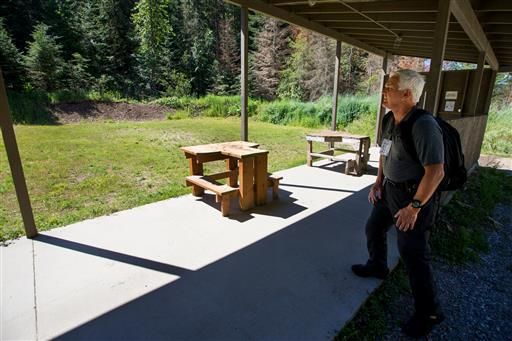
COEUR D'ALENE, Idaho — Bob Smith started the Fernan Rod and Gun Club in 1990 as a solution to clean up an informal shooting range and to start a club that enabled people to shoot in a safe environment. Now, two and a half decades later, the popular shooting range is trying to secure a 20-year special use permit so it can stay open for all the people who love it.
The club 5 miles outside Coeur d'Alene on Fernan Lake Road is on a site people used to use for target practice and as a general dump. Smith described the old site as being similar to the way Hayden Creek is now, but "10 times worse." Littered with microwaves, refrigerators, piles of trash and lots of bullet shells, the area was in bad shape, reported the Coeur d'Alene Press (http://bit.ly/29fRmq1).
In 1989, Smith came to an agreement with the U.S. Forest Service that a firearms safety and self-defense school Smith owns could have a special use permit for the area as long as his company kept the area clean and safe.
Only one year later, Smith started the Fernan Rod and Gun Club and the Forest Service agreed to permit the land to the club, instead of the school. The gun club would be able to have a shooting facility for federal and state agencies to train and practice and where members of the club and the public could shoot their guns.
Since then, the club has operated on shorter term special use permits. Now the Forest Service is currently helping the Fernan gun club write a proposal for the 20-year special use permit it is trying to secure. The club is also in the middle of conducting the mandatory environmental impact study to see if it is feasible for the club to operate for a longer period of time.
"Over the last few years we've been working hand in hand with them, working on making improvements on their proposal and bringing it up to standards with the Forest Service regulatory agencies," said Ryan Foote, deputy district ranger for the Coeur d'Alene River Ranger District on the Idaho Panhandle National Forest. "The last two or three years we've made a lot of good strides to make a proposal we can move forward with."
The largest NRA affiliate in the state and the only joint civilian, military and police range on federal property in the state, the Fernan gun club features eight multi-use bays, a rifle line and a structure where police and federal agencies can practice entering a building.
Club membership is required to use the facilities except on days it opens up to the public, which is usually on weekends.
Smith started to visualize the long-term permit about seven years ago. He has been frustrated by the process and cost of getting it, but is glad the end is in sight.
He estimates the process has cost the club about $300,000 — $100,000 in cash, $100,000 in man hours and another $100,000 the club received in grants that it had to give back because the club didn't use the money within the timeframe it was supposed to.
Due to the costs of this new permit, Smith said the club has started to have to charge everyone who uses the facility, even if it is just a small amount.
"We have had to pay for part of this process, it has cost our club to do this," Smith said. "The alternative is what you have happening in Hayden Creek."
The permit is expected to be signed within the next six or seven months.
If the new permit does not go through, Smith has little hope of maintaining the club. He said he is tired and ready to move on to other things in life. He also said the club has lost a lot of volunteers willing to spend time mowing the lawn or keeping the place in good condition.
"Should this be gone, we would tear everything down because if we don't, someone will come in, start a fire, burn everything down and leave it destroyed," Smith said. "We'll take the gate down too."
Smith desperately does not want to see the area revert back to the dump it used to be because he has worked so hard to make it what it is today.
He also realizes the importance of the Fernan shooting facility to so many different people. The club is by no means lacking in members and, according to Smith, is the only place left in the area that federal and police agencies can use for certain types of training and meeting admission requirements.
When Smith read about the efforts to clean up Hayden Creek, he was reminded of himself. He hopes someone else will take a page out of his book and turn a dump into a great shooting range. Above all, he wants to showcase how hard work can really turn a place around.
___
Information from: Coeur d'Alene Press, http://www.cdapress.com

- The Associated Press
- Updated
BOISE, Idaho — Idaho hunters would be allowed to kill one grizzly bear in their lifetimes under new proposed rules that could open up the eastern part of the state to grizzly hunting if federal officials decide next year to remove the bears' protected status as a threatened species.
The Idaho Department of Fish and Game announced the plan Thursday and said that it would seek public input until July 27 on a package of grizzly hunting rules that also specifies how hunters would have to report bear kills.
The more than 700 grizzlies around Yellowstone National Park have been considered a threatened species since 1975 and protected from hunting.
But federal wildlife officials say the population has sufficiently recovered to turn over management to Wyoming, Montana and Idaho — potentially allowing grizzly hunting in the three states pending a final decision on the threatened species status by March 2017.
The three states are required to outline their proposed grizzly hunting regulations before that decision, and the rules proposed by Idaho are part of that process.
Idaho officials say hunters would be allowed to kill male and female bears under the rules, which would also mandate reporting bear kills within 24 hours and showing the bears' hides and skulls to state conservation officers within five days. Hunters would not be allowed to shoot bears within 200 yards of dumps or landfills.
Any rules adopted by the Fish and Game Commission would have to be approved by the Idaho Legislature, probably in early 2017.
No proposal has been made yet on how long a grizzly hunting season would last in Idaho, but Fish and Game spokesman Mike Demick said in a statement that "any potential hunting season would be very limited."
The commission would set the hunting season and decide how many bears could be killed each season.
Idaho Department of Fish and Game spokesman Gregg Losinski said the protection of grizzlies in Yellowstone has been a success, meaning "the population is expanding and needs to be managed."
Idaho last month approved a plan also backed by Montana and Wyoming that would halt grizzly hunting if the bear population drops below 600. It also bans hunters from killing female bears that have cubs.
The number of bears that could be killed in each state would vary from year to year, depending on the number of bear deaths during the previous year.
The three states have also approved a plan that would let Wyoming hunters kill the most bears, followed by Montana hunters and Idaho hunters.
- The Associated Press
- Updated
IDAHO FALLS, Idaho — An 8-week-old snow leopard born at the Idaho Falls Zoo made its first appearance before the public on Friday.
KIFI-TV reports that the 10-pound, male cat born in May has yet to be named.
Zoo Keeper Dallas LaDucer says the cub will stay at the zoo for about a year and a half before being transferred to another zoo.
- The Associated Press
- Updated
PHOENIX — Residents of Phoenix's west side are on edge as they wonder if a serial shooter is targeting their neighborhood.
Phoenix police say they are investigating whether the same person behind four incidents that have killed six people, including a 12-year-old girl, in the city's Maryvale area.
The location, time of day and method of operation are some of the common factors among the slayings, which date back to April 1, Sgt. Jonathan Howard said. He declined to release further details.
Five of the victims died in shootings that occurred in a nine-day period last month. All of them were outside a residence at night when they were killed by gunfire from a vehicle. The crime scenes are within an area between 55th and 67th avenues and McDowell Road and Campbell Avenue.
Police held a forum with the community this week, advising residents to be vigilant and report any suspicious people or vehicles.
Margarito Castro, whose 19-year-old son was among the victims, attended that forum.
"He was a good person," Castro told The Arizona Republic. "He didn't have problems with anyone. The detectives looked at his social media, and they said he was a good guy."
Manuel Castro Garcia was sitting in a car outside a house in the area of 65th Avenue and Coronado Road the night of June 10 when, authorities said, a dark sedan pulled up next to him. Witnesses heard the victim and the suspect argue and then shots were fired, according to investigators.
Castro Garcia tried to drive despite being wounded, but he crashed his vehicle a few houses away, police said. He later died at a hospital.
Horacio de Jesus Pena, 32, was also killed in a drive-by shooting while standing outside a residence the night of June 3. Responding officers found in in the roadway with gunshot wounds and pronounced him dead at the scene. One witness reported seeing a white sedan in the road just before shots were fired.
On June 12, police found Angela Linner, 31, and Maleah Ellis, 12, shot to death inside a car outside a home. The girl's 33-year-old mother, Stefanie Ellis, was rushed to a hospital in critical condition. Ellis succumbed to her injuries Thursday.
Authorities now believe an April 1 drive-by shooting was carried out by the same suspect or suspects. Diego Verdugo-Sanchez, 21, was in front of his house around 9 p.m. when an unknown vehicle approached, according to police. Someone then fired shots from inside the car. Verdugo-Sanchez was found with gunshot wounds. He died at a hospital.
- By DARCY COSTELLO Associated Press
- Updated
SACRAMENTO, Calif. — An armored car guard and suspected armed robber are both in critical condition after a shootout outside a credit union Friday, the Sacramento County Sheriff's Department said.
The Brinks Inc. armored car guard was leaving a Golden 1 Credit Union branch on Florin Road in south Sacramento with a bag of money about 9:30 a.m. when a masked man armed with a handgun approached on foot, Sheriff's Sgt. Tony Turnbull said.
Both were wounded in the ensuing shootout. "It was a quick exchange of fire," Turnbull said.
Deputies found the guard shot once in the upper body and lying on the ground. The suspect was shot multiple times.
Two semi-automatic handguns and a black bag containing plastic bags of money were strewn around on the pavement outside the credit union after the shootout, along with black boots and articles of clothing.
Nina Pancho, 21, of Sacramento said she was sitting in a chair near the front of the credit union, waiting to open an account, when she spotted the Brinks guard and the suspect.
"I seen the robber coming up with his gun," she said. "He was by himself and coming, walking diagonal across the parking lot. He must've plotted it because he waited until the guy came out to try and rob him."
The suspect was wearing sunglasses, boots, a hat and appeared to be wearing clothing similar to the guard, as if he were "trying to copy what the Brinks guys wear," she said — but he had a surgical mask over his face.
"A lady was at the ATM when the robber came and she heard him say to drop the money and obviously he dropped it. The robber shot first," she said. "When I heard the shots fired, I ran to the back."
Paramedics were still attending to the guard and suspect when she was allowed to leave the credit union about 10 minutes later.
A second Brinks employee was in the armored car nearby but was not involved in the shootout, Turnbull said.
Golden 1 said the credit union branch would remain closed during the investigation. Spokesmen for Brinks did not immediately comment.
- The Associated Press
- Updated
SILVER CITY, N.M. — A New Mexico State Police official has criticized officers for letting a district attorney off easy after she was stopped in June for driving erratically.
Sgt. Elizabeth Armijo, a spokeswoman for the state police, questioned the Silver City Police Department's decision not to investigate after pulling over prosecutor Francesca Martinez-Estevez for reportedly speeding and swerving. She put some of the blame on a state police officer as well.
"There is absolutely no reason why they could not have or should not have," said Armijo. "On our side, the same thing applies. Our officer clearly did not do as much as she should have. She did not conduct a thorough investigation."
Lapel video captured one local officer describing Martinez-Estevez as "loaded," but police didn't give her a field sobriety test or citation during the June traffic stop.
The video also shows Martinez-Estevez giving herself a practice sobriety test and losing her balance walking heel to toe in a straight line. Silver City police reports describe her as having slurred speech and difficulty handling her iPhone.
Martinez-Estevez referred comment to her attorney, Jim Foy, who said the incident has been blown out of proportion.
The nearly two-hour stop was just four days after Martinez-Estevez won a Democratic primary election seeking a second term as district attorney for Grant, Luna and Hidalgo counties.
No charges will be filed in the case, according to Silver City Police Chief Ed Reynolds. He said his officers' actions are under investigation.
Armijo said she couldn't say whether the State Police officer involved was disciplined because it's a confidential personnel matter. But she did say that the situation "has been addressed internally."
"It's kind of a black eye for us," she said. "It should have happened differently."
- The Associated Press
- Updated
PORTLAND, Ore. — The Oregon Humane Society says it has conducted its largest ever bird rescue after helping Clackamas County authorities seize 245 birds from feces-filled cages inside a Damascus barn.
The Oregonian/OregonLive reports that the parakeets, cockatoos, pigeons and other birds were seized Wednesday. Authorities had responded to a June 16 report of concerns over poor sanitation, overcrowding and inadequate air circulation inside the barn.
Human Society spokesman David Lytle says they found birds in cages stacked on top of each other without perches, fresh water or food. He says some of the animals had lost feathers and had overgrown nails and beaks.
The owner, who hasn't been cited or arrested, told authorities he was a bird breeder. Lytle says the owner admitted the cages hadn't been cleaned since the spring.
- The Associated Press
- Updated
TACOMA, Wash. — An Orting man is accused of firing a shotgun inside a pickup truck during a backwoods bachelor party the night before his wedding, critically injuring a teenager who was riding in the bed.
The News Tribune reports that 39-year-old Tirus Rushton pleaded not guilty to third-degree assault with a firearm during his arraignment Thursday. He posted a $10,000 bail bond on Friday.
Sheriff's deputies say Rushton was celebrating the night of July 1 when he, his son, his son's 18-year-old friend, and three other people decided to go shooting. According to charging papers, they were driving up a dirt road when Rushton started shooting out the truck's windows.
Pellets hit the 18-year-old's cheek, eye and arm. Relatives said his condition was improving but that he is now blind in one eye.
- The Associated Press
- Updated
ANCHORAGE, Alaska — A dead humpback whale that washed ashore near one of Anchorage's largest parks will be left for nature to take its course.
KTUU reports the whale initially was found near the community of Hope, across Turnagain Arm from Anchorage, but high tide took it.
The National Oceanic and Atmospheric Administration confirms it's the same whale that has washed up near Kincaid Park. The agency is urging people to leave it alone because whale carcasses can attract bears.
NOAA spokeswoman Julie Speegle says they hope a high tide will wash the whale back out to deeper water.
- The Associated Press
- Updated
YELLOWSTONE NATIONAL PARK, Mont. — Yellowstone National Park is has hired three Mandarin-speaking rangers to help with communication amid a growing number of Chinese tourists.
The Billings Gazette reports that Yellowstone South District Resource Education Ranger Rich Jehle says basic safety publications are available in many languages, but it's different to have a ranger who can talk directly with a visitor.
Yellowstone doesn't track visitation by nation of origin and is relying instead on a perceived increase.
The new hires are interpretive rangers who provide about the parks.
According to U.S. Department of Commerce statistics, Chinese visitation to the U.S. increased by 451 percent between 2007 and 2015.
The Idaho Falls newspaper recently reported that the city is also seeing an influx of Chinese visitors on their way to and from Yellowstone.
___
Information from: The Billings Gazette, http://www.billingsgazette.com
- The Associated Press
- Updated
YAKIMA, Wash. — Yakima officials are ordering residents of a homeless encampment to pack up and move, offering them a place to relocate near the city police department.
The Yakima Herald-Republic reports that a notice handed to the residents Thursday says they must leave the campsite by Monday. Yakima code administration manager Joe Caruso, who served the notices, says any belongings left at the site will be seized and available for pickup by the owner.
Yakima Neighborhood Health Services is helping members of the homeless encampment move to the new site in a parking lot across the street from the police station.
The location was suggested as an alternative after the City Council failed to approve an emergency ordinance for a vacant lot owned by Neighborhood Health.
- The Associated Press
- Updated
LOVELAND, Colo. — Investigators say a grass fire near Loveland that burned nearly 13 acres was started by a resident trying to get rid of ants.
The Coloradoan reports that Loveland Fire Rescue Authority responded on Thursday to reports of a fire northeast of Carter Lake. At its peak, the blaze had flames as high as six feet. Fire officials contained the fire about an hour after it was reported.
No homes were damaged, and no people or livestock were injured.
The Larimer County Sheriff's Office is handling the ongoing investigation into the fire.
- The Associated Press
- Updated
GRAND CANYON NATIONAL PARK, Ariz. — A fundraising arm of Grand Canyon National Park has been awarded a grant to restore murals in a historic watchtower.
The murals inside the Desert View Watchtower tell the stories of American Indians who once lived in the area. The Grand Canyon Association says water leaks have badly damaged the artwork.
The $250,000 grant comes from American Express and the National Trust for Historic Preservation. Twenty historic sites in national parks had been vying for $2 million in preservation grants.
Grand Canyon was one of the top three favorites in a public campaign that drew more about 1.1 million votes.
Work on the 70-foot-tall stone watchtower is scheduled to begin in October.
It was built in the early 1930s by famed architect Mary Colter.
- The Associated Press
- Updated
LOS ALAMOS, N.M. — A spike in bear sightings in the northern New Mexico wilderness and even some neighborhoods has prompted the Los Alamos National Laboratory to shut down its trails.
The Santa Fe New Mexican reports the federal lab decided to close the trails that run through its campus in Los Alamos last week. A lab spokesman told the newspaper that a black bear attack on a marathon runner in the Valles Caldera likely contributed to the decision.
He says the decision was made out of an abundance of caution. There have been no recent reports of bear encounters among employees.
The network of trails at Los Alamos together cover nearly 50 miles, and some of the trails had been open to the public.

- The Associated Press
- Updated
WEST YELLOWSTONE, Mont. — Yellowstone National Park has welcomed more than 1.4 million visitors this year, a 10 percent increase over the same time in 2015.
The National Park Service says the park had about 830,000 visitors during the month of June alone, a 7 percent jump from last year.
The park's south entrance, which connects to Grand Teton National Park, had the biggest increase in June visits with an increase of 20,000 tourists from last year. The west entrance to the park still holds the top spot for visitors, recording nearly 14 percent more than last year.
Officials plan to look further into the statistics by conducting a survey in August to determine where visitors are from and their motivation for visiting the park.
This year marks the park service's 100th anniversary.
- MARK SAAL Standard-Examiner
- Updated
MOUNTAIN GREEN, Utah — Freedom is an important concept in the Rice home.
So important that prominently displayed on a wall in the family's living room are four Norman Rockwell prints, created for the artist's 1943 "Four Freedoms" oil painting series. The four works — "Freedom of Speech," ''Freedom of Worship," ''Freedom from Want," and "Freedom from Fear" — have special meaning to Angie Rice.
"Norman Rockwell's studio was 30 minutes from where I grew up," Angie said, explaining the artist would often take photographs of local people and places and incorporate them into his artwork.
But Angie and Sandi Rice's home would never be confused with a Rockwell painting, reported the Standard-Examiner (http://bit.ly/295A3fX). Until a year ago, Angie Rice was publicly living as Art Rice.
Today, Angie identifies as transgender.
While the struggle to embrace her identity took place over the course of years, she finally felt the freedom and courage to begin living life as she always believed she was intended in May 2015, when Utah's LGBT antidiscrimination law went into effect.
Angie grew up in small-town Vermont, the son of a retired Air Force veteran and a stay-at-home mom. Her earliest memories are as an 8-year-old boy, feeling "confused and scared and ashamed" of who she was.
As Art, she was careful not to let people know she had "gender interests that weren't male."
"I hid who I was out of fear and shame," she said.
In high school, Angie "overcompensated," competing with the other boys in basketball, cross-country and baseball, and excelling in student government. Following high school, Angie became the fourth generation in her family to attend the Air Force Academy, graduating in 1984.
She became a pilot, flying rescue helicopters for five years and later KC-135 aerial refueling aircraft; she flew special operations in three overseas conflicts. Angie is now retired from the Air Force and has spent the better part of the last decade teaching special-education classes at Roy Elementary School.
In 1988, Art Rice was living in northern Utah and met Sandi Rasband, who was running the night school program for the Fran Brown College of Beauty.
"Angie came in and learned how to cut hair," Sandi says. "She was my student, this macho helicopter pilot."
They quickly became friends. Sandi, who was experiencing abuse at home and was having suicidal thoughts, said Angie was the first person she could trust.
"I had a plan to end my life, and I was ready to try it," Sandi says. "But Angie said, 'You don't have to live like this, life can be better.' She gave me hope."
They were married in October of 1989. It was a Friday the 13th.
NOT FEELING BROKEN ANYMORE
Sandi recalled they were married for about a year before she "started seeing the signs." Sandi was playing with her makeup one day and said to her husband, "Let me put some on you for fun." Angie agreed.
A couple of days later, Angie asked Sandi to put more makeup on her, and the requests for makeup became more frequent after that.
"And I thought, 'OK, wait a minute. You weren't supposed to like it that much,'" Sandi says. "So for a while I thought it was my fault. I thought I brought it on, because I was the one that tried the makeup on her first."
Eight years later, the family was living in Alabama when Angie asked Sandi to go to the store with her to buy sports bras.
"I asked her if she was gay, and she said, 'No,'" Sandi recalls. "And I said, 'What is it? Do you want to be a girl?' And she said, 'No. Yeah. No. . I don't know.'"
Sandi had heard about cross-dressing.
"What I'm thinking in my mind at the time is, 'Well, I'm married to a cross-dresser,'" Sandi said. "But then I thought, 'Well, a sports bra's not going to hurt anybody, so what the heck.' And it made her happy, so she wore sports bras."
After Angie retired from the Air Force in 2004, her struggle with gender identity seemed to intensify.
"I stepped up the self-medication of alcohol (as) I'd done for so many years," Angie admits. "Inside my home, they knew me as a depressed and angry person."
Angie also started ordering hormones off the internet in an attempt to facilitate the transition from male to female. Sandi worried for her spouse's health.
Finally, five years ago this October, Sandi convinced Angie to see a counselor.
"I was 49 years old, and no one should live life like that — life between age 8 and 49 — with that kind of pain trapped inside them," Angie says.
From that first counseling session Angie learned two things: First, that the only expert who could diagnose if she was transgender was Angie.
"And the other thing that came out of that meeting was that I didn't think I was crazy anymore," she says. "I didn't feel I was broken."
But despite that relief, she still felt caught in a trap. Angie couldn't tell people about being transgender for fear of losing her job teaching children with special needs at Roy Elementary School.
"We'd go grocery shopping an hour and a half away, so we didn't run into anyone we knew," Angie says.
Sandi's adjustment to Angie's journey wasn't easy, either.
Sandi had grown up a member of The Church of Jesus Christ of Latter-day Saints. She describes her family as "very Mormon," and indeed, her uncle is LDS apostle Ronald A. Rasband. The couple was also sealed the day after Christmas 2013 at the Denver LDS Temple.
"The hardest part for me was that my whole future looked different than what I ever thought it would be," she admits.
But Sandi also grew up a staunch believer in prayer. So when she found out her husband was a transgender female, she set to work.
"I didn't want to know what God said to others," she said. "I wanted to know, 'What did God say to me?' If anybody is entitled to personal revelation, I was. Because this is my life."
Sandi realized she didn't want to live the rest of her life without her soul mate.
"The only thing I ever got (from prayers) was, 'This is my best friend. This is the person that I raised three children with. This is the person that helped me save my life, all those years ago. This is the person that I sent to war over and over again, when I didn't know when she was coming back.'"
Besides, she reasoned, leaving Angie now — at her time of greatest need — would be nothing short of a sin.
"I just got the feeling we needed to figure this out as a family," Sandi concluded. "And we did."
About three years ago, Angie and Sandi called a family meeting with their kids, Josh, Danielle and Jacob — now ages 25, 22 and 17, respectively — to break the news.
"We were watching TV as a family," Jacob remembers. "Our parents kind of muted the TV and we thought, 'OK, something is going down.'"
Sandi did most of the talking. She brought up a couple of documentaries the family had seen on transgender individuals, and then told the kids that's how Angie feels.
"Angie was crying a lot during it all, and she said to me and my sister, 'I hope you don't grow up like me,'" Jacob said. "That kind of hit me hard, because I always looked up to my parents. So I said, 'I'd be proud to still grow up like you.'"
And, in fact, Jacob is following in Angie's footsteps. This summer, he becomes the fifth generation to attend the Air Force Academy in Colorado Springs, Colorado.
Sandi says the news didn't come as a complete shock to the kids.
"They'd seen her wear mascara before," she said. "They weren't too surprised."
Still, it wasn't easy.
"It's been hard, I won't sugarcoat it," Jacob says. "It's been a big learning experience."
He says that while there's plenty of information available out there for transgender people, there's not a lot for their spouses — or their children.
Jacob said he's come to the view that it shouldn't matter how a person chooses to express who he or she is.
"I just realize that the dignity of every person is just that," he said. "People deserve that basic dignity."
GOING PUBLIC
When Utah's LGBT antidiscrimination law — which bans housing and employment discrimination against lesbian, gay, bisexual and transgender people — passed, Angie finally had the legal protection to go public.
One of the first things she did was meet with the principal at her school.
"We had a two-hour session in the principal's office," Angie recalls. "I did some crying. She did, too."
Then she met with district administrators.
"The only thing I received from them was love and respect," Angie says. "And that day I was branded with a title: first openly transgender teacher in the state of Utah."
Jeff Stephens, superintendent for the Weber School District, says Angie's transformation hasn't been an issue — mostly, Stephens said, because Angie is "an outstanding teacher who has such an extraordinary influence."
Stephens says the district's only concern throughout the process has been to be sensitive and respectful of Angie's feelings in getting the information out to the staff and others.
And Stephens says the district has received nothing but positive feedback about Angie as an educator.
"I have never had a single call of concern, and I think a lot of that is a tribute to her and a testament of the quality of teacher she is," he said. "Because those parents know her. Angie stood out as one of those teachers that goes so far above and beyond in ways that deeply influence children and families. I have a lot of respect for her."
Becky Campos' daughter, Aly, has been in Angie's special-needs class for the last two years, so she's experienced the teacher as both Art and Angie.
"Angie called us after the school year ended last year to let us know that she was going to be known as Angie Rice," Campos said. "After that, every week in the summer we'd take Aly over to see her, so she could get used to her as a woman."
Not that Aly, a severely autistic second-grader, needed any time to grasp the concept.
"It didn't even really faze her," Campos says. "She's always just called her 'Rice.' In fact, if you ask Aly if Angie is a boy or a girl, she just looks at you and says, 'Rice is a girl.'"
Aly will be in Angie's special-needs class for two more years. Campos is grateful for that; she says her daughter has made amazing progress with Angie's guidance.
"When this happened, Angie called us and let us know that if we did have any concerns (about the gender transition) she was open for us talking to her, or we could talk to the principal," Campos recalls. "Our only concern was we asked her, 'Are you going to change your teaching style?' She said no. And we said, 'That's all we need to know.'"
Outside of work, things have been somewhat more complicated.
Shortly after Angie went public, the bishop of their LDS ward asked for permission to address their situation in a church meeting — people had begun talking in the neighborhood. They gave their blessing.
Although they didn't attend, they were told by others the bishop did a good job, and that it was a "beautiful meeting."
But Angie says it only took a couple of days for the hurtful whispering to start.
"Some of the sisters in the ward called me 'Satan,'" she said.
Since that day, the family hasn't been back to church, though Angie and Sandi said they recently accepted an invitation to their ward's Relief Society Spring Salad Social and reported the evening went well.
Angie says she never wants to burn the bridge she feels with the LDS church.
"As a transgender woman, I understand and respect there's not a place for me there," she said. "I'd never use my authority of the Melchezidek Priesthood, nor would I expect to receive a calling in the Relief Society. All I ever asked for and wanted was a place to be me."
Abby Beattie and her family have lived next door to Angie and Sandi for three years.
"When we moved in, they were very welcoming to us and kind of adopted us," Beattie said. "We have five young children, and we'd get together and have music nights or watch videos, things like that."
Beattie says that when Angie was transitioning to a woman the family was very private about it, and they didn't see Angie and Sandi for about six months.
Beattie remembers well the day she saw Angie and Sandi outside, celebrating the passage of the state's anti-discrimination legislation.
"I saw who I thought was Art, dressed as a woman," she recalls. "They said, 'We'll explain it later. Everything's fine.'"
As promised, a few days later Angie and Sandi invited Beattie and her husband Brent to their home. Sandi again took the lead, explaining that Art now preferred to be called Angie, and that the couple would be staying together.
"We're strong LDS, and I had a prayer in my heart that I'd be able to understand what they're going through," Beattie said. Although the news was a bit of a shock, Beattie insists it didn't change her feelings toward the Rice family.
"Honestly, the thing I took away from that meeting, as they were speaking, was that I had this overwhelming feeling of love for Angie, and that it was not my place to judge in any way," she said. "I just felt such a love for them, and I felt it came from the Savior."
Beattie acknowledges they sometimes stumble over the pronouns, but she looks forward to being neighbors with Angie and Sandi for many years to come.
"They are some of the kindest, most compassionate people we've ever met," she said.
At its essence, the journey of Angie and Sandi Rice is nothing short of an epic love story.
"I've been in hostile combat airspace, I've been shot at, but by far the greatest fear I ever had in my life — what took the greatest courage — was admitting who I was, and the fear of losing the love of Sandi," Angie says.
That won't happen, Sandi promises.
"I learned that I can love bigger than I ever thought I could," Sandi concludes. "I don't regret anything. I would marry her all over again, knowing what our life would be now, and knowing where we are and knowing that she was going to be transgender later on in our life.
"I would still marry her all over again."
- By NATALIE BRUZDA Las Vegas Review-Journal
LAS VEGAS — The elders of the Las Vegas Paiute Tribe have always told stories of the song carriers — the ones who would continue to carry on the sounds of their sacred Salt Song ceremonies.
But they were quite surprised when the responsibility — and the songs — chose 9-year-old Tobyas Spotted Eagle.
"His innocence or maybe a combination of things," said his father, Chris Spotted Eagle, spiritual leader for the tribe. "I like to believe that the songs were actually calling out to him, and that's the way it's been told to me by some of the elders."
To have a person as young as Tobyas — now 11 — perform the Salt Songs was unheard of and almost taboo.
"We didn't know how the other elders were going to perceive it or accept it, with him sitting with us," Chris Spotted Eagle said. "We were really leery. We didn't want to offend."
He first joined his father and other members of the tribe in performing the ceremonies two years ago, reported the Las Vegas Review-Journal (http://bit.ly/29eWKt2).
In question was his level of maturity, as the dusk-to-dawn ceremony is performed over the departed body of a tribal member who has passed.
The singers are tasked with performing a collection of about 140 songs in a sacred ceremony that prepares the spirit to cross over to the other side.
"Because of the consciousness, because of the heaviness of the responsibility, we were a little reluctant and reserved on if he was going to mentally have the stability to handle what these songs are about and what they're able to do," Chris Spotted Eagle said.
The songs are sung in accordance with where they were gathered along the Salt Song Trail, which travels north along the Colorado River to the Kaibab and Colorado Plateau, into southern Utah, and then west to Mount Charleston. The trail moves farther west into the Pacific Ocean, laps back east through the Mojave Desert, and ends at the Grand Canyon.
"That spirit is running, running and running, and right at the end, at dawn, they make the leap over the Grand Canyon in our spiritual area," said Chris Spotted Eagle. "We've got to make sure they ain't stumbling along the way, or they'll fall into the river."
The songs build momentum as the evening progresses and the night sky darkens, and when the voice of Tobyas cuts through, any trepidation about his maturity falls quickly away.
"He's done better than we ever thought," Chris Spotted Eagle said. "He belts it out with all of us. Sometimes when you hear that youth voice, it actually wakes up these elders. It makes us so much more powerful. It's amazing to see it."
THE MOMENT
Chris Spotted Eagle first noticed his son's strong spiritual connection as an infant.
"He was starting to sing them in his sleep," he said. "And he was starting to sing them randomly, and he had never really heard these songs before, because we don't like the children around the ceremonies."
The pivotal moment manifested itself two nights after Chris purchased Tobyas a gourd rattle, thinking of it as a novelty item lacking any sort of spiritual content.
"I sang one night, but I didn't know the rules, I didn't know you couldn't sing them at night because they are really powerful songs," Tobyas said. "I just felt a mixture of the good and evil spirits. I also felt my grandpa who passed on."
When father and son met with elders to get to the bottom of what happened, they expressed their excitement about his progression.
"He was able to tap into it, like plugging it into the wall," Chris Spotted Eagle said. "It was that powerful."
At his first ceremony, Tobyas said he wasn't sure he'd be able to go all night. As a 9-year-old with a routine bedtime, staying up and energized into the early morning hours is no small feat.
Learning all of the songs, each sung in the native language, is not easy either.
"When I was there for the first one, they whispered in my ear and told me what the next song was going to be," he said. "They kept doing that and doing that. It helped me a lot. Now I know most of the songs that they sing."
His father said his son responds to the songs like "a fish to water."
"I've heard these songs my whole life and I struggle with some," Chris Spotted Eagle said. "It's almost like breathing to him."
Eighty years ago, each band used to have about 10 to 15 singers. Now, Chris and Tobyas are among the core group of about 10 to 12 singers who perform the ceremonies.
In number of participants, length and location, and the clothing worn, the ceremonies have changed over time. The number of participants has dwindled, the ceremony shortened from three or four days to one, and the singers now don modern clothing in climate-controlled buildings.
"The way one of our elders told us, it's giving her a little bit of peace of mind that it's going to continue," Chris said. "Not everyone is doing it anymore. There are just a handful of us who are singing these songs."
SHOES TO FILL
Tobyas is following in his father's footsteps just as Chris followed in the footsteps of his father, Leroy Spotted Eagle, who served as the spiritual leader for the 56-member tribe before he passed away nearly five years ago. A person becomes a member once he or she reaches the age of 21.
"A lot of people, they see my dad in me, they hear my dad in me, our mannerisms are the same, our speech is the same, we even look the same," Chris said. "I think a lot of it was, 'Hey man, you're it because you look like him.' But I like to think that now I'm kind of treading my own way now."
As spiritual leader, Chris doesn't view what he does as a religion.
"Religion has boundaries, rules and politics that govern it," he said. "It's unfortunate because it creates barriers. It creates a level of supremacy. Each one thinks that they're the best and better than everyone else, and that they're the only way. Whether it's Christianity or Hinduism or Islam, I don't refer to them as religions, I refer to them as spirituality. If you practice it at the origin, all of those, there's good in it."
And he believes getting back to the origin is key for the survival of future generations.
"In essence we need to get back to being caretakers of this Earth and loving each other, regardless of our skin color, our creed," he said. "We need to get back to that, or the creator is going to say, 'I'm going to take this back and give it back to the dinosaurs.'"
Chris believes the Creator will give human beings a generation or two more to get it right, and it's children like Tobyas who will make it happen.
"I feel the creator is saying, 'I'm going to plant these kids strategically in these certain areas, and it's up to you guys to cultivate them and give them an environment where they will thrive, and that will magnify, and help this earth out,'" he said. "We need to wake up, and we need to start being observant of things outside of us."
What Tobyas and Chris are trying to do takes commitment.
They both love football and the Pittsburgh Steelers. And Tobyas has earned straight A's throughout his tenure at Martin Luther King Jr. Elementary School, and hopes to continue the trend at Leavitt Middle School this fall.
But spiritual duties, including the Salt Song ceremonies, trump everything else.
"I didn't choose this, it chose me," Chris Spotted Eagle said. "For some reason, I don't ever question, it seems to be very strong for our bloodline. That's why I want to build on my son. I want him to take it to a level that's never been."
Tobyas agreed.
"I'll learn how he (my dad) does it, how he prays for people, and I'll carry that on once he passes," he said.
- The Associated Press
PHOENIX — The Arizona Attorney General's Office says a grand jury has indicted the mayor of the town of Superior on one count of theft.
Prosecutors have accused Jayme Valenzuela of using the town's debit card on eight separate occasions to obtain $2,300 in cash between August 2013 and December 2014.
Two of the transactions were at the Wild Horse Pass Casino, while the others were at bank machines in Maricopa and Pinal counties.
An auditor hired by the town council discovered the withdrawals, and Valenzuela paid back the funds.
Valenzuela has been ordered to appear in court Aug. 4. It was not immediately clear if he had an attorney.
- By BETHANY BLITZ The Coeur d'Alene Press
COEUR D'ALENE, Idaho — Bob Smith started the Fernan Rod and Gun Club in 1990 as a solution to clean up an informal shooting range and to start a club that enabled people to shoot in a safe environment. Now, two and a half decades later, the popular shooting range is trying to secure a 20-year special use permit so it can stay open for all the people who love it.
The club 5 miles outside Coeur d'Alene on Fernan Lake Road is on a site people used to use for target practice and as a general dump. Smith described the old site as being similar to the way Hayden Creek is now, but "10 times worse." Littered with microwaves, refrigerators, piles of trash and lots of bullet shells, the area was in bad shape, reported the Coeur d'Alene Press (http://bit.ly/29fRmq1).
In 1989, Smith came to an agreement with the U.S. Forest Service that a firearms safety and self-defense school Smith owns could have a special use permit for the area as long as his company kept the area clean and safe.
Only one year later, Smith started the Fernan Rod and Gun Club and the Forest Service agreed to permit the land to the club, instead of the school. The gun club would be able to have a shooting facility for federal and state agencies to train and practice and where members of the club and the public could shoot their guns.
Since then, the club has operated on shorter term special use permits. Now the Forest Service is currently helping the Fernan gun club write a proposal for the 20-year special use permit it is trying to secure. The club is also in the middle of conducting the mandatory environmental impact study to see if it is feasible for the club to operate for a longer period of time.
"Over the last few years we've been working hand in hand with them, working on making improvements on their proposal and bringing it up to standards with the Forest Service regulatory agencies," said Ryan Foote, deputy district ranger for the Coeur d'Alene River Ranger District on the Idaho Panhandle National Forest. "The last two or three years we've made a lot of good strides to make a proposal we can move forward with."
The largest NRA affiliate in the state and the only joint civilian, military and police range on federal property in the state, the Fernan gun club features eight multi-use bays, a rifle line and a structure where police and federal agencies can practice entering a building.
Club membership is required to use the facilities except on days it opens up to the public, which is usually on weekends.
Smith started to visualize the long-term permit about seven years ago. He has been frustrated by the process and cost of getting it, but is glad the end is in sight.
He estimates the process has cost the club about $300,000 — $100,000 in cash, $100,000 in man hours and another $100,000 the club received in grants that it had to give back because the club didn't use the money within the timeframe it was supposed to.
Due to the costs of this new permit, Smith said the club has started to have to charge everyone who uses the facility, even if it is just a small amount.
"We have had to pay for part of this process, it has cost our club to do this," Smith said. "The alternative is what you have happening in Hayden Creek."
The permit is expected to be signed within the next six or seven months.
If the new permit does not go through, Smith has little hope of maintaining the club. He said he is tired and ready to move on to other things in life. He also said the club has lost a lot of volunteers willing to spend time mowing the lawn or keeping the place in good condition.
"Should this be gone, we would tear everything down because if we don't, someone will come in, start a fire, burn everything down and leave it destroyed," Smith said. "We'll take the gate down too."
Smith desperately does not want to see the area revert back to the dump it used to be because he has worked so hard to make it what it is today.
He also realizes the importance of the Fernan shooting facility to so many different people. The club is by no means lacking in members and, according to Smith, is the only place left in the area that federal and police agencies can use for certain types of training and meeting admission requirements.
When Smith read about the efforts to clean up Hayden Creek, he was reminded of himself. He hopes someone else will take a page out of his book and turn a dump into a great shooting range. Above all, he wants to showcase how hard work can really turn a place around.
___
Information from: Coeur d'Alene Press, http://www.cdapress.com
- The Associated Press
BOISE, Idaho — Idaho hunters would be allowed to kill one grizzly bear in their lifetimes under new proposed rules that could open up the eastern part of the state to grizzly hunting if federal officials decide next year to remove the bears' protected status as a threatened species.
The Idaho Department of Fish and Game announced the plan Thursday and said that it would seek public input until July 27 on a package of grizzly hunting rules that also specifies how hunters would have to report bear kills.
The more than 700 grizzlies around Yellowstone National Park have been considered a threatened species since 1975 and protected from hunting.
But federal wildlife officials say the population has sufficiently recovered to turn over management to Wyoming, Montana and Idaho — potentially allowing grizzly hunting in the three states pending a final decision on the threatened species status by March 2017.
The three states are required to outline their proposed grizzly hunting regulations before that decision, and the rules proposed by Idaho are part of that process.
Idaho officials say hunters would be allowed to kill male and female bears under the rules, which would also mandate reporting bear kills within 24 hours and showing the bears' hides and skulls to state conservation officers within five days. Hunters would not be allowed to shoot bears within 200 yards of dumps or landfills.
Any rules adopted by the Fish and Game Commission would have to be approved by the Idaho Legislature, probably in early 2017.
No proposal has been made yet on how long a grizzly hunting season would last in Idaho, but Fish and Game spokesman Mike Demick said in a statement that "any potential hunting season would be very limited."
The commission would set the hunting season and decide how many bears could be killed each season.
Idaho Department of Fish and Game spokesman Gregg Losinski said the protection of grizzlies in Yellowstone has been a success, meaning "the population is expanding and needs to be managed."
Idaho last month approved a plan also backed by Montana and Wyoming that would halt grizzly hunting if the bear population drops below 600. It also bans hunters from killing female bears that have cubs.
The number of bears that could be killed in each state would vary from year to year, depending on the number of bear deaths during the previous year.
The three states have also approved a plan that would let Wyoming hunters kill the most bears, followed by Montana hunters and Idaho hunters.
- The Associated Press
IDAHO FALLS, Idaho — An 8-week-old snow leopard born at the Idaho Falls Zoo made its first appearance before the public on Friday.
KIFI-TV reports that the 10-pound, male cat born in May has yet to be named.
Zoo Keeper Dallas LaDucer says the cub will stay at the zoo for about a year and a half before being transferred to another zoo.
- The Associated Press
PHOENIX — Residents of Phoenix's west side are on edge as they wonder if a serial shooter is targeting their neighborhood.
Phoenix police say they are investigating whether the same person behind four incidents that have killed six people, including a 12-year-old girl, in the city's Maryvale area.
The location, time of day and method of operation are some of the common factors among the slayings, which date back to April 1, Sgt. Jonathan Howard said. He declined to release further details.
Five of the victims died in shootings that occurred in a nine-day period last month. All of them were outside a residence at night when they were killed by gunfire from a vehicle. The crime scenes are within an area between 55th and 67th avenues and McDowell Road and Campbell Avenue.
Police held a forum with the community this week, advising residents to be vigilant and report any suspicious people or vehicles.
Margarito Castro, whose 19-year-old son was among the victims, attended that forum.
"He was a good person," Castro told The Arizona Republic. "He didn't have problems with anyone. The detectives looked at his social media, and they said he was a good guy."
Manuel Castro Garcia was sitting in a car outside a house in the area of 65th Avenue and Coronado Road the night of June 10 when, authorities said, a dark sedan pulled up next to him. Witnesses heard the victim and the suspect argue and then shots were fired, according to investigators.
Castro Garcia tried to drive despite being wounded, but he crashed his vehicle a few houses away, police said. He later died at a hospital.
Horacio de Jesus Pena, 32, was also killed in a drive-by shooting while standing outside a residence the night of June 3. Responding officers found in in the roadway with gunshot wounds and pronounced him dead at the scene. One witness reported seeing a white sedan in the road just before shots were fired.
On June 12, police found Angela Linner, 31, and Maleah Ellis, 12, shot to death inside a car outside a home. The girl's 33-year-old mother, Stefanie Ellis, was rushed to a hospital in critical condition. Ellis succumbed to her injuries Thursday.
Authorities now believe an April 1 drive-by shooting was carried out by the same suspect or suspects. Diego Verdugo-Sanchez, 21, was in front of his house around 9 p.m. when an unknown vehicle approached, according to police. Someone then fired shots from inside the car. Verdugo-Sanchez was found with gunshot wounds. He died at a hospital.
- By DARCY COSTELLO Associated Press
SACRAMENTO, Calif. — An armored car guard and suspected armed robber are both in critical condition after a shootout outside a credit union Friday, the Sacramento County Sheriff's Department said.
The Brinks Inc. armored car guard was leaving a Golden 1 Credit Union branch on Florin Road in south Sacramento with a bag of money about 9:30 a.m. when a masked man armed with a handgun approached on foot, Sheriff's Sgt. Tony Turnbull said.
Both were wounded in the ensuing shootout. "It was a quick exchange of fire," Turnbull said.
Deputies found the guard shot once in the upper body and lying on the ground. The suspect was shot multiple times.
Two semi-automatic handguns and a black bag containing plastic bags of money were strewn around on the pavement outside the credit union after the shootout, along with black boots and articles of clothing.
Nina Pancho, 21, of Sacramento said she was sitting in a chair near the front of the credit union, waiting to open an account, when she spotted the Brinks guard and the suspect.
"I seen the robber coming up with his gun," she said. "He was by himself and coming, walking diagonal across the parking lot. He must've plotted it because he waited until the guy came out to try and rob him."
The suspect was wearing sunglasses, boots, a hat and appeared to be wearing clothing similar to the guard, as if he were "trying to copy what the Brinks guys wear," she said — but he had a surgical mask over his face.
"A lady was at the ATM when the robber came and she heard him say to drop the money and obviously he dropped it. The robber shot first," she said. "When I heard the shots fired, I ran to the back."
Paramedics were still attending to the guard and suspect when she was allowed to leave the credit union about 10 minutes later.
A second Brinks employee was in the armored car nearby but was not involved in the shootout, Turnbull said.
Golden 1 said the credit union branch would remain closed during the investigation. Spokesmen for Brinks did not immediately comment.
- The Associated Press
SILVER CITY, N.M. — A New Mexico State Police official has criticized officers for letting a district attorney off easy after she was stopped in June for driving erratically.
Sgt. Elizabeth Armijo, a spokeswoman for the state police, questioned the Silver City Police Department's decision not to investigate after pulling over prosecutor Francesca Martinez-Estevez for reportedly speeding and swerving. She put some of the blame on a state police officer as well.
"There is absolutely no reason why they could not have or should not have," said Armijo. "On our side, the same thing applies. Our officer clearly did not do as much as she should have. She did not conduct a thorough investigation."
Lapel video captured one local officer describing Martinez-Estevez as "loaded," but police didn't give her a field sobriety test or citation during the June traffic stop.
The video also shows Martinez-Estevez giving herself a practice sobriety test and losing her balance walking heel to toe in a straight line. Silver City police reports describe her as having slurred speech and difficulty handling her iPhone.
Martinez-Estevez referred comment to her attorney, Jim Foy, who said the incident has been blown out of proportion.
The nearly two-hour stop was just four days after Martinez-Estevez won a Democratic primary election seeking a second term as district attorney for Grant, Luna and Hidalgo counties.
No charges will be filed in the case, according to Silver City Police Chief Ed Reynolds. He said his officers' actions are under investigation.
Armijo said she couldn't say whether the State Police officer involved was disciplined because it's a confidential personnel matter. But she did say that the situation "has been addressed internally."
"It's kind of a black eye for us," she said. "It should have happened differently."
- The Associated Press
PORTLAND, Ore. — The Oregon Humane Society says it has conducted its largest ever bird rescue after helping Clackamas County authorities seize 245 birds from feces-filled cages inside a Damascus barn.
The Oregonian/OregonLive reports that the parakeets, cockatoos, pigeons and other birds were seized Wednesday. Authorities had responded to a June 16 report of concerns over poor sanitation, overcrowding and inadequate air circulation inside the barn.
Human Society spokesman David Lytle says they found birds in cages stacked on top of each other without perches, fresh water or food. He says some of the animals had lost feathers and had overgrown nails and beaks.
The owner, who hasn't been cited or arrested, told authorities he was a bird breeder. Lytle says the owner admitted the cages hadn't been cleaned since the spring.
- The Associated Press
TACOMA, Wash. — An Orting man is accused of firing a shotgun inside a pickup truck during a backwoods bachelor party the night before his wedding, critically injuring a teenager who was riding in the bed.
The News Tribune reports that 39-year-old Tirus Rushton pleaded not guilty to third-degree assault with a firearm during his arraignment Thursday. He posted a $10,000 bail bond on Friday.
Sheriff's deputies say Rushton was celebrating the night of July 1 when he, his son, his son's 18-year-old friend, and three other people decided to go shooting. According to charging papers, they were driving up a dirt road when Rushton started shooting out the truck's windows.
Pellets hit the 18-year-old's cheek, eye and arm. Relatives said his condition was improving but that he is now blind in one eye.
- The Associated Press
ANCHORAGE, Alaska — A dead humpback whale that washed ashore near one of Anchorage's largest parks will be left for nature to take its course.
KTUU reports the whale initially was found near the community of Hope, across Turnagain Arm from Anchorage, but high tide took it.
The National Oceanic and Atmospheric Administration confirms it's the same whale that has washed up near Kincaid Park. The agency is urging people to leave it alone because whale carcasses can attract bears.
NOAA spokeswoman Julie Speegle says they hope a high tide will wash the whale back out to deeper water.
- The Associated Press
YELLOWSTONE NATIONAL PARK, Mont. — Yellowstone National Park is has hired three Mandarin-speaking rangers to help with communication amid a growing number of Chinese tourists.
The Billings Gazette reports that Yellowstone South District Resource Education Ranger Rich Jehle says basic safety publications are available in many languages, but it's different to have a ranger who can talk directly with a visitor.
Yellowstone doesn't track visitation by nation of origin and is relying instead on a perceived increase.
The new hires are interpretive rangers who provide about the parks.
According to U.S. Department of Commerce statistics, Chinese visitation to the U.S. increased by 451 percent between 2007 and 2015.
The Idaho Falls newspaper recently reported that the city is also seeing an influx of Chinese visitors on their way to and from Yellowstone.
___
Information from: The Billings Gazette, http://www.billingsgazette.com
- The Associated Press
YAKIMA, Wash. — Yakima officials are ordering residents of a homeless encampment to pack up and move, offering them a place to relocate near the city police department.
The Yakima Herald-Republic reports that a notice handed to the residents Thursday says they must leave the campsite by Monday. Yakima code administration manager Joe Caruso, who served the notices, says any belongings left at the site will be seized and available for pickup by the owner.
Yakima Neighborhood Health Services is helping members of the homeless encampment move to the new site in a parking lot across the street from the police station.
The location was suggested as an alternative after the City Council failed to approve an emergency ordinance for a vacant lot owned by Neighborhood Health.
- The Associated Press
LOVELAND, Colo. — Investigators say a grass fire near Loveland that burned nearly 13 acres was started by a resident trying to get rid of ants.
The Coloradoan reports that Loveland Fire Rescue Authority responded on Thursday to reports of a fire northeast of Carter Lake. At its peak, the blaze had flames as high as six feet. Fire officials contained the fire about an hour after it was reported.
No homes were damaged, and no people or livestock were injured.
The Larimer County Sheriff's Office is handling the ongoing investigation into the fire.
- The Associated Press
GRAND CANYON NATIONAL PARK, Ariz. — A fundraising arm of Grand Canyon National Park has been awarded a grant to restore murals in a historic watchtower.
The murals inside the Desert View Watchtower tell the stories of American Indians who once lived in the area. The Grand Canyon Association says water leaks have badly damaged the artwork.
The $250,000 grant comes from American Express and the National Trust for Historic Preservation. Twenty historic sites in national parks had been vying for $2 million in preservation grants.
Grand Canyon was one of the top three favorites in a public campaign that drew more about 1.1 million votes.
Work on the 70-foot-tall stone watchtower is scheduled to begin in October.
It was built in the early 1930s by famed architect Mary Colter.
- The Associated Press
LOS ALAMOS, N.M. — A spike in bear sightings in the northern New Mexico wilderness and even some neighborhoods has prompted the Los Alamos National Laboratory to shut down its trails.
The Santa Fe New Mexican reports the federal lab decided to close the trails that run through its campus in Los Alamos last week. A lab spokesman told the newspaper that a black bear attack on a marathon runner in the Valles Caldera likely contributed to the decision.
He says the decision was made out of an abundance of caution. There have been no recent reports of bear encounters among employees.
The network of trails at Los Alamos together cover nearly 50 miles, and some of the trails had been open to the public.
- The Associated Press
WEST YELLOWSTONE, Mont. — Yellowstone National Park has welcomed more than 1.4 million visitors this year, a 10 percent increase over the same time in 2015.
The National Park Service says the park had about 830,000 visitors during the month of June alone, a 7 percent jump from last year.
The park's south entrance, which connects to Grand Teton National Park, had the biggest increase in June visits with an increase of 20,000 tourists from last year. The west entrance to the park still holds the top spot for visitors, recording nearly 14 percent more than last year.
Officials plan to look further into the statistics by conducting a survey in August to determine where visitors are from and their motivation for visiting the park.
This year marks the park service's 100th anniversary.
- MARK SAAL Standard-Examiner
MOUNTAIN GREEN, Utah — Freedom is an important concept in the Rice home.
So important that prominently displayed on a wall in the family's living room are four Norman Rockwell prints, created for the artist's 1943 "Four Freedoms" oil painting series. The four works — "Freedom of Speech," ''Freedom of Worship," ''Freedom from Want," and "Freedom from Fear" — have special meaning to Angie Rice.
"Norman Rockwell's studio was 30 minutes from where I grew up," Angie said, explaining the artist would often take photographs of local people and places and incorporate them into his artwork.
But Angie and Sandi Rice's home would never be confused with a Rockwell painting, reported the Standard-Examiner (http://bit.ly/295A3fX). Until a year ago, Angie Rice was publicly living as Art Rice.
Today, Angie identifies as transgender.
While the struggle to embrace her identity took place over the course of years, she finally felt the freedom and courage to begin living life as she always believed she was intended in May 2015, when Utah's LGBT antidiscrimination law went into effect.
Angie grew up in small-town Vermont, the son of a retired Air Force veteran and a stay-at-home mom. Her earliest memories are as an 8-year-old boy, feeling "confused and scared and ashamed" of who she was.
As Art, she was careful not to let people know she had "gender interests that weren't male."
"I hid who I was out of fear and shame," she said.
In high school, Angie "overcompensated," competing with the other boys in basketball, cross-country and baseball, and excelling in student government. Following high school, Angie became the fourth generation in her family to attend the Air Force Academy, graduating in 1984.
She became a pilot, flying rescue helicopters for five years and later KC-135 aerial refueling aircraft; she flew special operations in three overseas conflicts. Angie is now retired from the Air Force and has spent the better part of the last decade teaching special-education classes at Roy Elementary School.
In 1988, Art Rice was living in northern Utah and met Sandi Rasband, who was running the night school program for the Fran Brown College of Beauty.
"Angie came in and learned how to cut hair," Sandi says. "She was my student, this macho helicopter pilot."
They quickly became friends. Sandi, who was experiencing abuse at home and was having suicidal thoughts, said Angie was the first person she could trust.
"I had a plan to end my life, and I was ready to try it," Sandi says. "But Angie said, 'You don't have to live like this, life can be better.' She gave me hope."
They were married in October of 1989. It was a Friday the 13th.
NOT FEELING BROKEN ANYMORE
Sandi recalled they were married for about a year before she "started seeing the signs." Sandi was playing with her makeup one day and said to her husband, "Let me put some on you for fun." Angie agreed.
A couple of days later, Angie asked Sandi to put more makeup on her, and the requests for makeup became more frequent after that.
"And I thought, 'OK, wait a minute. You weren't supposed to like it that much,'" Sandi says. "So for a while I thought it was my fault. I thought I brought it on, because I was the one that tried the makeup on her first."
Eight years later, the family was living in Alabama when Angie asked Sandi to go to the store with her to buy sports bras.
"I asked her if she was gay, and she said, 'No,'" Sandi recalls. "And I said, 'What is it? Do you want to be a girl?' And she said, 'No. Yeah. No. . I don't know.'"
Sandi had heard about cross-dressing.
"What I'm thinking in my mind at the time is, 'Well, I'm married to a cross-dresser,'" Sandi said. "But then I thought, 'Well, a sports bra's not going to hurt anybody, so what the heck.' And it made her happy, so she wore sports bras."
After Angie retired from the Air Force in 2004, her struggle with gender identity seemed to intensify.
"I stepped up the self-medication of alcohol (as) I'd done for so many years," Angie admits. "Inside my home, they knew me as a depressed and angry person."
Angie also started ordering hormones off the internet in an attempt to facilitate the transition from male to female. Sandi worried for her spouse's health.
Finally, five years ago this October, Sandi convinced Angie to see a counselor.
"I was 49 years old, and no one should live life like that — life between age 8 and 49 — with that kind of pain trapped inside them," Angie says.
From that first counseling session Angie learned two things: First, that the only expert who could diagnose if she was transgender was Angie.
"And the other thing that came out of that meeting was that I didn't think I was crazy anymore," she says. "I didn't feel I was broken."
But despite that relief, she still felt caught in a trap. Angie couldn't tell people about being transgender for fear of losing her job teaching children with special needs at Roy Elementary School.
"We'd go grocery shopping an hour and a half away, so we didn't run into anyone we knew," Angie says.
Sandi's adjustment to Angie's journey wasn't easy, either.
Sandi had grown up a member of The Church of Jesus Christ of Latter-day Saints. She describes her family as "very Mormon," and indeed, her uncle is LDS apostle Ronald A. Rasband. The couple was also sealed the day after Christmas 2013 at the Denver LDS Temple.
"The hardest part for me was that my whole future looked different than what I ever thought it would be," she admits.
But Sandi also grew up a staunch believer in prayer. So when she found out her husband was a transgender female, she set to work.
"I didn't want to know what God said to others," she said. "I wanted to know, 'What did God say to me?' If anybody is entitled to personal revelation, I was. Because this is my life."
Sandi realized she didn't want to live the rest of her life without her soul mate.
"The only thing I ever got (from prayers) was, 'This is my best friend. This is the person that I raised three children with. This is the person that helped me save my life, all those years ago. This is the person that I sent to war over and over again, when I didn't know when she was coming back.'"
Besides, she reasoned, leaving Angie now — at her time of greatest need — would be nothing short of a sin.
"I just got the feeling we needed to figure this out as a family," Sandi concluded. "And we did."
About three years ago, Angie and Sandi called a family meeting with their kids, Josh, Danielle and Jacob — now ages 25, 22 and 17, respectively — to break the news.
"We were watching TV as a family," Jacob remembers. "Our parents kind of muted the TV and we thought, 'OK, something is going down.'"
Sandi did most of the talking. She brought up a couple of documentaries the family had seen on transgender individuals, and then told the kids that's how Angie feels.
"Angie was crying a lot during it all, and she said to me and my sister, 'I hope you don't grow up like me,'" Jacob said. "That kind of hit me hard, because I always looked up to my parents. So I said, 'I'd be proud to still grow up like you.'"
And, in fact, Jacob is following in Angie's footsteps. This summer, he becomes the fifth generation to attend the Air Force Academy in Colorado Springs, Colorado.
Sandi says the news didn't come as a complete shock to the kids.
"They'd seen her wear mascara before," she said. "They weren't too surprised."
Still, it wasn't easy.
"It's been hard, I won't sugarcoat it," Jacob says. "It's been a big learning experience."
He says that while there's plenty of information available out there for transgender people, there's not a lot for their spouses — or their children.
Jacob said he's come to the view that it shouldn't matter how a person chooses to express who he or she is.
"I just realize that the dignity of every person is just that," he said. "People deserve that basic dignity."
GOING PUBLIC
When Utah's LGBT antidiscrimination law — which bans housing and employment discrimination against lesbian, gay, bisexual and transgender people — passed, Angie finally had the legal protection to go public.
One of the first things she did was meet with the principal at her school.
"We had a two-hour session in the principal's office," Angie recalls. "I did some crying. She did, too."
Then she met with district administrators.
"The only thing I received from them was love and respect," Angie says. "And that day I was branded with a title: first openly transgender teacher in the state of Utah."
Jeff Stephens, superintendent for the Weber School District, says Angie's transformation hasn't been an issue — mostly, Stephens said, because Angie is "an outstanding teacher who has such an extraordinary influence."
Stephens says the district's only concern throughout the process has been to be sensitive and respectful of Angie's feelings in getting the information out to the staff and others.
And Stephens says the district has received nothing but positive feedback about Angie as an educator.
"I have never had a single call of concern, and I think a lot of that is a tribute to her and a testament of the quality of teacher she is," he said. "Because those parents know her. Angie stood out as one of those teachers that goes so far above and beyond in ways that deeply influence children and families. I have a lot of respect for her."
Becky Campos' daughter, Aly, has been in Angie's special-needs class for the last two years, so she's experienced the teacher as both Art and Angie.
"Angie called us after the school year ended last year to let us know that she was going to be known as Angie Rice," Campos said. "After that, every week in the summer we'd take Aly over to see her, so she could get used to her as a woman."
Not that Aly, a severely autistic second-grader, needed any time to grasp the concept.
"It didn't even really faze her," Campos says. "She's always just called her 'Rice.' In fact, if you ask Aly if Angie is a boy or a girl, she just looks at you and says, 'Rice is a girl.'"
Aly will be in Angie's special-needs class for two more years. Campos is grateful for that; she says her daughter has made amazing progress with Angie's guidance.
"When this happened, Angie called us and let us know that if we did have any concerns (about the gender transition) she was open for us talking to her, or we could talk to the principal," Campos recalls. "Our only concern was we asked her, 'Are you going to change your teaching style?' She said no. And we said, 'That's all we need to know.'"
Outside of work, things have been somewhat more complicated.
Shortly after Angie went public, the bishop of their LDS ward asked for permission to address their situation in a church meeting — people had begun talking in the neighborhood. They gave their blessing.
Although they didn't attend, they were told by others the bishop did a good job, and that it was a "beautiful meeting."
But Angie says it only took a couple of days for the hurtful whispering to start.
"Some of the sisters in the ward called me 'Satan,'" she said.
Since that day, the family hasn't been back to church, though Angie and Sandi said they recently accepted an invitation to their ward's Relief Society Spring Salad Social and reported the evening went well.
Angie says she never wants to burn the bridge she feels with the LDS church.
"As a transgender woman, I understand and respect there's not a place for me there," she said. "I'd never use my authority of the Melchezidek Priesthood, nor would I expect to receive a calling in the Relief Society. All I ever asked for and wanted was a place to be me."
Abby Beattie and her family have lived next door to Angie and Sandi for three years.
"When we moved in, they were very welcoming to us and kind of adopted us," Beattie said. "We have five young children, and we'd get together and have music nights or watch videos, things like that."
Beattie says that when Angie was transitioning to a woman the family was very private about it, and they didn't see Angie and Sandi for about six months.
Beattie remembers well the day she saw Angie and Sandi outside, celebrating the passage of the state's anti-discrimination legislation.
"I saw who I thought was Art, dressed as a woman," she recalls. "They said, 'We'll explain it later. Everything's fine.'"
As promised, a few days later Angie and Sandi invited Beattie and her husband Brent to their home. Sandi again took the lead, explaining that Art now preferred to be called Angie, and that the couple would be staying together.
"We're strong LDS, and I had a prayer in my heart that I'd be able to understand what they're going through," Beattie said. Although the news was a bit of a shock, Beattie insists it didn't change her feelings toward the Rice family.
"Honestly, the thing I took away from that meeting, as they were speaking, was that I had this overwhelming feeling of love for Angie, and that it was not my place to judge in any way," she said. "I just felt such a love for them, and I felt it came from the Savior."
Beattie acknowledges they sometimes stumble over the pronouns, but she looks forward to being neighbors with Angie and Sandi for many years to come.
"They are some of the kindest, most compassionate people we've ever met," she said.
At its essence, the journey of Angie and Sandi Rice is nothing short of an epic love story.
"I've been in hostile combat airspace, I've been shot at, but by far the greatest fear I ever had in my life — what took the greatest courage — was admitting who I was, and the fear of losing the love of Sandi," Angie says.
That won't happen, Sandi promises.
"I learned that I can love bigger than I ever thought I could," Sandi concludes. "I don't regret anything. I would marry her all over again, knowing what our life would be now, and knowing where we are and knowing that she was going to be transgender later on in our life.
"I would still marry her all over again."
 Faculty concerned about changes to U of A admissions policy
