

100 lucky pennies; bedbugs at school; rescuer finds his son killed
- Updated
Odd and interesting news out of the Midwest.
- Updated
BURLINGTON, Iowa (AP) — A Burlington man has surprised the elementary school he attended by writing a $700 check to pay for students' school lunches.
Jerry Fenton said the money will be used to cover overdue lunch bills for children at Grimes Elementary School who haven't been able to pay for lunch but are fed anyway, according to the Des Moines Register (http://dmreg.co/2ep1MrF ).
Fenton said he read a story online about a boy who brought two lunches to school so he could give one to a friend who wasn't able to pay his lunch bills, and decided to go a step further.
School district food service director Alan Mehaffy said unpaid lunch bills aren't a major problem at Burlington schools, but can sometime cause tension between parents and teachers when reminders about the bills are sent home.
Fenton, who owns the Arrowhead Motel in Burlington, received lots of publicity on social media after writing about the donation on his Facebook page.
"I don't want to tell people what to do ... but it's always nice when people do nice things," he said, saying he hopes the donation will inspire people to do something generous for others.
Mehaffy said gifts like Fenton's donation are "extremely rare." He said he could only remember one other similar donation to the school, when a school food service employee had died and asked for memorial donations to be directed to the overdue lunch bills.
"It made a big impact," Mehaffy said of Fenton's donation. "It was a very generous offer."
___
Information from: The Des Moines Register, http://www.desmoinesregister.com
- Updated
JEFFERSONVILLE, Ind. (AP) — A Jeffersonville resident who lost extremities after tornadoes ravaged Henryville in 2012 has become the first woman to receive a successful hand transplant.
Health officials announced Wednesday that Louella Aker, 69, is recovering well from a double hand transplant, which occurred Sept. 17 during 17-hour operation at Jewish Hospital in Louisville, Kentucky.
"She is truly a fighter who has continued to grow stronger each day following this surgery," said Tuna Ozyurekoglu, lead surgeon with the Kleinert Kutz Hand Care Center. "We look forward to watching her return to her normal activities, as she shows the world how successful transplantation can be."
Aker was diagnosed with a blood infection in 2012 after helping clean up Henryville, where tornadoes hit in March of that year. Doctors amputated both Aker's legs below the knee, her left forearm and part of her right hand.
"There are so many things you cannot do without your hands," Aker stated. "This will change my life and allow me to do the things I miss, like holding my granddaughter's hand."
Aker is taking medication to prevent her body from rejecting the transplants. She will undergo rehabilitation after being transferred from the hospital.
"She is tolerating her medications, and to date, has no signs of clinical rejection," said Dr. Christopher Jones of the University of Louisville and Jewish Hospital.
Aker said she's extremely grateful to the donor family, who she hasn't met.
- Updated
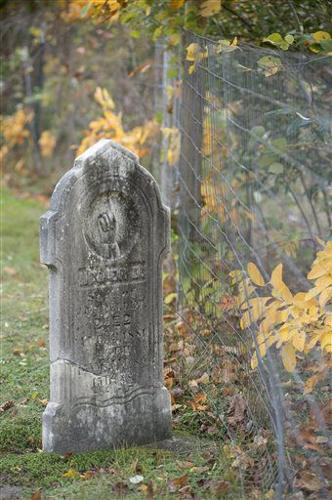
CHESANING, Mich. (AP) — Chesaning Township officials are contemplating exhuming dozens of graves at a cemetery threatened by ground erosion from a nearby river.
A line of tombstones in Wildwood Cemetery stands precariously close to the edge of a steep cliff that drops down to the Shiawassee River, MLive (http://bit.ly/2epqdoR ) reported. The drop-off has gotten closer to the cemetery as water has eaten away at the bank.
Township Supervisor Bob Corrin said officials are watching that erosion closely and preparing to relocate the graves farther from the river's edge if necessary.
"We won't move anything until we see some deterioration starting," Corrin said.
Two years ago, the township moved two bodies about 20 feet farther away from the river.
Corrin said the erosion began about 15 years ago and that he believes improvements made to the river bank since will slow or stop the problem.
"We're just hoping this thing stabilizes itself," Corrin said.
The law requires the township to post information in the local newspaper prior to exhuming and moving bodies. If there are no responses officials can seek permission through the court system.
Currently, the township is seeking approval for about 20 graves and is compiling a full list of graves that might be in danger, said Corrin.
"Right now we're putting the names together," he said.
For more than 150 years the cemetery has existed along the banks of the Shiawassee River, and most of the graves are 100 to 150 years old.
___
Information from: The Saginaw News, http://www.mlive.com/saginaw
- Updated
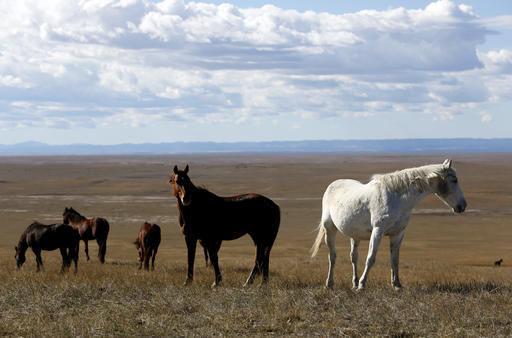
NEWELL, S.D. (AP) — A South Dakota man who won a $232 million Powerball jackpot in 2009 is now getting paid to let government horses roam his land.
More than 900 excess horses chosen from free-roaming herds on Bureau of Land Management ranges in other states are now grazing on a pasture owned by Neil Wanless, reported the Rapid City Journal (http://bit.ly/2eVcfxP ).
The land is about 75 miles northeast of Rapid City or 25 miles east of Newell. Wanless bought the land with his Powerball proceeds, which totaled $89 million after taxes.
The horses will be moved around to different parts of the ranch throughout the year to avoid overgrazing. They will have access to drink from dams and a water system Wanless installed. The horses will be able to live mostly free until death. The average age of horses on the Wanless land are 15 to 17 years and some live until they are as old as 34.
In the deal, the government pays Midland-based Spur Livestock LLC a varying rate around $2 per head each day to ensure the horses are fed, watered and kept relatively wild. In turn, Wanless has an arrangement with the company to keep the horses on his land.
BLM is bound by the Wild Free-Roaming Horses and Burros Act approved by Congress in 1971, that protect wild free-roaming and burros from capture, branding, harassment or death.
However some wild horses on non-BLM federal lands are not protected by the 1971 law. Those horses are often adopted or rescued by private sanctuaries when they reach unsustainable numbers.
___
Information from: Rapid City Journal, http://www.rapidcityjournal.com
- Updated
SPRINGFIELD, Mo. (AP) — A Springfield school official says bedbugs have been found in two classrooms and on a library book at an elementary school.
Communications director Teresa Bledsoe says three bedbugs were found at Weaver Elementary School. Bledsoe says the school district has brought in an exterminator, and the pest control specialist at the Springfield-Greene County Health Department confirmed that there is no infestation.
According to the Springfield News-Leader (http://sgfnow.co/2ewojkU ), the first report of bedbugs was Oct. 7, and the last one was last week.
Bledsoe says parents weren't notified about the discovery of bedbugs because there wasn't a need. Bledsoe says the affected family was provided resources to address the issue.
___
Information from: Springfield News-Leader, http://www.news-leader.com
- By LENORE SOBOTA The (Bloomington) Pantagraph
- Updated
NORMAL, Ill. (AP) — The "king of the forest" is coming down at Illinois State University.
A red oak tree that is estimated to have stood near the corner of what is now Fell Avenue and North Street for about 235 years soon will be removed for safety reasons — but not without a proper send off.
"We're here today to honor part of our history," said Patrick Murphy, horticulturalist and curator of ISU's Fell Arboretum. "Let this tree know that we give a darn."
People gathered around the tree over the lunch hour Wednesday to hear Murphy sing the praises of the mighty oak and learn what is being done to preserve its legacy.
"It's the king of the forest, indeed," Murphy said as he described how the tree has survived more than two centuries of disturbances: buildings being built and torn down, parking lots being paved, roots being cut as pipes and foundations were installed.
But those years have taken their toll.
Struck by oak wilt and other diseases, the old oak is a hollow shell of its former self. Literally.
"There's a void in this tree large enough for me to fit in," said Murphy.
After a heavy rain, water weeps out of cracks in the tree's bark and base, sometimes for days, he said.
Using a device called a resistograph, the university learned the core of the tree is hollow and there are cracks inside, Murphy explained.
"This decision was not made arbitrarily," he said.
As if to verify the decision was correct, a large limb broke off during strong winds earlier this week, narrowly missing the Educational Administration Building.
Even the untrained eye can see bark pulling away from the tree because of advancing decay.
Angelo Capparella, associate professor of biology, whose fourth-floor office window in the Science Laboratory Building overlooks the oak, said, "I'll miss this tree."
The squirrels that ate its acorns and may have called it home will miss it, too. So will migrating birds who dined on various bugs that Capparella said are found on native oaks.
But, as the saying goes, mighty oaks from little acorns grow.
Murphy has used acorns collected last year from the tree to grow small saplings. Acorns also are being collected this year for the same purpose.
It will take five to seven years for the little oaks to grow into "whips" — about 5 to 6 feet tall and the thickness of a finger — suitable for transplantation, said Murphy.
Although those little oaks are staying put at ISU for now, people attending the oak's farewell party were able to take home a piece of the tree.
A branch of the tree was cut into small sections, less than an inch thick and about 2 to 3 inches in diameter, for people to take as a remembrance. Almost 200 smaller pieces, less than a inch wide, were turned into lapel pins by Jessica Chambers, director of ISU's horticulture center, so people could have " a little token of the tree," she said.
Once the tree is taken down, some of the wood will be saved for educational purposes, said Murphy. The contractor has been asked to make a 12-inch thick slice as close to the ground as possible.
"We absolutely are going to do a ring count," said Murphy.
Capparella, who estimated the tree's age by using a formula taking various factors into account, is looking forward to the growth rings being counted once the tree is down.
"This will be a good test of that formula," he said.
___
Source: The (Bloomington) Pantagraph, http://bit.ly/2emPSCo
___
Information from: The Pantagraph, http://www.pantagraph.com
This is an Illinois Exchange story shared by The (Bloomington) Pantagraph.
- By DION LEFLER The Wichita Eagle
- Updated
ALLEN, Kan. (AP) — Christianne Parks says if rural Kansas can't keep up with the Internet, she's probably out of here.
"Eventually, I probably would get bored out of my mind and leave," said Parks, a 19-year-old who lives in Allen and is studying psychology at Emporia State University 20 miles to the south.
The slow rollout of high-speed broadband internet service is the latest existential threat to rural Kansas, according to Wichita Eagle (http://j.mp/2evd8hc ).
The sparsely populated region has been losing population for decades as farms have consolidated. That in turn led to steep declines in Main Street businesses.
Since 2000, 81 of Kansas' 105 counties have lost population, according to the U.S. Census Bureau. The consensus is that trend will get worse - especially among young people - until and unless someone can find a way to get better internet service to the outlands.
"It really all comes down to a quality of life perspective," said Brian Thomason of the Blue Valley Tele-Communications Co., based in the city of Home near the Nebraska border north of Manhattan. "I think we all live that. That's our jobs, to provide that."
The overarching issue is how to pay for replacing thousands of miles of obsolete copper wire with modern fiber-optic cable, without making internet service so expensive for customers that only businesses and the wealthy would be able to afford it.
The costs are staggering, about $20,000 a mile for fiber cable to serve widely dispersed customers in small villages and isolated farms.
The government is taking notice.
Seeking to keep Parks and others like her - educated young people who everyone agrees are vital to saving rural Kansas - two of the nation's top rural communications officials visited on a fact-finding mission.
Kansas Sen. Pat Roberts brought Ajit Pai, a member of the Federal Communications Commission, to Allen to meet with officials from about a dozen small telephone companies who are facing difficulty upgrading their networks.
The FCC makes the regulations for the system, and much of the money to pay for rural broadband expansion flows through the Senate Agriculture Committee, which Roberts chairs.
"I don't know of anybody on the Senate Agriculture Committee, on either side, who does not want to further expand our investment in broadband," Roberts said. "The support is there. The problem of course is the budget."
At present, rural Kansas has a patchwork of high- and low-speed internet. Some companies have bitten the cost bullet and installed the fiber. Others still rely on outdated early DSL technology that comes through the regular phone line.
Although that can handle basic business tasks such as checking crop prices or a weather report, customers say it's generally not enough for complex business dealings or the streaming movie services and online games that young customers have come to expect.
Parks said she has internet service at home but "it's really slow."
"I wish my brother were here. He literally said it should be illegal to have (internet) speeds this slow. Christianne Parks, Emporia State University student
Nikki Plankington, the town librarian, said the library was only able to get enough bandwidth to set up a Wi-Fi hot spot three years ago with help from the Manhattan library system. It's made the Allen library a popular destination for internet-starved townspeople.
"There are several people who will watch movies outside" after hours, she said. "The kids use it for the Pokemon Go thing. I don't know what that's all about, but the kids use it."
In a round-table discussion at the town's cramped senior center, telephone executives had a lot of complaints for Pai and Roberts.
One of the biggest was about who has to pay for expanding broadband - and who doesn't.
Much of the funding for broadband deployment in rural areas comes from the Universal Service Fund, created by Congress in 1934 to string phone lines to isolated communities and farms. In 2009, the FCC expanded universal service to include broadband and created the "Connect America Fund" to help spread the money around.
The idea behind universal service is to assess a small amount from all telephone customers - including those in densely populated and cheap-to-serve urban and suburban markets - to pay the extra cost of stringing long lines to isolated areas.
Check your own phone bill and you'll find the monthly universal service charges from both the federal and state governments.
But some telephone company officials say that kind of end-user funding is obsolete in the context of the internet, where the biggest users of the system aren't necessarily the end-of-the-line consumers.
The way it works now, ordinary customers bear the cost of upgrading and operating the systems while internet titans such as Netflix, Amazon and Google reap huge revenue from using the network, said Catherine Moyer of Pioneer Communications, which serves the southwest corner of Kansas.
"My customers and the customers here in Allen and all the customers in Wichita for that matter that have voice service pay a proportion of their bill," she said. But, "there's a whole group of people and companies utilizing the network that don't pay into the fund in any meaningful way ... so they haven't helped build out this network.
Netflix is a huge amount of traffic that traverses our network. The last time we looked it was in the 35 percent range. Catherine Moyer, Pioneer Communications
She said changing that is sure to bring cries of "trying to tax the internet." And in a way, it would be, she said.
"It's not necessarily what people want to see, but in the same light, if you want these networks and you want these speeds, you have to somehow fund that. And who should fund it?"
Pai said that's under consideration, but no decisions have been made.
"There's a federal-state joint board ... that is considering that issue," he said. "And we haven't heard recently how the joint board might make a decision along those lines."
Kansas is working with the federal government to expand broadband service, said Gov. Sam Brownback.
"We want to get as much broadband as we can to everywhere," he said, noting that in addition to entertainment, it also brings critical business information and teleconference medical help to small towns.
"There's been a particular federal push, which is good," said Brownback, a former U.S. senator. "And then there's state funds that go into a program that's something like the federal program too. There have been efforts to retarget those state funds to get them more focused and available for rural broadband."
Others complained about the red tape small phone companies have to go through to tap the federal funding to upgrade their systems and corporations.
"One thing that kind of concerns me a little bit is having the FCC dictate, or Washington dictate, the level of speed I'm required to have in order to maintain a certain level of funding," said Archie Macias of Wheat State Telephone, which serves rural communities in Butler, Cowley, Chase and Lyon counties.
Macias said his company's system, which has already installed fiber, can handle 25 megabit per second download speeds, but most of his customers only want to pay for 10.
"I'm not going to build a network that's like having 500 channels on a TV that you're going to watch 12 or 13," he said.
He said Wheat State spent $92,500 last year on preparing and filing federal reports.
And there are about 35 rural phone companies in the state doing the same.
Pai said he heard that complaint loud and clear.
He said the regulations are "too complex and much too uncertain for these companies to be able to make a long-term investment decision for rural America."
"What I'm going to keep focusing on is trying to simplify our own rules to make sure that the money we have allocated for this program is distributed in the most efficient, fairest way possible," he said. "And to me that means ... let's make sure that every dollar we dedicate for this program is dedicated to actually building out fiber, not on operating expenses like paperwork."
___
Information from: The Wichita (Kan.) Eagle, http://www.kansas.com
An AP Member Exchange shared by The Wichita Eagle for weekend use
- Updated
COLUMBUS, Ohio (AP) — The former CEO of a Phoenix-based traffic-camera company has been sentenced to more than a year in federal prison for her role in a scheme to bribe public officials in Ohio's capital city in exchange for city contracts.
A federal judge in Columbus, Ohio sentenced Karen Finley on Wednesday to 14 months in prison.
Finley pleaded guilty last year to conspiracy to commit bribery. She awaits sentencing in a similar corruption case in Chicago.
Ohio lobbyist John Raphael was sentenced in June to 15 months in federal prison for extortion in the scandal.
Authorities say Raphael extorted money in the form of campaign contributions for elected officials from the traffic-camera company Redflex for contracts awarded by the Columbus City Council.
Finley has apologized for her role in the scheme.
BURLINGTON, Iowa (AP) — A Burlington man has surprised the elementary school he attended by writing a $700 check to pay for students' school lunches.
Jerry Fenton said the money will be used to cover overdue lunch bills for children at Grimes Elementary School who haven't been able to pay for lunch but are fed anyway, according to the Des Moines Register (http://dmreg.co/2ep1MrF ).
Fenton said he read a story online about a boy who brought two lunches to school so he could give one to a friend who wasn't able to pay his lunch bills, and decided to go a step further.
School district food service director Alan Mehaffy said unpaid lunch bills aren't a major problem at Burlington schools, but can sometime cause tension between parents and teachers when reminders about the bills are sent home.
Fenton, who owns the Arrowhead Motel in Burlington, received lots of publicity on social media after writing about the donation on his Facebook page.
"I don't want to tell people what to do ... but it's always nice when people do nice things," he said, saying he hopes the donation will inspire people to do something generous for others.
Mehaffy said gifts like Fenton's donation are "extremely rare." He said he could only remember one other similar donation to the school, when a school food service employee had died and asked for memorial donations to be directed to the overdue lunch bills.
"It made a big impact," Mehaffy said of Fenton's donation. "It was a very generous offer."
___
Information from: The Des Moines Register, http://www.desmoinesregister.com
JEFFERSONVILLE, Ind. (AP) — A Jeffersonville resident who lost extremities after tornadoes ravaged Henryville in 2012 has become the first woman to receive a successful hand transplant.
Health officials announced Wednesday that Louella Aker, 69, is recovering well from a double hand transplant, which occurred Sept. 17 during 17-hour operation at Jewish Hospital in Louisville, Kentucky.
"She is truly a fighter who has continued to grow stronger each day following this surgery," said Tuna Ozyurekoglu, lead surgeon with the Kleinert Kutz Hand Care Center. "We look forward to watching her return to her normal activities, as she shows the world how successful transplantation can be."
Aker was diagnosed with a blood infection in 2012 after helping clean up Henryville, where tornadoes hit in March of that year. Doctors amputated both Aker's legs below the knee, her left forearm and part of her right hand.
"There are so many things you cannot do without your hands," Aker stated. "This will change my life and allow me to do the things I miss, like holding my granddaughter's hand."
Aker is taking medication to prevent her body from rejecting the transplants. She will undergo rehabilitation after being transferred from the hospital.
"She is tolerating her medications, and to date, has no signs of clinical rejection," said Dr. Christopher Jones of the University of Louisville and Jewish Hospital.
Aker said she's extremely grateful to the donor family, who she hasn't met.
CHESANING, Mich. (AP) — Chesaning Township officials are contemplating exhuming dozens of graves at a cemetery threatened by ground erosion from a nearby river.
A line of tombstones in Wildwood Cemetery stands precariously close to the edge of a steep cliff that drops down to the Shiawassee River, MLive (http://bit.ly/2epqdoR ) reported. The drop-off has gotten closer to the cemetery as water has eaten away at the bank.
Township Supervisor Bob Corrin said officials are watching that erosion closely and preparing to relocate the graves farther from the river's edge if necessary.
"We won't move anything until we see some deterioration starting," Corrin said.
Two years ago, the township moved two bodies about 20 feet farther away from the river.
Corrin said the erosion began about 15 years ago and that he believes improvements made to the river bank since will slow or stop the problem.
"We're just hoping this thing stabilizes itself," Corrin said.
The law requires the township to post information in the local newspaper prior to exhuming and moving bodies. If there are no responses officials can seek permission through the court system.
Currently, the township is seeking approval for about 20 graves and is compiling a full list of graves that might be in danger, said Corrin.
"Right now we're putting the names together," he said.
For more than 150 years the cemetery has existed along the banks of the Shiawassee River, and most of the graves are 100 to 150 years old.
___
Information from: The Saginaw News, http://www.mlive.com/saginaw
NEWELL, S.D. (AP) — A South Dakota man who won a $232 million Powerball jackpot in 2009 is now getting paid to let government horses roam his land.
More than 900 excess horses chosen from free-roaming herds on Bureau of Land Management ranges in other states are now grazing on a pasture owned by Neil Wanless, reported the Rapid City Journal (http://bit.ly/2eVcfxP ).
The land is about 75 miles northeast of Rapid City or 25 miles east of Newell. Wanless bought the land with his Powerball proceeds, which totaled $89 million after taxes.
The horses will be moved around to different parts of the ranch throughout the year to avoid overgrazing. They will have access to drink from dams and a water system Wanless installed. The horses will be able to live mostly free until death. The average age of horses on the Wanless land are 15 to 17 years and some live until they are as old as 34.
In the deal, the government pays Midland-based Spur Livestock LLC a varying rate around $2 per head each day to ensure the horses are fed, watered and kept relatively wild. In turn, Wanless has an arrangement with the company to keep the horses on his land.
BLM is bound by the Wild Free-Roaming Horses and Burros Act approved by Congress in 1971, that protect wild free-roaming and burros from capture, branding, harassment or death.
However some wild horses on non-BLM federal lands are not protected by the 1971 law. Those horses are often adopted or rescued by private sanctuaries when they reach unsustainable numbers.
___
Information from: Rapid City Journal, http://www.rapidcityjournal.com
SPRINGFIELD, Mo. (AP) — A Springfield school official says bedbugs have been found in two classrooms and on a library book at an elementary school.
Communications director Teresa Bledsoe says three bedbugs were found at Weaver Elementary School. Bledsoe says the school district has brought in an exterminator, and the pest control specialist at the Springfield-Greene County Health Department confirmed that there is no infestation.
According to the Springfield News-Leader (http://sgfnow.co/2ewojkU ), the first report of bedbugs was Oct. 7, and the last one was last week.
Bledsoe says parents weren't notified about the discovery of bedbugs because there wasn't a need. Bledsoe says the affected family was provided resources to address the issue.
___
Information from: Springfield News-Leader, http://www.news-leader.com
- By LENORE SOBOTA The (Bloomington) Pantagraph
NORMAL, Ill. (AP) — The "king of the forest" is coming down at Illinois State University.
A red oak tree that is estimated to have stood near the corner of what is now Fell Avenue and North Street for about 235 years soon will be removed for safety reasons — but not without a proper send off.
"We're here today to honor part of our history," said Patrick Murphy, horticulturalist and curator of ISU's Fell Arboretum. "Let this tree know that we give a darn."
People gathered around the tree over the lunch hour Wednesday to hear Murphy sing the praises of the mighty oak and learn what is being done to preserve its legacy.
"It's the king of the forest, indeed," Murphy said as he described how the tree has survived more than two centuries of disturbances: buildings being built and torn down, parking lots being paved, roots being cut as pipes and foundations were installed.
But those years have taken their toll.
Struck by oak wilt and other diseases, the old oak is a hollow shell of its former self. Literally.
"There's a void in this tree large enough for me to fit in," said Murphy.
After a heavy rain, water weeps out of cracks in the tree's bark and base, sometimes for days, he said.
Using a device called a resistograph, the university learned the core of the tree is hollow and there are cracks inside, Murphy explained.
"This decision was not made arbitrarily," he said.
As if to verify the decision was correct, a large limb broke off during strong winds earlier this week, narrowly missing the Educational Administration Building.
Even the untrained eye can see bark pulling away from the tree because of advancing decay.
Angelo Capparella, associate professor of biology, whose fourth-floor office window in the Science Laboratory Building overlooks the oak, said, "I'll miss this tree."
The squirrels that ate its acorns and may have called it home will miss it, too. So will migrating birds who dined on various bugs that Capparella said are found on native oaks.
But, as the saying goes, mighty oaks from little acorns grow.
Murphy has used acorns collected last year from the tree to grow small saplings. Acorns also are being collected this year for the same purpose.
It will take five to seven years for the little oaks to grow into "whips" — about 5 to 6 feet tall and the thickness of a finger — suitable for transplantation, said Murphy.
Although those little oaks are staying put at ISU for now, people attending the oak's farewell party were able to take home a piece of the tree.
A branch of the tree was cut into small sections, less than an inch thick and about 2 to 3 inches in diameter, for people to take as a remembrance. Almost 200 smaller pieces, less than a inch wide, were turned into lapel pins by Jessica Chambers, director of ISU's horticulture center, so people could have " a little token of the tree," she said.
Once the tree is taken down, some of the wood will be saved for educational purposes, said Murphy. The contractor has been asked to make a 12-inch thick slice as close to the ground as possible.
"We absolutely are going to do a ring count," said Murphy.
Capparella, who estimated the tree's age by using a formula taking various factors into account, is looking forward to the growth rings being counted once the tree is down.
"This will be a good test of that formula," he said.
___
Source: The (Bloomington) Pantagraph, http://bit.ly/2emPSCo
___
Information from: The Pantagraph, http://www.pantagraph.com
This is an Illinois Exchange story shared by The (Bloomington) Pantagraph.
- By DION LEFLER The Wichita Eagle
ALLEN, Kan. (AP) — Christianne Parks says if rural Kansas can't keep up with the Internet, she's probably out of here.
"Eventually, I probably would get bored out of my mind and leave," said Parks, a 19-year-old who lives in Allen and is studying psychology at Emporia State University 20 miles to the south.
The slow rollout of high-speed broadband internet service is the latest existential threat to rural Kansas, according to Wichita Eagle (http://j.mp/2evd8hc ).
The sparsely populated region has been losing population for decades as farms have consolidated. That in turn led to steep declines in Main Street businesses.
Since 2000, 81 of Kansas' 105 counties have lost population, according to the U.S. Census Bureau. The consensus is that trend will get worse - especially among young people - until and unless someone can find a way to get better internet service to the outlands.
"It really all comes down to a quality of life perspective," said Brian Thomason of the Blue Valley Tele-Communications Co., based in the city of Home near the Nebraska border north of Manhattan. "I think we all live that. That's our jobs, to provide that."
The overarching issue is how to pay for replacing thousands of miles of obsolete copper wire with modern fiber-optic cable, without making internet service so expensive for customers that only businesses and the wealthy would be able to afford it.
The costs are staggering, about $20,000 a mile for fiber cable to serve widely dispersed customers in small villages and isolated farms.
The government is taking notice.
Seeking to keep Parks and others like her - educated young people who everyone agrees are vital to saving rural Kansas - two of the nation's top rural communications officials visited on a fact-finding mission.
Kansas Sen. Pat Roberts brought Ajit Pai, a member of the Federal Communications Commission, to Allen to meet with officials from about a dozen small telephone companies who are facing difficulty upgrading their networks.
The FCC makes the regulations for the system, and much of the money to pay for rural broadband expansion flows through the Senate Agriculture Committee, which Roberts chairs.
"I don't know of anybody on the Senate Agriculture Committee, on either side, who does not want to further expand our investment in broadband," Roberts said. "The support is there. The problem of course is the budget."
At present, rural Kansas has a patchwork of high- and low-speed internet. Some companies have bitten the cost bullet and installed the fiber. Others still rely on outdated early DSL technology that comes through the regular phone line.
Although that can handle basic business tasks such as checking crop prices or a weather report, customers say it's generally not enough for complex business dealings or the streaming movie services and online games that young customers have come to expect.
Parks said she has internet service at home but "it's really slow."
"I wish my brother were here. He literally said it should be illegal to have (internet) speeds this slow. Christianne Parks, Emporia State University student
Nikki Plankington, the town librarian, said the library was only able to get enough bandwidth to set up a Wi-Fi hot spot three years ago with help from the Manhattan library system. It's made the Allen library a popular destination for internet-starved townspeople.
"There are several people who will watch movies outside" after hours, she said. "The kids use it for the Pokemon Go thing. I don't know what that's all about, but the kids use it."
In a round-table discussion at the town's cramped senior center, telephone executives had a lot of complaints for Pai and Roberts.
One of the biggest was about who has to pay for expanding broadband - and who doesn't.
Much of the funding for broadband deployment in rural areas comes from the Universal Service Fund, created by Congress in 1934 to string phone lines to isolated communities and farms. In 2009, the FCC expanded universal service to include broadband and created the "Connect America Fund" to help spread the money around.
The idea behind universal service is to assess a small amount from all telephone customers - including those in densely populated and cheap-to-serve urban and suburban markets - to pay the extra cost of stringing long lines to isolated areas.
Check your own phone bill and you'll find the monthly universal service charges from both the federal and state governments.
But some telephone company officials say that kind of end-user funding is obsolete in the context of the internet, where the biggest users of the system aren't necessarily the end-of-the-line consumers.
The way it works now, ordinary customers bear the cost of upgrading and operating the systems while internet titans such as Netflix, Amazon and Google reap huge revenue from using the network, said Catherine Moyer of Pioneer Communications, which serves the southwest corner of Kansas.
"My customers and the customers here in Allen and all the customers in Wichita for that matter that have voice service pay a proportion of their bill," she said. But, "there's a whole group of people and companies utilizing the network that don't pay into the fund in any meaningful way ... so they haven't helped build out this network.
Netflix is a huge amount of traffic that traverses our network. The last time we looked it was in the 35 percent range. Catherine Moyer, Pioneer Communications
She said changing that is sure to bring cries of "trying to tax the internet." And in a way, it would be, she said.
"It's not necessarily what people want to see, but in the same light, if you want these networks and you want these speeds, you have to somehow fund that. And who should fund it?"
Pai said that's under consideration, but no decisions have been made.
"There's a federal-state joint board ... that is considering that issue," he said. "And we haven't heard recently how the joint board might make a decision along those lines."
Kansas is working with the federal government to expand broadband service, said Gov. Sam Brownback.
"We want to get as much broadband as we can to everywhere," he said, noting that in addition to entertainment, it also brings critical business information and teleconference medical help to small towns.
"There's been a particular federal push, which is good," said Brownback, a former U.S. senator. "And then there's state funds that go into a program that's something like the federal program too. There have been efforts to retarget those state funds to get them more focused and available for rural broadband."
Others complained about the red tape small phone companies have to go through to tap the federal funding to upgrade their systems and corporations.
"One thing that kind of concerns me a little bit is having the FCC dictate, or Washington dictate, the level of speed I'm required to have in order to maintain a certain level of funding," said Archie Macias of Wheat State Telephone, which serves rural communities in Butler, Cowley, Chase and Lyon counties.
Macias said his company's system, which has already installed fiber, can handle 25 megabit per second download speeds, but most of his customers only want to pay for 10.
"I'm not going to build a network that's like having 500 channels on a TV that you're going to watch 12 or 13," he said.
He said Wheat State spent $92,500 last year on preparing and filing federal reports.
And there are about 35 rural phone companies in the state doing the same.
Pai said he heard that complaint loud and clear.
He said the regulations are "too complex and much too uncertain for these companies to be able to make a long-term investment decision for rural America."
"What I'm going to keep focusing on is trying to simplify our own rules to make sure that the money we have allocated for this program is distributed in the most efficient, fairest way possible," he said. "And to me that means ... let's make sure that every dollar we dedicate for this program is dedicated to actually building out fiber, not on operating expenses like paperwork."
___
Information from: The Wichita (Kan.) Eagle, http://www.kansas.com
An AP Member Exchange shared by The Wichita Eagle for weekend use
COLUMBUS, Ohio (AP) — The former CEO of a Phoenix-based traffic-camera company has been sentenced to more than a year in federal prison for her role in a scheme to bribe public officials in Ohio's capital city in exchange for city contracts.
A federal judge in Columbus, Ohio sentenced Karen Finley on Wednesday to 14 months in prison.
Finley pleaded guilty last year to conspiracy to commit bribery. She awaits sentencing in a similar corruption case in Chicago.
Ohio lobbyist John Raphael was sentenced in June to 15 months in federal prison for extortion in the scandal.
Authorities say Raphael extorted money in the form of campaign contributions for elected officials from the traffic-camera company Redflex for contracts awarded by the Columbus City Council.
Finley has apologized for her role in the scheme.
 Faculty concerned about changes to U of A admissions policy
