

Man strips, drives truck into plane; waitress saves choking man; geese repellent
- Updated
Odd and interesting news from the Midwest.

- Updated
ADDISON, Mich. (AP) — Stained-glass windows in churches are becoming a dying art because of changes in federal regulations regarding the use of heavy metals such as lead.
Richard Hanley is president of Omnibus Studios, which crafted and installed three windows at the 130-year-old Addison Congregational Church on Thursday. He told MLive (http://bit.ly/2bVMPLV ) that it's more difficult and expensive to build windows under the Environmental Protection Agency new regulations.
Hanley said the EPA is concerned about metals going into the air as they are heated to the point of vaporization.
Hanley said the glass used in the new windows is from Indiana, Washington, West Virginia and Germany. Each window costs about $20,000.
"It is very traditional, European-style work, with traditional techniques and cutting," he said. "The people cutting like this have been doing it for 10-plus years."
Hanley said three people spent "hundreds of hours" making the glass paintings.
"There was color rendering for the approval of the pastor, then we made the patterns by hand," Hanley said. "We take the original drawings and digitally blow them up, then put drawings on the light frame, then go back and refine them by hand."
The Rev. Kevin Duffy said the new windows supplement the church's original stained-glass window from the early 20th century.
"We had just built an addition that is a year old," Duffy said. "The slots were originally exterior windows, and we really prayed that we would have something of this nature to come in here, but never imagined something of this level."
___
Information from: Jackson Citizen Patriot, http://www.mlive.com/jackson
- Updated
ST. CLOUD, Minn. (AP) — A St. Cloud church has gone to court to keep a "tiny house" it uses to shelter a homeless person.
City officials say the trailer, belonging to St. John's Episcopal Church, violates residential code requirements and must be removed. The church filed a complaint against the city of St. Cloud in federal court on Thursday.
Church attorney Robert Feigh (fay) tells KFGO-AM (http://bit.ly/2bVsUOk ) that St. Cloud is discriminating against the church because similar structures are allowed in other parts of the city.
Feigh says if the city prevails, a homeless person now living in the trailer will be forced to live outside in the "Minnesota winter."
The "tiny house" is 132 square feet and sits on wheels.
St. Cloud officials did not respond to requests for comment Friday.
- Updated
LINCOLN, Neb. (AP) — Colorado, Kansas and Nebraska have reached a new agreement in their longstanding conflict over water in the Republican River basin, the states announced Friday.
State leaders signed resolutions following monthly negotiations that stretched over two years. The resolutions are intended to provide greater flexibility and certainty for all water users in the region.
Nebraska and Kansas fought for decades over water entitlements provided under the Republican River Compact, an agreement between the two states and Colorado. The compact has triggered lawsuits among the states, as well as from local farmers who say they were cheated out of water they should have received.
"These resolutions represent a long-term strategy for representing each state and ultimately improving water management for water users," said Nebraska Gov. Pete Ricketts.
The 1943 compact entitles Nebraska to 49 percent of the river's water, while Kansas receives 40 percent and Colorado gets 11 percent. The Republican River originates in Colorado, crosses the northwestern tip of Kansas into Nebraska, then runs through Nebraska before re-entering Kansas in its northeastern corner.
In February 2015, the U.S. Supreme Court ordered Nebraska to pay Kansas $5.5 million for using more water than it was entitled to in previous years. Nebraska officials hailed the decision, noting that the award was far less than the $80 million Kansas originally sought.
Shortly after the 2015 decision, Colorado, Kansas and Nebraska began looking for ways to cooperate more. At one point, the states struck a one-year agreement allowing Nebraska to pump more while ensuring that Kansas eventually gets the water it is due.
In a statement, Kansas Gov. Sam Brownback said the agreement "will ultimately improve water management for water users" in all three states.
Colorado Gov. John Hickenlooper called the agreement "historic" and shows the states can resolve their issues without litigation.
- Updated
OMAHA, Neb. (AP) — Authorities say a man wearing only boxer shorts stole a pickup and drove it into a Southwest Airlines plane at an airport in Omaha, Nebraska, causing minor injuries to three people on board.
Eppley Airfield Police Chief Tim Conahan says an officer spotted the man outside the terminal Thursday evening, screaming that people were trying to kill him. When officers approached, the man ran, climbed a fence into the gate area, undressed and stole an airline pickup. He drove into the plane, which was headed to Denver, as passengers were boarding.
The man is in custody, but has not yet been charged.
Southwest spokesman Chris Mainz said Friday that the plane's nose gear tires were flattened, so another plane flew the 113 passengers to Denver, landing three hours later than originally scheduled.
- By SARA BURNETT Associated Press
- Updated
CHICAGO (AP) — Insurance companies will be required to locate beneficiaries of unclaimed life insurance policies in Illinois and pay them money they're owed under legislation that Gov. Bruce Rauner signed into law on Friday.
The Republican approved the politically popular measure over the objections of business and industry groups, which said it opened them up to "overreaching audits" and would make what they feel is Illinois' already bad-for-business legal climate even worse.
Democratic Treasurer Michael Frerichs has been pushing the measure in hearings across the state that featured people who didn't know they'd been named as beneficiaries testifying that insurance companies never alerted them after the policy holder died.
Frerichs said his office has identified more than $550 million in unpaid benefits owed to Illinois residents since 2011 and that $7.4 billion has been identified nationally.
The legislation, which the General Assembly unanimously approved in May, requires insurers to use federal death records to identify deceased policyholders whose life insurance proceeds remain unpaid. The companies must conduct the initial check after the law takes effect Jan. 1, then twice each year going forward.
"I've never met a man or woman who purchased life insurance with the expectation that the death benefits would stay with the insurance company rather than their family," Frerichs said. "Life insurance policies are purchased to help families push through difficult times. Today, grieving families no longer will be victimized by unscrupulous life insurance companies."
Rauner also said Friday that the state insurance department is launching a website to help residents find out if they are a beneficiary of an insurance policy or annuity left by someone who died.
Business groups, including the U.S. Chamber of Commerce, argued against a provision that allows a private audit firm to search insurance company files and earn a contingency fee for finding money owed to beneficiaries. The chamber said the "profit-motivated" audits "have become a national concern for American businesses.
About a dozen states already have similar laws.
___
Follow Sara Burnett on Twitter at https://twitter.com/sara_burnett
- Updated
ARNOLD, Mo. (AP) — A waitress at a suburban St. Louis Denny's restaurant is being called a hero for saving the life of a choking man.
KMOV-TV (http://bit.ly/2bpSyI5 ) reports that Amanda Zamudio waits tables but also attends night classes, nearing her nursing degree. Earlier this month, a man eating at the Denny's in Arnold, Missouri, choked on his food.
The man stood up and Zamudio positioned herself behind him, used the Heimlich maneuver to give him one big thrust, and the food became dislodged.
Denny's CEO John C. Miller heard about the action and gave Zamudio an award for her action.
___
Information from: KMOV-TV, http://www.kmov.com
- By LINDA TYSSEN Mesabi Daily News
- Updated
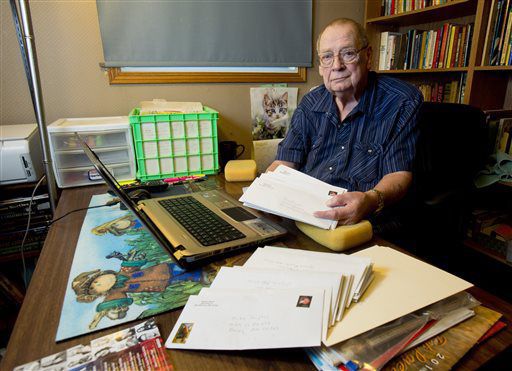
MOUNTAIN IRON, Minn. (AP) — Richard Roach, former longtime English teacher in Gilbert, put the following message on Facebook on June 1:
"Hey, ex-Gilbert students. I need your help with a project that I am starting. Since I retired in 1993, I have returned hundreds and hundreds of autobiographies to my former students, mostly at their reunions. However, I will never live long enough to return all of the ones that I still have. So I just have to do things differently. I am going to put lists on Facebook and if they will send me self-addressed stamped envelopes, I will mail them to them. I know that will cause a few problems as the lists are bound to include the names of some who have passed on, but I will do the best that I can... Please pass on the names to folks who might know these people... Please tell them to mention what list they were on, or it will take me forever... I will soon be 80 years old."
Roach has been deluged with positive responses via Facebook and in letters, the Mesabi Daily News (http://bit.ly/2bzKqsi ) reported.
"That's a great idea!" said Judy Fink on Facebook.
"How fun," wrote Jill Wirtanen.
"It was such a wonderful surprise," Rene Erchul Lind said.
"You were an awesome teacher," Jeanette Hageman said.
"My brother Duane has passed on, but I will get in contact with his daughter and see if she would like the autobiography," David Gibson said.
In an interview at the newspaper office, Roach said, "I have hundreds of them like that." One day more than 30 letters arrived in Roach's mail, and he set about returning more stories.
Roach started the autobiography project with his first year of teaching in Coleraine back in 1959-1960 — his first students are now 71 years old. He taught in Gilbert more than 30 years. He would have his students write their life stories when they were in the seventh grade, and each year until they graduated. He figures that adds up to nearly 4,000 stories, all of them kept in file folders at his home. He has compiled lists of the student's names and he numbers the lists for easier reference.
Roach brought with him some examples.
Sarah Schultz Norton wrote to Roach: "Did you know my dad, Lawrence 'Larry' Schultz? He died 10 years ago. He was just 56 years old. Sometimes we don't get the opportunity to ask questions about people we love. I never knew my dad wanted to be a teacher. He wanted his children to be educated. It was so lovely to receive this gift and learn things about my dad... getting to have a conversation with him... Again, that means more to me... than I can express. I wanted to write to you... you made a huge impact on your students and their families. Thank you from the bottom of my heart for giving me this piece of my dad back whom I miss every day."
Some of the most poignant letters have been from people in their 70s requesting the autobiographies written by their children who have died. "I have kept these for since 1959-60. I just couldn't get rid of them. Since I retired, I've been returning them at class reunions." He enjoys seeing the comments on Facebook, he said. "It makes you feel good. I just had the papers in boxes. It grows each time they tell their friends."
He took from a stack of seventh grade autographies this one from David Angeloni: "I live in Gilbert, Minnesota. I have one mom and one dad. I have two sisters and one brother. My home life is great because I have everything that I want. I live on Minnesota two houses down from Hogan's gas station. My dad's name is Reno Angeloni. He works for J&L Steel... I have a pet bird and all they do is squeak and eat but they are OK. School is all right some of the time. I hope Mr. Roach will pass me because if I don't, I will be up the creek."
From Melissa Johnson: "I live in Hutter. My dad words at Erie Mining Company, but is laid off now. (The year was 1982.) My mom is a housewife. I come from a family of nine girls and one boy from age 11 to 32 ... I enjoy sewing, cooking, reading, embroidery, crafts and painting. I belong to Girl Scouts and 4-H. My favorite teacher is Mr. Roach."
Still others wrote of having 100 cows as pets, becoming the first woman president, owning a farm in North Dakota and becoming a veterinarian, studying to be a psychiatrist. They wrote of embarrassing moments and dancing "with a whole bunch of popular boys." Another wrote of how much he loved his mother, and "the saddest time in my life was when my grandmother died."
"No matter how much time it takes, I'm not going to send them out without reading them," Roach said with a smile. "That's why it takes time."
Then he showed another autobiography, from Chris Chad of Eveleth, who wrote fondly of parents Louis and Joanne Chad and his brothers, including 2-year-old Mark. "He is cute, he talks too much and is sometimes a little pest. I love to ski and I have a paper route and clean at the laundromat... I like the Gilbert Junior High and I love my family. I am very happy with how things are going."
And Roach is happy with the Facebook response from former students wanting their long-ago biographies. "I have 600-some friends now."
___
Information from: Mesabi Daily News, http://www.virginiamn.com
An AP Member Exchange shared by the Mesabi Daily News.
- Updated
ST. LOUIS (AP) — A St. Louis man is dead after allegedly punching a man in a wheelchair — only to have the wheelchair-bound man pull out a gun and shoot him.
The shooting happened Monday. Police say 39-year-old Michael Johnson was arguing with 33-year-old Secoy Anthony Webb, who uses a wheelchair.
Police say Johnson began striking Webb in the face. Webb grabbed a gun and shot Johnson in the back.
Johnson died Wednesday in a hospital.
Webb is charged with unlawful possession of a firearm, and jailed on $30,000 cash-only bond. Police say the shooting remains under investigation.
- By RICHARD CHIN Pioneer Press
- Updated
ST. PAUL, Minn. (AP) — This summer, St. Paul police have been trying out a new tool that makes them stealthier while patrolling streets in the Hamline-Midway neighborhood.
It's called a bicycle, the Pioneer Press (http://bit.ly/2bzNnJx ) reported.
Four officers in the police department's Western District have been assigned full-time to patrol on bicycles this summer. The pilot program was set up to address complaints about groups of young people hanging out on the streets, sometimes getting into fights, shoplifting or other trouble, along the Central Corridor, according to police spokesman Steve Linders.
St. Paul has put police on bikes as far back as 1897, according to officer Jason Bain, one of the officers now patrolling on two wheels in St. Paul.
More recently, police units around the country started riding mountain bikes in the 1990s after Seattle police started a bike program.
St. Paul has largely used bikes in the past in the downtown area, especially to keep the peace at big public events like the Republican National Convention in St. Paul in 2008.
But now the police are seeing if bikes can be used in neighborhoods to catch drug dealers and garage burglars.
Bain said people still don't expect to see a pedaling police officer, which sometimes has meant that officers can quietly roll up to a crime in progress without alerting the criminals.
"The criminals hate it. At first they don't realize we're cops and we're on bikes," Bain said.
There are some disadvantages.
"We don't have that 3,000-pound vehicle to protect us," Bain said.
And a bike can't haul many of the tools, like a computer or a shotgun, that a police officer might normally take on patrol.
The bike police carry whistles, but they don't have lights or sirens. When they make an arrest, they have to call a squad car to transport the suspect. Their handcuffs double as bike locks.
But Bain said in some situations, like a protest march that shuts down a street, bikes can give police more mobility than a squad car.
And an officer on a bicycle is more approachable than an officer inside a squad car. That means more engagement opportunities.
A "softer" uniform — a polo shirt and shorts instead of a regulation shirt and blue wool trousers — also helps break down barriers.
"It's a different tool the police department can use to be visible," said Bain, 41, who is also a police bike instructor. "It's community engagement and it's enforcement."
Bain and his partner, David "Bo" Ratley, did some of both on a ride this past week.
Starting out from the department's Western District office on Hamline Avenue near University, they biked up to Hamline Park and handed out stickers to the kids playing there.
They greeted pedestrians and other cyclists they encountered with "How's it going?" or "Hey, sir, how are you doing?"
One man working in his yard shouted back, "Nice to see you out here."
"That wouldn't happen to you if you were in a squad car, or even on foot," Bain said.
Ratley said people often offer the officers water or coffee.
But one person they greeted on the street started swearing at them.
"He's known to police. Some days he'll chat with you, and other days he's like he was there," said Ratley, 39. "The ones that cause problems do not like us at all."
Bain said the pair cover 5 to 25 miles a shift. They have roamed to the St. Paul Cathedral up to Como Park and down to Highland Park, trying to hit the places where police see a spike in reports of burglary complaints or other problems.
One day this past week, they cruised down the alleys near Frogtown in the hopes of seeing a potential suspect in a series of dog-poisoning incidents there this summer.
They checked in at the CVS Pharmacy on Snelling and University avenues, talking with customers and store clerks. They also stopped to talk with two men who were washing car windshields for money in the drug store parking lot.
"Have you guys got permission to be out here?" Bain asked.
"We're not bothering anybody," said one of the men.
"I get that, I get that," Bain said.
But he told the men if the store complains, they'll have to come back and ask them to move.
They stopped when they saw a woman sitting on the curb, talking on her cellphone, her eyes red from crying.
Though the woman told them she didn't need help from police, Ratley said they might not have noticed her and stopped if they were speeding by in a squad car.
Much of the time, they roll slowly, peering into parked cars as they pass. They're looking for potential drug deals, drinking from open containers, kids fighting. Not necessarily major crimes, but they're the issues that bother people and businesses in the neighborhood.
"You can really monitor the quality-of-life crimes," Ratley said.
Once, Bain said, he stopped another cyclist who blew through a stop sign. Bicyclists are obligated to follow traffic laws just like other vehicles, Bain said.
"While I'm on a bike, if I don't enforce the bike laws, who will?" he said.
After the cyclist was stopped, a bag of marijuana fell out of his pocket, Bain said. The cyclist also had more than $1,000 in cash and more drugs packaged for resale, Bain said.
"Just a minor traffic violation yielded a good arrest," he said.
While rolling down an alley near Asbury Street and Edmund Avenue this past week, Bain caught a whiff of a distinctive odor.
"Smell that?" Bain said.
The two officers then stopped two young men nearby on the street who they said were passing a marijuana cigarette back and forth.
"I can smell burnt marijuana," Bain told one man. "I can smell it when you left the alleyway."
"That's my cologne," the man said.
Ratley briefly handcuffed the man he questioned after the man initially refused to identify himself. Ratley said the lack of cooperation at the beginning could escalate into a fight, and it's safer for everyone to eliminate the possibility early in the process.
"A little bit of hostility at the beginning, but everything leveled out," he said.
The men were let go because there wasn't enough evidence to make an arrest, according to the police.
"We saw them smoke it, but they got rid of it," Ratley said. "He was saying, 'I can smoke weed.' No, you can't."
Bain said the encounter still delivered a message that police are not going to ignore low-level offenses that bother neighborhood residents.
"It's a petty misdemeanor, but it's a crime," Bain said.
___
Information from: St. Paul Pioneer Press, http://www.twincities.com
An AP Member Exchange shared by the Pioneer Press.
- By BEN QUIGGLE The Elkhart Truth
- Updated
ELKHART, Ind. (AP) — Elkhart is trying to combat a bird problem and one local Boy Scout may have found a solution.
Anybody who has spent any amount of time at local parks has no doubt run into a Canada goose, or perhaps several dozen geese. They nest, beg for food, leave droppings all over and are a constant presence during the summer months.
Mishawaka recently dealt with their geese problem by exterminating 400 animals, an act that infuriated local residents.
Clyde Riley, Elkhart Parks and Recreation Department superintendent, said the city was looking for a more humane way of dealing with the problem.
Cue local Boy Scout Makeyta Trzaska, a member of Troop 4 in Wakarusa who is trying to become an Eagle Scout, the highest ranking that can be achieved as a Boy Scout. He began working with Riley during the spring, both eyeing a creative solution that would get rid of the geese in a few of the local parks.
"They leave feces all over some parks and it just doesn't look good and isn't sanitary," Riley said. "We have had no reports of anyone being injured by the geese, but we have had some reports of them being aggressive. With small children trying to enjoy the parks, that is cause for concern on our part."
Trzaska spent four days studying the bird populations at local parks, including McNaughton Park, Island Park and Central Park, trying to get an accurate picture of where the birds went, how many there were and what different types of animals gravitate to the parks.
"We needed to find a solution that wouldn't impact the other animals that called the parks home," Trzaska said.
In the end, Riley and Trzaska experimented with a fruit-based spray that can be applied to grass. When the geese eat the grass they get a bitter taste in their mouths and then move to other areas. The spray, 95 percent grapefruit juice, can last up to two weeks and by the end of that period the geese generally are conditioned to not return to the park.
"We are just attempting to control the amount of geese that are at our parks. We want to preserve the space so that people can utilize it," Riley said.
On Tuesday morning, Trzaska helped parks department personnel spray Central Park with the grapefruit solution by skipping classes at Goshen High School for the day.
"I think this was a great opportunity for him to earn his Eagle badge and for the Parks Department to demonstrate what can be accomplished if you work smarter, not harder," Riley said.
Testing the solution will cost the city around $500. That's a deal compared to other solutions, such as hiring someone to remove the geese, said Mike Lightner, head of the Public Buildings and Grounds Department.
Island Park, just northeast of downtown, received the first distribution of the grapefruit spray. On Tuesday, a walk through the park yielded no sightings of any geese.
Some were hanging out on the former Elkhart YMCA property, across the Elkhart River from the island, but most avoided the grassy areas of Island Park.
"Last Sunday I walked through here and I was thinking, 'Where are all the geese?'" said Tommie Freeman of Elkhart. "I haven't noticed as many. It is almost as though they all cleared out."
Freeman said she never had any issues with the geese being aggressive, but that the feces was something that bothered her.
L.C. Kitts of Elkhart said the number of geese has gotten out of hand and he doesn't know how the city is going to control the problem moving forward.
"Seems to be less hanging around the park now," he said. "They do hang out in flocks, so at times you might not see any, but then you come upon a big group."
Riley said the Parks Department plans to spray McNaughton Park soon. He hopes the end result of the program is something that allows the geese and residents to coexist while enjoying the parks.
"Hopefully other cities see what we did here and will adopt practices that are alternatives to killing the geese," he said.
___
Source: The Elkhart Truth, http://bit.ly/2bkaEOQ
___
Information from: The Elkhart Truth, http://www.elkharttruth.com
This is an AP-Indiana Exchange story offered by The Elkhart Truth.
- By STEVE KARNOWSKI Associated Press
- Updated
MINNEAPOLIS (AP) — Gov. Mark Dayton sought Friday to extend a little Minnesota nice to the state's declining honeybee population by issuing an executive order limiting certain pesticides that harm them, a step advocates said positions the state as a leader in protecting pollinating insects critical to the nation's food supply.
In making the announcement at the Minnesota State Fair, the Democratic governor stressed the importance of pollinators to the state's $90 billion agriculture sector.
The class of insecticides known as neonicotinoids, or "neonics," is one of several factors that have been blamed for falling pollinator populations, along with parasites such as mites, diseases and poor nutrition. About one-third of the human diet comes from plants pollinated by insects, and honeybees do about 80 percent of that work.
"We want to work cooperatively with user groups," Dayton said at a news conference. "We're not trying to ban anybody's practices or businesses, but there's a lot more we can do, all of us, more sensibly, with better awareness, to protect the pollinators."
Dayton's order directs the Minnesota Department of Agriculture to require verification that any application of neonicotinoid pesticides is necessary due to imminent threats of significant crop losses. It also creates a task force to study issues impacting pollinators and to recommend long-term solutions. State government will set up an interagency team on pollinator protection.
The governor also ordered state agencies to lead by example on the 8 million acres of land they manage statewide. Those steps will include turning highway rights-of-way into better habitat, with more of the kinds of plants pollinators crave. Neonicotinoid-treated plants and pesticides will be prohibited in the 40-acre State Capitol complex, and pollinator-friendly plants will be included in the Capitol's landscaping plan.
The order incorporates most of the recommendations from a special review that the state agriculture department conducted of neonicotinoids. But some of Dayton's proposals require legislative approval, including giving the state authority to regulate neonicotinoid-treated seeds. Agriculture Commissioner Dave Frederickson said about 80 percent of seeds planted today are treated with the insecticides.
University of Minnesota bee expert Marla Spivak said the governor's order "puts Minnesota miles ahead of all the other states in our nation. ... Some may think that these actions go too far, but I honestly don't know a farmer, a nursery operator, a grower, a pesticide applicator that wants to kill a bee or monarch while they're controlling their crop pests."
The Pesticide Action Network welcomed the moves toward using neonicotinoids as a last resort and the steps toward regulating pesticide-coated seeds. Organizer Lex Horan said in a statement that it ensures "bee-harming pesticides won't be used unnecessarily."
Bayer Crop Science, the top manufacturer of neonicotinoid pesticides, said it supports state efforts to protect pollinator health. Spokesman Jeff Donald pointed to a line in the state's review that said, "When properly applied, the risks associated with neonicotinoid use in general — and seed treatments in particular — can be offset by their benefits."
Kevin Paap, president of the Minnesota Farm Bureau, said every farm can find a place for pollinator-friendly plants such as milkweed and flowers, but farmers still need the flexibility to use modern technology.
Neonicotinoid insecticides are "very important," to agriculture he said. Biotechnology now builds insect resistance into corn and other crops, sharply reducing the need for pesticides, but it doesn't eliminate the need, he said.
"We certainly can have a balance with the pollinators and neonics and make that work," Paap said.
- Updated
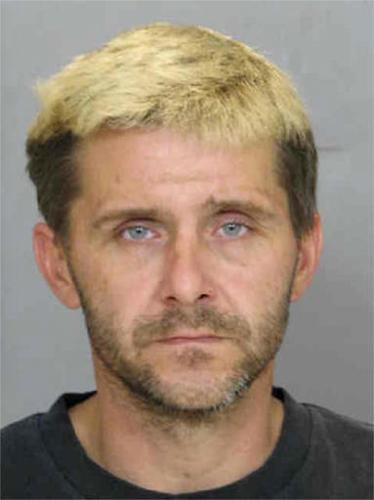
WATERLOO, Iowa (AP) — An Iowa felon who mistakenly voted in the 2012 presidential election despite having lost his right to do so has been ordered to pay a $750 fine after pleading guilty to election misconduct.
Glen Tank of Waterloo said Friday he's "not happy" with the way the criminal justice system handled his case from the beginning. He maintains he did nothing intentionally wrong but pleaded guilty Tuesday as part of an agreement in which he avoided prison time.
"I've been a nervous wreck" since the charges were filed 2 ½ years ago, he told The Associated Press. "I could've gone to prison. I'm not happy with the deal, but it's the only route I could go."
Tank owes $1,253 when mandatory surcharges and court costs are added to the fine. The auto body shop worker said he doesn't "have that money laying around" and will have to pay in installments.
Tank, 44, said he lost his rights to vote and own firearms 12 years ago when he was convicted of third-offense operating while intoxicated. He was convicted in 2010 of illegally possessing a firearm as a felon and was on probation at the time of the November 2012 presidential election.
Tank said he believed his voting rights had been restored by then because he had been summoned for jury duty — felons cannot serve as jurors. He said he took his identification card to register at a polling place at the Waterloo police station in 2012, where a poll worker assured him that he was eligible to vote. He cast his ballot to re-elect President Barack Obama, the first time he'd voted since high school.
Tank was among 9 Waterloo felons who were charged in January 2014 as part of a state investigation into voter fraud. Five have reached plea agreements and four are scheduled to stand trial next month.
Black Hawk County officials have acknowledged that those felons had the misfortune of living near precincts where workers didn't use electronic poll books that would have flagged them as ineligible. Felons who tried to vote elsewhere were turned away after they were identified; they weren't charged.
"The system was not updated. It should have thrown me out," Tank said.
Tank said he was stunned when investigators showed up to his workplace a year later asking him about the vote. While facing trial, he held out hope that the Iowa Supreme Court would restore voting rights to him and thousands of other felons. But justices ruled 4-3 in June to uphold the state's strict ban on felon voting.
- Updated
TOPEKA, Kan. (AP) — A man who had alcohol in his system when he killed a family of five in a crash 30 years ago has been charged with driving under the influence.
Shawnee County sheriff's Sgt. Todd Stallbaumer said Daryl Goodnow, 52, of Meriden, was arrested early Wednesday after deputies spotted him attempting to drive a pickup truck with a light pole lodged underneath, The Topeka Capital-Journal (http://bit.ly/2ceTyVx ) reported. Goodnow was released from jail on bond.
The prosecutor's office didn't immediately return a phone message from The Associated Press. Goodnow doesn't have a listed phone number, and Sheriff's Lt. Danny Lotridge says he didn't know whether Goodnow had an attorney for the DUI case.
Goodnow was 21 in February 1986 when the pickup truck he was driving crossed the center line of U.S. 75 near Hoyt and collided head-on with a rural Mayetta family's sport utility vehicle. The crash killed Dale Edwards, 28, his wife Nancy Edwards, 26, and their three children — Daniel, 9, Angela, 4, and Kattie Jo, 3.
Goodnow's blood alcohol content measured .07 percent, which was below the .10 level that was considered legally intoxicated at the time. Current state law prohibits driving with a blood alcohol concentration of .08 percent or higher.
A Jackson County jury convicted Goodnow of five counts of involuntary manslaughter. But the Kansas Court of Appeals later ruled that Goodnow should have been sentenced under the state's aggravated vehicular homicide law. He initially was sentenced to 10 to 50 years, but the appeals court ruling led him to be resentenced to 5 to 25 years.
Goodnow was released in 1991 but spent more time behind bars after violating his parole with a 1995 DUI arrest on Interstate 70 in Topeka.
___
Information from: The Topeka (Kan.) Capital-Journal, http://www.cjonline.com
- Updated
DECATUR, Ill. (AP) — A Decatur woman's ambition to become a nurse has led to new legislation allowing some convicted felons to petition the state for a health care worker license.
Gov. Bruce Rauner signed a measure into law Thursday with personal meaning for 43-year-old Lisa Creason, the Pantagraph (http://bit.ly/2bV89ki ) reported.
After earning an associate degree at Richland Community College in 2014, Creason found out she was prohibited from taking the Illinois exam to become a registered nurse because of an attempted robbery conviction 20 years prior.
Creason vocalized her dilemma and became part of a task force organized by Democratic state Rep. Camille Lilly of Chicago to change the law. The bill passed the Senate on March 26, 2015, and the House on May 26, 2016.
"She advocated for herself and her family," the governor said. "She stood up and said, 'There are barriers holding back good people in Illinois; let's knock those down. She got out there and led this effort, and Lisa, God bless you."
In 2011, the General Assembly added forcible felonies to the Health Care Worker Background Check Act to prevent violent and sexual offenders from having such licenses.
The new measure allows anyone convicted of a forcible felony, other than one requiring sex offender registration, to petition the Illinois Department of Public Health for a health care worker license.
Creason was convicted in 1994 of attempting to take money from a Subway cash register.
At the signing ceremony at Richland Community College, Creason thanked everyone who helped her efforts.
"The nursing program here accomplished something that my mother was unable to accomplish in 20-some years; they taught me how to shut my mouth," Creason said. "Thank you for offering to help me prepare for my state boards. It's a blessing to have all of you in my corner."
___
Information from: The Pantagraph, http://www.pantagraph.com
- Updated
FLINT, Mich. (AP) — The man who 40 years ago founded what's now called the HealthPlus Crim Festival of Races in Flint is preparing to run his 30th 10-mile race at the event that bears his name.
Bobby Crim is one of 20 people participating in their 30th Crim race. The 85-year-old will be joining an estimated 10,000 runners in the 10-Mile Race Saturday morning on the bricks of downtown's Saginaw Street, The Flint Journal reported (http://bit.ly/2bUV5M3 ) Friday.
The former Michigan House speaker said he couldn't have envisioned the road race he started in 1977 as a Special Olympics fundraiser would last four decades to become a festival including 8-kilometer and 5-kilometer races and the child-focused Teddy Bear Trot, which draws participants from across the globe.
"The community is the Crim, the Crim is the community," he said. "Almost everything from education to fitness or whatever goes through the Crim. We were a race, but now we're much more than a race."
Crim's fastest 10-mile time was 66 minutes, when he was 50. This year, he hopes to finish under two hours. He also plans to run the 5K with a friend who lost his sight in Vietnam when he was 19, as well as the Teddy Bear Trot with his grandchildren.
Crim said he runs between 15 and 20 races a year to stay in shape and that he splits his time between Florida and Grand Ledge, Michigan.
___
Information from: The Flint Journal, http://www.mlive.com/flint
- Updated
DES MOINES, Iowa (AP) — The Iowa agency overseeing the state's transition to a privately managed Medicaid program recorded over 225 grievances in the first three months of the new system, according to a new report released Friday.
The Iowa Department of Human Services said in a roughly 60-page quarterly report that three out-of-state insurance companies now running the program received the notices of dissatisfaction in April, May and June from Medicaid patients. The grievances were resolved within 30 calendar days, according to the report. Roughly 115 appeals were also resolved within 45 calendar days.
The report, required under new legislation, provides a closer snapshot of the system under the management of three private companies — Amerigroup, AmeriHealth and UnitedHealthcare. It breaks down enrollment figures and other details regarding case managers who assist patients with certain medical conditions.
The new information also allows the public to compare the data to ongoing reports of problems involving late payments and delayed care to patients. Some Democratic lawmakers say they continue to receive complaints from constituents. DHS has repeatedly said in public meetings that any reported issues are not systemic and are being addressed.
The report also has information about sanctions issued against the companies involving corrective action plans and fees. All three companies received several corrective action plans regarding timeliness, completeness and accuracy of reporting, among other things. They included fines of more than $1,200 for Amerigroup; $630 for AmeriHealth; and more than $2,500 for UnitedHealthcare.
The department waived the sanctions in April and May. Spokesman Amy Lorentzen McCoy noted earlier this month that DHS wanted to take a "collaborative approach" and work with the companies instead of being punitive. The department didn't inform health advocates and lawmakers about the plans.
The department declined to be more specific about which months the fines were for.
DHS estimated in the report the switch to the privatized system saved the state more than $22 million in the program's first three months.
Some lawmakers in a special oversight committee are expected to review the report Monday at the Capitol. Committee members include lawmakers who have been vocal about their skepticism of the program's performance.
In the meantime, Gov. Terry Branstad praised the report, adding in a statement that "Iowa patients and Iowa taxpayers have never had this thorough or transparent of a look and review of our Medicaid program."
The governor's office has repeatedly said the new Medicaid system provides better health outcomes. A chunk of the newly available data "may not be directly comparable" to data recorded under the old system, according to the report.
ADDISON, Mich. (AP) — Stained-glass windows in churches are becoming a dying art because of changes in federal regulations regarding the use of heavy metals such as lead.
Richard Hanley is president of Omnibus Studios, which crafted and installed three windows at the 130-year-old Addison Congregational Church on Thursday. He told MLive (http://bit.ly/2bVMPLV ) that it's more difficult and expensive to build windows under the Environmental Protection Agency new regulations.
Hanley said the EPA is concerned about metals going into the air as they are heated to the point of vaporization.
Hanley said the glass used in the new windows is from Indiana, Washington, West Virginia and Germany. Each window costs about $20,000.
"It is very traditional, European-style work, with traditional techniques and cutting," he said. "The people cutting like this have been doing it for 10-plus years."
Hanley said three people spent "hundreds of hours" making the glass paintings.
"There was color rendering for the approval of the pastor, then we made the patterns by hand," Hanley said. "We take the original drawings and digitally blow them up, then put drawings on the light frame, then go back and refine them by hand."
The Rev. Kevin Duffy said the new windows supplement the church's original stained-glass window from the early 20th century.
"We had just built an addition that is a year old," Duffy said. "The slots were originally exterior windows, and we really prayed that we would have something of this nature to come in here, but never imagined something of this level."
___
Information from: Jackson Citizen Patriot, http://www.mlive.com/jackson
ST. CLOUD, Minn. (AP) — A St. Cloud church has gone to court to keep a "tiny house" it uses to shelter a homeless person.
City officials say the trailer, belonging to St. John's Episcopal Church, violates residential code requirements and must be removed. The church filed a complaint against the city of St. Cloud in federal court on Thursday.
Church attorney Robert Feigh (fay) tells KFGO-AM (http://bit.ly/2bVsUOk ) that St. Cloud is discriminating against the church because similar structures are allowed in other parts of the city.
Feigh says if the city prevails, a homeless person now living in the trailer will be forced to live outside in the "Minnesota winter."
The "tiny house" is 132 square feet and sits on wheels.
St. Cloud officials did not respond to requests for comment Friday.
LINCOLN, Neb. (AP) — Colorado, Kansas and Nebraska have reached a new agreement in their longstanding conflict over water in the Republican River basin, the states announced Friday.
State leaders signed resolutions following monthly negotiations that stretched over two years. The resolutions are intended to provide greater flexibility and certainty for all water users in the region.
Nebraska and Kansas fought for decades over water entitlements provided under the Republican River Compact, an agreement between the two states and Colorado. The compact has triggered lawsuits among the states, as well as from local farmers who say they were cheated out of water they should have received.
"These resolutions represent a long-term strategy for representing each state and ultimately improving water management for water users," said Nebraska Gov. Pete Ricketts.
The 1943 compact entitles Nebraska to 49 percent of the river's water, while Kansas receives 40 percent and Colorado gets 11 percent. The Republican River originates in Colorado, crosses the northwestern tip of Kansas into Nebraska, then runs through Nebraska before re-entering Kansas in its northeastern corner.
In February 2015, the U.S. Supreme Court ordered Nebraska to pay Kansas $5.5 million for using more water than it was entitled to in previous years. Nebraska officials hailed the decision, noting that the award was far less than the $80 million Kansas originally sought.
Shortly after the 2015 decision, Colorado, Kansas and Nebraska began looking for ways to cooperate more. At one point, the states struck a one-year agreement allowing Nebraska to pump more while ensuring that Kansas eventually gets the water it is due.
In a statement, Kansas Gov. Sam Brownback said the agreement "will ultimately improve water management for water users" in all three states.
Colorado Gov. John Hickenlooper called the agreement "historic" and shows the states can resolve their issues without litigation.
OMAHA, Neb. (AP) — Authorities say a man wearing only boxer shorts stole a pickup and drove it into a Southwest Airlines plane at an airport in Omaha, Nebraska, causing minor injuries to three people on board.
Eppley Airfield Police Chief Tim Conahan says an officer spotted the man outside the terminal Thursday evening, screaming that people were trying to kill him. When officers approached, the man ran, climbed a fence into the gate area, undressed and stole an airline pickup. He drove into the plane, which was headed to Denver, as passengers were boarding.
The man is in custody, but has not yet been charged.
Southwest spokesman Chris Mainz said Friday that the plane's nose gear tires were flattened, so another plane flew the 113 passengers to Denver, landing three hours later than originally scheduled.
- By SARA BURNETT Associated Press
CHICAGO (AP) — Insurance companies will be required to locate beneficiaries of unclaimed life insurance policies in Illinois and pay them money they're owed under legislation that Gov. Bruce Rauner signed into law on Friday.
The Republican approved the politically popular measure over the objections of business and industry groups, which said it opened them up to "overreaching audits" and would make what they feel is Illinois' already bad-for-business legal climate even worse.
Democratic Treasurer Michael Frerichs has been pushing the measure in hearings across the state that featured people who didn't know they'd been named as beneficiaries testifying that insurance companies never alerted them after the policy holder died.
Frerichs said his office has identified more than $550 million in unpaid benefits owed to Illinois residents since 2011 and that $7.4 billion has been identified nationally.
The legislation, which the General Assembly unanimously approved in May, requires insurers to use federal death records to identify deceased policyholders whose life insurance proceeds remain unpaid. The companies must conduct the initial check after the law takes effect Jan. 1, then twice each year going forward.
"I've never met a man or woman who purchased life insurance with the expectation that the death benefits would stay with the insurance company rather than their family," Frerichs said. "Life insurance policies are purchased to help families push through difficult times. Today, grieving families no longer will be victimized by unscrupulous life insurance companies."
Rauner also said Friday that the state insurance department is launching a website to help residents find out if they are a beneficiary of an insurance policy or annuity left by someone who died.
Business groups, including the U.S. Chamber of Commerce, argued against a provision that allows a private audit firm to search insurance company files and earn a contingency fee for finding money owed to beneficiaries. The chamber said the "profit-motivated" audits "have become a national concern for American businesses.
About a dozen states already have similar laws.
___
Follow Sara Burnett on Twitter at https://twitter.com/sara_burnett
ARNOLD, Mo. (AP) — A waitress at a suburban St. Louis Denny's restaurant is being called a hero for saving the life of a choking man.
KMOV-TV (http://bit.ly/2bpSyI5 ) reports that Amanda Zamudio waits tables but also attends night classes, nearing her nursing degree. Earlier this month, a man eating at the Denny's in Arnold, Missouri, choked on his food.
The man stood up and Zamudio positioned herself behind him, used the Heimlich maneuver to give him one big thrust, and the food became dislodged.
Denny's CEO John C. Miller heard about the action and gave Zamudio an award for her action.
___
Information from: KMOV-TV, http://www.kmov.com
- By LINDA TYSSEN Mesabi Daily News
MOUNTAIN IRON, Minn. (AP) — Richard Roach, former longtime English teacher in Gilbert, put the following message on Facebook on June 1:
"Hey, ex-Gilbert students. I need your help with a project that I am starting. Since I retired in 1993, I have returned hundreds and hundreds of autobiographies to my former students, mostly at their reunions. However, I will never live long enough to return all of the ones that I still have. So I just have to do things differently. I am going to put lists on Facebook and if they will send me self-addressed stamped envelopes, I will mail them to them. I know that will cause a few problems as the lists are bound to include the names of some who have passed on, but I will do the best that I can... Please pass on the names to folks who might know these people... Please tell them to mention what list they were on, or it will take me forever... I will soon be 80 years old."
Roach has been deluged with positive responses via Facebook and in letters, the Mesabi Daily News (http://bit.ly/2bzKqsi ) reported.
"That's a great idea!" said Judy Fink on Facebook.
"How fun," wrote Jill Wirtanen.
"It was such a wonderful surprise," Rene Erchul Lind said.
"You were an awesome teacher," Jeanette Hageman said.
"My brother Duane has passed on, but I will get in contact with his daughter and see if she would like the autobiography," David Gibson said.
In an interview at the newspaper office, Roach said, "I have hundreds of them like that." One day more than 30 letters arrived in Roach's mail, and he set about returning more stories.
Roach started the autobiography project with his first year of teaching in Coleraine back in 1959-1960 — his first students are now 71 years old. He taught in Gilbert more than 30 years. He would have his students write their life stories when they were in the seventh grade, and each year until they graduated. He figures that adds up to nearly 4,000 stories, all of them kept in file folders at his home. He has compiled lists of the student's names and he numbers the lists for easier reference.
Roach brought with him some examples.
Sarah Schultz Norton wrote to Roach: "Did you know my dad, Lawrence 'Larry' Schultz? He died 10 years ago. He was just 56 years old. Sometimes we don't get the opportunity to ask questions about people we love. I never knew my dad wanted to be a teacher. He wanted his children to be educated. It was so lovely to receive this gift and learn things about my dad... getting to have a conversation with him... Again, that means more to me... than I can express. I wanted to write to you... you made a huge impact on your students and their families. Thank you from the bottom of my heart for giving me this piece of my dad back whom I miss every day."
Some of the most poignant letters have been from people in their 70s requesting the autobiographies written by their children who have died. "I have kept these for since 1959-60. I just couldn't get rid of them. Since I retired, I've been returning them at class reunions." He enjoys seeing the comments on Facebook, he said. "It makes you feel good. I just had the papers in boxes. It grows each time they tell their friends."
He took from a stack of seventh grade autographies this one from David Angeloni: "I live in Gilbert, Minnesota. I have one mom and one dad. I have two sisters and one brother. My home life is great because I have everything that I want. I live on Minnesota two houses down from Hogan's gas station. My dad's name is Reno Angeloni. He works for J&L Steel... I have a pet bird and all they do is squeak and eat but they are OK. School is all right some of the time. I hope Mr. Roach will pass me because if I don't, I will be up the creek."
From Melissa Johnson: "I live in Hutter. My dad words at Erie Mining Company, but is laid off now. (The year was 1982.) My mom is a housewife. I come from a family of nine girls and one boy from age 11 to 32 ... I enjoy sewing, cooking, reading, embroidery, crafts and painting. I belong to Girl Scouts and 4-H. My favorite teacher is Mr. Roach."
Still others wrote of having 100 cows as pets, becoming the first woman president, owning a farm in North Dakota and becoming a veterinarian, studying to be a psychiatrist. They wrote of embarrassing moments and dancing "with a whole bunch of popular boys." Another wrote of how much he loved his mother, and "the saddest time in my life was when my grandmother died."
"No matter how much time it takes, I'm not going to send them out without reading them," Roach said with a smile. "That's why it takes time."
Then he showed another autobiography, from Chris Chad of Eveleth, who wrote fondly of parents Louis and Joanne Chad and his brothers, including 2-year-old Mark. "He is cute, he talks too much and is sometimes a little pest. I love to ski and I have a paper route and clean at the laundromat... I like the Gilbert Junior High and I love my family. I am very happy with how things are going."
And Roach is happy with the Facebook response from former students wanting their long-ago biographies. "I have 600-some friends now."
___
Information from: Mesabi Daily News, http://www.virginiamn.com
An AP Member Exchange shared by the Mesabi Daily News.
ST. LOUIS (AP) — A St. Louis man is dead after allegedly punching a man in a wheelchair — only to have the wheelchair-bound man pull out a gun and shoot him.
The shooting happened Monday. Police say 39-year-old Michael Johnson was arguing with 33-year-old Secoy Anthony Webb, who uses a wheelchair.
Police say Johnson began striking Webb in the face. Webb grabbed a gun and shot Johnson in the back.
Johnson died Wednesday in a hospital.
Webb is charged with unlawful possession of a firearm, and jailed on $30,000 cash-only bond. Police say the shooting remains under investigation.
- By RICHARD CHIN Pioneer Press
ST. PAUL, Minn. (AP) — This summer, St. Paul police have been trying out a new tool that makes them stealthier while patrolling streets in the Hamline-Midway neighborhood.
It's called a bicycle, the Pioneer Press (http://bit.ly/2bzNnJx ) reported.
Four officers in the police department's Western District have been assigned full-time to patrol on bicycles this summer. The pilot program was set up to address complaints about groups of young people hanging out on the streets, sometimes getting into fights, shoplifting or other trouble, along the Central Corridor, according to police spokesman Steve Linders.
St. Paul has put police on bikes as far back as 1897, according to officer Jason Bain, one of the officers now patrolling on two wheels in St. Paul.
More recently, police units around the country started riding mountain bikes in the 1990s after Seattle police started a bike program.
St. Paul has largely used bikes in the past in the downtown area, especially to keep the peace at big public events like the Republican National Convention in St. Paul in 2008.
But now the police are seeing if bikes can be used in neighborhoods to catch drug dealers and garage burglars.
Bain said people still don't expect to see a pedaling police officer, which sometimes has meant that officers can quietly roll up to a crime in progress without alerting the criminals.
"The criminals hate it. At first they don't realize we're cops and we're on bikes," Bain said.
There are some disadvantages.
"We don't have that 3,000-pound vehicle to protect us," Bain said.
And a bike can't haul many of the tools, like a computer or a shotgun, that a police officer might normally take on patrol.
The bike police carry whistles, but they don't have lights or sirens. When they make an arrest, they have to call a squad car to transport the suspect. Their handcuffs double as bike locks.
But Bain said in some situations, like a protest march that shuts down a street, bikes can give police more mobility than a squad car.
And an officer on a bicycle is more approachable than an officer inside a squad car. That means more engagement opportunities.
A "softer" uniform — a polo shirt and shorts instead of a regulation shirt and blue wool trousers — also helps break down barriers.
"It's a different tool the police department can use to be visible," said Bain, 41, who is also a police bike instructor. "It's community engagement and it's enforcement."
Bain and his partner, David "Bo" Ratley, did some of both on a ride this past week.
Starting out from the department's Western District office on Hamline Avenue near University, they biked up to Hamline Park and handed out stickers to the kids playing there.
They greeted pedestrians and other cyclists they encountered with "How's it going?" or "Hey, sir, how are you doing?"
One man working in his yard shouted back, "Nice to see you out here."
"That wouldn't happen to you if you were in a squad car, or even on foot," Bain said.
Ratley said people often offer the officers water or coffee.
But one person they greeted on the street started swearing at them.
"He's known to police. Some days he'll chat with you, and other days he's like he was there," said Ratley, 39. "The ones that cause problems do not like us at all."
Bain said the pair cover 5 to 25 miles a shift. They have roamed to the St. Paul Cathedral up to Como Park and down to Highland Park, trying to hit the places where police see a spike in reports of burglary complaints or other problems.
One day this past week, they cruised down the alleys near Frogtown in the hopes of seeing a potential suspect in a series of dog-poisoning incidents there this summer.
They checked in at the CVS Pharmacy on Snelling and University avenues, talking with customers and store clerks. They also stopped to talk with two men who were washing car windshields for money in the drug store parking lot.
"Have you guys got permission to be out here?" Bain asked.
"We're not bothering anybody," said one of the men.
"I get that, I get that," Bain said.
But he told the men if the store complains, they'll have to come back and ask them to move.
They stopped when they saw a woman sitting on the curb, talking on her cellphone, her eyes red from crying.
Though the woman told them she didn't need help from police, Ratley said they might not have noticed her and stopped if they were speeding by in a squad car.
Much of the time, they roll slowly, peering into parked cars as they pass. They're looking for potential drug deals, drinking from open containers, kids fighting. Not necessarily major crimes, but they're the issues that bother people and businesses in the neighborhood.
"You can really monitor the quality-of-life crimes," Ratley said.
Once, Bain said, he stopped another cyclist who blew through a stop sign. Bicyclists are obligated to follow traffic laws just like other vehicles, Bain said.
"While I'm on a bike, if I don't enforce the bike laws, who will?" he said.
After the cyclist was stopped, a bag of marijuana fell out of his pocket, Bain said. The cyclist also had more than $1,000 in cash and more drugs packaged for resale, Bain said.
"Just a minor traffic violation yielded a good arrest," he said.
While rolling down an alley near Asbury Street and Edmund Avenue this past week, Bain caught a whiff of a distinctive odor.
"Smell that?" Bain said.
The two officers then stopped two young men nearby on the street who they said were passing a marijuana cigarette back and forth.
"I can smell burnt marijuana," Bain told one man. "I can smell it when you left the alleyway."
"That's my cologne," the man said.
Ratley briefly handcuffed the man he questioned after the man initially refused to identify himself. Ratley said the lack of cooperation at the beginning could escalate into a fight, and it's safer for everyone to eliminate the possibility early in the process.
"A little bit of hostility at the beginning, but everything leveled out," he said.
The men were let go because there wasn't enough evidence to make an arrest, according to the police.
"We saw them smoke it, but they got rid of it," Ratley said. "He was saying, 'I can smoke weed.' No, you can't."
Bain said the encounter still delivered a message that police are not going to ignore low-level offenses that bother neighborhood residents.
"It's a petty misdemeanor, but it's a crime," Bain said.
___
Information from: St. Paul Pioneer Press, http://www.twincities.com
An AP Member Exchange shared by the Pioneer Press.
- By BEN QUIGGLE The Elkhart Truth
ELKHART, Ind. (AP) — Elkhart is trying to combat a bird problem and one local Boy Scout may have found a solution.
Anybody who has spent any amount of time at local parks has no doubt run into a Canada goose, or perhaps several dozen geese. They nest, beg for food, leave droppings all over and are a constant presence during the summer months.
Mishawaka recently dealt with their geese problem by exterminating 400 animals, an act that infuriated local residents.
Clyde Riley, Elkhart Parks and Recreation Department superintendent, said the city was looking for a more humane way of dealing with the problem.
Cue local Boy Scout Makeyta Trzaska, a member of Troop 4 in Wakarusa who is trying to become an Eagle Scout, the highest ranking that can be achieved as a Boy Scout. He began working with Riley during the spring, both eyeing a creative solution that would get rid of the geese in a few of the local parks.
"They leave feces all over some parks and it just doesn't look good and isn't sanitary," Riley said. "We have had no reports of anyone being injured by the geese, but we have had some reports of them being aggressive. With small children trying to enjoy the parks, that is cause for concern on our part."
Trzaska spent four days studying the bird populations at local parks, including McNaughton Park, Island Park and Central Park, trying to get an accurate picture of where the birds went, how many there were and what different types of animals gravitate to the parks.
"We needed to find a solution that wouldn't impact the other animals that called the parks home," Trzaska said.
In the end, Riley and Trzaska experimented with a fruit-based spray that can be applied to grass. When the geese eat the grass they get a bitter taste in their mouths and then move to other areas. The spray, 95 percent grapefruit juice, can last up to two weeks and by the end of that period the geese generally are conditioned to not return to the park.
"We are just attempting to control the amount of geese that are at our parks. We want to preserve the space so that people can utilize it," Riley said.
On Tuesday morning, Trzaska helped parks department personnel spray Central Park with the grapefruit solution by skipping classes at Goshen High School for the day.
"I think this was a great opportunity for him to earn his Eagle badge and for the Parks Department to demonstrate what can be accomplished if you work smarter, not harder," Riley said.
Testing the solution will cost the city around $500. That's a deal compared to other solutions, such as hiring someone to remove the geese, said Mike Lightner, head of the Public Buildings and Grounds Department.
Island Park, just northeast of downtown, received the first distribution of the grapefruit spray. On Tuesday, a walk through the park yielded no sightings of any geese.
Some were hanging out on the former Elkhart YMCA property, across the Elkhart River from the island, but most avoided the grassy areas of Island Park.
"Last Sunday I walked through here and I was thinking, 'Where are all the geese?'" said Tommie Freeman of Elkhart. "I haven't noticed as many. It is almost as though they all cleared out."
Freeman said she never had any issues with the geese being aggressive, but that the feces was something that bothered her.
L.C. Kitts of Elkhart said the number of geese has gotten out of hand and he doesn't know how the city is going to control the problem moving forward.
"Seems to be less hanging around the park now," he said. "They do hang out in flocks, so at times you might not see any, but then you come upon a big group."
Riley said the Parks Department plans to spray McNaughton Park soon. He hopes the end result of the program is something that allows the geese and residents to coexist while enjoying the parks.
"Hopefully other cities see what we did here and will adopt practices that are alternatives to killing the geese," he said.
___
Source: The Elkhart Truth, http://bit.ly/2bkaEOQ
___
Information from: The Elkhart Truth, http://www.elkharttruth.com
This is an AP-Indiana Exchange story offered by The Elkhart Truth.
- By STEVE KARNOWSKI Associated Press
MINNEAPOLIS (AP) — Gov. Mark Dayton sought Friday to extend a little Minnesota nice to the state's declining honeybee population by issuing an executive order limiting certain pesticides that harm them, a step advocates said positions the state as a leader in protecting pollinating insects critical to the nation's food supply.
In making the announcement at the Minnesota State Fair, the Democratic governor stressed the importance of pollinators to the state's $90 billion agriculture sector.
The class of insecticides known as neonicotinoids, or "neonics," is one of several factors that have been blamed for falling pollinator populations, along with parasites such as mites, diseases and poor nutrition. About one-third of the human diet comes from plants pollinated by insects, and honeybees do about 80 percent of that work.
"We want to work cooperatively with user groups," Dayton said at a news conference. "We're not trying to ban anybody's practices or businesses, but there's a lot more we can do, all of us, more sensibly, with better awareness, to protect the pollinators."
Dayton's order directs the Minnesota Department of Agriculture to require verification that any application of neonicotinoid pesticides is necessary due to imminent threats of significant crop losses. It also creates a task force to study issues impacting pollinators and to recommend long-term solutions. State government will set up an interagency team on pollinator protection.
The governor also ordered state agencies to lead by example on the 8 million acres of land they manage statewide. Those steps will include turning highway rights-of-way into better habitat, with more of the kinds of plants pollinators crave. Neonicotinoid-treated plants and pesticides will be prohibited in the 40-acre State Capitol complex, and pollinator-friendly plants will be included in the Capitol's landscaping plan.
The order incorporates most of the recommendations from a special review that the state agriculture department conducted of neonicotinoids. But some of Dayton's proposals require legislative approval, including giving the state authority to regulate neonicotinoid-treated seeds. Agriculture Commissioner Dave Frederickson said about 80 percent of seeds planted today are treated with the insecticides.
University of Minnesota bee expert Marla Spivak said the governor's order "puts Minnesota miles ahead of all the other states in our nation. ... Some may think that these actions go too far, but I honestly don't know a farmer, a nursery operator, a grower, a pesticide applicator that wants to kill a bee or monarch while they're controlling their crop pests."
The Pesticide Action Network welcomed the moves toward using neonicotinoids as a last resort and the steps toward regulating pesticide-coated seeds. Organizer Lex Horan said in a statement that it ensures "bee-harming pesticides won't be used unnecessarily."
Bayer Crop Science, the top manufacturer of neonicotinoid pesticides, said it supports state efforts to protect pollinator health. Spokesman Jeff Donald pointed to a line in the state's review that said, "When properly applied, the risks associated with neonicotinoid use in general — and seed treatments in particular — can be offset by their benefits."
Kevin Paap, president of the Minnesota Farm Bureau, said every farm can find a place for pollinator-friendly plants such as milkweed and flowers, but farmers still need the flexibility to use modern technology.
Neonicotinoid insecticides are "very important," to agriculture he said. Biotechnology now builds insect resistance into corn and other crops, sharply reducing the need for pesticides, but it doesn't eliminate the need, he said.
"We certainly can have a balance with the pollinators and neonics and make that work," Paap said.
WATERLOO, Iowa (AP) — An Iowa felon who mistakenly voted in the 2012 presidential election despite having lost his right to do so has been ordered to pay a $750 fine after pleading guilty to election misconduct.
Glen Tank of Waterloo said Friday he's "not happy" with the way the criminal justice system handled his case from the beginning. He maintains he did nothing intentionally wrong but pleaded guilty Tuesday as part of an agreement in which he avoided prison time.
"I've been a nervous wreck" since the charges were filed 2 ½ years ago, he told The Associated Press. "I could've gone to prison. I'm not happy with the deal, but it's the only route I could go."
Tank owes $1,253 when mandatory surcharges and court costs are added to the fine. The auto body shop worker said he doesn't "have that money laying around" and will have to pay in installments.
Tank, 44, said he lost his rights to vote and own firearms 12 years ago when he was convicted of third-offense operating while intoxicated. He was convicted in 2010 of illegally possessing a firearm as a felon and was on probation at the time of the November 2012 presidential election.
Tank said he believed his voting rights had been restored by then because he had been summoned for jury duty — felons cannot serve as jurors. He said he took his identification card to register at a polling place at the Waterloo police station in 2012, where a poll worker assured him that he was eligible to vote. He cast his ballot to re-elect President Barack Obama, the first time he'd voted since high school.
Tank was among 9 Waterloo felons who were charged in January 2014 as part of a state investigation into voter fraud. Five have reached plea agreements and four are scheduled to stand trial next month.
Black Hawk County officials have acknowledged that those felons had the misfortune of living near precincts where workers didn't use electronic poll books that would have flagged them as ineligible. Felons who tried to vote elsewhere were turned away after they were identified; they weren't charged.
"The system was not updated. It should have thrown me out," Tank said.
Tank said he was stunned when investigators showed up to his workplace a year later asking him about the vote. While facing trial, he held out hope that the Iowa Supreme Court would restore voting rights to him and thousands of other felons. But justices ruled 4-3 in June to uphold the state's strict ban on felon voting.
TOPEKA, Kan. (AP) — A man who had alcohol in his system when he killed a family of five in a crash 30 years ago has been charged with driving under the influence.
Shawnee County sheriff's Sgt. Todd Stallbaumer said Daryl Goodnow, 52, of Meriden, was arrested early Wednesday after deputies spotted him attempting to drive a pickup truck with a light pole lodged underneath, The Topeka Capital-Journal (http://bit.ly/2ceTyVx ) reported. Goodnow was released from jail on bond.
The prosecutor's office didn't immediately return a phone message from The Associated Press. Goodnow doesn't have a listed phone number, and Sheriff's Lt. Danny Lotridge says he didn't know whether Goodnow had an attorney for the DUI case.
Goodnow was 21 in February 1986 when the pickup truck he was driving crossed the center line of U.S. 75 near Hoyt and collided head-on with a rural Mayetta family's sport utility vehicle. The crash killed Dale Edwards, 28, his wife Nancy Edwards, 26, and their three children — Daniel, 9, Angela, 4, and Kattie Jo, 3.
Goodnow's blood alcohol content measured .07 percent, which was below the .10 level that was considered legally intoxicated at the time. Current state law prohibits driving with a blood alcohol concentration of .08 percent or higher.
A Jackson County jury convicted Goodnow of five counts of involuntary manslaughter. But the Kansas Court of Appeals later ruled that Goodnow should have been sentenced under the state's aggravated vehicular homicide law. He initially was sentenced to 10 to 50 years, but the appeals court ruling led him to be resentenced to 5 to 25 years.
Goodnow was released in 1991 but spent more time behind bars after violating his parole with a 1995 DUI arrest on Interstate 70 in Topeka.
___
Information from: The Topeka (Kan.) Capital-Journal, http://www.cjonline.com
DECATUR, Ill. (AP) — A Decatur woman's ambition to become a nurse has led to new legislation allowing some convicted felons to petition the state for a health care worker license.
Gov. Bruce Rauner signed a measure into law Thursday with personal meaning for 43-year-old Lisa Creason, the Pantagraph (http://bit.ly/2bV89ki ) reported.
After earning an associate degree at Richland Community College in 2014, Creason found out she was prohibited from taking the Illinois exam to become a registered nurse because of an attempted robbery conviction 20 years prior.
Creason vocalized her dilemma and became part of a task force organized by Democratic state Rep. Camille Lilly of Chicago to change the law. The bill passed the Senate on March 26, 2015, and the House on May 26, 2016.
"She advocated for herself and her family," the governor said. "She stood up and said, 'There are barriers holding back good people in Illinois; let's knock those down. She got out there and led this effort, and Lisa, God bless you."
In 2011, the General Assembly added forcible felonies to the Health Care Worker Background Check Act to prevent violent and sexual offenders from having such licenses.
The new measure allows anyone convicted of a forcible felony, other than one requiring sex offender registration, to petition the Illinois Department of Public Health for a health care worker license.
Creason was convicted in 1994 of attempting to take money from a Subway cash register.
At the signing ceremony at Richland Community College, Creason thanked everyone who helped her efforts.
"The nursing program here accomplished something that my mother was unable to accomplish in 20-some years; they taught me how to shut my mouth," Creason said. "Thank you for offering to help me prepare for my state boards. It's a blessing to have all of you in my corner."
___
Information from: The Pantagraph, http://www.pantagraph.com
FLINT, Mich. (AP) — The man who 40 years ago founded what's now called the HealthPlus Crim Festival of Races in Flint is preparing to run his 30th 10-mile race at the event that bears his name.
Bobby Crim is one of 20 people participating in their 30th Crim race. The 85-year-old will be joining an estimated 10,000 runners in the 10-Mile Race Saturday morning on the bricks of downtown's Saginaw Street, The Flint Journal reported (http://bit.ly/2bUV5M3 ) Friday.
The former Michigan House speaker said he couldn't have envisioned the road race he started in 1977 as a Special Olympics fundraiser would last four decades to become a festival including 8-kilometer and 5-kilometer races and the child-focused Teddy Bear Trot, which draws participants from across the globe.
"The community is the Crim, the Crim is the community," he said. "Almost everything from education to fitness or whatever goes through the Crim. We were a race, but now we're much more than a race."
Crim's fastest 10-mile time was 66 minutes, when he was 50. This year, he hopes to finish under two hours. He also plans to run the 5K with a friend who lost his sight in Vietnam when he was 19, as well as the Teddy Bear Trot with his grandchildren.
Crim said he runs between 15 and 20 races a year to stay in shape and that he splits his time between Florida and Grand Ledge, Michigan.
___
Information from: The Flint Journal, http://www.mlive.com/flint
DES MOINES, Iowa (AP) — The Iowa agency overseeing the state's transition to a privately managed Medicaid program recorded over 225 grievances in the first three months of the new system, according to a new report released Friday.
The Iowa Department of Human Services said in a roughly 60-page quarterly report that three out-of-state insurance companies now running the program received the notices of dissatisfaction in April, May and June from Medicaid patients. The grievances were resolved within 30 calendar days, according to the report. Roughly 115 appeals were also resolved within 45 calendar days.
The report, required under new legislation, provides a closer snapshot of the system under the management of three private companies — Amerigroup, AmeriHealth and UnitedHealthcare. It breaks down enrollment figures and other details regarding case managers who assist patients with certain medical conditions.
The new information also allows the public to compare the data to ongoing reports of problems involving late payments and delayed care to patients. Some Democratic lawmakers say they continue to receive complaints from constituents. DHS has repeatedly said in public meetings that any reported issues are not systemic and are being addressed.
The report also has information about sanctions issued against the companies involving corrective action plans and fees. All three companies received several corrective action plans regarding timeliness, completeness and accuracy of reporting, among other things. They included fines of more than $1,200 for Amerigroup; $630 for AmeriHealth; and more than $2,500 for UnitedHealthcare.
The department waived the sanctions in April and May. Spokesman Amy Lorentzen McCoy noted earlier this month that DHS wanted to take a "collaborative approach" and work with the companies instead of being punitive. The department didn't inform health advocates and lawmakers about the plans.
The department declined to be more specific about which months the fines were for.
DHS estimated in the report the switch to the privatized system saved the state more than $22 million in the program's first three months.
Some lawmakers in a special oversight committee are expected to review the report Monday at the Capitol. Committee members include lawmakers who have been vocal about their skepticism of the program's performance.
In the meantime, Gov. Terry Branstad praised the report, adding in a statement that "Iowa patients and Iowa taxpayers have never had this thorough or transparent of a look and review of our Medicaid program."
The governor's office has repeatedly said the new Medicaid system provides better health outcomes. A chunk of the newly available data "may not be directly comparable" to data recorded under the old system, according to the report.
Most Popular
-
U.S. to drastically alter Colorado River releases, Arizona officials warn
-
 Lloyd to get clarity on Arizona basketball future this week | Greg Hansen
 -
Tommy Lloyd's recruiting chops nationally known | Greg Hansen
-
Tucson boy fatally shoots alleged robber
-
Former TUSD basketball star takes on top athletics job in the district | Greg Hansen

