

Spring — when garden and landscape plants sprout new growth — is the time plant-damaging insects are at their peak. Getting the jump on these pests is the most effective way to ward off any potential plant injury.
The most common garden and landscape insect pests at this time of year are mites, aphids and thrips. Mites are primarily pests of needled evergreen plants such as Italian cypress, arborvitae, juniper and cedar. Besides needled evergreens, mites also attack pyracantha.
Because mites work from the ground up, look for them at the bottom of the plant. Dry, brown needles with a dusty appearance indicate mites. On pyracantha, leaves turn an unusual coppery color. To test for mites, hold a white sheet of paper under suspicious branches and tap them firmly against the paper. If small, dustlike specks crawl against the white background, mites are present.
People are also reading…
The easiest way to control mites is to spray infested plants with a strong jet of water from a garden hose attachment. The spray will knock off a large percentage of these sucking pests and prevent further injury to the plant. Repeat as needed.
Aphids affect many plants, including all types of flowers and vegetables, roses, citrus and deciduous fruit trees. Most aphids are green or greenish-yellow and can be seen without magnification. Some aphids, like the wooly aphid found on Arizona ash, are white or gray.
Regardless of the type, aphids feed almost exclusively on the soft, new growth of plants. Their sucking of plant fluids causes young leaves to twist and curl. In addition, aphids secrete a clear, sticky substance called honeydew. If you see leaves coated with a clear varnishlike substance, that's honeydew — and you've found a colony of aphids. To control them — as with mites — spray them off with water. One spray should do it, and don't worry: Once they've been knocked off the plant, they won't crawl back.
Thrips are small, threadlike insects that damage a number of plants, including citrus and roses. On citrus, thrip feeding causes leaves to be cupped and curled, much like the damage caused by aphids. Also, the leaves of citrus appear to be streaked with silvery lines. On roses, damage from thrips appears on the flower petals. They, too, appear streaked and blemished. Although thrips don't do any real damage to plants, many rose growers use systemic insecticides to prevent thrips from damaging rose petals.
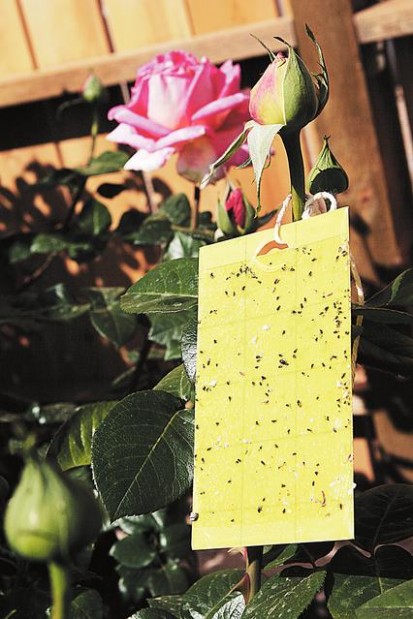
Most damaging insects, including aphids and thrips, are attracted to yellow. One of the best ways to monitor for these pests is to set out sticky yellow cards that trap them.
You can buy sticky cards at many garden centers. Or make your own by coating yellow construction paper with corn syrup. Check the traps daily to determine when insect pests make their first appearance in the garden, then use selected control measures.
»tips for Summer
"Success With Summer Flowers" is the topic for this week's garden demonstrations. They will be presented at 9 a.m. Wednesday at the University of Arizona-Pima County Extension Center, 4210 N. Campbell Ave.; at 1 p.m. Wednesday at the Wilmot Library, 530 N. Wilmot Road; and at 1 p.m. Friday at the Oro Valley Library, 1305 W. Naranja Drive.