

It has been home to the rich and famous, the down and out, and those who simply wanted to ride a horse.
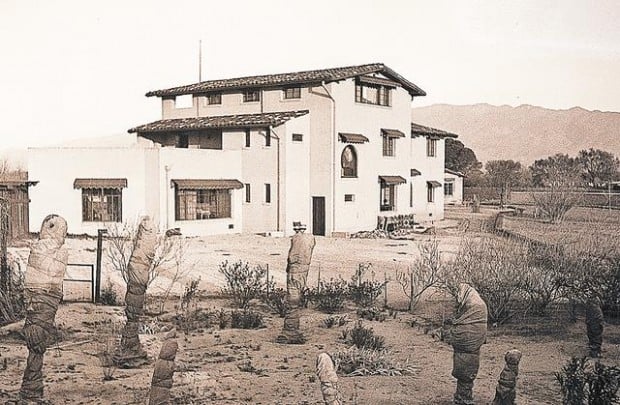
It began in the early 1930s, when the Westinghouse family — yes, THAT Westinghouse family — built a three-story home and a few guest cottages on East Tanque Verde Road as a winter retreat.
"They were in Tucson from November to April," says George Westinghouse IV, 62, grandson of the occupants. "They were typical snowbirds."
Hardly.
During the late '20s and into the mid-1930s, George Westinghouse III, son of the famous inventor; his wife, Evelyn Violet; and their six children wintered in Tucson.
As a young man, Westinghouse III had stayed at the Tanque Verde Guest Ranch, no doubt triggering his interest in Tucson.
By 1927, he and his wife were wintering here, eventually sending two of their daughters to the private girls' school, Hacienda del Sol, today home to the guest ranch resort. In 1930, they bought the property at what is now 10500 E. Tanque Verde Road and the next year built a massive three-story home, along with several guest cottages.
People are also reading…
The family also maintained other homes, including ones in the Bahamas, British Columbia and on Bainbridge Island, Wash.
"They would bring their help, and convoy in cars down to Tucson from Seattle," says Westinghouse IV. "I have no idea how many house staff there were. But each child had a dog."
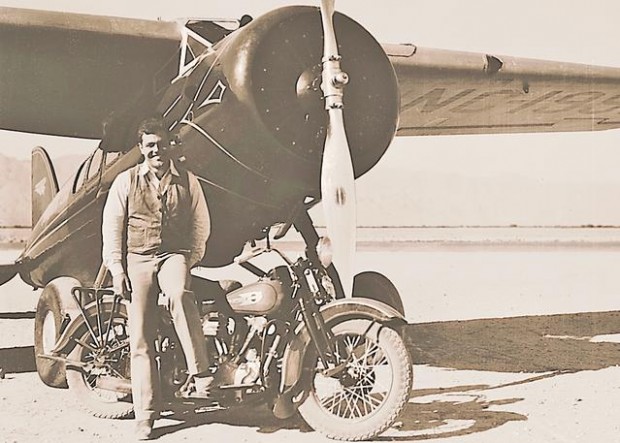
One of those children, his late father, George Thomas Westinghouse, was a dashing young aviator back in the early '30s, and made several landings at Davis-Monthan Field, then Tucson's municipal airport.
"He flew out of there between 1931 and 1936," says Westinghouse, noting that his father's last flight from Tucson was logged in the summer of '36. In 1941 he joined the Royal Air Force, serving in World War II.
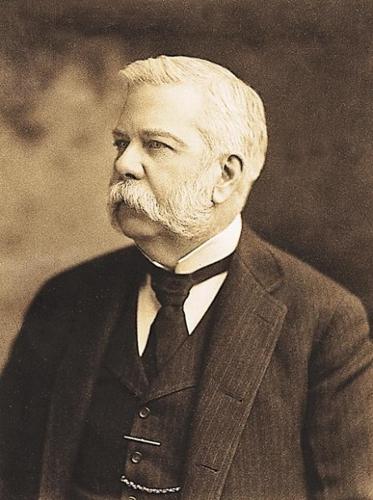
The family's fortunes go back to George Westinghouse Jr., a prolific inventor who in 1868 invented the air brake for railway trains. He is also known for besting Thomas Edison in the battle to make alternating current (AC), rather than direct current (DC), the country's principal electrical current.
But in the financial panic of 1907, he lost control of his company, Westinghouse Electric, though he kept several other companies. He died in 1914, leaving a multimillion-dollar fortune to his heirs.
"My family had nothing to do with the company after 1907," says the inventor's great-grandson, who lives in Atlanta and serves as the family historian.
Long known for kitchen appliances, the company, now joined with the Toshiba Corporation, is focusing on nuclear plant products and services.
As for the Westinghouse links to Tucson, that only lasted a decade or so. "Everybody hated Tucson except my grandfather," says Westinghouse.
Never mind. The home's next occupants would be far more suited to the rough and rugged life.
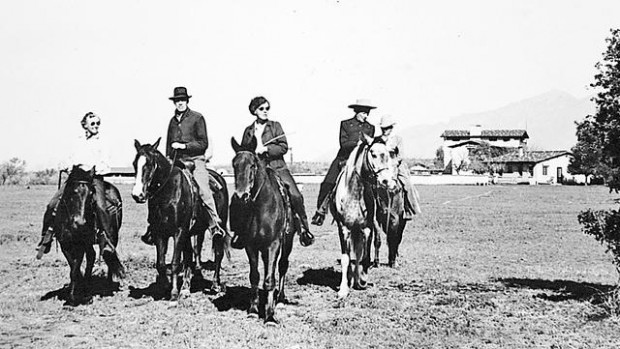
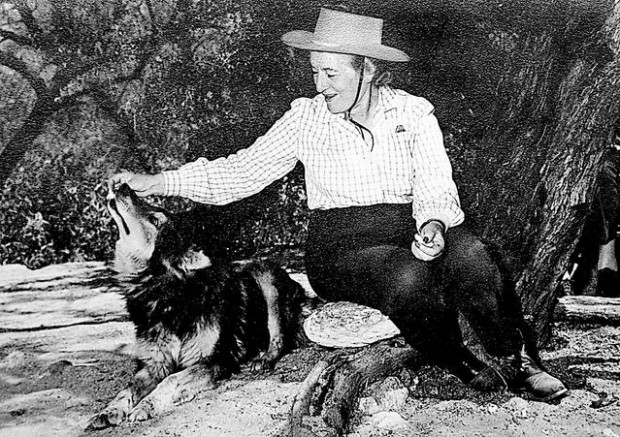
Enter Julia Bennett, who would run the place as a dude ranch, the Diamond W, from 1936 to 1950.
The proprietor of a Montana dude ranch, the Diamond J, Bennett hosted the Westinghouse family there, says Sherry Pepper, 69, Bennett's granddaughter.
Sometime around the summer of '35, Mrs. Westinghouse, says Pepper, told her grandmother, "Julia, you need another ranch in the winter."
Bennett, who ran her ranch as a single mother, found Mr. Westinghouse, who was hunting in British Columbia, and made a deal to lease the Tucson spread.
That winter, Bennett, along with her daughter, Marge, came to Tucson, staying at the Santa Rita Hotel and visiting the ranch. "They had to clean it up. Nobody was taking care of it," says Pepper, who now lives in Tucson.
Worried that she wouldn't have enough money to pay her bill at the Santa Rita, let alone open up another dude ranch, Bennett called up a Montana neighbor who owned a big cattle ranch, says Pepper.
"He was here for the winter, and she told him she had opened up a dude ranch here," says Pepper. "He said, 'I'll be right over and bring all my friends.' My grandmother leased the horses and made $5,000 that winter."
By 1939, Bennett owned the place outright. That same year Pepper was born to Marge, who had married a "New York dude" who had visited the Diamond J in Montana, which Bennett continued to run in the summer.
"She would leave here in May and open up the Montana ranch June 1," says Pepper. "She left the horses here but would take the saddles back and forth."
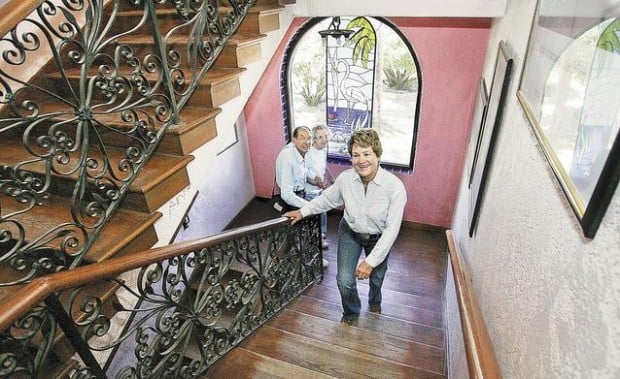
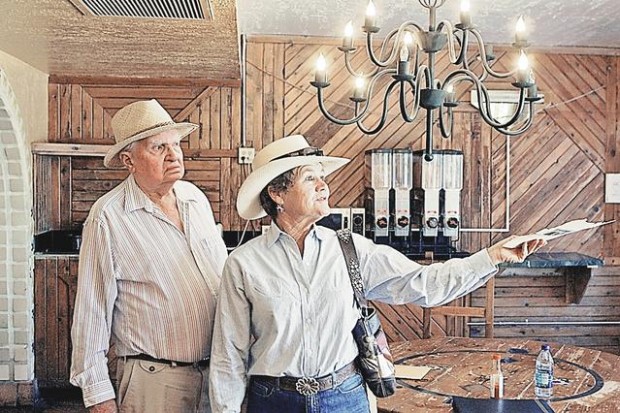
Pepper spent her early years at both places. During a recent tour of the old Diamond W, she remembered roller-skating on the front porch, sliding down the banister and taking moonlit rides to Sabino Canyon.
Standing in front of the home she calls the mansion, she says, "They used to have cocktails on the second-floor landing."
But her grandmother also kept chickens and turkeys. "We had fresh eggs. And there was a greenhouse where my grandmother got flowers," Pepper remembers.
"We used to have cookouts, too," remembers Jim Van Auken, who arrived in January of 1947 as a wrangler, living in the wrangler house next to the barn.
"Julia needed a wrangler and I wanted to get out of the cold," says Van Auken, originally a Wyoming resident whose sister had once worked for Bennett.
By then, Pepper's parents had divorced. In 1949, Van Auken and Pepper's mother married. "I married the boss's daughter," says Van Auken, now 87 and still living in Tucson.
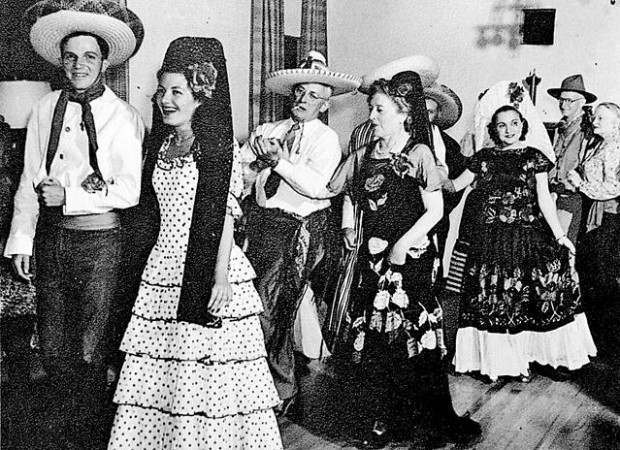
About 30 dudes could be handled at one time here, served by two wranglers, two cooks and several maids. Most of the guests stayed at least a month.
"I saddled the horses every day but Sunday," says Van Auken. "That was a rest day for the horses."
Most of the dudes arrived by train, and one of Van Auken's duties was to collect them in the ranch station wagon. Both he and Pepper remember elaborate ranch entries in the annual rodeo parade and Christmas at the Diamond W.
"We had a big tree in the living room," says Pepper. "Anything my grandmother did was a big deal."
But in 1950, Bennett sold her Tucson ranch, moving back to Montana for good. "Two ranches was just too much," says Pepper, whose own mother died in 1957.
That same year, Bennett sold her ranch in Montana, at age 83. "She killed her last elk at 84," says Pepper, whose grandmother died in 1965 at age 91.
More than a half-century after she last frolicked at Tucson's old Diamond W, Pepper says, "The great thing about growing up on a dude ranch is somebody is always there to put you on your horse."
Other children, however, would follow on other horses here, at a place next called Treehaven.
DID YOU KNOW
Created in 1929 as a ranch school for the daughters of society's elite families, Hacienda del Sol was converted to a guest ranch in 1948 but later fell into disuse. In the mid-1990s, it was renovated and restored and is now a ranch resort, offering fine dining.