
 Photo Credit: Rawpixel Ltd / Alamy Stock Photo
Startups are well-known for their role in reshaping industries, building new ones, and creating substantial wealth for founders and early employees. Because of their small size, startups benefit from their ability to experiment and adapt more quickly than established firms, which under the right circumstances, can mean rapid innovation and growth. When it comes to startups though, the incredible success of a select-few has gone a long way in shaping public perception.
What’s less well-known is that while most startup businesses will never achieve scale, they do still play a vital role in creating jobs and driving the U.S. economy forward. According to the Bureau of Labor Statistics, more than 416,000 new firms opened in the year leading up to March of 2018, the largest number since the Great Recession. While new firms represent just a small proportion of total firms, job openings from these new businesses disproportionately impact employment figures. Between 2017 and 2018, for example, startup firms gained 1.7 million jobs, compared with a net gain of just 518,000 from older firms.
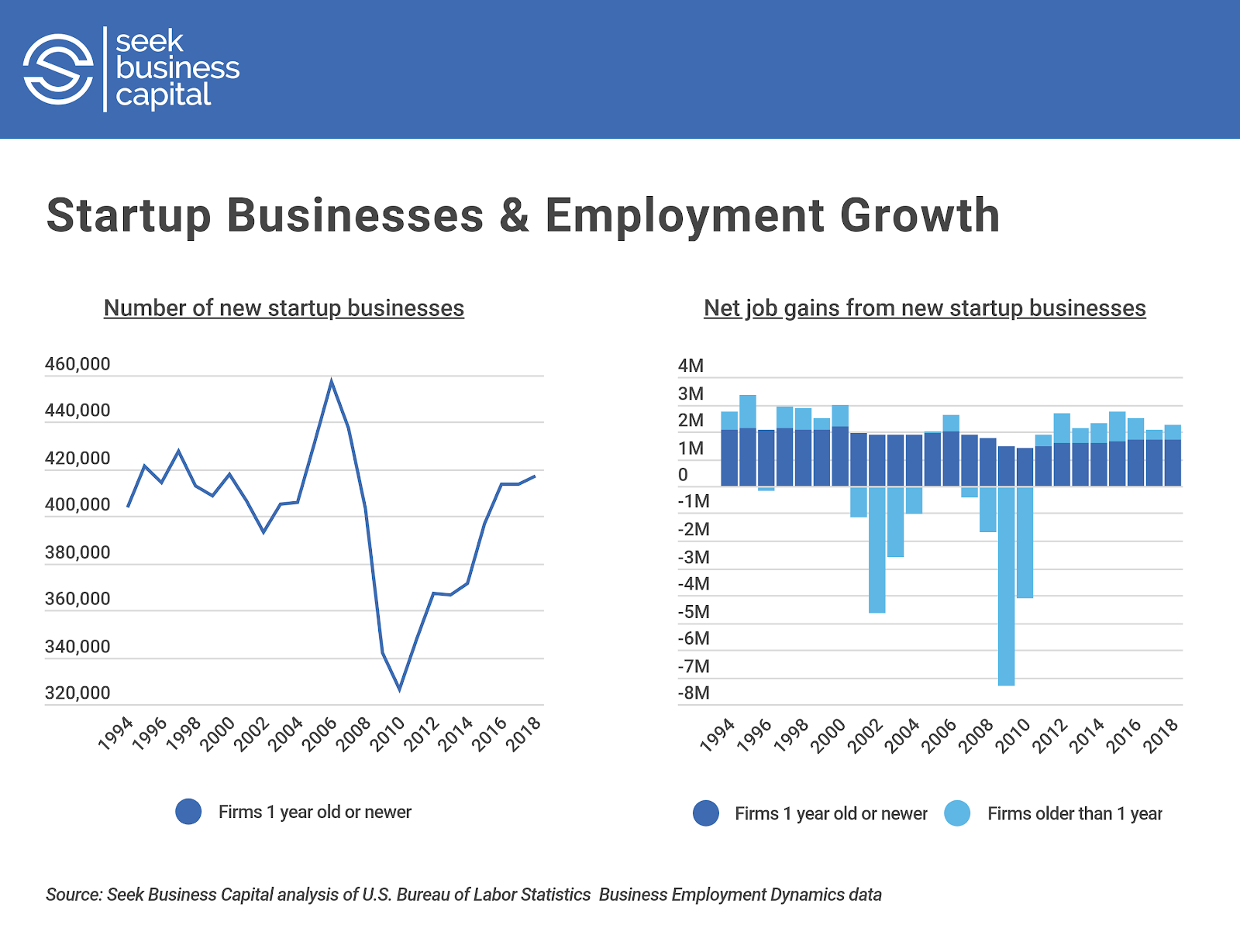
Starting a new business doesn’t come without risk. Just one in two establishments opened between March of 2012 and March of 2013 survived to March 2018. While businesses may close shop for a variety of reasons—such as selling the firm, lack of product-market fit, or poor team dynamics—a majority of owners cite lack of capital as the main reason for closing.
Raising the necessary capital to start and sustain a new business can be challenging. According to the most recent Annual Survey of Entrepreneurs, the median cost to start or acquire a new business in 2016 was between $25,000 and $50,000. Perhaps surprisingly, just a small percentage of companies cover these costs with investment capital, whether from friends/family or venture capitalists. Instead, the vast majority of new businesses fund operations through a combination of personal savings, bank loans, and credit cards.
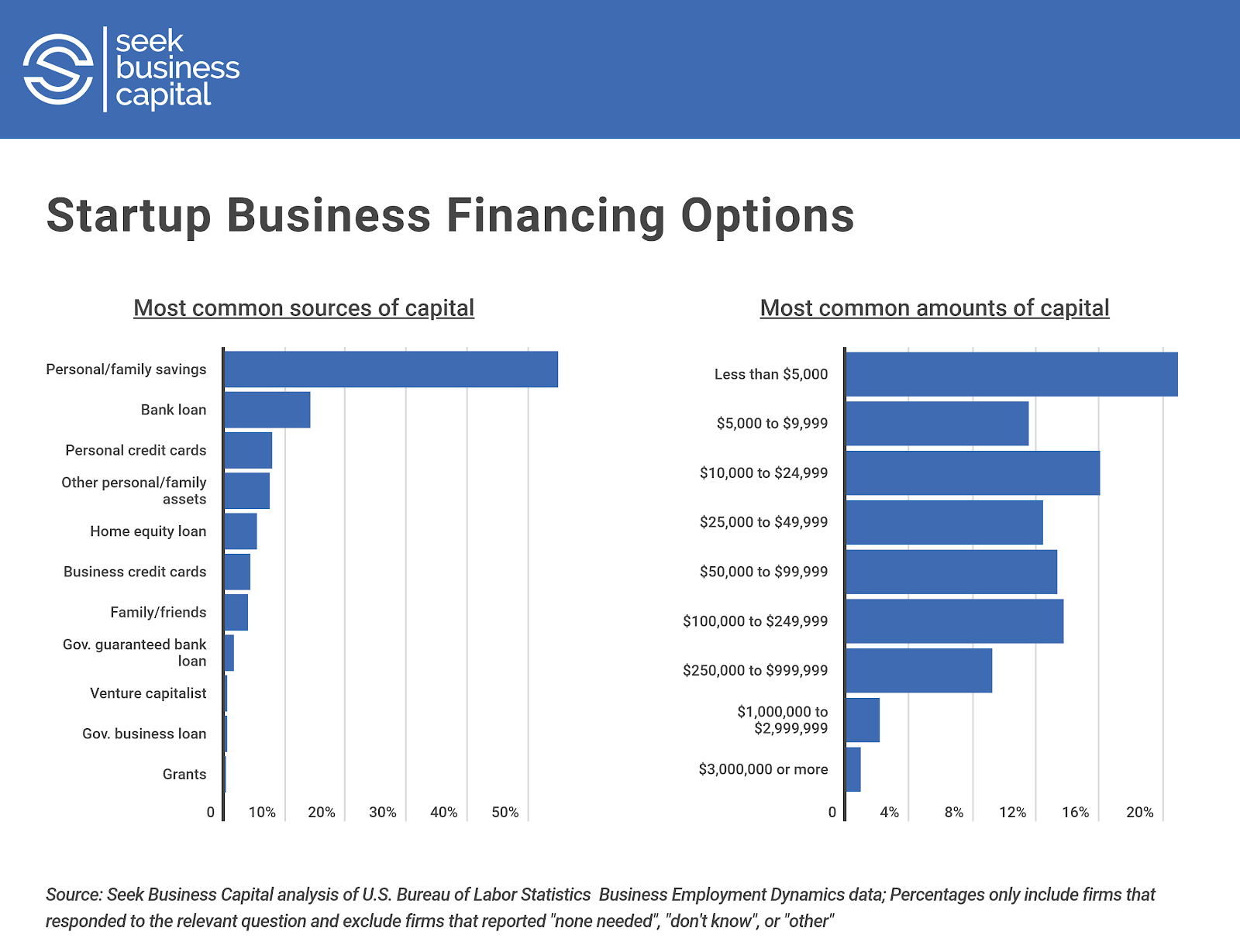
That said, industry matters when it comes to starting and funding a new business venture. To help aspiring entrepreneurs fund new business ventures, researchers at Seek Business Capital analyzed the amounts and sources of capital needed to start a business by industry.
For each industry, Seek Capital used data from the U.S. Census Bureau and Bureau of Labor Statistics to calculate the proportion of businesses relying on various sources of startup capital and how that proportion deviates from the average across all firms. For example, across all industries, 0.41 percent of new firms that require startup capital make use of venture capital financing. Within the information industry, that same proportion is 2.33 percent, or 6.7 times the average across all firms. These differences, among other factors such as median startup costs and 5-year survival rates, are listed below (industries are listed in ascending order by total employment). Here’s what the researchers found: