

Bunnies, baskets and butterflies. Pretzels and hot cross buns. Eggs and Peeps.
During the last few weeks, we’ve been sharing some fun facts about the Easter season and tidbits about the origins and meanings of Easter’s symbols and traditions on a daily blog series “Journey to Easter.”
For the countdown to Easter, we mined a few of our favorite “Journey to Easter” blog entries for you today.
Find previous “Journey to Easter” blog entries and the coming week’s articles at azstarnet.com/news/blogs/starnet-blog
Palm Sunday
"Chosen people of the Lord,
"Singing hosanna to our King,
"Going out to greet him,
"Waving palm branches as we sing."
— Processional in many Catholic Churches today
Today is Palm (or Passion) Sunday and begins Holy Week, the last week of Lent and the week prior to Easter.
Palm Sunday commemorates Jesus' triumphal entry onto Jerusalem atop a donkey. Palm Sunday got his name because crowds greeted him by waving branches from the palm and olive trees that lined the road and shouting "Hosanna" (which means "God Saves" in Hebrew).
Palm Sunday is chronicled in the four Gospels: Matthew, Mark, Luke and John.
Symbolism abounds:
- The palm branch symbolizes victory, triumph, peace and eternal life.
- The donkey is an animal of peace.
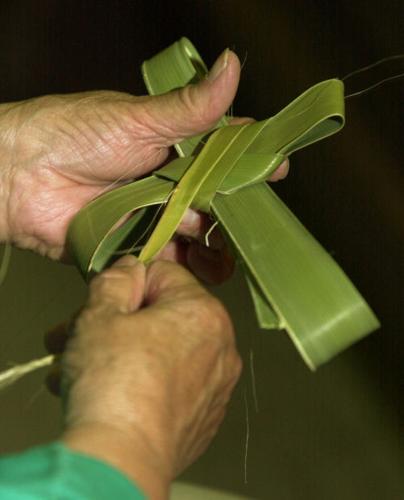
- In the Catholic Church today, vestments today will be deep red, the color of Jesus' blood. Likewise, congregants will receive fresh palm leaves folded into the shape of a cross.
Peeps
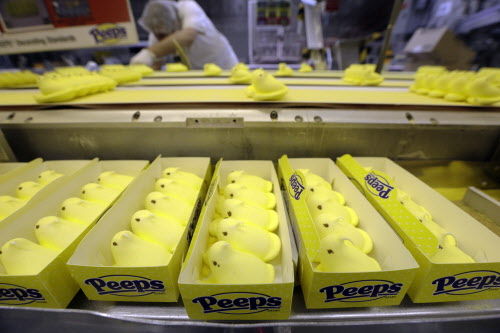
Americans buy more than 700 million Marshmallow Peeps, shaped like chicks, bunnies and eggs each year. It is the most popular nonchocolate Easter candy.
Here are a few other fun facts about Peeps from Infoplease.com:
- As many as 5 million Marshmallow Peeps, bunnies, and other shapes are made each day in preparation for Easter.
- In 1953, it took 27 hours to create a Marshmallow Peep. Today it takes six minutes.
- Yellow Peeps are the most popular, followed by pink, lavender, blue, and white.
Source: Infoplease.com
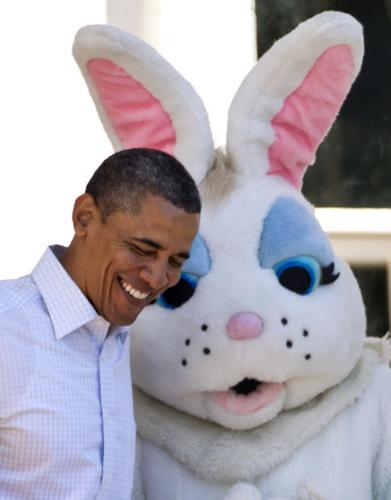
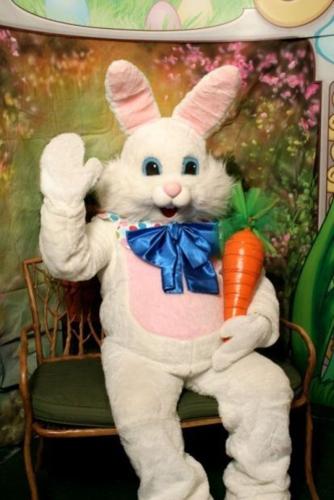
Bunnies
“Here comes Peter Cottontail
“Hoppin' down the bunny trail
“Hippity hoppin', Easter's on its way”
The lyrics to “Peter Cottontail” and seasonal decorations with fluffy bunnies may have you scratching your head, wondering what rabbits have to do with a Christian holy day.
The rabbit's penchant for procreation established it as a springtime and Easter icon.
Rabbits and hares symbolize fertility. Rabbits are able to breed at a young age and have large litters and a short gestation, which allows them to reproduce rapidly. Hares are able to conceive a second litter while pregnant with the first.
Hares were sacred to the Saxon goddess of spring and had a prominent place in the vernal equinox festivities. Early Christians seeking converts merged holy days with pre-existing cultural celebrations, and the hare became part of the Easter festivities.
Because the rabbit is more common in the United States, the hare lost the top spot to his smaller cousin, Peter Cottontail.
Source: Hester E. Oberman, who teaches psychology of religion at the University of Arizona, 2012
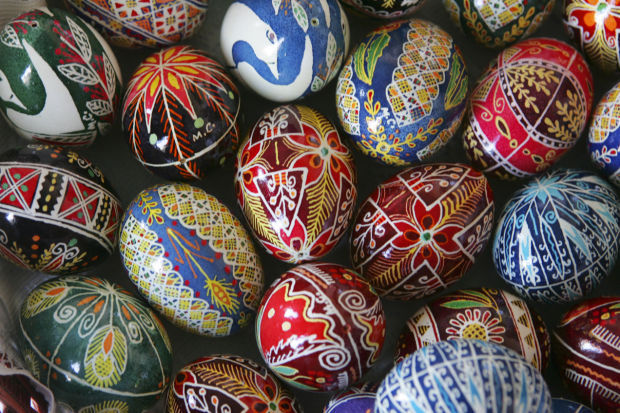
Eggs
Early Christians seeking converts merged holy days with pre-existing cultural celebrations, traditions and symbols. Thus, the egg became practically synonymous with Easter.
Some tidbits about the egg:
- Eggs symbolize immortality, according to "A Dictionary of Symbols" by J.E. Cirlot.
- Some civilizations believed the world began with an enormous egg, and others saw the universe as a cosmic egg.
- The Chinese believed the first man sprang from an egg that the deity Tian dropped from heaven to float upon the primordial waters, Cirlot writes.
- Eggs, also a symbol of fertility, had a starring role in spring rites and festivals in ancient Egypt, Persia and Rome. They may have been painted to represent the bright colors and sunlight of spring and were given as gifts.
- From a Christian perspective, the egg represents Jesus' emergence from the tomb and the resurrection, says History.com
- From a practical standpoint, eggs were not eaten during Lent — the 40-day period of penance before Easter—but the hens kept laying. The eggs were hard-boiled and preserved, and Easter was the first chance to eat those that had accumulated.
Source: Hester E. Oberman, who teaches psychology of religion in the UA religious studies program, 2012
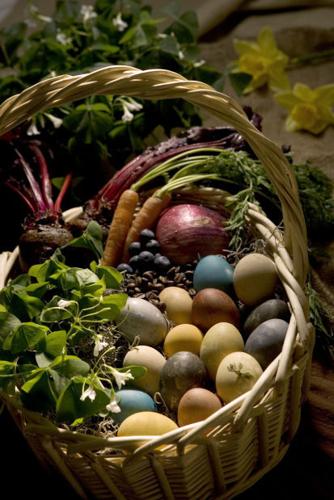
Baskets
The Easter Bunny legend of an egg-laying rabbit that hid eggs in a garden was first documented in the 1500s, says Discovery News. The Easter Bunny and peripheral tales came to the United States with German immigrants in the 1700s.
Every bunny needs a nest, so the practice of preparing nests for the eggs followed the legend, says Discovery News.
The basket, which also can be a symbol for a tomb, represents the nest, Jeanne Carrigan, a nun with the Sisters of St. Francis, told the Star in 2012.
Subscribe to stay connected to Tucson. A subscription helps you access more of the local stories that keep you connected to the community.
Be the first to know
Get local news delivered to your inbox!