
Skip to main contentSkip to main content
Register for more free articles.
Log in Sign up
Back to homepage
Subscriber Login
Keep reading with a digital access subscription.
Subscribe now
You have permission to edit this collection.
Edit
Arizona Daily Star
83°
  • Sign in
  • Subscribe Now
  • Manage account
  • Logout
    • Manage account
    • e-Newspaper
    • Logout
  • AI Answers
  • Site Search
  • News
    • Sign up for newsletters
    • Local
    • Arizona
    • Business
    • Crime
    • Nation & World
    • Markets & Stocks
    • SaddleBrooke
    • Politics
    • Archives
    • News Tip
  • Arizona Daily Star
    • E-edition
    • E-edition-Tutorial
    • Archives
    • Special Sections
    • Merchandise
    • Circulars
    • Readers' Choice Awards
    • Buyer's Edge
  • Obituaries
    • Share Your Story
    • Recent Obituaries
    • Find an Obituary
  • Opinion
    • Submit a Letter
    • Submit guest opinion
    • Letters to the Editor
    • Opinion & Editorials
    • National Columnists
  • Sports
    • Arizona Wildcats
    • Greg Hansen
    • High Schools
    • Roadrunners
    • Scores
  • Lifestyles
    • Events Calendar
    • Arts & Theatre
    • Food & Cooking
    • Movies & TV
    • Movie Listings
    • Music
    • Comics
    • Games
    • Columns
    • Play
    • Home & Gardening
    • Health
    • Get Healthy
    • Parenting
    • Fashion
    • People
    • Pets
    • Travel
    • Faith
    • Retro Tucson
    • History
    • Travel
    • Outdoors & Rec
    • Community Pages
  • Brand Ave. Studios
  • Join the community
    • News tip
    • Share video
  • Buy & Sell
    • Place an Ad
    • Shop Local
    • Jobs
    • Homes
    • Marketplace
    • I Love A Deal
  • Shopping
  • Customer Service
    • Manage My Account
    • Newsletter Sign-Up
    • Subscribe
    • Contact us
  • Mobile Apps
  • Weather: Live Radar
  • Facebook
  • Twitter
  • Bluesky
  • YouTube
  • Pinterest
  • Instagram
© 2026 Lee Enterprises
Terms of Service | Privacy Policy
  • AI Answers
  • Site Search
Arizona Daily Star
News+
  • AI Answers
  • Site Search
Read Today's E-edition
Arizona Daily Star
News+
  • Log In
  • $1 for 3 months
    Subscribe Now
    • Manage account
    • e-Newspaper
    • Logout
  • E-edition
  • News
  • Obituaries
  • Opinion
  • Wildcats
  • Lifestyles
  • Newsletters
  • Comics & Puzzles
  • Readers' Choice Awards
  • Jobs
  • 83° Showers in the Vicinity
Share This
  • Facebook
  • Twitter
  • Bluesky
  • WhatsApp
  • SMS
  • Email

Angela Pittenger's favorite stories of 2015

  • Jan 5, 2016
  • Jan 5, 2016 Updated Jan 5, 2016
Prefer us on Google

These stories highlight some of the issues, events and organizations that impact Tucson families. 

Stories that Soar: From child's imagination to the stage

Budding writers take their seats on the floor of the crowded cafeteria. They wait anxiously — fidgeting, talking and dancing to live music — never taking their eyes off the stage, where Stories that Soar is about to turn their words into plays.

A hush settles over the Robison Elementary School children as the performances begin. Excitement, laughter, and sometimes tears follow as their tales about family, dreams, love, death and even zombies, come to life.

This is a familiar scene for Stories that Soar. The nonprofit organization, a program of Literacy Connects, travels to schools throughout Southern Arizona, to give voice to children’s imaginations by performing their stories.

It starts with a visit to the school, where, through the voice of an actor, a “Magic Box” tells the kids how hungry it is for their original writings.

The box settles in for about three weeks. Children stuff it with stories.

About two weeks after the box is picked up, it’s show time.

GETTING STARTED

As she helped grade papers in her son’s first grade classroom at Lineweaver Elementary, Sharon O’Brien knew she could do more for the school — and for the kids.

So, the theater major at the University of Arizona got permission to put on a play with her son’s class.

“I rediscovered my passion for theater,” she said.

But, she still wanted to do more. She knew there had to be a way to bring the resources together to help inspire more students.

It turned out, her friend, Meg Breshears, felt the same way.

They wanted to empower kids through theater. So, Breshears introduced O’Brien to Sonia Teder-Moore, who was working on an idea to have children write stories to feed a magic box. Those stories would then be performed by actors for the students.

The concept was brought to life at the UA in 2001, as a small project in the women’s collaborative theater class.

They used theater students as actors, and had their first performance at Sam Hughes Elementary School.

Inspired to continue to build the program, the women applied for and received a three-year research project grant for $30,000, and developed their masters thesis with it.

The program existed at the UA for four years, O’Brien said. When she was getting ready to graduate with her master’s degree, and funding was running out, they began talking with the university about what to do with the program. The university wanted to keep it, but the women wanted it to grow.

“We saw potential,” O’Brien said.

Since projects created at the university are technically owned by the university, they sought help from the office of Technology Transfer to create an agreement so they could take it. Their next step was being accepted into the McGuire Entrepreneurship Program in the Eller College of Management. After pitching their idea, they were admitted to earn their associate MBA.

“We did really well,” O’Brien said. “I learned a lot. We launched our business the year we graduated.”

Around 2005 they incorporated as a nonprofit called Sharmoore Children’s Productions. That first year, they performed five shows.

In 2011, Sharmoore — as Stories That Soar — merged with Reading Seed and Literacy Coalition to create Literacy Connects.

A WEALTH OF STORIES

Stories That Soar works with schools to get kids excited about writing.

“We kick it off in a creative way,” said O’Brien, the nonprofit’s artistic director and remaining founding member. “We’re there to support that teachers work hard teaching kids how to write. We find the magic box helps teach why we write — to be heard and to share ideas.”

The magic box is not a picky eater. Students can feed it stories on any topic.

“We frequently get hard and or sad stories. Most commonly, we receive sad stories from children dealing with a loss of a family member or pet,” said Dallas Thomas, production manager. “However, we’ve received and performed stories about children being taken from their family by CPS, politics, border issues, death, bullying and more. We make it a point to not shy away from difficult stories when we receive them. Students trust the magic box as a safe confidant, and share many personal stories. It’s an outlet, both creative and at times, very emotional.”

A memorable one for O’Brien was written by a first grader. “If I am myself, is there another me? So, I looked under the bed, there was a monster and it chased me and I was scared,” O’Brien quoted. “Here’s this little six year old asking metaphysical questions and she’s exploring demons while looking for herself and she takes a hose and washes them away. … If you take time to think about it, these kids are writing about universal things. We don’t always see them as deep thinkers.”

After the three weeks, O’Brien reads each story fed to the box — usually several hundred — and narrows the stack down to about 100, which are then separated and sent home with the actors. Their job is to select two to four stories, and come back with concepts on how they would be performed.

TOUGH CHOICES

In a workshop behind O’Brien’s mid-Tucson home, several actors sit in a circle on the ground, each one with a stack of papers in front of them.

“I love this one. ‘The Man with the Big Head.’ I’m thinking puppet show with red curtains,” actor Greg Colburn said.

Each one takes turns talking about how they’d perform the tales they chose, as O’Brien keeps a list on a white board.

Actor Anel Schmidt describes “The Only Girl,” as a bilingual family drama. A soft one with movement.

The white board is full. More than 980 stories were submitted for this show, and the actors have to choose about 20.

“It’s so hard,” said actor Cyndi LaFrese. “If we need to let this one go, it’s fine, but, it’s awesome. They’re gonna dance ‘The Hustle’ and ‘Stayin Alive.’ But, honestly, that’s what it is. It’s fun and it’s fluff. It was my relief piece, since I went with heavier stuff this show.”

THE CAST

Stories that Soar employs a rotating cast of about 21 part-time professional actors, and a full-time production manager. Seven actors perform in each show.

“I love getting to work with these really passionate people,” O’Brien said. “I feel so thankful we believe in this mission and get to create something meaningful together.”

The actors feel the same way.

“I love that we get a glimpse into the authors’ worlds, their imaginations and their real life experiences, their fears, their secret wishes, their heartbreak,” LaFrese said. “It can get real, and I love that we can give a voice to those stories too.”

“My favorite part of working for Stories That Soar is getting to go to work and be like, ‘This is my job. We are adults playing in the garage, and this is my job,’” said Luke Murray, 21. “Not everyone gets to go to work and say that they are happy doing what they are doing.”

Fun is part of it. But, the real joy comes from knowing they are making an impact on the children.

“Kids go from not liking to write one bit to loving to write, even for homework,” Murray said.

Seeing the excitement on a child’s face when their story is performed for the whole school is a great feeling, Murray said.

“I have heard over and over that we pick the stories ‘that needed to be chosen,’ the struggling writers, the quiet kids, the ones no one expected,” LaFrese said. “I think the impact goes beyond writing, which in and of itself is so important already. I think seeing their story on stage boosts their self esteem and empowers them to think that they can do anything.”

The most memorable story for LaFrese was by a girl from the Arizona Schools for the Deaf and the Blind about her experience at a summer camp empowering kids with prosthetic limbs. She wasn’t very interested in writing until she saw her story performed.

“Her reaction during the show was absolutely priceless and in the years after, we got to see her writing and creativity blossom as she wrote more stories for the Magic Box,” LaFrese said.

REHEARSAL TIME

Boxes are moved from one side of the room to the other and masks are handed out to the actors as they read through a story about a boy trying to convince his friends that zombies are real.

Props are basic. Wood boxes, ladders and fabric become trees, mountains, beds, dragons, dreams — anything one can imagine.

“Using a minimal approach engages the audience more,” O’Brien says. “If you suggest a costume, the audience fills in the rest and are involved in the process.”

Zombie noises and screaming can be heard as cast members act out a fight scene.

“Definitely getting cleaner. Mike, you came in really fast. I’m not buying your zombie moves yet,” O’Brien said, as she gets up to demonstrate slower zombie moves. “We also need a little more tension in the fight scene.”

FUNDING

Each show costs about $6,000 to produce, so there is a fee for the group’s services.

The school host fee ranges from $2,500 to $5,000. To cover the rest, O’Brien said they seek funding through grants, business sponsors, foundations and individual donors. Key funders are Tucson Pima Arts Council, Arizona Commission on the Arts, Stocker Foundation and Helios Foundation (as part of the Literacy Connects Infusion Project), O’Brien said.

“The bulk of the expense goes towards paying the production manager, artistic director, seven actors, stage manager, musicians, tech and evaluation,” O’Brien said. “A small portion goes towards production costs. The $6,000 does not pay for indirect costs associated with running the organization.”

STANDING OVATION

At the end of every show, O’Brien asks students who wrote stories to stand.

At Robison Elementary School, about 95 percent of the kids stand.

The cheers are deafening, as the children are acknowledged.

O’Brien then thanks the teachers.

“Without you encouraging literacy, this wouldn’t happen,” O’Brien says. “Give a hand to the teachers.”

After that, the authors of stories that were performed and illustrators of pictures that were shown, are called to the stage. Each one takes a handful of confetti on their way up.

“Without an idea, without a plot,” the cast sings. “Without some action, a story it’s not.”

With that, a burst of color shoots into the air as students throw their confetti.

That’s one of O’Brien’s favorite parts.

“I love nothing more than seeing their faces and meeting these little people,” O’Brien said. “And to see them walk up on that stage and know you’re acknowledging them.”

Late woman's dream is realized on nonprofit farm

Felicia Ann Cutler’s dream was to feed the hungry.

So after she passed away at the age of 48, her husband, David, brought new life to that dream by converting the tree nursery behind their home into a garden.

Not just any garden, though.

Felicia’s Farm organically grows fruits and vegetables, collects eggs from its 480 chickens, and donates 100 percent of its harvest to Casa Maria Soup Kitchen, a local charity that hands out lunches and bags of groceries to Tucson’s needy families.

The farm also serves as a place schools use to teach special needs students work skills, a spot for Cancer Conquerors to grow cancer-fighting vegetables and a site where individuals, groups and families can volunteer.

A LOVE STORY

Together for 33 years — and married 28 — David and Felicia met on a tour to Israel when they were 16 years old.

Felicia was a student at Sahuaro High School. David lived in Los Angeles, but once he finished high school, he moved to Tucson to attend the University of Arizona — and to be close to Felicia.

“As soon as I got out, we got married and started a family four years later,” David said. “Up until she passed, she was my high school sweetheart and the love of my life.”

David loved Felicia’s giving spirit.

“She was a caring, giving, outgoing person,” David said. “She helped and loved everybody. She just gave and gave.”

Even when Felicia got sick with Behcet’s disease — a rare autoimmune disorder — she continued to give, and she did so with a smile, David said.

“She was sick for a long time,” David said. “No matter how sick she was, she always put on a smile to help people.”

Felicia was sick for about 18 years, and was diagnosed with more than 15 different illnesses during that time, David said. She died June 6, 2009, of a pulmonary embolism caused by the disease.

David wanted Felicia’s generosity to live on.

“I decided to set up the farm because it hit me that what she loved to do was care for people and feed people,” David said. “I’m sure she’s looking down and she’s happy people remember her and is happy people are doing what she did her whole life for others.”

A GIVING NATURE

Luis Altamirano, the farm’s livestock manager, started working on the property when it was a tree nursery. His wife cleaned the Cutler family’s home, and both got to know Felicia.

“She was the kind of lady who was always looking for ways to help people,” Altamirano said. “Felicia prided herself on donating stuff.”

The mother of three, Felicia especially liked helping children and donated clothes and other items to Casa de los Niños, Altamirano said.

With the help of Altamirano, family, and friends, David started planting vegetables in wooden planters.

Once the trees were cleared — there were thousands — they designed garden beds so they could grow more.

They also built a chicken coop.

“Our first chicken coop was for 75 to 125 chickens,” Altamirano said, adding that a local roofing company donated materials.

Now, the farm has the capacity for 500 to 700 chickens, in coops that allow for 5 square feet per chicken.

The farm gained nonprofit status in 2011, and has since nearly doubled the amount of food produced.

“We started out with a small amount of chickens and vegetables,” Altamirano said. “We’ve grown a lot.”

FARM OPERATIONS

About 2 of the property’s 6 acres are farmed, said farm manager Sofia Montes.

Everything is grown according to the seasons, including cilantro, corn, tomatilloes, beans, kale, peppers, tomatoes, garlic, onions and melons. And they do it naturally, Montes said.

Rows of zinnias and sunflowers are also grown, so they can be donated to hospice facilities.

A section of the property was recently cleared by a group of Intuit employees to make room for “Bee Land,” which consists of five bee boxes. The bees will pollinate the crops, and honey will eventually be harvested and donated.

Montes said her goal is to make the farm fully sustainable.

Waste from goats, chickens and horses is collected for compost.

“We have a lot of poop, which is great,” Montes said. “Because we don’t have to buy fertilizer ... Chicken manure is potent. Too potent. It’ll kill your plants if you don’t compost it.”

They collect seeds so they don’t have to buy them, and use solar power for the chicken coop. Montes also hopes to collect rainwater during monsoon season, to help reduce the $12,000 yearly cost.

The farm, located north of the Rillito River, is primarily funded by David, who is a CPA by profession, with a practice that is national and international. He said he feels fortunate that he’s able to help the community.

“I give probably 30 to 50 percent of my income to charity,” David said. “I love helping people. It’s pretty much what I live for. I’m pretty blessed that I’ve been given the opportunity to have the kind of income to do it with.”

Felicia’s Farm is in the process of diversifying funding sources by getting grants and other donors to help support the farm, said Carolyn Owens, the farm’s fundraising consultant.

“We want to include the community in supporting the farm’s efforts,” Owens said.

Once the River Road farm is fully planted, David hopes to also start farming on a 40-acre property he owns in Marana.

DONATIONS

Volunteers from the community help Montes harvest the vegetables and fruits.

The produce is then loaded up and taken to the soup kitchen. Last month, the farm donated 1,000 pounds of food to Casa Maria.

On a recent delivery, Altamirano delivered 59 pounds of collard greens, 6 pounds of chard, 3 pounds of parsley and 65 pounds of onions.

Casa Maria currently hands out about 600 single bag lunches, 600 servings of soup and 250 grocery bags for families seven days a week, said Brian Flagg, the nonprofit organization’s organizer.

“The soup kitchen gets a lot of boxed, processed foods, so the vegetables are good,” Montes said.

Montes’ eagerness to grow what the free kitchen’s community wants has left an impression on Flagg.

“Sofia is cool,” Flagg said. “She spoke with all of the women en español and now, she’s growing what they asked for.”

Some of the produce from Felicia’s Farm goes into soups, but the majority goes into the grocery bags for families, Flagg said.

“It’s really good stuff,” Flagg said.

Deliveries are currently made once a week, but Montes said as summer starts and there’s more to harvest, they will bring food to the soup kitchen two or three times a week.

SOUP KITCHEN

A soup pot full of fresh eggs from the farm sat inside the busy soup kitchen, waiting to be hard-boiled.

“The eggs are really good and are a favorite in the lunches,” Flagg said. “They’re good for them.”

The chickens at Felicia’s Farm produce an average of 16 to 18 dozen eggs daily, Altamirano said. About 100 dozen eggs a week are donated to Casa Maria. Last year, the soup kitchen received more than 2,800 dozen eggs.

Altamirano hopes to increase that number. “The goal is 5,000 dozen for 2015,” he said.

Altamirano cares for the chickens. He pets them, feeds them, and lets them out of the coop occasionally.

“But a bobcat lives over there,” he said pointing toward the fence. So they don’t get to wander too far.

“We are trying to keep the happiest chickens possible,” Altamirano said.

VOLUNTEERS

A volunteer to-do list is posted on the outside wall of a shed. It lists things like weeding, clearing beds and planting. Anyone can volunteer at the farm. And they can do so on their own schedule during the farm’s operating hours.

Volunteering at the farm also counts as community service hours.

Prior to becoming a part-time farm employee, Cathy Lowling volunteered.

“My daughter and I bonded over purple lettuce,” Lowling recalled. “Kids don’t see the food in real life. I learned a lot being out here and trying new things. I think if kids can connect with one new thing, it’s great.”

Melissa Wiley, a store manager, recently worked on pulling garlic out of the ground. It was her first time volunteering at the farm.

Wiley’s reason for volunteering was to fulfill her community-service obligation to clear up a traffic ticket, but she plans on returning.

“My kids and I used to volunteer for the Humane Society,” Wiley said. “If we knew this was here, we’d have been out a long time ago. It was fun. We harvested garlic and mixed compost. It felt good.”

HANDS ON LEARNING

An average of 60 children a month from local schools and community organizations volunteer at the farm. It teaches them about where food comes from and how they can impact hunger in the community.

Catalina Magnet High School uses the farm for its community-based instruction program for special needs students.

Students plant, harvest, pull weeds, collect eggs — basically anything that needs to be done.

“It teaches them to work on their fine motor skills, having patience and a lot of skills that they can hopefully go into the community and use for work,” said Wanda Pacheco, a teacher’s aide. “They’re always learning something and gaining experience.

“It’s a good opportunity for them.”

Working with other people on the farm also helps the students with their communication, Pacheco said. “It matures them.”

Young adults from Chapel Haven West, which offers support for adults with cognitive disabilities, work on the farm to learn about adult life, Lowling said.

“They come out four times a week,” Lowling said. “It helps us and it helps them learn to work, and they are able to have a little work experience going into adult life.”

It also partners with Satori Charter School to teach students about farming, sustainability and hunger in the community and how to make a difference. An average of 25 students from the school visit the farm each week.

LABOR OF LOVE

Felicia’s Farm’s four employees take its mission to heart.

Montes, who graduated with a master’s degree in environmental science from the UA in December, started working Felicia’s Farm in January.

She was surprised to get such a job right out of school, rather than a commercial job.

“It’s great that I can use my skills for something I feel so good about,” Montes said. “I’m not selling my soul.”

Lowling has been around the farm for about five years. She said it’s been fun to watch it go “from very little to a lot and seeing more people get involved.”

“I’m pleased that some family is getting really good fresh food,” Lowling said.

As the farm’s longest-tenured employee, Altamirano loves the variety of work he gets to do.

He especially loves knowing that he’s helping people.

“When I go to Casa Maria and see the people, they really need help,” Altamirano said. “And to be able to do that with my job is good.”

For David, the farm is a living part of Felicia.

“It’s nice to get up every day and realize there’s still a piece of her with me, the kids and the community,” he said. “It’s been beautiful.”

How to have 'the talk' with your kids

The birds and the bees. The facts of life. The big talk.

No matter what you call it, talking about one of the most natural things in the world can feel ... well, unnatural, when you’re talking about it with your kids.

But, if we’re not talking to our children about sex, they will learn it elsewhere — kids at school, the Internet, television and who knows where else.

So, which is worse — some awkward question-and- answer sessions, or your child receiving the wrong message about sex somewhere else?

“Many parents are hesitant to talk with their children about sexual health,” said Marie Fordney, director of The Grrrls Project, a teen pregnancy prevention program at Child & Family Resources, Inc. “They may feel they don’t have enough information, or that talking will make them curious and cause their children to do something risky while trying to learn more. The truth is that kids in the U.S. are exposed to sex every day and everywhere. It’s in advertising, television, even literature. And all over the Internet. The only way to be sure our children are getting the messages we want them to receive about sex is for us to talk with them ourselves.”

While there is not one right way to go about it, medical and parenting experts agree the best way to educate the kids is to start having those conversations early on.

For starters, using the correct terminology for body parts opens the door to more discussions later on, said Kim Metz, specialty service director at The Parent Connection, a program of Arizona’s Children Association, which offers support, classes and resources for families.

“Wait for their questions. Look for opportunities for teaching moments, then it’s easier and more natural and it starts a pattern early on in being able to discuss things,” Metz said. “It’s far more simple early on when the comfort level is there.”

When the children do ask questions, don’t feel like you have to elaborate or read more into the question, Metz said. “Keep it simple and wait for them to ask for more.”

No worries if you’ve been waiting on the subject. It’s never too late to start the conversation, Metz said.

“If parents have waited, there’s no reason to sit down and catch up on everything we’ve missed,” Metz said. “Just open the conversation. Find out what they know. No matter what age the children are, just be available and open to answering questions and giving them information.”

The direction these conversations go depends a lot on the parents’ level of comfort with questions about sex, sexuality, etc., said Dr. Richard Wahl, pediatrician and director of adolescent medicine at Banner — University Medicine.

“If one has the perspective that sexuality is a natural and beautiful part of life, then there is no point where one has ‘the talk,’ but, it is a part of life,” Wahl said. “And, children, being inquisitive creatures, will ask questions in many different ways at different ages. Being open to your children’s questions and answering them in an age-appropriate manner is a key thing. A 6-year-old and a 16-year-old will get very different answers to ‘Where do babies come from?’ ”

Once you have given them answers, Metz said ask your children if you’ve answered all of their questions.

“If you haven’t said enough, they’ll ask you more,” Metz said.

How much you share and when you share may depend on your family’s values and beliefs.

“Different families have different values and ideas,” Metz said. “Therefore we need to respect that, but, above all, don’t make it something that’s hush-hush. It’s a natural thing. Be able to take a deep breath, answer questions and check in that you have done so to their satisfaction.”

Culture is another factor in the way sex is approached, Wahl said.

“Compared to Europe, we are very restricted in our approach. Compared to the Middle East, we are exceedingly open in this regard,” Wahl said. “In this culture, there’s absolutely an awkwardness about sexuality, as a whole. This country is exceedingly open to violence, but closed to sexuality.”

But, the key, Wahl says, is an open line of communication with your child — from toddler age to young adult.

“Teaching our children about sex is not a one-time conversation, but an extension of our ongoing relationship with our children,” Fordney said. “We don’t wait until a child is of reading age to show them their first book. Most parents have bath books or noisy toy books for infants, and begin reading to their children long before the child is reading him or herself.

“The same should apply to learning about their bodies, where babies come from, and that they have the right to decide when and how and by whom they are touched. This is important information, and there’s a lot to say, so we have the responsibility as parents to have ‘the talk’ over the course of years and as part of everyday interactions.”

For teens, Wahl says a big part of answering questions is clearing up misconceptions and wrong information from the Internet.

“The amount of information available online and in graphic detail is answering these questions many times over, for better and for absolutely worse,” Wahl said. “A lot of times it’s clearing up misconceptions, rather than introducing a topic out of the blue. The amount of poor advice or inaccurate and stupid information readily available is vast, so that’s part of the challenge these days.”

Parents who have already been there chimed in to help with ideas on approaching the subject with your children. Read on to see how they handled it with theirs.

• • •

“We always use anatomically correct terms, answer the questions they ask (we’re not offering up anything additional right now) without beating around the bush. I figured if I act weird and embarrassed about the subject, they’ll think it’s something to be weird and embarrassed about. Each time I make them promise to not listen to the kids at school ... Always ask me or dad. I figure if we continue the open dialog they’ll be more apt to keep their promise.” - Sarah Bos, mother of two

“I told both boys, ‘Look I know this sounds gross to you now, but trust me, it will seem different when you’re older.’ I told them about how the penis goes into the vagina and to use protection. I was pretty straight forward

with them. They were a little embarrassed and they laughed a lot and said they already knew some of the stuff because of friends. They were 11 and 9.” - Ray Gonzales, father of 3

The-talk-g5
Chiara bautista / Arizona Daily

“When my daughter was 4 and my son was 5, we suddenly noticed a lot of baby fish in our aquarium a few days after we had bought a couple of new fish. They were very excited, and asked how the babies had gotten there. I was also surprised, since I was only planning on two! I talked about fish eggs and how they were fertilized. This discussion lead, of course, to human babies, which they both already knew weren’t hatched from eggs. I had just finished an excellent book, called “The Talk: What your kids need to hear from YOU about sex” (Sharon Maxwell) and I decided sooner was better than later. Of course, I got the usual reaction, “Yuck, did you and daddy really have to do that?” My 5-year-old son immediately changed the subject, but my 4-year-old daughter asked a lot of questions. It very soon became a nontopic in the house, and I didn’t really need to caution them too much about telling their friends, since — of course — it was all very embarrassing. Now that they are approaching middle school, they are both very comfortable talking to me about rumors their friends tell them at school, or song lyrics on the radio. I am always very frank and open with my answers, and I hope they will never hesitate to ask me to clarify things, instead of relying on the media or their peers.” - Pamela Keyes, mother of two

The-talk-g2
Chiara bautista / Arizona Daily

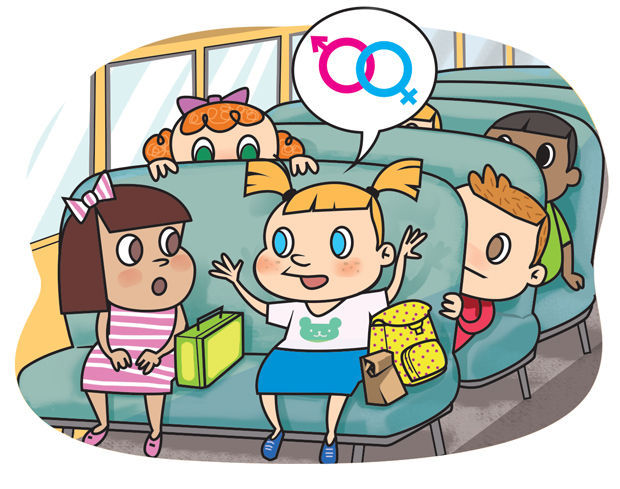
“We told our 6-year-old daughter the facts of life. She proceeded to share this with her kindergarten friends. A parent of one of the friends nicely let us know that they preferred their child not learn about this from a kindergartner on the school bus.”

John Leader, father of three

The-talk-g4
Chiara bautista / Arizona Daily

“Aidan and his friends decided to look up sex in the dictionary at school. That, and hell, and a few other fun words. That’s how we started talking about sex. I think for most parents they assume human sexuality starts during puberty, when, in fact it starts way before then. I have always been open about everything, but only used simple answers. Most of the time that’s all they want anyways. We have talked about privates, appropriate and not appropriate touching and many other things. I asked Aidan about what he thought about the definition of sex and he said ‘mom it sounded so disgusting.’” - Katrina Gloudeman, mother of one

The-talk-g3
Chiara bautista / Arizona Daily

“My kid learned from Minecraft because of the pigs. I guess the pigs ‘mate’ and have babies. So one day my mom and sister asked if he knew about that kind of stuff and he told them what he had learned from the game — the basics — and they said he had it down. They told him to come to them or us if he had questions, not his friends or the Internet.” - Amanda Webner, mother of four

Connecting with other parents, vital to well-being

When we become parents, we’re constantly surrounded by people.

And yet, we often feel lonely or isolated. Especially if we’re the first one of our friends to enter the ranks of parenthood.

“It’s isolating if you’re the only one having a child,” said Kim Metz, specialty service director at The Parent Connection, a program of Arizona’s Children Association, which offers support, classes and resources for families. “Without the support and camaraderie with other parents, you may feel like you’re the only one walking the hallways in the middle of the night, getting up with to take care of a sick child or not getting enough sleep.”

Kidless friends try to understand — the exhaustion, stress, joy — but, they don’t get it. Not completely. And we shouldn’t expect them to.

In many cases, our only experience with children is to have been one, Metz said. “And we don’t remember or realize our parents weren’t getting sleep or dedicating their lives to us, so, we wonder if we’re doing it right.”

So, what do we do?

We make parent friends. Not to replace our old friends, of course. Nothing can.

Having a network of parents raising families at the same time we are is vital to the well-being of the parents, Metz said. It decreases stress and increases feelings of competence by sharing ideas. “It’s important to not feel you’re the only one,” Metz said.

Making parent friends can be hard if you don’t know where to look.

Yeah, there are tons of parents out there. But, when you become one, it’s like being the new kid at school. Do you just start going up to people at Target? Chat up the moms at the playground?

Doing so can lead to new friends. But, for some, that approach doesn’t work so well.

Daniel Kinn, a stay-at-home-dad to one child has been looking for other parents to connect with, for him as well as friends for his son. He only knows one or two other stay-at-home dads.

“Interestingly enough, I’m almost reverse discriminated against from women,” Kinn said. “Women think I have a motive behind wanting to meet up with them and their kids. All I want is a play friend for my son. It’s very disheartening.”

Joining a group or attending classes is a good way to combat those issues, Metz said.

For example, The Parent Connection offers Baby and Me as well as Stay and Play groups for parents and children. Despite what people think, the classes are not play groups, and they’re not just for moms.

Rather, they are play-based parenting groups that provide an opportunity for parents to “play with their children, get support around their parenting and form a network of other parents who are experiencing child raising at the same time you are with children near the same age as your children,” Metz said.

And, Metz said, dads attend these groups. “We get dads at our groups because there are lots of stay at home dads now,” Metz said. “Even at Baby and Me, we have dads that come and realize they are treated the same as moms.”

Stay and Play and Baby and Me groups meet at places like libraries and churches and are free to attend. Find them online at theparentconnectionaz.org

Barbie Patterson, mother of two, went from working full-time and being very social to being alone with her baby.

“None of my existing friends were having babies at the same time, so it was a challenging time,” Patterson said.

She found like-minded mom friends at the now-closed Gymboree. “There was a good group of about nine of us,” Patterson said. “We visited some during classes and went to open gym, which was less formal and we just started talking a little bit more, then started going to lunch afterwards. That evolved into play dates and that evolved into girls nights out. We’re all very close.”

Since it worked so well for her, Patterson recommends making friends at the kids’ activities, such as the gym, library story times or mom groups.

“You just have to be brave and ask people on that first play date,” Patterson said. “It’s very much like asking someone on a date-date and its kinda hard, but, you just have to be willing to take that leap.”

Another option is Meetup groups.

Meetup.com is like an online bulletin board posting group gatherings. There are tons of Meetup groups — parent groups, exercise groups, artist groups and more. It’s free to sign up and find a group. Once you join one, you may have to pay dues, depending on your group.

Lisa Ramirez, mother of two children, is a co-organizer of Meetup Moms Group of Tucson, which has 124 members.

“I was a working professional before I became a stay-at-home mom,” Ramirez said. “You definitely feel isolated when all of your friends are coworkers or have older children, and you don’t often see those friends anymore.”

She describes the Meetup group as being “heaven sent.” The group has activities from educational to play groups. So, it provides many opportunities for the parents and kids to socialize with others.

Ramirez has gained some good friends through the Meetup group. “We just moved to a different side of town, and we’re close to two of the moms who are in the group, so now we’re constantly hanging out together and our kids are hanging out at each other’s house, in addition to the events at Meetup.”

Although the group is for moms, Ramirez said they try to incorporate dads into some of the events.

“I can’t stress enough how great it’s been for me,” Ramirez said. “It kinda keeps me sane through motherhood.”

Similar to Meetup groups, Facebook has several established groups for parents. Some are online sounding boards to bounce ideas off of each other, and some plan activities and opportunities to meet in person, as well. Find them by typing key words in the search bar on top of the home page.

Aimee Cronenberg, mother of two, belongs to a mom’s group on Facebook. She found it “invaluable” when her children were very young.

“I didn’t really know any other moms with kids the same age as mine, as well as moms who share the same sort of parenting philosophies as I did,” Cronenberg said. “It feels to me like this kind of moms group is absolutely ideal for people who have infants and toddlers, and then, by the time of the kids getting to school age, you’ve sort of established the people that you are closest to, and you continue to have play dates with them, but not necessarily with the whole group.”

Another good thing about Facebook groups is that people can ask for help or advice and get an answer any time of day or night without having to wait until they can meet with people in person, Cronenberg said.

For expectant moms, there are due-date clubs — a group of mothers who are all due around the same time. One website that has them is mothering.com

Cronenberg joined a due-date club when she was pregnant with her daughter in 2010.

“Now, six years later, we are actually still a very active group of friends,” Cronenberg said. “Some of these ladies know more about me than any other person. The fact that we don’t get to meet in person doesn’t change how close we all are.”

Tucson kids picture hopes, dreams through photo program

To some, a photo of sparkly shoes and brightly colored socks, shows nothing more than childhood whimsy. But, to the 6-year-old girl behind the camera, it illustrates her dream to become an artist.

Jennavicia Ormsby was one of 10 children who participated in Pictures of Hope, an annual event in which photojournalist Linda Solomon teaches underprivileged children how to illustrate their hopes and dreams through photography.

“These children have had difficulties economically and don’t have homes,” Solomon said. “So, to give them an opportunity to share their dreams and their hopes, it really shows them that their dreams matter. And we all need to feel that.”

Armed with a point-and-shoot camera for each child — donated by Walgreen Co. — Solomon and mentors from the community visited children who live in transitional or affordable housing through Our Family Services, to help them write down their hopes and dreams and take pictures that reflect them.

Solomon will choose one or two photos from each child to be printed onto greeting cards that can be purchased through Our Family Services. One hundred percent of proceeds go into the organization to support its programs. An unveiling of the chosen photos will be held in October.

“This program gives kids in our program hope, something that’s in short supply for many of them,” said Chris DeGraff, development director of Our Family Services.

The morning started with a brief tutorial taught by Solomon, with each child getting a chance to compose and take a portrait with Solomon’s camera.

Jennavicia, 6, one of the youngest in the group, was the first to get her hands on the camera. With help from Solomon, she posed the girl seated next to her and took her first photo.

Following the tutorial, about 20 other adults entered the room as mentors, including Tucson Mayor Jonathan Rothschild and H.T. Sanchez, superintendent of Tucson Unified School District, among others. NBC Nightly News was in attendance, as well, working on a feature that will air in coming weeks.

“This is my fourth year being here, and every year it’s satisfying to go out with the children and explore the community with them looking for images that reflect their dreams,” Rothschild said. “It’s a really great way to give these children a sense of self worth.”

“To think any family goes without in my community is unfathomable,” said mentor, Betsy McKenna. “To be a part of something that’s making a difference is an honor.”

Each child was paired with two or three mentors to help him or her write his or her hopes and dreams on the paper.

Dreams varied, but, one common thread was woven through all — none were wishes for material items.

Rather, they dream of things like going to college, ending world hunger, siblings growing up strong, leaving mom a love note, becoming a teacher, getting the family back together or to live in a house.

“You don’t see one iPad on their lists,” Solomon said. “The best dreams are for others and I think these children express that. They are dreams to help others, to have a home, for education. With that said, the message of Pictures of Hope is that the values expressed by these children are the values that are the most important.”

Solomon looked over and marked two of the items on each child’s list for them to photograph with help from their adult mentors.

Jennavicia’s assignment was to photograph her dream to be an artist and a teacher.

Cathy Borinstein, arts and culture advisor for the mayor’s office, has mentored for Pictures of Hope since its inaugural event five years ago, and was one of Jennavicia’s mentors.

“I love the program. The kids are so wonderful. They just pull your heartstrings,” Borinstein said. “To see through children’s eyes is amazing.”

Borinstein, along with two other mentors — Debi Chess Mabie and Deb Goodman — piled into a car to take Jennavicia to Sarnoff Art & Writing to make a photo that illustrates being an artist and leaving a love note for her mom.

On the way there, Mabie chats with Jennavicia about school.

“What grade are you in?”

“I’m in kindergarten. I passed,” Jennavicia says proudly.

Jennavicia loved her teacher — so much so, that she too, wants to teach some day.

She said she plans on taking her new camera with her every day so she can take pictures of her family and friends.

Upon arriving at the art store, the owner, Henry Sarnoff, sets Jennavicia up at a table with markers to create a card for her mom.

While she writes “I love you mom” and draws on the card, Sarnoff comes back with a surprise gift. It’s a watercolor set.

Her face lights up.

“Thank you,” she says.

Once the card is made, Jennavicia sets it on the palette that a wooden artist’s mannequin is holding in front of the store. With the help of her three mentors, she steps back, frames her shot, and pushes the shutter.

Another smile. She’s happy with her photo.

Next stop, The Drawing Studio, to photograph artists and teachers at work.

A pastel class, taught by Pat Dolan, is taking place.

Dolan takes Jennavicia around and shows her what the artists are working on and talks about her job as an art teacher.

Jennavicia observes and takes pictures, capturing the teacher’s and artist’s hands moving over a drawing, and an artist’s glasses.

Dolan tells Jennavicia how much she loves her bright socks and shows her own off — black with green shamrocks — as a common bond in creativity.

With that, Jennavicia photographs a portrait of her artsy, multi-colored socks.

Back at Our Family Services, the children and mentors trickle back, talking about the photos they took and places they visited.

Vivica Platz, 13, dreams of ending world hunger, studying animals in college and adopting dogs from a rescue shelter. To illustrate that, her mentors took her to the Humane Society of Southern Arizona and the Community Food Bank.

“I took a picture of a really lazy cat,” Vivica said. “It was adorable. The Food Bank was awesome. I went into a fridge that smelled like cantaloupes.”

Vivica’s and the other children and mentors’ excitement at the end of the event was tangible.

“Every time I come here, it’s always exciting,” Goodman said. “It never fails to amaze me. I love these children. They see they can make things happen and they matter.”

Keeping kids safe on social media

An Instagram account that shows dozens of local high school girls in a provocative light has drawn nearly 3,400 followers since it launched about eight weeks ago.

It has also gotten parents talking with their children about keeping safe on social media — and about how much is too much information to share.

On the Instagram site, photos are posted with the girl’s full name, school she attends and, in most cases, a comment such as, “body and booty on point” or “you would be scorin’ if you were friends with Lauren.’ ” Girls are nominated by friends to be featured on the account.

Less is known about the account owner, who claims to be a high school student, and declined to disclose his or her name or age to “a random stranger.”

In a direct message responding to the Star’s questions, the account’s owner said it’s all in the name of boosting the girls’ self esteem and “making the girls happy.

“We’re in high school, so don’t worry, we’re not pedophiles,” says the account owner. “And we post the girls with their school for the same reason Mrs. Arizona or Mrs. California are given their names; to basically show that these girls represent their school.”

Of the nearly 90 girls pictured as of last week, a few were identified as University of Arizona students. The rest were from several local high schools.

One Tucson mom was outraged when she found out her daughter’s photo, along with her full name and what school she attends, was on the Instagram account. The mother immediately requested to follow the account and sent a direct message to have her daughter’s picture removed. The account owner complied after commenting that he or she didn’t understand why the mother objected and that the account was set up to bolster the girls’ self esteem.

Once the photo was removed, the mother discussed with her daughter the dangers of putting information out there, as well as the degrading nature of such an account.

“I’ve gone over it with her over and over again,” she said. “Don’t put your whole name out there, don’t put your school. If it’s something you’re not comfortable having your grandmother see, don’t put it out there—and it didn’t matter.”

Her daughter said she didn’t even think about it. Her friends nominated her so she thought it was OK.

The Star is withholding the mother’s name to protect her daughter’s identity. The Star is also not identifying the name of the Instagram account as to not drive more traffic to it.

Degrading, dangerous

“You always want to be careful and guarded when it comes to your personal information, such as your name, address, workplace and school you attend,” said Deputy Tom Peine, public information officer for the Pima County Sheriff’s Department.

“Due to the connected information online, it exposes people to fraudulent activity and ill-intended use of your data that you readily make available out there,” he said.

There is also the danger of sexual predators, looking for opportunities to groom possible victims, Peine said.

This “grooming” makes the predator appear innocent in the victim’s eyes, in turn making the child comfortable with sharing information, which can lead to exposure to a variety of dangers or inappropriate materials, Peine said.

“It lowers the typical threshold that children have in disclosing information about their surroundings, their homes and anything of that nature,” Peine said.

Not only can it pose a danger to the victim, but also that person’s family. Predators can take it as far as scoping out the family and the family home for “all types of other criminal activity,” Peine said.

In fact, 65 percent of online sex offenders used the victim’s social networking site to gain home and school information about the victim and more than 25 percent use social networking sites to gain information about the victim’s whereabouts at a specific time, says the Journal of Adolescent Health.

“Children may be innocently unconcerned about information they provide,” Peine said. “Once information is out there online, we have to assume it’s online forever.”

Educating children on Internet safety is urgent in our increasingly digital lives — the earlier the better.

“My daughters, who are now 13 and 11, have been on social media and have had cell phones for several years. Some parents shame other parents for posting pictures of their children or allowing their children to engage, but this is the world we live in,” said Monica Casper, professor of Gender and Women’s Studies at the University of Arizona.

“Our lives are increasingly digital, and at least from my perspective as a parent and teacher of young people, avoidance isn’t practical or desirable. But, my husband and I have had numerous conversations from early ages about Internet safety, people with questionable motives, and their own self-representations online. We have their account IDs and passwords, and they know that I can check any time — and I do.”

Comments from the girls in the photos on the Instagram account — some scantily clad, some portraits — show they are flattered to be chosen. It’s not surprising, since teens are often curious and confused with mixed messages on being sexy or sexually curious.

“What these young women and men see is a universe of pop culture full of precisely this kind of objectification, often cloaked in the language of women’s empowerment and self-esteem. This is one of the wages of ‘choice feminism,’ which essentially says that if women ‘choose’ it, then it must not be all that bad. Clearly, our young people crave attention and encouragement, but we’re impoverished in what we offer them,” Casper said.

“For girls wanting to feel beautiful and sexy — and why shouldn’t they — we send either mixed messages or worse, the message that they are only there for men’s viewing or tactile pleasure. We collectively shame any kind of sexuality, while bombarding children with images of sex.”

Bryanna Sanchez, 18, was enraged at what she saw on the Instagram account when she was invited to be a follower of it.

“I think the account is just kind of putting girls out there as sexual objects rather than human beings,” Sanchez said. “It’s focused more on what they look like rather than what they have to offer. I just don’t think it’s OK … It angers me again because the girls were OK with it. They’re OK with them posting the pictures and saying the comments about them. It seems they feel empowered by it or they like the attention they are getting. So, I think it’s also on the girls because they’re encouraging this social culture that we have now.”

Teaching girls about self-respect and responsibly choosing images to post online is an important part of the solution.

But, it is just as important to teach boys and men “that girls and women are full human beings, and not here solely for their amusement. It’s a multipronged process, and it has to start early,” Casper said.

Alicia Saposnik, a mother of two boys, said she has talked about respect for girls and women — and everyone — as well as for their bodies and their privacy since they were little.

“This respect goes for them, too, so they are relatively careful to maintain their own privacy in these matters — private pages, no followers if they don’t know who they are, etc.,” Saposnik said.

Monitor kids’ usage

A handful of parents in an online Facebook chat about Internet safety chimed in with their opinions:

“Parents should know all passwords to kids’ electronics/social media sites and check them regularly,” said Debbie Germain Dotson.

“I’ve coupled this thing about respect with a healthy terror of social media,” Saposnik said. “For example, I’ve told them, ‘Anything you do or say on Instagram you should be willing to have on a billboard with your name and photo on the corner of Grant and Craycroft.’ That worked wonders.”

“I’m always monitoring (daughter) Kambria’s Instagram,” said Kim Godinho, a mother of three. “She seems to be following the rules, but, how can a parent regulate friends sending pics to a website as a nomination? The Internet is a curse and a blessing. But for kids, you really have to keep your eyes open.”

“The aftermath is what I would be concerned about,” said Harry Pollak, a father of three. “Once the post is deleted, who’s to say that info hasn’t been copied and posted elsewhere? Social media is a parent’s nightmare.”

Talk about bullying before it's a problem

One Tucson mom knew something was up with her son when he started mouthing off at home, was cranky and had a shorter fuse with his sister.

But she couldn’t quite put a finger on what was bothering him until the boy revealed during a meeting with the school principal that he was being bullied.

It had been going on for about two months, recalled the mother. (The Star is withholding the names of the boy and his parents to protect his identity.)

“I looked at my son’s face and saw the tears coming down,” she said. “This is very difficult for a parent. Learning that my kid is afraid to come to school is heartbreaking.”

More than 20 percent of children nationwide between the ages 12 and 18 reported being bullied in the last school year.

The actual number may be far greater because experts estimate that most — more than 60 percent — don’t tell anyone about it when it’s happening.

“True bullying situations don’t get reported and when it does flare up families are like ‘Why didn’t you do something?’ said Mary Saraceni, the school counselor at Gale and Hughes elementary schools. “But they (bullies) are not gonna do it in front of an all school assembly. They’re gonna do it when the teacher is on the phone.”

SIGNS OF BULLYING
AND HOW TO ADDRESS IT

Though it can be hard to tell what’s going on in a child’s school life, there are signs that something might be wrong. Getting to the bottom of it takes communication and diligence on the parents’ part.

“Any major change in behavior can be a sign,” said Jamal Givens, director of prevention and wellness for CODAC Behavioral Health Services. “If they were talkative and begin to shut down. If they don’t want to go to school. They don’t want to eat … If they’re normally quiet and become more aggressive or mean.”

Other signs include unexplained bruises, cuts or scratches, making up excuses to miss school, anxiety, low self-esteem and complaining frequently of headaches, stomach aches or other ailments.

“When you see these indicators, you have to follow up and ask probing questions,” Givens said.

That’s not an easy task, especially as children get older, since they naturally become more closed to sharing their feelings.

“A good habit to get in is to lead a scripted discussion after school,” said Saraceni, who has a doctorate in education. “‘What was the best thing that happened? What is something you would change?’ If you say ‘How was school?’ and they say ‘fine,’ its not in depth enough. If you probe enough they’ll start to share — especially at elementary age. It gets harder as they get older unless you lay the groundwork.”

Those conversations need to start before there’s a problem, said Deborah Temkin, director of education research at Child Trends, a nonprofit, nonpartisan research center based in Bethesda, Maryland.

“Bullying is not a conversation you should start when something happens,” Temkin said. “For kids to trust you enough to disclose what’s happening they have to feel comfortable with having those conversations … Talk about their social lives and how they’re dealing with school, that way they feel comfortable having those conversations.”

To get older children to confide in you, it might help to not be seated directly across from them, Saraceni said. “They don’t like to maintain eye contact and share feelings.”

Going for a walk or a drive, or sitting next to them on the couch helps them express themselves because the focus isn’t on them having to share their innermost feelings — anything where it doesn’t seem like they’re in the hot spot, Sarceni said.

For younger children, Saraceni said she gets paper and crayons out, turns on some music and doesn’t say a word. Then she uses their drawings to prompt discussion.

“Often they’ll start drawing about the thing that is bothering them and I’ll say ‘Oh, neat colors in that picture. Tell me what’s going on there.’ And typically, they’ll pour their hearts out. It’s at their pace and they’re comfortable.”

A TUCSON BOY’S STORY

The boy who revealed in the meeting with his mother and his school principal that he was being bullied had been responding to a question from the principal about whether he found himself not wanting to come to school.

When the bullying happened again, the boy told the principal and the bully was talked to. However, the bullying continued and escalated physically, so his parents filed a report with law enforcement. Upon investigation, they learned the bully was going through some things at home. “Although not an excuse, it could explain his behavior at school,” the victim’s mother said.

Before pressing charges she and her husband sat down with their son and asked what he wanted them to do. He didn’t want them or anybody else involved.

“So we decided to have the detective explain to the kid that we were giving him one last chance because our son asked us to. That we could have him arrested at any time if he laid another finger on him,” his mother said. “It didn’t completely go away in the following weeks but it did get better …My son is better. He knows now that it is best that he tells us right away so that it doesn’t get too far.”

The boy’s mother said the school handled the situation as well as it could have, but more needs to be done.

“There needs to be zero tolerance at all times, even for the smallest of issues. Anti-bullying campaigns need to be implemented at the beginning, during and end of the school year. Not just once,” she said. “If the child doesn’t speak up, no one will help. As a parent, look for the signs. What’s different? Talk to your kid’s friends. Become involved.”

WHAT TO DO

“As long as you don’t throw the first punch, you can hit back” is a common mantra among some parents.

However, that can get the child in trouble since most schools have adopted a zero-tolerance policy, regardless of whether a child is defending him- or herself.

Rather, it is recommended that the child finds a way to safely get away from the situation and find a trusted adult to talk to.

Hanging out in groups is a way to deter bullies, CODAC’s Givens said. “A lot of times a bully isn’t gonna confront a person with two, three or four friends.”

Parents should immediately alert the school principal if their child is being bullied, Givens said. Also, follow the steps outlined in the school’s bullying policies.

Arizona has anti-bullying laws so if a bully is physically assaulting somebody, you can call the police, Givens said.

Schools need to educate and encourage bystanders to stick up for a child if they see him or her being bullied and to include children who are alone in their group, Givens said.

“A bully doesn’t like to be confronted by a group,” Givens said. “They’re doing it because they feel like they can.”

Schools try to handle these situations, but many of them don’t always know what to do, so it’s important for parents and students to be advocates for what is the safest solution for them, said Temkin, who grew up in Tucson and attended elementary, middle and high school here.

“Get the services they need, which might be a change of seats in the classroom,” Temkin said. “One thing we recommend is the kids not be isolated. So, if a seat change is required, perhaps the seating chart for the whole class is changed around so that kid isn’t singled out as an issue.”

CYBERBULLYING

Temkin estimated that about 7 percent of children ages 8 to 15 reported being cyberbullied last school year.

“Surprisingly, cyberbullying is less prevalent than traditional forms,” Temkin said. “It is an issue, but I think it’s really important that it’s not the prime issue when talking about bullying.”

However, being bullied online can be just as traumatic. And, it’s even more difficult for schools to handle because there is still debate on how much a school can get involved in cyberbullying. That being said, kids who bully online are likely to be involved in bullying at school.

“What makes it very different is bullying when I was growing up stopped at school. You go home and find respite in the fact that you have hours without feeling tortured,” Temkin said. “Now kids are attached to their phones, checking Instagram and Twitter … That of course means cyberbullying is a 24/7 event. So it can be very traumatic.”

Signs to look out for mimic those of face-to-face bullying.

“The effects are behavior change … being more obsessed with or not wanting to be online,” Temkin said. “Either of those extremes might be an indication.”

Parents can monitor their children’s computers, phones and social media, but Temkin recommends being up front about it.

“If it’s done in an open and honest way, there’s more likelihood there will be a positive outcome from that.”

PREVENTION

Preventing children from becoming bullies starts at home by teaching kindness toward all people.

“When they see us not treating, for instance, people waiting on us or the bus driver, poorly, we are sending a message that that’s an appropriate behavior,” Temkin said. “Be conscious that those messages translate. The best thing is to be a good role model.”

A lot of schools are focused on stopping bullying rather than preventing, Temkin said.

“They’re focused on telling them not to bully but not setting up the foundation for kids to be pro-social,” Temkin said. “Schools taking that proactive approach are less likely to experience bullying. Making sure everybody feels supported will yield more positive results than just telling kids not to bully.”

When it does occur, it’s important to look at the context of the bullying, Tempkin said. Stereotypes as to who is targeted by bullies do not always apply.

“Kids who are different tend to be targeted, but it’s not always about targeting a difference of discrimination,” Tempkin said. “Kids are using bullying as a social device to gain popularity and status in their social networks. The context is an important factor. We have to address that in order to prevent it.”

Educating children about including others and sticking up for one another is a sure way to combat bullying, Saraceni said.

“When there’s one sort of underdog and a bully with his or her pack they just have this sick sense to find the weakest link and they go get them,” Saraceni said. “So if that one lonely child can be included in someone else’s game, they’re not so vulnerable.”

She tries to hit that point home with the following example:

“If there’s 100 kids on the playground and one is being picked on by three, the rest of us have so much power. The odds are much better,” Saraceni explained. “By doing nothing we put the power with the bullies and that one kid is facing 99 kids. If someone is not helping, they’re part of the problem.”

It doesn’t mean it alleviates all bullying, Saraceni said. “But if you have guidelines and basic understandings you can figure out what went wrong and how to fix it. If you don’t talk about it until there’s a problem, it’s too late.”

Wild West action: Family night at Trail Dust Town

A couple of cowboys pace on the town’s Main Street. They spin their pistols as though they were itching for a fight.

A train’s whistle mingles with the sound of boots hitting the ground and the clang of spurs.

“Here we are,” we hear one of the cowboys say.

“Hey Killer Miller,” taunts another.

It looks and sounds like there might be the gunfight they were angling for.

Instead, they gather together, each still spinning their pistols on their fingers, chatting up passersby.

A slight rumble of thunder rolls through town, warning of an impending monsoon storm.

This isn’t a scene from a western movie. It’s a typical Friday night at Trail Dust Town, an Old West attraction on Tucson’s east side that houses the Pinnacle Peak Steakhouse — billed as a family tradition for more than 50 years — Wild West stunt shows, amusement rides, gift shops and the Museum of the Horse Soldier.

“Trail Dust Town is a great destination for a family night because there’s a little something for everyone,” said David Ragland, the town’s public relations director and event coordinator. “And it’s all family-friendly and affordable.”

Trail Dust Town was developed in 1960, with Pinnacle Peak opening in 1962. In recent years, it has been repositioning itself to be on the forefront of local family and community destinations with the addition of the Heirloom Farmers Market, a partnership with The Loft Cinema, Paws & Pints events and community partner nights.

Heirloom began holding its weekly Friday farmers market in the center of the town in January. A family day is held on the first Friday of the month, where rides and some shops are open during market hours.

The town began sponsoring The Loft Cinema’s annual Kids Fest in 2013 and the Loft’s year-round Loft Jr. program in 2014. Both programs show family-friendly films for free.

New this year, Trail Dust Town began hosting Loft Jr. Under the Stars, where families can watch a film outside at Trail Dust Town. The program has been so successful that it was extended into September, rather than ending in August, as originally planned.

“Their support has really helped us bolster our family-friendly programming here at The Loft, and allowed us to offer some great children’s films without charging admission, which families have told us they really appreciate,” said Jeff Yanc, The Loft Cinema’s program director.

“We’ve also helped to host events at Trail Dust Town and it’s really a perfect location for family fun,” Yanc said. “The vibe is very much like a theme park, which is great for a family friendly event, but it’s also right in the middle of the city, so there’s no long, uncomfortable road tip necessary to get there. It’s a win-win.”

I recently brought my family — my husband, Clint, son, Noah, and mother-in-law, Judy — to Trail Dust Town to check out the scene and spend a couple hours together. Here’s how the evening unfolded for us.

Night in the Old West

Ding, ding, ding. Toot! Toot!

We were first welcomed by the railroad-crossing bells and the whistle of the C.P. Huntington Train, which is named after the historic steam locomotive of the same name that was purchased by the Southern Pacific Railroad in 1863. Trail Dust Town didn’t name the train, however. Its name was given to it by the manufacturer, Chance Rides.

Walking into Trail Dust Town was like being in a different time. Old West facades adorn the buildings and shops. Wood walkways serve as sidewalks and the “street” is brick.

There’s plenty look at. And plenty to do.

A family favorite is The Magic Shop, which is run by Emory Williams Jr., who, with his father, owned and ran Williams Magic on East 22nd Street before it closed a couple of years ago. (He rus a mobile magic shop in Vail and sells online at williamsmagic.com)

At any given time, you’ll see Williams entertaining customers who come into the shop with one of his magic tricks. If you buy a trick, he’ll show you how to perform it — in private, of course. If you’re lucky, parting words will be one of many silly jokes Williams has up his sleeve.

On a previous visit Williams showed us several tricks.

“Whoa! How do you do that?” Noah, 8, was impressed when Williams made a ball in a vase disappear and reappear.

We ended up buying the Ball & Vase trick for about $6.

Williams made us turn our backs so he could show Noah how it works. It’s cool enough to trick people, yet simple enough for an 8-year-old to pull off.

“Don’t tell anyone the secret,” Williams says.

“I won’t,” Noah says, eyes lit with mischief.

“Hey mom, dad wanna see a magic trick?” Noah asks the second we leave the shop. (That went on multiple times every day for about a week.)

Our second time around, we peeked in the window, where Williams worked his magic at his counter.

One of the cowboys approaches us.

“Hey y’all should come to the stunt show at 7 and 8 o’clock this evening,” says Travis Jager, with an exaggerated Southern drawl. “It’s gonna be awesome. We’re gonna be blowin’ stuff up. It’s gonna be intense.”

But we have gold panning to do and rides to go on first — there’s a train, Ferris wheel and a carousel.

To go on the rides, pan for gold or to watch a stunt show, you need wooden nickels, the town’s official currency, or an $8 wristband, which is good for all attractions. Each amusement ride costs one wooden nickel. The stunt show is two.

We drop $20 at the Trail Dust Trading Post and come out with a wristband and enough wooden nickels, which are $2 each, for all of us — three adults, plus Noah — to see the stunt show.

“Oh, can I go on the Ferris wheel? Please. Please,” Noah asks, as he’s already running toward Polly Anna Park.

The grassy area with picnic tables can be reserved for birthday parties and other events.

An old fashioned popcorn wagon sits in the corner where you can get drinks, popcorn and wooden nickels. You can only pay with cash, though.

There aren’t many people at 6 p.m. when we arrive, so there are no lines. Noah gets on the covered-wagon Ferris wheel with two other kids.

We watch it go round and round, as the kids chat excitedly.

“I made a new friend. He’s from Pennsylvania. It snows a lot there,” Noah says after getting off the ride.

“This place is fun,” says Nate Feldman, 10. “I like the magician and the restaurant.”

Next stop — panning for gold.

We are greeted by actor Jim Cumberland, aka “Big Jim,” who is dressed as an old-time gold miner.

“How you doin’ there?” Big Jim says. “You having fun tonight?”

Big Jim hands Noah a pan to use and a glass vial to collect gold in.

Several kids and parents are lined up at the trough dipping their pans and hands into the water, pulling out pieces of “gold” and stuffing them into their vials.

One girl finds the jackpot.

“Mom, over here is a good spot.”

It’s almost time to catch the 7 p.m. stunt show, so we get in line with about 50 other people.

“Everybody got their wooden nickels or wrist bands?” an actor yells out to the line.

“Yeah!” The crowd is excited, ready to go in and watch the show.

We file in and take a spot on the bleachers.

Bon Jovi’s “Dead or Alive” plays in the background as one of the cowboy actors interacts with the crowd.

“Anybody from out of town?”

When one guy yells “Texas” the crowd shouts, “Yeah!”

“On the count of three, yell ‘yee-haw,’” the cowboy says. “1, 2, 3.”

“Yeee-haw!”

With that — and a pre-recorded introduction — the show starts.

As the actors brawl and argue over who’s going to catch Killer Miller, the crowd bursts out with laughter. The sound of gunshots ring through the crowd.

“Watch out behind you,” kids yell out as the villain sneaks up behind our intrepid hero.

Boom! A bright, hot burst of fire explodes.

“Yeah!” Noah yells. “I could feel the heat from that on my face.”

Jager looks over at my husband’s spiky hair, and yells “That made this guy’s hair stand up!”

As it starts to rain, umbrellas pop up throughout the bleachers for the remainder of the show.

At the end, actors take a bow to an appreciative crowd.

A family trip to Trail Dust Town wouldn’t be complete without a train ride.

It’s wet out, but the train offers us a dry place to sit.

“All aboard,” the conductor yells.

And, we’re off.

The train takes us through a ghost town, a graveyard, a desert campfire and a mine along the town’s outside perimeter. The conductor narrates the entire trip.

Once we’re back at the train station, we decide an ice cream and chocolates are in order. We head into the Chocolate Depot, conveniently located right where we get off the train.

It’s a tiny shop, filled with nostalgic candies, handmade chocolates and Thrifty Ice Cream. Seven dollars later, we decided to call it a night.

When all was said and done, we spent a total of $27.

The experience and memories created — priceless.

Check out the Trail Dust Town action at tucson.com/video

Living the 36-hour day

On a road trip home from Colorado, Bob Svejcara — typically a lead foot — cruised down the highway at 20 mph.

It was the red flag his wife, Robin, couldn’t ignore.

“I thought, ‘Wow that’s strange, why is he driving that slow? There’s nobody on the road,’” Robin recalls. “He’s usually the one I’d tell to slow down.”

There were other signs something might be wrong — Bob once forgot how to get to Walmart and sometimes seemed confused and unsure of himself on hiking trips.

The end of that road trip marked the beginning of a different journey for the Svejcaras. Robin took Bob to get checked out and doctors diagnosed him with Alzheimer’s disease in April 2013.

Robin has done the driving ever since and has become Bob’s full-time caregiver.

FAMILY STEPS UP

When a loved one is diagnosed with dementia, family members usually step up as caregivers until it’s no longer possible.

In 2014, there were 314,000 unpaid caregivers giving 357 million hours of care to someone with Alzheimer’s disease in Arizona, says the Alzheimer’s Association. Pima County caregivers put in an estimated 89 million hours of unpaid care.

Putting in that many hours, caregivers tend to neglect themselves, says Kelly Raach, regional director of the Desert Southwest Chapter of the Alzheimer’s Association. In 2014, caregivers racked up health-care costs that were $155 million higher than those who were not caregivers.

“The instances of chronic disease in caregivers is high because they don’t go to the doctor or are unable to get away,” Raach says. “They shrug it off and keep going.”

But getting away and having a back-up plan is vital for health and peace of mind.

“It’s really important for people to ask for help and get respite care, even if it’s two or three hours a day, so you can go to a movie or get your hair done ... take care of yourself,” says Natalie Ireland, support group facilitator for the Alzheimer’s Association.

A DAY can FEEL
LIKE 36 HOURS

A day of caregiving can feel endless.

So much so, that a family guidebook was written on the subject and titled, “The 36-Hour Day.” Raach recommends the book to families who are in the trenches of caregiving.

Maria Gonzales, who is caring for her husband, Joe — who was diagnosed with both Alzheimer’s and Parkinson’s diseases earlier this year — says the days feel long because, “you’re going, going, going all the time.”

“Nothing in my life prepared me for this,” Gonzales says. “I used to teach and I had 29 children in my classroom, and I handled that fine. But this is an adult who has his own mind and his own ways and wants to do certain things like he used to, but he can’t, and I have to be dealing with that.”

Maria also cares for their 44-year-old son, Carlos, who has Down syndrome.

The family’s day starts at 6 a.m., to get Carlos ready for his day program. Once Sun Van picks him up between 7 and 7:40 a.m., Maria and Joe do the shopping, go to doctor’s appointments and get lunch before picking Carlos up. Then it’s time to rest and make dinner.

“Basically, I’m taking care of them most of the day,” Maria says.

One of the family bathrooms had to be set up so Joe could sit down and shower, which he can still do himself, with reminders from his wife.

“I’m not a person who says, ‘Oh I can do it all,’” Maria says. “I will do it as long as I can, but at a certain point, I will have to hire people or something.”

In the meantime, the stress is taking its toll. She recently started taking medication for high blood pressure and is having more tests done.

Selena Haslett, 37, helped care for her grandfather while she was pregnant and raising a teen daughter.

During the worst part of her grandfather’s illness, he was bed-ridden. Since Haslett is a caregiver and a patient-care technician by profession, her mother called on her to do things she was uncomfortable with, such as showering her grandfather and changing him when he was soiled.

“Now that I look back, I realize how much I did juggle things, but I didn’t even think twice about it during the time,” Haslett says.

Haslett’s daughter came along for much of it. They would go to soccer practice, then go see grandpa to help him shower and get to bed.

“It became the normal thing to do,” Haslett says. “I had moments of being extremely exhausted, but I managed to pull through that and do what I could.”

April Willmore starts and ends each day taking care of her 87-year-old mother — preparing coffee and breakfast, administering medication, preparing dinner and putting her to bed.

They run errands together, go for walks, have lunch and watch television. A helper comes a few hours a week so Willmore can go to a support group hosted by Tucson Medical Center Senior Services. Willmore’s mother can’t be left unsupervised, even for a few minutes.

“When I first got there, I left some cat litter (it was clean) out with a cup to scoop it and she saw the cup and that triggered some kind of idea it was something to drink. She ate the cat litter,” Willmore says. “We use a brown soap and apparently she thought it looked like chocolate. She didn’t say that, but that was my best guess. She ate the soap. She puts clean clothes in the toilet. Maybe she thinks she’s washing them. I don’t know. One time I left a medicine bottle out and there were a couple pills in there, but she took them.”

Caring for her mother has proven much more difficult than raising her two sons.

“You can’t just close the door and say, ‘I need to be alone for an hour.’ You can do that with a child,” Willmore says. “In the beginning, I was so overwhelmed because it was all about her, and I felt like I was drowning.”

WORRY, ISOLATION, BOREDOM

Bob Svejcara’s Alzheimer’s is still in the earlier stages, so he’s able to do small projects around the house, but he often forgets what he’s started.

“He says he’ll throw a wash in the washing machine, but I have to tell him sometimes how to get to the washing machine,” Robin says. “Or to get it out, he’ll head out the front door and I’ll say, ‘No, the clothes line is in the back, so you have to go out the back.’ I try to give him clues and guide him and not say, ‘Do this. Do that.’ You don’t want to overtake if you can.”

Robin once had a scare with her heart and ended up in the emergency room, shortly after Bob stopped driving. The couple doesn’t have children and doesn’t have family or friends nearby.

“I thought, ‘Oh my goodness, what if something happened to me and I’m in the hospital and Bob’s here and can’t get to the hospital?’ That really shook me up,” Robin recalls. “So, what? What? In talking around, asking questions through the TMC people, we were given the name of a caregiver manager and I got in contact with her and told her our situation and what happened.

“When the time comes, she’ll come. These are some of the things that I think about at night.”

“That’s when shortage of memory comes in handy,” Bob laughs.

HOW TO COPE

Making peace with the fact that the woman she’s caring for isn’t her mother has helped Willmore cope.

“I kinda said goodbye to mom because she’s not my mom anymore,” Willmore says. “She’s a sweet little lady that needs to be taken care of. But she took care of us. She was a fantastic mom.”

Returning the favor is an act of love, but one that won’t be rewarded with seeing the person grow and thrive.

“With a child, you always look forward to raising them up to be responsible on their own, maybe giving you grandchildren,” she says. “With an old person, there’s really nothing to look forward to, unless you’re one of those lucky people who looks forward to the sun coming up.”

But she tries to find something to laugh about every day. She also finds comfort in support groups offered through TMC Senior Services and the Alzheimer’s Association, where she gets advice on things she’s experiencing from people who have been there.

And she participates in a “very active” AARP community group that meets twice a month to socialize, which allows her to “completely get away from the whole Alzheimer’s thing.”

Gonzales relies heavily on gardening and her friends for escape. She advises everyone to cultivate friendships early in life, because you never know when you might need them.

“For me the most important thing is seeing my group of friends,” Gonzales says.

“They have supported me through all this time and they call me every other day. ... It helps to know that somebody cares out there.”

Robin Svejcara found “peripheral support” by attending the Alzheimer’s film series hosted by TMC Senior Services.

“At first your reaction is shock and anger, then you breathe in and out deeply,” Robin says.

“Then you prepare, talk, communicate, activate. I think it helps to do something. Start something. Do things in a positive way. Say, ‘You got this diagnosis. You’re not happy with it, but that’s the way it is. Let’s go with it.’”

The joys of grandparents: Laughter, lessons, unconditional love create special bond

Nothing compares to grandparents.

Sure, parents are great and all. But there’s something special about grandparents.

It’s even in the title — they’re grand.

“A grandparent isn’t someone that just bakes you cookies or gives you gifts on holidays,” said Syrena Tracy, University of Arizona student and granddaughter. “They are someone who is wise and teaches you lessons as a grandchild to grow into the person you’ll become.”

While having them is pretty special, we hear being a grandparent is pretty great, too.

“As parents, we of course adore our children and marvel at all the new things they learn,” said Robin Gerard, grandmother to six. “As parents, we are also distracted with making a living, maintaining a household, going to the grocery, laundry, paying bills, et cetera, so sometimes these distractions force us to miss some special moments with our children. As grandparents, you do not have those distractions, so the time you spend with your grandchildren you can be 100 percent present and not miss anything.”

Gerard’s six grandkids all live in Colorado, but she puts in extra effort to have strong relationships with all of them.

“We keep in good contact with Skype,” she said. “I talk to them or see them almost every week, via Skype. And I go out there at least four times a year.”

Skype enables Robin to read stories to the grandkids and even work on letters and words with flash cards.

“We do our best to stay connected, even though we’re apart,” Robin said.

One grandson, who is almost 5, was born in Tucson and lived here until he was nearly 3. Last year, he and his “Gigi” ran the one-mile kids run at The Great Pumpkin Race at Buckalew Farms, a highlight for grandma and grandson that they re-live through stories.

“When I see my grandson, we always make up stories and we make one up about that pumpkin race,” Robin said.

That grandson and Robin developed a bond that was not only grandma and grandson, but more like buddies when they lived in Tucson, said Robin’s son, Rob Roberts.

“They were great pals and continue to be now,” Roberts said. “When she visits Colorado, they even share a little twin bed.”

Unconditional love — a quality that makes her an “exceptional mother” — is what makes her a great grandmother, Roberts said.

“We know, if and when we need her, mom will be there for us,” Roberts said. “She showers that same love on her grandchildren. And, she does it in many different forms. She never forgets to send them a gift, whether it is birthdays, Christmas, Valentine’s Day, Easter or even Halloween.”

All six of her grandkids know and love their Gigi despite the long distance because she puts in the time and effort, Roberts said.

Robin’s daughter, Meghan Jacobsen says her mother is an inspiration.

“She’s just very motivating and caring,” Jacobsen said. “I hope my kids learn from her how to have a good heart.”

Meghan’s oldest son, Dylan, 10, got the running bug from his grandma, who runs regularly, and ran Boston Marathon two years in a row. So much so, that he has joined a running club at school.

“She’s just so relatable and she runs a lot and I’m so athletic and love running and she helps me with problems,” Dylan said. “She’s funny and she’s nice. Every Valentine’s Day she gives me books to read. I love reading.”

The duo go running together when they see each other. One of Dylan’s favorite memories is riding his bike while his grandma ran seven miles.

“For me as a father, it has been such a fun journey to watch the relationship between my mother and my sons develop,” Roberts said. “She has always been a great mom and she will always be a great grandmother.”

Gerard is just one of many of Tucson’s doting grandparents. From coaching cross country to making the best root beer floats, these grandparents are beacons of guiding light to their children and grandchildren:

Doug and Sandy Holm, grandparents to two

Since her oldest son was born, Sarah Betts’ parents have gone above and beyond to help her family out.

They believe that being grandparents is about “helping us raise our kids, not just spoiling them, but raising them to be good people,” Betts said.

“I want to teach them to love everybody and give everybody a chance,” Sandy said.

With Sandy, the grandkids come first, Betts said.

“She puts her grandchildren above everything,” Betts said of her mother. “Anytime we ask, she pretty much drops everything to watch him and help us out.”

Same goes for her father.

“My kids adore him, too,” Betts said. “It’s funny because he’s a lot different with the grandkids than he was with his own kids. He just has a lot of fun with them. It’s really fun getting to watch him be a grandpa.”

For Sandy, being a grandparent is a totally different experience than being a parent.

“You’re so involved with your kids, correcting them or training them to be responsible adults that you miss stuff that you can enjoy as a grandparent,” Sandy said.

Generosity is a trait Sarah hopes her kids learn from her parents.

“They’re incredibly generous with everything they’ve got — money, time and love — and I hope they teach my kids to be like that,” Betts said.

Doreen Castillo Davis, 49, mother of one, grandmother to one, step-grandma to one, marathon runner and running coach.

For Doreen, being a grandma is a second chance.

“I get to make up for all the things I didn’t do for my daughter,” the 49 year old said. “The truth is you get to love them and you get to give them back. I love her and spoil her and make sure she has everything she needs and then she gets to go back to her mom.”

Kindness is a trait Doreen wants her granddaughter, Mariah, 9, to learn from her and strives to teach her about it.

“I actually put her in a summer camp at Ben’s Bells and she loved it,” Doreen said. “She was always kind before that, but now you can talk to her about it and she’s the kindest girl ever. She’s that one girl in class that takes care of everybody.”

Doreen’s passion is running — she ran the Boston Marathon among others — and was able to share that with her granddaughter as the assistant coach for the cross country team at school last year.

“I got to spend time with her and share my passion and it’s pretty cool,” Doreen said. “Mariah enjoys running. I hope to see her running as she grows up, but she’s into softball right now. She loves it and is really good at it.”

The two have gotten to spend lots of quality time together traveling, too. Doreen took Mariah to Maui and to the Grand Canyon.

“I try to do things with her and get her out and expose her to different things,” Doreen said.

Jimmy and Vivian Cesario, paternal grandparents, and Barbara Wright, grandmother and teacher

Syrena Tracy says her grandparents — dad’s father and mom’s mother — are always there for guidance and life lessons.

“He’s overall a great person,” she said of her grandfather. “He’s very responsible about things and makes sure you’re doing the right thing. He’s always giving advice.”

Syrena says she can go to her “papa” about anything and admires his tenacity in having to fix things himself rather than hiring somebody else to do it.

“He’s 83 and acts like he’s 60,” Syrena said.

She also enjoys her shopping trips to Kohl’s with her grandfather.

His wife, Vivian, died recently. She was affectionately called “mama” by the grandkids.

“My mama was a woman of joy and inspiration,” Syrena said. “My mama was the one to sit with you and tell you stories about when she was younger, and the one who made sure you were on the right track with life. She could bring happiness to any situation and make you feel better if you were down.”

Barbara Wright or “nana,” is a former math teacher at Pima Community College and still teaches at Davis-Monthan Air Force Base. She goes to church every weekend.

“She’s very good at guiding you. She has taught me values in life and really gets in-depth about things,” Syrena said. “She has taught me multiple life lessons. Like, if I get in trouble I can call her and she tells me what I need to do and what I can learn from it and she is very full of knowledge.”

Bill and Barbara Wardle, grandparents of nine

Going to the grandparents house is often about the simple things.

For the Wardle’s grandkids, it’s drawing with grandma, running through the sprinklers and root beer floats.

“Root beer floats are their favorites,” Barbara said. “So, I always have root beer and ice cream on hand.”

Growing up with the mantra “a house isn’t a house unless it’s a home” and inspiration from her own grandma, made Barbara into the grandmother she is today.

“My own grandmother was great,” Barbara said. “Family comes first. You stick together one way or the other.”

From the moment Judi Badie — daughter of the Wardles — became pregnant with her first child, her parents were there. They went to her prenatal visits and ultrasound appointments and attended the birth of both of her children.

They continue to show that same interest in their grandchildren’s lives by going to school open house and the end of the year portfolio days.

“Bumpa” — kidspeak for grandpa — loves to make paper airplanes with his grandkids.

“They experiment with different weights by putting paper clips on them and test them out,” Badie said. “Every time they go over they want grandpa to make paper airplanes. And he’s notorious for taking them to the park with kites. He gets the biggest kites. He’s big on nature walks with them and gardening.”

Bumpa also teaches the kids life skills like fixing the toilets and checking the oil. “They like doing those things with him,” Badie said.

Grandma called “Mermer,” a name her mother was called by her grandchildren.

“She likes to sing to them, read them books and do crafts,” Badie said. “And there’s the infamous root beer floats. A&W can’t even make them like grandma. And she makes up simple games with them, like she’ll crumple up a piece of paper and try and throw it in the garbage can.”

Badie’s 6-year-old daughter says she loves the holidays with her grandparents — from dyeing Easter eggs to decorating the Christmas tree.

Having such closeness with their grandparents helps them have high self esteem, Badie said. Her hope is that her children will listen to their grandparents’ stories and learn about where they came from.

“I don’t think I listened very well as a child when my grandmother talked about her life and the people who were close to her, and now that I’m older I find I’m curious about my history and ancestors and I can’t ask her,” Badie said.

She believes that learning those stories helps with self esteem and “realization of themselves and their character.”

For the Wardles, life is best when shared with children.

“When you are blessed with children, it’s better than gold,” Barbara said. “I’ve told all of my kids that. We’re a close family.”

“They take such delight in watching the kids play. That’s what makes them happy,” Badie said. “I can’t tell who’s having more fun, my kids or my parents.”

Syrian families find new lives in Tucson

The thunderous sound of jets overhead sends the Alzamel children running for cover under the bed.

To them, daily operations at Davis-Monthan Air Force Base sound like warplanes in Syria.

The family is safe here, but memories of war don’t fade quickly. The Alzamel family fled Daraa, their hometown in Syria, more than three years ago. They traveled on foot to Jordan with three young children. For 10 hours they walked. Nisreen Alzamel was pregnant with her fourth child — a daughter. Islam Alzamel is now 3 years old.

The Alzamels are among the first handful of Syrian families to settle here since the country’s civil war began in 2011. Arizona’s Refugee Resettlement Program reported that as of September 25, 112 Syrian refugees had made their home in Arizona in fiscal year 2015. Approximately a dozen families came to Tucson.

That number is expected to increase in the coming year. The Obama administration has said it will allow 10,000 Syrian refugees to resettle in the United States in fiscal year 2016, although rising security concerns have led to legislation in Congress to tighten screening for Iraqi and Syrian refugees.

The executive director of Refugee Focus, one of three local agencies that resettle refugees, says they were told to expect few arrivals through next March, then an uptick.

“Banning Syrian refugees won’t make America safer. It will only make them more desperate,” says Jeffrey Cornish, executive director of the International Rescue Committee in Tucson. “They are fleeing violence, including ISIS, and are seeking safety for themselves and their families.”

“IF YOU WANT TO DIE, COME TO THIS CAMP”

Before their illegal journey to Jordan, the Alzamel family spent a terrifying day lying on the ground as bullets pierced their house. Hisham Alzamel counted 18 bullets.

That morning, the government had entered Daraa hunting rebels, the family says. Hisham feared it was the last time he would see his family.

For 10 hours, they had no bathroom breaks, no sips of water. They survived to encounter fear again.

During a two-month stay in a dark basement with 300 other families, they were forced to keep quiet, they say.

Even a routine bathroom trip sparked fear. They’d hug, just in case it was goodbye.

When the Alzamels arrived in Zaatari Refugee Camp in Jordan, they joined thousands of other refugees. They sought medical attention — Nisreen needed a cesarean section and all three children were ill.

“They could not get U.N. refugee help. They were told if you want a C-section, you have to pay,” says Rania Kanawati, translating for the family. “Either pay or do it in the tent.”

Nisreen sold her ring to pay for the care.

A tent was provided for them to live in, but the scorching heat pushed them to live behind it, where there was shade. When sandstorms struck, they hid their faces in their hands.

They used to say, “If you want to die, come to this camp.”

When they could bear it no longer, they used money carried from Syria to help them pay rent in Jordan. They had brought half of their money — $4,000. The rest was hidden in their chimney back home, but they say it was taken, along with Hisham’s bus, when the house was raided.

INTERVIEW, HEARTBREAK

With their hometown in Hama, Syria, overrun by heavy bombing and tanks, Mouffak Beij and his wife, Roukia Al Younes Al Masri, fled with six of their 10 children.

They walked a mile to wait for a bus to take them to Jordan. When it arrived, it was overflowing with others fleeing.

Terrified their children would be forced to join the fighting, the parents pushed the oldest kids onto the bus. The plan was to meet at a designated spot in Jordan.

For four days, they waited on the street for another bus. They finally made it to Jordan, where they used their savings to rent a house rather than stay at a refugee camp.

They were there for four years until a yearlong interview process ended with their clearance to resettle in the United States. And with that joy came more heartbreak.

Their 23-year-old son had been denied entrance to the United States. He would not be migrating with them.

“WE LIVE TOGETHER
OR WE DIE TOGETHER”

Life in the U.S. is difficult for the Beij family without their son. With the decline of Mouffak’s health, their eldest son is needed to help support the family. They also miss four of their married daughters — two in Jordan, two in Syria.

There is no indication of when or if their son will be allowed to join the family. He told his parents that if he doesn’t hear from the U.N. soon, he will take a boat to Europe.

Mouffak says he will stay in the United States until the financial assistance from the resettlement agency runs out. If his son is not here by then, the family will go back.

“We live together or we die together,” he says through an interpreter.

If the Beijs’ son does get clearance, resettlement agencies will work to place him with his family. But he still has to go through the process — which includes security screening and DNA checks to ensure he is related. That could take a long time.

“That’s really frustrating for families and it’s frustrating for us,” says Craig Thoresen, executive director of the Phoenix-based resettlement agency Refugee Focus. The agency also has an office in Tucson.

COMPASSION, SECURITY

Since the recent terrorist attacks in Paris and Beirut, many U.S. governors, including Arizona’s, have called for a halt to allowing Syrian refugees into their states. The U.S. House of Representatives recently passed legislation to increase the vetting process for refugees from Syria and Iraq.

Security screenings are important, but closing our doors to refugees would be a decision based on fear, says Jill Rich, who worked closely with the Lost Boys of Sudan.

“This country was built to be compassionate and yet we’re saying we’re not going to allow in the most vulnerable populations in the world,” Rich says. “It doesn’t makes sense to me. We need to continue to be a compassionate society, because if not, the enemies have won.”

With the intense screening process and security vetting, coming to the U.S. as a refugee would be a difficult and time-consuming way for terrorists to get in.

“Terrorists can enter countries much easier than coming the refugee route,” Thoresen says. “Why would they wait years and go through all this scrutiny when they can come easier? It would be easier to come on a work visa. There’s far less scrutiny.”

Secretary Jeh Johnson of the Department of Homeland Security addressed fears of allowing in Syrians in a statement emphasizing efforts to better secure the Visa Waiver Program and tighten airport security.

“Since the attacks in Paris, there has been anxiety across our country,” his statement reads. “I understand that anxiety. But, in this environment, we must guard against actions that are ill-considered, misdirected and counterproductive. We must focus our efforts on measures that will actually strengthen our screening of those who travel to the United States, and better secure the homeland.”

Even as detailed outlines of the vetting process circulate, many still worry about the accessibility of Syrian records.

“If we don’t have the connections in Syria or if (the databases) are wiped clean … it’s a legitimate concern in that it may be true,” Cornish, of the International Rescue Committee, said during a recent forum for Tucson churches. “But there are other ways we can verify their identity and their past. ... The State Department, the FBI and Homeland Security are very much aware of these deficiencies, and they do everything they can to make up for them.”

EXPECTATIONS VS. REALITY

Before moving to the U.S., Roukia imagined skyscrapers and skylines when she thought about America.

“Tucson is very similar to their hometown in Syria,” says Kanawati, the translator who met the family shortly after they arrived in Tucson about five months ago. “Overseas, when they talk about America, they show you the skyline … so when you come, you want to see that.”

Roukia is thankful for her life in the U.S. But like so many, the difficult transition is a surprise.

“The father struggles because of the way they used to live in Syria,” Kanawati says. “They are educated people, and to see his son working as a dishwasher is very difficult to accept.”

The family’s 22-year-old son works part-time washing dishes at a sushi restaurant. His is the family’s primary income. Before they fled Syria, he was studying to be an engineer at Aleppo University.

Hisham Alzamel, too, feels the sting of insufficient employment. His family arrived in Tucson late last summer. In Syria, he was a bus driver. Here, he has struggled to find a job.

“The husband is desperate to give more to his family and find a job,” Kanawati says. The children ask about television and iPads — luxuries they once knew.

Many refugees work in the hospitality industry as housekeepers or dishwashers. Those with stronger English skills become security guards or work in health care, Cornish says.

Thoresen, with Refugee Focus, compared Syrian refugees to those from Iraq. Many were professionals and educated, sometimes in the United States.

WHAT THE AGENCIES DO

Upon arrival, refugees in Arizona receive at least 90 days of help and $925 to be spent on behalf of each person.

That money — from agency contracts with the Department of State — must be committed before the 90 days end. It goes toward immediate needs such as furnishing an apartment, filling the refrigerator with food for arrival day and helping with rent and utilities.

Refugees also receive Temporary Assistance for Needy Families, the state’s Two Parent Employment Program, along with food stamps and insurance through Arizona’s Medicaid agency. Finally, they’re offered cultural orientation.

“That’s the very initial adjustment period, where we try to take care of all the necessities so people are stable, the kids are in school, and they are building friendships,” Thoresen says.

After 90 days, some families may qualify for targeted help finding a job and additional funding for rent from the Office of Refugee Resettlement through the Department of Health and Human Services. That can last up to 180 days after arrival, but at that point, the money flow stops.

Some services such as English instruction, medical help and transportation may continue for up to five years.

Agencies aim to guide refugees to self sufficiency within three to six months — and that happened about 85 percent of the time last fiscal year, Cornish says.

“Most families succeed,” Thoresen says. “Are there homeless refugees or refugees in jail? Unfortunately, the answer is yes. It’s a small number, but we’re not saving people. We’re giving people a chance.”

DAY-TO-DAY CHALLENGES

For three years, the Alzamel children lived in turmoil — fleeing Syria and scraping by in Jordan.

School was not part of that experience.

Now they are back in the classroom, in the sixth, fifth and second grades.

It’s frustrating trying to catch up when they don’t speak the language. They feel lost.

The kids learn other subjects in English and then work with an English language development, or ELD, teacher who does not speak Arabic. At school districts like Tucson Unified, these teachers often work with students from around the world.

Julie Kasper, founder of the refugee education hub CENTER and a former ELD teacher at Catalina Magnet High School, has seen the challenges refugee kids face in school, from language barriers to dietary limitations at lunchtime.

“There are schools where there is a pullout model where students are in a classroom with peers all day except for an hour, or there are schools with specific classes that offer all of the instruction with an ESL component,” Kasper says.

Of the five Beij children who now live in Tucson, four attend the Al Huda International School of Languages, where teachers speak Arabic.

“Then the kids come home and teach the parents English,” says Kanawati, chair of the school’s board.

The family can send their children to that school because the children’s tuition is sponsored by donations and because they have transportation — they spent their teenage daughter’s dowry money on a car.

A NEW LIFE

Those who work with Tucson’s refugee population say the city has long opened its arms to newcomers from other countries.

“It’s been very welcoming, a very warm place for refugees to come,” Rich says.

Kanawati moved to the U.S. from Syria about 23 years ago for school. As a board member at the Islamic Center of Tucson, she has worked with refugees from Somalia and Afghanistan.

Tucson is a good city for refugees, she says. She finds people want to help, want to donate clothes or furniture, want to make others welcome.

Because Kanawati wears hijaab, or head scarf, she is used to questions.

“Right now, when I tell them I’m from Syria, people support me and say nice stuff. Other people just stare and stay quiet,” she says.

After almost four months in Tucson, Nisreen sees her children changing.

“They feel peace here. They tell their parents that,” Kanawati says, translating for Nisreen. “The kids trust people. Before, they thought, ‘They are going to kill us.’ They are adjusting.”

Meet Tucson's most dedicated Star Wars fans

The force has awakened in Tucson.

Or maybe it has always been strong here.

That seems to be the case for some of Tucson’s biggest Star Wars fans, as they gear up for the newest movie, “Star Wars: The Force Awakens,” which opens Friday, Dec. 18.

Some of them talked about their passion for the films. And, from what we hear, the love of “Star Wars” isn’t a crush. It’s a deep-seeded love that started when the first film came out in 1977 and grew stronger with each addition — even during that awkward Jar Jar Binks phase.

Brian Petty, 51, an artist who creates screen accurate costumes, was 12 years old when he first saw “Star Wars Episode IV: A New Hope.” He was immediately hooked.

That first film remains Petty’s favorite. The classic story of good versus evil mixed with cool costumes drew him in. Not to mention what went into getting the movie made.

“I appreciate the story behind the movie just as much as the story of the movie,” Petty said.

Once he saw the first trailer for the newest film, he hasn’t looked at any others.

“I don’t want to know anything,” he says. “I want to be 12 years old again.”

Petty, a meat cutter at Sprouts by day, spends most waking hours after work in his small backyard workshop pouring molds, mixing resin, painting and finishing helmets for costumes. His wife, Lynne, does the sewing.

Most costumes are created for local chapters of costuming clubs such as the 501st Legion and the Rebel Legion, which use them at community and fundraising events.

Petty is working on a Darth Vader helmet and a Storm Trooper helmet to raffle off at Roadhouse Cinemas. Money raised will go toward the Make a Wish Foundation, which grants wishes to children with life-threatening illnesses.

The fundraiser will culminate in an evening at the movies for Make a Wish kids, on Jan. 1 with costumed characters.

“To me its more meaningful to go to the hospital or do the Make a Wish thing,” Petty said. “I do it because its a way for me to give back. I love “Star Wars,” but I want to dress up and do it for the right reasons.”

Petty, is one of the fans we spoke to and asked five questions about their love of “Star Wars”:

What is your most quoted movie line?

What do you think of Jar Jar Binks and why?

If you could be any character in a “Star Wars” movie, who would it be and why?

If you were a Jedi knight, what would you use your powers for and what would be your weapon of choice?

If you were to have a drink at the Mos Eisley Cantina, who would you be drinking with and why?

Related to this collection

Arizona Daily Star
  • Facebook
  • Twitter
  • Bluesky
  • YouTube
  • Instagram
  • Arizona Daily Star Store
  • This is Tucson
  • Saddlebag Notes
  • Tucson Festival of Books
Prefer us on Google

Sites & Partners

  • E-edition
  • Classifieds
  • Events calendar
  • Careers @ USA Today Co.
  • Online Features
  • Sponsored Blogs
  • Get Healthy

Services

  • Advertise with us
  • Register
  • Contact us
  • RSS feeds
  • Newsletters
  • Photo reprints
  • Subscriber services
  • Subscription FAQ
  • Shopping

© Copyright 2026 Arizona Daily Star, PO Box 26887 Tucson, AZ 85726-6887

Terms of Use | Privacy Policy | Advertising Terms of Use | Privacy Choices | Cookie Preferences

Powered by BLOX Content Management System from bloxdigital.com.

  • Notifications
  • Settings
You don't have any notifications.

Get up-to-the-minute news sent straight to your device.

Topics

News Alerts

Breaking News