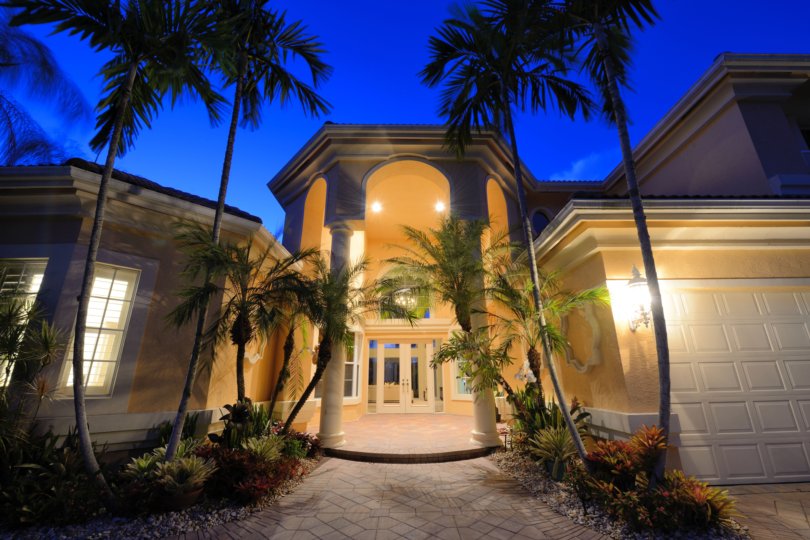
 Photo Credit: Sean Pavone / Alamy Stock Photo
Whether someone is a first-time homebuyer or an investor looking for a rental property, navigating the real estate market can be overwhelming. Local schools, mortgage rates, and the size/condition of the property are a few factors that influence the price tag, but more than anything else, it’s “location, location, location” that dictates the cost of real estate.
In many cases, a desirable location outweighs other factors that would otherwise decrease the price of a house. Take, for example, this “distressed” teardown that went on the San Francisco market in June of 2017 for $7 million and sold for slightly less than asking price. The reason for the astronomical cost? Its large lot is a contributing factor, but most importantly it’s the property’s proximity to Dolores Park and the home of tech billionaire Mark Zuckerberg. The median list price of residential property in the U.S. is $150 per square foot, meaning that this same 1,071 square foot home might sell for just $160,000 in another location.
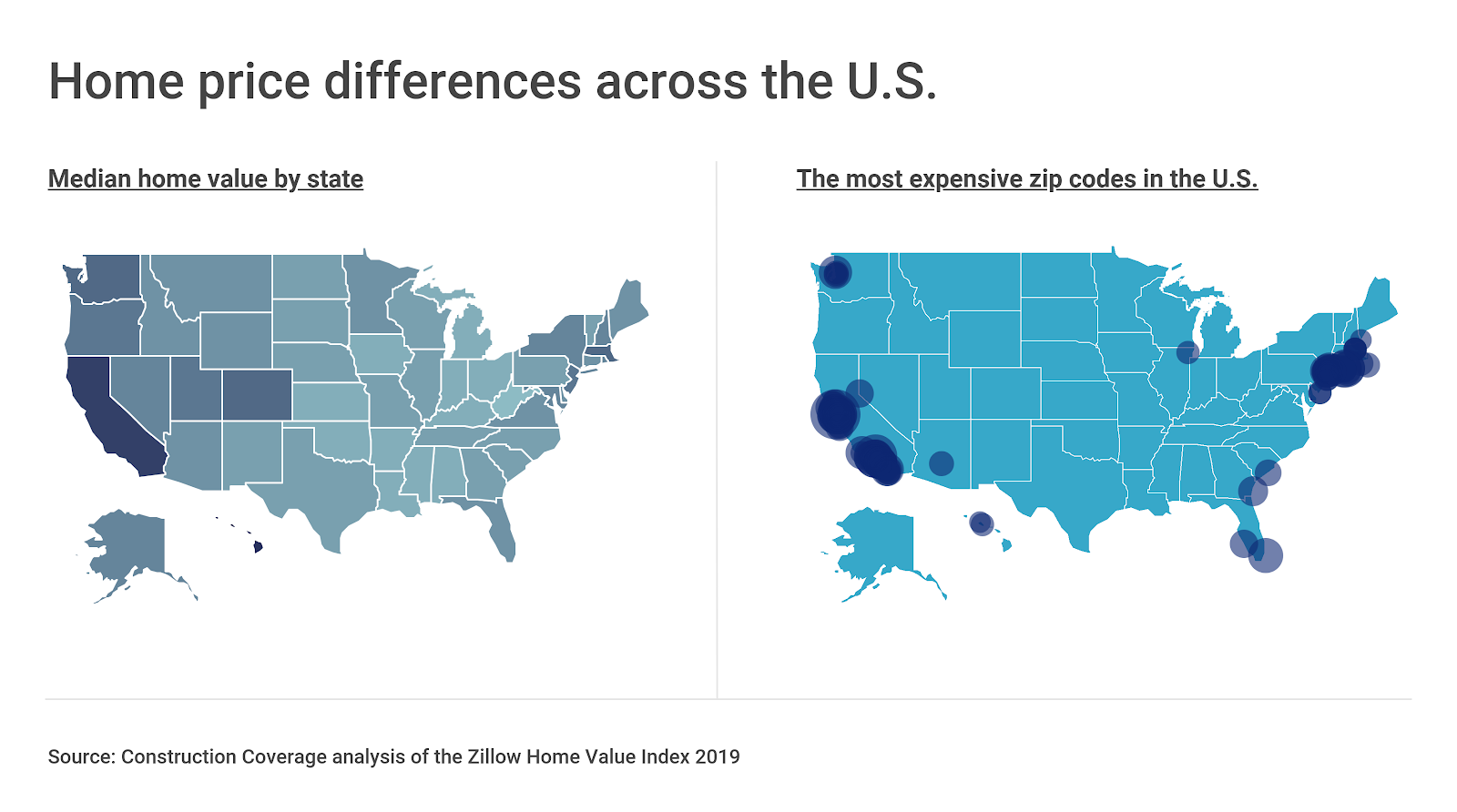
Looking at housing costs nationwide, coastal areas such as California, Hawaii, Massachusetts, the District of Columbia, and Washington have the highest median home values, while Southern and Midwestern states tend to have the lowest median home values. In addition, large coastal cities and their affluent suburbs are known to command high prices, whereas sparsely populated rural areas are known for their low housing costs. This helps explain why 70 percent of the 200 most expensive zip codes in the country are in California, and just two zip codes—60043 in the Chicago metro and 85253 in Scottsdale—are outside of coastal states.
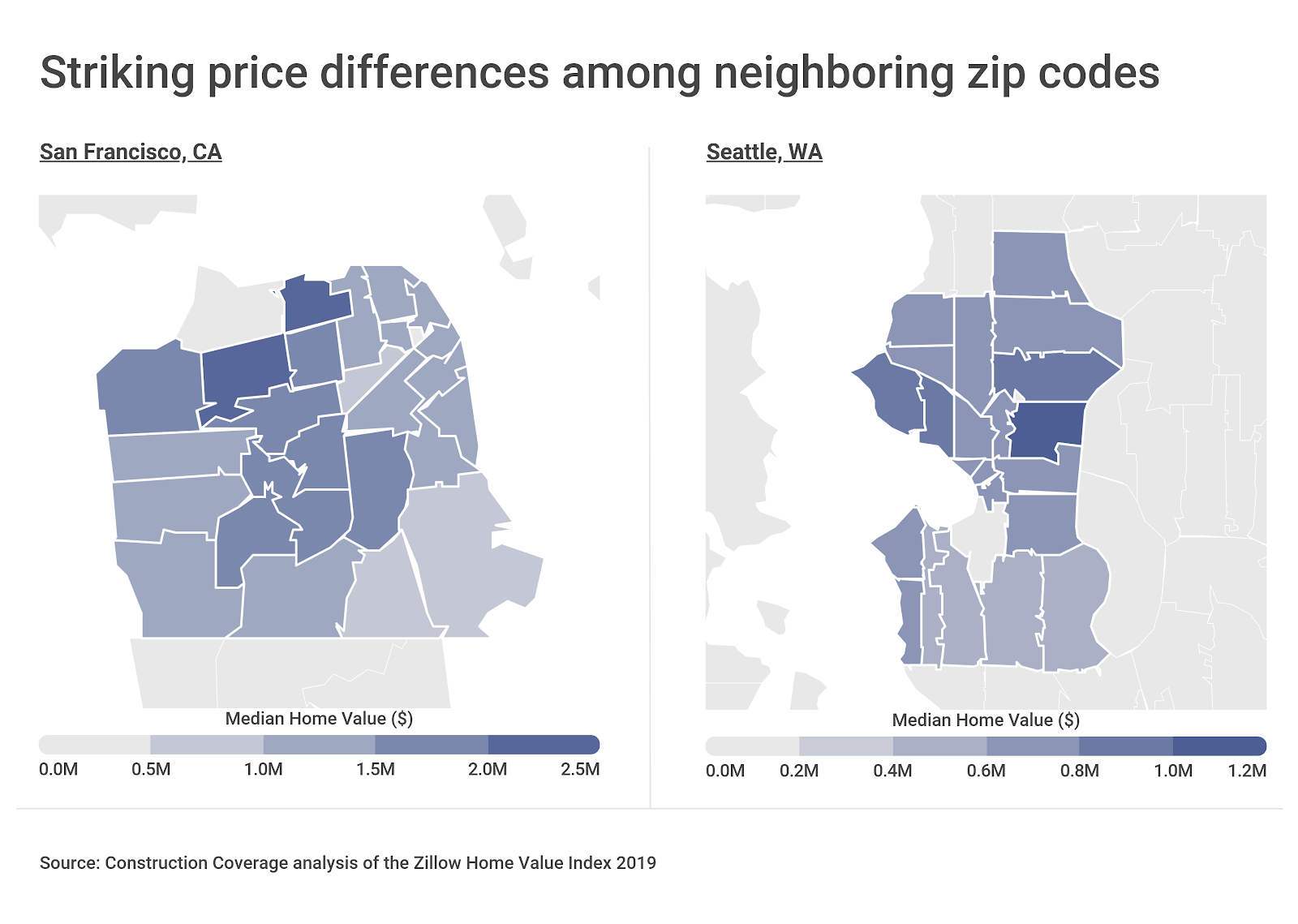
Even in already expensive cities like San Francisco and Seattle, the differences among neighborhoods that are in close proximity to each other is striking. In San Francisco, there is more than a $1.6 million spread in the median home value across its zip codes. Similarly, in Seattle the difference is over $700,000. For some homebuyers, this could mean that expanding the search just a few blocks away could literally save tens (or hundreds) of thousands of dollars.
To gain a better understanding of the hyperlocality of the real estate market, Construction Coverage analyzed data from Zillow and the U.S. Census Bureau to determine the most expensive zip code in every state, as measured by highest median home value. With a more than $6 million spread across these zip codes, the price differences reveal just how much location matters when searching for a home. Here’s what they found: