Skip to main contentSkip to main content
Register for more free articles.
Log in Sign up
Back to homepage
Subscriber Login
Keep reading with a digital access subscription.
Subscribe now
You are the owner of this collection.
Edit Collection
You have permission to edit this collection.
Edit
Arizona Daily Star
82°
  • Sign in
  • Subscribe Now
  • Manage account
  • Logout
    • Manage account
    • e-Newspaper
    • Logout
  • News
    • Sign up for newsletters
    • Local
    • Arizona
    • Business
    • Crime
    • Nation & World
    • Markets & Stocks
    • SaddleBrooke
    • Politics
    • Archives
    • News Tip
  • Arizona Daily Star
    • E-edition
    • E-edition-Tutorial
    • Archives
    • Special Sections
    • Merchandise
    • Circulars
    • Readers' Choice Awards
    • Buyer's Edge
  • Obituaries
    • Share Your Story
    • Recent Obituaries
    • Find an Obituary
  • Opinion
    • Submit a Letter
    • Submit guest opinion
    • Letters to the Editor
    • Opinion & Editorials
    • National Columnists
  • Sports
    • Arizona Wildcats
    • Greg Hansen
    • High Schools
    • Roadrunners
  • Lifestyles
    • Events Calendar
    • Arts & Theatre
    • Food & Cooking
    • Movies & TV
    • Movie Listings
    • Music
    • Comics
    • Games
    • Columns
    • Play
    • Home & Gardening
    • Health
    • Get Healthy
    • Parenting
    • Fashion
    • People
    • Pets
    • Travel
    • Faith
    • Retro Tucson
    • History
    • Travel
    • Outdoors & Rec
    • Community Pages
  • Brand Ave. Studios
  • Join the community
    • News tip
    • Share video
  • Buy & Sell
    • Place an Ad
    • Shop Local
    • Jobs
    • Homes
    • Marketplace
    • I Love A Deal
  • Shopping
  • Customer Service
    • Manage My Account
    • Newsletter Sign-Up
    • Subscribe
    • Contact us
  • Mobile Apps
  • Weather: Live Radar
  • Facebook
  • Twitter
  • Bluesky
  • YouTube
  • Pinterest
  • Instagram
© 2026 Lee Enterprises
Terms of Service | Privacy Policy
Arizona Daily Star
News+
Read Today's E-edition
Arizona Daily Star
News+
  • Log In
  • $1 for 3 months
    Subscribe Now
    • Manage account
    • e-Newspaper
    • Logout
  • E-edition
  • News
  • Obituaries
  • Opinion
  • Wildcats
  • Lifestyles
  • Newsletters
  • Comics & Puzzles
  • Buyer's Edge
  • Jobs
  • 82° Sunny
Share This
  • Facebook
  • Twitter
  • Bluesky
  • WhatsApp
  • SMS
  • Email

Growing native plants in Tucson

From the Your Tucson garden and the changing climate series
  • Dominika Heusinkveld
  • Apr 19, 2023
  • Apr 19, 2023 Updated Oct 5, 2023

Native plants are underutilized in our gardens in the Sonoran Desert. Many nurseries sell plants from Mediterranean climates or from deserts in South Africa and South America. But our native trees, cacti, shrubs and flowers make for great garden plants, too.

As a bonus, native plants also provide food and habitat for animals of varying sizes, and particularly for small mammals, birds and insects which are critical to healthy food chains and ecosystems. With native habitats shrinking, planting native plants in our gardens can help reduce the ecological damage wrought by overdevelopment.

Here are some articles you can read to find out more about your native plant options. The video below shows some examples of beautiful native plants.

No muss, no fuss, and plenty of food: Native perennial food plants for the Tucson desert garden

Fruits on prickly pear

Fruits from the prickly-pear cacti, known as tunas, can be made into everything from jelly and syrup to sorbet.

Doug Kreutz / Arizona Daily Star

The Sonoran desert has supported human settlements for at least 12,000 years. The incredible biodiversity of the area meant that there were plenty of foods available for Indigenous people to harvest. Today, many of these foods are still available to us — it just takes a little step out of our comfort zone.

The plants listed are a small sampling of the native foods we can grow in our area. All of these plants are extremely drought-tolerant, ideally adapted to our desert conditions, and will require little care once established. They are all perennials, which means you only need to plant them once. They’re a great option if you want to grow your own food but don’t want to fuss with vegetable beds and the high maintenance they entail — fertilizing, irrigation, transplanting, shade cloth and all that jazz.

Prickly pear (Opuntia spp.) Prickly pear cacti offer two options for tasty food: pads (nopales) and fruit (tunas). The young, green pads must be harvested while very tender, otherwise they will be tough. They can be grilled, sauteed, fried, pickled, and marinated. If you want to try them out, you can usually find them in grocery stores in the spring. They taste similar to green beans, but have a mucilaginous texture like okra. The fruits can be processed and made into syrups, juice, jellies and sauces.

Even if you plant a thornless variety, like Indian fig (O. ficus-indica), be aware that the pads and fruit still have glochids. You will need some type of tongs for picking the fruit or pads. For fruit and pads, you can get rid of the glochids by burning them off (by holding the fruit or pad with tongs over a gas flame) followed by processing and straining (fruit) or peeling (pads).

Banana yucca (Yucca baccata) Every part of this plant has a useful purpose, but for eating, the flowers and fruits are the main event. The fruits are picked off the plant when just slightly soft; they can be green to yellow in color. They can be baked or roasted like potatoes and have a flavor like a cross between a sweet potato and a banana. They tend to have a lot of seeds in the fruit, but the seeds can be roasted and dried and then ground into flour. Do not confuse this with yuca, also known as the cassava plant, native to South America.

Mesquite (Prosopsis spp.) Native mesquites in the Sonoran desert include velvet (P. velutina), screwbean (P. pubescens), and honey (P. glandulosa) mesquites. These marvelous trees belong to the legume family, and their bean pods provide nutritious food for humans and animals alike. You can harvest the pods fresh off the tree in the summer; taste the raw pods first to make sure you like the flavor. Desert Harvesters says that each tree can have a distinctive flavor. The dried pods can be ground into a gluten-free flour (no need to remove the beans, just grind up the whole thing) which is then used in baking and cooking. The flour is high in fiber and minerals.

Palo verde (Parkinsonia spp.) Two common native species are blue palo verde (P. florida) and foothills palo verde (P. microphylla). Like the mesquite, palo verde are legumes, and the beans are edible; unlike mesquite, you will want to remove the beans from the pods. You can harvest the pods when they’re green, and remove the beans from the inside to eat fresh or cooked. They can be frozen for later. You can also harvest them when the pods are dry, and eat the seeds toasted or grind them into flour. Another option is to sprout the seeds and eat the sprouts (raw or cooked). The flowers are also edible.

Wolfberry (Lycium spp.) Wolfberries are related to the famous goji berries, and have similar amounts of antioxidants and vitamins and the related potential health benefits. Favorite species for human consumption include L. fremontii and L. pallida. They aren’t great for fresh eating, due to their tartness, but make tasty jams, jellies, chutneys and syrups and are wonderful additions to various foods as dried berries.

Hackberry (Celtis spp.) The two species of hackberries native to our desert are canyon hackberry (C. reticulata), which is a tree, and desert hackberry, (C. pallida) which is a large shrub (and thus easier to harvest). This is your go-to plant if you want tasty fresh berries. You can freeze them if you have more than you can eat, or make them into jams. You will be sharing them with your native desert critters, too.

For more information, visit the Desert Harvesters website. For recipes and more native food plant ideas, as well as information on safe harvesting techniques, check out their excellent book "Eat Mesquite and More: A Cookbook for Sonoran Desert Foods and Living." You can also download the Linking Edible Arizona Forests (LEAF) Network’s edible tree guide. If you want to try out some of these foods before committing, take a look at the Sonoran Pantry selections on the Native Seeds SEARCH website.
7 native plants for winter flowers in Tucson

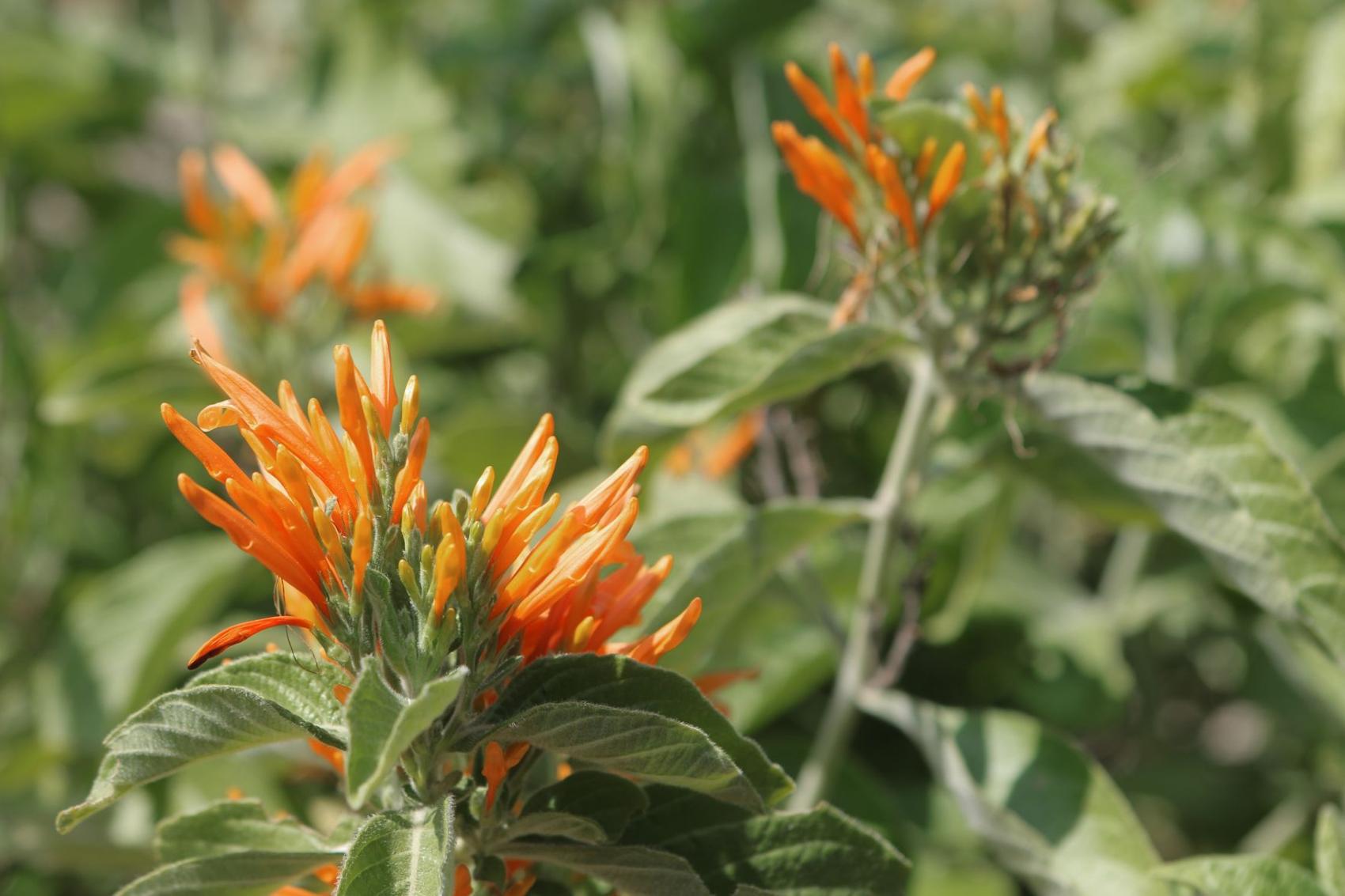
Firecracker plants

Justicia spicigera (Mexican honeysuckle) has larger leaves than other desert-flowering plants.

Ron Medvescek, Arizona Daily Star

Fall is the perfect time to plant winter-blooming flowers and shrubs. Not only does this provide you with year-round color, but it also functions as a food source for pollinators during a time when food is scarce.

The following is a selection of plants you can look for in local nurseries to add to your garden. As always, ask about pesticide use before you buy anything, since plants that have been treated with systemic pesticides will be toxic to your pollinators (and many other animals, too).

In general, native plants may look a bit stressed when you first plant them. Don’t worry, chances are they will recover. Water new plants twice a week to start with, then gradually decrease watering frequency over two months to about once every two to three weeks (assuming no rain).

You can adjust your watering schedule as needed for best blooms — some areas are sunnier and hotter, and will need more watering. Timing of blooms will vary based on soil, location and watering, so while these plants should bloom at the times indicated, you may experience some variation at your site.

Mexican honeysuckle (Justicia spicigera): This plant likes to bloom in mid-winter with tubular orange flowers. Plant in full sun for best flowering. It can die back if temperatures get much lower than 25 F but will regrow once soils warm up.

Gooding’s verbena (Glandularia gooddingii): Another year-round bloomer, this plant has beautiful purple flowers and is a great alternative to purple lantana. Plants usually last one to two years but will reseed readily.

Globemallow (Sphaeralcea ambigua): Globemallows grow to about a 3-foot wide and tall mound. They come in a variety of colors, including deep orange and light purple or pink. They like full sun, and can bloom throughout the year. Bees love these plants.

Lemmon’s marigold (Tagetes lemmonii): This small shrub grows in a mounding form to about 3-4 feet. It’s covered in yellow flowers when blooming. Attracts bees and butterflies; birds like the seeds.

Bush dalea (Dalea pulchra): Also known as indigo bush, this beautiful native has lavender-like flowers late in winter into spring. Great for pollinators, it’s also a nitrogen-fixer. It’s usually under 2 feet tall. The black dalea (Dalea frutescens) is a related plant that also provides winter bloom.

Baja fairy duster (Calliandra californica): This near-native blooms nearly all year round with beautiful feathery bright red blooms. It originates from Baja, California, but is hardy in our climate. It can grow up to 4-5 feet tall. It’s a nitrogen fixer, so don’t fertilize it. A smaller, native version, the pink fairy duster (Calliandra eriophylla), also attracts butterflies and hummingbirds.

Parry’s Penstemon (Penstemon parryi): This perennial has lovely hot pink tubular flowers that hummingbirds love. It prefers afternoon shade. Plant in large clusters for a great show of color. You can also plant it from seeds in the fall, but they likely won’t flower until fully grown by the next year.

Native plants for your Tucson garden

Plant this, not that: Native alternatives to common landscape plants

Gooding's verbena

The Gooding’s verbena loves summer heat and is a larval food plant for some native butterflies. It attracts many different pollinators. It’s a great native alternative to lantana.

A.E. Araiza, Arizona Daily Star

Many of us have favorite plants that we are reluctant to let go of. In addition, some non-native plants are overused by landscapers because they happen to be in stock and convenient. This makes for a lot of yards that look the same. It also means that fewer yards can host native wildlife, something that is becoming more important as natural landscapes get destroyed.

Here are six native alternatives to non-native plants, which will not only make your yard more interesting and lower maintenance, but will also make it friendlier to our local wildlife. Some of these plants may be a little harder to find, but local nurseries like Civano Nursery, Desert Survivors, Native Seed/SEARCH (during plant sales), or Spadefoot Nursery will usually have them or be able to obtain them for you. The more people ask for native plants, the more the horticulture industry will oblige them.

Plant Arizona rosewood (Vauquelinia californica), not oleander (Nerium oleander) for a large flowering evergreen shrub.  As you probably already know, oleander is extremely toxic — every part of the plant contains deadly glycosides which affect the cardiovascular and respiratory systems. Even dried plant components remain toxic and cannot be added to compost or burned (the smoke is toxic). A single leaf can be deadly to a small child, and it takes very low doses for animals such as horses, dogs and cats to be poisoned.

Besides the potential harm to domesticated animals and people, the plant is terrible for pollinators — its showy flowers attract them but the plant offers no nectar to reward them for their hard work. It also has invasive potential, and has been listed by the Bureau of Land Management and the U.S. Forest Service on their “Priority Noxious and Invasive Plant” list.

Arizona rosewood is a great native alternative. It has a leaf shape very similar to oleander, and grows to a similar size. Its beautiful creamy white flowers are great for pollinators. It’s a great screening hedge. It uses less water than oleander, can be trained and pruned, and is completely non-toxic. It grows at a moderate rate, and, once established, the growth can be speeded up with more regular watering.

Plant native velvet mesquite (Prosopis velutina), not Chilean mesquite (Prosopis chilensis) for a tall shade tree. The Chilean mesquite’s main selling point is the lack of thorns, but it has a number of drawbacks. For one thing, it has a shallower root system which makes it more likely to damage nearby structures like walls, driveways and sidewalks. It also makes the tree more likely to blow down in heavy storms. Chilean mesquites also require regular watering, while our native mesquites, once established, will do fine without any extra water. The velvet mesquite is one of the taller native mesquites, growing up to 50 feet tall. It is also an excellent habitat tree for a number of native and visiting birds. Because it loses its leaves for part of the winter, it can be planted in areas where you welcome winter sun but desire summer shade.

Plant Gooding's verbena (Glandularia goodingii), not purple lantana (Lantana montevidensis) for a low-growing groundcover. Gooding's verbena looks very similar to purple lantana, both in form and in color and in flower type. It's native to the Mojave and Sonoran deserts. It is short-lived, but will reseed in your garden. Gooding's verbena is very versatile, doing well in anything from full sun to part shade. It’s hardy to 0 F and is drought-tolerant. Pollinators, especially butterflies, love it, and it is a larval food for some moths and butterflies.

While the lantana provides nectar, it does not provide any larval food for butterflies. In addition, other species of lantana have shown themselves to be easily invasive and very damaging to a number of regions. Lantana camara has become invasive in many climates and is threatening important ecosystems in India (including vital tiger habitat), Australia, Hawaii, California and parts of Texas. I have noted that L. camara is also invasive in my yard.

Plant desert willow (Chilopsis linearis) instead of chaste tree (Vitex agnus-castus) for a flowering deciduous tree. While the chaste tree is lovely, it has been found growing as a weed in the wild, particularly in washes. An equally beautiful native tree is the desert willow. It has tropical-looking pink to dark purple flowers. It is winter deciduous, like the chaste tree, so both create about the same amount of litter. The desert willow is adapted to our region, requires little or no maintenance, no additional watering once established, and is a marvelous tree for different types of birds, butterflies and other pollinators.

Plant bull grass (Muhlenbergia emersleyi) not fountain grass (Penisetum spp.) for a showy, tall grass. Fountain grass is extremely invasive in our desert riparian areas, and puts our saguaro cacti at risk for high-temperature fires (like the ones last year that killed thousands of saguaros). Unfortunately, it is still sold as an ornamental grass by nurseries who claim it is “infertile.” The National Park Service states that even so-called infertile varieties can become cross-pollinated by related species and spread easily in our climate. Bull grass is native to our area and has beautiful, tall showy feathery stems. It also provides larval food for a number of native butterflies. It can tolerate our climate and soils well and is extremely hardy.

Plant Mexican fan palm (Washingtonia robusta) or a California fan palm (Washingtonia filifera) instead of date palms (Phoenix spp.) for a tall palm tree. The Washingtonia palms are native to our area and adapted to our desert climate. They require less water, less trimming, and no special fertilization. They are hardy to 18-20 F. For more information, check out this great handout on palm trees from the University of Arizona’s extension office.

Plant the Arizona cypress (Hesperocyparis arizonica, Cupressus arizonica) instead of Mediterranean conifers such as Italian pine, Italian cypress, and others. Arizona cypress, once common in elevations 3,000-6,000 feet, have plummeted in number due to drought, climate change, and bark beetle infestation. In a managed landscape, the threat of bark beetles can be minimized by regular watering. Keep in mind that all of these factors, including bark beetles, threaten non-native conifers in our area as well, so you should probably consider carefully before planting any conifer. If you definitely want one in your yard, choose the native option, as it will be best adapted to our conditions and will provide habitat for wildlife.

7 ground cover plants for your desert garden

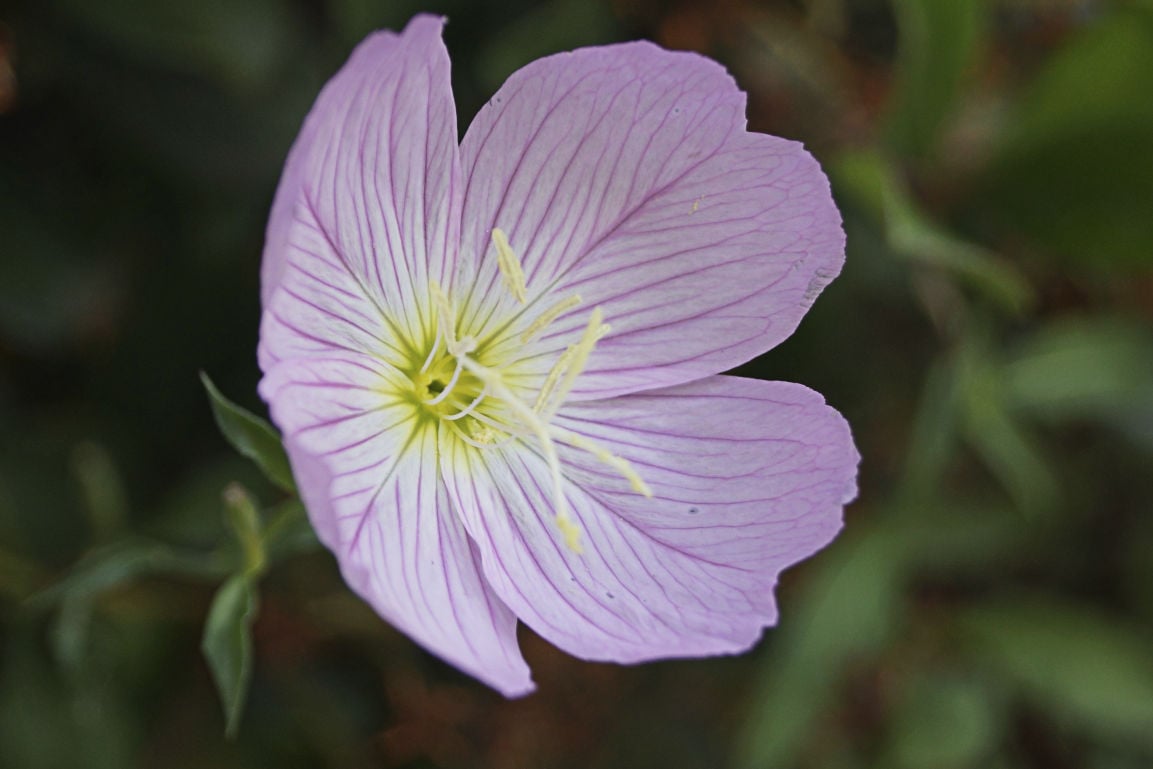
Mexican Evening Primrose

Mexican Evening Primrose

Aricia Martinez

In an ecosystem, ground covers are low plants and small shrubs that grow below the shrub layer. They serve several important functions: they shade the soil, they act as a living mulch, and they prevent erosion.

For the gardener, ground covers are also an opportunity to add in more attractive plants and help your garden deal with drought and heat.

As you may have noticed, in the Sonoran desert low shrubs and small plants are few and far between. Because resources are limited, plants are naturally spaced out. This means that if you want more dense plantings you will need to give your plants additional water. If you use native and drought-adapted plants, you will still be able to conserve water (relatively speaking).

Following is a list of some plants that make good ground covers in our climate. For more information on planning and planting your ground covers, check out this excellent resource, “Groundcovers for Arizona Landscapes,” from the University of Arizona extension office. One ground cover you should avoid at all costs is periwinkle or vinca (Vinca major); it is extremely invasive in our riparian areas and chokes out native plants and wildlife.

Evening primrose (Oenothera spp.): These native plants have large white or pink flowers and bloom beautifully in the evenings. They do well in part shade but will likely have more blooms in full sun. The flowers are very fragrant and attract bees and other insects. Two species easily found in local nurseries are Mexican evening primrose (O. speciosa) and tufted evening primrose (O. ceaspitosa).

Trailing dalea (Dalea greggii): This lovely native of the Chihuahuan desert has purple flowers which are great for various pollinators. It can take part shade to full sun and reflected heat, is hardy to 15 F and grows about a foot tall and up to 6 feet wide.

Small sages (Salvia spp.): These little guys are bright colored, with red or purple tubular flowers that attract hummingbirds and butterflies. They usually do well in full to part sun, and will require more water in sunny areas. They are generally pretty hardy, to between 0-10 F. Two common ones in our area are autumn sage (S. greggii) and germander sage (S. chamaedroides).

Gooding’s verbena (Glandularia gooddingii): Another native and pollinator favorite, this plant has beautiful pink to purple flowers in clusters. It will take full sun and is hardy to 0 F. It does well in poor soil and rocky areas.

Desert zinnia (Zinnia acerosa): This native mini-shrub grows about 6-10 inches tall by a foot wide. It has whitish to creamy yellow flowers. It is well suited to sunny areas, and is hardy to about 25 F.

Damianita (Chrysactinia mexicana): A beautiful and very tough native, damianita will grow in very sunny areas and is also hardy to 0 F. It grows in small mounds of about a foot across and has lots of small bright yellow flowers.

Trailing rosemary (Rosmarinus officinalis 'Prostratus'): This is a Mediterranean plant, but does well in our climate and gives you fragrant greenery that can be used in cooking. It has very small bluish-white flowers which are popular with pollinators. It does well in full sun, and is hardy to 15 F.

10 unusual plants to put in that hot spot where plants go to die

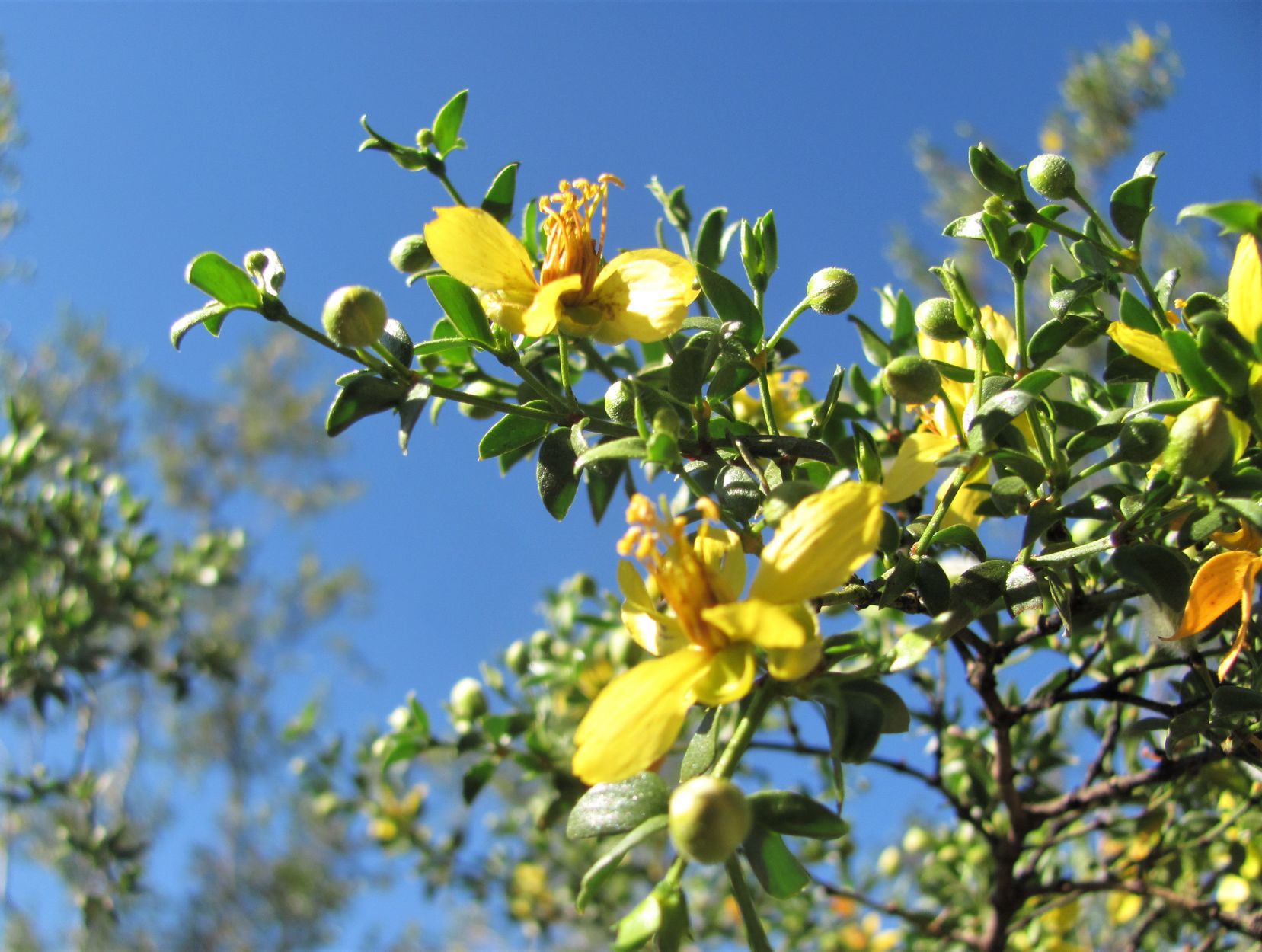
Creosote blooms (copy)

Creosote bushes, some of the oldest plants in the Sonoran Desert, are low maintenance and have a wonderful fragrance after rains.

Doug Kreutz, Arizona Daily Star

Do you have a tough spot in your yard where everything dies from the heat and the sun? Maybe it’s next to your driveway, or up against a south-facing wall. Many plants (even native ones) can’t handle reflected sun and heat, particularly during our pre-monsoon summer. If you have such a spot in your yard, you may want to consider the plants listed below.

These plants are not always commonly seen in nurseries, and thus are ones that you may not have considered for your yard. Most are either natives or near-natives. I have not included native cacti such as saguaro, prickly pear, cholla, barrel, and others, which would also work, depending on the space you have.

Trees

Palo blanco (Acacia williardana): This lovely native tree has long, weeping leaf structures and paper-thin peeling bark. It is very striking. It does not tolerate frost, becoming damaged below 28 F. Plant it in a warm area with some heat from a wall or similar structure. It makes a great centerpiece for a patio, or can be planted in a group to form a grove.

Smoketree (Psorothamnus spinosus, Dalea spinosa): This unusual sculptural small tree is usually bare, showing off its unique gray-green spiky branches. It has spectacular deep violet pea-like blooms in the summer. It only grows to about 20 feet, and is shrublike in its natural shape. It will require some space, due to its spiky nature.

Tenaza (Havardia pallens): This near-native from Texas and Mexico has lush green leaves and interesting light-grey bark. It is evergreen, and can grow quite tall (20-50 feet). It’s also a fast grower, so it’s a good candidate if you need some shade in your patio quickly.

Shrubs

Arizona rosewood (Vauquelinia californica): This tough, large native shrub is a slow grower, but will reward you with creamy white flowers and dark green foliage. It’s a great native, nonpoisonous replacement for oleander. It can grow huge (up to 20 feet tall), though it will take a while to do so. It is extremely heat and drought tolerant and can take temperatures down to 10 F.

Creosote bush (Larrea tridentata): While common in our surrounding desert, this wonderful native shrub is underused in our residential landscapes. It is extremely drought and heat tolerant and will require little or no water when established. It can flower year-round when water is available. Best of all, it gives of a wonderful, spicy scent when it rains. It also has medicinal properties.

Little leaf cordia (Cordia parviflora): This medium-sized shrub is native to Mexico, but does well here. It has pretty white flowers and a natural form.It’s relatively cold-hardy (to 18 F) and does not require pruning. It is also very low litter, making it a good option for hot pool deck areas.

Brittlebush (Encelia farinosa): Another underused common native shrub, the brittlebush is a boon for our native pollinators. In spring and late summer, it has a profusion of large yellow flowers. Its rounded form and grey-green foliage give a lovely background for taller plants. If watered regularly it will grow faster and bloom more.

Small perennials and groundcovers

Damianita (Chrysactinia mexicana): This little spreading low shrub is very tough, with cold tolerance to 0 F and high drought and heat tolerance. It flowers from March to November, and will grow to its full size in about 3 years. It even tolerates caliche soils.

Bush morning glory (Convolvulus cneorum): This Mediterranean native does well in our full sun and reflected heat. It has large, glowing white flowers and attractive deep green foliage. It can be grown on rocky sloped areas.

Trailing dalea (Dalea gregii): This low spreading shrub has lovely purple flowers from May to September and attractive sage-colored small leaves. It is very tolerant of heat and is tolerant of cold down to the mid-teens. It’s native to the Chihuahuan desert, and will look its best with a little supplemental water during the driest part of the year.

Planting a thorn-free garden for kids

Fairy duster in bloom

Fairy duster in brilliant bloom along the Babad Do’ag Trail. — Credit: Doug Kreutz/Arizona Daily Star

Doug Kreutz/Arizona Daily Star

If you’ve got kids, no doubt you’ve already had to pick out cactus spines and glochids from their skin or had to nurse a few scratches. It’s no fun for kids (or parents) to have to deal with thorny plants. Despite what many think, it is possible to have a native plant garden that is prickly-free.

You don’t need to avoid spiny or thorny plants completely. Just keep them out of traffic areas (which is a good idea anyway). Narrow paths, driveways, entrances, and gathering spots should all be free of spiny plants, even if you don’t have small children.

Also, keep in mind that even if you don’t have any cacti in your yard, other people do. This means that tiny, invisible glochids are everywhere. In addition, many plants can be irritating to the skin, particularly if their stems are broken and they exude a liquid of some type. For these reasons, if your kids are helping you in the garden, make sure you all wear gloves and long sleeves. These will also protect you and your kids from the harsh desert sun and biting critters.

Here are some tips on what to plant in your desert garden to keep kids happy.

Native wildflowers: Most of our wildflowers are spine-free, and can be used to plant a gorgeous pollinator garden. You can get a combination of perennial wildflowers and annuals. Sennas, zinnias, marigolds, sages and penstemons are examples of native perennials that will bring lots of color to your yard. Native poppies, sunflowers, Gooding’s verbena and others are great annuals and will reseed themselves each year. You can also plant lots of milkweed to have a monarch butterfly waystation — a cool way for kids to learn about the lifecycle of these amazing butterflies. Check out this helpful guide from Spadefoot Nursery on how to get wildflowers established in your yard and when to sow which species. 

Shrubs: There are tons of options here. Desert lavender, quailbush, hop bush, Texas rangers, woolly butterfly bush, yellow bells, fairy duster, the different daleas, and many others. The red bird of paradise has thorny stems, so you might want to avoid that one, but the yellow and the Mexican bird of paradise are fine.

Small Trees: Desert willow, Mexican bird of paradise, Anacacho orchid tree and featherbush are all thornless small trees that will look beautiful in your yard. For advice on how to plant them correctly, check out my article on how to plant a tree in Tucson. If you’re planting them now, make sure you have irrigation set up.

Tall trees: If you want really tall trees, live oak, velvet ash and arizona sycamore are possibilities, although they will require supplemental water. Avoid planting hybrid mesquites, even though there are thornless varieties. These crossbreed with our native mesquites and endanger our native habitats. Spadefoot nursery has different varieties of near-native oaks if you want to spice up your selection a little. 

Vines: Queen’s wreath, yellow orchid vine and crossvine are good near-native options. Pretty much all of the vines that grow here other than bougainvillea are thornless. Queen’s wreath in particular will attract lots of bees, so keep that in mind if your kids are small and likely to pester the bees enough to get stung.

Grasses: Often overlooked, native grasses provide valuable habitat for small animals and are beautiful to look at due to their movement and soft texture. Some options include bamboo muhly, pink muhly, deer grass, purple threeawn and sideoats grama. Desert Survivors has a large variety of native grasses, although availability depends on the season, so you might want to call first. You can also check out the selection at Spadefoot Nursery. 

In this Series

Your Tucson garden and the changing climate

  • Updated Aug 7, 2024
    Future-proofing your Tucson garden
  • Updated Jun 13, 2024
    Helping your plants get through Tucson's summer heat
  • Updated Jul 2, 2024
    Composting tips for your Tucson garden
  • 14 updates
  • Previous
Dominika Heusinkveld

Dominika Heusinkveld

Related to this collection

Your Tucson garden and the changing climate

Your Tucson garden and the changing climate

As you no doubt noticed, the Southwest is in a prolonged, multi-decade drought, and our water supply is somewhat precarious. Add to that conce…

Arizona Daily Star
  • Facebook
  • Twitter
  • Bluesky
  • YouTube
  • Instagram
  • Arizona Daily Star Store
  • This is Tucson
  • Saddlebag Notes
  • Tucson Festival of Books

Sites & Partners

  • E-edition
  • Classifieds
  • Events calendar
  • Careers @ Lee Enterprises
  • Careers @ Gannett
  • Online Features
  • Sponsored Blogs
  • Get Healthy

Services

  • Advertise with us
  • Register
  • Contact us
  • RSS feeds
  • Newsletters
  • Photo reprints
  • Subscriber services
  • Subscription FAQ
  • Licensing
  • Shopping
© Copyright 2026 Arizona Daily Star, PO Box 26887 Tucson, AZ 85726-6887
Terms of Use | Privacy Policy | Advertising Terms of Use | Do Not Sell My Info | Cookie Preferences
Powered by BLOX Content Management System from bloxdigital.com.
  • Notifications
  • Settings
You don't have any notifications.

Get up-to-the-minute news sent straight to your device.

Topics

News Alerts

Breaking News