Skip to main contentSkip to main content
Register for more free articles.
Log in Sign up
Back to homepage
Subscriber Login
Keep reading with a digital access subscription.
Subscribe now
You have permission to edit this collection.
Edit
Arizona Daily Star
74°
  • Sign in
  • Subscribe Now
  • Manage account
  • Logout
    • Manage account
    • e-Newspaper
    • Logout
  • News
    • Sign up for newsletters
    • Local
    • Arizona
    • Business
    • Crime
    • Nation & World
    • Markets & Stocks
    • SaddleBrooke
    • Politics
    • Archives
    • News Tip
  • Arizona Daily Star
    • E-edition
    • E-edition-Tutorial
    • Archives
    • Special Sections
    • Merchandise
    • Circulars
    • Public Notices
    • Readers' Choice Awards
    • Buyer's Edge
  • Obituaries
    • Share Your Story
    • Recent Obituaries
    • Find an Obituary
  • Opinion
    • Submit a Letter
    • Submit guest opinion
    • Letters to the Editor
    • Opinion & Editorials
    • National Columnists
  • Sports
    • Arizona Wildcats
    • Greg Hansen
    • High Schools
    • Roadrunners
  • Lifestyles
    • Events Calendar
    • Arts & Theatre
    • Food & Cooking
    • Movies & TV
    • Movie Listings
    • Music
    • Comics
    • Games
    • Columns
    • Play
    • Home & Gardening
    • Health
    • Get Healthy
    • Parenting
    • Fashion
    • People
    • Pets
    • Travel
    • Faith
    • Retro Tucson
    • History
    • Travel
    • Outdoors & Rec
    • Community Pages
  • Brand Ave. Studios
  • Join the community
    • News tip
    • Share video
  • Buy & Sell
    • Place an Ad
    • Shop Local
    • Jobs
    • Homes
    • Freedom RV AZ
    • Marketplace
    • I Love A Deal
  • Shopping
  • Customer Service
    • Manage My Account
    • Newsletter Sign-Up
    • Subscribe
    • Contact us
  • Mobile Apps
  • Weather: Live Radar
  • Facebook
  • Twitter
  • Bluesky
  • YouTube
  • Pinterest
  • Instagram
© 2026 Lee Enterprises
Terms of Service | Privacy Policy
Arizona Daily Star
News+
Read Today's E-edition
Arizona Daily Star
News+
  • Log In
  • $1 for 3 months
    Subscribe Now
    • Manage account
    • e-Newspaper
    • Logout
  • E-edition
  • News
  • Obituaries
  • Opinion
  • Wildcats
  • Lifestyles
  • Newsletters
  • Comics & Puzzles
  • Buyer's Edge
  • Jobs
  • Freedom RV AZ
  • 74° Sunny
Share This
  • Facebook
  • Twitter
  • Bluesky
  • WhatsApp
  • SMS
  • Email

Not so mighty oak; yellowing leaves; prune early?

  • Feb 29, 2016
  • Feb 29, 2016

Answers to your gardening questions from an expert.

Bottle tree dropping leaves could be a problem

Q: I recently moved to a house in Phoenix, and am trying to understand the various plants in my yard. I have a couple trees that drop pods, which are very hard and dry when they fall (I haven’t seen them on the tree yet). The tree itself is deciduous, with sturdy branches extending from the trunk and “weeping,” vine-like branches that contain the leaves. Does anyone have any idea what this tree is? If so, are the pods edible?

A: Your trees are called bottle trees (Brachychiton populneus). This is an Australian native that does well here and averages 30 feet tall and wide at maturity. It isn’t supposed to be deciduous, so if it is dropping leaves unexpectedly, there could be a problem. The leaf photo you sent shows a nutrient deficiency, and that could cause the trees to drop leaves.

Make sure you are giving it proper fertilization and irrigation to remedy the leaf symptom. Since it is a relatively large evergreen tree, it is popular for producing shade. However, its size makes it too big for small landscapes and more appropriate for parks. The pods are not edible and might be the downsides of these trees if you use a reel lawn mower, walk around in bare feet, or don’t like picking them up. This species is susceptible to Texas root rot, and should not be planted in areas where this disease is known to occur.

Peter L. Warren is the urban horticulture agent for the Pima County Cooperative Extension and the University of Arizona. Questions may be emailed to tucsongardensage@gmail.com


Yellowing leaves on Texas mountain laurel

Q: Several months ago, I planted a Sophora secundiflora in a well-prepared, well-drained spot. When I purchased the plant, I asked about watering and was told, “Don’t let it dry out.” The shrub had what I considered a poorly developed root system. I used a 2-inch layer of pea-sized gravel for mulch. About a month after it was planted, I noticed yellowing of the leaves. Thinking this might be chlorosis, I looked for causes of this on the Web. The one that kept coming back up was overwatering. So I decreased watering. Now I am thinking it was not chlorosis, and withholding water was a bad idea. The buds at the base of the leaf petioles still seem hydrated, as do the twigs and stems. Any ideas on what I should or should not do to ensure this shrub survives?

A: Texas mountain laurel is a drought-tolerant species native to the Southwest and requires well-drained soil and infrequent watering. During the first year after it is planted, it can be watered once a week. After that, it is best to change your irrigation schedule to once every 14 to 21 days except for winter, when you can stop irrigating until spring each year. Unfortunately, the symptoms of overwatering can look like underwatering, so it’s understandable how you could mistake one for the other. Transplanting stress may also be a factor in the first year and show up the same way. Many plants purchased in containers have greatly reduced root systems, so some of that is expected. The important thing is to provide good care while the tree becomes established. Time will tell if your tree will survive. It may just drop the yellow leaves and releaf.

With warm weather, should we prune early?

Q: I know that I and many other readers of the Star would really appreciate advice from you about what to plan regarding cutting back bushes this year. Normally, we would have been thinking no later than mid-March, but with this goofy hot weather we’re having, normal-year planning seems irrelevant. Help, o Garden Sage!

A: Pruning damaged or dead wood may be done anytime, but as you know, we recommend waiting for warm weather for cold-sensitive plants. Pruning for other reasons such as structure, shape and size is typically done with the idea of minimizing stress to the plants, and that is usually accomplished in the cool part of the year, so your mid-March deadline makes sense. With tougher plants, that deadline can be extended into the warmer months. Some plants, however, are pruned with blooming in mind, and timing depends on when each species produces flower buds. We have a pruning calendar you can access on the Internet that has more details (search for az1499.pdf). Regarding the unusual weather this year, it is easy to see how our unseasonably warm weather lately might give us a false sense of security and/or fear about the days and weeks ahead. Our UA climate science specialist, Mike Crimmins, reminds us that it is still technically winter, and the volatile weather patterns we have been seeing this year are difficult to predict. We are still hoping that El Niño will send some rain our way in March. Crimmins says that would reduce the freeze risk since the moisture helps keep overnight temps up. So with all the uncertainty, the best plan would be to stick with the mid-March plan for pruning and starting tender annuals outdoors.

Peter L. Warren is the urban horticulture agent for the Pima County Cooperative Extension and the University of Arizona. Questions may be emailed to tucsongardensage@gmail.com

Transplanted oak tree not growing

Q: About four to five years ago, I planted an oak tree in my front yard. ... As yet, it has not grown, I don’t think, 1 inch. It does get leaves every year, but that’s it. What can I do to help it grow?

A: Trees transplanted to a new location typically take a couple years to adjust to their new surroundings. A big part of the adjustment is growing new roots, which are usually drastically pruned and damaged in the transplanting process. Since the below-ground root growth is not obvious to us above-ground animals, it appears that nothing is happening for quite a while. The rule of thumb is: The first year they sleep, the second year they creep, and the third year they leap. This growth pattern assumes the tree was planted in a suitable location and the care was appropriate. Care, once established, includes annual fertilization with a complete fertilizer and regular irrigation. For an oak tree that is not a native desert species that means watering to a depth of 24 to 36 inches every seven to 14 days in the summer, every 10 to 14 days in the spring and fall, and every 14 to 21 days in the winter. The emitters for your drip irrigation system should be placed in a ring around the tree at or near the edge of the tree canopy so the water will reach the absorbing roots. You can also put a half-inch of compost on top of the soil around the tree root zone and an inch or two of organic mulch on top of the compost. The slow release of nutrients from these as they decompose, along with their protection of the root zone, can help keep your tree healthy.

Peter L. Warren is the urban horticulture agent for the Pima County Cooperative Extension and the University of Arizona. Questions may be emailed to tucsongardensage@gmail.com
What type of fertilizer to use for fruit trees

Q: I would like to know when and how and what type of fertilizer I should use for plum, apricot, peach and fig trees. My trees are 2 to 3 years old.

A: Once established, fruit trees need to be fertilized each spring to ensure that new healthy growth occurs and fruit will be large and tasty. For trees of 2 to 3 years of age, you can use 3/4 of a pound of a complete fertilizer that contains nitrogen, phosphorus and potassium. Spread the fertilizer evenly under the tree near the edge of the crown of the tree, also known as the drip line where rain falls and your drip irrigation should be installed. Timing your irrigation to coincide with fertilization will help the fertilizer reach the roots and protect the roots.

Peter L. Warren is the urban horticulture agent for the Pima County Cooperative Extension and the University of Arizona. Questions may be emailed to tucsongardensage@gmail.com
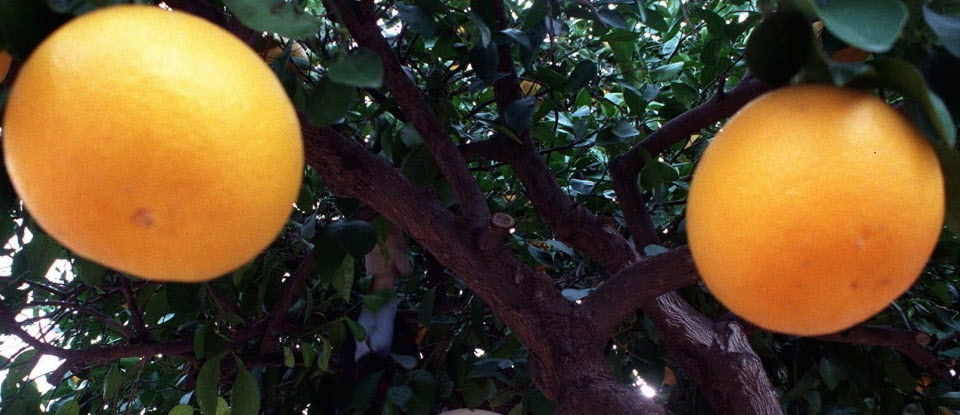
Right time to trim citrus

Garden Sage: Orange tree

You can prune live branches from citrus trees now through April.

Courtesy of Andre Engels

Q: I have a question about trimming our two dwarf grapefruit trees. We just removed all the fruit from them. We would like to trim up the bottoms (they both touch the ground, and when the fruit comes on and grows larger, they are very weighed down). There are some dead limbs in the middle also. Can we trim the citrus trees now before they start to bloom for the next batch of fruit?

A: Yes, you can prune your trees now. Dead limbs and sprouts (aka watersprouts or suckers) can be removed any time. Between February and April is best for pruning live branches. This allows the tree to leaf out and protect any limbs that may be exposed to sun. What is commonly called skirting or limbing up from the bottom should be done carefully to avoid taking off too much. The natural shape of these trees helps protect the bark from too much sun and resulting scalding damage that could occur. Removal of the low-hanging branches should only be to improve access to the soil surface, the irrigation system, or to the interior of the tree. Citrus wood is naturally strong and is not as likely to break under the stress of a large fruit load. Furthermore, citrus trees can produce fruit in all but the most shaded part of the tree, and need not be regularly pruned to allow light into the interior of the canopy. Even when the crop load is heavy, individual fruit size is large, so pruning to reduce the crop load and improve fruit size is not necessary except occasionally with tangerines. Finally, citrus fruit quality is typically just as good or better from a minimally pruned tree as compared with one that is heavily pruned. Lower canopy fruit often is of the best quality because it is not often affected by sunburn, scarring by windblown soil particles and by the movement of adjacent branches and twigs, or by bird predation.

Peter L. Warren is the urban horticulture agent for the Pima County Cooperative Extension and the University of Arizona. Questions may be emailed to tucsongardensage@gmail.com
Pear tree stinker

Q: There is a tree in bloom outside my office and I’m wondering what it is. It has white/green blossoms and looks like a pear tree but doesn’t smell like a fruit tree. It sort of smells like sewage. The smell is similar to a carob tree, but more so. I tried to find it online by googling smelly blooming trees and I think it might be a callery pear.

A: You are correct. The tree in question is a callery pear (Pyrus calleryana). These are ornamental pear trees bred to produce flowers and not edible fruit. They became very popular in the last quarter of the 20th century and can be found in many cities and towns as a street tree. The variety most seen is ‘Bradford’ although there are at least a couple dozen others. The flowers have an unfortunate odor as you noticed and are best observed at a distance. Another unfortunate feature of Bradford pears is their branch structure. The tendency for branches to grow from the trunk at sharp angles predisposes these trees to break in high winds. The one thing this tree has going for it is resistance to fireblight, a disease that affects other pear trees. The newer varieties have been bred for better features but fireblight continues to be a concern.

Peter L. Warren is the urban horticulture agent for the Pima County Cooperative Extension and the University of Arizona. Questions may be emailed to tucsongardensage@gmail.com

Avoiding compost deaths

Q: How can I keep the mice out of my compost? One of the most terrible days of my life was last fall when I used a sharp-bladed shovel to dig out last year’s compost pile. Suddenly and unexpectedly I heard the shrill and amazingly loud screaming of mice. As I quickly removed my shovel I saw with horror that it had sliced a mouse nest in half, decapitating, killing, and wounding three of the blind, hairless baby mice. The two unharmed baby mice I put back in the compost where they were soon rescued by the parents. But I never want to have that experience again.

After the catastrophe, I got rid of my old compost bin that used to sit on the ground and replaced it with a plastic bin raised up 2 feet from the ground on metal legs. I used metal mesh to seal the base of the bin in case mice could actually climb up the slippery metal legs, and this I thought would keep the mice away from my delicious kitchen scraps. Now, two months later I again see small gray mice inside the compost bin. It is winter and they want to be warm and not hungry, but I dread what will happen in the early summer when I want to use that compost in my garden. Any ideas of how to avoid another mouse tragedy?

A: It is difficult to keep rodents out of anything. If you weren’t so concerned about the mice, I would recommend snap traps baited with peanut butter near the base of your compost bin. Since you are concerned, the best bet is excluding them from the compost bin. Exclusion could work with your current compost bin if you can use mesh with small enough holes that they cannot squeeze through. Hardware cloth with quarter-inch holes should be enough to keep out adult mice. Using a bin with a lid can also aid in exclusion. Another idea is to make this compost habitat less appealing by turning your compost once a week. Turning compost with a pitchfork can result in the same deathly experience if not done frequently enough. There are also the sort of bins that can be turned with a crank if that is more your speed. If composted material is decomposing ideally, it reaches a fairly high temperature in the middle and no mouse is going to set up housekeeping in that heat. In the end, you might have to just be more careful digging around the top of your compost pile to avoid more mouse mayhem.

Peter L. Warren is the urban horticulture agent for the Pima County Cooperative Extension and the University of Arizona. Questions may be emailed to tucsongardensage@gmail.com
Tough to know when you have mites

Q: I have attached a photo of my coral aloe (Aloe striata). After much searching, I believe the hideous, growth seen in the photo is aloe cancer/gall/mite? I have dug up, bagged and put the plant in the trash. Apparently, I can never have another aloe again except Blue Elf? Is this true, and is this wretched little mite a menace to my neighbor’s aloes? Is there anything else I should do? It makes me almost miss the killing freezes in Colorado!

A: I believe you are correct about the diagnosis. That appears to be damage caused by the eriophyid mite (Aceria aloinis). Because these mites are microscopic, it is difficult to know they are there until the damage is seen. There is some anecdotal evidence that the “Blue Elf” variety of aloe is unaffected but there is no science to back this up that I have seen. On the other hand, other known host plants include the aloe species arborescens, dichotoma, nobilis, and spinossima as well as Haworthia species. In general, I don’t see these mites as a widespread problem so I wouldn’t put all my aloe investments in one species. They are sporadic pests on aloes and based on the number of questions I get, many people don’t have a problem with them. These mites can spread by crawling and by wind. Because they can’t fly it isn’t a quickly spreading problem and your neighbor’s plants could very well be safe from infestation. What you did by bagging the infested plant and disposing of it is the best thing to do and probably enough to stop it from spreading.

Peter L. Warren is the urban horticulture agent for the Pima County Cooperative Extension and the University of Arizona. Questions may be emailed to

tucsongardensage@gmail.com
Cat claw vines can weigh down a fence

Q: We are planting cat claw vines along a fence line for privacy. We chose cat claw for its low water use, fast growing and lower temperature tolerance. We live in Catalina at 3,140 feet. Our soil is gravelly sandy silt for 18 inches with a silty clay layer below. We have built 4-foot wide by 8-foot tall trellises to cover the 50-foot stretch along a chain link fence on the south side of our house. The trellises are rebar and four-by-four-inch welded mesh panels. I just read that cat claw may not be suitable for planting on wire. Why? I had not read that before. If it’s about strength shouldn’t what we have built support them? How far apart should we plant the vines, the nursery told us five feet. Would four feet be too close? Would one foot from the fence be appropriate?

A: The reason wire fences are not recommended is because the foliage of cat claw vine (Macfadyena unguis-cati) tends to concentrate near the top of the plant making it top heavy. The average wire fence would likely not support such a heavy plant. Rebar and welded mesh panels are probably tougher than the wire fence you read about. You might need to add horizontal stretches of wire to prevent the vine from pulling away once it fully covers the trellis. This is a fairly aggressive vine and should ultimately fill in the gaps when planted five feet apart. Growth should start slow and speed up once it becomes established. One foot from the fence seems right.

Peter L. Warren is the urban horticulture agent for the Pima County Cooperative Extension and the University of Arizona. Questions may be emailed to

tucsongardensage@gmail.com

What is normal lifespan for grapefruit tree?

Q: I live in Tucson (caliche paradise). I have a ruby red grapefruit tree in my patio. It is 20 years old, 17 feet tall. Over the years I have trimmed it into a nice shade tree that gives us 150 square feet of shade. It has four separate trunks off the main trunk. The main trunk is 38 inches in circumference. I just harvested it and counted over 500 large grapefruit. I have not fed it in the last 10 years. I deep water every 10 days in the summer and once a month in winter. What is the normal life span? What am I doing wrong?

A: Grapefruit trees do not need a lot of fertilizer. A mature tree of the size you described probably has roots extending past the patio and receiving fertilizer from your turfgrass, garden, etc. Or perhaps the site is on a former agriculture field and there is still some residual fertilizer left in the soil. Or perhaps there is fertilizer in the irrigation water. Sooner or later, the tree will show nutrient deficiencies. Maybe it already is, but your yield is not yet affected. Grapefruit trees can live to be 50 years under ideal conditions but insects, diseases, and user errors often take their toll and shorten life spans. Your irrigation schedule seems to be on track so other than finding a way to add some fertilizer to the outer root zone, I think you are doing a fine job taking care of your tree.

Peter L. Warren is the urban horticulture agent for the Pima County Cooperative Extension and the University of Arizona. Questions may be emailed to

tucsongardensage@gmail.com

Take precautions with fertilizer if you have chickens, citrus trees

Q: We have chickens running free in a backyard of citrus trees, and to protect the flock I’ve avoided using granular citrus fertilizer to feed those trees. I’ve used water-soluble general plant food followed with a top dress of compost or mulch, but want to meet the particular nutritional needs of the citrus. How would you suggest fertilizing the citrus?

A: The way you are fertilizing is fine. The important information to know is how much nitrogen, phosphorus, and potassium (potash) is in your water-soluble plant food. The percent of these three nutrients contained in a particular product are usually listed in that order, separated by dashes, on the front of the fertilizer container. Once you know the percent nitrogen, you can cross-reference that with the size the tree in our handy chart to determine how much fertilizer to put down. The difficult thing to know about compost and mulch is the amount of nitrogen available to the plant. The good companies put an analysis of the compost on the bag but still you have to wait for the compost to be watered into the root zone and that can take varying amounts of time dependent on your soil type and how much water is used. The nice thing about compost and mulch is that independent of the nutrients they provide, there is protection of the root zone that can moderate temperature extremes and increase the water holding capacity of the root zone. By the way, depending on how many chickens you have, you may be getting significant additional fertilizer from them.

Peter L. Warren is the urban horticulture agent for the Pima County Cooperative Extension and the University of Arizona. Questions may be emailed to

tucsongardensage@gmail.com

Aggressive bees looking for a drink

Q: I was finally sitting outside last week with my soda and had up to five aggressive bees wanting my beverage. Yikes! They even have a memory cause the next day without my beverage, they were still checking me out! I also noticed them in my recycle bin. I don’t remember this happening before. Is anything different going on?

A: The main thing going on this year is a slightly colder winter. Honeybees overwinter in their hives to keep warm and feed on the honey they stored during the warmer months. On nice days, they are as likely to get outside as you are and they will also partake in a sweet beverage. Since not as many flowering plants are available in the winter, you may see honeybees in recycle bins where food and drink residues may be found in addition to having some competition for your beverage.

As you exclaim, “careful man, there’s a beverage here,” be reminded that we all have to eat and a sugary beverage is a food source for a bee.

Peter L. Warren is the urban horticulture agent for the Pima County Cooperative Extension and the University of Arizona. Questions may be emailed to

tucsongardensage@gmail.com

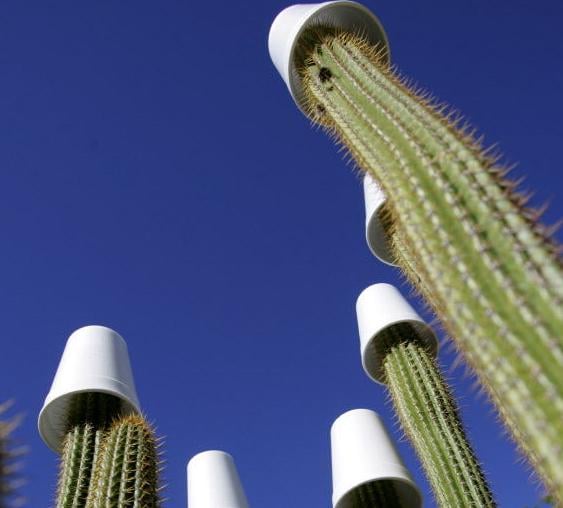
Protecting your cactus

Protecting cactus in cold weather

The photo which was taken at the Pima County Cooperative Extension shows a Trichocereus Hybrid with Styrofoam cups on top to help with the cold days and nights. Photo by James S. Wood / Arizona Daily Star 

James S. Wood / Arizona Daily Star 2006

Q: I live in the Tucson Foothills area where I planted three San Pedro cactus near an outdoor wash area six years ago. During the cold months, the temperature can easily drop below freezing at least seven days each winter. Since it is getting increasingly hard to cover and uncover each 5-foot-tall San Pedro cactus, can I leave the green exterior frost protection drop cloths purchased from the Home Depot  over each San Pedro cactus from late December through mid-February without damaging these plants? What time frame do you recommend for covering and protecting outdoor San Pedro cactus from frost damage?

A: You can certainly leave the frost cloth on if it allows light to get through. The general time frame for frost danger in our area is between mid-November and late February. Of course this is just a guideline. During the early and late ends of this range the likelihood of frost is closer to 10 percent and it is greatest between mid-December and mid-January. I recommend covering sensitive plants when local weather authorities predict danger of frost. As I am sure you know, some winters are fairly mild and you can get away with not covering your plants and then we have colder years like 2011 and this year to keep us on our toes.

Sap-sucking bugs harm fruit

Q: I live in Sierra Vista and have a small peach tree, about 3 to 4 years old. Last spring it bloomed for the first time and set about a dozen peaches. When the fruit was a bit smaller than golf ball size, I noticed each one had a small hole and was oozing a clear sap-like substance. I assume an insect of some kind that had bored into the fruit caused it. Each peach shriveled up and fell off the tree. With what should I treat my tree and when to prevent this again?

A: Peaches and other fruits such as pomegranates are potential food for a few different insect species. Based on your description, I suspect one of the larger plant bugs we refer to as leaf-footed bugs. They have piercing-sucking mouthparts that penetrate the fruit to suck out the sap. Their saliva has a toxin in it that injures the fruit. The resulting wound is also an entry point for disease and that is possibly what caused the fruit to shrivel and fall from the tree. Treating for this insect is challenging because as adults they are fast moving and can fly. The insecticides used are contact poisons so you need to know where they are and hit them directly with the treatment. There are organic and conventional insecticides available for this pest.

The best time to treat for them is when they are young. The young are yellow-orange in color and usually hang out in a group. Since you have a small tree this will be easier than if you had an orchard of trees to monitor.

The other thing you can do is look for eggs on your tree and remove them before they hatch. This hatch occurs in a week or less after they are laid so monitoring once a week is critical to removing them before they emerge. The eggs are laid in a row along a stem or the midrib of a leaf and are golden-brown in color. Since these insects also feed on citrus and pomegranates, it is good to monitor those plants as well if you have them nearby.

Peter L. Warren is the urban horticulture agent for the Pima County Cooperative Extension and the University of Arizona. Questions may be emailed to

tucsongardensage@gmail.com

Mixing trees, sewer pipes — watch out

Q: We have some old mesquite trees and palo verde trees near our walking lanes. There are old clay unsealed sewer pipes nearby at a depth of about 4 feet. Are we at risk for sewer problems? How far should any tree be from a lane with old sewers? As for new trees, we were thinking of planting more of the above but not near the walk lanes. Desert willows were also suggested, but they may need more water. Do you have any other suggestions?

A: Your sewer pipes are at risk with tree roots nearby. Typically, mature tree roots extend 2 to 3 times the width of the crown so it is wise to give any potential obstructions such as sewer pipes, sidewalks and houses enough room. Since the trees are old and so are the pipes, you might wait and see if a problem presents. It is certainly a good idea to have the pipes inspected or monitor the water use rate if you suspect a leak. There are quite a few choices for low water use trees. The decision usually begins by measuring the space you have available both below ground and above ground. The mature size of a tree should be accounted for in any plan to plant. Desert willows are a low water use tree and a good one if your space isn’t large enough for a mesquite tree. Other species to consider include white thorn acacia, ironwood and Texas ebony. Your plan should also include irrigation even though you are planning to go with a low water use tree. Even native desert species need some water.

Peter L. Warren is the urban horticulture agent for the Pima County Cooperative Extension and the University of Arizona. Questions may be emailed to

tucsongardensage@gmail.com

Trimming agaves - you probably don't need to

Q: Should I be worried that my landscaper severely trimmed the bottoms of these two old agaves? He said the reason was to keep snakes from hiding there and make it easier for them to clean around. He removed one without notifying me, saying it was too close to the other and was “dying.” I see some evidence of west-side gray leaves; does this mean my agaves are dying or is it sun damage?

A: It is troubling that your landscaper pruned these plants and so severely. Typically, agaves don’t need pruning unless they have diseased or damaged leaves. Some people prune off the pointy leaf ends if they extend into walkways but even this is damaging to the plant. If snakes are a regular problem in your area, maybe there is a good reason for protecting the landscapers.

It’s not clear what sort of cleanup is required from the photos or what you asked him to do in that regard. Removing one because it was too close makes sense although it probably should have been discussed before removing it.

Finally, agaves don’t do great in direct western sun so you might be seeing sunburn on the leaves facing that direction.

Peter L. Warren is the urban horticulture agent for the Pima County Cooperative Extension and the University of Arizona. Questions may be emailed to

tucsongardensage@gmail.com

What to do about thick-rind grapefruit

Grapefruit

Grapefruits with thick skins may have been given too much nitrogen fertilizer. Photo by Ben Kirkby / The Arizona Daily Star

Ben Kirkby/Arizona Daily Star 1998

Q: My red grapefruits this year have thick rinds. Is there a way to avoid this in next year’s crop?

A: Thick rinds on citrus may indicate too much nitrogen and a lack of potassium or potash in your fertilizer. Make sure you are using a complete fertilizer that contains some of each of nitrogen, phosphorus and potassium. Since it is the time of year to put down your first fertilizer dose, you can hopefully get this problem fixed before your next crop.

Peter L. Warren is the urban horticulture agent for the Pima County Cooperative Extension and the University of Arizona. Questions may be emailed to

tucsongardensage@gmail.com

Dealing with Thompson Yuccas

Q: I’m in SaddleBrooke and have a few Thompson Yuccas. The recent winds caused one yucca to break off half way up, in the middle of its trunk. The breaking point looks to have had an injury at that point in its past. These plants are on the expensive end and are listed as disease- and pest-free, so I’m surprised to find myself with these issues.

A: Thompson yuccas (Yucca thompsoniana) are very tough plants and they do not have any known pests. They are tolerant of extreme heat and cold hardy to minus 10 degrees. The photo you sent shows what appears to be a rotten core and that made it susceptible to the winds that snapped it off. It’s likely that the past injury you noted was the beginning of the problem and may have allowed for disease to enter and progress.

I also noticed the leaves, which are typically darker green; seem to be suffering from lack of moisture and possibly salt damage. While these plants are drought tolerant, providing irrigation every two weeks in the summer and every three weeks in the spring and fall to a depth of 12 to 18 inches is recommended and makes them look better. Regular irrigation will also help wash the salt through the root zone.

Peter L. Warren is the urban horticulture agent for the Pima County Cooperative Extension and the University of Arizona. Questions may be emailed to

tucsongardensage@gmail.com

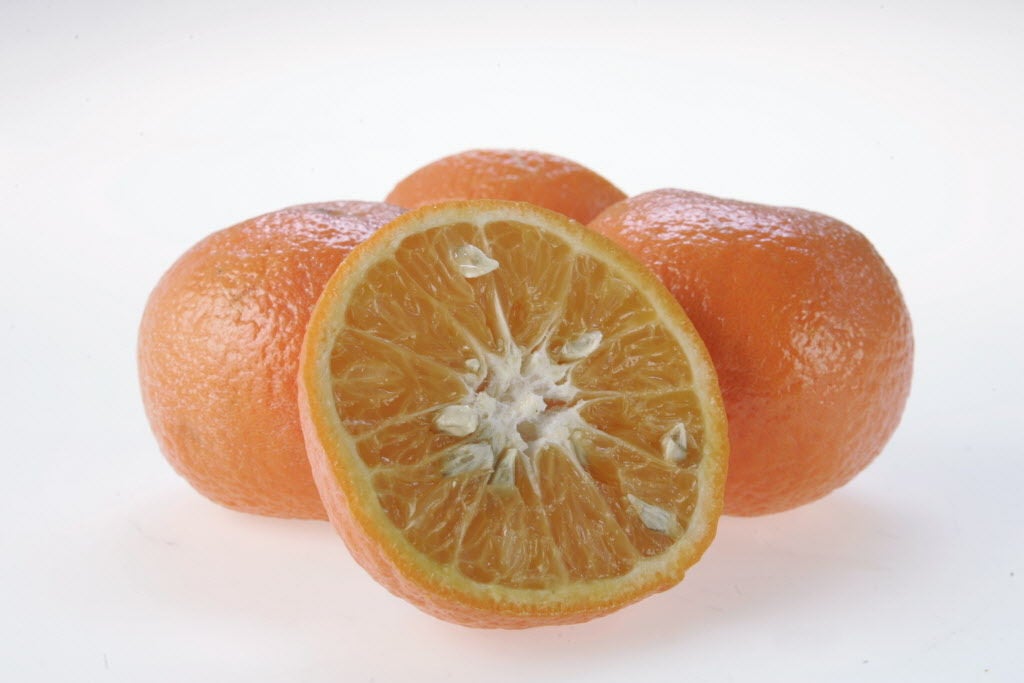
When to pick tangelos, tangerines

Garden Sage - tangerine

When should you pick your tangerines? Experiment to see how the taste changes over time and pick just enough to eat each week.

Courtesy of Brent Ramerth

Q: How long can tangelos be left on the tree and still be good? After picking, how long should the tangelos last? Should tangelos be stored on the counter or in the refrigerator?

A: The recommendation is to pick citrus when it is ripe, since they don’t ripen any more once off the tree. Since we all have different tastes, it is best for you to pick one or two and try them. If they taste as good as you hoped, then pick them all. You can also experiment to see how the taste changes over time and just pick enough to eat each week. If you have a lot, storing them in the refrigerator is recommended since they will spoil more quickly if left at room temperature.

Tangelos and tangerines have some of the shorter harvest times of all the citrus fruit, and each variety is ripe for about two months. Depending on which variety you are growing, harvest is recommended between mid-November and mid-February.

Peter L. Warren is the urban horticulture agent for the Pima County Cooperative Extension and the University of Arizona. Questions may be emailed to

tucsongardensage@gmail.com

Citrus tree leaves dropping after freeze - what can I do?

Garden Sage: Citrus

Have more citrus than you can use? Take it to Super Citrus Saturdays.

Courtesy of H. Zell

Question: What should I expect of my citrus trees after the recent cold weather. They’re losing every leaf. Is there anything special I should do to give them a fighting chance to survive?

Answer: The important thing to do now is wait and see how they respond once the warm weather begins. Since the foliage has been reduced, you should cut back your watering by half. Without leaves, trees will take up less water and you do not want excess water around the roots. Also hold off on any fertilization until March 15. Once they start growing again you will see where the dead parts are, and then you can prune them off. It is best to wait to prune until after the last frost date (March 15) in case we have another freeze. The dead parts will protect underlying live parts. In the event of another freeze, it would be good to cover your citrus with frost cloth or a reasonable facsimile thereof if they are small enough to do so.

Peter L. Warren is the urban horticulture agent for the Pima County Cooperative Extension and the University of Arizona. Questions may be emailed to tucsongardensage@gmail.com

What fruit trees best grow here?

Question: Is there a list of fruit trees that grow in Tucson? Specifically, I am interested in peaches, apricots, cherries (sweet and sour) and apples? If they need a pollinator, which varieties do best together?

Answer: The main limiting factor to successfully growing fruit trees in Tucson is the lack of cold weather. Fruit trees require a certain amount of chilling hours to produce fruit, and we do not consistently get enough cold weather to meet the requirements for many fruit trees you may have seen or heard about in other parts of the country. Fortunately, there is a good selection of fruit trees that do fine here, and as long as you stick with these, you can have many years of harvesting your homegrown fruit. From your list of interests, you can find varieties of peaches, apricots and apples that grow well here. We don’t have cherries, but you can substitute figs, pears, persimmons, plums, quince, grapes, kiwi, blackberries, strawberries and pomegranates. Here is a link to our publication on fruits and nuts that includes much of what you need to know about these varieties. You will notice that the ones that do well in the low desert of Tucson are marked. There is a link to the pdf version that has a nice chart showing when they are harvested and if they require cross-pollination. Go to ag.arizona.edu/pubs/garden/az1269

Peter L. Warren is the urban horticulture agent for the Pima County Cooperative Extension and the University of Arizona. Questions may be emailed to tucsongardensage@gmail.com

How to reverse rotten luck growing tomatillos

Question: Thanks to our climate, I’m doing a postmortem for last season’s garden and planning seed starting for next season pretty much simultaneously. About tomatillos: I’ve had rotten luck. I’ve had single plants, mixed varieties, started seeds, bought plants from reputable local nurseries and have tried to appropriately manage watering and soil nitrogen. Tomatoes have done just fine. Tomatillos? I’ve had rotten luck.

Answer: Now is an excellent time to revisit and evaluate your gardening practices in 2015. In theory, growing tomatillos should be easy although they are as sensitive to the heat as tomatoes and there are a few insects to watch for so you don’t lose your crop. Shade cloth can help protect them once the spring heat kicks in and checking for insects once a week should be sufficient to manage pests before they get out of control. Here are some basic guidelines for growing tomatillos. Please let me know if you are already doing all these things.

Tomatillos should be planted in full sun with well-drained soil. Jan. 15 to Feb. 15 is the ideal planting time, although you can wait until March if you are using transplants. Drip irrigation is ideal and should provide an inch of water per week. Multiple plants are required for pollination.

Trying to save half-frozen bougainvilleas

Question: Thanks to our climate, I’m doing a postmortem for last season’s garden and planning seed starting for next season pretty much simultaneously. About tomatillos: I’ve had rotten luck. I’ve had single plants, mixed varieties, started seeds, bought plants from reputable local nurseries and have tried to appropriately manage watering and soil nitrogen. Tomatoes have done just fine. Tomatillos? I’ve had rotten luck.

Answer: Now is an excellent time to revisit and evaluate your gardening practices in 2015. In theory, growing tomatillos should be easy although they are as sensitive to the heat as tomatoes and there are a few insects to watch for so you don’t lose your crop. Shade cloth can help protect them once the spring heat kicks in and checking for insects once a week should be sufficient to manage pests before they get out of control. Here are some basic guidelines for growing tomatillos. Please let me know if you are already doing all these things.

Tomatillos should be planted in full sun with well-drained soil. Jan. 15 to Feb. 15 is the ideal planting time, although you can wait until March if you are using transplants. Drip irrigation is ideal and should provide an inch of water per week. Multiple plants are required for pollination.

Question: Is it too late for my bougainvilleas? I was out of town during the recent night freezes in Tucson, and I now have two bougainvilleas that are half frozen (they look great where the branches were protected by my awning). What do I do with the dead half? Pinch off the flowers and leaves? Prune it back? Just leave it alone?

Answer: Since you still have live parts it’s not too late to cover them in case we get more frosts. They will likely come back from this damage. The dead parts will protect the living parts somewhat in case we have more frosty temperatures so leave the dead parts on the plant until the spring when the danger of frost has passed.

Peter L. Warren is the urban horticulture agent for the Pima County Cooperative Extension and the University of Arizona. Questions may be emailed to tucsongardensage@gmail.com

Problems getting rosebuds to open

Question: I live here in Tucson at Villa Catalina condos at Sixth Street and Country Club Road. We have a small rose garden with some beautiful flowers. My problem is some of our larger flowers don’t fully open. I get a very large ball, very tight, but will not open. Then there are flowers next to them, and they open nicely. Any ideas?

Answer: There are a couple possible answers to this problem. If the rose buds that don’t open appear unhealthy, possibly with a browning on the edges, there are known diseases and insects that can affect them. If the buds appear to be healthy, a more likely problem is environmental stress. According to local rose expert and master gardener volunteer, Lauren Kettenbach, this time of year that is a common problem. Before Thanksgiving there was some pretty cold weather, and then it got warm again. So it could be weather-related, and it’s also very late in the season to have any blooms at all. I would not worry unless there is a problem with the spring bloom.

Peter L. Warren is the urban horticulture agent for the Pima County Cooperative Extension and the University of Arizona. Questions may be emailed to tucsongardensage@gmail.com

Can tomato seedling be saved?

Question: We live in the Tanque Verde area. In the spring I planted a tomato seedling in very good soil in the planter next to the house on the patio. It grew quite tall and produced tomatoes. I missed the weather forecast for our first frost, and the leaves wilted. Since then I’ve hung frost cloth from the eaves every evening, which traps the heat from the house. Last week when it was 26 on the patio it was 40 inside the frost cloth. Since it was wilted I cut the plant down, intending to uproot it, but noticed new green shoots coming from the bottom. Any hope for the plant, or should I start over in the spring?

Answer: As you saw, even if the temperatures are below freezing for a short time, some plants will die back above the soil and still be alive below ground. It is best to cover frost-sensitive plants when possible. In many cases, protecting plants with frost cloth can make the difference between survival and starting over. Your tomato could be fine since you are seeing new growth now. Time will tell for your plant and for many others. Patience is a virtue when determining how much damage your plants suffered. Some plants will not show new life until mid-spring.

Peter L. Warren is the urban horticulture agent for the Pima County Cooperative Extension and the University of Arizona. Questions may be emailed to tucsongardensage@gmail.com

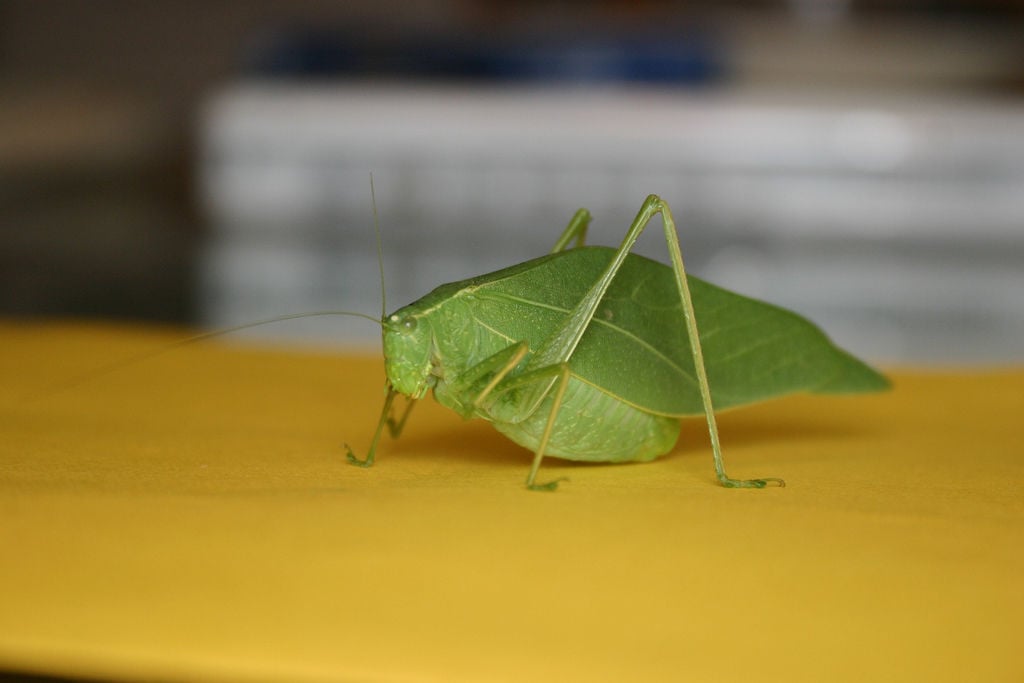
Eggs belong to an insect that is more a curiosity than pest

Q: Any idea whose eggs these are? They were on an orange tree in Tucson.

A: Katydid laid those eggs. Technically, katydids are grasshoppers of the long-horned variety (Family Tettigoniidae) due to their long antennae. They get their name from the noise they make in the evenings that seems to say ka-ty-did if you use your imagination. Because they often resemble the leaves of trees they inhabit, it is difficult to see them unless they move about. Their eggs resemble small seeds and are laid in a nice row on foliage or stems mostly. Like other grasshoppers, katydids feed on foliage although no appreciable damage is done so they are more of a curiosity than a pest.

Katydids are more of a curiosity than a pest

Katydids often resemble the leaves of trees they inhabit, so it is difficult to see them unless they move about. Like other grasshoppers, katydids feed on foliage but don’t do much damage, so they are more of a curiosity than a pest.

Courtesy of Victor Billings.

Peter L. Warren is the urban horticulture agent for the Pima County Cooperative Extension and the University of Arizona. Questions may be emailed to tucsongardensage@gmail.com

Info on peach blight

Q: I am writing to see if you have information about peach tree blight. I have two peach trees in Green Valley and both have been affected by a blight that causes the peaches to shrink in size and become inedible. Is there a treatment for this disease? Both trees have produced fruit for many years and are now advanced in age; one tree is 37 years old and the other over 30 years. They both still produce green leaves and fruit.

A: Improper pruning, not enough thinning of fruit, or poor soil fertility, can cause too small fruit. The other factor in your situation is the age of the trees. Peach trees don’t live forever and the average lifespan is around 15 years. I love old trees but if your goal is fruit production, the best thing is to replace your old trees with a couple of younger ones. Peaches typically start producing fruit by age 3 or 4 so if you can’t wait for fresh peaches, select a tree of that age to replace your older trees.

Peter L. Warren is the urban horticulture agent for the Pima County Cooperative Extension and the University of Arizona. Questions may be emailed to tucsongardensage@gmail.com.

Will Cyprus trees survive without watering?

Q: Our small HOA is trying to convert to desert or semi-desert landscaping. It’s a fight, as some owners want the same flowers they had back east or in California, but we keep trying. We have a number of old Cyprus trees on the property and have been told that it is OK to disconnect the drip irrigation systems currently watering them because they have a well-established root system that will ensure they get enough water. Do you agree it is OK to not water them any longer? We don’t want them anymore, but can’t afford to cut them down. I’d also like to learn what desert plants you recommend that don’t need regular watering, provide color, and, if it’s not asking too much, what months they bloom?

A: Keep up the good fight for native desert or desert-adapted plants. We can always go visit our old plant friends from other places but it is hard to sustain them here. Cypress trees need water just like everyone else. If you cut off the supply, those trees will eventually die of complications from drought. The problem with just letting them die is they might fall and hurt somebody or something. If they are out in the middle of nowhere that might be okay but I am guessing they are not. There are desert plants that don’t need much water but everything needs some water.

The extreme examples get by with seasonal rainfall but even those plants suffer when we have a drought. There are quite a few choices of shrubs you can use that provide color and don’t require much water. A good online source of information for this is amwua.org/plants and of course you can always chat up your local Cooperative Extension agent, plant nurseries and Master Gardener volunteers about specific plants.

Peter L. Warren is the urban horticulture agent for the Pima County Cooperative Extension and the University of Arizona. Questions may be emailed to tucsongardensage@gmail.com

Controlling stink bugs

Q: We have been having a bad stink bug infestation (hemipterans not pinacate beetles) the past couple of years in the garden. This past year they were out early and often and basically ruined the entire tomato crop. We are at 5,000 feet and don’t plant until May. First fruits are almost never harvested before Aug. 15. It is a cold zone with 46 nights at or below freezing so far this winter (no that is not a misprint). Do you have any suggestions to deal with these pests?

A: There are a couple things you can do. First, it is helpful to scout once a week when your crop comes up to see when the stink bugs begin to lay eggs. They are laid in a mass of 10-25 on the underside of leaves and look like tiny barrels. You can reduce the population significantly by removing the eggs before they hatch. Once they hatch and are actively feeding you can spray them and the sooner, the better while they are still young. If your crop is organic there is a product called PyGanic that works pretty well on hemipterans. If you use conventional pesticides, there are more choices but they may have some restrictions on when you apply them relative to when you harvest.

Peter L. Warren is the urban horticulture agent for the Pima County Cooperative Extension and the University of Arizona. Questions may be emailed to tucsongardensage@gmail.com

Dealing with weeds in the winter grass

Q: I have a backyard of Bermuda that is overseeded with annual rye grass. Last year was my first in this house and I moved in during January to find numerous winter weeds sprouting in the over-seeded Bermuda grass. With the recent rains I have the same weeds returning. Will a general-purpose weed and feed fertilizer/herbicide take care of the weeds or should I use another product? When should I apply? Last year I removed the weeds by pulling them out by hand.

A: Without knowing which weeds you are seeing I would guess you are concerned about winter annual broadleaf weeds such as London rocket. These are called winter annuals because they germinate in the fall, survive the winter, and sprout in the spring. Our winter in Tucson being mild and short, these weeds don’t waste time waiting for the vernal equinox and are up and flowering now. The answer to your question is likely yes; any post-emergent broadleaf weed herbicide will take these weeds down. A cautionary note: your trees and shrubs are in the same plant category as your broadleaf weeds so be careful about applying these herbicides on these desired plants and their root zones. In most situations, spot treating your weeds is better than carpeting your lawn with herbicide both for saving your desirable plants and for saving a few bucks on the product.

It is best to treat your weeds now before they go to seed. Be careful to avoid windy days so the herbicide doesn’t drift onto nearby plants and follow any other precautions listed on the label. Pulling weeds is also an option and can be therapeutic, if you have the time and the energy. Finally, keeping your lawn healthy is a good defense against weeds.

Peter L. Warren is the urban horticulture agent for the Pima County Cooperative Extension and the University of Arizona. Questions may be emailed to tucsongardensage@gmail.com

When to prune back hibiscus and bougainvillea

Q: What is the best month in the Tucson/Marana area to trim back hibiscus and bougainvillea plants? Also, I need to cut back and trim greasewood so what is the best month for that shrub?

A: Hibiscus species should be pruned in late winter to promote growth in the spring because it blooms from buds produced in the same season. Bougainvillea species can be pruned once the danger of frost has past, usually mid-March. During the growing season, vigorous shoots can be pruned as needed. Greasewood, aka creosote (Larrea tridentata), doesn’t require any pruning except to control the size and that can be done any time.

Peter L. Warren is the urban horticulture agent for the Pima County Cooperative Extension and the University of Arizona. Questions may be emailed to tucsongardensage@gmail.com

Will 'suckers' grow and produce fruit?

Tangerines

A Fairchild Tangerine. Photo by Ron Medvescek/Arizona Daily Star/2006

Ron Medvescek/Arizona Daily Star 2006

Q: My Tangerine tree is quite large and has “suckers” growing up from ground. Can I dig these up with a root ball? Will these produce fruit if grown? Folks and common sense tells me that coming from below “Graft” area that they will grow trees but, NOT bear fruit. Also, I live a mile south of the old Desert Treasures orange groves. So what happened to the “Thermal Belt” that used to be in this area? Because now we freeze like the rest of town!

A: Any suckers growing from below the graft union on the tree will be from the rootstock. You are correct in saying that the growth from below the graft will grow and it may even produce fruit but it will not be edible. The rootstock is chosen based on its hardiness rather than its fruit quality.

Since these suckers take energy to produce, it is best to prune them off whenever you see them so the tree can put its energy into something you might find tasty. I checked with our University of Arizona Climate Scientist, Mike Crimmins, and there is no thermal belt we are aware of having been in your area. This has been a colder year than normal with 10 days having freezing events so far. The average is 16 for the whole season and there is plenty of winter left. So it’s possible you are noticing it more this year.

Peter L. Warren is the urban horticulture agent for the Pima County Cooperative Extension and the University of Arizona. Questions may be emailed to tucsongardensage@gmail.com

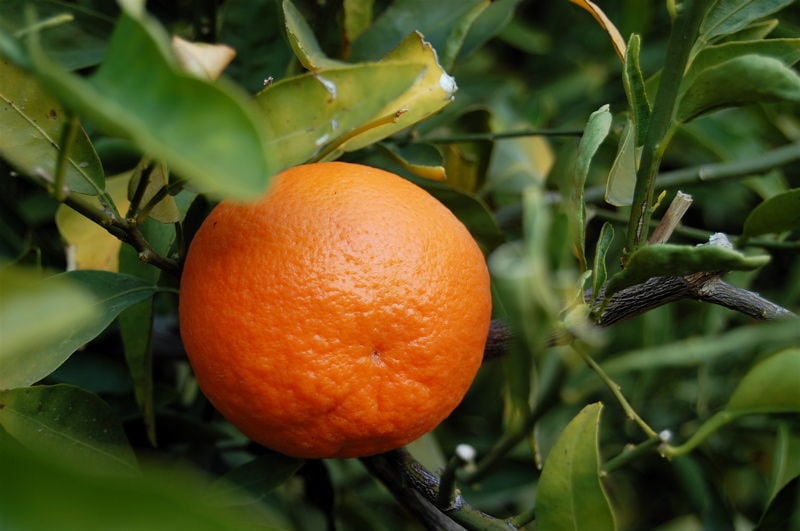
Six years is a long time without an orange

Oranges

Freshly picked oranges.

Ben Kirkby/Arizona Daily Star 1998

Q: I have a 6-year-old miniature orange tree. It has lush green foliage but to date I have yet to see the first orange. It is on an irrigation system and is fertilized by our landscaper. Do these trees take this long to bear fruit or could there be something else going on?

A: Usually a tree is producing fruit before it is 6 years old. If your tree is producing flowers but no fruit, it could be a pollination problem. If the tree isn’t producing flowers, there a few potential problems. The most common are a fertilization or water problem, so it would be good to know what kind of fertilizer and irrigation schedule your landscaper is using.

Typically, citrus fertilizer requirements are based on the type and size of the tree. For example, a small orange tree, 2 to 3 feet tall, requires 0.25 to 0.50 pounds of nitrogen per year. This amount is applied in thirds, each third being applied in January/February, March/April, and May/June. If you don’t want to do the fertilizer math, we have a handy chart to help based on the percentage of nitrogen in your bag of fertilizer. Search for az1671-2015.pdf on the Internet.

For irrigation, make sure you are providing drip emitters in a circle around the root zone at the drip line of the tree. The amount of water delivered should allow the water to reach 36 inches deep in the soil. You can check the depth with a soil probe. Timing for the irrigation is once every seven to 10 days in the summer, 10 to 14 days in the spring/fall, and every 14 to 21 days in the winter.

Peter L. Warren is the urban horticulture agent for the Pima County Cooperative Extension and the University of Arizona. Questions may be emailed to tucsongardensage@gmail.com

Planting to control insect damage

Question: I am trying to find out what kind of plants I can plant in my garden that will help ward off insects.

Answer: Despite a large amount of misinformation published on this topic, there are no plants that can be used to repel insects effectively. There are, however, plants that can be planted together to reap other benefits. Flowering plants can be used to attract beneficial insects that help manage pests. Mostly these helpful plants are flowering plants that supply nectar and pollen to the predators and parasites that prey on pest insects. The nice thing is most any flowering plants can be effective in this way so you can choose ones that you like and that do well in your area. One plant feature that works well is flowers that face up and form a cup or sorts that can hold rainwater since water can be scarce. Another idea is planting varieties that are more attractive to pests and can be used as trap crops to lure the pests away from a desirable crop. The grower then has the option to spray the trap crop with the pests on it or simply let them eat it. Also, some plants act as nurse plants for more sensitive species by shading them. We often see saguaro cacti growing this way naturally in the desert.

Peter L. Warren is the urban horticulture agent for the Pima County Cooperative Extension and the University of Arizona. Questions may be emailed to tucsongardensage@gmail.com

Caring for poinsettias year round

Poinsettias thrive on bright natural daylight: at least six hours daily is recommended. Placement near a sunny window is ideal, but avoid locations where hot afternoon sun may shine directly on, and fade colorful bracts.

To prolong the bright red of the bracts, temperatures ideally should not exceed 70 degrees during the day, or fall below 65 degrees at night. Avoid placing poinsettias near drafts, fluctuating air currents, excess heat and dry air from appliances, fireplaces or ventilating ducts. Poinsettias are sensitive to cold temperatures and outside placement during the winter months is not recommended when temperatures are below 55 degrees Leaf drop will occur if poinsettias are exposed to temperatures below 50 degrees

Poinsettias do best with moist soil so water when the soil surface feels dry to the touch. Like other container plants, the best indication of a thorough watering is water begins to seep through the drain holes at the bottom of the pot. Don't leave them sitting in water or they may suffer from root rot. It is not necessary to fertilize your poinsettias during the holiday season, however, beyond the holidays you should apply a balanced, all-purpose household plant fertilizer to promote new growth.

Poinsettias can be grown year round for lush green foliage.

March or April: When the bracts age and turn to a muddy green, cut the stems back to about eight inches in height. After you cut the plant back, it will probably look rather stark, with bare branches and bluntly cut woody stems.

By the end of May, you should see new growth. Keep the plants near a sunny window.

Around July 4: Cut branches back again about half their length to encourage bushy plants. You may place your poinsettias outdoors in indirect sun when night temperatures are warmer. Continue to water the plants regularly during the growing period. Fertilize every two to three weeks throughout the spring, summer and fall months with a complete, indoor plant fertilizer.

The poinsettia is a plant that requires a long period of darkness and is termed a "short day" (long night) plant. Short-day plants form flowers only when day length is less than about 12 hours. Many spring and fall flowering plants are short day plants, including chrysanthemums, poinsettias and Christmas cactus. If these are exposed to more than 12 hours of light per day, bloom formation does not occur.

November or December: Poinsettias will naturally bloom depending upon the flowering response time of the particular cultivar. This can be tricky to do outside of a controlled greenhouse environment, because any stray artificial light could delay or halt the flowering of the plants.

To make this work, the plants must be kept in complete darkness for 14 continuous hours each night beginning Oct. 1. This can be done by moving the plants to a dark room, or placing a large box over them. During this period, the plants require six to eight hours of bright sunlight and night temperatures between 60 and 70 degrees. This regimen must continue for about eight to 10 weeks for the plants to develop colorful bracts for the holiday season.

If this seems like too much effort, you can always support the horticulture industry by purchasing another poinsettia.

Peter L. Warren is the urban horticulture agent for the Pima County Cooperative Extension and the University of Arizona. Questions may be emailed to tucsongardensage@gmail.com

Giant agave bug

Question: I found this insect on my gas grill today. Is this the kissing bug I have been reading about?

Answer: What you are seeing is the giant agave bug (Acanthocephala thomasi). Kissing bugs (Triatoma species) are smaller and don’t have the bright orange feet and orange tips on the antennae. Also, the kissing bugs feed primarily on mammals, such as pack rats and humans, whereas the bug you found feeds on plants. Recently, there was a flurry of news reports in other parts of the country on the kissing bugs and the associated Chagas disease they can transmit. These stories then spread through social media, gathering some misinformation as they went. So I understand why you are concerned. Despite the media hype, this was not actually new information.

Kissing bugs are more common in the Southwest. However, the risk of Chagas disease transmission in Arizona is very low, according to University of Arizona Cooperative Extension Specialist Dawn Gouge. UA researchers found a high rate of infection (about 40 percent) of kissing bugs in southern Arizona by the protozoan Trypanosoma cruzi that causes the Chagas disease infection. However, the kissing bugs in Arizona differ from those in areas where Chagas disease is a health problem and are not as effective in transmitting the disease to humans. The reason has to do with the timing of blood feeding and defecating. Our local species fly then poop as opposed to poop then fly. The protozoa are passed in feces, not during blood feeding, so by waiting to defecate until after they fly from where they eat, their behavior greatly reduces chances for transmission.

Peter L. Warren is the urban horticulture agent for Pima County Cooperative Extension and the University of Arizona. Questions may be emailed to tucsongardensage@gmail.com

Desert Broom's beauty in the eyes of beholder

Question: I have a desert broom plant in my yard that has turned into a tree. I really like it but it is now blooming and is sending cottony stuff all over the yard. My neighbor said it is a weed and a nuisance and I should cut it down. Is there any way I can keep it from blooming?

Answer: Desert broom (Baccharis sarothroides) is a native plant and very common in the Southwest. It is often considered a weed because of its ability to colonize open spaces quickly. My predecessor at the University of Arizona Cooperative Extension, George Brookbank, was a proponent of this plant as a good native shrub for landscape use, so not everyone sees this plant as a weed. There is no way to prevent it from blooming, but you could prune off the flowers before they go to seed and start taking flight. That way you could still enjoy the plant to some extent and hopefully appease your neighbor.

Peter L. Warren is the urban horticulture agent for Pima County Cooperative Extension and the University of Arizona. Questions may be emailed to tucsongardensage@gmail.com

May be okay to spray buffelgrass

Question: Our HOA has declared war on buffelgrass: a good thing. But rather than remove it, they are having intense commercial spraying of glyphosate using concentrations higher than the typical herbicide available to homeowners. I cannot find information (from scientific sources such as .edu) about the immediate or long-term toxicity of the spray on cactus or our desert trees. Do you know of any research showing what it may do?

Answer: According to our University of Arizona Cooperative Extension Weed Specialist, Bill McCloskey, direct spraying of cacti with glyphosate repeatedly will probably kill most cactus species but they can withstand incidental spray contact (i.e., the whole plant is not sprayed) intermittently and can survive a single direct spraying. Generally, we recommend spraying grass-specific herbicides for grass control (e.g., fluaziflop, sethoxydim or clethodim on bermuda grass) to avoid injuring the cacti. Unfortunately, this class of herbicides doesn’t work well on buffelgrass, but maybe repeated spraying would eventually do it. Manual removal of buffelgrass would be effective in this case but understandably hard around cacti.

Peter L. Warren is the urban horticulture agent for Pima County Cooperative Extension and the University of Arizona. Questions may be emailed to tucsongardensage@gmail.com

Long needles help identify type of tree

Q: Can you tell me if this tree is a cedar of Lebanon?

A: It looks like a deodar cedar (Cedrus deodara) from a distance. Cedar of Lebanon (Cedrus libani) branches usually form level layers in a mature tree. The deodar doesn’t usually look as layered and the branches and the leader tend to droop at the ends.

To be sure, you can count the needles in a cluster and you can measure them. The cedar of Lebanon has clusters of 15 to 45 whereas the deodar cedar has clusters of 20 to 30 so there is some overlap but if you can find some with greater than 30 needles that is a good clue.

Of the three true cedar trees in the genus Cedrus, the longest needles belong to the deodar cedar. If most needles exceed 2ƒ centimeters is likely a deodar cedar.

Peter L. Warren is the urban horticulture agent for Pima County Cooperative Extension and the University of Arizona. Questions may be emailed to tucsongardensage@gmail.com

Primrose does well in West with a little water

Q: Today I spoke with two lovely ladies at the Oro Valley Farmers market. I asked about this flower that grows wild in my yard. When I first saw it I thought it was a form of dandelion, but it has a gorgeous iridescent white bloom that opens at dusk. The hawk moths love it. The seedpods are plentiful right now, all dried up at the base of the plant. I’m including some pictures to help identify it. One woman showed me a photo of a birdcage primrose, however I’m thinking it is just an evening primrose.

A: There are a few species of primrose so it’s easy to get confused. I checked with our friends at the University of Arizona Herbarium and they think it is Oenothera caespitosa, commonly known as tufted evening primrose and fragrant evening primrose. This low-growing perennial is found throughout the West in sunny, dry, infertile, rocky, well-drained soils. It requires little water, which makes it a good choice for xeriscape gardens. Moderate watering will keep it blooming all summer.

Peter L. Warren is the urban horticulture agent for Pima County Cooperative Extension and the University of Arizona. Questions may be emailed to tucsongardensage@gmail.com

Invasive, noxious fountaingrass

Q: Do you have any info that would help our HOA organize its response to its fountain grass infestation? Also, are there any fountain grass variations that local nurseries sell that are sterile and won’t spread?

A: Fountaingrass (Pennisetum setaceum) is a fast growing, attractive, perennial, fire-adapted bunch grass and in our ideal environment can reach several feet tall and wide. It does just fine in dry environments although some rain helps. Unfortunately, it invades desert areas and readily outcompetes native species.

There are some varieties that are purported to be sterile but research shows they’re not 100 percent sterile and that’s a deal breaker considering it is invasive. Since it is a noxious weed in dry areas like ours I recommend removing it when possible, spraying with herbicides when necessary, and not planting it again. As is sometimes the case with invasive plants, humans are guilty of planting this species before we knew it was invasive. When it was first introduced, it was thought to be just another pretty grass for medians and landscapes.

Peter L. Warren is the urban horticulture agent for Pima County Cooperative Extension and the University of Arizona. Questions may be emailed to tucsongardensage@gmail.com

Winter visitors return to dead landscaping, wonder about timing

Q: We are snowbirds here November through March. Much of our landscape was redone the last week of March and we departed April 3. Now we have just returned and I see our 5-gallon emus (red valentine shrubs) have bit the dust and a couple red barrels are dying. These plants should have been sturdy enough for their western exposure site. Our new sprinkler system is one year old and works fine. Would you guess that these plants should not have been planted so late in the spring before we left right away? Perhaps they needed two to three daily waterings on hot summer days but no one was here? Our gardener/landscaper didn’t indicate that there should be any problems and he knew we are here just part time and he set the sprinklers.

We both chose the plants together and he knew we were leaving immediately after he installed the landscape. He wasn’t able to schedule our work sooner and I think maybe the job shouldn’t have been done after late January to allow the plants to settle in before the heat hit.

A: The last week of March and into April we were seeing temperatures in the high 80s and low 90s. If your irrigation was working properly and delivering the right amount of water then you might have been OK, although western sun exposure is a tough place to get started when it gets hot.

Drip irrigation is the preferred method rather than a sprinkler and the recommended amount for the summer season is once every 14 days to a depth of 12 to 18 inches for the barrel cacti and 24 to 36 inches for the emu shrubs. The barrels (Ferocactus species) are certainly desert plants and the emu (Eremophila maculata) is from Australia and a good desert adapted plant so their chance of survival in your area is good.

You are asking the right questions and if you are planning to try again, I recommend planting earlier, maybe now, so they can get established before the summer and make sure to adjust your irrigation to fit the needs of the plants.

Peter L. Warren is the urban horticulture agent for the Pima County Cooperative Extension and the University of Arizona. Questions may be emailed to tucsongardensage@gmail.com

When to prune roses

Q: When is the correct time to prune roses in the Tucson area? And do you prune them like we do in the Midwest, i.e. cut back near the ground?

Answer: The pruning of roses is recommended twice per year in Tucson. The first pruning can be done in late January to a height of 15 inches or so. This time remove all dead wood, crossing branches, and small leaves. Seal the fresh pruning cuts with Elmer’s glue to prevent insects from invading the newly cut branches, fertilize, and then water.

In mid-September a lighter pruning is recommended. This time remove one third of the plant along with any diseased or dead wood but leave any leaflets. Seal fresh cuts with Elmer’s Glue, fertilize, and water.

The Pima County Master Gardeners teach classes on roses and other things at some of the public libraries in case you’re interested. Check your library schedules or call the Extension Office for more information,626-5161.

Peter L. Warren is the urban horticulture agent for the Pima County Cooperative Extension and the University of Arizona. Questions may be emailed to tucsongardensage@gmail.com

Controlling leafminer

Q: I am writing to inquire about recommendations for a nontoxic approach to controlling citrus leafminer on a young lime tree I am growing in a large pot. I do not recall having this pest in the past and have had limes, grapefruit and lemons for many years. This new lime tree I planted about a year ago is now infested on all the new leaves and I am wondering if there might be a nontoxic method to reduce or eliminate them. I have looked up information on the web but the recommendations seem to be relatively toxic and I would prefer to avoid those if possible.

A: Because your lime tree is young, insecticides are generally recommended to prevent these insects from slowing the growth of the tree. That said, you could let your tree tough it out since there are natural enemies that prey on the citrus leafminer and the leaves they damage are still effective food producers for the tree.

Other things you can do to manage the situation include avoiding pruning except for water sprouts and branches broken by wind, et cetera, and only fertilizing outside of the normal flights of the adults. The adults are most often seen in the summer and fall months. Both pruning and fertilizing promote the new growth that is most attractive to these insects.

Peter L. Warren is the urban horticulture agent for the Pima County Cooperative Extension and the University of Arizona. Questions may be emailed to tucsongardensage@gmail.com

Anthropod that moves at 10 mph

Q: I’ve never seen a bug like this one found in my garage. It had eyes and would move quickly when I put my finger in front of it.

A: This is a solpugid. It is a member of the arachnid class in the phylum of arthropods and related to spiders and scorpions but distinct enough to warrant their own order. Their habitat is the desert and they are predators of other arthropods and have a reputation for being fast; their top speed is reportedly around 10mph. They have no venom, are harmless to humans, and do a good bit of pest management for us while we sleep. All things considered, they are good to have around.

Peter L. Warren is the urban horticulture agent for the Pima County Cooperative Extension and the University of Arizona. Questions may be emailed to tucsongardensage@gmail.com

City won't let palm tree go natural

Question: I have a palm tree the city wants me to trim. I don’t want to spend the money to have someone else do it. I don’t want to climb a 20-foot ladder with a chainsaw. And I like the way this tree looks. Can you help me by saying something about how this form is considered by many people to be attractive and is a common landscape practice?

Answer: It is a common practice to leave a full skirt on palm trees and you can find others in the city just like yours. Most palm trees with a full skirt are a bit taller and as long as the bottom 10 feet of the tree is bare and the dead fronds are away from anything that might catch fire, everything is deemed okay. Some people find the natural form of these trees with a full skirt to be attractive and others like to see them well pruned. Unfortunately for you, the city requires the latter when the skirt hangs low like yours does. The hazards of palm skirts and the risks are mostly fire and having it fall on someone and crush them.

Peter L. Warren is the urban horticulture agent for the Pima County Cooperative Extension and the University of Arizona. Questions may be emailed to tucsongardensage@gmail.com

Road widening hurts Aleppo pine

Question: I found a patch of Aleppo pine that is dying on the west side of La Canada. The road was recently widened (3 years ago) and this whole group fronts close to the road. Could the die-off be due to road widening?

Answer: Yes, the trees could be suffering from the road widening. Construction would likely damage the roots on that side of the tree and typically damage such as this shows up above ground a few years later. It would be difficult to protect such large trees in a road-widening because their roots likely extend two to three times the width of the crown. In a different construction situation the property owner could ask for a protective zone to be fenced off around the tree to help more of the root system to survive. Typically when we see trees that have been attacked by pine engraver beetles, the color of the needles ranges from straw to reddish colors.

Peter L. Warren is the urban horticulture agent for the Pima County Cooperative Extension and the University of Arizona. Questions may be emailed to plwarren@cals.arizona.edu

Mesquite twig girdler

Question: I occasionally run across a dead branch on some of my mesquite trees. The dead branch sticks out like a sore thumb, and on closer inspection, there is a ring around the branch etched into the bark. The foliage in front of the ring is dead, but behind everything appears fine. First, do you know what causes this? Second, should I be concerned. And third, should I be preventing this and how? Right now, all I do is prune the branch out.

Answer: The ring etched in the bark is the work of the mesquite twig girdler (Oncideres rhodosticta). This beetle is in the family Cerambycidae that are commonly referred to as long-horned beetles due to their long antennae. The adults aren’t commonly seen on the trees although they are attracted to lights at night if you want to find them. The female chews a ring in the stem and deposits her eggs further out on the stem. The eggs hatch in the stem and the larvae feed on the dying wood in the stem caused by the girdle cutting off nutrients to the end of the branch. The larvae will overwinter in the wood and adults will emerge in the spring. Research has shown the damage has no affect on the health of mesquite trees and it is simply nature’s way of pruning. So the good news is you don’t have to do anything to prevent these beetles from chewing on your trees.

Peter L. Warren is the urban horticulture agent for Pima County Cooperative Extension and the University of Arizona. Questions may be emailed to tucsongardensage@gmail.com

Finding a tree for good fall color

Q: I’m looking for a good tree that gives fall color. I’m trying to decide between a Texas red oak and a red push pistache. Is one a better tree for our desert climate? Which grows quicker and has better form? It would be planted about 20 feet from our home in Marana. Could you give me info about each tree so I could make a good choice?

A: The Texas red oak (Quercus buckleyi), aka the Texas hill country red oak, is a deciduous shade tree that may reach 30 feet in height and 60 feet in width under ideal circumstances. It has excellent fall color and makes a good specimen for our area. The downside might be the leaf litter and the acorns, depending on how you feel about either cleaning up after them or not. The red push pistache (Pistacia chinensis) is a hybrid deciduous tree that also has excellent fall color, maybe even better than the oak. Its growth is moderate and at maturity it typically reaches 40 feet tall by 35 feet wide. The leaflets are smaller and should be less troublesome than the oak leaves. The pistache should just fit your space if you plant it 20 feet away. The Texas red oak is typically a larger tree and would not fit your space as well.

Peter L. Warren is the urban horticulture agent for the Pima County Cooperative Extension and the University of Arizona. Email him at csongardensage@gmail.com

What are grubs found in firewood?

Q: I have been buying firewood (mesquite and eucalyptus) to burn some and use some for woodcrafts like lathe-turned vases. It is common for the wood to be full of large round and oblong holes that are caused by some type of insect. Recently I was able to extract two almost whole grubs of some sort from a piece of mesquite. One “grub” is essentially round, and the other has a large head, sort of triangular, and a smaller round body. Can you tell me what these are and if they pose any danger to my house? Is there anything I can do to get rid of them?

Also, I cut some fresh mesquite last spring and left it in my garage to dry over the summer. It became riddled with small circular holes, apparently caused by some different insect. In this case the damage is pretty much limited to the early, or sap wood. Can you also give me some information about the insect that causes this other type of damage?

A: The two grubs are representatives of common wood-boring beetles from the Buprestidae and Cerambycidae families of insects. The round one is a larva of a long-horned beetle and the one with the large head is a larva of a metallic wood-boring beetle. Both of these insects are associated with dying or dead trees. Their galleries can be seen on sapwood, as you described, and the adult beetles are commonly seen emerging from firewood. They are not known to infest or reinfest dry wood so your home is safe. The small circular holes are from bark beetles, another species commonly associated with dying and dead trees in our area. In the forest, these three are examples of insects helping decompose trees into soil. Without them and the associated fungi and bacteria, we would be up to our eyeballs in timber and our soils would have even less organic matter than usual.

Peter L. Warren is the urban horticulture agent for the Pima County Cooperative Extension and the University of Arizona. Email him at csongardensage@gmail.com

Related to this collection

Arizona Daily Star
  • Facebook
  • Twitter
  • Bluesky
  • YouTube
  • Instagram
  • Arizona Daily Star Store
  • This is Tucson
  • Saddlebag Notes
  • Tucson Festival of Books

Sites & Partners

  • E-edition
  • Classifieds
  • Events calendar
  • Careers @ Lee Enterprises
  • Careers @ Gannett
  • Online Features
  • Sponsored Blogs
  • Get Healthy

Services

  • Advertise with us
  • Register
  • Contact us
  • RSS feeds
  • Newsletters
  • Photo reprints
  • Subscriber services
  • Subscription FAQ
  • Licensing
  • Shopping
© Copyright 2026 Arizona Daily Star, PO Box 26887 Tucson, AZ 85726-6887
Terms of Use | Privacy Policy | Advertising Terms of Use | Do Not Sell My Info | Cookie Preferences
Powered by BLOX Content Management System from bloxdigital.com.
  • Notifications
  • Settings
You don't have any notifications.

Get up-to-the-minute news sent straight to your device.

Topics

News Alerts

Breaking News