

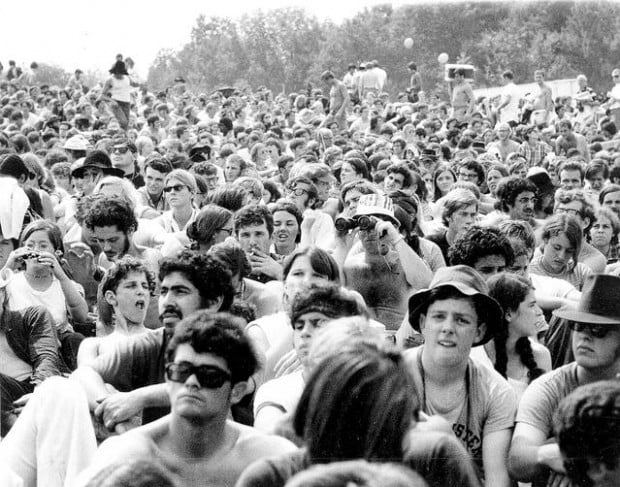
They partied and protested, then grew up to dominate America with their chutzpah and sheer numbers. Yet now, as the oldest of the baby boomers prepare to turn 60, there are glimmers of doubt within this "have it all" generation about how they will be judged by those who come next.
The ferment of the '60s and '70s — when boomers changed the world, or thought they did — faded long ago. Nostalgic pride in the achievements of that era now mixes with skepticism: Have the boomers collectively betrayed their youthful idealism? Have they been self-centered to the point of shortchanging their children?
Anthony DeCurtis, one of the boomers' pre-eminent rock 'n' roll journalists, hears the occasional barb from his creative-writing students at the University of Pennsylvania, and it gives him pause.
"There's a fear that there's going to be nothing left — that they're going to be picking up the pieces for this six-decade party we had, cleaning up the mess," said DeCurtis, 54. "There's some truth to that, I guess."
People are also reading…
The boomers — 78.2 million of them born from 1946 to 1964 — are wealthier and more numerous than any generation before or since. They have controlled political power long enough to stack the financial deck in their favor.
"It's economic and policy imperialism," said University of Oklahoma historian Steve Gillon, 48, author of "Boomer Nation."
"The boomers have set up institutions that will continue to benefit them, at the expense of other groups, as they grow old and live longer than any other generation," Gillon said. "It's spend what you want, cut your own taxes — the ultimate baby-boom philosophy of 'We want to have it all.' We're not a generation that's had to deal with the reality of sacrifice."
"Reason to be proud"
Among the boomers turning 60 this year — along with George W. Bush and Bill Clinton — is Ron Kovic, who became an anti-war activist after being paralyzed by a combat wound in Vietnam in 1968. His autobiographical book "Born on the Fourth of July" became a hit film.
Unlike some of his contemporaries, Kovic sees no reason for guilt or embarrassment as boomers take stock. "We have every reason to be proud," he said. "We were brash and bold and beautiful."
Now, Kovic says, his generation will revolutionize a different kind of '60s.
"Often when people get older, they say to the younger generation, 'Well, it's your turn now,' " he said. "I feel very differently. Rather than just passing the torch, and saying we did our best, this generation — which dreamed such big, impossible dreams — refuses to step aside. It sees itself as part of change that it still passionately believes will occur."
Reluctance to step aside could be a formidable phenomenon in coming years as many boomers seek self-fulfillment and civic engagement deep into old age. Listen to Dr. Terry Grossman, author of "The Baby Boomers' Guide to Living Forever" and operator of a Denver anti-aging clinic.
"As an official member of the boomer generation, I do not believe it was intended for us to die," said Grossman, 58. "We were special right from the get-go — dying wasn't part of our script."
Grossman said he believes medical advances that will extend life spans by several decades are perhaps 20 years away. Boomers, he said, are turning to fitness gurus, special diets and vitamin megadoses in hopes of staving off aging long enough to benefit.
A particularly assertive breed of boomers dominates in Washington, D.C., according to Michael Franc, who works there for the conservative Heritage Foundation.
"Boomers always struck me as very self-centered and self-important because there are so many of us," said Franc, 48. "We're always in the middle of the next fun moment at some ever-lasting party, and we're not able to defer the gratification to tackle the long-term problems."
Civic involvement urged
Other boomers feel similar doubts about their generation's track record — and they want their new cause to be a shot at redemption. Boomer-led initiatives such as Civic Ventures are encouraging people over 50 to consider socially productive jobs and volunteer work rather than easing into traditional "golden years" retirement.
"We've been killing ourselves working for hours on end for decades, caught up in the work-and-spend dynamic," said Marc Freedman, 47, Civic Ventures' founder.
"But there's a chance for the boomers to reclaim their earlier legacy, and not be a drain on society," he said. "They could have a second coming in terms of social idealism and find ways to contribute that mean something beyond themselves."


