

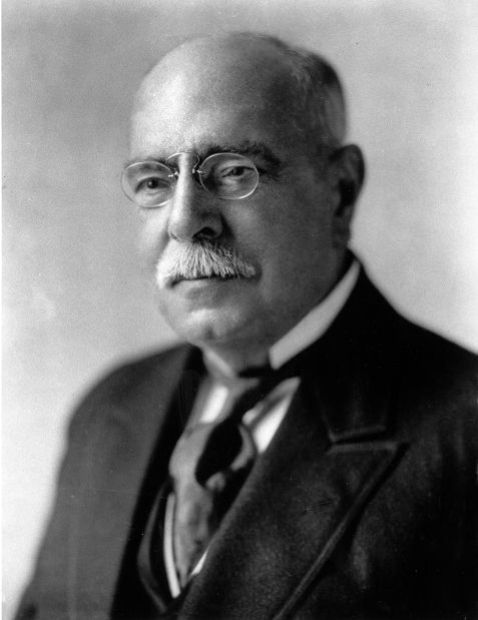
Perhaps he was worried about his legacy, though he needn't have been. John Philip Sousa's name is solidly placed in musical history.
However, he might later have hoped his comments on jazz music would be forgotten.
From the Arizona Daily Star, January 11, 1922:
Jazz To Pass Out Like All Other Musical crazes, Sousa Says
_____
Noted Bandmaster Pleases Children at His Concert
_____
Matinee Yesterday Afternoon Finds Great Leader In Happy Mood; Singer Wins Favor
_____
Adoration for the pleasing personality and military bearing of John Philip Sousa from the school children of Tucson at the matinee concert which the bandmaster conducted yesterday afternoon in the Armory hall was proof of the fact that to touch the hearts of the children means to touch the heart of the world in popularity.
"It is praise enough to hear the delighted expressions from the children," said the bandmaster. "Applause is the only way that an audience may show that it is pleased with the artist who seeks to entertain. Oftentimes, there are moments following an artistic performance when applause breaks the spell that the temperament of the artist has woven, but after all, it is the expression of appreciation without which a concert would be somewhat dead."
The saxophone players from the band were blowing a few blue notes during the intermission. "Just what do you think of jazz?" the internationally known bandmaster was asked.
"Jazz? Well, jazz is merely an expression of an age. It is fading in its popularity already," he challenged, "for it could never be permanent any more than the Gavotte, the rag time or the cake walk of my early days of conducting. It will die as they have done. But it has known a great appeal to the masses for the reason that it was the accompaniment to dancing that anyone could do. Dancing that needed no particular training or grace in its steps, contrary to the waltz that will live on through the generations."
The singing of Miss Mary Baker was a feature of the performance at the matinee and Tucson audiences have seldom heard a better vocalization of the waltz song "Carmena." Miss Baker's trills were pure bel canto, and the beauty of her diction was a pleasure to hear.
"It is no special effort for a singer to sing with a band," said Miss Baker after the matinee yesterday. "It is merely a matter of breath and the proper use of the voice. Singers often think there must be some particular voice training for a band accompaniment, but I have found it no different from my concert work."
Miss Florence Hardeman took the audience by storm with her exquisite interpretation of "Souvenir" for the violin, accompanied by the harp. The Polonaise in D Flat by Wieniawski was the number played first, but the fine artistic interpretation of which the violinist is capable was covered, until the encore, when she gave to the audience the "Souvenir." That she pleased was evinced by the utter silence that followed the last drawing of the bow over the strings of the violin.
Each of Sousa's players is an artist. John Dolan, who directs at times for Sousa, and who plays the cornet, is undoubtably the best that has been heard in the city.
People are also reading…
The Morgue Lady disagrees with Mr. Sousa. He says anyone can dance to jazz without training or grace. The Morgue Lady can't dance to anything.
She also disagrees that jazz is or was fading in popularity. It is alive and well in the Morgue Lady's heart, and she suspects in other hearts as well.


