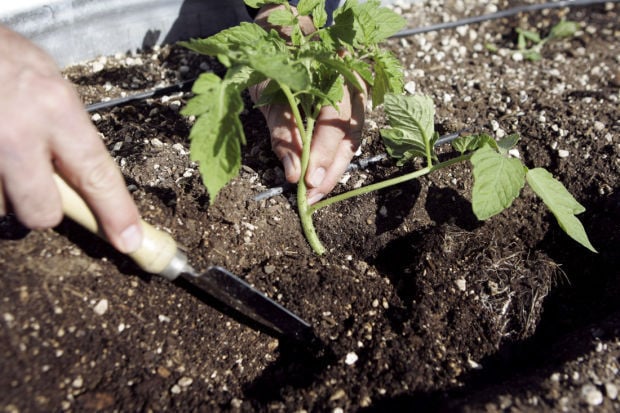

1 - Use Epsom salt (magnesium sulfate) in each planting hole. Mix 1-2 tablespoons into the soil when transplanting. Epsom salt will increase the amount of calcium available to the plants and help prevent blossom end rot. If you do see yellowish-leaves or blossom-end rot (a blackish spot at the bottom of the fruit), mix 1-2 tablespoons per gallon of water and spray the foliage.
Another strategy is to use the foliar spray when transplanting, when the plant first starts flowering and when the fruit is setting.
Peppers are susceptible to the same problem, so give them a boost with Epsom salt, too.
2 - Use the just right amount of organic nitrogen. This one's a little tricky: use too much and you'll get big, leafy plants and few blossoms or fruit. Too little and the foliage won't develop properly and the plant will fail to thrive. I've made both mistakes, so all I can say is, experiment.
When transplanting, use well-aged manure and compost mixed in with your garden soil. If you find that your plants are not leafing out properly, give them a boost of manure tea or fish emulsion mixed in water.
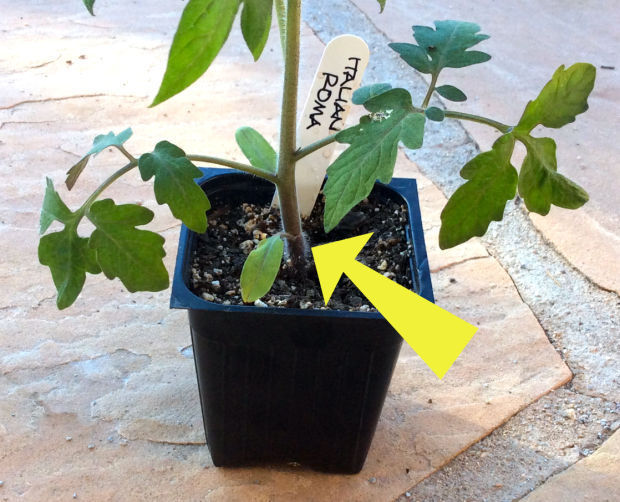 |
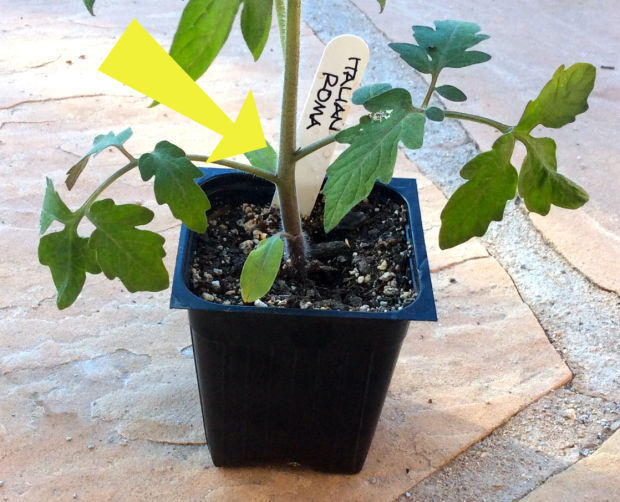
3 - Bury the stem when transplanting into the garden. Pinch off the bottom set of leaves and plant up to the second set of leaves. Roots will sprout along the buried stem, strengthening the root system overall. (See photos.)
 |
4 - Use companion plants such as marigold to keep bad bugs at bay. Dill, basil and borage planted around tomatoes can repel hornworms. Also try chives, onions or garlic.
5 - Plant early! This is also a bit tricky, because we can't predict whether we're going to get a freeze between now and April. Last year, one of my community gardening neighbors planted her tomatoes in February while I waited till mid-March. Guess what?
Mine struggled in the summer heat and didn't bear fruit until fall. Hers did much better. She judged the winter to be unusually warm and took a chance. And she was right.
So hedge your bets: Plant a few right now (or in February next year) and plant the rest in mid-March. Also, choose fast-maturing or small varieties.
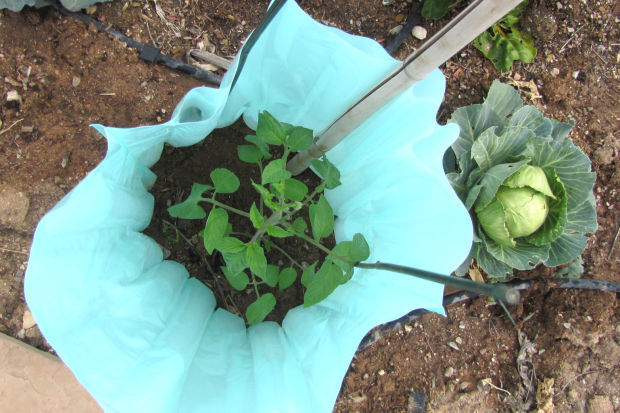 |
6 - Watch the weather. If the temperatures are expected to reach 40 degrees or below at night, cover the plants with old bed sheets. Or use walls o’ water until late March or into April.
7 – In late May or June, give your tomatoes (and peppers) some afternoon shade. Clip pieces of light-colored bed sheets to each tomato cage to block the afternoon sun. Use clothespins or black binder clips. Don't use those landscape shade cloths — they actually raise the temperature, a study has found.