

Photos: The Art of Science
Photographs from "The Art of Science" insert in the 2016 University of Arizona College of Science supplemental publication in the Arizona Daily Star.
Art of Science

Scientists capture the complex and the compelling through the camera lens. It is here where color, shape and texture collaborate, and the art of science begins. Neill Prohaska, a UA doctoral student in ecology and evolutionary biology, adjusts an advanced camera system atop a 200-foot-tall research tower used by associate professor Scott Saleska’s research team to investigate how Amazonian tropical forests respond to climate change in the Tapajos National Forest in Brazil.
Art of Science

Approximately 20 percent of breast cancer cases are HER2 positive, and there are advanced cancer therapies for those breast cancer patients. Blue staining indicates an increase in HER2 protein production by breast cancer cells. A single black dot indicates a copy of HER2 gene, while a single red dot indicates a copy of CEN17 in the cell nuclei. Clusters of black dots demonstrate the increased amount of HER2 gene copies.
Art of Science
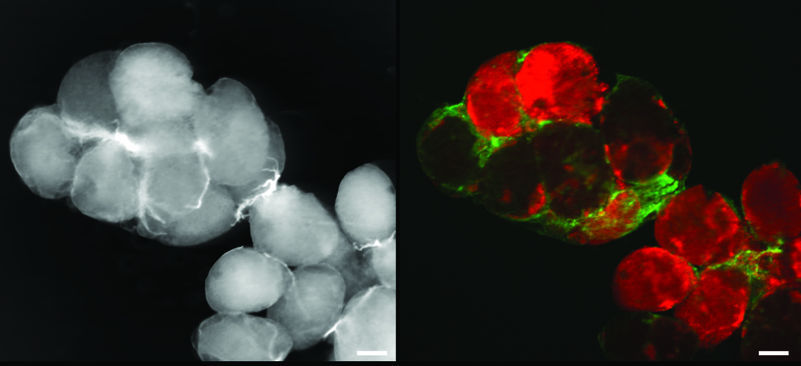
Light and fluorescence microscopy of developing eggs from Aedes aegypti mosquitoes that transmit the viral pathogen responsible for Dengue Fever. The developing mosquito eggs in these matched photos are defective owing to disruption of a vesicle transport process that is required for normal eggshell formation.
Art of Science
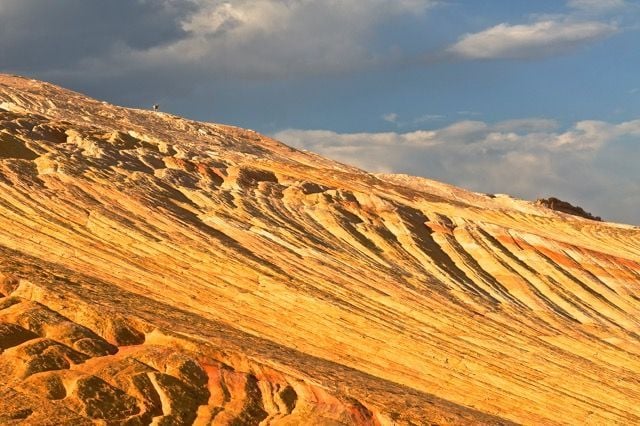
Giant, sweeping expressions of ancient sand dunes appear in solid rock, namely the Navajo Sandstone as exposed along the east side of the Kaibab Uplift in southern Utah. Note the bighorn sheep, upper left, for scale. Due to folding along the Kaibab, the Navajo Sandstone is no longer horizontal, but is inclined eastward. The paleo-dune geometry reveals paleo-wind directions about 175,000,000 years ago.
Art of Science

The science of extracting metals has changed significantly over the years due to advancements in new technologies. But places like Crystal Mill still exist to remind us of the gold rush that took over the Wild West.
Art of Science
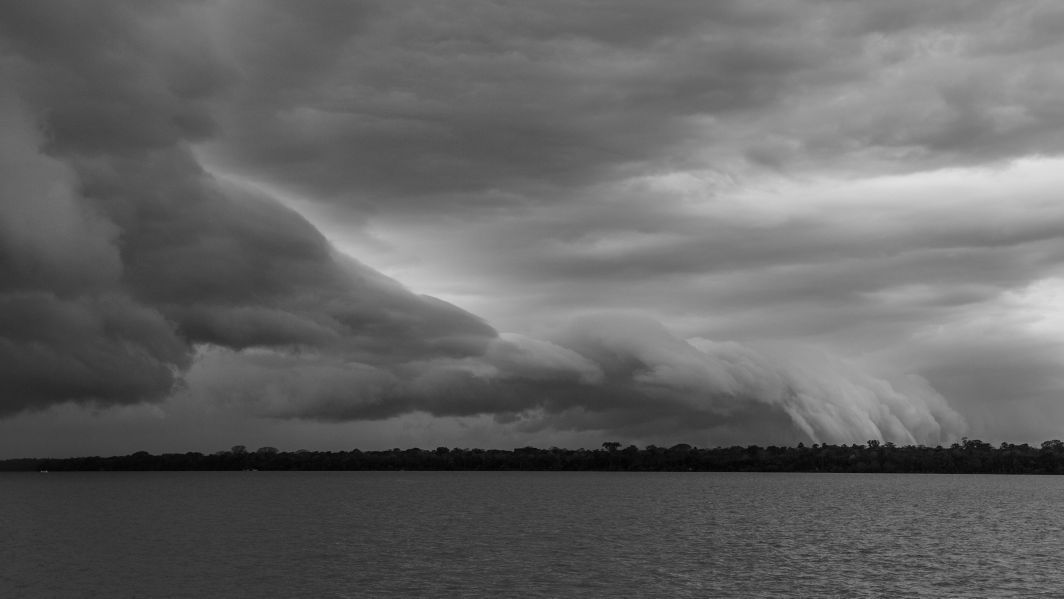
Storm clouds over Caxiuana Bay near the Amazon river, en route to the Caxiuana National Forest, where a large experiment is testing the vulnerability of Amazon forests to long-term drought. University of Arizona professor Scott Saleska led an international team of U.S. and Brazilian professors and students to the experimental site for a field course on how to investigate the effects of climate change on tropical forests.
Art of Science

A male northern flying squirrel moves a pine cone, half his weight, between cavity caches. By studying squirrel’s aerodynamics in the wild, UA researchers discovered that this species has a novel way of flying — it retains and directs air vortexes that form along their wing membranes.
Art of Science
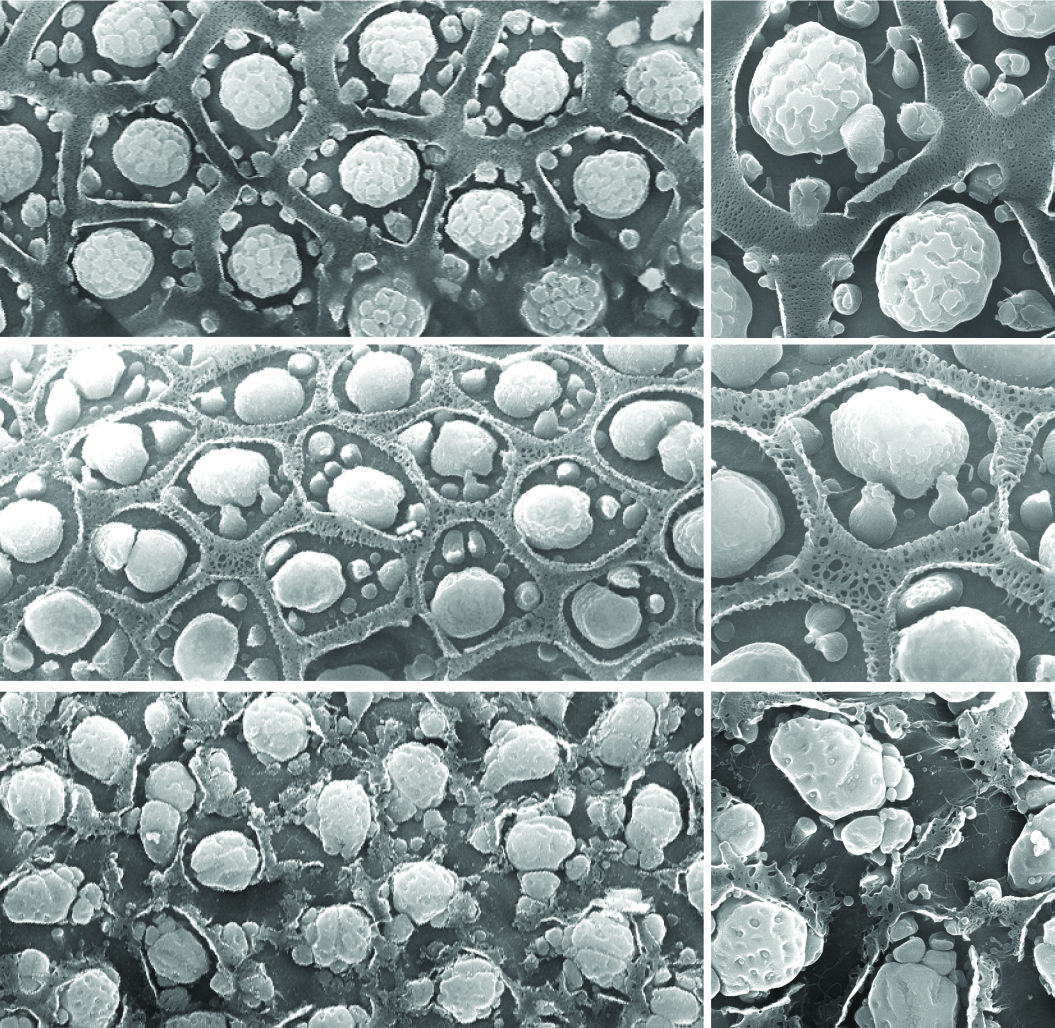
Scanning electron micrograph of eggshells from Aedes aegypti mosquitoes that transmit the viral pathogen responsible for dengue fever. The top image shows a normal eggshell and the bottom two images show what happens when the eggshells are defective.
Art of Science

The Lagoon Nebula, a bright cloud of dust and gas 4,000 light years away and 40 light years across, glows brilliantly due to hot energetic young stars forming within. The photo was captured at the Mount Lemmon SkyCenter in Arizona.
Art of Science
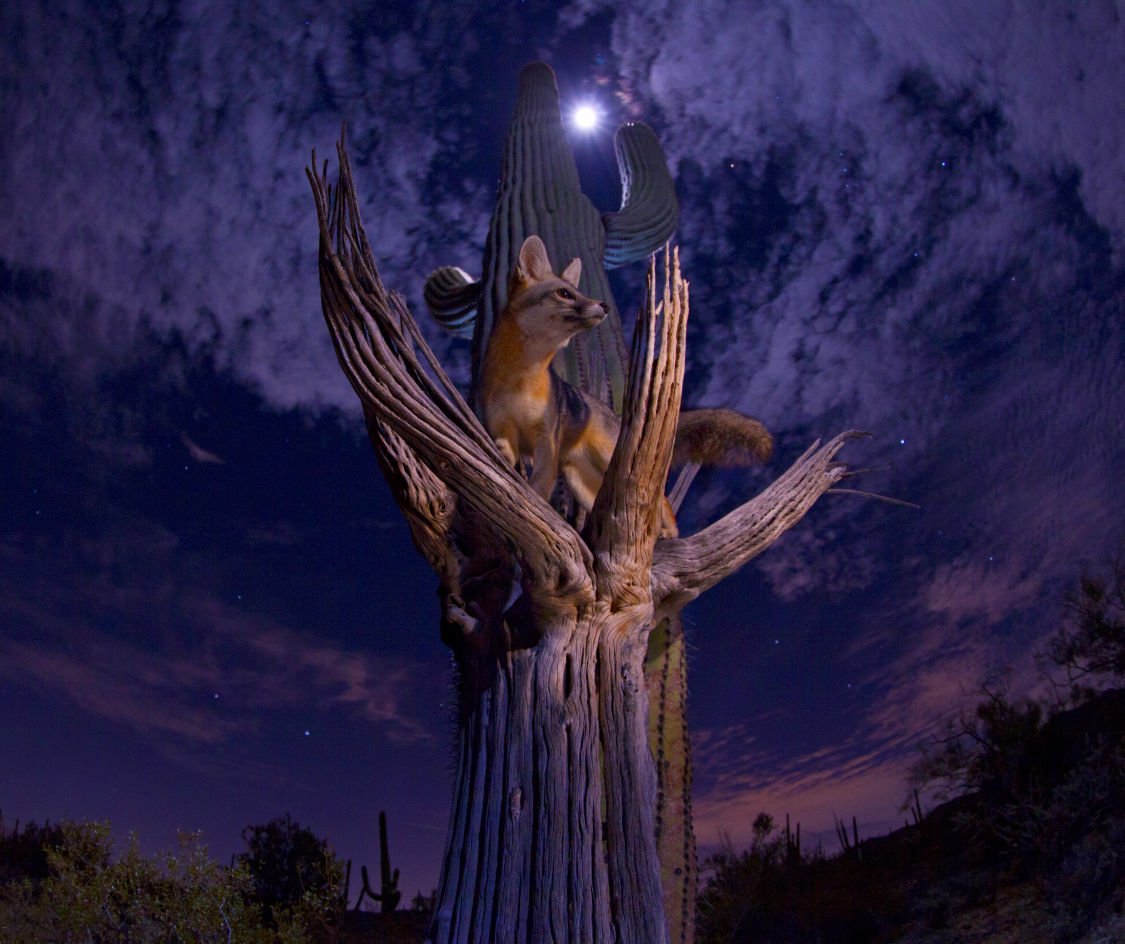
On a moonlit Arizona night, a gray fox surveys the desert from the highest perch it can find. This most ancient fox species evolved at least 6 million years ago, when the Southwest was covered with a lush old-growth forest in which the gray fox adapted to eating fruit and hunting birds that roosted high in trees, a UA study found.
Art of Science
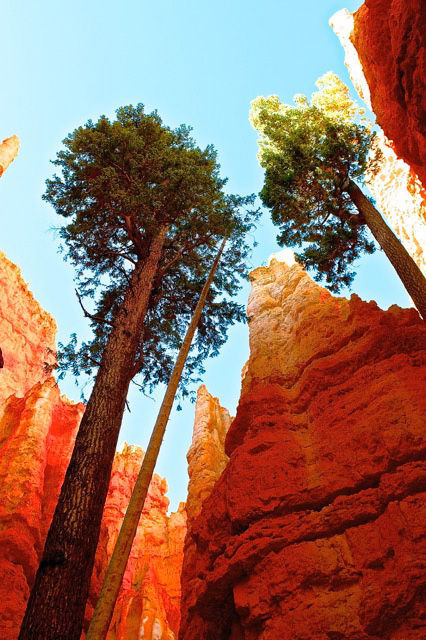
No trip to Bryce Canyon National Park in Utah is complete without a walk down Navajo Trail into “Wall Street.” At the base, verticality is everywhere expressed in trees and rock spires. The alcoves and slots lend themselves to excellent acoustical refreshment —harmonica— when it is break time from geology.
Art of Science
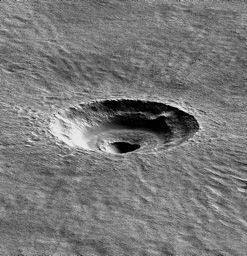
This 3D perspective was made from HiRISE data of a strange, terraced crater on Mars, which grad student Ali Bramson and Associate Professor Shane Byrne combined with other data to show that the area has a layer of water ice underneath the surface.
Art of Science

Ray Bertram, documentation, Steward Observatory — Technicians at the Richard F. Caris Mirror Lab install glass into a mold before casting an 8.4 meter honeycomb mirror for the Giant Magellan Telescope, which is being constructed in Chile. This is the fourth of eight GMT mirrors to be cast at the Mirror Lab. With a diameter of 25 meters, the GMT will have more than three times the light-collecting area of any existing optical telescope.
Art of Science

During a recent trip to teach cosmology to Tibetan monks and nuns (the subject of a previous special section story), Chris Impey visited the class as Einstein to answer questions about gravity and black holes. One of the monks is holding a piece of paper to represent the Sun, part of a scale model of the Solar System laid out around the grounds of the monastery. The class is part of a program called “Science for Monks,” launched by the Dalai Lama a decade ago to educate monastics in modern science.
Art of Science

The interaction of two different cell populations becomes an illustrative blend of colors when utilizing a multiplex immunohistochemistry assay approach. Different molecular biomarkers are detected in this lung tumor using a combination of chromogens. The immune cells attacking the cancer cells are seen in fuchsia surrounding brown PD-L1 cancer cells. When the two cell populations begin to interact in an apoptotic struggle for survival, a brown punctates crater the frontlines. This technology eases the interstation of tumor and the immune response to allow for better prognosis and personalized assessment. Utilizing a multiplex immunohistochemistry assay approach, the interaction of two different cell populations becomes an illustrative blend of colors. Different molecular biomarkers are detected in this lung tumor section using a combination of chromogens. The immune cells attacking the cancer cells are seen in fuchsia surrounding brown PD-L1 cancer cells. When the two cell populations begin to interact in an apoptotic struggle for survival a brown punctates crater the frontlines. This technology eases the interstation of tumor and the immune response to allow for better prognosis and personalized assessment.
Art of Science

This young protoplanetary disk is about 10 million years old and about 400 light years from Earth. The disk shows a beautiful two-armed spiral pattern, only seen previously in two other young stellar disks, and a large gap extending to about the equivalent of Uranus’ orbit in our own solar system. These features are expected to be sign posts of interactions with massive stellar and planetary companions, and we’re leading an ongoing effort to observe the planets themselves. The image is taken with a coronagraph, which blocks the light from the central star (black circle in the image), allowing for the fainter disk structures to be captured.

Families get moving for good cause.