

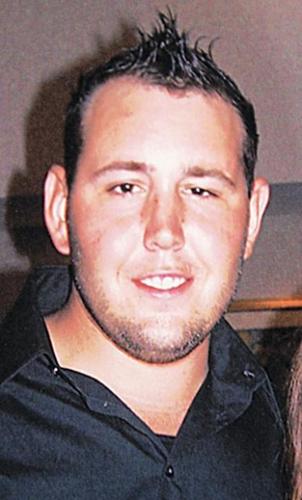
Twenty-five-year-old Mark Woodley was on his way home from a long day of work when he saw a pickup flipped on its roof.
He made a fateful decision — one that would set off a wave of terrible luck and leave him fighting for his life.
It was around 9 o'clock on a rainy night, and Woodley was driving west on Interstate 10 toward Tucson. He was in a hilly stretch between Marsh Station Road and the Sonoita exit when he spotted the white pickup, which had rolled over in the grassy median.
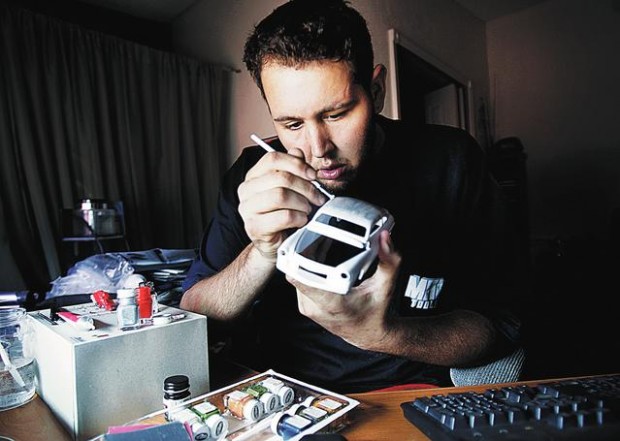
A field mechanic, Woodley had already driven 300 miles to Morenci and back and in one day. He'd troubleshot some electrical problems and was tired, looking forward to unwinding at home in Three Points.
But it wasn't unusual for him to stop and help a distressed motorist — he's a big guy, driving a large service truck for his employer, United Rentals, and he likes to help people, his family says.
People are also reading…
So he pulled over onto the right side of the highway, then crossed by foot to help the driver, 65-year-old James Douglas Hoopes — who was still upside-down.
Arizona Department of Public Safety reports from that night, Sept. 11, indicate Woodley was able to get Hoopes out of his truck.
A witness saw both Woodley and Hoopes walking, ready to step away from the rollover site. Hoopes was holding his shoulder.
Just at that moment, when everything was looking fine, it all went horribly wrong.
"It was a wild turn of events," says Tucsonan Gary Luna, who had also stopped to help. "A very unfortunate incident."
A 31-year-old Sahuarita woman and her infant son were in a blue 2006 Pontiac traveling west in the right-hand lane. By that time, a few other vehicles had also stopped to help Hoopes.
"Understand, it was awful weather. There were cars pulled to the side with their emergency flashers going, trying to help," Luna says. "There were other vehicles, semi trucks that weren't slowing down. They had to be doing 75.
"I heard the one car hit the brakes and I heard it sliding. Then I heard it hit."
The woman driving the Pontiac later told investigators she saw a man in dark clothing waving a flashlight on the right-hand side of the highway, perhaps trying to signal traffic to slow down.
According to accident reports, the woman said she moved into the left-hand lane to avoid the man but ended up hydroplaning, hitting Hoopes' truck.
The truck crashed into Hoopes and Woodley.
A worrisome phone call
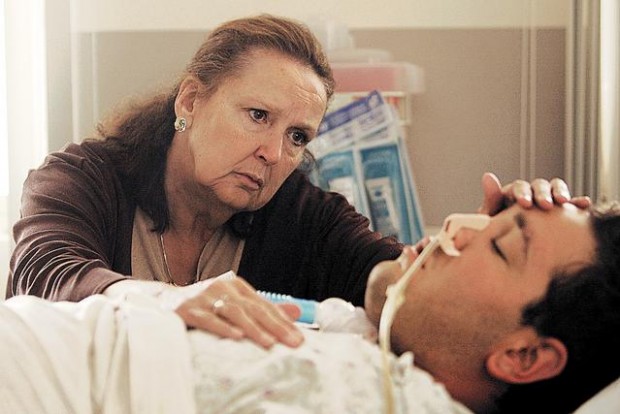
Schoolteacher Georgine Woodley was at home in Three Points that night and already in her pajamas when the phone rang.
Her son Mark, who lives with her and his stepfather, told her he'd been hit.
Georgine's first thought was that he'd been hit in his service truck.
"Did you call the police?" she asked.
"Yes," he replied.
"Are you all right?" she asked.
"No," he said.
Mark hung up and Georgine called back again and again. There was no response. She jumped in her car with her husband, Lyle, and drove to the scene.
Mark stands 6 feet 5 inches tall and weighs 288 pounds, and his mother says he has a high tolerance for pain.
He was talking when his mother and stepfather arrived at the crash site and was able to tell them that he'd helped pull a man out of a rollover. He told them another car came along and "she hit everything," Georgine recalls.
The last thing Mark remembers was the ambulance ride on the way to University Medical Center.
"Dad never got here"
Janet Hoopes had last spoken to her husband at about 8:30 that night, when he was driving through Benson.
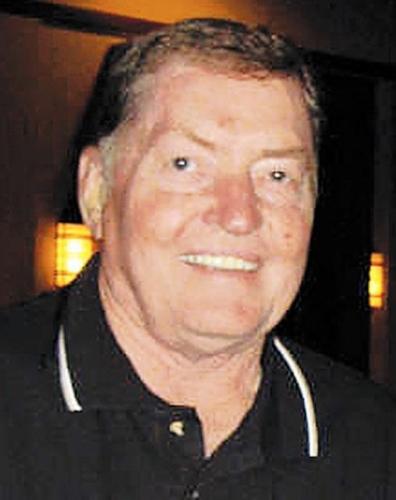
Doug Hoopes, a recently retired chemist with Phelps Dodge who has been on the Thatcher Town Council in southeastern Arizona for 12 years, had been traveling from the family's home in Alpine to Tucson for a doctor's appointment the next day.
He'd planned on staying in Tucson that night with their son, Brett.
Janet went to bed early after speaking with her husband but was awakened around 11 p.m. by a call from Brett.
"Dad never got here," he said.
"Call the police," Janet told him. "Ask them if a white truck wrecked."
As Janet was speaking to her son, University Medical Center called to tell her Doug was there.
Janet immediately got into her car and drove to Tucson, arriving at UMC in the wee hours of the morning, her adrenaline pumping.
Doug Hoopes had suffered fractures to his rib, back, sternum and spine.
Health complications
Mark Woodley was at UMC, too, with one of his kidneys crushed.
Georgine Woodley had thought the surgery to remove her son's kidney would be fairly routine. He'd have to take good care of himself with only one kidney, but she envisioned him coming home within the next few days.
But Mark's bad luck continued.
During the kidney surgery Sept. 12, the 2002 graduate of Flowing Wells High suffered an extremely rare reaction to the blood transfusion. The condition is known as TRALI — transfusion-related acute lung injury, which has no proven cause.
TRALI occurs in about one in every 5,000 transfusions — fewer than 1 percent. About 6 percent of those reactions are fatal.
"It is a really complex type of a reaction and we're just working out what causes it and why it's devastating in some and not in others," says Dr. Annie Strupp, chief medical officer for the American Red Cross' Western Region, which includes Arizona. UMC's blood comes from the American Red Cross.
There is a theory that TRALI is caused by certain white-cell antibodies carried by people who have been transfused or by women who have been pregnant, particularly women who have been pregnant several times. The antibodies are most often found in plasma, but are also found in all blood products.
As a preventive measure, the Red Cross says it's able to reserve male-only donors for plasma used in transfusions, but Strupp emphasizes that it would be impossible to stop using blood products from women, since they make up about half of the Red Cross' donors.
"Generally speaking, I don't think people should be afraid of TRALI," says Dr. Mary Berg, director of transfusion medicine at UMC.
The reaction is more common in people who have been transfused during surgery. Not all transfusion recipients react the same way. In a TRALI case, the white blood cells break apart and fluid rapidly fills both lungs, making it hard for the patient to breathe.
Georgine doesn't blame UMC.
"I don't know that they could have done anything differently. It's so rare, and there's a lot of misdiagnosis and underreporting of it," she says.
"The perfect storm brought him here, but I also feel the perfect storm saved him."
To help his lungs, the hospital hooked Mark up to a system normally used for neonatal patients. Mark even stayed in the pediatric unit while he was on the machine. As his mother says, her baby was the biggest one in the unit.
For a while, Mark's family didn't know if he had suffered brain damage.
Unsure if he'd ever be the same, they say doctors told them to consider long-term care.
He was swollen and didn't open his eyes until Sept. 19 — the same day he mouthed the words, "I want to go home."
Some encouraging signs
Georgine began wearing a cross that her sister gave her.
One of her co-workers said she believed God would ensure Mark's recovery because he'd been injured while helping someone else.
There were encouraging signs. Since a ventilator prevented him from speaking, Mark wrote things down in his usual messy handwriting. In his first note, he asked for deodorant and toothpaste.
Mark was later transferred to the adult intensive-care unit and for a brief while was near Doug Hoopes' room.
The Hoopes family was praying, too. All of Janet and Doug's eight children came to his bedside. The family belongs to the Church of Jesus Christ of Latter-day Saints, and several church elders came to the hospital to bless Doug. Fellow church members in the tight-knit community of Thatcher and in Alpine, the Central Arizona town where they had recently moved, offered prayers, too.
Doug has had part of his colon and small intestine removed, and despite so many broken bones, he's expected to make a full recovery.
Now recovering in a Tucson-area rehabilitation center, he'll finish up his term on the Thatcher Town Council this year and hopes to be attending meetings again by November.
Hoopes' family members frequently stopped by to check on Mark's condition, too.
"They sought us out when we were still up in the peds unit, and they came up every day to see how he was doing. They were very concerned about Mark," Georgine said.
"They said that Doug had been asking for 'my help.' "
Mark has asked about Hoopes several times, too, his mother says.
But Hoopes still does not know that Mark was injured, and since his surgery a few days after the crash he seems to have forgotten many details of what happened, Janet says.
"We're afraid to tell him everything that happened just yet. He'd feel so terrible, knowing that the person who stopped to help had been hurt," she says.
"But what Mark did was thoughtful — I know Doug would want to thank him."
Authorities did not cite any of the drivers that night, accident reports say. The woman driving the Pontiac told the Star last week she wasn't aware that the crash had hurt anyone. Both she and her infant son escaped serious injuries and were treated and released from a hospital that night.
Mark Woodley went home from UMC Oct. 3, and his family is hopeful he'll make a full recovery.
Though he doesn't remember anything after the accident, he seems to remember everything else.
He's been walking since last week.
"One of my friends said that Mark's work here on Earth is not done," Georgine says. "It's just been craziness. But I know she's right."

 Faculty concerned about changes to U of A admissions policy


