

Buffalo Mayor Byron W. Brown is not going to agree to immediate passage of an ordinance amendment passed by the Common Council to remove school speed zone cameras by September.
On April 13, six out of nine Council members passed the resolution for immediate passage by what could prove a veto-proof tally.
But the administration says the proper process was not followed.
Now the two branches of city government are at odds over the required legislative procedure for the measure to become official.
"Mayor Brown is not going to sign for immediate passage of this item. As he continues to review the data from the school safety zone program, this ordinance will need to go through the traditional process," said City spokesman Michael J. DeGeorge.
According to the administration, the mayor and the Council both have to sign off on immediate passage. Otherwise, there is no ordinance for the mayor to sign, veto or do nothing. An item requiring one of those actions would have to go through the normal legislative process or bypass the process with the express consent of both the Council and the mayor. The Council's ordinance amendment did neither, therefore no action is required by the mayor.
People are also reading…
But Council President Darius G. Pridgen said the Council’s action was appropriate, and the Council is awaiting Brown's action.
Pridgen also said he has not been informed by Corporation Counsel Timothy Ball or anyone from the Brown administration that the Council’s actions were incorrect.
According to Pridgen, the Council sent the ordinance amendment to Brown as an item of necessity because it was something the Council felt was very important to move on.
Pridgen also said he spoke with former Council President James Pitts, who oversaw the ordinance amendment to require a 2/3 supermajority vote by the Council for immediate passage.
“Pitts said the reason that area of the law was changed was so that the Council did not have to wait on the mayor to do immediate passage, that the Council could do immediate passage, send it to the mayor and then the mayor had the opportunity to either sign it or not, and so we’re still in that process,” Pridgen said.
"The Council has the power to send something to the mayor’s desk for immediate passage, and now it’s in his court,” Pridgen added.
The mayor has 10 days to sign the legislation or veto it. If he vetoes it, the legislation goes back to the Council, which then has 30 days to vote to override the veto. If the mayor does not act, the legislation then becomes law as per the city Charter, says the majority of Council members.
But the 10-day period is not applicable in this case, the administration contends.
The Council’s amendment was delivered to Brown on April 21, according to the City Clerk's office.
Another 6-to-3 vote would be enough to override a mayoral veto.
The speed camera amendment calls for replacing the cameras with radar speed signs and installing nonpunitive traffic calming measures in school zones, such as speed bumps. It also changes the school zone speed limit from 15 mph to 20 mph and requires the city to place "school" pavement markings and crosswalks by schools.
The two sides have been in conflict for about a year over speed camera enforcement in schools zones.
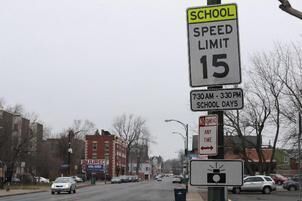
The School Zone Safety Program sets a 15 mph speed limit around 20 public, private and charter schools. Drivers captured on camera traveling at least 26 mph receive a citation mailed to the car's registered owner. The city gets $36 of each $50 citation. Sensys Gatso, the camera company that issues the citations, receives $14.
The program has drawn criticism that it was poorly rolled out and executed. Others have complained that the cameras target the city's most impoverished residents by placing many of the cameras in high-poverty, minority neighborhoods.
But the camera company, the Brown administration and some residents say the program is working and saving lives. About half of the citations were issued to people who live outside the city, and the cameras have increased compliance by Buffalo drivers to 82% since February 2020.


