

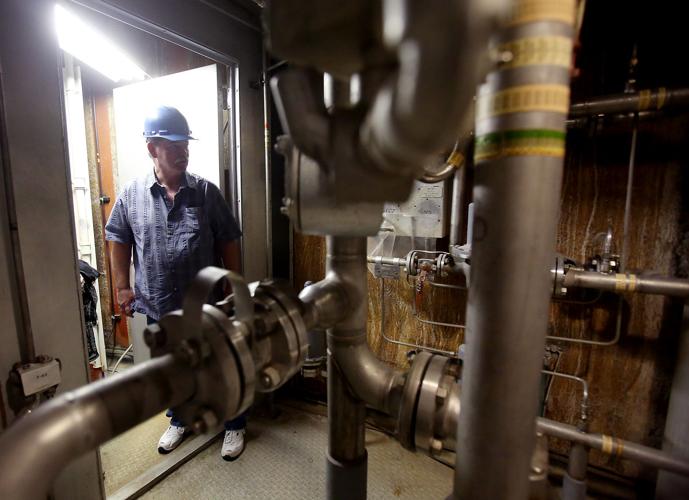
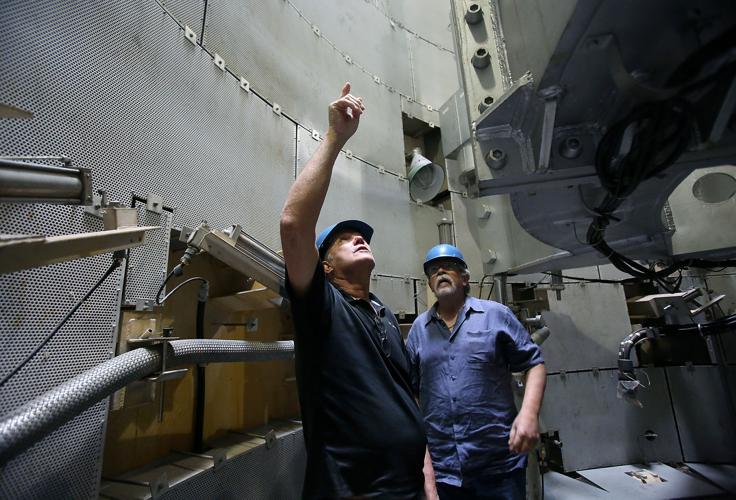
Mike Pierce smiled when he once again pressed against the 6,000-pound door inside the decommissioned nuclear missile silo 25 miles south of Tucson.
It has been more than three decades since Pierce and other members of the 390th Strategic Missile Wing lived with the 103-foot tall, 9-megaton Titan II missile with the power to annihilate Chicago.
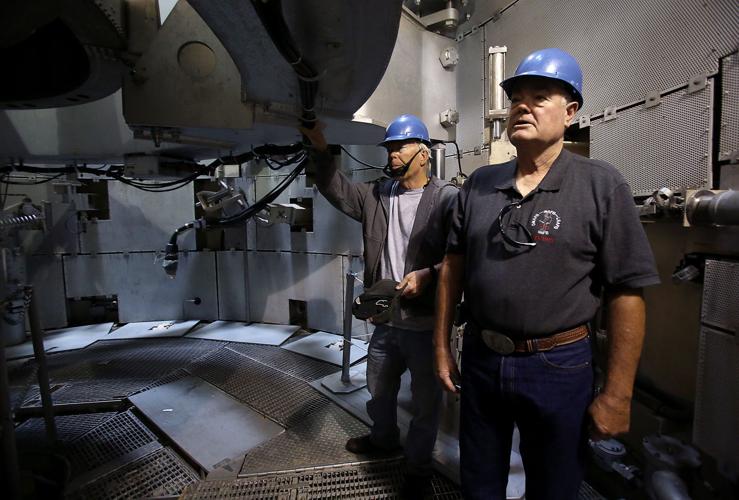
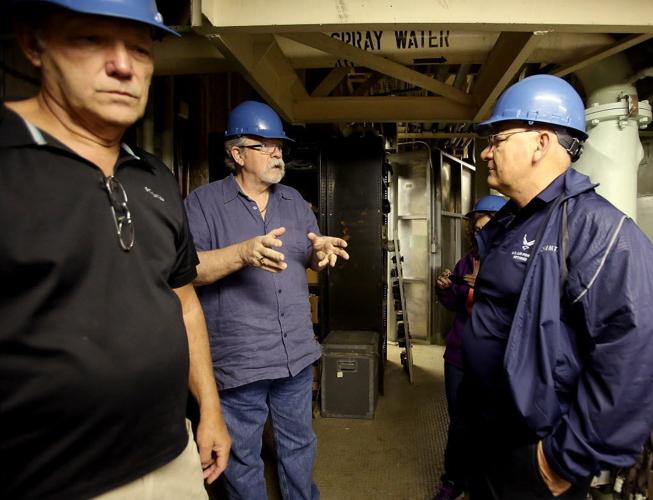
On a private tour of the Air Force Facility Missile Site 8 — now a museum in Green Valley featuring the inert missile — Pierce remembers how the crew divided up duties: maintenance, repairs and, if needed, the launching of the nuclear warhead.
Deep inside the ICBM silo, surrounded by 3-foot thick walls, Pierce recalls the chore of opening the massive door designed to protect the Titan II Missile.
“I can’t tell you how many times I had to open that heavy door,” Pierce said, with a reminiscent grin on his face.
People are also reading…
“We used to make the person with the lowest rank open the door.”
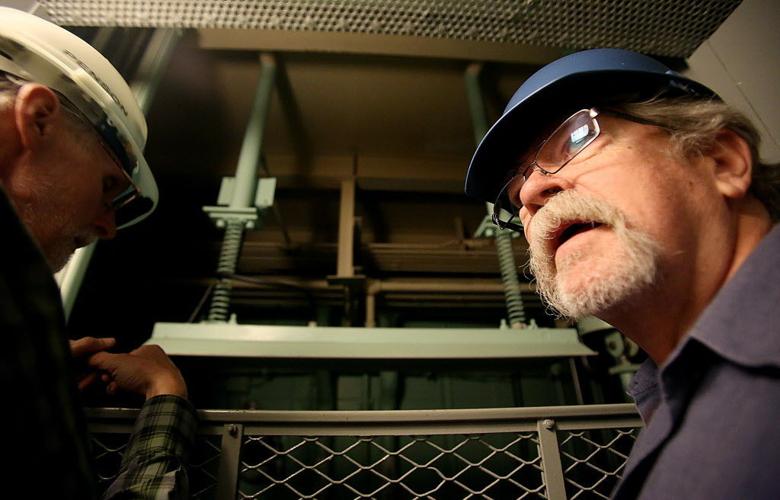
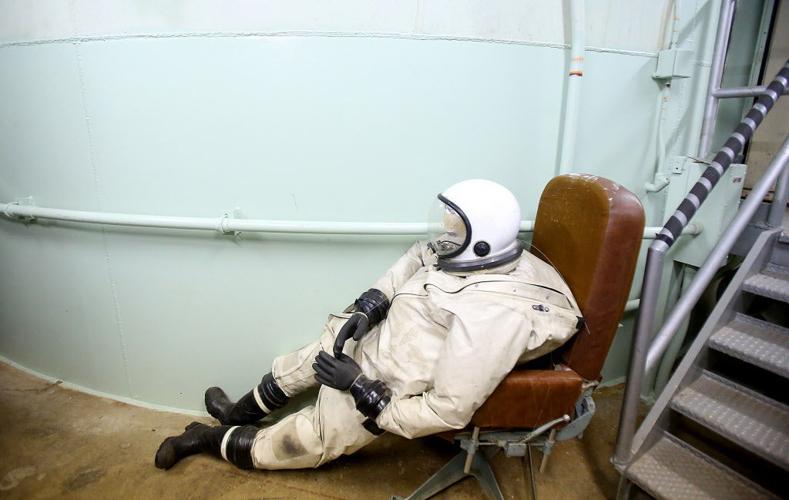
The members of the 390th moved around the missile silo as if they never left. They touched fuel pumps, talked about the uncomfortable protective suits they wore and remembered every nook and cranny they slept in during breaks.
Sam Morgan, 63, worked with the Titan II Missile from 1973-1975. He recalls an embarrassing time when he put on his protective suit but forgot to spit something out.
“I was working in my suit and I forgot about a wad of tobacco I had been chewing,” Morgan said, “I was freaking out because I couldn’t spit in the suits, so I had to swallow it.”
There were also serious, dangerous elements of working with a nuclear-tipped ICBM.
In 1980 in Little Rock, Arkansas, where an identical silo to the Tucson area’s was located, a group of airmen dropped a wrench and hit a fuel tank 80 feet below. The subsequent explosion destroyed the entire launch site and killed one man.
Pierce remembered being assigned to the cleanup.
“I never felt fear when I did my job,” he said. “But when I saw the giant hole where the Little Rock Missile Site used to be, I realized what I did was dangerous.”
Pierce also recalls the anxiety over his first missile repair after Little Rock.
“I remember going to make a repair and feeling a fear I had never felt before,” Pierce said. “After Little Rock, I didn’t want to go and fix that missile, but I did because I wasn’t going to let my brothers down.”
Morgan left the Titan II missile after a leak in his suit caused toxic gas to fill his lungs. “The gas from the missile went into my lungs and burned them,” he said. “The permanent scaring forced me to quit working with Titan II.”
Sharon Scott served as the only woman during her time on the Titan II, and she remembers the bonds she created while working on the warhead.
“They treated me like family,” Scott said. “We fought, we laughed, but when we were working on that missile, we cared for each other and made sure we were safe.”
Family and brotherhood are a common term used among the members of the 390th and for many in the Titan II Crew still see Pierce as their big brother: The man they went to when they needed cheering up, a slap on the wrist or advice.
“(Once) I lifted my helmet off to talk to Mike — we used to do that; lift our helmets up just a bit to talk to each other,” Scott said. “I lifted my helmet up, and Mike came up to me and told me to be careful.”
Scott remembers Pierce being strict and stern when it came to safety on Titan II.
“Mike was tough,” Scott said. “You knew if Mike told you to be careful, it was serious.”
Pierce could be tough, but he also had the trust and respect of the crew in the mega missile, Morgan said.
“No matter what we were doing, no matter how dangerous I always felt safe,” Morgan said. “I felt safe because of Mike. We all trusted him.”
Scott said Pierce’s knowledge made her trust him.
“Mike could fix anything on that missile,” Scott said. “We never worried because we knew if something went wrong Mike would know how to fix it.”
Credit for the Titan II’s safety belonged to the entire 390th, a modest Pierce said.
Pierce and Scott recall working together to repair different parts of the missile, with Pierce responsible for the tall or heavy, hard-to-reach places and Scott maintaining the small and cramped spots.
“(Pierce) was big and tall, so he would go high,” Scott said. “I was short and small, so I went low.”
Pierce pulled out a photograph of the 390th taken when he worked with the missile.
He was tall and skinny, with wavy brown hair and a sun-kissed complexion. And he was young.
“To me, I still feel like the young man who worked with a nuclear missile,” Pierce said.
“It feels like I never really left Titan II.”
The Titan II Missile continued as an active nuclear weapon from 1963-1987, and for every man and woman at the reunion, that missile was a home.
The airmen of the 390th were enlisted to do a job that many did not do. The job was difficult and it was dangerous.
Despite the dangers, every member of the Titan II Missile Reunion said the same thing when asked if they would do it again:
“In a heartbeat.”


