

Photos: Arizona State Museum celebrates 120 years
The Arizona State Museum is 120 years old Sunday. It is the oldest and largest anthropology in the Southwest and was established by the Arizona Territorial Legislature in 1893. Here are examples of exhibits, community events and services provided by the museum.
Arizona State Museum celebrates 120 years
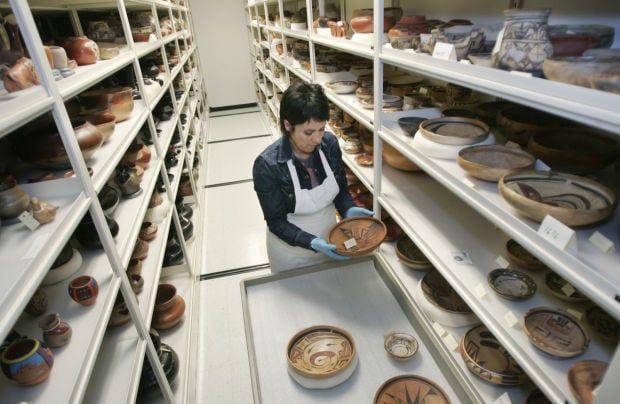
Teresa Moreno, Assistant Conservator for Arizona State Museum, handles Hopi Indian pottery from the 1920's in the new pottery vault at the museum in 2007.
Arizona State Museum celebrates 120 years
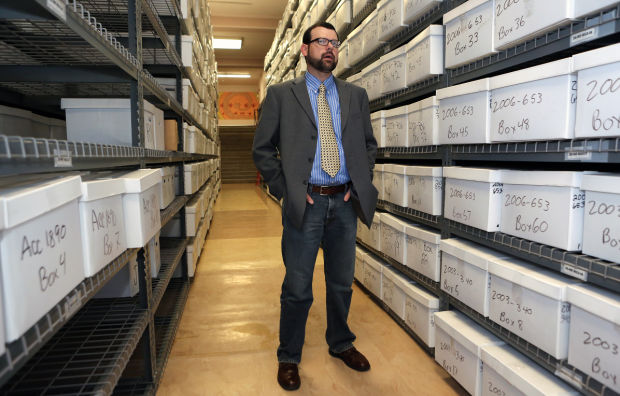
Patrick D. Lyons, incoming director of Arizona State Museum, standing among some of the boxes of stored various artifacts.
Arizona State Museum celebrates 120 years
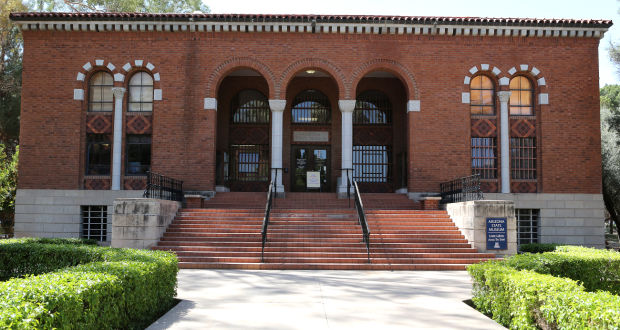
An exterior of Arizona State Museum
Arizona State Museum celebrates 120 years
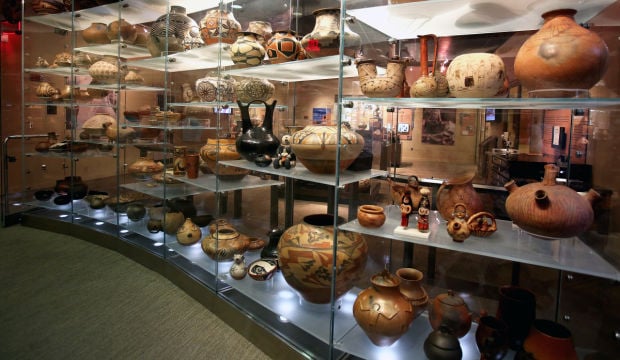
The Arnold and Doris Roland Wall of Pots at the Arizona State Museum.
Arizona State Museum celebrates 120 years

Images from University Indian Ruin Field School (a collaboration among Arizona State Museum, UA School of Anthropology, Desert Archaeology, Inc.).
Arizona State Museum celebrates 120 years

Images from University Indian Ruin Field School (a collaboration among Arizona State Museum, UA School of Anthropology, Desert Archaeology, Inc.).
Arizona State Museum celebrates 120 years
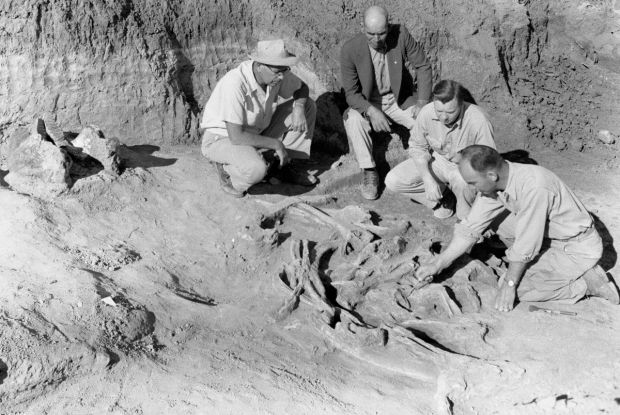
Dr. Emil W. Haury (ASM director 1938-64) with (left to right) land owner Fred Navarette, paleontologist Dr. John Lance, and archaeologist Ken Greenleaf at Naco mammoth kill site, April 14-18, 1952. Eight Clovis projectile points found in the rib cage of a 10,000-year-old Columbian mammoth at this ancient kill site provided the first substantial evidence of Paleo-Indian peoples in this region at the close of the last ice age.
Arizona State Museum celebrates 120 years

Undated photo at the Arizona State Museum of children petting a buffalo in a static display.
Arizona State Museum celebrates 120 years
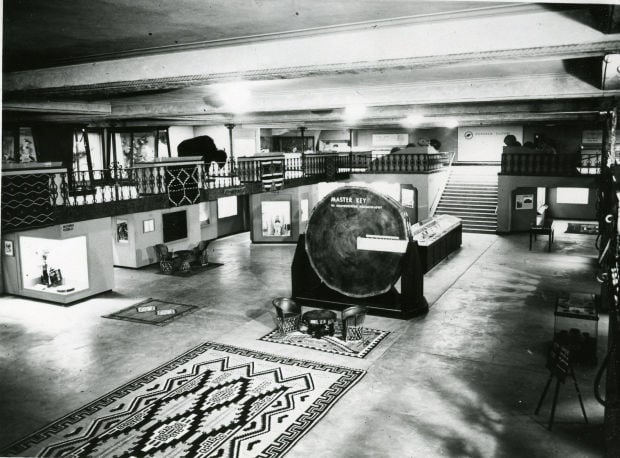
Undated photo of Arizona State Museum displays before establishment of the University Tree Ring lab.
Arizona State Museum celebrates 120 years

Work at the Arizona State Museum's conservation laboratory.
Arizona State Museum celebrates 120 years
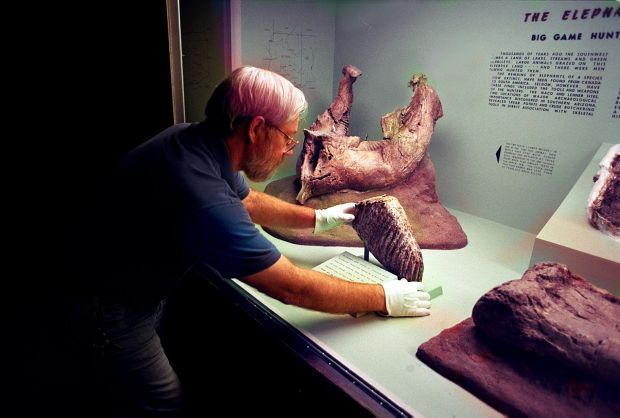
Photo of Arizona State Museum's Rhod Lauffer cleaning a molar and jaw from a Whooly Mammoth. Photo by Doug Kreutz. Photo taken on 11/17/99.
Arizona State Museum celebrates 120 years
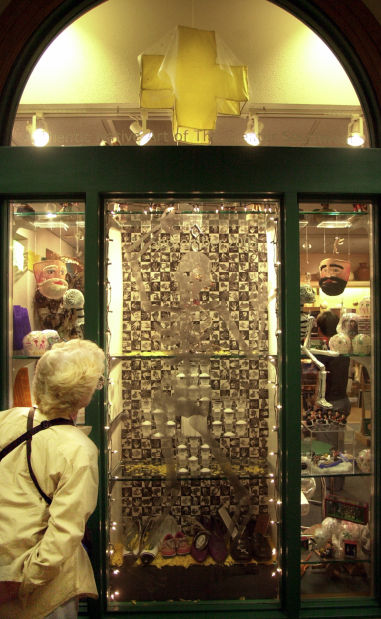
Beverly Lawson, visiting from Los Angeles, examines a Dia de los Muertos exhibit in the Arizona State Museum gift store window, which is a memorial to the victims of the Sept. 11 attacks.
Arizona State Museum celebrates 120 years
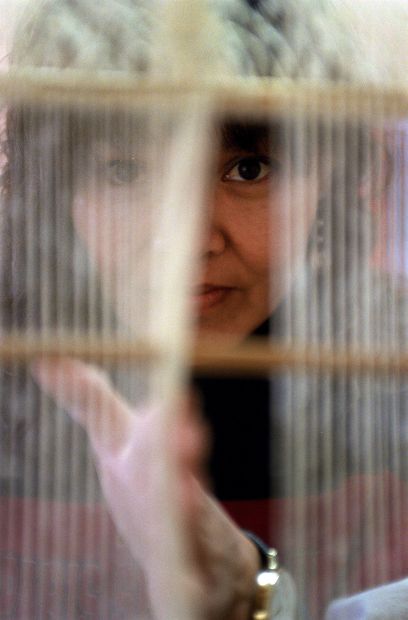
Brenda Spencer, a nationally recognized Navajo weaver is currently demonstrating her skills at the U of A Arizona State Museum. Visitors to the museum may watch her work weaving intricate patterns into rugs, meander through the Hubbell Trading Post, watch Tohono O'odham basket weavers, or even buy one of the many hand-crafted items for sale in the lobby. 12/12/97
Arizona State Museum celebrates 120 years
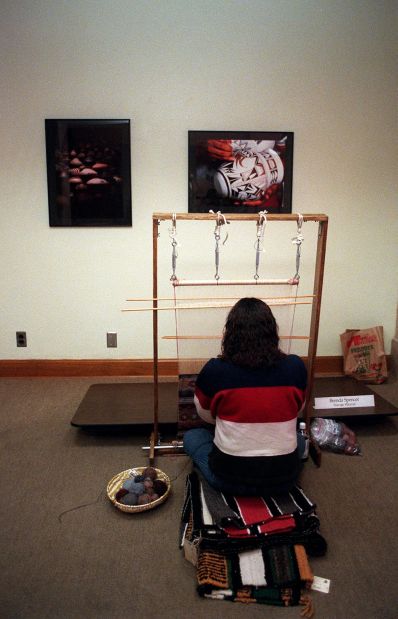
Master weaver Brenda Spencer set up her loom in the lobby of the Arizona State Museum to provide demonstrations of the intricate art of Navajo rug weaving Dec. 12, 1997.
Arizona State Museum celebrates 120 years
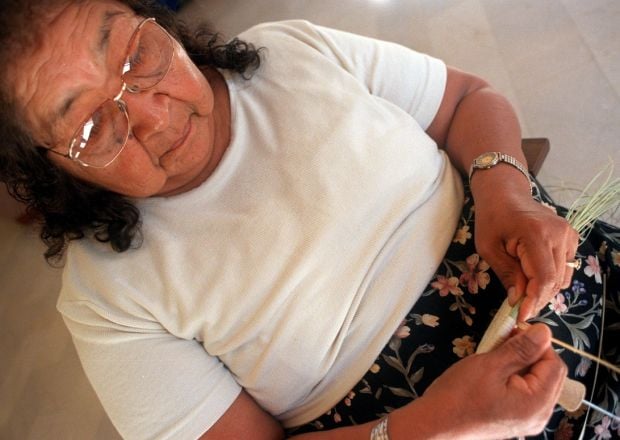
Christine Johnson, a Tohono O'odham basket weaver, works her craft in the lobby of the Arizona State Museum Dec. 12, 1997.
Arizona State Museum celebrates 120 years
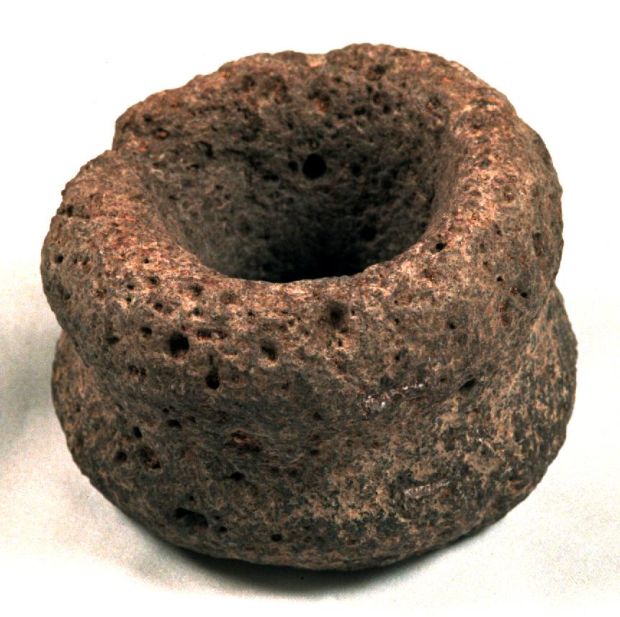
This is a basalt donut stone that would add weight to a digging stick. It slips through the end of the stick to the bottom. It is from a Hohokam site called Hodges which was excavated in the 1930s. It is located in the Ruthrauff and Interstate 10 area. It is part of the collection at the Arizona State Museum at the University of Arizona.
Arizona State Museum celebrates 120 years
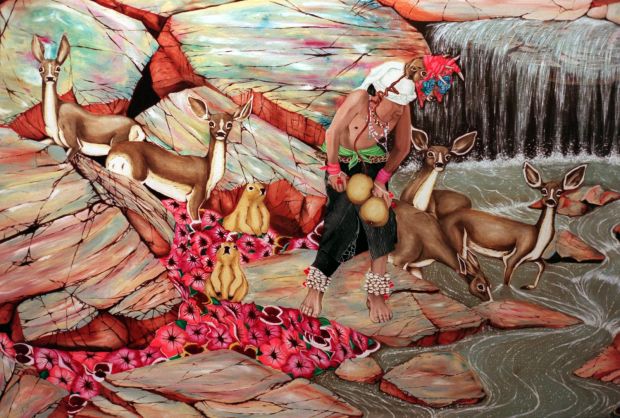
A detail from a mural of the Flower World by Daniel F. Leon on display in the Paths of Life exhibit at the Arizona State Museum Nov. 2, 1998. Yoeme (Yaqui) children will perform depictions of the Flower World on Nov. 7.
Arizona State Museum celebrates 120 years
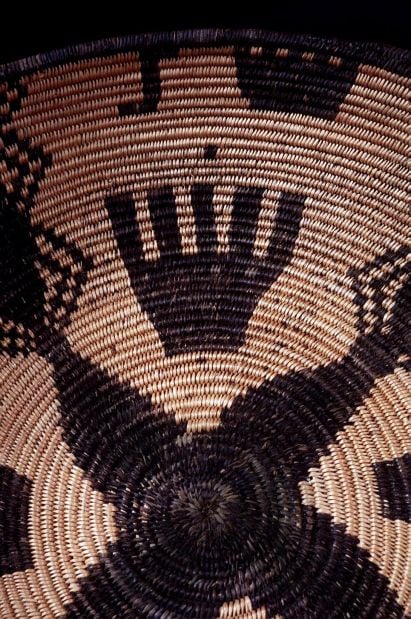
Detail shot of an Apache basket and will be on display at the Arizona State Museum on the University of Arizona campus. It is a detail of a bowl probably Tonto Apache. The tag on is says, "very old Apache basket. Much sorrow in family, hence dark design." Photo taken on 3/18/98.
Arizona State Museum celebrates 120 years
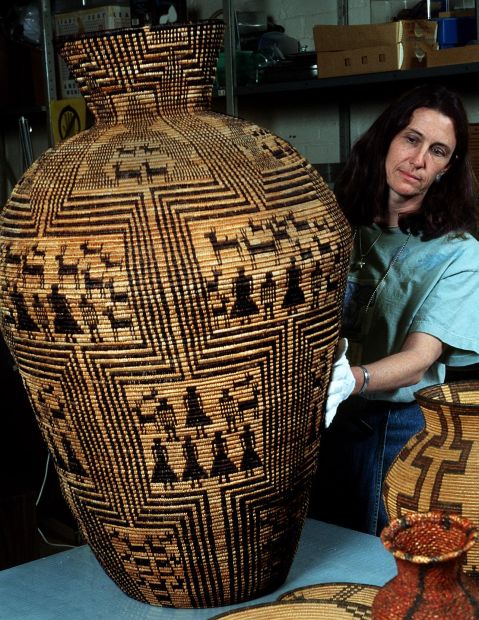
Curator Diane Dittemore, with the Arizona State Museum at the UA, is next to a big olla (Spanish for jar) which is one of the Apache baskets which will go on exhibit at the museum on April 4. The basket measures about 3.5 feet by 2 feet and is one of the biggest in the collection. Photo taken on 3/18/98.
Arizona State Museum celebrates 120 years
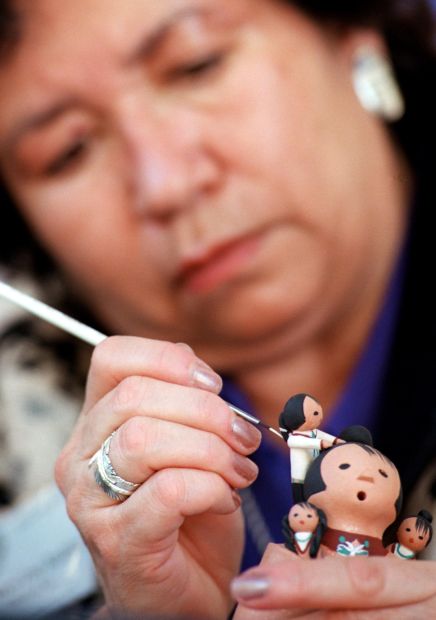
Mary Lou Zuni Kokaly a Isleta/San Juan Pueblo Indian finishes a Navo Story teller at the 1999 Southwest Indian Art Fair at the Arizona State Museum. Photo taken on 2/27/99.
Arizona State Museum celebrates 120 years
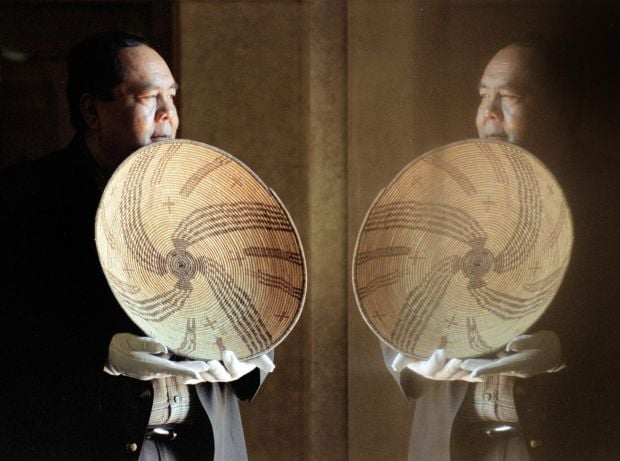
Arizona State Museum Associate Director Hartman Lomawaima, holding a hundred year old Apache woven basket, is thrilled about the affiliation between the museum and the Smithsonian Institute which would allow for a more comprehensive indigenous collection. Photo taken on 5/24/2001.
Arizona State Museum celebrates 120 years
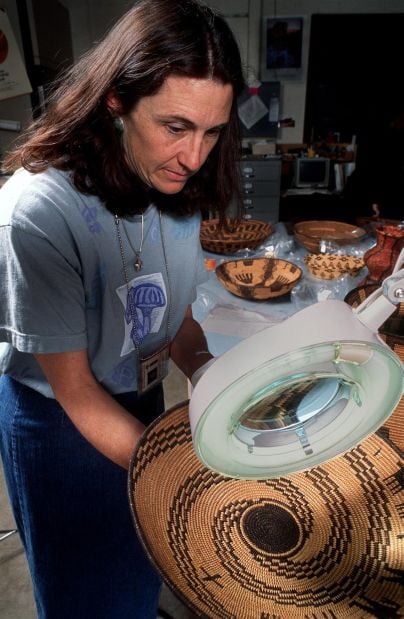
Diane Dittemore, a curator with the Arizona State Museum at the UA, shows off an Apache basket which will be exhibited at the annual open house on April 4. These rarely exhibited baskets will be shown for one day only at the museum. Photo taken on 3/18/98.
Arizona State Museum celebrates 120 years
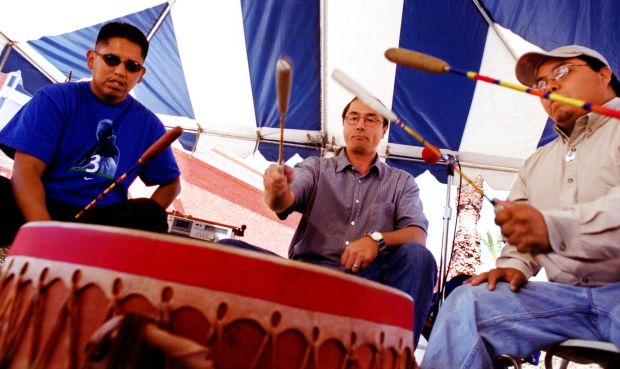
Erick Johnson,Joseph Martin, J. Cedar, are a Southern Style Drum Group that played during the Southwest Indian Art Fair, held at the Arizona State Museum on the UA Campus. Photo taken on 2/27/2000.
Arizona State Museum celebrates 120 years
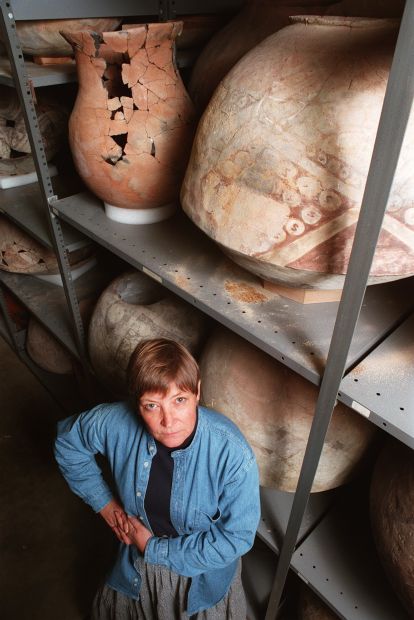
Neg~68421; 1995 file photo of Arizona State Museum curator Jan Bell with large Hohokam pots that date back to the 12-1300's. The pots are beginnning to crumble due to inadequate environmental conditions at the museum.
Arizona State Museum celebrates 120 years
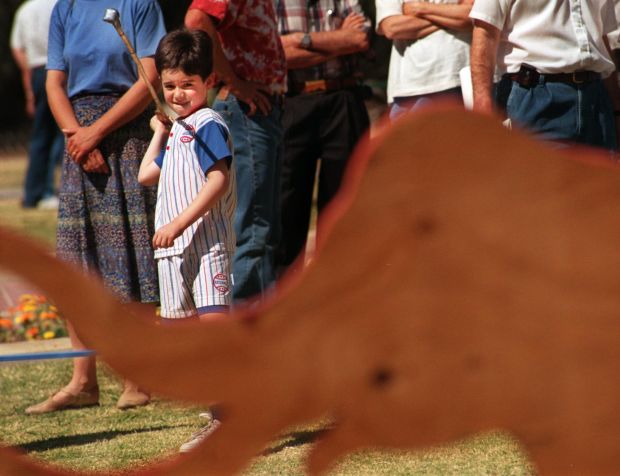
Henry Schwebel, 6, takes aim at a plywood cutout of a wooly mammoth (which disappeared from Arizona about 12,000 years ago) - his weapon of choice is an atlatl, a spear-thrower used in the southwest until about 1500 years ago. Gripped in his hand, it is a lever that uses a snap of the wrist to increase a hunters range and power (and pierce the mammoth's thick skin) The occasion was an open house at the Arizona State Museum, located on the UA campus - part of Arizona Archaeology Awareness Month. Visitors could check out the museum exhibits and demonstrations on spear point making, basket weaving and rock art. Photo taken on 3/20/99.
Arizona State Museum celebrates 120 years
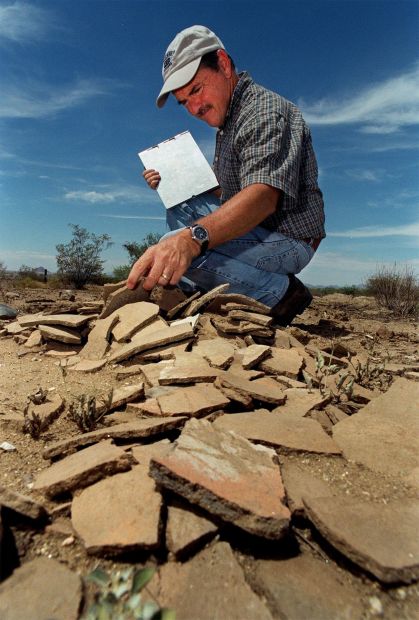
John Madsen, Antiquity Permits Administrator for the Arizona State Museum, looks over pot sherds discarded by pot-hunters at an illegal site on state trust land to the West of the Tortolita Mountains, north of Tucson. Sales of artifacts on the internet (via auctions like ebay) may encourage looters, Madsen believes. Photo taken on 7/14/2000.
Arizona State Museum celebrates 120 years
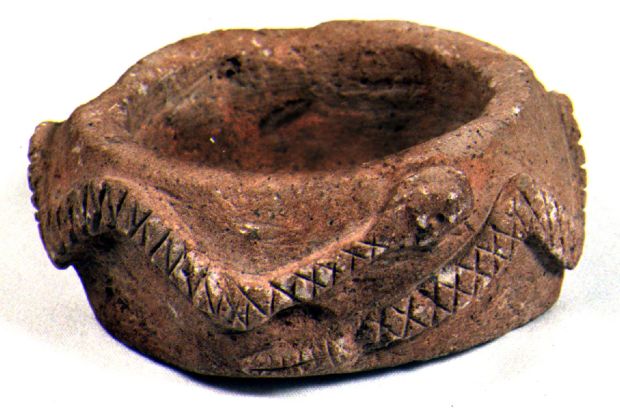
This is a rattlesnake carved stone bowl from the Hohokam site near Ruthrauff and Interstate 10 called Hodges. The site was excavated in the 1930s and the artifacts are now at the Arizona State Museum at the University of Arizona. Copyright 1996 The Arizona Daily Star
Arizona State Museum celebrates 120 years
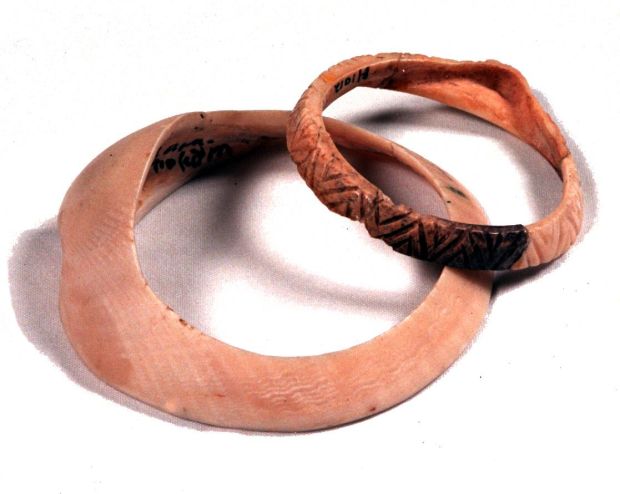
These are Hohokam bracelets made clam shells with carved decorations along the edges. They are taken from a site called Hodges located around Ruthrauff and Interstate 10. They were excavated in the 1930s and are part of the collection at the Arizona State Museum at the University of Arizona. Copyright 1996 The Arizona Daily Star
Arizona State Museum celebrates 120 years
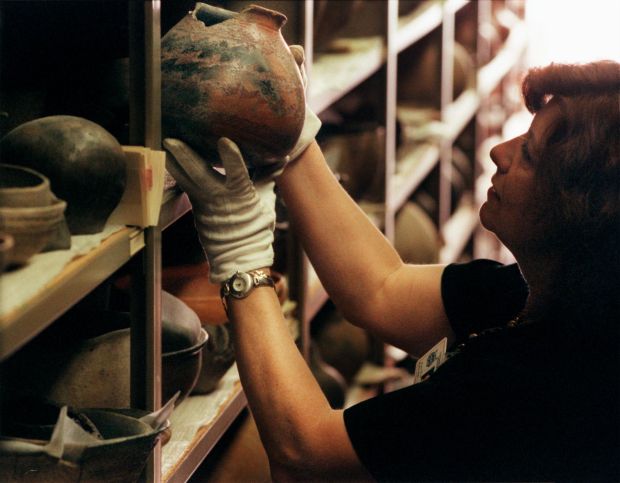
Suzanne Griset, head of the Collections division at the Arizona State Museum, carefully handles a Rincon red-on-brown jar with evidence of color and surface damage, due to soluble salt that has migrated to surface with humidity fluctuations. The Saving Southwest Traditions: The Potery Project, which opened Friday morning at the Museum, celebrates ASM's pottery collection's designation as a national treasure (via Save America's Treasures project) This should help with money to update their climate control and begin restorations. Photo taken on 3/16/2000.
Arizona State Museum celebrates 120 years
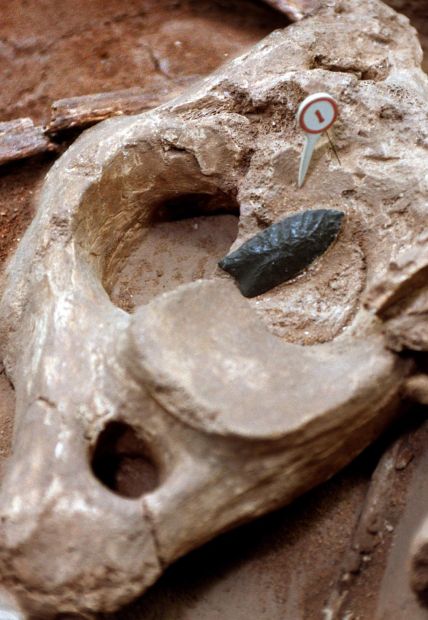
A spearhead imbedded in the cervical vertebrae (in the neck) of a mammoth indicates the existence of man and beast at the same time. The mammoth, found in 1952 by Emil Haury near Naco, Az., was killed on the sandy bank of a stream covered in clay and silt. Photo taken on 1/20/2000.
Arizona State Museum celebrates 120 years
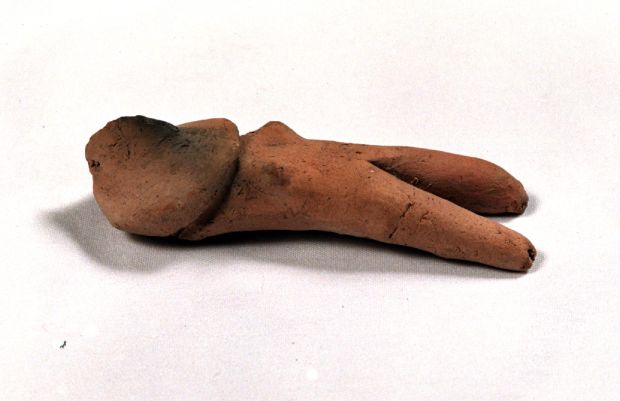
This is a figurine made of pottery and is part of the collection at the Arizona State Museum at the University of Arizona. It was found at the Hodges site in the 1930's which is near Ruthrauff, east of I-10. Copyright 1996 The Arizona Daily Star
Arizona State Museum celebrates 120 years
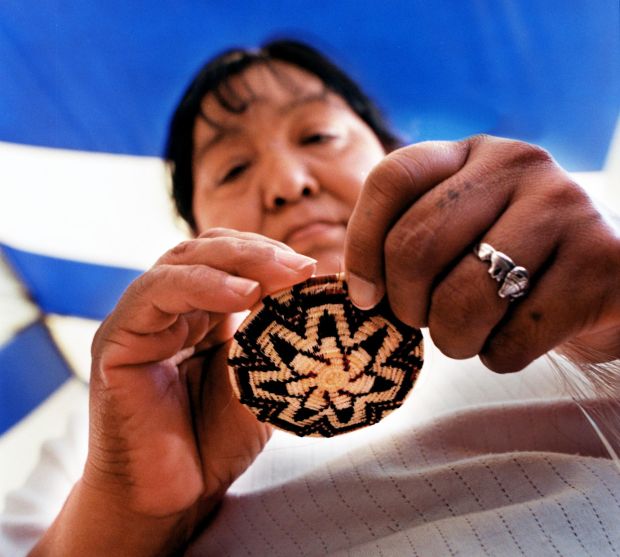
Geneva Ramon a Tohono O'odham Indian makes Miniature Horse hair Baskets at the Southwest Indian Art Fair at the Arizona State Museum on the UA Campus. A basket this size takes about two months to complete. Feb. 27, 2000.
Arizona State Museum celebrates 120 years
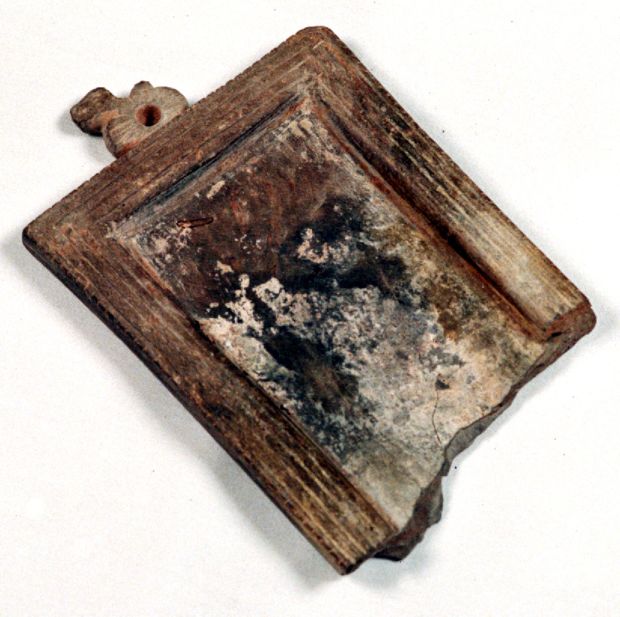
This is a color pallete made of schist and has a snake figure on the end. It was taken from a Hohokam site at the Hodges site in the 1930s. It is located near Ruthrauff and Interstate 10 and is part of the collection from the Arizona State Museum at the University of Arizona. Copyright 1996 The Arizona Daily Star
Arizona State Museum celebrates 120 years
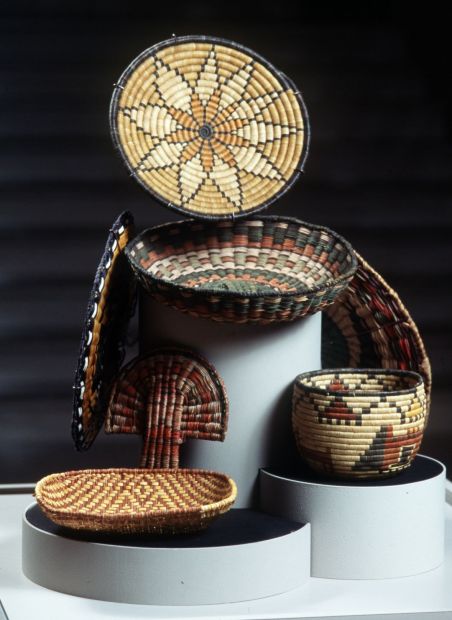
Assembled group of Hopi baskets which represents different eras from the 20th century. The display was part of a basket weaving workshop at the Arizona State Museum. Copyright 1996 The Arizona Daily Star
Arizona State Museum celebrates 120 years
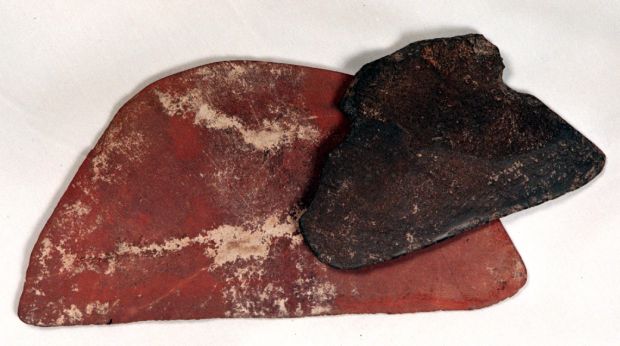
These are tubular knives used by Hohokam for cutting agave, digging pits and making canals. They are from the collection at the Arizona State Museum at the University of Arizona. The red stone is a rhyolite and the darker one is basalt. Copyright 1996 The Arizona Daily Star
Arizona State Museum celebrates 120 years
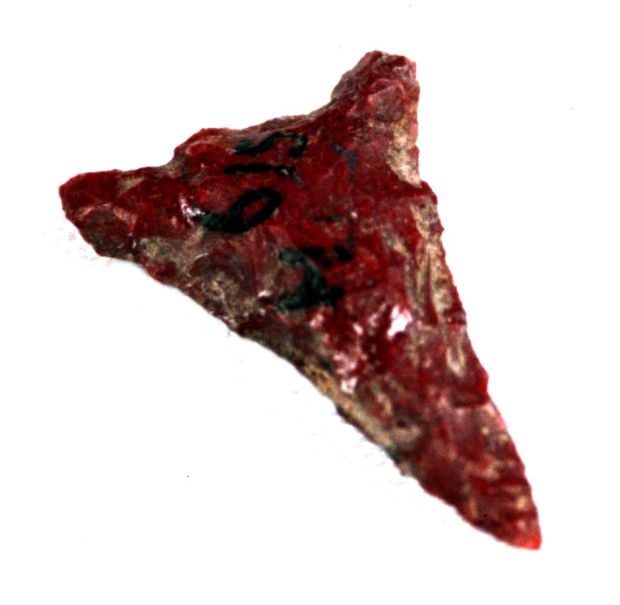
This is a Hohokam arrow head made from jasper from the collection of the Arizona State Museum at the University of Arizona. Copyright 1996 The Arizona Daily Star
Arizona State Museum celebrates 120 years
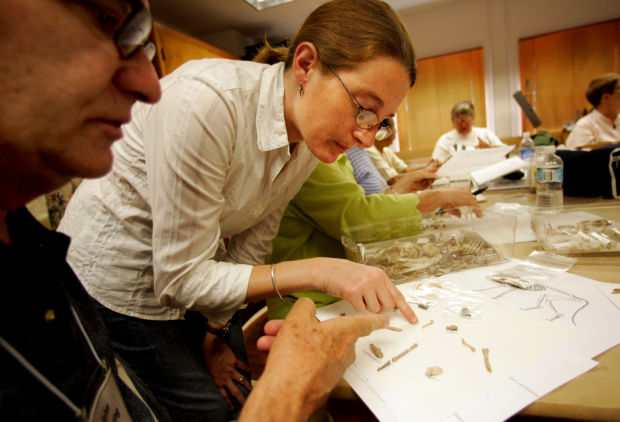
Barnet Pavao-Zuckerman, an assistant curator of zooarchaeology at the Arizona State Museum, helps John Scheuring figure out what bones belong to what animal on July 27, 2006 in Tucson, Ariz. The Arizona State Museum's Archaeology Summer Camp for Adults, allows people to do indoor laboratory exercises and learn about archaeology. There are lectures, hands-on activities, and tours.
Arizona State Museum celebrates 120 years

Mickey Lorring and his daughter Molly, 2, don flowered wreaths on their heads as they watch a performance during Marking the Summer Solstice: A Multicultural Celebration at the Arizona State Museum in Tucson, Ariz., Saturday June 23, 2007.
Arizona State Museum celebrates 120 years
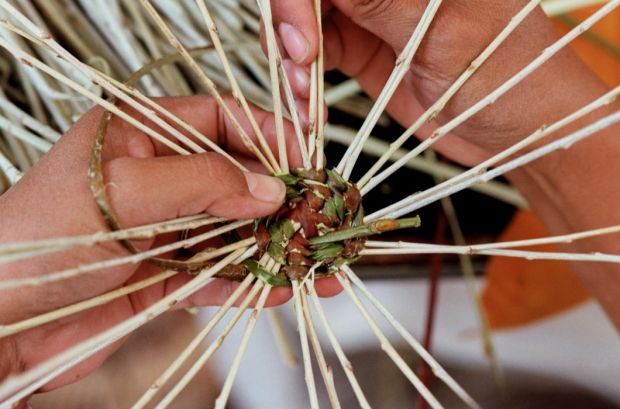
Evelyn M. Rope, a San Carlos Apache Indian, weaves a worry basket which is made of Willow and Cotton stems at the 1999 SouthWest Indian Art Fair at the Arizona State Museum Feb. 27, 1999.
Arizona State Museum celebrates 120 years
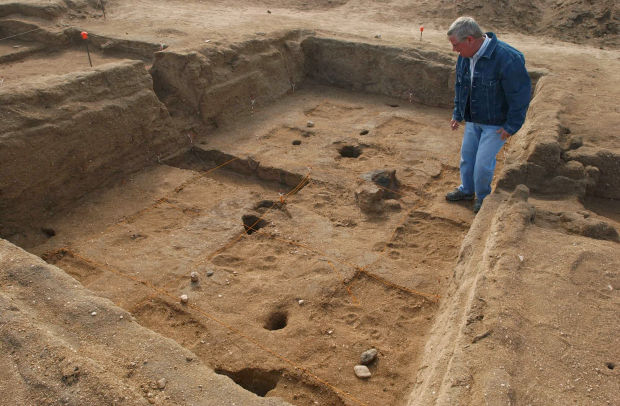
Paul Fish, curator of archaeology for the Arizona State Museum at the University of Arizona, explores the ground floor of what may have been a Hohokam Indian family residence. The Marana site is among the best-preserved examples of Hohokam culture, Fish said. March 29, 2007.
Arizona State Museum celebrates 120 years
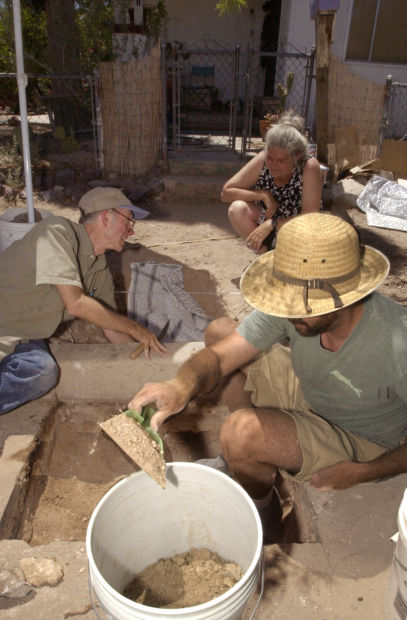
Homer Thiel with Desert Archaeology puts soil into a bucket on Monday, June 6, 2005, as John McClelland talks with Lane Beck who are both with the Arizona State Museum, as they excavate an area where a local resident found skeletal remains north of downtown Tucson, Ariz. The head of the skeleton is underneath the sheet next to McClelland.
Arizona State Museum celebrates 120 years
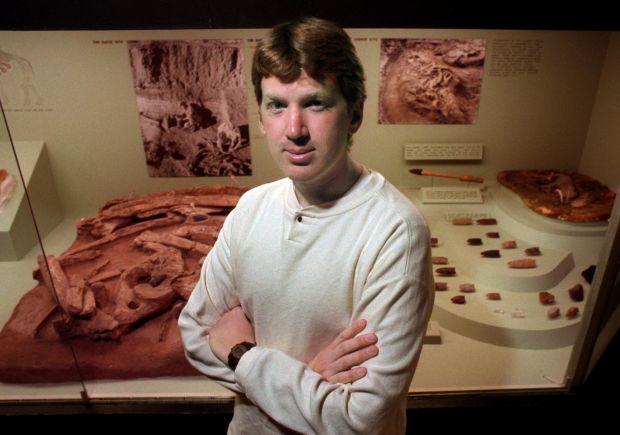
Eric Kaldahl, with Old Pueblo Archaeology Center, stands in front of an Arizona State Museum exhibit at the UA. The mammoth remains on display were found by Emil Haury in 1952 near Naco, Az. Kaldahl is giving a lecture about ancient elephant hunters in Arizona and the methods they may have used. Photo taken on 1/20/2000.
Most Popular

Thursday's news: What you missed while you were at work.

Our weekly round-up of letters published in the Arizona Daily Star.

Don't miss Wednesday's most popular stories from Arizona Daily Star.

Get a quick digest of today's top local news stories from Arizona Daily Star.

Get a recap of Tuesday's local news stories from Arizona Daily Star.

The Wildcats never held a lead in losing to the Wolverines 91-73 in the late game of Saturday's Final Four, April 4, 2026, Indianapolis, Ind.