

54 historical then and now photos of Tucson
This is the latest installment of photographs from Tucson's past that have been rephotographed, as best as possible, to show what things look like today.
Tucson then and now
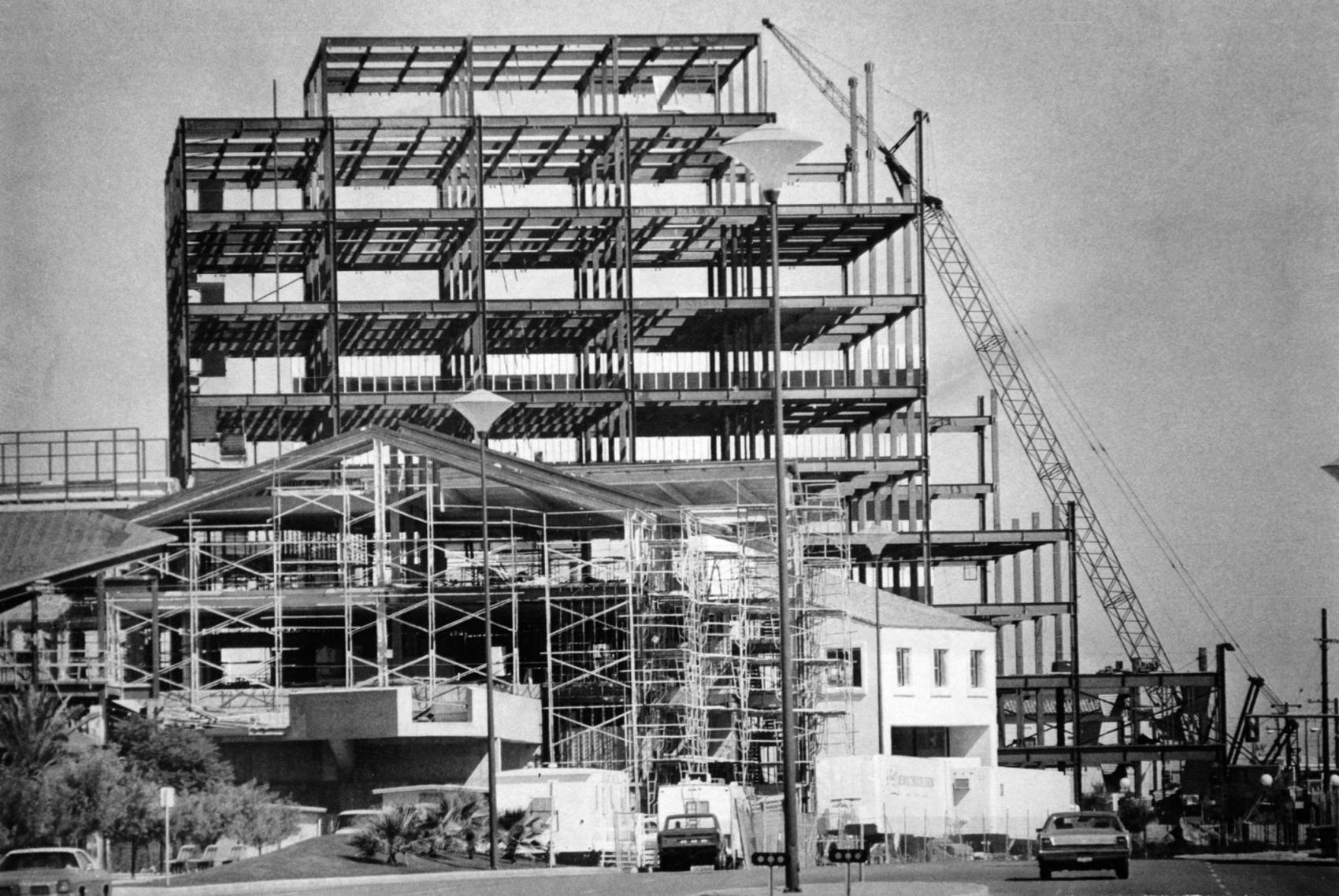
La Placita Village and the United Bank building, foreground, is under construction by M.M. Sundt Construction Company in September, 1973. Looming behind is metal frame of the Hotel Arizona at the Tucson Community Center.
Tucson then and now

A passenger boards the streetcar on Broadway Boulevard near Stone Avenue in Tucson, on Jan 30, 2019.
Tucson then and now
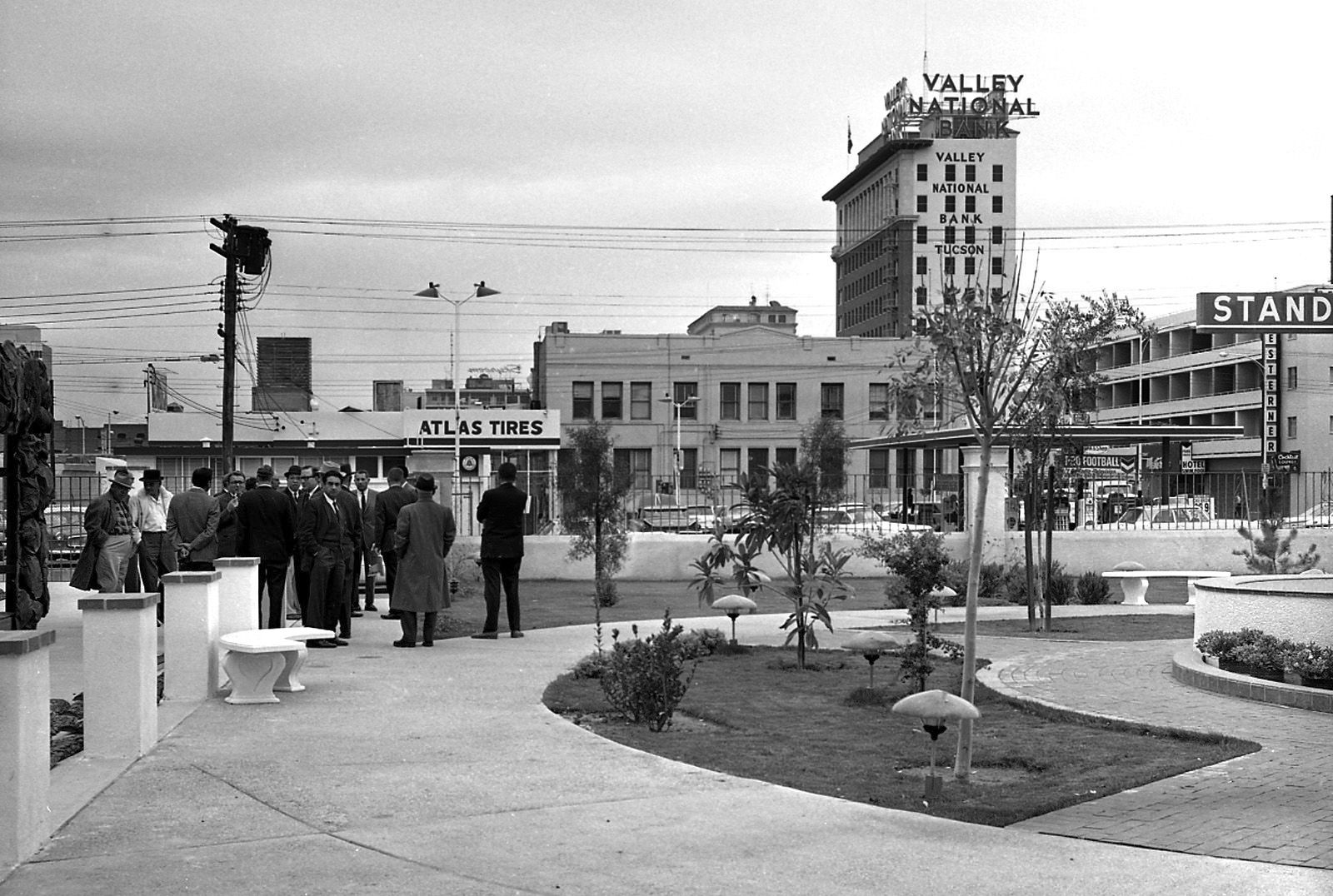
Tucson Mayor Lew Davis, city councilmen and other city officials conduct a walking tour in front of the St. Augustine Cathedral, to survey the conditions of buildings on December 9, 1964. The area surveyed was south of the downtown area and became part of the urban renewal project that changed the face of Tucson.
Tucson then and now

Work continues in front of the Roman Catholic Diocese of Tucson's new office building next to the Saint Augustine Cathedral at 192 S. Stone Ave., on April 2, 2019.
Tucson then and now
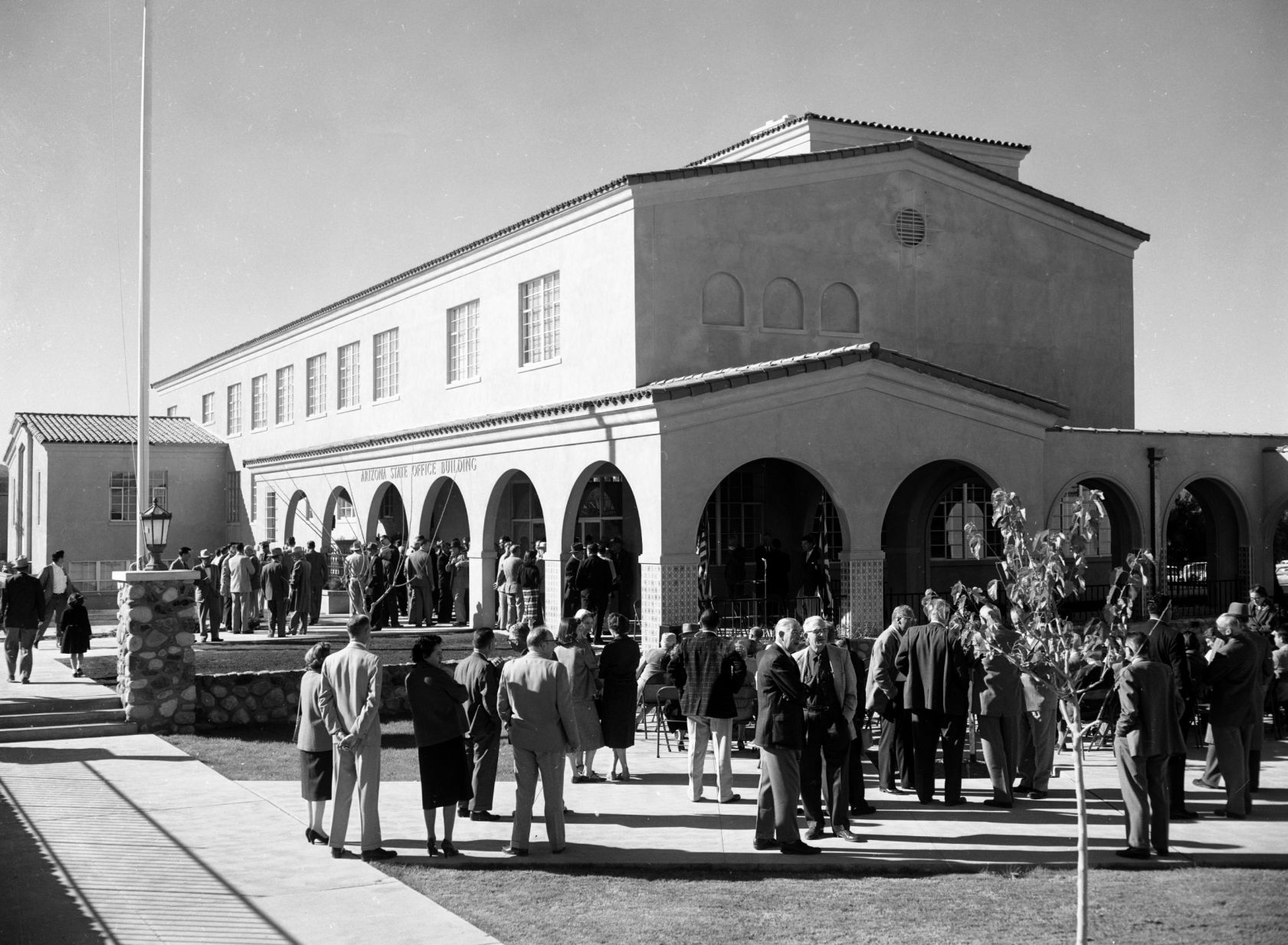
The Arizona State Office Building in Tucson was a $600,000 structure that housed the Arizona state offices for Southern Arizona which was dedicated on Dec. 29, 1958. State Sen. Hi Corbett acted as master of ceremonies. U.S. Sen. Ernest McFarland made his final public appearance before leaving office. However, the building could not be occupied until the Legislature met on Jan. 12 and made an emergency appropriation for maintenance.
Tucson then and now

The Arizona State Office Building, at 416 W. Congress St., is in downtown Tucson, on Jan 30, 2019.
Tucson then and now
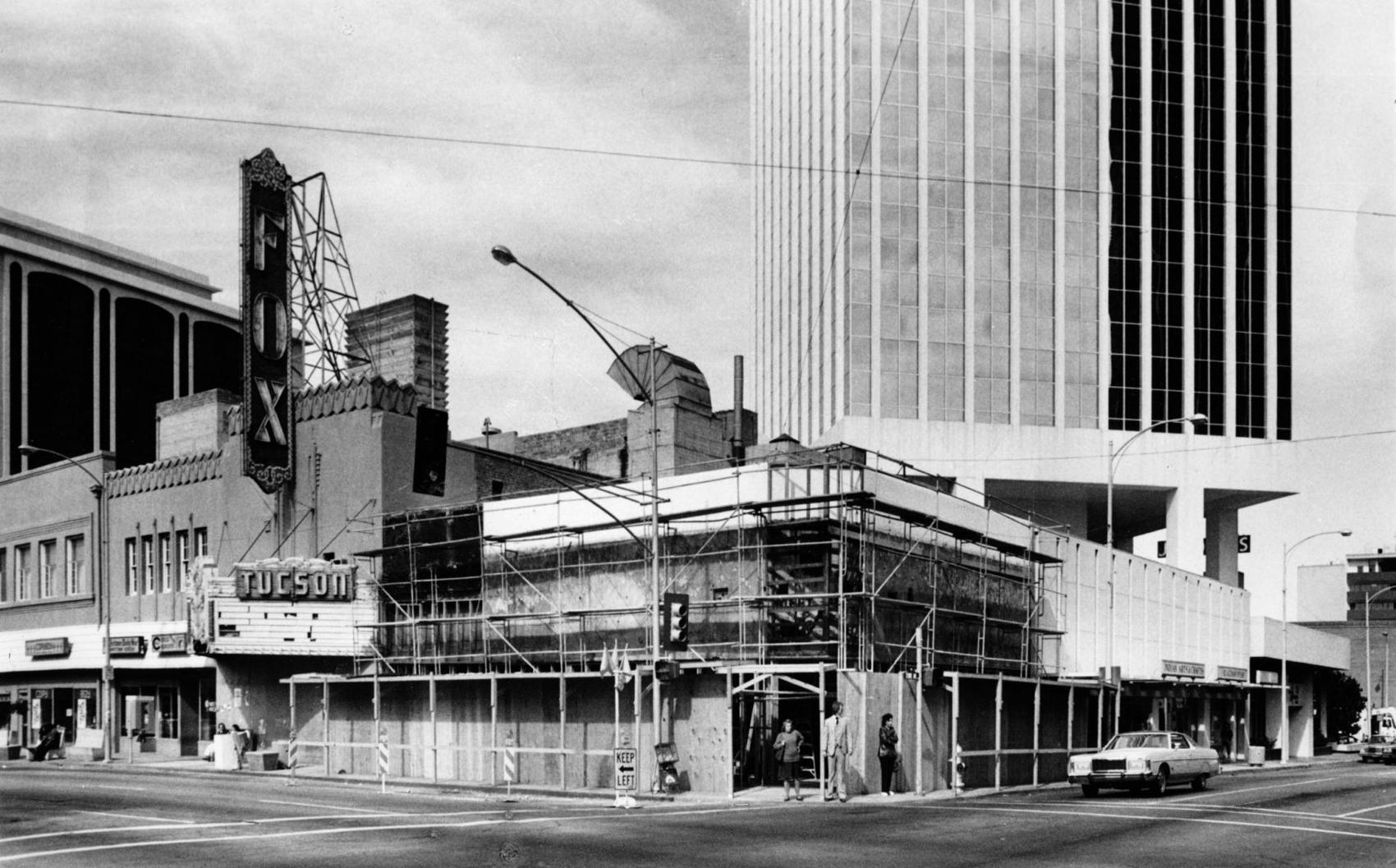
The businesses at Congress St. and Stone Ave. got an $80,000 facelift in 1982. Some $10,000 came from a U.S. Housing and Urban Development Grant but that didn't improve the still shuttered Fox Theater next door.
Tucson then and now

Bruegger's Bagels at 1 W. Congress St., at Stone Avenue, in downtown Tucson, is located next door to the historic Fox Theatre on Jan 30, 2019.
Tucson then and now
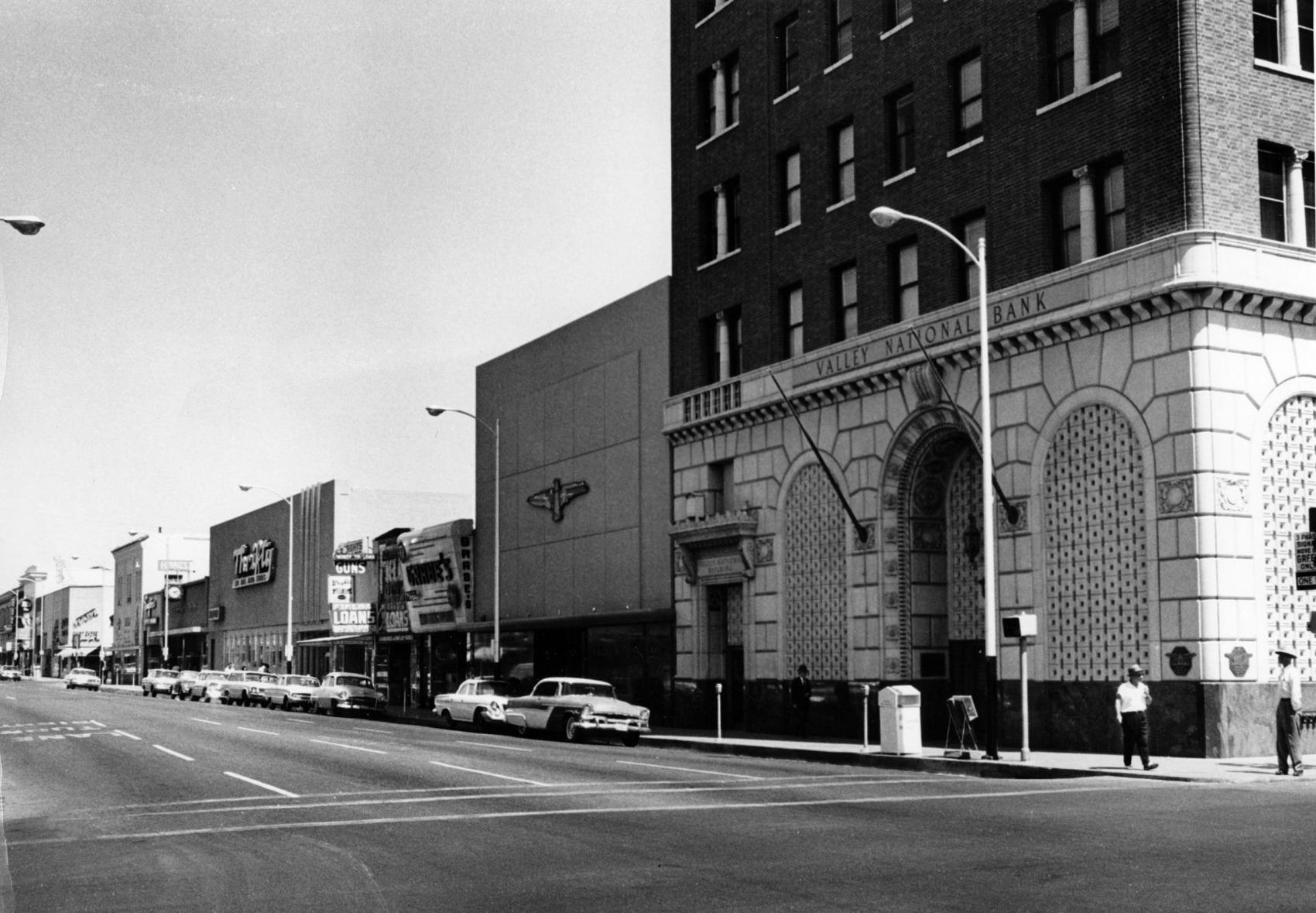
Congress Street in Tucson, looking east from Stone Avenue toward the Thrifty's, Field's Jeweler's & Loan and the Grabe Electric Company in June, 1965.
Tucson then and now

The Chase Bank building, right, at 2 E. Congress St., in Tucson, is a historic building and still very recognizable in contrast to the new building construction on the five-story City Park building at 20, 40 and 60 E. Congress on Jan 30, 2019. It is expected to be three buildings connected through patios that may have entertainment venues such as a bowling alley, pinball arcade but also include the Hexagon Mining technology firm.
Tucson then and now
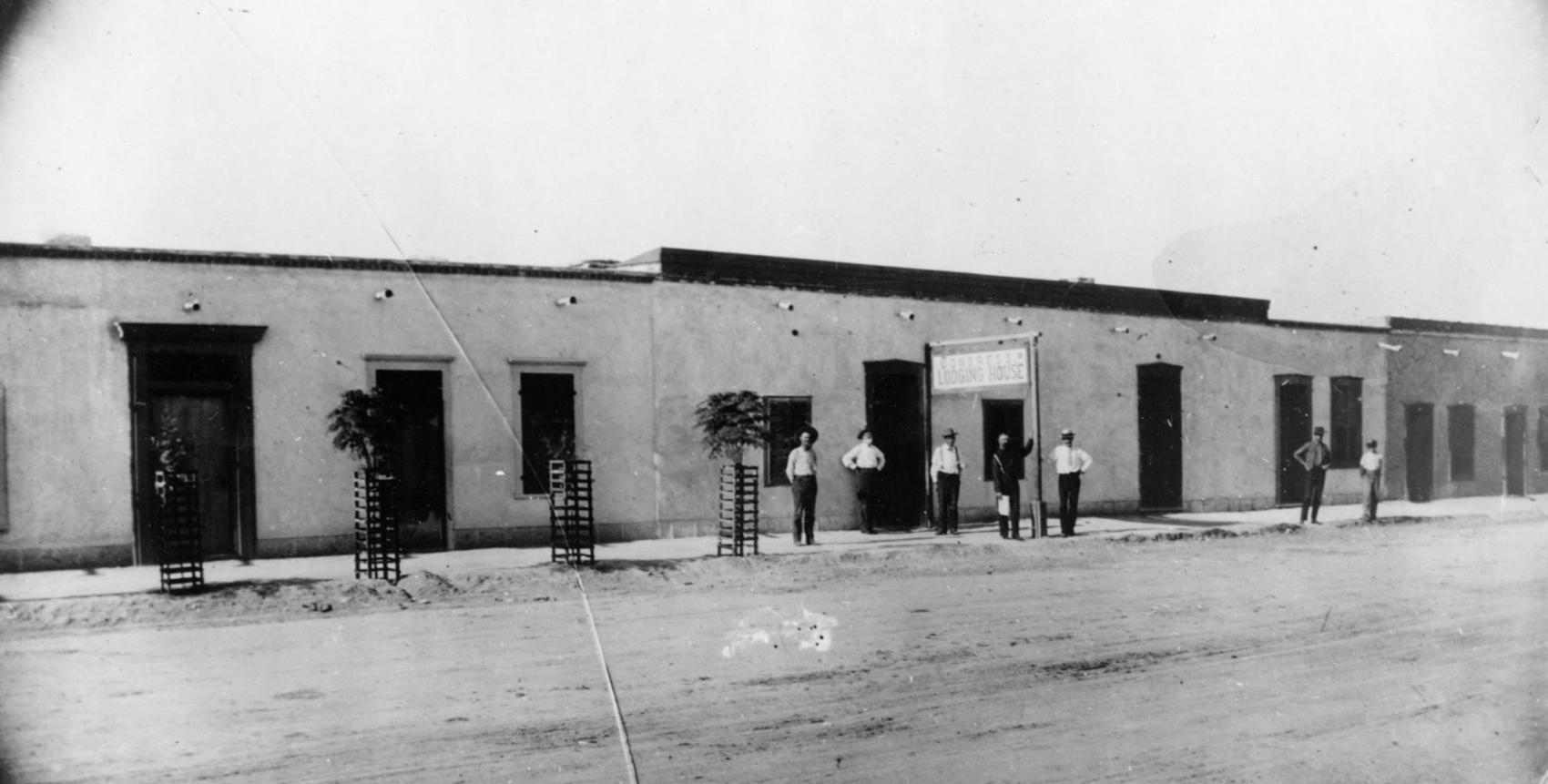
The Congress lodging house on the north side of Congress Street between Stone and Scott, Tucson, in 1891. Capt. Johnson, proprietor, is second from left.
Tucson then and now

Krikawa Jewelry, Chic Boutique and Spa share the block with the Old Pueblo Parking Garage in downtown Tucson, on Jan 30, 2019. Krikawa, left, at 21 E Congress St., is an internet based, jewelry design house creating custom, one-of-a-kind styles. The Chic Boutique and Spa, at 40 E. Congress St., offers a variety of products and services for women to look and feel their best. They feature clothing and unique accessories such as handbags, boots in addition to services like waxing, manicures, facials and more.
Tucson then and now

Downtown Tucson parade on East Congress Street and Sixth Avenue, looking east, during the world premiere of the movie "Arizona" in 1940. It was the first full-length movie filmed at Old Tucson Studios.
Tucson then and now

Traffic continues west along East Congress Street which, at least architecturally, has mostly been unchanged for decades in downtown Tucson, on Jan 30, 2019.
Tucson then and now
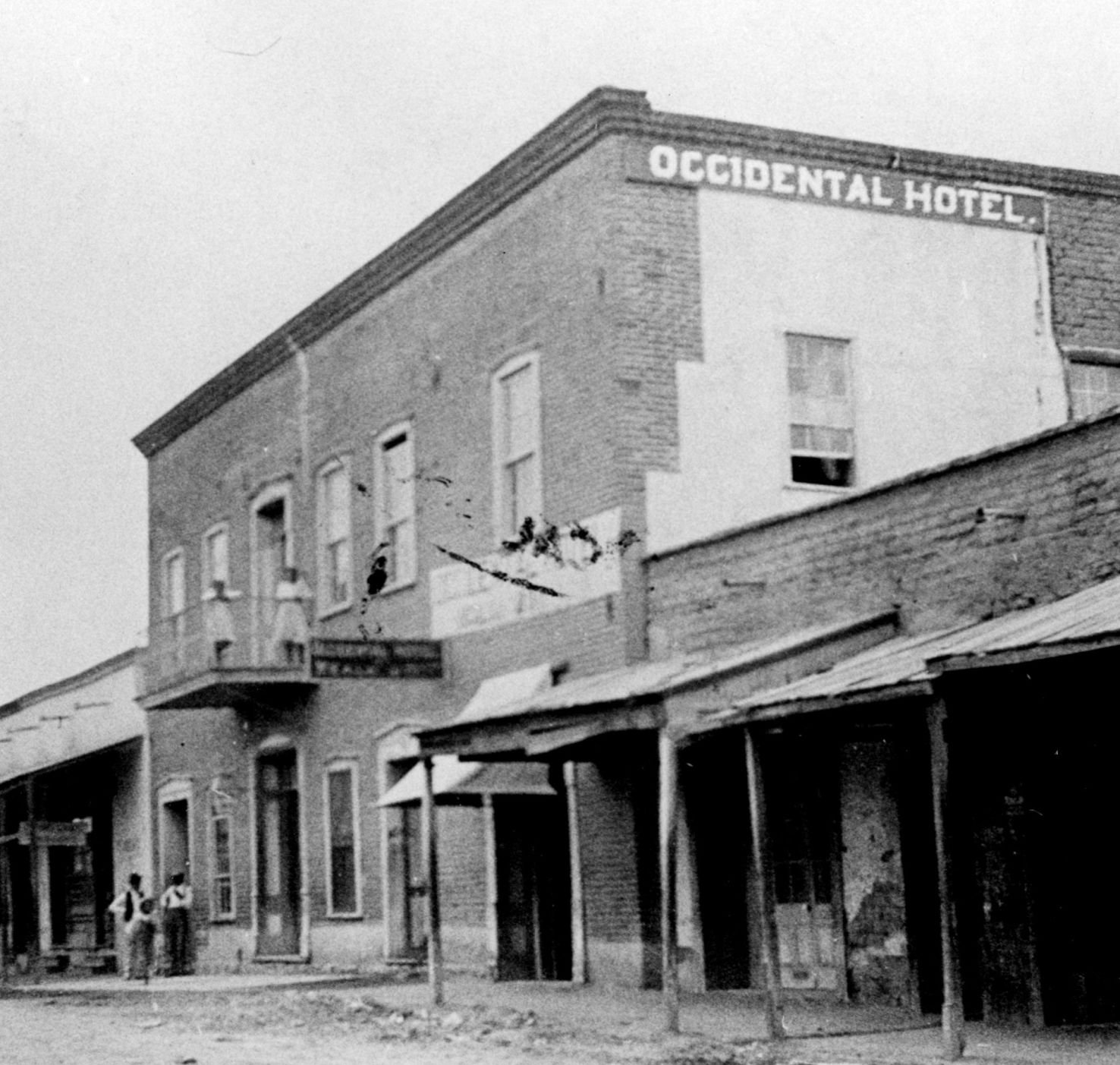
The Occidental Hotel, which was at one time was known as the Palace Hotel, was on Meyer near Camp Street. Camp Street was later renamed Broadway, Tucson, in July, 1899.
Tucson then and now

The front office of the Tucson Roadrunners Ice Hockey team at 175 W. Broadway Blvd., on Feb 4, 2019. It is on the site of the former Hotel Arizona.
Tucson then and now
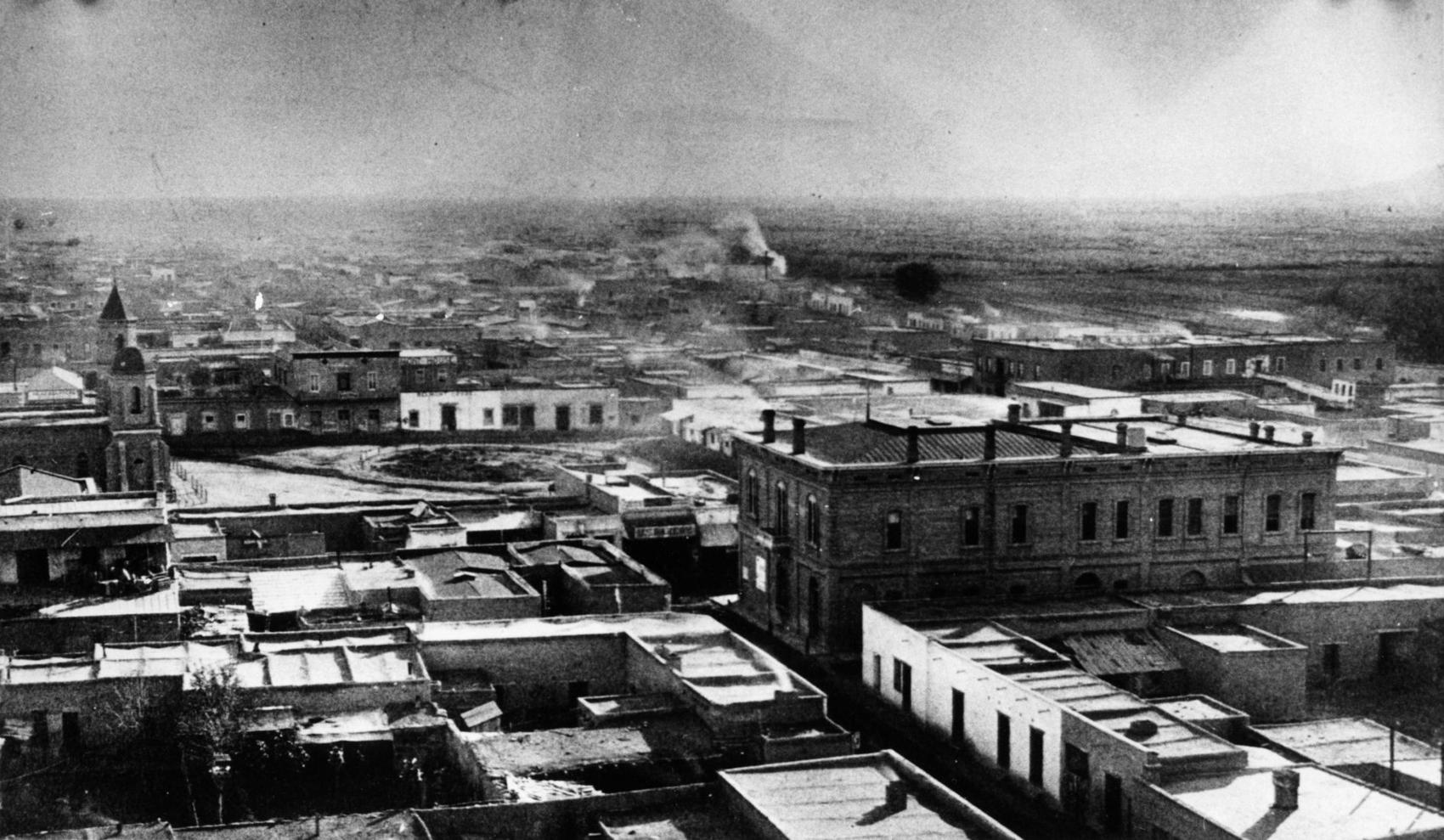
Tucson as it looked around 1890. St. Augustine Cathedral is at left and the park, now called La Placita Park, is left of center. The Windsor Hotel and bar, the two-story building at right of center, is on the northwest corner of Congress Street and Court Avenue.
Tucson then and now

The Pima County Superior Court building, left, the county's administration building, middle, and the adult probation building in downtown Tucson, on March 11, 2019. (Photo taken through the bars inside the dome of the old Pima County Courthouse.)
Tucson then and now

The Louis Zeckendorf Store, left, and the Leo Goldschmidt Furniture Store on Main Street at Pennington (Pennington is between the two buildings) in Tucson, in 1887. It was decorated for a parade honoring Gen. Nelson A. Miles for capturing Geronimo. Years later Zeckendorf bought the Goldschmidt building.
Tucson then and now

The Tucson Federal Building, an eight-story structure that was built in 1980, is at 300 W. Congress St., on Jan 30, 2019. Major tenants of the building are: the Government Services Administration, Department of Labor, U.S. Forest Service, the Internal Revenue Service and more.
Tucson then and now

Volunteer soldiers pose near the Orndorff Hotel, right, in 1898, before leaving for the Spanish-American War. The statue of a soldier located in Armory Park is in memory these volunteers. The hotel was located at Pennington and Main but the photo was taken from Pennington near Meyer looking west. It was previously called the Cosmopolitan Hotel. The letters "L. ZE" (for Louis) Zeckendorf stores, located on Main Street, is visible in the background. His other store is visible on the left in the background. Zeckendorf was the uncle of Albert Steinfeld, who became a prominent businessman.
Tucson then and now

The Tucson Federal Building, as seen from West Pennington Street, is an eight-story structure that was built in 1980 and is at 300 W. Congress St., on Jan 30, 2019. Major tenants of the building are: the Government Services Administration, Department of Labor, U.S. Forest Service, the Internal Revenue Service and more.
Tucson then and now

An undated photograph of the original St. Augustine Cathedral. Construction began in the early 1860s and was completed in 1868. When the structure was demolished, the facade was disassembled and is now the facade of the Arizona Historical Society, at 949 E. 2nd Street. Photo courtesy of the Diocese of Tucson Archives
Tucson then and now

Veinte de Agosto Park in downtown Tucson was named for the birthday of the city, August 20, 1775, and it is bound by Congress Street., Broadway Boulevard and Church Street, on Feb. 11, 2019. The one acre park is on the site of the original San Augustine Cathedral. It was located along what was then Camp Street, now Broadway, and South Church Street. The flagpoles, right, are used during the celebration of the city's birthday and commemorate the six flags that have flown over Tucson. It is also the home of the Pancho Villa statue. The park is currently closed.
Tucson then and now

N. Stone Ave. between Pennington Street and Alameda, Tucson, in 1903. Church at the far right is now the site of the Pioneer Hotel. Dark building at upper right is the San Xavier Hotel, now the historic Southern Pacific train depot.
Tucson then and now

Jacome Plaza in downtown Tucson is also the site of the Joel D. Valdez Main Library on March 11, 2019. (Photo taken through the bars inside the dome of the old Pima County Courthouse.)
Tucson then and now

Congress Street, looking west from Stone Ave, Tucson, ca. 1884. The sign for the Palace Cigar Store is in the background on the left. The taller building on the right is the Windsor Hotel off Court Street.
Tucson then and now

A well-dressed bicyclist rides westbound on Congress Street at South Church Avenue on April 2, 2019.
Tucson then and now

Looking west on Grant Road at Campbell Ave. after a Richfield gas station was demolished in 1966 to make way for the widening and realignmennt of Grant Road west of the intersection.
Tucson then and now

Westbound traffic on Grant Road approaches North Campbell Avenue In Tucson on Feb 4, 2019. The offices of attorneys Lerner and Rowe are is on the left of the photo.
Tucson then and now

Cordova Bros. Smoke Shop at 173 N. Meyer in 1951. It was built in 1850 using 24-inch adobe and Saguaro-beamed ceilings, according to caption information.
Tucson then and now

One of the oldest adobe homes in downtown Tucson, La Casa Cordova, at 175 N. Meyer Ave., is listed in the National Register of Historic Places. It is now part of the Tucson Museum of Art. It was built within the area enclosed by the city's Presidio wall and it may predate the time of the 1854 Gadsden Purchase, according to the museum. Two of its back rooms, on the south side, appear on the 1862 Ferguson map. The Cordova family bought the building in 1936 and lived there from 1944 to 1973.
Tucson then and now

Mature trees provided welcome shade at La Placita Village on a May day in 1978. At one time it was the location of both the downtown bureau's of the Tucson Citizen and the Arizona Daily Star.
Tucson then and now

Demolition of La Placita Village continues even as the Flin Building, background, once the home to El Charro restaurant, remains almost untouched in downtown Tucson, on Jan 30, 2019.
Tucson then and now

A quiet day at the hospitable confines of La Placita Village in 1977. The table was in front of the Arizona Daily Star's downtown office.
Tucson then and now

Demolition of La Placita Village continues even as the Flin Building, once the home to El Charro restaurant, remains almost untouched in downtown Tucson, on Jan 30, 2019.
Tucson then and now

The Lighthouse YMCA Pool at 5th Street and Dodge, Tucson, in June, 1957. The land for the Lighthouse YMCA was donated in 1952. The facility was completed in 1958. They moved to a new facility on Columbus south of Ft. Lowell in the mid-80s.
Tucson then and now

The common area of the Tamarack Condominiums, at 450 N. Dodge Blvd, is centrally located off East Fifth Street and Dodge In Tucson on Feb 4, 2019. It is conveniently located near El Con Mall, Reid Park and is part of the El Montevideo neighborhood.
Tucson then and now

The Pima County Courthouse at Pennington and Court, Tucson, in 1891. It was built in 1881 after the arrival of the railroad and as the population increased. In order to have the space for the new building, more property was needed so a corral, owned by Robert Leatherwood, was purchased at the corner of Church and Pennington. It was a Victorian style, two-story structure with a gray stone foundation. It had two side wings topped by gable attics and a tower with a cupola in the center. It was replaced by the historic Pima County Courthouse (still standing), which was designed by Roy Place in 1928.
Tucson then and now

The historic Pima County Courthouse in Tucson, on Feb. 4, 2019. It is the third county courthouse and was designed by Roy Place and built in 1928 for $350,000. The Spanish Colonial style structure was constructed from brick, covered with stucco and a ceramic tile dome.
Tucson then and now

Pennington Street looking east from Meyer Street in Tucson, in 1887. The parade is in honor of Gen. Nelson A. Miles, who defeated Geronimo, in Arizona. The Tucson Opera House is at right. The second Pima County Courthouse is in the background. It was built in 1881 after the arrival of the railroad and as the population increased. In order to have the space for the new building, more property was needed so a corral, owned by stable owner and sheriff Robert Leatherwood was purchased at the corner of Church and Pennington. It was a Victorian style, two-story structure with a gray stone foundation. It had two side wings topped by gable attics and a tower with a cupola in the center.
Tucson then and now

One of two footbridges that cross into El Presidio Park in Tucson, on Jan 30, 2019. The historic Pima County Courthouse is in the distance at right. It is the third county courthouse and was built in 1928 for $350,000. The Spanish Colonial style structure was constructed from brick, covered with stucco and a ceramic tile dome.
Tucson then and now

The new Eastside (now Ott Family) YMCA at 401 S. Prudence between Broadway and 22nd Street in March, 1969.
Tucson then and now

The Ott Family YMCA, at 401 S. Prudence Rd., has swimming facilities as well as weight training programs, fitness programs, martial arts, a skatepark, basketball and more in Tucson on Feb 4, 2019. There is even a before and after school program.
Tucson then and now

Scan of a water-damaged photo negative that shows La Placita Park on West Congress in Tucson in 1954. Note the Belmont Hotel at left, El Charro Mexican Restaurant and Frank's Billiard Hall. At far right is "A" Mountain.
Tucson then and now

Plaza De La Mesilla, also known as La Placita Park, with its familiar gazebo, was once one of the main parks in downtown Tucson, is partially hidden by large trees as vehicles head eastbound on West Broadway Boulevard on April 2, 2019.
Tucson then and now

The Rev. John Clinton Fowler and some children enter the new St. Michael and All Angels Episcopal Church on Oct. 15, 1953, shortly after the consecration of the church. It was located at the unpaved T-intersection of North Wilmot Road and East Fifth Street. The church was built of adobe bricks made on the site. The same material was used for the stucco. Developer John Murphey loaned the church the money to build the Santa Fe-style church. Rev. Fowler is remembered for his tireless actions against war, hunger, homelessness and social injustice, according to Robert Brisley, who supplied this photo from church archives. The church has the vestments worn in this photo, Brisley says.
Tucson then and now

The St. Michael and All Angels Episcopal Church at 602 N. Wilmot Rd. In Tucson on Feb 4, 2019. St. Michael's began as a parochial mission of St. Philip's in the Hills Episcopal Church. Located on the Harold Bell Wright Estates residential subdivision, the lot became available to St. Philip's by several owners of the estate for the purpose of building a church. Rev. George Ferguson, the rector of St. Philip's, collaborated with architect Josias Joesler and contractor John Murphey to build the church. It was designed in the style of churches in northern New Mexico, such as San Miguel Church, in Santa Fe.
Tucson then and now

Traffic tie-ups like this one in June, 1962, happened several times a day on 22nd Street at the Southern Pacific Railroad tracks in Tucson. Most of the motorists in this picture had to wait 10 minutes for the two-train switching operation. An overpass solved the problem in 1965.
Tucson then and now

Eastbound traffic proceeds over the East 22nd Street Overpass in Tucson on Feb 5, 2019. The overpass was built in the mid 1960s much to the relief of motorists who before had to cross two separate lines of track.
Tucson then and now

22nd Street in Tucson where it crossed the Southern Pacific Railroad main line east of what is now Kino Parkway on March 10, 1953. Twelve years later, a bridge over the railroad tracks was completed.
Tucson then and now

Traffic proceeds towards downtown Tucson along the Barraza-Aviation Parkway underneath the East 22nd Street Overpass on Feb 5, 2019. The overpass was built in the mid 1960s much to the relief of motorists who before had to cross two separate lines of track.
Tucson then and now

Steel beams are in place on the west end of the 22nd Street overpass over the Southern Pacific Railroad in February, 1965. A delay in the delivery of steel put the project about a month behind schedule. The project cost $1,357,000.
Tucson then and now

The East 22nd Street Overpass in Tucson from below where East 21st Street joins with South Campbell Avenue on Feb 5, 2019. The overpass was built in the mid 1960s much to the relief of motorists who before had to cross two separate lines of track.
Most Popular

The annual Fourth of July extravaganza over "A" Mountain took place July 4, 2026, Tucson, Ariz., for the last time. The city is converting fro…

A widespread monsoon storm skirted just south and east of Tucson, Ariz., July 9, 2026, dropping some scattered rains and lighting on the outsk…

Armory Park, closed for nearly nine months for a $1.71 million upgrade, renovation and improvement, reopened with a concert, circus arts, food…

FC Tucson drop in-state rivals Stars FC 4-1 in a pre-Fourth of July USL League 2 match up, Tucson, Ariz., July 3, 2026.

Thursday's news: What you missed while you were at work.

FC Tucson took the lead twice in the second half to drop Capo FC 2-1 with playoff implications on the line, July 10, 2026, Tucson, Ariz.

Get a recap of Tuesday's local news stories from Arizona Daily Star.

Get a quick digest of today's top local news stories from Arizona Daily Star.

Don't miss Wednesday's most popular stories from Arizona Daily Star.

For the month of July, guests can watch animals crush, roll, lick and engulf watermelons during Watermelon Wednesdays at the Reid Park Zoo. Su…