

Photos: Researchers and Tucsonans hunt for fallen meteorite
Researchers are looking for pieces from what is believed to be a meteorite that landed in northwest Tucson on Tuesday evening December 10. The pieces may be no larger than about 50 grams. Scientists are hoping Tucsonans can help them look for the space rocks.
Meteorite Hunt
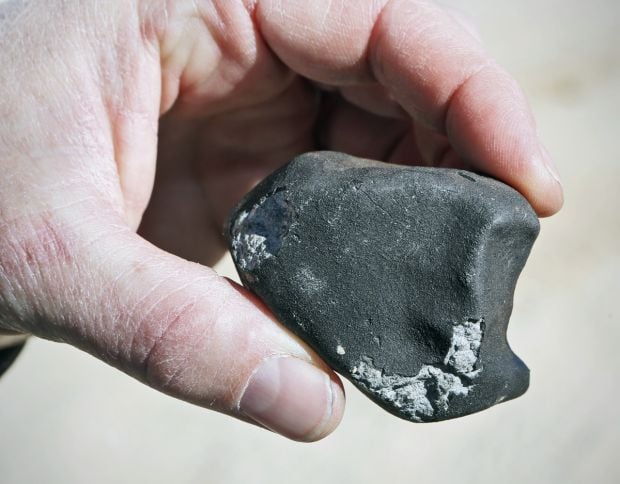
Robert Ward, a volunteer field researcher representing Chicago Field Museum, displays a piece from a meteorite found in Africas as he searches the desert southwest of West Linda Vista Blvd and Hartman Road in Marana, AZ. The piece represents the type of rock they would be searching forf from what is believed to be a meteorite that landed in northwest Tucson on Tuesday evening December 10. Photo taken Wednesday, December 11, 2013. Photo by Ron Medvescek / Arizona Daily Star.
Meteorite Hunt
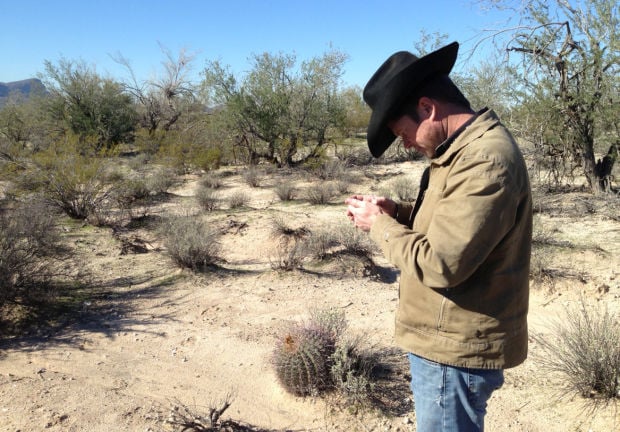
Robert Ward, a volunteer field researcher for the Chicago Field Museum, looks at Doppler weather radar images from NASA on his cell phone near the intersection of West Linda Vista Boulevard and North Linda Vista Place. The images are a graphic representation of areas where meteorites have fallen to the ground. Photo taken Wednesday December 11, 2013. Photo by Ronald Medvescek / Arizona Daily Star
Meteorite Hunt
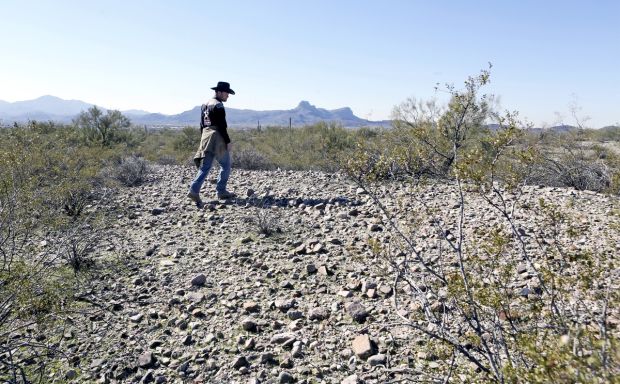
Robert Ward, a volunteer field researcher representing Chicago Field Museum, searches the desert southwest of West Linda Vista Blvd and Hartman Road in Marana, AZ. for pieces from what is believed to be a meteorite that landed in northwest Tucson on Tuesday evening December 10. The pieces may be no larger than about 50 grams said Ward. Scientists are hoping Tucsonans can help them look for the space rocks. Photo taken Wednesday, December 11, 2013. Photo by Ron Medvescek / Arizona Daily Star.
Meteorite Hunt
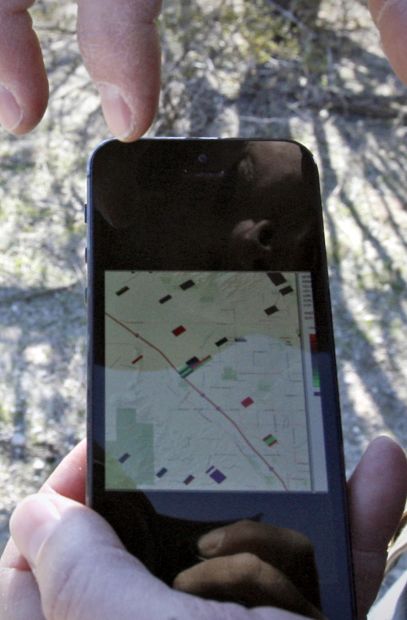
Robert Ward, a volunteer field researcher representing Chicago Field Museum, uses his cell phone to study a map with Doppler radar tracking of what is believed to be a meteorite that landed in northwest Tucson on Tuesday evening December 10. The pieces may be no larger than about 50 grams said Ward. The colors of the readings indicate altitude and direction of travel for the debris. Scientists are hoping Tucsonans can help them look for the space rocks. Photo taken Wednesday, December 11, 2013. Photo by Ron Medvescek / Arizona Daily Star.
Meteorite hunt
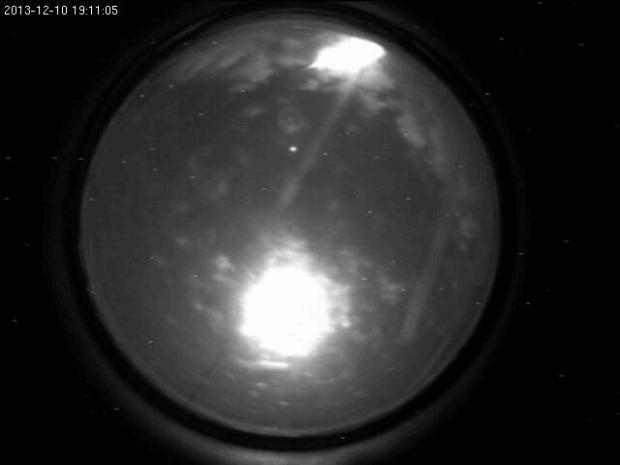
An image from the sky camera at the MMT Observatory on Mount Hopkins shows the size of the bolide — or fireball — in relation to the size of the moon. The moon is the larger white “splotch” in the lower part of the frame. The bolide is the smaller “splotch” at the top of the frame, according to Eric Christensen, a University of Arizona astronomer. Christensen is the principal investigator for the Catalina Sky Survey.

At 7:11 Tuesday night a large meteor entered the earth’s atmosphere northeast of Phoenix and broke up over Marana, said Robert Ward is a voluntary field researcher representing the Chicago Field Museum.

Most meteors that hit the Earth are small or break up before landing, like the one that broke up over northwest Tucson on Tuesday night. There…