

By now, you've probably heard a lot of it before:
You need to save money. Conserve around the house. Make a few small changes and it all adds up.
But how much have you really changed your habits? Have you looked around your house to see what simple things you can do to save money?
Much of what you can do involves energy conservation, be it natural gas, electricity or water usage.
We checked in with some hardware store owners around the region and talked to the folks at our local utilities to find out what all of us could be doing more of in order to save a little more around the house.
And yes, it's true — make a few small changes and it all adds up.
"Every little bit helps," said Joe Salkowski, a spokesman for Tucson Electric Power Co. "Some of the steps you can take produce limited savings, but combined with everything else you do, it really can have an impact."
People are also reading…
In addition to energy conservation, people are fixing their own stuff nowadays, said Verla Herbert, one of the managers of Sunrise Ace Hardware at 4749 E. Sunrise Drive.
"People are more conscious of how they're spending their money, and they're making much better decisions," she said.
TIP #1: LIGHTBULBS
Change your incandescent lightbulbs to compact fluorescents.
One CFL can save you $5 to $10 per year, and installing five of them can save $250 over the life of the bulbs, according to TEP.
"CFLs are great because they're pain-free," Salkowski said. "They're very easy to use because you don't have to do anything differently."
The bulbs not only reduce the amount of electricity your light sockets use, but they also reduce the amount of heat put off by bulbs, keeping your house cooler as well, Salkowski said.
TEP has negotiated with several manufacturers of CFLs to provide local retailers with discounted CFL lightbulbs, Salkowski said.
The discounted bulbs are available everywhere from large home-improvement stores to dollar stores and smaller hardware stores, with signs on the shelves marking them as part of the TEP program, he said.
TIP #2: LAUNDRY
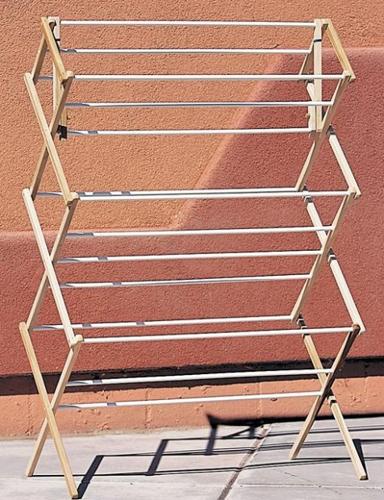
Hang your laundry to dry.
"One of the things I see people buying more and more is clotheslines and clothespins," Sunrise Ace's Herbert said.
She's seen increasing interest in lines of all kinds, from the kind you set up in your backyard to the retractable kind you can install across the length of your bathtub. They run anywhere from $18.59 to $54.99, she said.
Compare that to the cost of running your clothes dryer, said Libby Howell, a spokeswoman for Southwest Gas.
Southwest Gas last did a study on dryers last year, she wrote in an e-mail. The cost of operating a dryer varies by what powers it, she said.
An electric dryer that ran for 1,372 kilowatt hours cost $85 per year. A propane dryer that used 44 gallons of propane cost $141 per year. And a natural gas dryer that used 40 therms cost $57 per year. So basically, if you invest in a nice clothesline, it will pay for itself in about a year or less.
TIP #3: COOLING
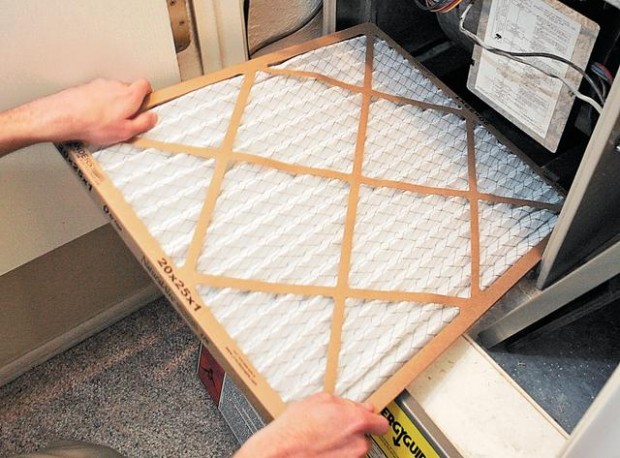
Change your air conditioner filters frequently or maintain your own evaporative cooler.
The air conditioner filter should be changed every month to maintain maximum efficiency, said John Piccoli, manager of the Oro Valley Ace Hardware at 11921 N. First Ave.
And coolers aren't hard to maintain either, said Fred Kirkpatrick, one of Piccoli's salesmen.
Essentially, the pads just need to be kept clean, which isn't hard to do, he said.
Pads for Master Cool units last three or four years, he said. Otherwise, the pads should be replaced every year.
But if you do it yourself, you save the labor costs of having a professional do it, and you possibly save on the markup a professional might charge you.
TIP #4: RAINWATER
Capture the water that comes off your roof and use it in your yard.
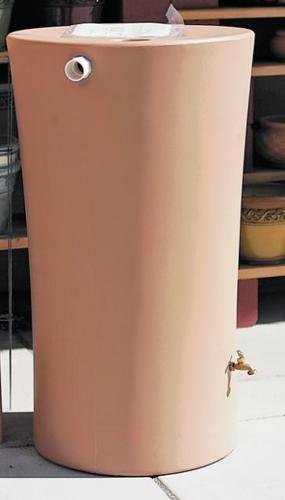
Piccoli markets a 90-gallon rainwater harvesting tank for about $200, while Herbert said her store carries rain barrels for about $100.
Both are intended to catch rainwater as it comes off your roof, and some models have a spigot attached to the front for a garden hose.
"That little bit of extra water is basically free coming off your roof," Herbert said.
Piccoli acknowledged such equipment costs a little bit upfront but said it has the potential to pay for itself within a year because of what you'll save in watering your landscaping.
TIP #5: COATING
If you have a flat roof, cover it with white coating.
"People are painting their roofs white to reflect the heat," Findysz said.
Herbert and Piccoli each said they are seeing increased sales in roof coatings.
When Piccoli mentioned the roof coatings, Arizona Daily Star photographer Jim Davis related that he saw an eight-degree drop in the temperature of his swamp-cooled home several years ago after he put white coating on the roof.
TIP #6: TOILETS
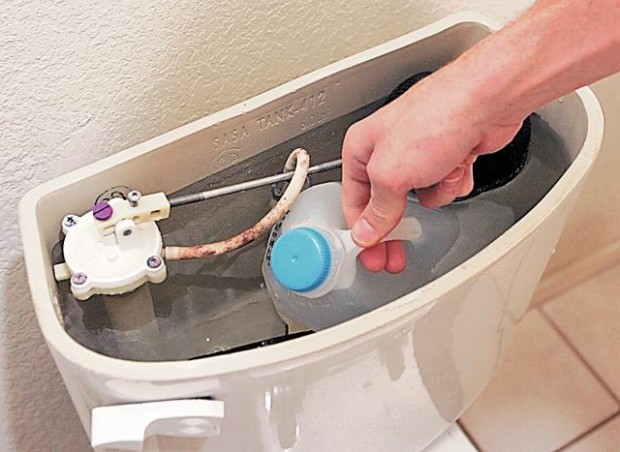
In lieu of a low-flow toilet, displace some of the water in your toilet tank so it takes less water to fill up.
Oro Valley Ace's Piccoli said it's really simple.
You just need an old Windex bottle or two-liter soda bottle. Remove the labels and rinse it out, then fill it with water. Flush your toilet, and while the water is low in the tank, put in one or two water-filled bottles.
Make sure the bottles don't interfere with the toilet's ability to flush!
The money saved on this varies depending on how many gallons of water you're displacing, but it can add up to a couple bucks a month off your water bill.
You should also make sure your toilet doesn't leak. A leaky toilet can waste up to 200 gallons per day, according to the Water Conservation Alliance of Southern Arizona.
To figure out whether your toilet leaks, add food coloring to the tank. If the water in the toilet bowl changes to that color, you've got a leak.
Go online to www.toiletology.com/index.shtml for tips on how to fix a leaky toilet.
TIP #7: THERMOSTAT
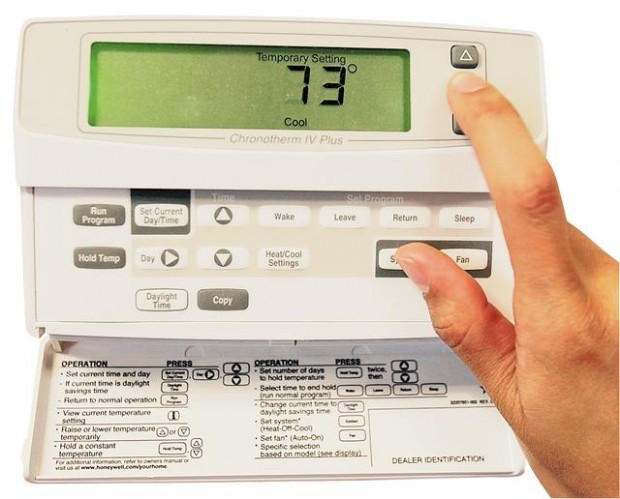
Turn your thermostat down a little in the winter and up a little in the summer.
In the winter, you can save 2 percent of your heating bill for each degree you lower the temperature, said Howell, of Southwest Gas. At night, turning down the heater by 10 degrees can save 7 percent in heating costs.
Similar numbers apply to your cooling bill during warmer months if you turn the temperature up a bit, she said.
TIP #8: WATER HEATER
Turn down your water heater.
"For each 10-degree reduction in water temperature, you can save 3 to 5 percent in energy costs," Howell said. "Turning your water heater temp down also slows mineral buildup, thereby helping your water heater last longer."
It never hurts to wrap your water heater either, even in warm climates, Piccoli said.
TIP #9: COOKING
Cook outside in warm months.
"The less you can heat up your house, the better off you are," Piccoli said.
His counterpart at the Ace Hardware Stores Inc. at 6959 E. 22nd St. agreed.
"We're selling a lot more propane tanks for the barbecue grills," said Joe Findysz, whose family owns the store at 22nd and South Kolb Road as well as four other locations.
Barbecue propane sales have almost tripled over what they normally are at this time of year, he said.
"We're selling more charcoal, too," he added.
TIP #10: ELECTRICITY
Plug your electronics into a power strip that you can turn on and off, and turn that strip off when the electronics are not in use.
Over the last several years, it has become more common for people to have devices that continue to suck energy even when the device is turned off.
This is any electronic item that has a red "standby" light that remains on when the gadget is off.
It's hard to pinpoint exactly how much electricity these things use, but they are one culprit behind the increased per-capita electricity usage over the last decade, Salkowski said.
In fact, last year was the first time in several years that such usage actually decreased somewhat, he said.
Plugging your entertainment center items — not including items on timers, such as recording devices — into a power strip and turning off the strip when nothing is in use is still recommended.
"It is inconvenient, but it is an effective way to make sure your electronic devices are not consuming energy when you're not using them," Salkowski said.
TEP has a great set of online calculators to help you figure out how much energy your gadgets use in just about every part of your house, from your kitchen to your home office to your laundry room. Go online to tep.com/Green/EnergyAdvisor/Calculators.asp to play around with them. The online tools give estimates based on current electric rates.


