

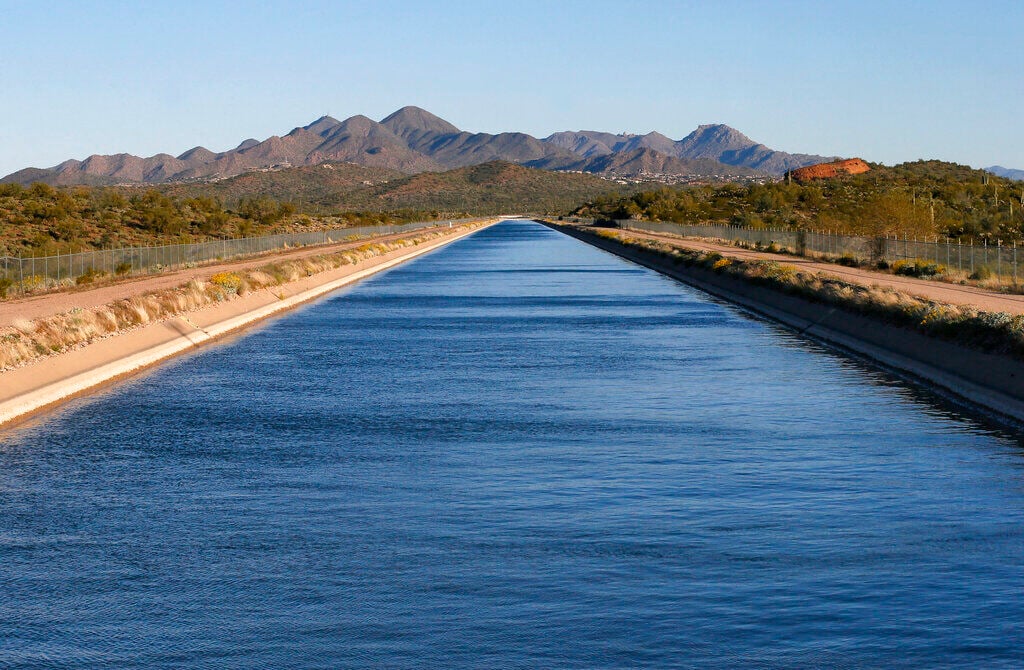
The federal government's proposal for the Colorado River that's most likely to be adopted would slash water deliveries by 77% to the Central Arizona Project, the canal system that brings river water to Tucson and Phoenix for most or all of their drinking water.
Here are five things to know about the proposal:
- It's designed to be imposed by the U.S. Bureau of Reclamation on Arizona and the other six Colorado River Basin states if they can't agree on their own fix for the river's growing deficit between water use and supply. As of now, no such agreement is in sight.
- If Tucson lost 77% of its CAP supply, it could no longer replenish its aquifers with recharged water from the project to be saved for future needs. The city right now recharges around 40% or a little more of its annual supply. A 77% cut would wipe out considerably more than what is normally recharged.
- The proposal would cut a massive chunk of CAP water because it would allocate cuts to the states strictly on the basis of which users have highest priority for the river water, and the CAP has the lowest priority of any user. That's because Arizona agreed when Congress authorized the $4 billion project's construction in 1968 to take the lowest priority for access to river water in the event of shortages.
- Depending on what kind of public comments the bureau gets on its proposals, it could very well change that alternative to reduce the cut to CAP, two outside experts told the Star.
- The bureau has to make a final decision on which of five alternatives, including this one, to pick so it can take effect by the end of September, when the river's current federal operating guidelines expire. The bureau says it's willing to consider another agreement if the states settle on one, but that it can't delay action any longer.
Contact Tony Davis at 520-349-0350 or tdavis@tucson.com. Follow Davis on Twitter@tonydavis987.

Tony Davis
Reporter


 Arizona faces massive cut in Colorado River water under most likely US plan


