Skip to main contentSkip to main content
Register for more free articles.
Log in Sign up
Back to homepage
Subscriber Login
Keep reading with a digital access subscription.
Subscribe now
You have permission to edit this collection.
Edit
Arizona Daily Star
86°
  • Sign in
  • Subscribe Now
  • Manage account
  • Logout
    • Manage account
    • e-Newspaper
    • Logout
  • News
    • Sign up for newsletters
    • Local
    • Arizona
    • Business
    • Crime
    • Nation & World
    • Markets & Stocks
    • SaddleBrooke
    • Politics
    • Archives
    • News Tip
  • Arizona Daily Star
    • E-edition
    • E-edition-Tutorial
    • Archives
    • Special Sections
    • Merchandise
    • Circulars
    • Readers' Choice Awards
    • Buyer's Edge
  • Obituaries
    • Share Your Story
    • Recent Obituaries
    • Find an Obituary
  • Opinion
    • Submit a Letter
    • Submit guest opinion
    • Letters to the Editor
    • Opinion & Editorials
    • National Columnists
  • Sports
    • Arizona Wildcats
    • Greg Hansen
    • High Schools
    • Roadrunners
  • Lifestyles
    • Events Calendar
    • Arts & Theatre
    • Food & Cooking
    • Movies & TV
    • Movie Listings
    • Music
    • Comics
    • Games
    • Columns
    • Play
    • Home & Gardening
    • Health
    • Get Healthy
    • Parenting
    • Fashion
    • People
    • Pets
    • Travel
    • Faith
    • Retro Tucson
    • History
    • Travel
    • Outdoors & Rec
    • Community Pages
  • Brand Ave. Studios
  • Join the community
    • News tip
    • Share video
  • Buy & Sell
    • Place an Ad
    • Shop Local
    • Jobs
    • Homes
    • Marketplace
    • I Love A Deal
  • Shopping
  • Customer Service
    • Manage My Account
    • Newsletter Sign-Up
    • Subscribe
    • Contact us
  • Mobile Apps
  • Weather: Live Radar
  • Facebook
  • Twitter
  • Bluesky
  • YouTube
  • Pinterest
  • Instagram
© 2026 Lee Enterprises
Terms of Service | Privacy Policy
Arizona Daily Star
News+
Read Today's E-edition
Arizona Daily Star
News+
  • Log In
  • $1 for 3 months
    Subscribe Now
    • Manage account
    • e-Newspaper
    • Logout
  • E-edition
  • News
  • Obituaries
  • Opinion
  • Wildcats
  • Lifestyles
  • Newsletters
  • Comics & Puzzles
  • Buyer's Edge
  • Jobs
  • 86° Sunny
Share This
  • Facebook
  • Twitter
  • Bluesky
  • WhatsApp
  • SMS
  • Email
Spotlight

Supreme Court makes big decisions, shot putter runs hurdles to save team from disqualification, and more of the week's top news

  • Jul 1, 2023
  • Jul 1, 2023 Updated Oct 6, 2023
Prefer us on Google

The Supreme Court's biggest decisions of the term came this week. Find out more on that and the rest of the week's top national stories.

Actor Julian Sands died while hiking on California mountain, authorities confirm

LOS ANGELES (AP) — Actor Julian Sands, who starred in several Oscar-nominated films in the late 1980s and 90s including “A Room With a View” and “Leaving Las Vegas,” was found dead on a Southern California mountain five months after he disappeared while hiking, authorities said Tuesday.

An investigation confirmed that it was Sands whose remains hikers found Sunday in wilderness near Mount Baldy, the San Bernardino County Sheriff's Department said. The 65-year-old actor was a longtime avid hiker who lived in Los Angeles and was reported missing Jan. 13 after setting out on the peak that rises more than 10,000 feet (3,048 meters) east of the city. Crews aided by drones and helicopters had searched for him several times, but, severely hampered by wintry conditions that lasted through spring, no sign of him was found until the hikers came upon him.

It has not yet been determined how he died, authorities said.

Sands, who was born, raised and began acting in England, worked constantly in film and television, amassing more than 150 credits in a 40-year career. During a 10-year span from 1985 to 1995, he played major roles in a series of acclaimed films.

After studying at the Royal Central School of Speech and Drama in London, Sands embarked on a career in stage and film, playing small parts in films including “Oxford Blues” and “The Killing Fields.” He landed the starring role of George Emerson, who falls in love with Helena Bonham Carter's Lucy Honeychurch while on holiday in Tuscany, in the 1985 British romance, “A Room With a View.”

The film from director James Ivory and producer Ismail Merchant won the British Academy of Film and Television Arts award for best film, and was nominated for eight Oscars, winning three.

In the wake of its success, Sands moved to the United States to pursue a career in Hollywood.

He played the title role in the 1989 horror fantasy “Warlock” and its sequel. In the 1990 horror comedy “Arachnophobia,” with Jeff Daniels and John Goodman, Sands played an entomologist specializing in spiders.

The following year he appeared in director David Cronenberg's surreal adaptation of the William Burroughs novel “Naked Lunch" in 1991.

In 1993, Sands starred in the thriller “Boxing Helena,” a movie that drew major media attention during production when Madonna and Kim Basinger each accepted the title role before backing out. The part would go to “Twin Peaks” actor Sherilyn Fenn. The film flopped.

Author Anne Rice championed Sands to play the titular Lestat in the much-hyped 1994 Hollywood adaptation of her novel “Interview With the Vampire,” but the role would go to Tom Cruise.

In 1995's “Leaving Las Vegas,” Sands played an abusive Latvian pimp alongside Nicolas Cage and Elisabeth Shue. The film was nominated for four Oscars, with Cage winning best actor.

Sands touted his love of the outdoors in a 2020 interview with the Guardian, saying he was happiest when “close to a mountain summit on a glorious cold morning" and that his biggest dream was scaling “a remote peak in the high Himalayas, such as Makalu.”

The actor said in the interview that in the early 1990s, he was caught in an “atrocious” storm in the Andes and was lucky to survive when three others near his party didn't.

After “Leaving Las Vegas,” the quality of the films Sands was cast in, and the size of his roles, began declining. He worked steadily, appearing in director Wim Wenders’ “The Million Dollar Hotel” and director Dario Argento’s “The Phantom of the Opera.”

He also appeared as a guest star or in recurring roles on TV series including “24,” “Medici,” “Smallville,” “Dexter,” “Gotham” and “Elementary.” His final film was 2022's “The Ghosts of Monday.”

Sands was born in Yorkshire, the middle child of five brothers raised by a single mother. He had three children of his own.

He had been married since 1990 to journalist Evgenia Citkowitz, with whom he had two adult daughters, Imogen Morley Sands and Natalya Morley Sands. His eldest child was son Henry Sands, whom he had with his first wife, journalist Sarah Harvey.

A few days before he was found, Sands' family issued a statement saying, “We continue to hold Julian in our hearts with bright memories of him as a wonderful father, husband, explorer, lover of the natural world and the arts, and as an original and collaborative performer."

___

Follow AP Entertainment Writer Andrew Dalton on Twitter: https://twitter.com/andyjamesdalton

Photos: Julian Sands through the years

1989: Julian Sands

Jodie Foster, grin on face and Oscar in hand, sits with escort Julian Sands during the Governor's Ball at the Shrine Auditorium March 29 1989. Earlier Foster was named best actress at the 61st Academy Awards for her performance in Paramount's "The Accused." (AP Photo/Lennox Mclendon)

Lennox Mclendon
2006: Julian Sands

Cast member Julian Sands attends the "24:" Season Five DVD release party Monday, Dec. 4, 2006 in Los Angeles. (AP Photo/Phil McCarten)

PHIL MCCARTEN
2009: Julian Sands

British actor Julian Sands runs during the Westfield Hollywood Ashes Cricket Match between Australia and Britain in Van Nuys, Calif. on Saturday, May 9, 2009. (AP Photo/Danny Moloshok)

Danny Moloshok
2013: Julian Sands

Julian Sands attends the "Forbidden Fruit" readings from banned works of literature on Sunday, May 5, 2013 in Beverly Hills, Calif . (Photo by Richard Shotwell/Invision/AP)

Richard Shotwell
2012: Julian Sands

British actor Julian Sands speaks at a press conference presenting "A Celebration of Harold Pinter," in Mexico City, Thursday, May 3, 2012. In his one-man celebration, Sands will read selections of the English playwright's poems, reflections and commentaries, in Mexico City, May 3 and 4. (AP Photo/Alexandre Meneghini)

Alexandre Meneghini
2013: Nick Blood, Iain Softley, Julian Sands

From left, cast member Nick Blood (plays Stuart Sutcliffe), "Backbeat" writer Iain Softley and actor Julian Sands talk during the party for the opening night performance of "Backbeat" at the Center Theatre Group/Ahmanson Theatre on Wednesday, January 30, 2013 in Los Angeles, Calif. (Photo by Ryan Miller/Invision/AP)

Ryan Miller
2013: Julian Sands, Kevin McKidd

Julian Sands, left, and Kevin McKidd attend the "Forbidden Fruit" readings from banned works of literature on Sunday, May 5, 2013 in Beverly Hills, Calif . (Photo by Richard Shotwell/Invision/AP)

Richard Shotwell
2013: Julian Sands

Julian Sands attends the "Forbidden Fruit" readings from banned works of literature on Sunday, May 5, 2013 in Beverly Hills, Calif . (Photo by Richard Shotwell/Invision/AP)

Richard Shotwell
2016: Julian Sands

Julian Sands attend a special screening of "Demolition" at the SVA Theatre on Monday, March 21, 2016, in New York. (Photo by Evan Agostini/Invision/AP)

Evan Agostini
Italy Venice Film Festival 2019 The Painted Bird Photo Call

Actor Julian Sands poses for photographers at the photo call for the film 'The Painted Bird' at the 76th edition of the Venice Film Festival in Venice, Italy, Tuesday, Sept. 3, 2019. (Photo by Arthur Mola/Invision/AP)

Arthur Mola
Italy Venice Film Festival 2019 The Painted Bird Red Carpet

Actors Julian Sands, left, and Stellan Skarsgard pose for photographers upon arrival at the premiere of the film 'The Painted Bird' at the 76th edition of the Venice Film Festival, Venice, Italy, Tuesday, Sept. 3, 2019. (Photo by Arthur Mola/Invision/AP)

Arthur Mola
2020 Chanel Pre-Oscar Dinner

Julian Sands arrives at the 2020 Chanel Pre-Oscar Dinner at The Beverly Hills Hotel on Saturday, Feb. 8, 2020, in Beverly Hills, Calif. (Photo by Willy Sanjuan/Invision/AP)

Willy Sanjuan

Supreme Court rejects legal theory that could have transformed US elections, upholds NC ruling

WASHINGTON — The Supreme Court ruled Tuesday that state courts can act as a check on their legislatures in redistricting and other issues affecting federal elections, rejecting arguments by North Carolina Republicans that could have transformed contests for Congress and president.

The justices by a 6-3 vote upheld a decision by North Carolina's top court that struck down a congressional districting plan as excessively partisan under state law.

Chief Justice John Roberts wrote for the court that "state courts retain the authority to apply state constitutional restraints when legislatures act under the power conferred upon them by the Elections Clause. But federal courts must not abandon their own duty to exercise judicial review."

The high court did, though, suggest there could be limits on state court efforts to police elections for Congress and president.

The practical effect of the decision is minimal in that the North Carolina Supreme Court, under a new Republican majority, already has undone its redistricting ruling.

Justices Samuel Alito, Clarence Thomas and Neil Gorsuch would have dismissed the case because of the intervening North Carolina court action.

Another redistricting case from Ohio is pending, if the justices want to say more about the issue before next year's elections.

Derek Muller, a University of Iowa law professor and elections expert, said Tuesday's decision leaves some room to challenge state court rulings on federal election issues. "In other words, the door is not closed on these challenges, and open questions remain in the 2024 election and beyond. But these are likely to be rare cases. The vast majority of state court decisions that could affect federal elections will likely continue without any change," Muller said.

The North Carolina case attracted outsized attention because four conservative justices had suggested that the Supreme Court should rein in state courts in their oversight of elections for president and Congress.

Opponents of the idea, known as the independent legislature theory, had argued that the effects of a robust ruling for North Carolina Republicans could be much broader than just redistricting and exacerbate political polarization.

Potentially at stake were more than 170 state constitutional provisions, over 650 state laws delegating authority to make election policies to state and local officials, and thousands of regulations down to the location of polling places, according to the Brennan Center for Justice at the New York University School of Law.

The justices heard arguments in December in an appeal by the state's Republican leaders in the legislature. Their efforts to draw congressional districts heavily in their favor were blocked by a Democratic majority on the state Supreme Court because the GOP map violated the state constitution.

A court-drawn map produced seven seats for each party in last year's midterm elections in highly competitive North Carolina.

The question for the justices was whether the U.S. Constitution's provision giving state legislatures the power to make the rules about the "times, places and manner" of congressional elections cuts state courts out of the process.

Former federal judge Michael Luttig, a prominent conservative who has joined the legal team defending the North Carolina court decision, said in the fall that the outcome could have transformative effects on American elections. "This is the single most important case on American democracy — and for American democracy — in the nation's history," Luttig said.

Leading Republican lawmakers in North Carolina told the Supreme Court that the Constitution's "carefully drawn lines place the regulation of federal elections in the hands of state legislatures, Congress and no one else."

During nearly three hours of arguments, the justices seemed skeptical of making a broad ruling in the case. Liberal and conservative justices seemed to take issue with the main thrust of a challenge asking them to essentially eliminate the power of state courts to strike down legislature-drawn, gerrymandered congressional district maps on grounds that they violate state constitutions.

In North Carolina, a new round of redistricting is expected to go forward and produce a map with more Republican districts.

The 9 current justices of the US Supreme Court

Chief Justice John Roberts

Chief Justice John Roberts

Chief Justice John Roberts

Nominated to serve as chief justice by President George W. Bush

Took seat Sept. 29, 2005

Born Jan. 27, 1955, in Buffalo, N.Y.

AP FILE

Justice Clarence Thomas

Justice Clarence Thomas

Associate Justice Clarence Thomas

Nominated to serve as associate justice by President George H.W. Bush

Took seat Oct. 23, 1991

Born June 23, 1948, near Savannah, Georgia

Pablo Martinez Monsivais

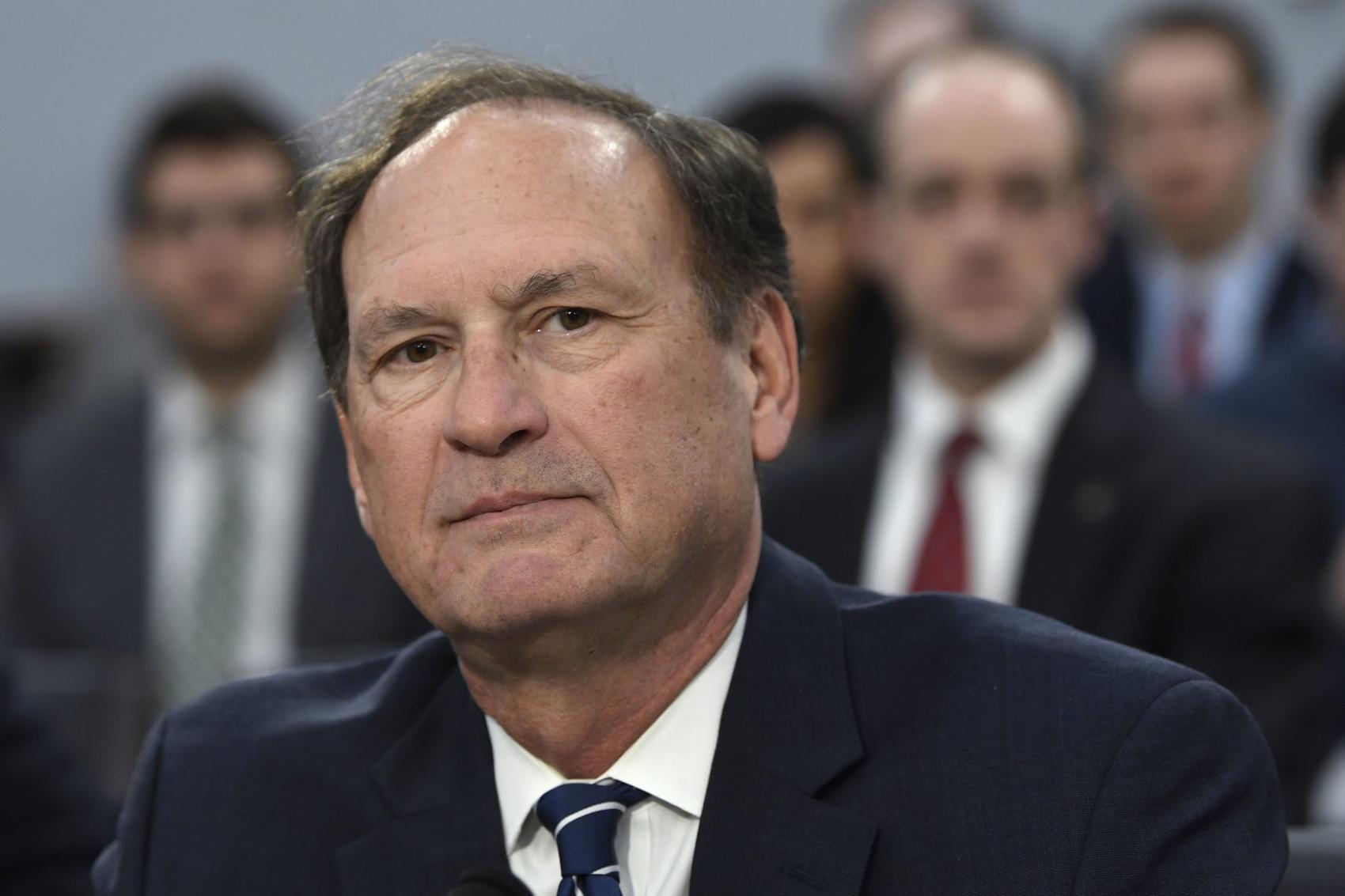
Justice Samuel Alito

Justice Samuel Alito

Associate Justice Samuel Alito

Nominated to serve as associate justice by President George W. Bush

Took seat Jan. 31, 2006

Born April 1, 1950, in Trenton, New Jersey

AP FILE

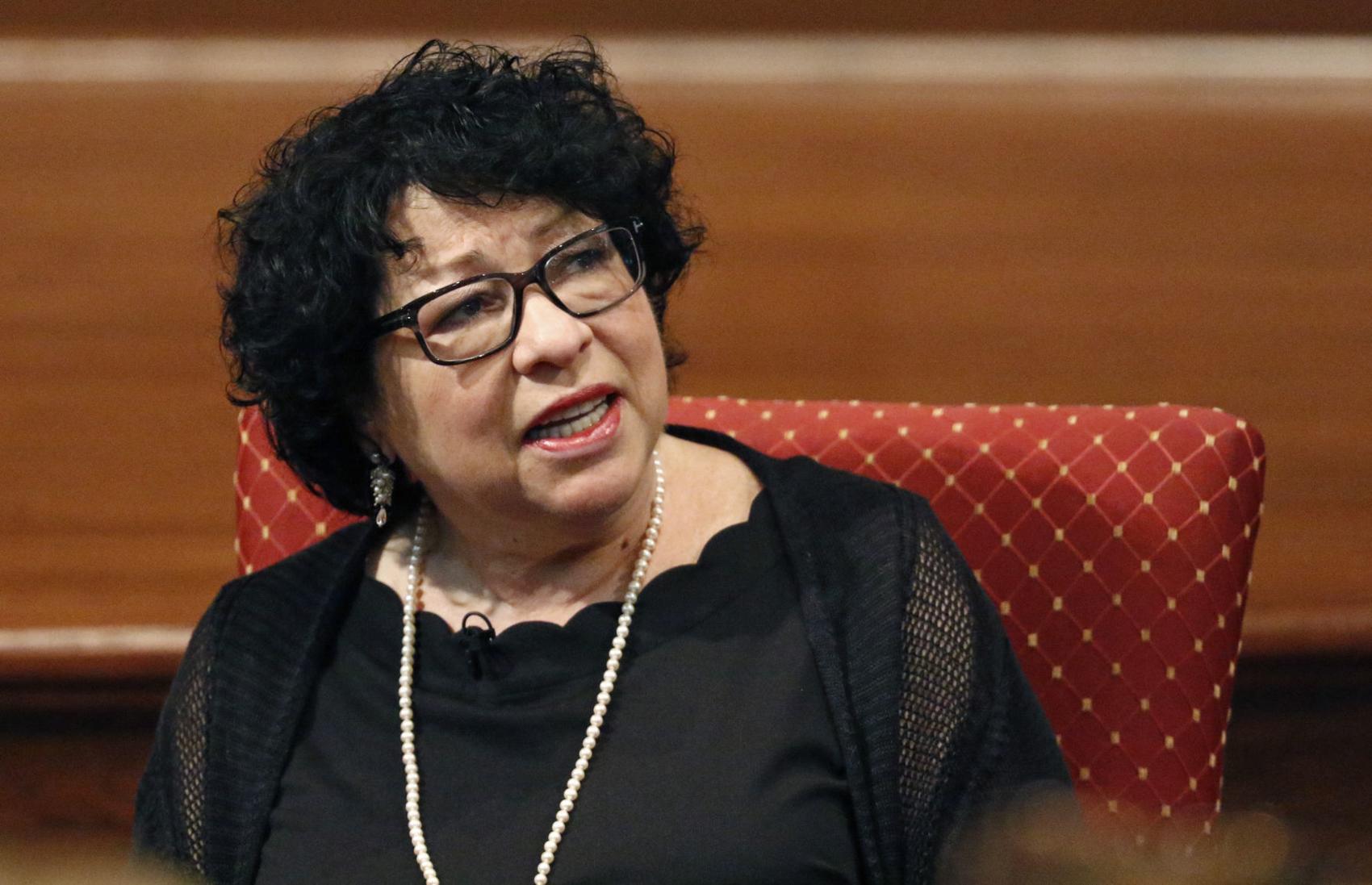
Justice Sonia Sotomayor

Justice Sonia Sotomayor

Associate Justice Sonia Sotomayor

Nominated to serve as associate justice by President Barack Obama

Took seat Aug. 8, 2009

Born June 25, 1954, in Bronx, New York

AP FILE

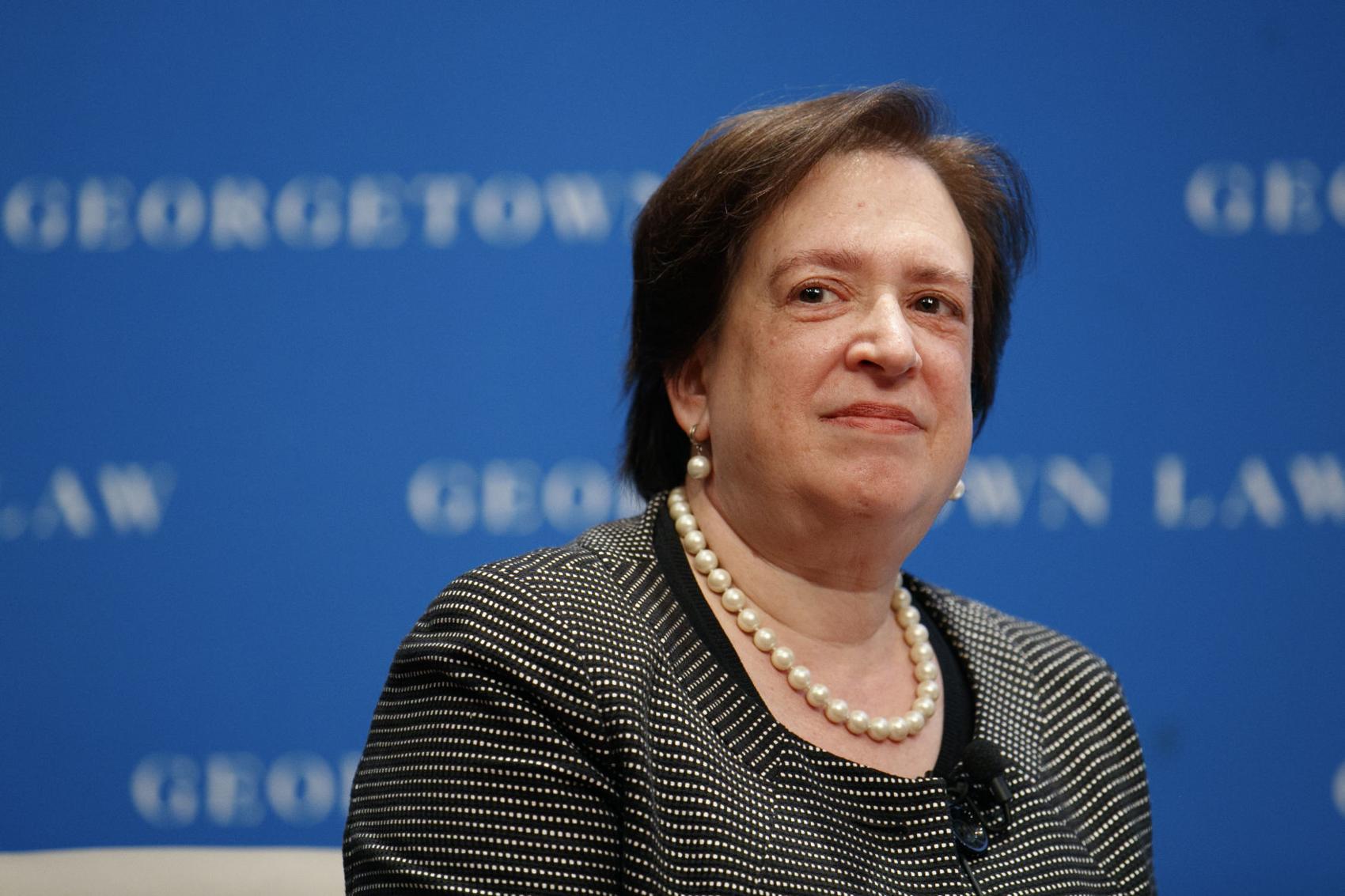
Justice Elena Kagan

Justice Elena Kagan

Associate Justice Elena Kagan

Nominated to serve as associate justice by President Barack Obama

Took seat Aug. 7, 2010

Born April 28, 1960, in New York City

AP FILE

Justice Neil Gorsuch

Justice Neil Gorsuch

Associate Justice Neil Gorsuch

Nominated to serve as associate justice by President Donald Trump

Took seat April 10, 2017

Born Aug. 29, 1967, in Denver, Colorado

AP FILE

Justice Brett Kavanaugh

Justice Brett Kavanaugh

Associate Justice Brett Kavanaugh

Nominated to serve as associate justice by President Donald Trump

Took seat Oct. 6, 2018

Born Feb. 12, 1965, in Washington D.C.

THE NEW YORK TIMES VIA AP, POOL

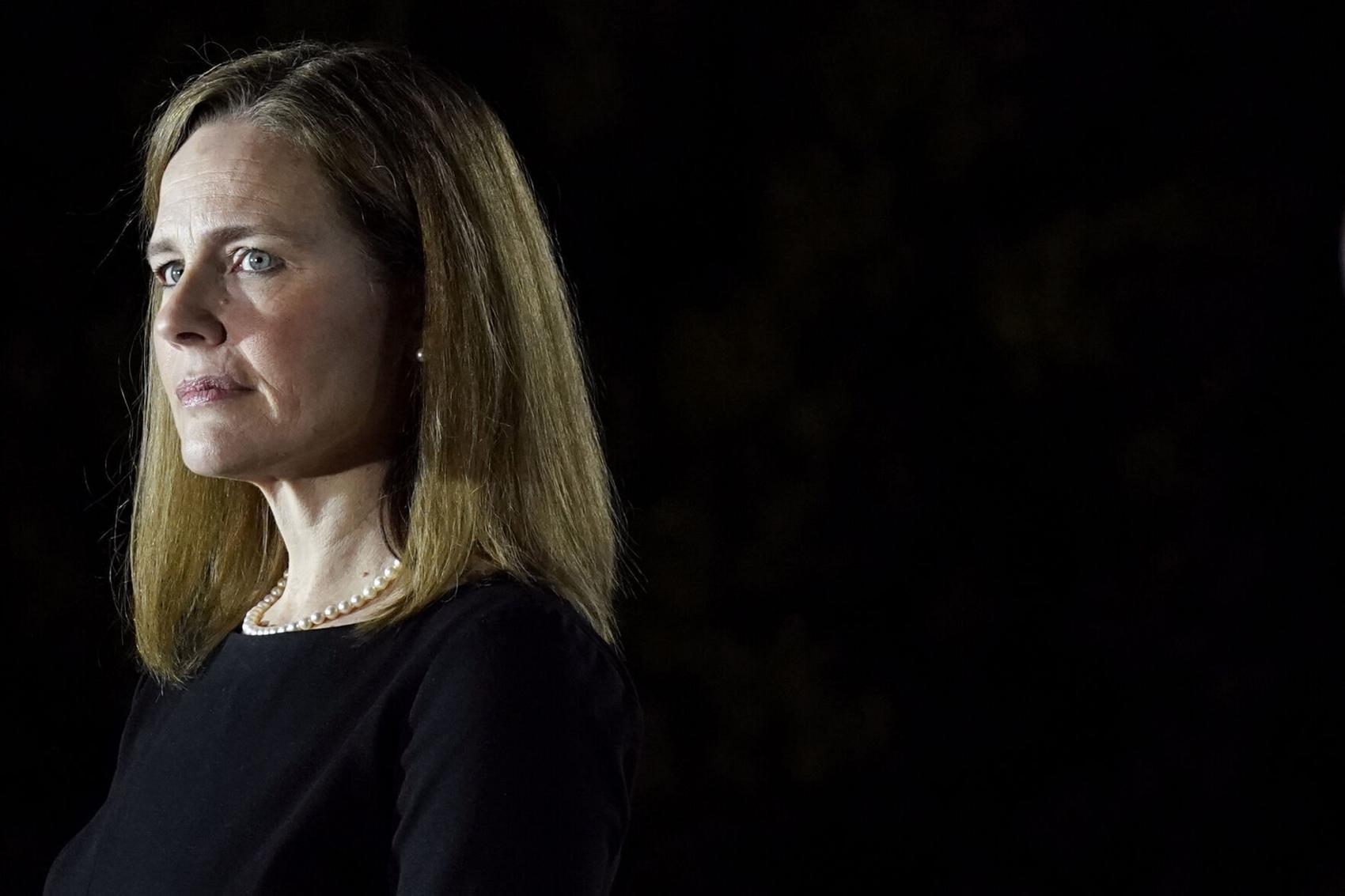
Justice Amy Coney Barrett

Justice Amy Coney Barrett

Associate Justice Amy Coney Barrett

Nominated to serve as associate justice by President Donald Trump

Took seat Oct. 27, 2020

Born January 28, 1972

Associated Press

Justice Ketanji Brown Jackson

Justice Ketanji Brown Jackson

Associate Justice Ketanji Brown Jackson

Nominated to serve as associate justice by President Joe Biden

Took seat June 30, 2022

Born September 14, 1970

AP file

In gay rights defeat, Supreme Court rules for designer who doesn't want to make wedding websites for gay couples

WASHINGTON — In a defeat for gay rights, the Supreme Court's conservative majority ruled on Friday that a Christian graphic artist who wants to design wedding websites can refuse to work with same-sex couples. One of the court's liberal justices wrote in a dissent that the decision's effect is to "mark gays and lesbians for second-class status" and that it opens the door to other discrimination.

The court ruled 6-3 for designer Lorie Smith despite a Colorado law that bars discrimination based on sexual orientation, race, gender and other characteristics. Smith had argued that the law violates her free speech rights.

Supreme Court Whats Left

FILE - Lorie Smith, a Christian graphic artist and website designer in Colorado, right, accompanied by her lawyer, Kristen Waggoner of the Alliance Defending Freedom, second from left, speaks outside the Supreme Court in Washington, Monday, Dec. 5, 2022, after her case was heard before the Supreme Court.

Andrew Harnik, Associated Press

Smith's opponents warned that a win for her would allow a range of businesses to discriminate, refusing to serve Black, Jewish or Muslim customers, interracial or interfaith couples or immigrants. But Smith and her supporters had said that a ruling against her would force artists — from painters and photographers to writers and musicians — to do work that is against their beliefs.

Justice Neil Gorsuch wrote for the court's six conservative justices that the First Amendment "envisions the United States as a rich and complex place where all persons are free to think and speak as they wish, not as the government demands." Gorsuch said that the court has long held that "the opportunity to think for ourselves and to express those thoughts freely is among our most cherished liberties and part of what keeps our Republic strong."

In a dissent, Justice Sonia Sotomayor wrote: "Today, the Court, for the first time in its history, grants a business open to the public a constitutional right to refuse to serve members of a protected class." She was joined by the court's two other liberals, Justice Elena Kagan and Justice Ketanji Brown Jackson.

Supreme Court Whats Left

FILE - Supporters wave a pride flag in front of the U.S. Supreme Court, Oct. 8, 2019, in Washington.

Manuel Balce Ceneta, Associated Press

Sotomayor said that the decision's logic "cannot be limited to discrimination on the basis of sexual orientation or gender identity." A website designer could refuse to create a wedding website for an interracial couple, a stationer could refuse to sell a birth announcement for a disabled couple, and a large retail store could limit its portrait services to "traditional" families, she wrote.

The decision is a win for religious rights and one in a series of cases in recent years in which the justices have sided with religious plaintiffs. Last year, for example, the court ruled along ideological lines for a football coach who prayed on the field at his public high school after games.

The decision is also a retreat on gay rights for the court. For nearly three decades, the court has expanded the rights of LGBTQ people, most notably giving same-sex couples the right to marry in 2015 and announcing five years later in a decision written by Gorsuch that a landmark civil rights law also protects gay, lesbian and transgender people from employment discrimination.

Even as it has expanded gay rights, however, the court has been careful to say those with differing religious views needed to be respected. The belief that marriage can only be between one man and one woman is an idea that "long has been held — and continues to be held — in good faith by reasonable and sincere people here and throughout the world," Justice Anthony Kennedy wrote in the court's gay marriage decision.

The court returned to that idea five years ago when it was confronted with the case of a Christian baker who objected to designing a cake for a same-sex wedding. The court issued a limited ruling in favor of the baker, Jack Phillips, saying there had been impermissible hostility toward his religious views in the consideration of his case. Phillips' lawyer, Kristen Waggoner, of the Alliance Defending Freedom, also brought the most recent case to the court. On Friday, she said the Supreme Court was right to reaffirm that the government cannot compel people to say things they do not believe.

Listen now and subscribe: Apple Podcasts | Google Podcasts | Spotify | Stitcher | RSS Feed | Omny Studio

"Disagreement isn't discrimination, and the government can't mislabel speech as discrimination to censor it," she said in a statement.

Smith, who owns a Colorado design business called 303 Creative, does not currently create wedding websites. She has said that she wants to but that her Christian faith would prevent her from creating websites celebrating same-sex marriages. And that's where she runs into conflict with state law.

Colorado, like most other states, has a law forbidding businesses open to the public from discriminating against customers. Colorado said that under its so-called public accommodations law, if Smith offers wedding websites to the public, she must provide them to all customers, regardless of sexual orientation. Businesses that violate the law can be fined, among other things. Smith argued that applying the law to her violates her First Amendment rights. The state disagreed.

The case is 303 Creative LLC v. Elenis, 21-476.

The 9 current justices of the US Supreme Court

Chief Justice John Roberts

Chief Justice John Roberts

Chief Justice John Roberts

Nominated to serve as chief justice by President George W. Bush

Took seat Sept. 29, 2005

Born Jan. 27, 1955, in Buffalo, N.Y.

AP FILE

Justice Clarence Thomas

Justice Clarence Thomas

Associate Justice Clarence Thomas

Nominated to serve as associate justice by President George H.W. Bush

Took seat Oct. 23, 1991

Born June 23, 1948, near Savannah, Georgia

Pablo Martinez Monsivais

Justice Samuel Alito

Justice Samuel Alito

Associate Justice Samuel Alito

Nominated to serve as associate justice by President George W. Bush

Took seat Jan. 31, 2006

Born April 1, 1950, in Trenton, New Jersey

AP FILE

Justice Sonia Sotomayor

Justice Sonia Sotomayor

Associate Justice Sonia Sotomayor

Nominated to serve as associate justice by President Barack Obama

Took seat Aug. 8, 2009

Born June 25, 1954, in Bronx, New York

AP FILE

Justice Elena Kagan

Justice Elena Kagan

Associate Justice Elena Kagan

Nominated to serve as associate justice by President Barack Obama

Took seat Aug. 7, 2010

Born April 28, 1960, in New York City

AP FILE

Justice Neil Gorsuch

Justice Neil Gorsuch

Associate Justice Neil Gorsuch

Nominated to serve as associate justice by President Donald Trump

Took seat April 10, 2017

Born Aug. 29, 1967, in Denver, Colorado

AP FILE

Justice Brett Kavanaugh

Justice Brett Kavanaugh

Associate Justice Brett Kavanaugh

Nominated to serve as associate justice by President Donald Trump

Took seat Oct. 6, 2018

Born Feb. 12, 1965, in Washington D.C.

THE NEW YORK TIMES VIA AP, POOL

Justice Amy Coney Barrett

Justice Amy Coney Barrett

Associate Justice Amy Coney Barrett

Nominated to serve as associate justice by President Donald Trump

Took seat Oct. 27, 2020

Born January 28, 1972

Associated Press

Justice Ketanji Brown Jackson

Justice Ketanji Brown Jackson

Associate Justice Ketanji Brown Jackson

Nominated to serve as associate justice by President Joe Biden

Took seat June 30, 2022

Born September 14, 1970

AP file

In landmark decision, Supreme Court strikes down affirmative action in college admissions

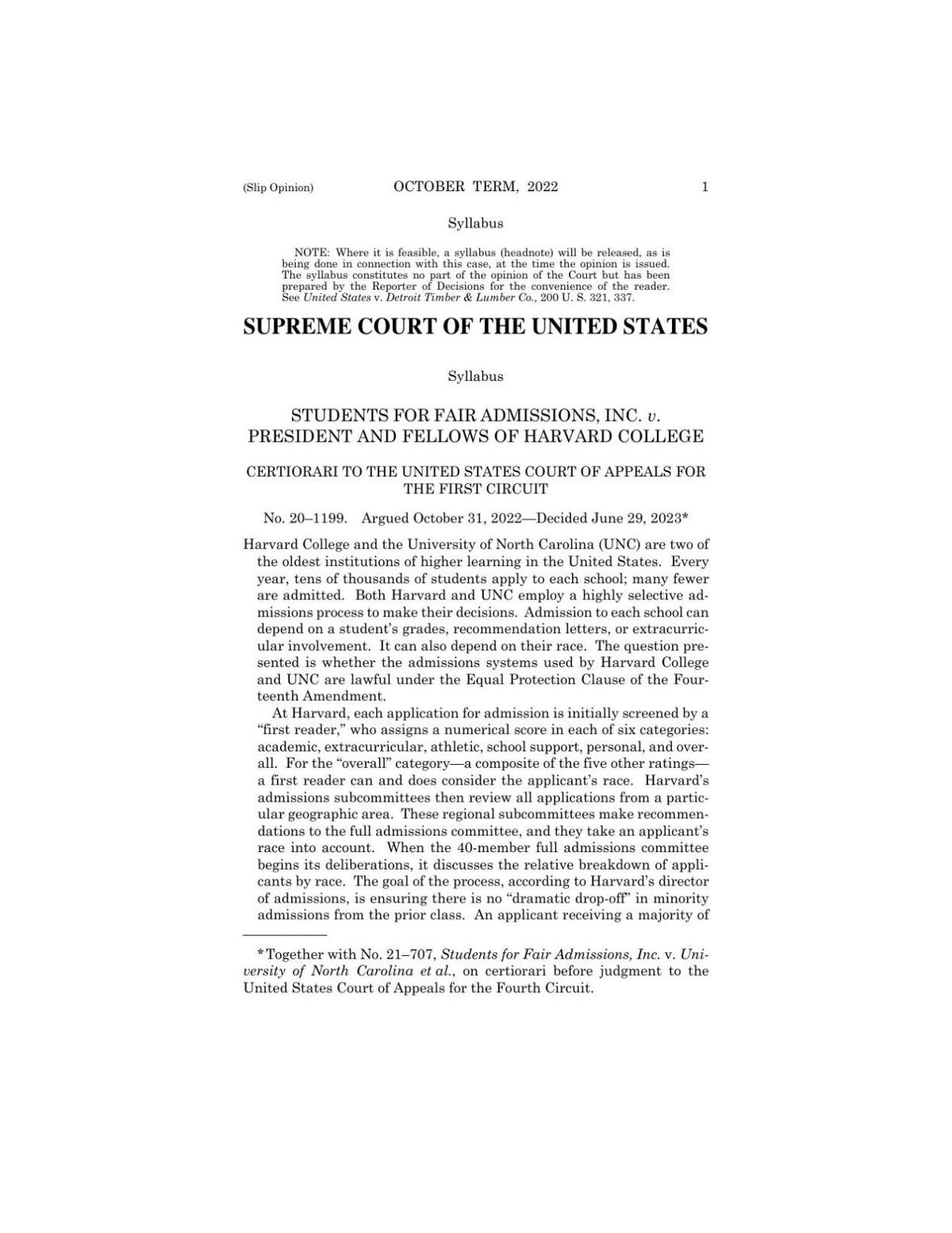
WASHINGTON — The Supreme Court on Thursday struck down affirmative action in college admissions, declaring race cannot be a factor and forcing institutions of higher education to look for new ways to achieve diverse student bodies.

The court's conservative majority overturned admissions plans at Harvard and the University of North Carolina, the nation's oldest private and public colleges, respectively.

Chief Justice John Roberts said that for too long universities have "concluded, wrongly, that the touchstone of an individual's identity is not challenges bested, skills built, or lessons learned but the color of their skin. Our constitutional history does not tolerate that choice."

Read the opinions here:

Download PDF Read the Supreme Court's ruling on affirmative action in college admissions

Justice Clarence Thomas, the nation's second Black justice who had long called for an end to affirmative action, wrote separately that the decision "sees the universities' admissions policies for what they are: rudderless, race-based preferences designed to ensure a particular racial mix in their entering classes."

Justice Sonia Sotomayor wrote in dissent that the decision "rolls back decades of precedent and momentous progress."

Both Thomas and Sotomayor, the two justices who have acknowledged affirmative action played a role in their admissions to college and law school, took the unusual step of reading a summary of their opinions aloud in the courtroom.

Supreme Court Affirmative Action

Activists demonstrate as the Supreme Court hears oral arguments on a pair of cases that could decide the future of affirmative action in college admissions, in Washington, Oct. 31, 2022. 

J. Scott Applewhite, Associated Press

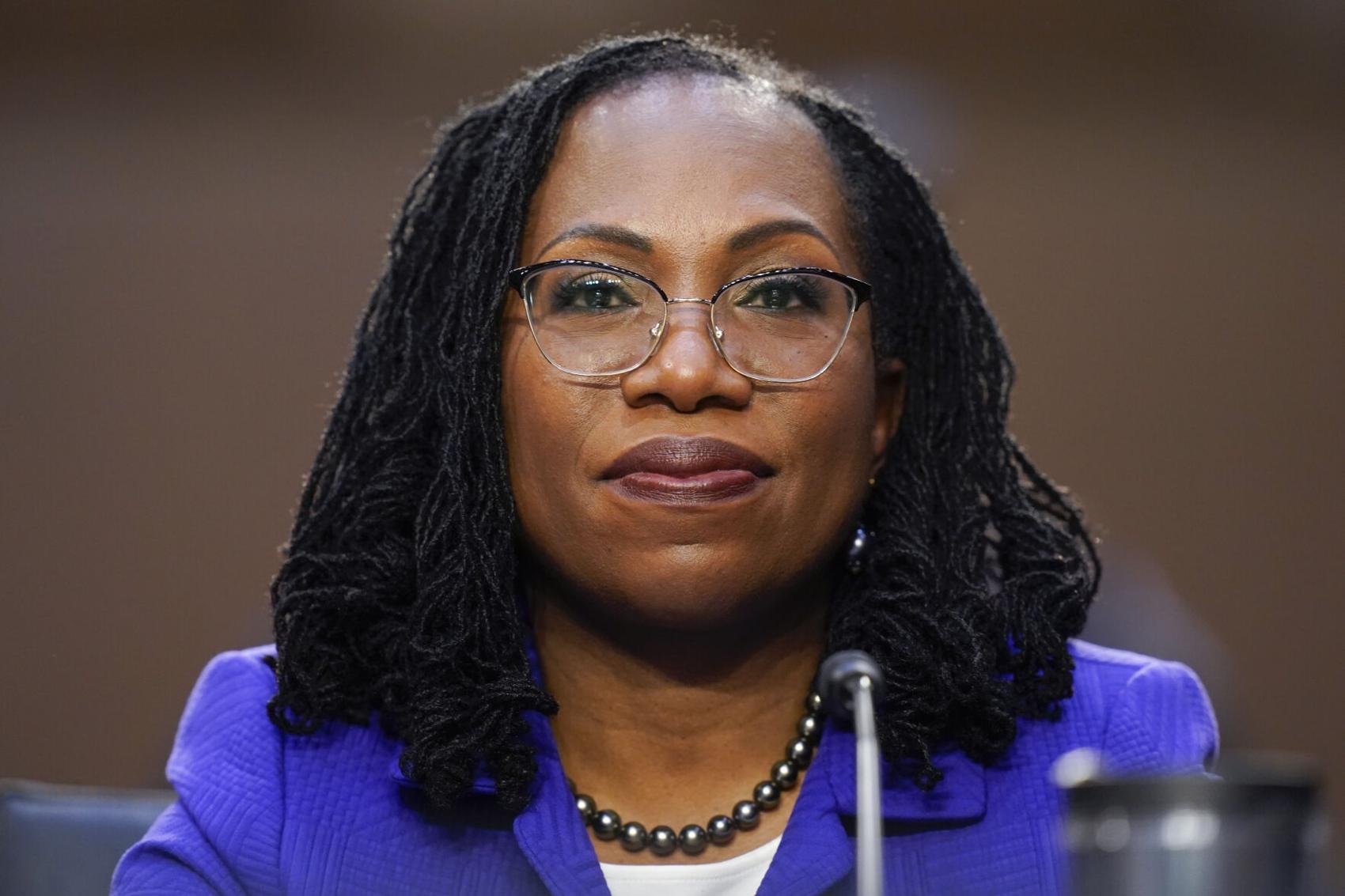
In a separate dissent, Justice Ketanji Brown Jackson — the court's first Black female justice — called the decision "truly a tragedy for us all."

Jackson, who sat out the Harvard case because she had been a member of an advisory governing board, wrote, "With let-them-eat-cake obliviousness, today, the majority pulls the ripcord and announces 'colorblindness for all' by legal fiat. But deeming race irrelevant in law does not make it so in life."

The vote was 6-3 in the North Carolina case and 6-2 in the Harvard case. Justice Elena Kagan was the other dissenter.

President Joe Biden was expected to comment on the decision from the White House later Thursday.

Listen now and subscribe: Apple Podcasts | Google Podcasts | Spotify | Stitcher | RSS Feed | Omny Studio

Two former presidents offered starkly different takes on the high-court ruling.

Former President Donald Trump, the current GOP presidential frontrunner, wrote on his social media network that the decision marked "a great day for America. People with extraordinary ability and everything else necessary for success, including future greatness for our Country, are finally being rewarded."

Former President Barack Obama said in a statement that affirmative action "allowed generations of students like Michelle and me to prove we belonged. Now it's up to all of us to give young people the opportunities they deserve — and help students everywhere benefit from new perspectives."

The Supreme Court had twice upheld race-conscious college admissions programs in the past 20 years, including as recently as 2016.

AP Poll Affirmative Action

FILE - Students walk through Harvard Yard, April 27, 2022, on the campus of Harvard University in Cambridge, Mass. 

Charles Krupa, Associated Press

But that was before the three appointees of former President Donald Trump joined the court. At arguments in late October, all six conservative justices expressed doubts about the practice, which had been upheld under Supreme Court decisions reaching back to 1978.

Lower courts also had upheld the programs at both UNC and Harvard, rejecting claims that the schools discriminated against white and Asian American applicants.

The college admissions disputes are among several high-profile cases focused on race in America, and were weighed by the conservative-dominated, but most diverse court ever. Among the nine justices are four women, two Black people and a Latina.

The justices earlier in June decided a voting rights case in favor of Black voters in Alabama and rejected a race-based challenge to a Native American child protection law.

The affirmative action cases were brought by conservative activist Edward Blum, who also was behind an earlier affirmative action challenge against the University of Texas as well as the case that led the court in 2013 to end use of a key provision of the landmark Voting Rights Act.

Blum formed Students for Fair Admissions, which filed the lawsuits against both schools in 2014.

The group argued that the Constitution forbids the use of race in college admissions and called for overturning earlier Supreme Court decisions that said otherwise.

Roberts' opinion effectively did so, both Thomas and the dissenters wrote.

The only institutions of higher education explicitly left out of the ruling are the nation's military academies, Roberts wrote, suggesting that national security interests could affect the legal analysis.

Blum's group had contended that colleges and universities can use other, race-neutral ways to assemble a diverse student body, including by focusing on socioeconomic status and eliminating the preference for children of alumni and major donors.

The schools said that they use race in a limited way, but that eliminating it as a factor altogether would make it much harder to achieve a student body that looks like America.

At the eight Ivy League universities, the number of nonwhite students increased by 55% from 2010 to 2021, according to federal data. That group, which includes, Native American, Asian, Black, Hispanic, Pacific Islander and biracial students, accounted for 35% of students on those campuses in 2021, up from 27% in 2010.

The end of affirmative action in higher education in California, Michigan, Washington state and elsewhere led to a steep drop in minority enrollment in the states' leading public universities.

They are among nine states that already prohibit any consideration of race in admissions to their public colleges and universities. The others are: Arizona, Florida, Georgia, Nebraska, New Hampshire and Oklahoma.

In 2020, California voters easily rejected a ballot measure to bring back affirmative action.

A poll last month by The Associated Press-NORC Center for Public Affairs Research showed 63% of U.S. adults say the court should allow colleges to consider race as part of the admissions process, yet few believe students' race should ultimately play a major role in decisions. A Pew Research Center survey released last week found that half of Americans disapprove of considerations of applicants' race, while a third approve.

The chief justice and Jackson received their undergraduate and law degrees from Harvard. Two other justices, Elena Kagan and Neil Gorsuch, went to law school there, and Kagan was the first woman to serve as the law school's dean.

Every U.S. college and university the justices attended, save one, urged the court to preserve race-conscious admissions.

Those schools — Yale, Princeton, Columbia, Notre Dame and Holy Cross — joined briefs in defense of Harvard's and UNC's admissions plans.

Only Justice Amy Coney Barrett's undergraduate alma mater, Rhodes College, in Memphis, Tennessee, was not involved in the cases.

The 9 current justices of the US Supreme Court

Chief Justice John Roberts

Chief Justice John Roberts

Chief Justice John Roberts

Nominated to serve as chief justice by President George W. Bush

Took seat Sept. 29, 2005

Born Jan. 27, 1955, in Buffalo, N.Y.

AP FILE

Justice Clarence Thomas

Justice Clarence Thomas

Associate Justice Clarence Thomas

Nominated to serve as associate justice by President George H.W. Bush

Took seat Oct. 23, 1991

Born June 23, 1948, near Savannah, Georgia

Pablo Martinez Monsivais

Justice Samuel Alito

Justice Samuel Alito

Associate Justice Samuel Alito

Nominated to serve as associate justice by President George W. Bush

Took seat Jan. 31, 2006

Born April 1, 1950, in Trenton, New Jersey

AP FILE

Justice Sonia Sotomayor

Justice Sonia Sotomayor

Associate Justice Sonia Sotomayor

Nominated to serve as associate justice by President Barack Obama

Took seat Aug. 8, 2009

Born June 25, 1954, in Bronx, New York

AP FILE

Justice Elena Kagan

Justice Elena Kagan

Associate Justice Elena Kagan

Nominated to serve as associate justice by President Barack Obama

Took seat Aug. 7, 2010

Born April 28, 1960, in New York City

AP FILE

Justice Neil Gorsuch

Justice Neil Gorsuch

Associate Justice Neil Gorsuch

Nominated to serve as associate justice by President Donald Trump

Took seat April 10, 2017

Born Aug. 29, 1967, in Denver, Colorado

AP FILE

Justice Brett Kavanaugh

Justice Brett Kavanaugh

Associate Justice Brett Kavanaugh

Nominated to serve as associate justice by President Donald Trump

Took seat Oct. 6, 2018

Born Feb. 12, 1965, in Washington D.C.

THE NEW YORK TIMES VIA AP, POOL

Justice Amy Coney Barrett

Justice Amy Coney Barrett

Associate Justice Amy Coney Barrett

Nominated to serve as associate justice by President Donald Trump

Took seat Oct. 27, 2020

Born January 28, 1972

Associated Press

Justice Ketanji Brown Jackson

Justice Ketanji Brown Jackson

Associate Justice Ketanji Brown Jackson

Nominated to serve as associate justice by President Joe Biden

Took seat June 30, 2022

Born September 14, 1970

AP file

How the Supreme Court student loan decision could affect you

NEW YORK (AP) — The Supreme Court has ruled the Biden administration overstepped its authority in trying to cancel or reduce student loan debt, effectively killing the $400 billion plan, which would have canceled up to $20,000 in federal student loans for 43 million people. Of those, 20 million would have had their remaining student debt erased completely.

The court's decision means, barring an act of Congress, those Americans are on the hook for payments starting in October.

Still, borrowers who are worried about their budgets do have options. For instance, the government has other loan forgiveness programs that are still in effect, even if Biden's plan was struck down.

Supreme Court

A sign reading "cancel student debt" is seen outside the Supreme Court, Friday, June 30, 2023, as decisions are expected in Washington. (AP Photo/Jacquelyn Martin)

Jacquelyn Martin

Here's what to know about how the decision will affect you:

WHEN WILL STUDENT LOAN PAYMENTS RESUME?

Student loan payments that have been frozen for the last three years because of the pandemic are set to restart in October. That was going to happen no matter what the Supreme Court decided. Interest will start accruing Sept. 1.

HOW SHOULD I PREPARE?

Betsy Mayotte, president of the Institute of Student Loan Advisors, encourages people not to make any payments until the pause has ended. Instead, she says, put what you would have paid into a savings account.

"Then you've maintained the habit of making the payment, but (you're) earning a little bit of interest as well," she said.

Mayotte recommends borrowers use the loan-simulator tool at StudentAid.gov or the one on TISLA's website to find a payment plan that best fits their needs. The calculators tell you what your monthly payment would be under each available plan, as well as your long-term costs.

Katherine Welbeck of the Student Borrower Protection Center recommends logging on to your account and making sure you know the name of your servicer, your due date and whether you're enrolled in the best income-driven repayment plan.

WHAT IF I CAN'T OR DON'T WANT TO PAY?

If your budget doesn't allow you to resume payments, it's important to know how to navigate the possibility of default and delinquency on a student loan. Both can hurt your credit rating, which would make you ineligible for additional aid.

If you're in a short-term financial bind you may qualify for deferment or forbearance — allowing you to temporarily suspend payment.

To determine whether deferment or forbearance are good options for you, you can contact your loan servicer. One thing to note: interest still accrues during deferment or forbearance. Both can also impact potential loan forgiveness options. Depending on the conditions of your deferment or forbearance, it may make sense to continue paying the interest during the payment suspension.

ARE THERE ANY OTHER PROGRAMS THAT CAN HELP WITH STUDENT LOAN DEBT?

If you've worked for a government agency or a nonprofit, the Public Service Loan Forgiveness program offers cancellation after 10 years of regular payments, and some income-driven repayment plans cancel the remainder of a borrower's debt after 20 to 25 years.

Borrowers should make sure they're signed up for the best possible income-driven repayment plan to qualify for these programs.

Borrowers who have been defrauded by for-profit colleges may also apply for borrower defense and receive relief.

These programs aren't be affected by the Supreme Court ruling.

WHAT'S AN INCOME-DRIVEN REPAYMENT PLAN?

An income-driven repayment plan sets your monthly student loan payment at an amount that is intended to be affordable based on your income and family size. It takes into account different expenses in your budget, and most federal student loans are eligible for at least one of these types of plans.

Generally, your payment amount under an income-driven repayment plan is a percentage of your discretionary income. If your income is low enough, your payment could be as low as $0 per month.

If you'd like to repay your federal student loans under an income-driven plan, the first step is to fill out an application through the Federal Student Aid website.

HOW CAN I REDUCE COSTS WHEN PAYING OFF MY STUDENT LOANS?

— If you sign up for automatic payments, the servicer takes a quarter of a percent off your interest rate, Mayotte says.

— Income-driven repayment plans aren't right for everyone. That said, if you know you will eventually qualify for forgiveness under the Public Service Loan Forgiveness program, it makes sense to make the lowest monthly payments possible, as the remainder of your debt will be cancelled once that decade of payments is complete.

— Reevaluate your monthly student loan repayment during tax season, when you already have all your financial information in front of you. "Can you afford to increase it? Or do you need to decrease it?" Mayotte said.

— Break up payments into whatever ways work best for you. You could consider two installments per month, instead of one large monthly sum.

___

Related to this collection

Most Popular

Chemical poured into Lincoln Memorial Reflecting Pool

Chemical poured into Lincoln Memorial Reflecting Pool

Painting of Reflecting Pool finished

Painting of Reflecting Pool finished

Arizona Daily Star
  • Facebook
  • Twitter
  • Bluesky
  • YouTube
  • Instagram
  • Arizona Daily Star Store
  • This is Tucson
  • Saddlebag Notes
  • Tucson Festival of Books
Prefer us on Google

Sites & Partners

  • E-edition
  • Classifieds
  • Events calendar
  • Careers @ Lee Enterprises
  • Careers @ USA Today Co.
  • Online Features
  • Sponsored Blogs
  • Get Healthy

Services

  • Advertise with us
  • Register
  • Contact us
  • RSS feeds
  • Newsletters
  • Photo reprints
  • Subscriber services
  • Subscription FAQ
  • Licensing
  • Shopping
© Copyright 2026 Arizona Daily Star, PO Box 26887 Tucson, AZ 85726-6887
Terms of Use | Privacy Policy | Advertising Terms of Use | Do Not Sell My Info | Cookie Preferences
Powered by BLOX Content Management System from bloxdigital.com.
  • Notifications
  • Settings
You don't have any notifications.

Get up-to-the-minute news sent straight to your device.

Topics

News Alerts

Breaking News