

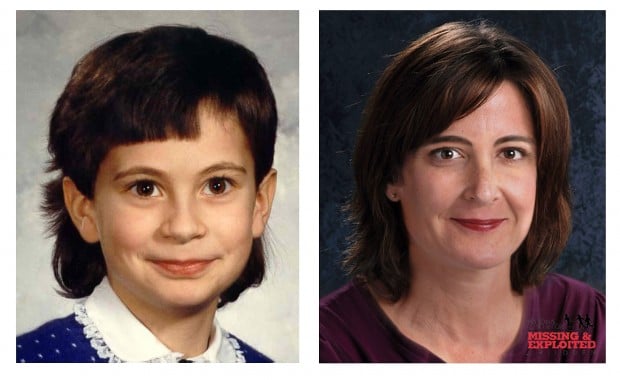
PITTSBURGH - Cherrie Mahan was 8 when she vanished from a bus stop near her home. A picture of the smiling, brown-haired girl would be the first featured on direct-mail fliers like those now sent weekly to tens of millions of U.S. homes with a simple message - Have You Seen Me?
Monday marked 25 years since Cherrie disappeared in western Pennsylvania. And although she's never been found, the fliers are credited with helping to recover 149 other missing children, according to the National Center for Missing & Exploited Children.
"It emphasizes the point that somebody out there knows," said the center's president, Ernie Allen.
The idea for the fliers came after advertising executive Vincent Giuliano, who worked for marketer Advo Inc. in Windsor, Conn., saw a 1984 television movie about the 1981 murder of 6-year-old Adam Walsh, who had been abducted from a Florida shopping mall.
People are also reading…
The next day, Giuliano and employees talked about the show and the idea of putting pictures and a hot-line number on their mailers began to form. Giuliano was so moved that he arranged to meet Adam's father, John Walsh, an advocate for victims of violent crime, who put him in touch with the National Center for Missing & Exploited Children in Alexandria, Va.
"I felt I had to go out and meet him. That's what pushed me," said Giuliano, now senior president of government relations at Valassis Inc., a marketing company that bought Advo.
Cherrie Mahan was chosen for the first flier, in May 1985, because there were enough details about her case that the center figured someone had to know something, Giuliano said.
The third-grader got off her school bus the afternoon of Feb. 22, 1985, in Winfield Township, a rural community 20 miles north of Pittsburgh. A motorist saw Cherrie get off and noticed a bluish-green van with a painting of a mountain and a skier on it behind the bus. But as the bus stopped to allow traffic to pass after driving down the road a bit, the van had disappeared.
Cherrie's stepfather told police he had let her walk the short distance home because it was a nice day. When she didn't arrive, he went to the bus stop 10 minutes later and saw tire prints - but no Cherrie.
Giuliano said it's "so bewildering" that someone who knows something about the case hasn't come forward. Telephone calls to Cherrie's mother, Janice McKinney, for this story weren't returned.
While Cherrie's case serves as a sober reminder that not every missing child is found, the flier program has had success - and gives hope. More than half the 2,100 children featured on the fliers have been found through other means, such as police investigations or other groups posting pictures of them.
Allen, the center president, said some of the stories that have come from the flier program are almost so implausible that people would think they're made up.
• In 1999, a law student vacationing in Roatan, Honduras, befriended a father and daughter. When he got home, he saw the girl's image on a flier and called the hot line. The FBI found the girl, who had been taken by her father two years earlier.
• In March 1990, a San Francisco woman befriended and photographed a 6-year-old boy on a beach while vacationing in Mexico. That November, a flier arrived at her home with a picture of the boy, who'd been missing since June 1988. She contacted the center, and the boy was reunited with his mother, Allen said.
By 1990, the recovery rate for missing children was 62 percent, but now, partly because of the fliers and new technology such as Amber Alerts to spread information quickly, it's 97 percent, Allen said.
"But the ones you don't find, the ones that don't come home, are the ones that haunt you forever," he said.


