Skip to main contentSkip to main content
Register for more free articles.
Log in Sign up
Back to homepage
Subscriber Login
Keep reading with a digital access subscription.
Subscribe now
You have permission to edit this collection.
Edit
Arizona Daily Star
58°
  • Sign in
  • Subscribe Now
  • Manage account
  • Logout
    • Manage account
    • e-Newspaper
    • Logout
  • News
    • Sign up for newsletters
    • Local
    • Arizona
    • Business
    • Crime
    • Nation & World
    • Markets & Stocks
    • SaddleBrooke
    • Politics
    • Archives
    • News Tip
  • Arizona Daily Star
    • E-edition
    • E-edition-Tutorial
    • Archives
    • Special Sections
    • Merchandise
    • Circulars
    • Readers' Choice Awards
    • Buyer's Edge
  • Obituaries
    • Share Your Story
    • Recent Obituaries
    • Find an Obituary
  • Opinion
    • Submit a Letter
    • Submit guest opinion
    • Letters to the Editor
    • Opinion & Editorials
    • National Columnists
  • Sports
    • Arizona Wildcats
    • Greg Hansen
    • High Schools
    • Roadrunners
  • Lifestyles
    • Events Calendar
    • Arts & Theatre
    • Food & Cooking
    • Movies & TV
    • Movie Listings
    • Music
    • Comics
    • Games
    • Columns
    • Play
    • Home & Gardening
    • Health
    • Get Healthy
    • Parenting
    • Fashion
    • People
    • Pets
    • Travel
    • Faith
    • Retro Tucson
    • History
    • Travel
    • Outdoors & Rec
    • Community Pages
  • Brand Ave. Studios
  • Join the community
    • News tip
    • Share video
  • Buy & Sell
    • Place an Ad
    • Shop Local
    • Jobs
    • Homes
    • Marketplace
    • I Love A Deal
  • Shopping
  • Customer Service
    • Manage My Account
    • Newsletter Sign-Up
    • Subscribe
    • Contact us
  • Mobile Apps
  • Weather: Live Radar
  • Facebook
  • Twitter
  • Bluesky
  • YouTube
  • Pinterest
  • Instagram
© 2026 Lee Enterprises
Terms of Service | Privacy Policy
Arizona Daily Star
News+
Read Today's E-edition
Arizona Daily Star
News+
  • Log In
  • $1 for 3 months
    Subscribe Now
    • Manage account
    • e-Newspaper
    • Logout
  • E-edition
  • News
  • Obituaries
  • Opinion
  • Wildcats
  • Lifestyles
  • Newsletters
  • Comics & Puzzles
  • Buyer's Edge
  • Jobs
  • 58° Clear
Share This
  • Facebook
  • Twitter
  • Bluesky
  • WhatsApp
  • SMS
  • Email
Spotlight

The Nashville shooting, Donald Trump's indictment, Gwyneth Paltrow's ski accident lawsuit, and more top news from the week

  • Apr 2, 2023
  • Apr 2, 2023 Updated Jul 3, 2023

From full coverage of the school shooting in Nashville, to different angles on Trump's indictment, here are the top national stories from the past week.

Pennsylvania man found dead in home with 60 venomous snakes, poisonous lizard, small crocodile

A western Pennsylvania man found dead in a home filled with poisonous snakes last week had been bitten, but that’s not what killed him, according to police.

Aliquippa police told the Pittsburgh Tribune-Review that the 23-year-old man, whose identity has not been released, had bite marks on his wrist but they were from “an old snake bite” unrelated to his death.

Police said the Beaver County coroner could release the man’s cause of death in two or three weeks, as toxicology results are also pending. The Trib reported that the man was found in a bathroom on Tuesday.

The Beaver County Times reported that the people in the home had recently moved to the area to sell reptiles.

A 3-year-old girl was found in a highchair near poisonous snakes, The Times reported, which prompted a visit from Beaver County Child and Family Services. Police told the Trib that no violations were found.

Aliquippa code enforcement officer Jim Bologna told the Trib that about 60 venomous snakes, including a cobra and two black mambas, were among over 200 snakes held in latched cages. The poisonous snakes were taken to a local exotic pet store by the Beaver County Humane Society.

Besides the snakes, there was also a poisonous lizard and a dwarf caiman crocodile, the outlets reported. Venomous snakes are prohibited in Aliquippa and Bologna told the Trib that the owners could face fines up to $1,000 for each snake.

The Times reported that the residents are allowed to remain in the home with the non-poisonous snakes and lizards.

Listen now and subscribe: Apple Podcasts | Google Podcasts | Spotify | Stitcher | RSS Feed | Omny Studio

The most dangerous snakes in the world

Sea snakes

Sea snakes

This rare venomous sea snake found slithering on the sand in Newport Beach is one of a growing number of the serpents apparently drawn far north of their usual habitat by the spread of warm ocean temperatures, a biologist says.

The yellow-bellied sea snake discovered near the 18th Street lifeguard tower on Monday was the third report of the species in Southern California since 2015 — and the fifth since 1972, said Greg Pauly, herpetological curator at the Natural History Museum of Los Angeles County.

"Oceans are warming and the species that respond to that change will be those that are the most mobile," Pauly said. "So the big question now is this: Are sea snakes swimming off the coast of Southern California the new normal?"

Sporting short sharp fangs capable of delivering extremely potent venom, the snake — named for its bright yellow underside and flattened yellow tail with black spots — is no joke.

But Pauly said "these are pretty mellow animals" and they are unlikely to bite a person unless they are picked up.

Natural History Museum of Los An

West African carpet viper

West African carpet viper

Saw-scaled, or carpet vipers, are a major cause of snakebite envenoming in Sub-Saharan African savannas north of the rainforest belt, in the Arabian Peninsula and extending through Iran to Pakistan, India and Sri Lanka, according to the World Health Organization. This is a West African carpet viper from Nigeria. (David J. Williams/World Health Organization)

David J. Williams/WHO

Egyptian cobras

Egyptian cobras

Several cobra species belong to the genus Naja, according to the World Health Organization. Cobras are found throughout Sub-Saharan Africa, the Arabian Peninsula, parts of the Middle East and Central Asia, as well as throughout South and South East Asia. This is an Egyptian cobra, photographed in Kenya. (David J. Williams/World Health Organization)

David J. Williams/WHO

Monocellate cobras

Monocellate cobras

Several cobra species belong to the genus Naja, according to the World Health Organization. Cobras are found throughout Sub-Saharan Africa, the Arabian Peninsula, parts of the Middle East and Central Asia, as well as throughout South and South East Asia. This is a monocellate cobra from Thailand. (David J. Williams/World Health Organization)

David J. Williams/WHO

Puff adders

Puff adders

Puff adders are found in Sub-Saharab Africa and the Arabian Peninsula, causing many snakebites that result in permanent disability or death, according to the World Health Organization. This puff adder is from Kenya. (David J. Williams/World Health Organization)

David J. Williams/WHO

Mambas

Mambas

Mambas are a group of widely distributed venomous snakes with neurotoxic venom, feared because of high fatality rates associated with envenoming, according to the World Health Organization. This is a black mamba photographed in Swaziland. (David J. Williams/World Health Organization)

David J. Williams/WHO

Russell's vipers

Russell's vipers

Russell's vipers are responsible for thousands of snakebite envenoming cases in South and South East Asia, according to the World Health Organization. Bites by this snake are a major cause of acute kidney injury requiring haemodialysis. This is a Siamese Russell's viper from Cambodia. (David J. Williams/World Health Organization)

David J. Williams/WHO

Krait

Krait

Several krait species with potent neurotoxic venom are found in South and South East Asia, according to the World Health Organization. They can enter homes at night, biting people sleeping on floor mats. This is the Malayan krait from Thailand. (David J. Williams/World Health Organization)

David J. Williams/WHO

Malayan pit vipers

Malayan pit vipers

The Malayan pit viper is a major cause of snakebite envenoming in South East Asia, according to the World Health Organization. They are found in forests and plantations, remaining motionless. Many victims are bitten after walking on or near it. This is a Malayan pit viper from Cambodia. (David J. Williams/World Health Organization)

David J. Williams/WHO

Papuan taipans

Papuan taipans

Papuan taipans cause the most deaths from snakebite in Australia and Papua New Guinea, according to the World Health Organization, with most occurring in Papua New Guinea. Fatality rates are close to 100 percent without antivenom. (David J. Williams/World Health Organization)

David J. Williams/WHO

Brown snakes

Brown snakes

According to the World Health Organization, brown snakes from genus Pseudonaja cause 50 percent of all snakebite-related deaths in Australia. This is a common brown snake from eastern Australia. (David J. Williams/World Health Organization)

David J. Williams/WHO

Lancehead vipers

Lancehead vipers

Several lancehead viper species are found throughout Central and South America, according to the World Health Organization. They are responsible for many snakebite envenomings. This is a Bothrops asper from Costa Rica. (David J. Williams/World Health Organization)

David J. Williams/WHO

Rattlesnakes

Rattlesnakes

Rattlesnakes are found from southern Canada, throughout the United States and into Mexico, as well as Central and the northern half of South America, according to the World Health Organization. Bites are common. This is a neotropical rattlesnake from South America. (David J. Williams/World Health Organization)

David J. Williams/WHO

Police: Nashville shooter bought 7 guns before school attack

NASHVILLE, Tenn. (AP) — The person who killed three children and three adults at a Christian school in Nashville legally bought seven firearms in recent years and hid the guns from their parents before the attack, police said Tuesday.

The violence Monday at The Covenant School is the latest school shooting to roil the nation. Three 9-year-old students were killed, as well as the head of the grade school, a custodian and a substitute teacher.

The suspect, Audrey Hale, 28, was a former student at the school. Police said the shooter did not target specific victims.

Authorities said Hale was not on their radar before the attack. Police say Hale was under a doctor's care for an undisclosed emotional disorder.

Police have released videos of the shooting, including edited surveillance footage that shows the shooter's car driving up to the school, glass doors being shot out and the shooter ducking through one of them.

Additional video, from Officer Rex Engelbert's bodycam, shows a woman greeting police outside as they arrive at The Covenant School on Monday. “The kids are all locked down, but we have two kids that we don't know where they are,” she tells police.

“OK, yes, ma'am,” Engelbert replies.

The woman then directs officers to Fellowship Hall and says people inside had just heard gunshots. “Upstairs are a bunch of kids,” she says.

Three officers, including Engelbert, search rooms one by one, holding rifles. “Metro Police,” officers yell.

“Let's go, let's go,” one officer yells.

As alarms are heard going off in the school, one officer says, “It sounds like it's upstairs.”

Officers climb stairs to the second floor and enter a lobby area. “Move in,” an officer yells. Then a barrage of gunfire is heard.

“Get your hands away from the gun," an officer yells twice. Then the shooter is shown motionless on the floor.

Police earlier said Hale had drawn a detailed map of the school, including potential entry points, and conducted surveillance of the building before carrying out the massacre, authorities said.

Get the full story here:

New York grand jury votes to indict Donald Trump

A Manhattan grand jury has voted to indict Donald Trump on charges involving payments made during the 2016 presidential campaign to silence claims of an extramarital sexual encounter, his lawyers said Thursday, producing the first criminal case against a former U.S. president and a jolt to Trump’s bid to retake the White House.

Trump, who has denied any wrongdoing and has repeatedly attacked the investigation, called the indictment “political persecution” and predicted it would damage Democrats in 2024.

The indictment is an extraordinary development after years of investigations into his business, political and personal dealings. It is likely to galvanize critics who say Trump lied and cheated his way to the top and embolden supporters who feel the Republican is being unfairly targeted by a Democratic prosecutor.

In a statement, his lawyers, Susan Necheles and Joseph Tacopina, said: “He did not commit any crime. We will vigorously fight this political prosecution in court.”

The district attorney's investigation centered on money paid to porn actor Stormy Daniels and former Playboy model Karen McDougal, whom he feared would go public with claims that they had extramarital sexual encounters with him.

Trump was expected to surrender to authorities next week, though the details were still being worked out, according to a person familiar with the matter who was not authorized to discuss a matter that remained under seal.

In bringing the charges, the Manhattan district attorney, Alvin Bragg, is embracing an unusual case that had been investigated by two previous sets of prosecutors, both of which declined to take the politically explosive step of seeking Trump’s indictment.

In the weeks leading up to the indictment, Trump railed about the investigation on social media and urged supporters to protest on his behalf, prompting tighter security around the Manhattan criminal courthouse.

Trump faces other potential legal perils as he seeks to reassert control of the Republican Party and stave off a slew of one-time allies who are seeking or are likely to oppose him for the presidential nomination.

Read more:

Photos: Demonstrations as potential Trump indictment looms

APTOPIX Trump Legal Troubles

A woman holds up a poster as part of a protest in front of the courthouse ahead of former President Donald Trump's anticipated indictment on Monday, March 20, 2023, in New York. (AP Photo/Eduardo Munoz Alvarez)

Eduardo Munoz Alvarez
APTOPIX Trump Legal Troubles

A supporter of former President Donald Trump exits Trump Tower on Tuesday, March 21, 2023, in New York. The man visited to show his support for the former president and his opposition of District Attorney Alvin Bragg's attempt to have Trump indicted. (AP Photo/Bryan Woolston)

Bryan Woolston
APTOPIX Trump

A supporter of former President Donald Trump unfurls a flag outside of Trump's Mar-a-Lago estate, Monday, March 20, 2023, in Palm Beach, Fla. (AP Photo/Lynne Sladky)

Lynne Sladky
Trump Legal Troubles

New York State Court police keep an eye as people protest in front of the courthouse ahead of former President Donald Trump's anticipated indictment on Monday, March 20, 2023, in New York. (AP Photo/Eduardo Munoz Alvarez)

Eduardo Munoz Alvarez
Trump Legal Troubles Protests

Enzo Alcindor, a supporter of former President Donald Trump, sits on his vehicle with flags outside of Trump's Mar-a-Lago estate, Monday, March 20, 2023, in Palm Beach, Fla. (AP Photo/Lynne Sladky)

Lynne Sladky
Trump

Paula Magnuson, a supporter of former President Donald Trump, walks with her dogs outside of Trump's Mar-a-Lago estate, Monday, March 20, 2023, in Palm Beach, Fla. (AP Photo/Lynne Sladky)

Lynne Sladky
Trump Legal Troubles

Bob Fertik, of New York, stands in front of the New York Criminal Courts building carrying a sign supporting the possible criminal indictment of former President Donald Trump, on Monday, March 20, 2023, in New York. (AP Photo/Bryan Woolston)

Bryan Woolston
Trump Legal Troubles

Stephanie Lu, of New York, stands in front of the New York Criminal Courts building criticizing New York County District Attorney Alvin Bragg and a possible criminal indictment of former President Donald Trump, on Monday, March 20, 2023, in New York. (AP Photo/Eduardo Munoz Alvarez)

Eduardo Munoz Alvarez
Trump Legal Troubles

Supporters of former President Donald Trump's protest in front of the New York Criminal Courts building on Monday, March 20, 2023, in New York. A New York grand jury has heard from what could be the final witness in the investigation into Trump as law enforcement officials accelerate security preparations in advance of a possible indictment. (AP Photo/Eduardo Munoz Alvarez)

Eduardo Munoz Alvarez
Trump

A supporter of former President Donald Trump raises a flag outside of Trump's Mar-a-Lago estate, Monday, March 20, 2023, in Palm Beach, Fla. (AP Photo/Lynne Sladky)

Lynne Sladky
Trump

A vehicle drives past President Donald Trump's Mar-a-Lago estate, Monday, March 20, 2023, in Palm Beach, Fla. The decision whether to indict former President Donald Trump over hush-money payments made on his behalf during his 2016 presidential campaign lies in the hands of a Manhattan grand jury that has been meeting in secret to hear evidence for weeks. (AP Photo/Lynne Sladky)

Lynne Sladky
Trump Legal Troubles

Media gathers around a lone supporter of former President Donald Trump as she protests a in front of Trump Tower, on Tuesday, March 21, 2023, in New York. A New York grand jury investigating Trump over a hush money payment to a porn star appears poised to complete its work soon as law enforcement officials make preparations for possible unrest in the event of an indictment. (AP Photo/Bryan Woolston)

Bryan Woolston
Trump Legal Troubles

A woman performs with a mask of former president Donald Trump as a small group of people protest near the District Attorney office, Tuesday, March 21, 2023, in New York, in an anticipation of former president's possible indictment. (AP Photo/Eduardo Munoz Alvarez)

Eduardo Munoz Alvarez
Trump Legal Troubles

A man, wearing a patriotic colored Guy Fawkes mask and holding an American flag, joins a small group of protesters near the Manhattan District Attorney's office, Tuesday, March 21, 2023, in New York, in an anticipation of former President Donald Trump's possible indictment. A New York grand jury investigating Trump over a hush money payment to a porn star appears poised to complete its work soon as law enforcement officials make preparations for possible unrest in the event of an indictment. (AP Photo/Eduardo Munoz Alvarez)

Eduardo Munoz Alvarez
Trump

Kathy Clark, a supporter of former President Donald Trump, stands outside of Trump's Mar-a-Lago estate, Tuesday, March 21, 2023, in Palm Beach, Fla. (AP Photo/Lynne Sladky)

Lynne Sladky
Trump

Colton McCormick, a supporter of former President Donald Trump, stands outside of Trump's Mar-a-Lago estate, Tuesday, March 21, 2023, in Palm Beach, Fla. (AP Photo/Lynne Sladky)

Lynne Sladky
Trump Legal Troubles

Jeffrey Shinko, of Lucerne County, Pa, holds a sign while standing in front Trump Tower on Tuesday, March 21, 2023, in New York. Shinko traveled from Pennsylvania to New York City to show his support for former President Donald Trump. A New York grand jury investigating Trump over a hush money payment to a porn star appears poised to complete its work soon as law enforcement officials make preparations for possible unrest in the event of an indictment. (AP Photo/Bryan Woolston)

Bryan Woolston
Trump Legal Troubles

A Trump supporter takes part in a protest near the Manhattan District Attorney's office, Tuesday, March 21, 2023, in New York, in an anticipation of former President Donald Trump's possible indictment. A New York grand jury investigating Trump over a hush money payment to a porn star appears poised to complete its work soon as law enforcement officials make preparations for possible unrest in the event of an indictment. (AP Photo/Eduardo Munoz Alvarez)

Eduardo Munoz Alvarez
Trump Legal Troubles

A Trump supporter wearing a costume with antlers takes part in a protest near the district attorney's office in New York on Tuesday, March 21, 2023, ahead of former President Donald Trump's anticipated indictment. (AP Photo/Eduardo Munoz Alvarez)

Eduardo Munoz Alvarez
Trump Legal Troubles

Supporters of former U.S. president Donald Trump take part in a protest near the District Attorney office ahead of former President Donald Trump's anticipated indictment on Tuesday, March 21, 2023, in New York. A New York grand jury investigating Trump over a hush money payment to a porn star appears poised to complete its work soon as law enforcement officials make preparations for possible unrest in the event of an indictment.(AP Photo/Eduardo Munoz Alvarez)

Eduardo Munoz Alvarez
Trump

Mary Kelley, a supporter of former President Donald Trump, stands outside of Trump's Mar-a-Lago estate, Tuesday, March 21, 2023, in Palm Beach, Fla. (AP Photo/Lynne Sladky)

Lynne Sladky
Trump

A supporter of former President Donald Trump holds up a Bible as she acknowledges passers-by, outside his Mar-a-Lago estate in West Palm Beach, Fla., Tuesday, March 21, 2023. (AP Photo/Gerald Herbert)

Gerald Herbert
Trump

Supporters of former President Donald Trump gather outside his Mar-a-Lago estate in West Palm Beach, Fla., Tuesday, March 21, 2023. (AP Photo/Gerald Herbert)

Gerald Herbert
Trump

A supporter of former President Donald Trump walks with a cross from outside his Mar-a-Lago estate over a bridge to West Palm Beach, Fla., Tuesday, March 21, 2023. (AP Photo/Gerald Herbert)

Gerald Herbert
Trump Legal Troubles

A woman walks on Fifth Avenue carrying a flag showing support for former President Donald Trump, on Tuesday, March 21, 2023, in New York. (AP Photo/Bryan Woolston)

Bryan Woolston
Trump Legal Troubles

Trump supporter Jeffrey Shinko, right, of Lucerne County, Pa, and a man protesting Trump, argue about a possible criminal indictment of former President Donald Trump Tuesday, March 21, 2023, in New York. (AP Photo/Bryan Woolston)

Bryan Woolston
Trump Legal Troubles

Mike Hisey, left, dressed to portray former President Donald Trump in a prison uniform, stands in front of Trump Tower ahead of a possible announcement of a criminal indictment of the former president on Tuesday, March 21, 2023, in New York. (AP Photo/Bryan Woolston)

Bryan Woolston

Gwyneth Paltrow is not at fault for ski collision, jury decides

PARK CITY, Utah (AP) — Gwyneth Paltrow won her court battle over a 2016 ski collision at a posh Utah ski resort after a jury decided Thursday that the movie star wasn’t at fault for the crash.

A jury dismissed the complaint of a retired optometrist who sued Paltrow over injuries he sustained when the two crashed on a beginner run at Deer Valley ski resort, siding with Paltrow after eight days of live-streamed courtroom testimony that made the case a pop culture fixation.

Paltrow, an actor who in recent years has refashioned herself into a celebrity wellness entrepreneur, Paltrow looked to her attorneys with a pursed lips smile when the judge read the eight-member jury’s verdict in the Park City courtroom. She sat intently through two weeks of testimony in what became the biggest celebrity court case since actors Johnny Depp and Amber Heard faced off last year.

The dismissal concludes two weeks of courtroom proceedings that hinged largely on reputation rather than the monetary damages at stake in the case. Paltrow’s attorneys described the complaint against her as “utter B.S.” and painted the Goop founder-CEO as uniquely vulnerable to unfair, frivolous lawsuits due to her celebrity.

Paltrow took the witness stand during the trial to insist the collision wasn’t her fault, and to describe how she was stunned when she felt “a body pressing against me and a very strange grunting noise.”

Throughout the trial, the word “uphill” became synonymous with “guilty,” as attorneys focused on a largely unknown skiing code of conduct that stipulates that the skier who is downhill or ahead on the slope has the right of way.

Worldwide audiences followed the celebrity trial as if it were episodic television. Viewers scrutinized both Paltrow and Sanderson’s motives while attorneys directed questions to witnesses that often had less to do with the collision and more to do with their client’s reputations.

The trial took place in Park City, a resort town known for hosting the annual Sundance Film Festival, where early in her career Paltrow would appear for the premieres of her movies including 1998’s “Sliding Doors,” at a time when she was known primarily as an actor, not a lifestyle influencer. Paltrow is also known for her roles in “Shakespeare in Love” and the “Iron Man” movies.

The jury’s decision marks a painful court defeat for Terry Sanderson, the man who sued Paltrow for more than $300,000 over injuries he sustained when they crashed on a beginner run. Both parties blamed the other for the collision. Sanderson, 76, broke four ribs and sustained a concussion after the two tumbled down the slope, with Paltrow landing on top of him.

He filed an amended complaint after an earlier $3.1 million lawsuit was dismissed. Paltrow in response countersued for $1 and attorney fees, a symbolic action that mirrors Taylor Swift’s response to a radio host’s defamation lawsuit. Swift was awarded $1 in 2017.

Paltrow’s defense team tried to paint Sanderson as an angry, aging and unsympathetic man who had over the years become “obsessed” with his lawsuit against Paltrow. They argued that Paltrow wasn’t at fault in the crash and also said, regardless of blame, that Sanderson was overstating the extent of his injuries.

__

Photos: Scenes from Gwyneth Paltrow's ski collision trial

Gwyneth Paltrow Skiing Lawsuit

Gwyneth Paltrow enters the courtroom for her trial, Wednesday, March 29, 2023, in Park City, Utah, where she is accused in a lawsuit of crashing into a skier during a 2016 family ski vacation, leaving him with brain damage and four broken ribs. (AP Photo/Rick Bowmer)

Rick Bowmer
Gwyneth Paltrow Skiing Lawsuit

Paltrow attorney Steve Owens displays a poster showing a brain scan in the courtroom on Wednesday, March 29, 2023, in Park City, Utah. Paltrow's attorneys on Wednesday questioned medical experts about the injuries Terry Sanderson claims to have sustained when he and Paltrow collided at Deer Valley Resort seven years ago. (AP Photo/Rick Bowmer, Pool)

Rick Bowmer
Gwyneth Paltrow Skiing Lawsuit

Terry Sanderson, the Utah man suing Gwyneth Paltrow, testifies during the court, Wednesday, March 29, 2023, in Park City, Utah. Sanderson accuses Paltrow of crashing into him on a beginner run at Deer Valley Resort, leaving him with brain damage and four broken ribs. (AP Photo/Rick Bowmer, Pool)

Rick Bowmer
Gwyneth Paltrow Skiing Lawsuit

Terry Sanderson, the Utah man suing Gwyneth Paltrow, leaves the courtroom during a lunch recess, Wednesday, March 29, 2023, in Park City, Utah. He accuses her of crashing into him on a beginner run at Deer Valley Resort, leaving him with brain damage and four broken ribs. (AP Photo/Rick Bowmer, Pool)

Rick Bowmer
Gwyneth Paltrow Skiing Lawsuit

Paltrow attorney James Egan displays a poster showing a brain scan in the courtroom on Wednesday, March 29, 2023, in Park City, Utah. Paltrow's attorneys on Wednesday questioned medical experts about the injuries Terry Sanderson claims to have sustained when he and Paltrow collided at Deer Valley Resort seven years ago. (AP Photo/Rick Bowmer, Pool)

Rick Bowmer
Gwyneth Paltrow Skiing Lawsuit

Terry Sanderson, the Utah man suing Gwyneth Paltrow, walks in to the courtroom, Wednesday, March 29, 2023, in Park City, Utah. He accuses her of crashing into him on a beginner run at Deer Valley Resort, leaving him with brain damage and four broken ribs. (AP Photo/Rick Bowmer, Pool)

Rick Bowmer
Gwyneth Paltrow Skiing Lawsuit

Gwyneth Paltrow sits in court during an objection by her attorney during her trial, Wednesday, March 29, 2023, in Park City, Utah, where she is accused in a lawsuit of crashing into a skier during a 2016 family ski vacation, leaving him with brain damage and four broken ribs. (AP Photo/Rick Bowmer)

Rick Bowmer
Gwyneth Paltrow Skiing Lawsuit

Gwyneth Paltrow sits in court during an objection by her attorney during her trial, Wednesday, March 29, 2023, in Park City, Utah, where she is accused in a lawsuit of crashing into a skier during a 2016 family ski vacation, leaving him with brain damage and four broken ribs. (AP Photo/Rick Bowmer)

Rick Bowmer
Gwyneth Paltrow Skiing Lawsuit

Terry Sanderson, the Utah man suing Gwyneth Paltrow, leaves the courtroom during a lunch recess, Wednesday, March 29, 2023, in Park City, Utah. He accuses her of crashing into him on a beginner run at Deer Valley Resort, leaving him with brain damage and four broken ribs. (AP Photo/Rick Bowmer, Pool)

Rick Bowmer
Gwyneth Paltrow Skiing Lawsuit

Dr. Robert Hoesch testifies during Gwyneth Paltrow's trial over a 2016 ski collision, Wednesday, March 29, 2023, in Park City, Utah. (AP Photo/Rick Bowmer, Pool)

Rick Bowmer
Gwyneth Paltrow Skiing Lawsuit

Dr. Carl Black testifies during Gwyneth Paltrow's trial over a 2016 ski collision, Wednesday, March 29, 2023, in Park City, Utah. (AP Photo/Rick Bowmer, Pool)

Rick Bowmer
Gwyneth Paltrow Skiing Lawsuit

Gwyneth Paltrow sits in court during an objection by her attorney during her trial, Wednesday, March 29, 2023, in Park City, Utah, where she is accused in a lawsuit of crashing into a skier during a 2016 family ski vacation, leaving him with brain damage and four broken ribs. (AP Photo/Rick Bowmer)

Rick Bowmer
Gwyneth Paltrow Skiing Lawsuit

Terry Sanderson, the Utah man suing Gwyneth Paltrow, answers question about his extensive post-crash international travel behind an image of him visiting Thailand, as he testifies Wednesday, March 29, 2023, in Park City, Utah. Sanderson accuses Paltrow of crashing into him on a beginner run at Deer Valley Resort, leaving him with brain damage and four broken ribs. (AP Photo/Rick Bowmer, Pool)

Rick Bowmer
Gwyneth Paltrow Skiing Lawsuit

Gwyneth Paltrow sits in court during an objection by her attorney during her trial, Wednesday, March 29, 2023, in Park City, Utah, where she is accused in a lawsuit of crashing into a skier during a 2016 family ski vacation, leaving him with brain damage and four broken ribs. (AP Photo/Rick Bowmer)

Rick Bowmer
Gwyneth Paltrow Skiing Lawsuit

Terry Sanderson, the Utah man suing Gwyneth Paltrow, steps off the witness stand as his attorneys try to clarify his height for jurors in the courtroom, Wednesday, March 29, 2023, in Park City, Utah. Sanderson accuses Paltrow of crashing into him on a beginner run at Deer Valley Resort, leaving him with brain damage and four broken ribs. (AP Photo/Rick Bowmer, Pool)

Rick Bowmer
Gwyneth Paltrow Skiing Lawsuit

Terry Sanderson, the Utah man suing Gwyneth Paltrow, steps off the witness stand as his attorneys try to clarify his height for jurors in the courtroom, Wednesday, March 29, 2023, in Park City, Utah. Sanderson accuses Paltrow of crashing into him on a beginner run at Deer Valley Resort, leaving him with brain damage and four broken ribs. (AP Photo/Rick Bowmer, Pool)

Rick Bowmer
Gwyneth Paltrow Skiing Lawsuit

Terry Sanderson, the Utah man suing Gwyneth Paltrow, testifies, Wednesday, March 29, 2023, in Park City, Utah. Sanderson accuses Paltrow of crashing into him on a beginner run at Deer Valley Resort, leaving him with brain damage and four broken ribs. (AP Photo/Rick Bowmer, Pool)

Rick Bowmer
Gwyneth Paltrow Skiing Lawsuit

Gwyneth Paltrow leaves the courtroom, Wednesday, March 29, 2023, in Park City, Utah, where she is accused in a lawsuit of crashing into a skier during a 2016 family ski vacation, leaving him with brain damage and four broken ribs. (AP Photo/Rick Bowmer)

Rick Bowmer
Gwyneth Paltrow Skiing Lawsuit

Gwyneth Paltrow enters the courtroom for her trial, Thursday, March 30, 2023, in Park City, Utah, where she is accused in a lawsuit of crashing into a skier during a 2016 family ski vacation, leaving him with brain damage and four broken ribs. (AP Photo/Rick Bowmer, Pool)

Rick Bowmer
Gwyneth Paltrow Skiing Lawsuit

Terry Sanderson, the Utah man suing Gwyneth Paltrow, walks into the courtroom, Thursday, March 30, 2023, in Park City, Utah. He accuses her of crashing into him on a beginner run at Deer Valley Resort, leaving him with brain damage and four broken ribs. (AP Photo/Rick Bowmer, Pool)

Rick Bowmer

UPDATE: Police say Nashville school shooter had detailed maps of school, conducted surveillance

NASHVILLE, Tenn. (AP) — The suspect in a Nashville school shooting on Monday had drawn a detailed map of the school, including potential entry points, and conducted surveillance before killing three students and three adults in the latest in a series of mass shootings in a country growing increasingly unnerved by bloodshed in schools.

The suspect, who was killed by police, is believed to be a former student at The Covenant School in Nashville, where the shooting took place.

The shooter was armed with two “assault-style” weapons — a rifle and a pistol — as well as a handgun, authorities said. At least two of them were believed to have been obtained legally in the Nashville area.

The victims were identified as Evelyn Dieckhaus, Hallie Scruggs, and William Kinney, all 9 years old, and adults Cynthia Peak, 61; Katherine Koonce, 60; and Mike Hill, 61.

APTOPIX Nashville School Shooting

A group prays with a child outside the reunification center at the Woodmont Baptist church after a school shooting, Monday, March 27, 2023, in Nashville, Tenn. (AP Photo/John Bazemore)

John Bazemore

The website of The Covenant School, a Presbyterian school founded in 2001, lists a Katherine Koonce as the head of the school. Her LinkedIn profile says she has led the school since July 2016.

Police gave unclear information on the gender of the shooter. For hours, police identified the shooter as a 28-year-old woman and eventually identified the person as Audrey Hale. Then at a late afternoon press conference, the police chief said that Hale was transgender. After the news conference, police spokesperson Don Aaron declined to elaborate on how Hale currently identified.

The attack at The Covenant School — which has about 200 students from preschool through sixth grade, as well as roughly 50 staff members — comes as communities around the nation are reeling from a spate of school violence, including the massacre at an elementary school in Uvalde, Texas, last year; a first grader who shot his teacher in Virginia; and a shooting last week in Denver that wounded two administrators.

“I was literally moved to tears to see this and the kids as they were being ushered out of the building,” Metropolitan Nashville Police Chief John Drake said Monday during one of several news conferences.

Drake did not give a specific motive when asked by reporters but gave chilling examples of the shooter's prior planning for the targeted attack.

“We have a manifesto, we have some writings that we’re going over that pertain to this date, the actual incident," he said. "We have a map drawn out of how this was all going to take place.”

The Covenant School was founded as a ministry of Covenant Presbyterian Church. The affluent Green Hills neighborhood just south of downtown Nashville, where the Covenant School is located, is home to the famed Bluebird Café – a beloved spot for musicians and song writers.

President Joe Biden, speaking at an unrelated event at the White House on Monday, called the shooting a “family’s worst nightmare” and implored Congress again to pass a ban on certain semi-automatic weapons.

“It’s ripping at the soul of this nation, ripping at the very soul of this nation,” Biden said.

Before Monday’s violence in Nashville, there had been seven mass killings at K-12 schools since 2006 in which four or more people were killed within a 24-hour period, according to a database maintained by The Associated Press and USA Today in partnership with Northeastern University. In all of them, the shooters were males.

The database does not include school shootings in which fewer than four people were killed, which have become far more common in recent years. Just last week alone, for example, school shootings happened in Denver and the Dallas-area within two days of each other.

Monday's tragedy unfolded over roughly 14 minutes. Police received the initial call about an active shooter at 10:13 a.m.

Officers began clearing the first story of the school when they heard gunshots coming from the second level, Aaron said during a news briefing.

Two officers from a five-member team opened fire in response, fatally shooting the suspect at 10:27 a.m., Aaron said. One officer had a hand wound from cut glass.

Aaron said there were no police officers present or assigned to the school at the time of the shooting because it is a church-run school.

Other students walked to safety Monday, holding hands as they left their school surrounded by police cars, to a nearby church to be reunited with their parents.

Rachel Dibble, who was at the church as families found their children, described the scene as everyone being in “complete shock.”

“People were involuntarily trembling,” said Dibble, whose children attend a different private school in Nashville. “The children … started their morning in their cute little uniforms, they probably had some Froot Loops and now their whole lives changed today.”

Dr. Shamendar Talwar, a social psychologist from the United Kingdom who is working on an unrelated mental health project in Nashville, raced to the church as soon as he heard news of the shooting to offer help. He said he was one of several chaplains, psychologists, life coaches and clergy inside supporting the families.

“All you can show is that the human spirit that basically that we are all here together … and hold their hand more than anything else,” he said.

Jozen Reodica heard the police sirens and fire trucks blaring from outside her office building nearby. As her building was placed under lockdown, she took out her phone and recorded the chaos.

“I thought I would just see this on TV,” she said. “And right now, it’s real.”

From her office nearby, Kelly Stooksberry could see parents rushing to park their cars on the side of the road before sprinting to locate their children. She saw one woman fall to her knees and grab her chest.

“It was gut-wrenching,” she said.

Nashville has seen its share of mass violence in recent years, including a Christmas Day 2020 attack where a recreational vehicle was intentionally detonated in the heart of Music City’s historic downtown, killing the bomber, injuring three others and forcing more than 60 businesses to close.

Tennessee state senators met for about 12 minutes on Monday after agreeing to delay taking up any bills due to the shooting. The session started off with an emotional prayer from the guest pastor.

“Ladies and gentlemen, I wrote down a prayer today and I quickly realized that I cannot," said Pastor Russell Hall, with his voice trembling. "I stand before you today heartbroken.”

A look at some of America's deadliest school shootings

Intro

Until the massacre at Colorado’s Columbine High School in 1999, the number of dead in U.S. school shootings tended to be in the single digits. Since then, the number of shootings that included schools and killed 10 or more people has mounted. The most recent two were both in Texas. In May 2022, an 18-year-old attacker killed 19 children and two adults at Robb Elementary School in Uvalde, Texas. In May 2018, a 17-year-old killed 10 people at Santa Fe High School near Houston. Most of the victims were students.

Columbine High School, April 1999

Columbine High School, April 1999

COLUMBINE HIGH SCHOOL, April 1999: Two students killed 12 of their peers and one teacher at the school in Littleton, Colorado, and injured many others before killing themselves.

AP file

Red Lake High School, March 2005

Red Lake High School, March 2005

RED LAKE HIGH SCHOOL, March 2005: A 16-year-old student killed his grandfather and the man's companion at their Minnesota home, then went to nearby Red Lake High School, where he killed five students, a teacher and a security guard before shooting himself.

AP file

Virginia Tech, April 2007

Virginia Tech, April 2007

VIRGINIA TECH, April 2007: A 23-year-old student killed 32 people on the campus in Blacksburg, Virginia, in April 2007; more than two dozen others were wounded. The gunman then killed himself.

The News & Advance, Chet White, file

Sandy Hook Elementary School, December 2012

Sandy Hook Elementary School, December 2012

SANDY HOOK ELEMENTARY SCHOOL, December 2012: A 19-year-old man killed his mother at their home in Newtown, Connecticut, then went to the nearby Sandy Hook Elementary School and killed 20 first graders and six educators. He took his own life.

AP file

Umpqua Community College, October 2015

Umpqua Community College, October 2015

UMPQUA COMMUNITY COLLEGE, October 2015: A man killed nine people at the school in Roseburg, Oregon, and wounded nine others, then killed himself.

AP file

Marjory Stoneman Douglas High School, February 2018

Marjory Stoneman Douglas High School, February 2018

MARJORY STONEMAN DOUGLAS HIGH SCHOOL, February 2018: An attack left 14 students and three staff members dead at the school in Parkland, Florida, and injured many others. The 20-year-old suspect was charged with murder.

AP file

Santa Fe High School, May 2018

Santa Fe High School, May 2018

SANTA FE HIGH SCHOOL, May 2018: A 17-year-old opened fire at a Houston-area high school, killing 10 people, most of them students, authorities said. The suspect has been charged with murder.

AP file

Robb Elementary School, May 2022

Robb Elementary School, May 2022

ROBB ELEMENTARY SCHOOL, May 2022: An 18-year-old gunman opened fire Tuesday at an elementary school in Uvalde, Texas, killing 19 children and two adults, officials said. The 18-year-old attacker was killed by law enforcement.

AP file

9 killed in Army Black Hawk helicopter crash in Kentucky. Live updates.

FORT CAMPBELL, Ky. (AP) — Nine people were killed in a crash involving two Army Black Hawk medical evacuation helicopters conducting a nighttime training exercise in Kentucky, Army officials said Thursday.

Nondice Thurman, a spokesperson for Fort Campbell, said the deaths happened Wednesday night in southwestern Kentucky during a routine training mission.

A statement from Fort Campbell says the two HH-60 Black Hawk helicopters, part of the 101st Airborne Division, crashed around 10 p.m. Wednesday in Trigg County, Kentucky. The 101st Airborne confirmed the crash about 30 miles (48 kilometers) northwest of Fort Campbell. The crash is under investigation.

The helicopters crashed in a field near a residential area with no injuries on the ground, Brig. Gen. John Lubas, the 101st Airborne deputy commander, said. One helicopter had five people aboard and the other had four, Lubas said.

Speaking a news conference Thursday morning, Kentucky Gov. Andy Beshear said the state would do everything it can to support the families of those killed.

"We're going to do what we always do. We're going to wrap our arms around these families, and we're going to be there with them, not just for the days, but the weeks and the months and the years to come," Beshear said.

Lubas said it is unclear what caused the crash. He said a team of investigators from Fort Rucker in Alabama was headed to the crash site.

"This was a training progression, and specifically they were flying a multi-ship formation, two ships, under night vision goggles at night," Lubas said.

He said officials believe the accident occurred when "they were doing flying, not deliberate medical evacuation drills."

The helicopters have something similar to the black boxes on passenger planes, which records the performance of aircrafts in flight and are used by investigators to analyze crashes.

"We're hopeful that will provide quite a bit of information of what occurred," Lubas said.

The Black Hawk helicopter is a critical work horse for the U.S. Army, used in security, transport, medical evacuations, search and rescue and other missions. The helicopters are known to many people from the 2001 movie "Black Hawk Down," which is about a violent battle in Somalia eight years earlier.

Black Hawks were a frequent sight in the skies over Iraq and Afghanistan during the wars conducting combat missions and are also used by the Army's 160th Special Operations Aviation Regiment. They were also often used to ferry visiting senior leaders to headquarters locations in the Iraq and Afghanistan war zones.

Fort Campbell is located near the Tennessee border, about 60 miles (97 kilometers) northwest of Nashville, and the crash occurred in the Trigg County, Kentucky, community of Cadiz.

Nick Tomaszewski, who lives about a mile from where the crash occurred, said he saw two helicopters flying over his house moments before the crash.

"For whatever reason last night my wife and I were sitting there looking out on the back deck and I said 'Wow, those two helicopters look low and they look kind of close to one another tonight,'" he said.

The helicopters flew over and looped back around and moments later "we saw what looked like a firework went off in the sky."

"All of the lights in their helicopter went out. It was like they just poofed ... and then we saw a huge glow like a fireball," Tomaszewski said.

Flyovers for training exercises happen almost daily and the helicopters typically fly low but not so close together, he said.

"There were two back to back. We typically see one and then see another one a few minutes later, and we just saw two of them flying together last night," he said.

In the Kentucky House and in the Senate, members stood for a moment of silence Thursday morning in honor of the crash victims. Kentucky state Rep. Walker Thomas said the crash occurred about 15 to 20 minutes from his home.

"They're there to protect us," Thomas said. "And we're constantly seeing these helicopters flying over our communities."

Thomas spoke about how connected Fort Campbell soldiers and their families are to the communities near the Army post.

"The Fort Campbell soldiers that live in our communities, go to our churches ... they go to our schools, their kids do," he added. "And this really hurts."

Last month, two Tennessee National Guard pilots were killed when their Black Hawk helicopter crashed along an Alabama highway during a training exercise.

US Army history from the year you were born

Intro

Intro

Much has changed since the 1920 amendment to the National Defense Act reorganized the United States Army. The U.S. Cavalry that fought in the Indian Wars has faded into history, those who protested for promised pay in post-World War I have died out, and the soldiers of the Greatest Generation who landed at Normandy Beach are almost gone.

To explore the fascinating history of the U.S. Army, Stacker scoured resources from newspaper articles and primary documents to studies and various governmental websites. Army strength numbers for each year are sourced from the Defense Manpower Data Center (DMDC).

Over the course of the last century, Army history has changed demographically, physically, and ideologically. Countries have fallen and risen, women are now permitted on the front lines of open combat, and training facilities have begun to employ video games to prepare recruits for 21st-century warfare. Women are also training in co-ed facilities, something unheard of 100 years ago when the world was still reeling from a war that had rocked the globe with its modern tactics and immense scope.

But the history of the Army isn’t only about warfare: During the Great Depression, it operated Civilian Conservation Corps (CCC) camps out of which previously unemployed, unmarried men worked on infrastructure programs designed to help stabilize a failing economy and provide jobs to those unable to find work.

The 1940s saw another war that affected the entire world. The U.S. was reluctant to get involved until the Pearl Harbor attack, which changed the national consensus and led the country to massively mobilize into stopping the Nazi regime and its allies. The 1950s was a decade that included the Korean War, nuclear testing, and Sen. Joseph McCarthy attacking the Army for being too easy on communists.

The 1960s brought another set of challenges. The Cold War began that decade, and Cuba became the face of America’s closest communist threat. Vietnam, a war that many protested, began with troops arriving in the country as early as 1965. From the 1970s to the 1980s, the U.S. struggled with recruitment and painting a new face on the Army. The 1990s and 2000s began a tech revolution, as well as fighting in the Middle East—which continues to this day. The U.S. Army has changed, but it endures and is still the main infantry force defending America.

Keep reading to learn more about Army history from the year you were born.

You may also like: Can you answer these real 'Jeopardy!' questions about politics?

Keystone // Getty Images

1920: Amended National Defense Act is passed

1920: Amended National Defense Act is passed

- Army strength: 204,292 people (0.19% of U.S. population)

The National Defense Act of 1920 provided updates to the 1916 National Defense Act, including the reorganization of the U.S. Army as a three-part organization composed of the standing Regular Army, the National Guard, and the Organized Reserve. The act strengthened the National Guard and Organized Reserve in particular, stipulating that the Militia Bureau's chief be a National Guard officer and allowing National Guard officers to perform as Army general staff. Also in 1920, there was a big push for universal weight standards to ensure those who enlisted could meet the responsibilities of war.

Public Domain // Courtesy submission

1921: The Army intervenes at the Battle of Blair Mountain

1921: The Army intervenes at the Battle of Blair Mountain

- Army strength: 230,725 people (0.21% of U.S. population)

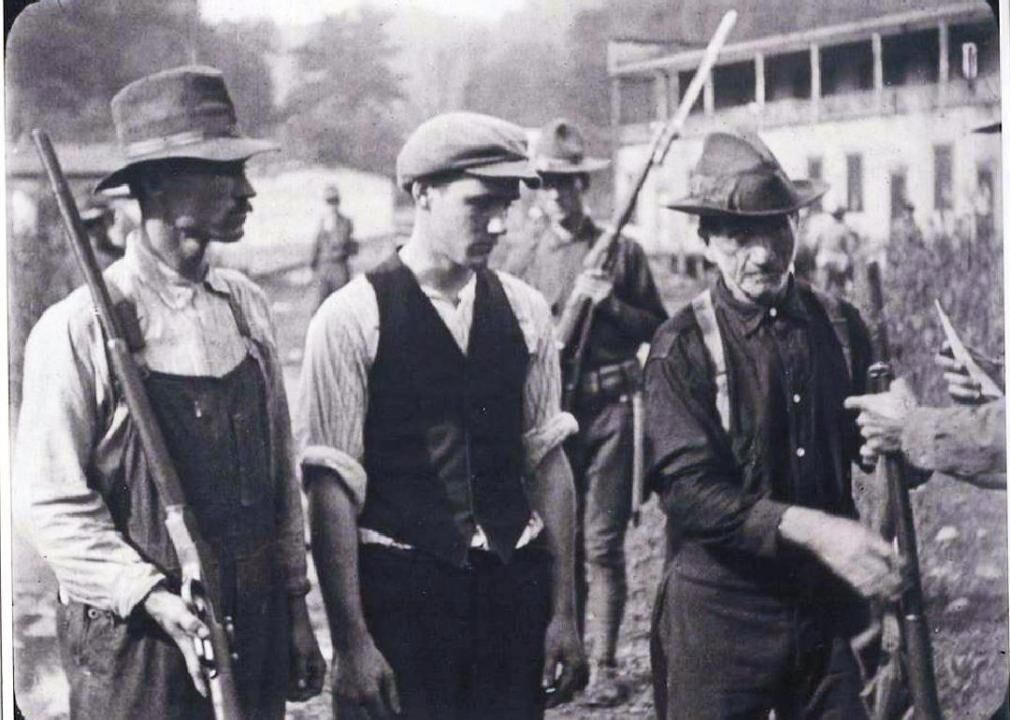
Four labor uprisings between 1919 and 1921 required Army intervention, but the largest of these—and the largest in U.S. history—took place over five days in late August and early September of 1921 as part of the Coal Mine Wars, multiple labor disputes throughout Appalachia.

Around 10,000 fully armed coal miners who sought to unionize marched to Logan County in West Virginia to confront 3,000 “Logan Defenders” (strike bearers backed by coal operators) and law-enforcement officers, and force the coal mines into a contract. Roughly 1 million rounds were fired, up to a 100 people killed (though this report varies), and many more arrested. The Army was deployed by a presidential order to stop the fighting and famously managed to send thousands of miners home without firing a single shot.

Public Domain // Wikimedia Commons

1922: Col. Charles Young dies

1922: Col. Charles Young dies

- Army strength: 148,763 people (0.14% of U.S. population)

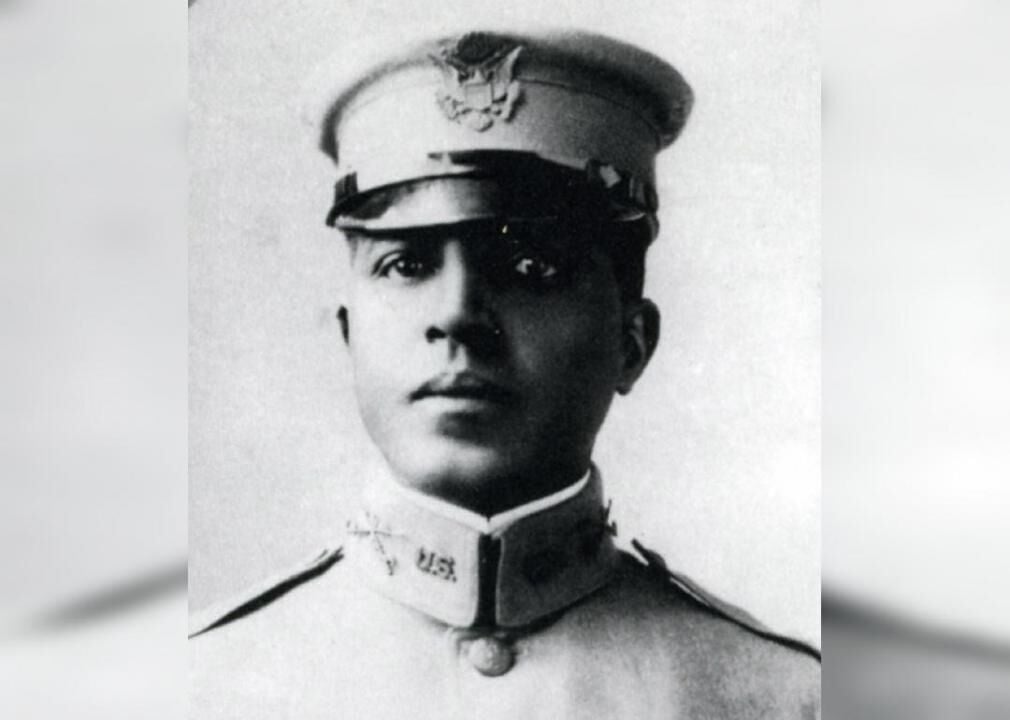
Col. Charles Young was the first Black colonel in the United States Army, the first Black U.S. national park superintendent, first Black military attache, and third Black graduate of the United States Military Academy. The son of former slaves, Young led the U.S. Calvary into Mexico in Pershing's Punitive Expedition. At the time of his death in 1922, he was the highest-ranking Black officer in the Regular Army.

Public Domain // U.S. Army

1923: Harding orders troops home from Germany

1923: Harding orders troops home from Germany

- Army strength: 133,243 people (0.12% of U.S. population)

Four years after the end of World War I, President Warren G. Harding ended the U.S. occupation of the Rhine through an executive order, effectively calling the last of the U.S. troops back home from Germany. Six months later, Harding and his wife embarked on a “voyage of understanding” speaking tour throughout Alaska and other western U.S. states in order to connect with voters there, amidst multiple scandals dogging the Harding presidency.

Public Domain // Wikimedia Commons

1924: Philippines scouts rebel

1924: Philippines scouts rebel

- Army strength: 142,673 people (0.13% of U.S. population)

Philippine scouts trained by members of the U.S. Army mutinied because they were not given the same pay and treatment as their stateside counterparts. The men, who were essential to American rule in the Philippines in spite of not receiving equal benefits or pay to American soldiers, were sent to jail for rebelling and defying orders. The U.S. Army ignored their requests for equal pay and changed nothing about recruitment methods or leadership.

You may also like: Most lopsided state legislatures in America

Public Domain // US Army Military History Institute

1925: Black soldiers evaluated for wartime fitness

1925: Black soldiers evaluated for wartime fitness

- Army strength: 137,048 people (0.12% of U.S. population)

The Army War College in 1925 began a study of the service and fitness of Black soldiers. After review, the college found that Black soldiers who were led by white officers could enter into wartime conflicts. For many years this policy was in place; the segregation of troops continued until 1948, just two years before the start of the Korean War.


Public Domain // National Archives

1926: Sgt. Stubby dies

1926: Sgt. Stubby dies

- Army strength: 134,938 people (0.11% of U.S. population)

Sgt. Stubby, the mascot of the 102nd Infantry Regiment, died in his sleep March 16, 1926. Stubby was famous for grabbing a German by the seat of his pants, and shook paws with three presidents (Woodrow Wilson, Warren Harding, and Calvin Coolidge). The dog was an honorary member of the American Red Cross, YMCA, and American Legion. He sniffed out poison gas and tracked down wounded and dead soldiers, and survived shrapnel wounds and a gas attack over the course of 17 battles. He was the most highly decorated dog of World War I and so beloved that when he died, his body was preserved. He still wears his blanket decorated with his medals and can be seen at the Smithsonian Institution in Washington D.C.


Public Domain // Wikimedia Commons

1927: Joint Army and Navy Basic War Plan Red

1927: Joint Army and Navy Basic War Plan Red

- Army strength: 134,829 people (0.11% of U.S. population)

Surrounding the Geneva Naval Conference in 1927, the U.S. Army developed a series of color-coded war plans for hypothetical conflict scenarios with Japan, Germany, Mexico, and England. War Plan Red outlined a hypothetical plan for defending and invading British-held Canada. The plan described first sending the Joint Army in to capture Halifax in order to cut off Canadians from British allies before overtaking power plants around Niagara falls, causing Canadians to freeze. Mounting attacks—from marches into Montreal and Quebec to seizing nickel mines in Ontario—were intended to gain complete control.

War Plan Red was approved in 1930 by Secretary of War Patrick J. Hurley and Secretary of the Navy Charles Francis Adams III. Updates came to the war plan in 1934 and 1935, but it was never presented to Congress for an actual war declaration.


Community Archives // Wikimedia Commons

1928: First US Army Day

1928: First US Army Day

- Army strength: 136,084 people (0.11% of U.S. population)

The first official U.S. Army Day was celebrated May 1, 1928. It was timed for the same day as Workers' Day, a communist celebration. Army Day was moved to April 6 in 1929 in honor of the anniversary date of the U.S. entering World War I. The holiday is meant to introduce the public to the activities of the U.S. Army, convey the importance of preparedness for the military, and to bring attention to national defense.


Public Domain // Wikimedia Commons

1929: Escobar revolutionaries send stray bullets to US

1929: Escobar revolutionaries send stray bullets to US

- Army strength: 139,118 people (0.11% of U.S. population)

In El Paso, Texas, the U.S. Calvary was under threat from the Escobar Revolution. The revolutionaries fought so close to the U.S border that stray bullets landed on the U.S side and several injuries were reported.

You may also like: From Stonewall to today: 50 years of modern LGBTQ+ history


Public Domain // Wikimedia Commons

1930: Douglas MacArthur is appointed Army chief of staff

1930: Douglas MacArthur is appointed Army chief of staff

- Army strength: 139,378 people (0.11% of U.S. population)

Gen. Douglas MacArthur was superintendent at West Point before being appointed Army chief of staff with the rank of general by President Herbert Hoover. In his new position, MacArthur caused an uproar in 1932 when he authorized excessive force to remove the Bonus Army—unemployed, protesting World War I veterans—from Washington D.C.


Public Domain // United States Army

1931: US Army wins International Military Team Trophy

1931: US Army wins International Military Team Trophy

- Army strength: 140,516 people (0.11% of U.S. population)

In a show of Calvary skills, the U.S. Army used a myriad of horse skills to win the 1931 International Military Team Trophy at Madison Square Garden. France lost and supporters were visibly upset, as reported by the New York Times.


William Warhurst/Topical Press Agency // Getty Images

1932: Calvary soldiers attack veterans

1932: Calvary soldiers attack veterans

- Army strength: 134,957 people (0.11% of U.S. population)

Twenty thousand veterans from World War I were forced out of Washington D.C. when Calvary soldiers rode into the crowd, sabering the veterans and lobbing tear gas. The veterans were unemployed, and protesting the bonus certificates they were awarded that could not be used until 1945. MacArthur spearheaded the charge, publicly leading the soldiers to the Hoovervilles to disperse the veterans by force.


Public Domain // U.S. Army

1933: US Army aids Civilian Conservation Corps

1933: US Army aids Civilian Conservation Corps

- Army strength: 136,547 people (0.11% of U.S. population)

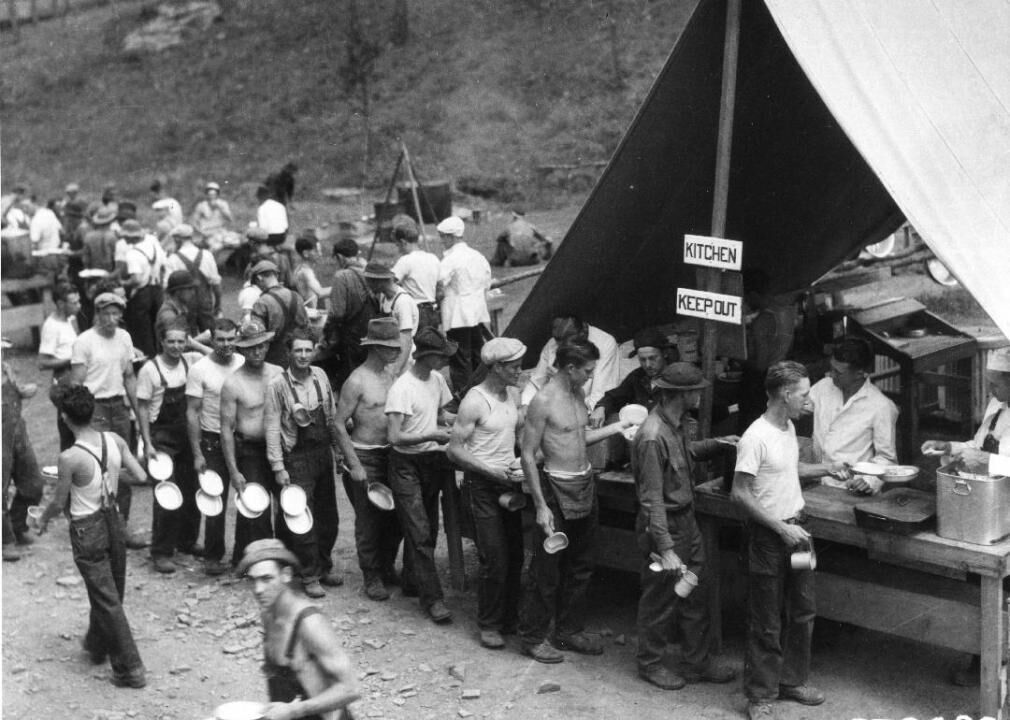
The U.S. Army transported 25,000 Civilian Conservation Corps recruits to conditioning camps in 1933. The CCC was formed to get young men to work, due to the Great Depression's impact on jobs. The work of the Army's involvement in the CCC aided in training mobilization units for World War II.


OSU Special Collections & Archives // Wikimedia Commons

1934: Army takes over the mail

1934: Army takes over the mail

- Army strength: 138,464 people (0.11% of U.S. population)

President Franklin D. Roosevelt in 1934 halted all service of the Post Office amidst allegations of U.S. Air Mail contract scandals. The U.S. Army Air Corps was ordered in February 1934 to take over air mail transportation, to disastrous results. Intense winter weather contributed to multiple crashes and the deaths of 12 pilots. The public outcry was so severe that full airline service was restored by June of that year, and Congress passed the Air Mail Act.

You may also like: 25 terms you should know to understand the gun control debate


Centpacrr // Wikimedia Commons

1935: Final flight of US Army Air Corps LTA operations

1935: Final flight of US Army Air Corps LTA operations

- Army strength: 139,486 people (0.11% of U.S. population)

Before the dissolution of the U.S. Army Air Corps “lighter-than-air” (LTA) operations, the branch created a final and fluid airship that was also the largest ever flown. The TC-14 flew for two hours and was clocked at a top speed of 90 mph. The airship took more than three years to build, largely due to a very small budget dispensed during the Great Depression.


United States Air Force

1936: M1 Garand becomes go-to Army rifle

1936: M1 Garand becomes go-to Army rifle

- Army strength: 167,816 people (0.13% of U.S. population)

The M1 Garand was adopted as the Army's go-to rifle. The new rifle was created with the height of modernized small arms technology. The rifle was strong and light, weighing only 9 pounds; it was the perfect weapon for the new Army's needs. This semi-automatic weapon would go on to be the primary choice of arms for World War II.


US Army // Wikimedia Commons

1937: Army's Airship Program ends

1937: Army's Airship Program ends

- Army strength: 179,968 people (0.14% of U.S. population)

The army's Airship Program was terminated and the balloons sold off in 1937. Airships were used all through the 1930s, and in World War I to spy and acquire information.


Public Domain // WIkimedia Commons

1938: 15th Regiment returns home from China

1938: 15th Regiment returns home from China

- Army strength: 185,488 people (0.14% of U.S. population)

After decades of service in China, the 15th Regiment arrived back on U.S. soil March 24, 1938. The soldiers spent their time escorting Chinese supply boats upriver and tracking down headhunters. The homecoming was similar in style to those in World War I as the USAT Grant came ashore with 808 enlisted men and officers, and 417 wives and children.


Public Domain // WIkimedia Commons

1939 US Army (and its Calvary) ranks 39th in the world

1939 US Army (and its Calvary) ranks 39th in the world

- Army strength: 189,839 people (0.15% of U.S. population

The Army still used Calvary and had horses to pull artillery, and ranked 39th in the world for military strength. That low ranking didn't bode well for the ongoing war in Europe. The Calvary was 50,000 strong in 1939 and the nation was not ready for a war.

You may also like: How Americans use the internet today, by the numbers


Public Domain // Wikimedia Commons

1940: Selective Training and Service Act

1940: Selective Training and Service Act

- Army strength: 269,023 people (0.20% of U.S. population)

The Selective Training and Service Act of 1940 called for every man between 21 and 45 years old to register for the draft. Even though it was peacetime, the government believed there would be a call for war soon. That same year, height standards for the Army dropped down to 5 feet (from 5 feet and 3 inches in 1923).


Topical Press Agency // Getty Images

1941: ‘It's only a maneuver’

1941: ‘It's only a maneuver’

- Army strength: 1.46 million people (1.10% of U.S. population)

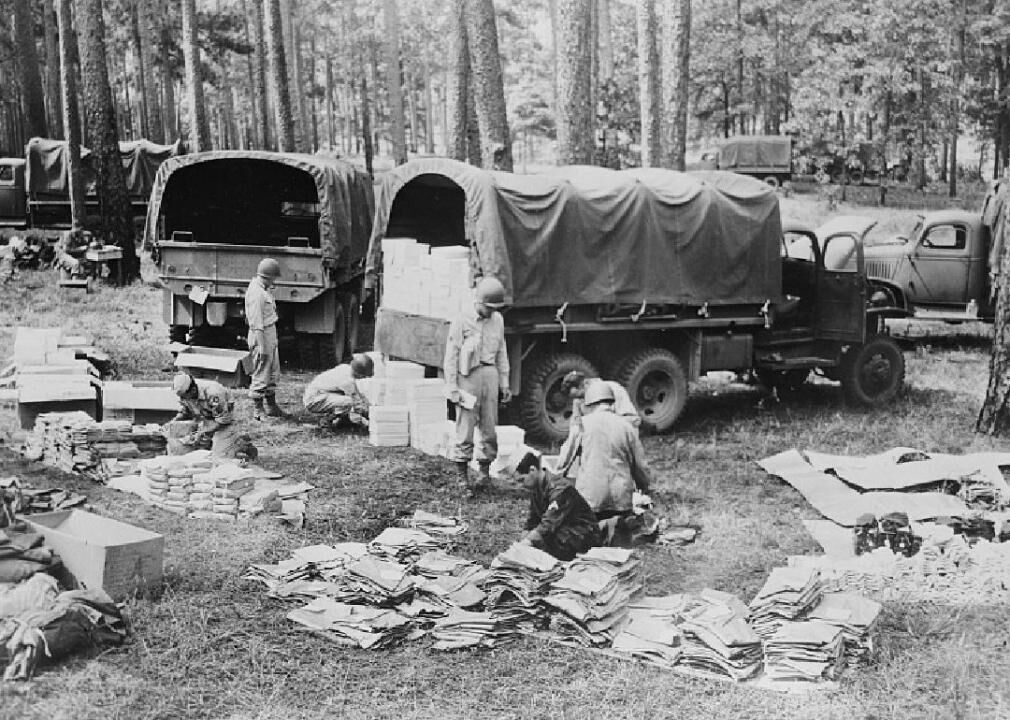
To prepare American forces for World War II, the U.S. Army in 1941 began staging the first-ever army-against-army U.S. war maneuvers in Louisiana and the Carolinas. Faux battles included the Second Battle of Camden, the Battle of the Pee Dee, and the Battle of Shreveport.


Public Domain // Wikimedia Commons

1942: Dogs Defense group founded

1942: Dogs Defense group founded

- Army strength: 3.08 million people (2.28% of U.S. population)

The Dogs Defense group was formed in 1942 in order to train dogs for sentry duty. The Army saw that the working dogs were skilled, and signed into existence the first K9 corp.


Public Domain // Wikimedia Commons

1943: US Army Fights the Japanese in Alaska

1943: US Army Fights the Japanese in Alaska

- Army strength: 6.99 million people (5.12% of U.S. population)

In Attu, Alaska, two amphibious landings by the U.S. Army were put in place to attack the Japanese who had occupied the island without any resistance. The battle lasted for two weeks and the majority of fighting was hand-to-hand combat. It is the only battle on a U.S. territory that was fought under arctic conditions.


Library of Congress's Prints and Photographs division // WIkimedia Commons

1944: Operation Neptune

1944: Operation Neptune

- Army strength: 7.99 million people (5.78% of U.S. population)

On June 6, 1944, D-Day—or Operation Neptune—was carried out. This battle allowed the allies to begin the liberation of France and push the Germans back.

You may also like: The only 7 countries that are on track to meet the Paris Agreement—and how they're doing it


Public Domain // Wikipedia

1945: Dachau (mostly) liberated

1945: Dachau (mostly) liberated

- Army strength: 8.27 million people (5.91% of U.S. population)

The 42nd and 45th division liberated more than 32,000 prisoners in Dachau concentration camp. However, many Nazis escaped and began a death march with 7,000 prisoners, murdering those unable to continue to march.


Pixabay

1946: The 'mutiny of American troops after WWII

1946: The 'mutiny of American troops after WWII

- Army strength: 1.44 million people (1.02% of U.S. population)

With Germany's surrender in May 1945 and Japan's surrender that September, World War II was officially over. U.S. troops were anxious to get home—but getting the troops back before Christmas was no small task. Thousands of restless soldiers from the time of Japan's surrender through January 1946 protested delays by marching and holding rallies at bases around the world, many times with signs that mocked commanders.


Fox Photos // Getty Images

1947: The World War II draft expires

1947: The World War II draft expires

- Army strength: 685,458 people (0.48% of U.S. population)

Throughout World War II, the War Manpower Commission had to recruit upwards of 200,000 men per month in order to secure 9 million men in the U.S. Armed Forces before the close of 1943. The draft ran from 1940 until 1946, at which point the draft was suspended. The authorization for that draft expired in 1947 with no push by Congress for an extension.


Library of Congress

1948: Truman desegregates the US Military

1948: Truman desegregates the US Military

- Army strength: 554,030 people (0.38% of U.S. population)

President Harry Truman desegregated the U.S. Military despite extensive opposition to the legislation and threats of a filibuster from Southern senators. The military by 1946 had become the largest employer of minorities, and in 1946 Truman's appointed panel, President's Commission on Civil Rights, recommended further civil rights protections that included anti-poll tax laws and anti-lynching laws. Truman in 1948 used his executive powers to enact all of the committee's recommendations, appoint the first African American federal judge, and desegregate the Armed Forces, among many other milestones.


Keystone // Getty Images

1949 Army withdraws from Korea

1949 Army withdraws from Korea

- Army strength: 660,473 people (0.44% of U.S. population)

The U.S. Army withdrew troops from Korea, blaming limited military power. The government assured the public that if the Army is needed, more troops will go back.

You may also like: Most and least popular governors in America


Keystone // Getty Images

1950: Attack on Korea authorized

1950: Attack on Korea authorized

- Army strength: 593,167 people (0.39% of U.S. population)

Gen. Douglas MacArthur in 1950 authorized the U.S. 7th Infantry Division to launch an amphibious attack on Korea. It was the beginning of a war between Communist-supported North Korea and the United States and United Nations-backed South Korea.


U.S. Air Force photo

1951: China supports North Korea

1951: China supports North Korea

- Army strength: 1.53 million people (0.99% of U.S. population)

China entered the war on the North Korean side and planned a total annihilation of the U.S. Army in South Korea. The Ridgeway offensive was the U.S. Army's answer; they wanted to hold ground and keep Seoul.


Keystone // Getty Images

1952: Armistice talks stall

1952: Armistice talks stall

- Army strength: 1.60 million people (1.01% of U.S. population)

In the U.S. Army's third year of the Korea war, armistice talks stalled as the fighting continued. The newly elected President Dwight D. Eisenhower traveled to Korea to discuss a ceasefire. The Korean Demilitarized Zone was established, and in March 1953, Joseph Stalin's death helped push a prompt conclusion to the negotiations.


Keystone // Getty Images

1953: Korean War ends

1953: Korean War ends

- Army strength: 1.53 million people (0.96% of U.S. population)

The Korean war ended in July 1953 with an armistice serving as a ceasefire. The U.S. Army worked to create an official line of demarcation between North and South Korea. The ceasefire was between military forces, not governments—and with no peace treaty signed, the Korean War never officially stopped.


U.S. Navy // Wikimedia Commons

1954: McCarthy hearings begin

1954: McCarthy hearings begin

- Army strength: 1.4 million people (0.86% of U.S. population)

Joseph McCarthy accused the U.S. Army in 1954 of being soft on communists. The case resulted in McCarthy being barred from speaking in the U.S. Senate.

You may also like: Cities before conflict: what it was like to visit Juarez, Tehran, and 13 other afflicted places


APA/Hulton Archive // Getty Images

1955: Operation Gyroscope

1955: Operation Gyroscope

- Army strength: 1.11 million people (0.67% of U.S. population)

Operation Gyroscope was a project that sought a more cost-effective option for sending much-needed troops to Europe for rebuilding efforts. Instead of flying soldiers trained out West into New York, before loading them onto ships with equipment bound for Europe, the soldiers boarded ships in California and shipped out via the Panama Canal.


Keystone // Getty Images

1956: M113 ships to Vietnam

1956: M113 ships to Vietnam

- Army strength: 1.03 million people (0.61% of U.S. population)

The M113 personnel carrier was shipped to Vietnam to test its armor and capabilities. The vehicle—created by the Food Machinery Corp—was used throughout the Vietnam War.


Donn A. Starry // Wikimedia Commons

1957: Operation Plumbbob

1957: Operation Plumbbob

- Army strength: 997,994 people (0.58% of U.S. population)

The government launched a series of nuclear bombs tests called Operation Plumbbob in 1957. To see how the U.S. Army troops responded to nuclear bombs, they conducted an airlift assault.


National Nuclear Security Administration / Nevada Site Office // Wikimedia Commons

1958: Elvis Presley joins up

1958: Elvis Presley joins up

- Army strength: 898,925 people (0.51% of U.S. population)

Most young men 18 and older had to sign up for the draft. Elvis Presley had his number come in and was drafted into the U.S. Army in 1958. He reportedly had the option to fulfill his service a recruiting model and an entertainer for the troops, but Presley chose to become a common soldier instead.


Associated Press // Wikimedia Commons

1959: First soldiers killed in Vietnam

1959: First soldiers killed in Vietnam

- Army strength: 861,964 people (0.48% of U.S. population)

Maj. Dale Buis and Master Sgt. Chester Ovnand, part of a military assistance advisory group in Bien Hoa, north of what was formerly called Saigon, were the first Americans killed in the Vietnam War. Viet Cong guerrillas attacked the group, which had been coming to South Vietnam since November 1955 to provide help and advice to Vietnam's ministry of defense.


U.S. Army Sgt. 1st Class Michael J. Carden // Wikimedia Commons

1960: Laos is determined to be non-threatening

1960: Laos is determined to be non-threatening

- Army strength: 873,078 people (0.48% of U.S. population)

Three groups of the U.S. Army in 1960 were set to be deployed to Southeast Asia. The battle groups were canceled when the government decided that there weren't any threats coming from Laos.


Hulton Archive // Getty Images

1961: Green Berets receive real green berets

1961: Green Berets receive real green berets

- Army strength: 858,622 people (0.47% of U.S. population)

The Green Berets were given actual, green berets to wear for the first time in 1961 as a part of their uniform. President John F. Kennedy visited the group (the name for the U.S. Army Special Forces) at Fort Bragg in North Carolina to commend them for their service.


U.S. Army Courtesy Photo

1962: Army troops head to Florida airfields

1962: Army troops head to Florida airfields

- Army strength: 1.07 million people (0.57% of U.S. population)

The U.S. Army in 1962 sent troops to Florida airfields that were closest to Cuban Missile ranges. The Army also received a convoy citation from a Virginia state trooper for an overloaded caravan.


mediadefense.gov

1963: Operation Biglift

1963: Operation Biglift

- Army strength: 975,916 people (0.52% of U.S. population)

The U.S. Army participated in Operation Biglift in 1963 in order to demonstrate its might. Almost 15,000 soldiers were flown over to Europe to show how fast the U.S. was ready to fight if need be.


USAMHI // Wikimedia Commons

1964: South Vietnamese training begins

1964: South Vietnamese training begins

- Army strength: 973,238 people (0.51% of U.S. population)

The U.S. Army in 1964 sent a mobile forces team to train the South Vietnamese. The entire plan was supposed to succeed and stop the Viet Cong by the end of 1964.

You may also like: Oldest national parks in America


Keystone // Getty Images

1965: China Beach

1965: China Beach

- Army strength: 969,066 people (0.50% of U.S. population)

The U.S. Army sent the first 3,500 combat troops to Vietnam on March 8, 1965. The men, who landed at China Beach and joined 23,000 American military advisers already there, were sent in defense of the American air base at Da Nang in the wind-up to the Vietnam War. That same year, President Lyndon Johnson authorized air strikes on the North Vietnamese.


U.S. Army // Getty Images

1966: Army forces in Vietnam number 200,000

1966: Army forces in Vietnam number 200,000

- Army strength: 1.2 million people (0.61% of U.S. population)

More than 200,000 U.S. Army soldiers were stationed at various bases throughout Vietnam in 1966. Army officers worked with their South Vietnamese counterparts.


Hulton Archive // Getty Images

1967: Operation Malheur I and II

1967: Operation Malheur I and II

- Army strength: 1.44 million people (0.73% of U.S. population)

The U.S. Army conducted Operation Malheur I and Operation Malheur II as a series of search and destroy actions intended to thwart Viet Cong force activity in the northern reaches of South Vietnam. Air assaults effectively disrupted activity but failed to end it; the operations contributed to the 6,400 civilian casualties reported for the province that year.


Photo courtesy of U.S. Army Heritage and Education Center, Vietnam War Photograph Collection

1968: My Lai massacre

1968: My Lai massacre

Army strength: 1.57 million people (0.78% of U.S. population)

In the My Lai massacre in March 1968, soldiers massacred hundreds of unarmed people in the Sơn Tịnh District, South Vietnam, including children and monks. Until it was challenged by a helicopter pilot, the Army called My Lai a victory. Earlier in 1968 came the Tet Offensive, a series of attacks against the South Vietnamese Army of the Republic of Vietnam, the U.S. Armed Forces, and allies by the Viet Cong and North Vietnamese People’s Army of Vietnam. The offensive represents one of the widest-reaching military actions of the Vietnam War.


DAVID LAMB/AFP // Getty Images

1969: The Battle of Hamburger Hill

1969: The Battle of Hamburger Hill

- Army strength: 1.51 million people (0.75% of U.S. population)

In the bloody 1969 Battle of Hamburger Hill, U.S. soldiers fought for control of a 3,000-foot-tall hillside in a remote part of South Vietnam. The battle kicked off Operation Apache Snow, a calculated offensive against the northern People's Army of Vietnam. The Battle of Hamburger Hill—expected to take several hours—went on for 11 days and 12 assaults, and caused 72 American deaths, more than 370 American injuries, and more than 630 North Vietnamese casualties. After winning the hill, the U.S. Army abandoned it and Vietnamese troops reoccupied it.

You may also like: Former jobs of the governor of every state


United States Army Military History Institute // Wikimedia Commons

1970: Koza riot in Okinawa, Japan

1970: Koza riot in Okinawa, Japan

- Army strength: 1.32 million people (0.64% of U.S. population)

A drunken soldier on the night of Dec. 20, 1970, crashed into an Okinawan pedestrian and, after checking on him, the soldier attempted to get back into his car. But an angry crowd surrounded him, and the Koza riot began and continued into the next day: Thousands of Okinawans were pitted against 700 soldiers.


Larry Gray, United States Government military member // Wikimedia Commons

1971: Women recruitment is up

1971: Women recruitment is up

- Army strength: 1.12 million people (0.54% of U.S. population)

At the beginning of the 1970s, women were recruited to the U.S. Army in larger numbers. The jump was due to the end of the draft, the conclusion of the Vietnam War, and notable strides in the feminist movement.


Senior Airman Tiffany M. Deuel // U.S. Air Force photo

1972: Withdrawals begin from Vietnam

1972: Withdrawals begin from Vietnam

- Army strength: 810,960 people (0.39% of U.S. population)

Between 1969 and 1972, more than 500,000 American servicemen—336,000 of whom were Army personnel—were redeployed in 12 increments from the Republic of Vietnam. The final five of those withdrawals happened in 1972.


Tullio Saba // Flickr

1973: Withdrawal from Vietnam concludes

1973: Withdrawal from Vietnam concludes

- Army strength: 800,973 people (0.38% of U.S. population)

In Operation Homecoming Feb. 12, 1973, the release of 591 American prisoners of war was initiated. Final troops withdrew from Vietnam March 29 of the same year, marking America's first defeat—and longest war.


U.S. Air Force photo

1974: Tensions rise

1974: Tensions rise

- Army strength: 783,330 people (0.37% of U.S. population)

In the wake of an unpopular war and rising tensions, discontent between races spiked throughout 1974 and Army barracks became undisciplined. The Army reduced its size and began refining its recruiting process.

You may also like: 'I have a dream' and the rest of the greatest speeches of the 20th century


Cpl. Andrew Neumann // USMC

1975: Mandatory defensive weapons training for women

1975: Mandatory defensive weapons training for women

- Army strength: 784,333 people (0.36% of U.S. population)

The Army enacted mandatory defensive weapons training for women members of the Army in 1975. The Women's Army Corps, begun in 1942, also provided women with more opportunities.


Scott Olson // Getty Images

1976: Operation Paul Bunyan

1976: Operation Paul Bunyan

- Army strength: 779,417 people (0.36% of U.S. population)

Two soldiers in 1976 were axed to death in the Korean demilitarized zone. In retaliation, U.S. soldiers enacted Operation Paul Bunyan, in which they hacked down an old tree the murdered soldiers had been there to remove. The action showed force and intimidated North Koreans, who quickly took the blame for the murders.


Wayne Johnson // Wikimedia Commons

1977: Army admits to 27 germ warfare tests conducted on public property

1977: Army admits to 27 germ warfare tests conducted on public property

- Army strength: 782,246 people (0.36% of U.S. population)

In a scathing Washington Post report March 9, 1977, the U.S. Army admitted to 239 open-air, secret “germ warfare tests” between 1949 and 1969, including 27 conducted on public property. The newly disclosed locations where the Army tests toxins included Washington D.C.'s Greyhound bus terminal and National Airport, two tunnels along the Pennsylvania Turnpike, and at various sports in New York City, San Francisco, and in Florida's Key West and Panama City.


Sgt. Eliverto V Larios // DoD photo

1978: Jonestown Massacre

1978: Jonestown Massacre

- Army strength: 771,624 people (0.35% of U.S. population)

On Nov. 18, 1978, in Jonestown, Guyana, 918 followers of Pentecostal cult leader Jim Jones died—some by willingly drinking fruit punch dosed with cyanide, others (mostly children) by forced syringes of the lethal cocktail, and others by gunfire (dispensed by Jones' guards) when they tried to flee into the nearby jungle. More than 300 children died in the shocking group suicide, which the Army was sent in to clean up.


Larry Downing // Getty Images

1979: Faulty pilot ejection controls found

1979: Faulty pilot ejection controls found

- Army strength: 758,852 people (0.34% of U.S. population)

U.S. Army helicopter injuries were reviewed in 1979 for safety issues. It was found that there wasn't any way for the pilots to eject in time. Almost 300 crashes were recorded between 1979 and 1985.


Frank Barratt/Stringer // Getty Images

1980: Bright Star military exercise commences

1980: Bright Star military exercise commences

- Army strength: 777,036 people (0.34% of U.S. population)

The United States and Egypt held their first Operation Bright Star together in Egypt in 1980. The training exercises are intended to improve military ties between the two countries and include tactical air, ground, and naval operations. Bright Star is held every two years and grew in 1995 to include troops from the UAE, France, U.K., and several countries in the Middle East and west. The following year, NATO nations (France, U.K., Germany, and UAE) were added, with Kuwait added as well in 1998. Bright Star became among the biggest exercises with U.S. troops worldwide. 1980 also represents the start of the U.S. Army's new tagline, “Army. Be all that you can be,” which was in use until 2001.


Norbert Schiller/Stringer // Getty Images

1981: US Army gets a new look

1981: US Army gets a new look

- Army strength: 781,419 people (0.34% of U.S. population)

The U.S. Army switched its uniform design to woodland camouflage, which was in use in the U.S Army until 2004. The inspiration came from the Vietnamese jungle.


Cpl. Ilwoong Kong // DoD photo

1982: New recruits, new (amended) requirements

1982: New recruits, new (amended) requirements

- Army strength: 780,391 people (0.34% of U.S. population)

The U.S. Army in 1980 changed its Army Physical Fitness Test (APFT) requirements for new recruits in 1980, reflecting that recruits must run 2 miles, and complete push-ups and sit-ups. A 1982 amendment to the APFT offered alternative tests to recruits with physical barriers.


Sgt. Mike MacLeod // Army National Guard

1983: US Army invades Grenada

1983: US Army invades Grenada

- Army strength: 779,643 people (0.33% of U.S. population)

The United States invasion of Grenada came about following unrest within the People's Revolutionary Government there and the execution of Grenada's Prime Minister Maurice Bishop. On Oct. 25, 1983, the U.S. Army's Rapid Deployment Force, U.S. Army Delta Force, and multiple other military branches invaded and promptly overwhelmed Grenadian forces.


Sgt. Michael Bogdanowicz, U.S. Army // Wikimedia Commons

1984: Pedro Colondres-Rosa defrauds US Army

1984: Pedro Colondres-Rosa defrauds US Army

- Army strength: 780,180 people (0.33% of U.S. population)

Pedro A. Rodríguez-Colondres joined the U.S. Army in the 1970s under the assumed name of Pedro Colondres-Rosa, but was discharged in the 1970s for not passing the fitness tests. From 1984 until 2011, Colondres-Rosa used a false name to receive veterans benefits. He was arrested in 2014 for defrauding the U.S. Army Reserve.

You may also like: Countries that have mandatory voting


kittirat roekburi // Shutterstock

1985: El Salvador raid

1985: El Salvador raid

- Army strength: 780,787 people (0.33% of U.S. population)

A raid in El Salvador by U.S. Army Rangers was conducted in 1985 in retaliation for the deaths of six soldiers. The Rangers ended up killing 83 guerillas at a training camp.


The U.S. Army // Wikimedia Commons

1986: US troops arrive in Honduras

1986: US troops arrive in Honduras

- Army strength: 780,980 people (0.33% of U.S. population)

More than 3,000 U.S. troops arrived in Honduras in 1986 to show support for that country's government in its war with Nicaragua. Honduras claimed Nicaraguan troops had illegally crossed into Honduras while attempting to detain Nicaraguan rebels. That same year, the U.S. Army sent assistance to Bolivia for anti-narcotics operations, which included extensive cocaine raids throughout the country.


TSGT Bob Simons, USAF // National Archives Catalog

1987: US Army Airborne heads to Honduras

1987: US Army Airborne heads to Honduras

- Army strength: 780,815 people (0.32% of U.S. population)

The U.S. Army Airborne Division was deployed to Honduras to the Nicaraguan border for army exercises. The exercises were created to show the continued strength of the U.S. military.


SSGT Scott Stewart // National Archives Catalog

1988: US takes on Nicaraguan insurgents

1988: US takes on Nicaraguan insurgents

- Army strength: 771,847 people (0.32% of U.S. population)

More than 2,000 U.S. soldiers were flown to Honduras in 1988, where Nicaraguan insurgents were threatening the border. While there, the U.S. Army demonstrated its might with repeated training exercises.


TSGT Bob Simons, USAF // National Archives Catalog

1989: Operation Just Cause

1989: Operation Just Cause

- Army strength: 769,741 people (0.31% of U.S. population)

The Invasion of Panama called Operation Just Cause ended with the U.S. defeating Manuel Noriega with 26,000 deployed combat troops. President H.W. Bush used four justifications for the invasion: protecting U.S. citizens living in Panama; safeguarding the Torrijos-Carter Treaties; protecting human rights and democracy in the country; and fighting drug traffickers.

You may also like: Worst-run cities in America


AFP/Stringer // Getty Images

1990: Gulf War starts

1990: Gulf War starts

- Army strength: 732,403 people (0.29% of U.S. population)

To leverage Iraq’s requests for cancellation of debt to Gulf creditors following the Iran-Iraq war, Iraqi President Saddam Hussein threatened neighboring Kuwait. The threats escalated when Kuwait turned down Hussein's requests for debt forgiveness, and as the president accused the United States of intentionally weakening Iraq by pushing for reduced oil prices in Kuwait. A report 100,000 Iraqi troops invaded Kuwait on Aug. 2, 1990, overrunning the country.


US Air Force // Wikimedia Commons

1991: Gulf ground war begins

1991: Gulf ground war begins

- Army strength: 710,821 people (0.28% of U.S. population)

The U.S. led an air and ground war invasion of Iraq just after the new year on Jan. 16, 1991. By the end of the first day, the first wave of troops took more than 10,000 of Hussein's soldiers prisoner. The Iraqi retreat from Kuwait and the end of the war came soon after on Feb. 28.


DOD/Handout // Getty Images

1992: US troops offer humanitarian aid in Somalia

1992: US troops offer humanitarian aid in Somalia

- Army strength: 610,450 people (0.24% of U.S. population)

Somalians cheered U.S. troops coming to help with humanitarian aid. Gradually, the U.S. became part of the strife and inter-clan wars.


Staff Sgt. Gustavo Castillo // Air Force photo

1993: Battle of Mogadishu

1993: Battle of Mogadishu

- Army strength: 572,423 people (0.22% of U.S. population)

Operation Gothic Serpent and the Battle of Mogadishu commenced as 160 U.S. soldiers—comprised mainly of Army Rangers and Delta Force Operators—in Black Hawk Helicopters were attacked and shot at by Somalis from the streets. What was intended as an hour and a half mission turned into a battle that stretched on for 15 hours as the Black Hawks fell from the sky and U.S. soldiers were surrounded.


TSGT PERRY HEIMER // Wikimedia Commons

1994: Operation Uphold Democracy

1994: Operation Uphold Democracy

- Army strength: 541,343 people (0.21% of U.S. population)

More than 20,000 troops entered Haiti as part of Operation Uphold Democracy. They landed without any opposition in their mission to help ensure a peaceful transition to a democratic government in Haiti.

You may also like: Famous declassified government secrets


BOB PEARSON // Getty Images

1995: Peace treaty ends Bosnia-Herzegovina conflict

1995: Peace treaty ends Bosnia-Herzegovina conflict

- Army strength: 508,559 people (0.19% of U.S. population)

Following a U.S.-brokered peace treaty, American members of the military—including the Army—were welcomed into the country with open arms. The treaty concluded what had been the most brutal, violent armed European conflict since World War II.


MICHEL GANGNE // Getty Images

1996: All-Black Korean War unit has honor restored

1996: All-Black Korean War unit has honor restored

- Army strength: 491,103 people (0.18% of U.S. population)

The all-Black Korean War unit that was stripped of its honor and whose members were called cowards had its honor restored in an official Army report released publicly in April 1996. It wasn't until 1995 that researchers found that the unit performed similarly to the white units under the same stress and combat.


People's pictorial // Wikimedia Commons

1997: 7 Black WWII soldiers get Medal of Honor

1997: 7 Black WWII soldiers get Medal of Honor

- Army strength: 491,707 people (0.18% of U.S. population)

Not one Medal of Honor was awarded to a Black soldier for service during World War II until a U.S. Army-commissioned 1993 study looked into racial discrimination in awarding medals. Results from the study showed a number of Distinguished Service Cross recipients ought to be rightfully upgraded to receive the Medal of Honor. President Bill Clinton did so on Jan. 13, 1997, when he awarded the highest military honor to seven Black veterans from World War II. Of those named, only one—Vernon Baker—was alive to receive his medal.


JAMAL WILSON/Stringer // Getty Images

1998: Bosnia mission zaps US Army strength

1998: Bosnia mission zaps US Army strength

- Army strength: 484,928 people (0.18% of U.S. population)

The high costs, time, and troop requirements of the U.S. mission in Bosnia led many to complain about the 6,900 combat troops in Bosnia. Many claimed U.S. troops there weakened the overall military strength of the Army.


MIKE NELSON/Stringer // Getty Images

1999: Yugoslavians hold U.S. soldiers captive

1999: Yugoslavians hold U.S. soldiers captive

- Army strength: 477,788 people (0.17% of U.S. population)

Three U.S. Army soldiers in Yugoslavia for a peacekeeping mission were taken captive and held as prisoners of war for 32 days. Christopher Stone, Army Staff Sgt., Andrew Ramirez, and Specialist Steven Gonzales were ambushed while driving a Humvee and put in prison. National POW/MIA Recognition Day, held on the third Friday in September, was established to honor those veterans like Stone, Ramirez, and Gonzales who were prisoners of war—as well as those still missing in action.

You may also like: Major newspaper headlines from the year you were born


USAF/Handout // Getty Images

2000: 49th Armored Division deploys

2000: 49th Armored Division deploys

- Army strength: 483,115 people (0.17% of U.S. population)

As relations in Bosnia and Herzegovina improved, a scaling-down of U.S. military presence there began in 1999. Army numbers dropped from 5,400 that year to 3,900 by February 2000. As the 10th Mountain Division returned home in March of that year, it was replaced by the 49th Armored Division, Texas Army National Guard—marking the first deployment outside the U.S. of a division-sized reserve component formation since the Korean War.


Spc. Christina Westover // US Army Photo

2001: 9/11

2001: 9/11

- Army strength: 482,655 people (0.17% of U.S. population)

In the wake of the 9/11 attacks, President George W. Bush's administration launched Operation Enduring Freedom, the official name for the global War on Terror, which commenced with allied air strikes on various al-Qaida and Taliban targets.


Michael Foran // Wikimedia Commons

2002: Army uses video games for recruitment, training

2002: Army uses video games for recruitment, training

- Army strength: 488,631 people (0.17% of U.S. population)

Video games became not only a thing of pleasure, but of recruitment and training, at the turn of the 21st century. The first video game used for Army recruitment was “America's Army,” a two-part, first-person shooter game.


Aletha Frost // U.S. Air Force

2003: US Army invades Baghdad amidst looters

2003: US Army invades Baghdad amidst looters

- Army strength: 497,770 people (0.17% of U.S. population)

During the U.S. Army invasion of Baghdad, mobs took the opportunity to loot and burn multiple locations throughout the city, including various offices, embassies, and university labs. Members of the military were criticized for not intervening.


Marco Di Lauro/Stringer // Getty Images

2004: Second Battle of Fallujah

2004: Second Battle of Fallujah

- Army strength: 498,428 people (0.17% of U.S. population)

The second Battle of Fallujah was fought with the U.S. Marines and Army together with British forces. It was one of the heaviest battles since the Vietnam war.

You may also like: 50 endangered species that only live in the Amazon rainforest


Lance Corporal Samantha L. Jones, USMC // Wikimedia Commons

2005: Iraqi election

2005: Iraqi election

- Army strength: 490,632 people (0.17% of U.S. population)

The U.S. began involving itself in the politics of Iraq as U.S. Army troops provided a presence to increase safety for voters in the Iraqi parliamentary election. The United Iraqi Alliance took 48% of the vote against the Democratic Patriotic Alliance of Kurdistan and the Iraqi List earned 26% and 14% of the vote, respectively.

Also in 2005, Sgt. Leigh Ann Hester became the first woman in U.S. history to earn the Silver Star for direct combat action.


Pool // Getty Images

2006: President Bush visits Afghanistan

2006: President Bush visits Afghanistan

- Army strength: 507,131 people (0.17% of U.S. population)

Five years after launching Operation Enduring Freedom, President George W. Bush paid a visit to Afghanistan. There, he met with Afghan President Hamid Karzai and said he was sure Osama bin Laden would be “brought to justice” soon. Five more years passed before bin Laden was shot and killed. That year, the Army's 3rd Brigade Combat Team and two Battalion Task Forces from the 4th Brigade Combat Team deployed to Afghanistan and were there until 2007.


U.S. Army/Handout // Getty Images

2007: Troops need more sleep

2007: Troops need more sleep

- Army strength: 522,190 people (0.17% of U.S. population)

Working hard and pulling long shifts began having an effect on the troops, who news outlets reported being overwhelmed by fatigue with little sleep. Stress and exhaustion were taking their toll, the Guardian reported that year, and were contributing to desertions.


Martyn Aim/ Stringer // Getty Images

2008: Felons join up

2008: Felons join up

- Army strength: 544,150 people (0.18% of U.S. population)

Convicted felons in 2008 were able to receive military waivers in order to join the U.S. Army. Crimes like assault, drug dealing, and making terrorist threats were all waived.


Motortion Films // Shutterstock

2009: Army major kills 13 in Fort Hood

2009: Army major kills 13 in Fort Hood

- Army strength: 553,579 people (0.18% of U.S. population)

A U.S. Army major opened fire in Fort Hood, Texas, killing 13 and injuring 30. The military psychiatrist's shooting spree represents the worst mass murder at a U.S. military installation in history.

You may also like: Do you know the mayors of these major cities?


JIM WATSON // Getty Images

2010: Army sent to Haiti for relief effort

2010: Army sent to Haiti for relief effort

- Army strength: 566,045 people (0.18% of U.S. population)

Members of the U.S. Army returned to Haiti in 2010 following a large earthquake there. More than 20,000 soldiers and other members of services attended to victims of the earthquake.


Fred W. Baker III // DoD photo

2011: US troops leave Iraq

2011: US troops leave Iraq

- Army strength: 565,463 people (0.18% of U.S. population)

The last U.S. troops left Iraq in December 2011. The war took 4,500 American lives and countless lives of Iraqis.


Mario Tama // Getty Images

2012: Military gets trimmed

2012: Military gets trimmed

- Army strength: 550,063 people (0.18% of U.S. population)

President Barack Obama shrank the military with a cut of 40,000 active duty service members in 2012. The president blamed slashes to the budget and defaulted government loans for the cutbacks.


Lawrence Jackson // Official White House Photo

2013: Women join the front lines

2013: Women join the front lines

- Army strength: 532,043 people (0.17% of U.S. population)

Secretary of Defense Leon Panetta in January 2013 lifted the direct ground combat exclusion that banned women from fighting on the front lines. That month, women began integrating into those units.


Win McNamee // Getty Images

2014: Army hairstyles get a closer look

2014: Army hairstyles get a closer look

- Army strength: 508,210 people (0.16% of U.S. population)

In a 2014 review of Army policy regarding unauthorized hairstyles, previously restricted hairdos were found to be disproportionately restrictive for natural, African American hairstyles. The restrictions had been put in place in March of that year, to fierce backlash. Updated guidelines allow for two-strand twists, larger accepted braid sizes, and the removal of the phrase “matted and unkempt” from guidelines.

You may also like: Political cartoons from the last 100 years


Photo courtesy of US Marine Corps

2015: Army shrinks to pre-WWII levels

2015: Army shrinks to pre-WWII levels

- Army strength: 491,365 people (0.15% of U.S. population)

To meet new budgetary guidelines, the Pentagon announced in 2015 that the U.S. Army would contract to levels unseen since prior to World War II. Other cuts included the retirement of the A-10 aircraft and lowered benefits for military members.


US Air Force // Wikimedia Commons

2016: Army reduced further

2016: Army reduced further

- Army strength: 475,400 people (0.15% of U.S. population)

Budget cuts in 2016 slashed the U.S. Army further. The lowest amount of active-duty soldiers in years was achieved that year, with further cuts desired.


Sgt. Sean Mathis // Wikimedia Commons

2017: Immigrant recruits can't serve

2017: Immigrant recruits can't serve

- Army strength: 476,245 people (0.15% of U.S. population)

More than 500 immigrant recruits were discharged within a single year following the tabling of the Military Accessions Vital to the National Interest recruiting program, which drew in talent from around the globe with the promise of expedited tracks to citizenship. The recruits, courted for their medical skills or language abilities, were let go without due cause when fears arose that the vetting system for said recruits was not thorough enough.


Staff Sgt. Melanie Holochwost // U.S. Air Force

2018: US Army has stations throughout Africa

2018: US Army has stations throughout Africa

- Army strength: 413,593 people (0.13% of U.S. population)

Much to the surprise of the public, the U.S. Army and other service branches were on missions in more than 20 African countries in 2018 alone. The American presence was largely to offer African militaries assistance and training as needed. The only permanent U.S. military base in Africa is in Djibouti, along the continent's east coast.


US Army Africa // Wikimedia Commons

2019: First woman poised to lead US Army Infantry division

2019: First woman poised to lead US Army Infantry division

- Army strength: 416,876 people (0.13% of U.S. population)

Brig. Gen. Laura Yeager became the first woman to lead any U.S. Army infantry when Maj. Gen. Mark Malanka retired from the California National Guard's 40th Infantry Division on June 29, 2019. The division was led by men since its inception in 1917. Yeager was promoted in 2016 to brigadier general—at the time, only the fourth woman to reach such a rank in the California National Guard.

Cpl. Danielle Rodrigues // Wikimedia Commons

2020: COVID-19 upends the military

2020: COVID-19 upends the military

- Army strength: 482,343 people (0.14% of U.S. population)

As the full breadth of the coronavirus pandemic took shape around the world, the Pentagon in March 2020 banned the majority of unofficial troop travel and family members. Gen. Gus Perna, who served as head of Army Materiel Command, was tasked with heading Operation Warp Speed, the national vaccine distribution task force.


U.S. Army photo

2021: Extended-range guided rocket successfully traverses 80 km

2021: Extended-range guided rocket successfully traverses 80 km

The extended-range version of the U.S. Army’s Guided Multiple Launch Rocket System in March 2021 successfully traveled 80 kilometers (nearly 50 miles) in a flight demonstration held at White Sands Missile Range in New Mexico. Eventually, the goal is to get the rocket to travel at least 150 kilometers, or 93.2 miles.

You may also like: Can you answer these real 'Jeopardy!' questions about politics?


U.S. Army Photo

Jennifer Aniston says the 'world needs humor' as younger generation finds 'Friends' offensive

Jennifer Aniston says "Friends" has become foe to a younger generation's sensibilities.

Aniston has been playing comedic roles since she stepped into Rachel Greene's shoes on the 1994 mega-hit "Friends." She quickly became a superstar, and in the decades since has been serving up the laughs in movies like the 2004 romantic comedy "Along Came Polly" and the 2013 romp "We're the Millers," in which she slayed as a stripper moonlighting as a soccer mom.

Aniston, ahead of the release of her latest Netflix movie, "Murder Mystery 2," spoke with AFP (via Yahoo News) about the evolution of comedy.

"Now it's a little tricky because you have to be very careful, which makes it really hard for comedians, because the beauty of comedy is that we make fun of ourselves, make fun of life," Aniston said. "[In the past] you could joke about a bigot and have a laugh — that was hysterical. And it was about educating people on how ridiculous people were. And now we're not allowed to do that."

"There's a whole generation of people, kids, who are now going back to episodes of 'Friends' and find them offensive," Aniston added. "There were things that were never intentional and others … well, we should have thought it through — but I don't think there was a sensitivity like there is now."

Jennifer Aniston arrives at the 77th Golden Globe Awards at the Beverly Hilton on Jan. 5, 2020, in Los Angeles.

Jennifer Aniston arrives at the 77th Golden Globe Awards at the Beverly Hilton on Jan. 5, 2020, in Los Angeles. (Marcus Yam/Los Angeles Times/TNS)

Marcus Yam/Los Angeles Times/TNS

"Friends" has been catching flack for years about its lack of diversity and the offensive nature of some of its jokes.

A once-obese Monica Geller (played by Courteney Cox) is the butt of body-shaming jokes throughout the series, and her brother Ross Geller (David Schwimmer) faces a barrage of homophobic punchlines because his ex-wife left him for a woman. Bustle published a list of offensive "Friends" jokes in 2018; Cosmopolitan published a list of "shocking" jokes in 2017 that "Friends" couldn't "get away with today."

Series creator Marta Kauffman told the BBC in 2022 that she now regrets the representation of the character played by Kathleen Turner.

"We kept referring to her as Chandler's father, even though Chandler's father was trans," she said. "Pronouns were not yet something that I understood. So we didn't refer to that character as she. That was a mistake."

Kauffman also addressed the show's lack of diversity.

"I've learned a lot in the last 20 years," Kauffman told the L.A. Times' Greg Braxton in 2022. "Admitting and accepting guilt is not easy. It's painful looking at yourself in the mirror. I'm embarrassed that I didn't know better 25 years ago.

"It was after what happened to George Floyd that I began to wrestle with my having bought into systemic racism in ways I was never aware of. That was really the moment that I began to examine the ways I had participated. I knew then I needed to course-correct."

Kauffman pledged $4 million to the Boston area's Brandeis University to establish the Marta F. Kauffman '78 Professorship in African and African American Studies, which supports "a distinguished scholar with a concentration in the study of the peoples and cultures of Africa and the African diaspora."

Lisa Kudrow, who played ditzy masseuse and coffee-shop singer Phoebe Buffay, also retrospectively weighed in on the series in 2020, commenting on how different the show would be if it were made today.

Listen now and subscribe: Apple Podcasts | Google Podcasts | Spotify | Stitcher | RSS Feed | Omny Studio

"Oh, it'd be completely different," Kudrow said. "It would not be an all-white cast ... I'm not sure what else, but, to me, it should be looked at as a time capsule, not for what they did wrong," she said. "Also, this show thought it was very progressive. There was a guy whose wife discovered she was gay and pregnant, and they raised the child together? We had surrogacy too. It was, at the time, progressive."

Especially in the United States, where everyone is "far too divided," we can't "take ourselves too seriously," Aniston told AFP.

"Everybody needs funny!" she added. "The world needs humor!"

___

Tornadoes kill at least 18 across US Midwest and South

WYNNE, Ark. (AP) — Storms that dropped possibly dozens of tornadoes killed at least 18 people in small towns and big cities across the South and Midwest, tearing a path through the Arkansas capital, collapsing the roof of a packed concert venue in Illinois, and leaving people throughout the region bewildered Saturday by the damage.

Confirmed or suspected tornadoes in at least seven states destroyed homes and businesses, splintered trees, and lay waste to neighborhoods across a swath of the country home to some 85 million people. The dead included seven in Tennessee's McNairy County, four in the small town of Wynne, Arkansas, and three in Sullivan, Indiana.

Other deaths were reported in Alabama, Illinois and Mississippi, along with one near Little Rock, where the mayor said more than 2,000 buildings were in a tornado's path.

Stunned residents of Wynne, a community of about 8,000 people 50 miles (80 kilometers) west of Memphis, Tennessee, woke Saturday to find the high school's roof shredded and its windows blown out. Huge trees lay on the ground, their stumps reduced to nubs. Broken walls, windows and roofs pocked homes and businesses.

Debris and memories of regular life lay scattered inside the damaged shells of homes and strewn on lawns: clothing, insulation, roofing paper, toys, splintered furniture, a pickup truck with its windows shattered.

“I’m sad that my town has been hit so hard,” said Heidi Jenkins, a salon owner. “Our school is gone, my church is gone. I’m sad for all the people who lost their homes.”

Get the full story here:

Related to this collection

Arizona Daily Star
  • Facebook
  • Twitter
  • Bluesky
  • YouTube
  • Instagram
  • Arizona Daily Star Store
  • This is Tucson
  • Saddlebag Notes
  • Tucson Festival of Books

Sites & Partners

  • E-edition
  • Classifieds
  • Events calendar
  • Careers @ Lee Enterprises
  • Careers @ Gannett
  • Online Features
  • Sponsored Blogs
  • Get Healthy

Services

  • Advertise with us
  • Register
  • Contact us
  • RSS feeds
  • Newsletters
  • Photo reprints
  • Subscriber services
  • Subscription FAQ
  • Licensing
  • Shopping
© Copyright 2026 Arizona Daily Star, PO Box 26887 Tucson, AZ 85726-6887
Terms of Use | Privacy Policy | Advertising Terms of Use | Do Not Sell My Info | Cookie Preferences
Powered by BLOX Content Management System from bloxdigital.com.
  • Notifications
  • Settings
You don't have any notifications.

Get up-to-the-minute news sent straight to your device.

Topics

News Alerts

Breaking News