

Happy birthday to legendary game show host Bob Barker, who turns 99 today.
Here's a gallery of images from Barker's life and career:
From the loss of Stephen 'tWitch' Boss and Mississippi State football coach Mike Leach, to full coverage on the return of Brittney Griner, here are the top stories from the week.
Happy birthday to legendary game show host Bob Barker, who turns 99 today.
Here's a gallery of images from Barker's life and career:
Mike Leach, the gruff, pioneering and unfiltered college football coach who helped revolutionize the passing game with the Air Raid offense, has died following complications from a heart condition, Mississippi State said Tuesday. He was 61.
Leach, who was in his third season as head coach at Mississippi State, fell ill Sunday at his home in Starkville, Mississippi. He was treated at a local hospital before being airlifted to University of Mississippi Medical Center in Jackson, about 120 miles (200 kilometers) away.
"Mike was a giving and attentive husband, father and grandfather. He was able to participate in organ donation at UMMC as a final act of charity," the family said in a statement issued by Mississippi State. "We are supported and uplifted by the outpouring of love and prayers from family, friends, Mississippi State University, the hospital staff, and football fans around the world. Thank you for sharing in the joy of our beloved husband and father's life."
Leach fought through a bout with pneumonia late in this season, coughing uncontrollably at times during news conferences, but seemed to be improving, according to those who worked with him.
News of him falling gravely ill swept through college football the past few days and left many who knew him stunned, hoping and praying for Leach's recovery under grim circumstances.
His impact on college football over the last two decades runs deep and will continue for years to come.
Leach was known for his pass-happy offenses, wide-ranging interests — he wrote a book about Native American leader Geronimo, had a passion for pirates, a taught a class about insurgent warfare — and rambling, off-the-cuff news conferences.
Leach's teams were consistent winners at programs where success did not come easy. In 21 seasons as a head coach at Texas Tech, Washington State and Mississippi State, Leach went 158-107. And his quarterbacks put up massive passing statistics, running a relatively simple offense called the Air Raid that he did not invent but certainly mastered.
An interview with Leach was as likely to veer off into politics, wedding planning or hypothetical mascot fights as it was to stick to football. He considered Donald Trump a friend before the billionaire businessman ran for president and then campaigned for him in 2016.
He traveled all over the world and his curiosity knew no bounds. He most appreciated those who stepped outside of their expertise.
"One of the biggest things I admire about Michael Jordan, he got condemned a lot for playing baseball. I completely admired that," Leach told The Associated Press last spring. "I mean, you're gonna be dead in 100 years anyway. You've mastered basketball and you're gonna go try to master something else, and stick your neck out and you're not afraid to do it, and know that a lot of people are gonna be watching you while you do it. I thought it was awesome."
As much as Leach enjoyed digging into topics other than football, he was excellent at the Xs and Os.
Six of the 20 best passing seasons in major college football history were by quarterbacks who played for Leach, including four of the top six.
Calling plays from a folded piece of paper smaller than an index card, Leach turned passers such as B.J. Symons (448.7 yards per game), Graham Harrell (438.8), Connor Halliday (430.3) and Anthony Gordon (429.2) into record-setters and Heisman Trophy contenders.
"You have to make choices and limit what you're going to teach and what you're going to do. That's the hard part," Leach told the AP about the Air Raid's economical playbook.
SIOUX FALLS, S.D. (AP) — A massive winter storm blew toward the center of the U.S. on Monday, threatening millions of people with heavy snow, freezing rain and flooding.
The National Weather Service warned that there would be “numerous, widespread, and impactful weather hazards in the heart of the country this week.” Across the Rockies and into the northern Plains and parts of the Midwest, people were warned to prepare for blizzard-like conditions. Those farther south in Texas and Louisiana could get heavy rains with flash flooding, hail and tornadoes by Tuesday. The storm will continue southeast into Florida later in the week, forecasters said.
“It will be a busy week while this system moves across the country," said Marc Chenard, a meteorologist at the National Weather Service's headquarters in College Park, Maryland.
Officials in western South Dakota told residents to brace for 6 inches (15 centimeters) or more of snow: “Get your shovels handy, get your groceries, and check other needed supplies. The roads will be hard to travel."
A swath of country stretching from Montana into western Nebraska and Colorado was under blizzard warnings Monday, and the National Weather Service said that as much as 2 feet (61 centimeters) of snow was possible in some areas of western South Dakota and northwestern Nebraska. Meanwhile, ice and sleet were expected in the eastern Great Plains.
Get the full story here:

More than 3 million people were still without power Feb. 17, following a winter storm that ripped through the central and southern United States from Minnesota to Texas and surroundings. Texas was hit the hardest and residents there experienced the highest rate of power outages. The storm was expected to hit other parts of Texas, Arkansas, and the Lower Mississippi Valley ahead of traveling toward the Northeast Feb. 18.
For people living in warmer climates, blizzards, ice storms, snowstorms, and other winter-related weather events may not seem as threatening as other natural disasters. You just wait out the snow and you’re fine, right? Not necessarily. Ice, sleet, snow, and extreme cold can be just as deadly as fires or hurricanes—especially if you underestimate them.
Most of us know how to prepare for a winter storm: if possible park your car inside if you drive (bonus points if you leave a snow brush/ice scraper in the trunk); own a working shovel and a bag of sand or other eco-friendly rock salt alternative; make sure your heating is working and sufficiently fueled up if applicable; service your generator; buy groceries ahead of time; dig out warm socks, gloves, hats, and blankets; locate flashlights and candles, and charge up all your devices in case of potential power outages.
But what do you do after the storm? Even after the snow stops, you can still feel the nasty—and often dangerous—effects. Frozen pipes, freezing temperatures, power loss, and black ice are just a few of the hazards. The key to staying safe is remaining cautious even after you think you’re in the clear.
Consider that heading out to shovel snow puts you at risk for several reasons. Overexertion can lead to heart issues—heart attacks in winter months are a major cause of death. Leaving skin exposed to the elements can result in frostbite. Remaining in wet clothes leads to a loss of body heat and increases the odds of hypothermia.
Stacker compiled recommendations from the National Weather Service, the Department of Homeland Security, and other experts to put together this list of steps to take after a winter storm hits. Whether you need a refresher, a checklist, or a boost of confidence if you’re already on top of all of these suggestions, we’re here to help you brush up on what to do and how to prepare for the aftermath of a winter storm.
Read on for tips on preventing illness, shoveling snow safely, assessing damage to your property, and more.
You may also like: U.S. cities with the cleanest air
Zhang Kenny // Unsplash
Stay informed about the latest weather conditions by watching local news or listening to NOAA weather radio. Even after you think the danger has passed, it’s important to know about road closures, changing weather patterns, and other community alerts. Local emergency services can provide updates if you sign up, or you can download a variety of apps for smartphones such as with FEMA or the American Red Cross emergency app.
Hadrian // Shutterstock
Just because the snow is no longer falling doesn’t mean it’s safe to drive. Snow can melt, then refreeze at night, creating an even slicker sheet of ice. Black ice—nearly invisible patches of frozen dew—can also create dangerous road conditions. If possible, wait until all the snow and ice melts to venture outside, either on foot or in your car. Alternatively, you can buy a bag of sand or other eco-friendly alternatives to rock salt to sprinkle on walkways and steps to accelerate the process or help with snow and ice removal.
Staff Sgt. Keith Ballard // U.S. Air Force
After a storm hits, check on your pets and livestock to make sure they still have food, water, and heat. If you’re able, call any neighbors, relatives, or friends who may need help, such as the elderly and people with disabilities.
Ellumyne // Wikimedia Commons
The National Weather Service recommends reaching out to loved ones ahead of winter storms you may have to travel through to let them know your route and emergency plan. Whether you follow this precaution before driving or if you’re home with anticipated power outages, don’t forget to follow up. Get in touch with friends and family after the storm has passed to update them and let them know you’re OK. Power outages may cause limited coverage in cell areas, so be sure to try again after an hour to see if coverage has improved.
needpix
Even if the snow has stopped, you might not be able to get to the grocery store safely. Conserve food and other supplies until you know for sure that you’ll be able to buy more. You should also check with your local water company to ensure that the water is safe to drink before using it, as excess precipitation from storms can contaminate the water supply.
You may also like: States sending the most young people to the military
needpix
If the storm caught you unaware and you were forced to shelter in your parked car, wait until the storm ends to leave. Never set out on foot when snow is still falling. Anyone who has vehicles in four-season climates ought to make or buy a basic emergency kit for the car that includes a flashlight, hand warmers, a multi-wick candle (or two), waterproof matches, blanket, a small shovel, and snow scraper. Hand warmers and candles are particularly important for preventing frostbite while you wait for the weather to improve: A multi-wick candle can heat a car for up to 24 hours, rendering it a life-saving tool in sub-freezing conditions.
You may also like: 35 things you need in your emergency kit
Pxhere
If your heat goes off during a winter storm, you may be forced to find somewhere else to stay. Text SHELTER and your zip code to 43362 (4FEMA) to find the closest shelter in your area. Chances are if your home loses heat and power, your neighbors are in the same position, so remember to check on them and their safety as well—particularly the elderly, the disabled, or homes with young children.
Airman Tristan D. Viglianco // U.S. Air Force
Wear lightweight layers of warm, dry, loose-fitting clothes to stay warm and prevent frostbite and hypothermia (more on both of these to come). Don’t forget your boots, mittens, and a hat. If you shovel, quickly change out of any wet clothes, which make your body extra susceptible to losing heat, and wrap yourself in a blanket. Scarves are also a great measure to protect lungs against cold air.
Airman 1st Class Sadie Colbert // U.S. Air Force
It’s easy to overexert yourself in extreme temperatures. If you need to shovel snow, use proper form to prevent injury to your back. You should also take breaks every 15 to 20 minutes to stretch your back and prevent exhaustion. Overexertion can also lead to heart attacks, a major cause of death in the winter.
Tech. Sgt. Rob Hazelett // U.S. Air Force
If you spend any time in extremely cold temperatures, you should pay attention to signs of frostbite and hypothermia. Your skin will turn white or gray, feel firm or wavy, and go numb as frostbite sets in. Telltale signs of hypothermia in adults include shivering, exhaustion, confusion, memory loss, slurred speech, and drowsiness. In children, it may present as bright red skin that’s cold to the touch or extreme energy loss.
You may also like: History of dogs in space
Winky // Wikimedia Commons
If your power goes out, use battery-powered flashlights or headlamps from your emergency kit to light your way instead of candles. Open flames can easily cause accidental injuries or fires during storms.
pxhere
Once the storm passes, survey the scene outside before you leave the safety of your home. Look for downed power lines that may have been felled by high winds or heavy snow. If you see any, report them to your local power company immediately and do not go outside. Electricity might still be coursing through the lines.
Master Sgt. Carl Clegg // U.S. Air National Guard
You should also check your home for broken windows. Not only can the shattered glass be dangerous, but openings can also let in cold air and cause the temperature to drop. If you find any broken windows, cover them with plywood and taped-up blankets to temporarily block out the weather.
pxhere
Frozen pipes can cause up to $15,000 dollars in damage—especially if you don’t catch the problem until its too late. If you suspect that your pipes might be frozen, turn off the water supply and get a plumber to inspect them as soon as possible.
Thirteen Of Clubs // Flickr
After storms, frozen gutters and ice dams on the roof will slowly melt as the temperature rises, leaking in through the shingles and into your home. Inspect every inch of your ceiling for leaks. If you see any potential structural damage, find somewhere else to stay or at least move your family to the other side of the house.
You may also like: Preparing for winter in 30 steps
Aaron Gustafson // Flickr

When it’s safe to go outside, look closely at any trees near your home. Check for broken limbs and damaged trees that are still standing. If they haven’t fallen yet, they could come down at any moment. Call a professional to remove any broken limbs as soon as possible.
needpix
Every year, an average of 430 people die from accidental carbon monoxide poisoning. Most of these incidents occur during the winter, often due to people using gas- or charcoal-burning appliances in enclosed spaces. No matter what, do not attempt to use a gas- or charcoal-powered grill, camp stove, generator or other appliance inside your home—even if the power is out. It’s also a good idea to check that your carbon monoxide detector is in good working order.
Oaktree b // Wikimedia Commons
It’s completely natural to feel exhausted, stressed, and drained in the aftermath of a severe winter storm or other emergency. Remember to nurture your mental health as well as physical health after a natural disaster. Eat healthily, get plenty of rest, be patient with yourself, and try to stay positive. If you need to talk to someone, call the 24-hour Red Cross Disaster Distress Hotline at 1-800-985-5990 or text “TalkWithUs’ to 66746.
You may also like: U.S. cities with the cleanest air
Justin Connaher // U.S. Air ForceWASHINGTON (AP) — Russia freed WNBA star Brittney Griner on Thursday in a dramatic high-level prisoner exchange, with the U.S. releasing notorious Russian arms dealer Viktor Bout, the White House said. The swap, at a time of heightened tensions over Ukraine, achieved a top goal for President Joe Biden, but carried a heavy price — and left behind an American jailed for nearly four years in Russia.
“She’s safe, she’s on a plane, she’s on her way home," Biden said from the White House, where he was accompanied by Griner's wife, Cherelle, and administration officials.
The deal, the second such exchange in eight months with Russia, procured the release of the most prominent American detained abroad. Griner is a two-time Olympic gold medalist whose monthslong imprisonment on drug charges brought unprecedented attention to the population of wrongful detainees.
Biden's authorization to release a Russian felon once nicknamed “the Merchant of Death" underscored the escalating pressure that his administration faced to get Griner home, particularly after the recent resolution of her criminal case and her subsequent transfer to a penal colony.
The Russian Foreign Ministry also confirmed the swap, saying in a statement carried by Russian news agencies that the exchange took place in Abu-Dhabi and that Bout has been flown home
Russian and U.S. officials had conveyed cautious optimism in recent weeks after months of strained negotiations, with Biden saying in November that he was hopeful that Russia would engage in a deal now that the midterm elections were completed. A top Russian official said last week that a deal was possible before year's end.
Even so, the fact that the deal was a one-for-one swap was a surprise given that U.S. officials had for months expressed their their determination to bring home both Griner and Paul Whelan, a Michigan corporate security executive jailed in Russia since December 2018 on espionage charges that his family and the U.S. government has said are baseless.
“We’ve not forgotten about Paul Whelan,” Biden said. “We will keep negotiating in good faith for Paul’s release.”
Whelan's brother David said in a statement he was “so glad” for Griner's release but also disappointed for his family. He credited the White House with giving the Whelan family advance notice and said he did not fault officials for making the deal.
“The Biden Administration made the right decision to bring Ms. Griner home, and to make the deal that was possible, rather than waiting for one that wasn’t going to happen,” he said.
In releasing Bout, the U.S. freed a a former Soviet Army lieutenant colonel whom the Justice Department once described as one of the world's most prolific arms dealers. Bout, whose exploits inspired a Hollywood movie, was serving a 25-year sentence on charges that he conspired to sell tens of millions of dollars in weapons that U.S officials said were to be used against Americans.
The Biden administration was ultimately willing to exchange Bout if it meant Griner's freedom. The detention of one of the greatest players in WNBA history contributed to a swirl of unprecedented public attention for an individual detainee case — not to mention intense pressure on the White House.
Griner’s arrest in February made her the most high-profile American jailed abroad. Her status as an openly gay Black woman, locked up in a country where authorities have been hostile to the LBGTQ community, infused racial, gender and social dynamics into her legal saga and made each development a matter of international importance. Full story:

After keeping the world at arm’s length for roughly two years, the entertainment world could finally get more personal again in 2022. And it d…
NEW YORK (AP) — Southern California quarterback Caleb Williams, the catalyst for the Trojans' turnaround season, won the Heisman Trophy on Saturday night to make USC the first school to take home college football's most prestigious player of the year award eight times.
Williams received 544 first-place votes and 2,031 points to easily outpoint TCU quarterback Max Duggan (1,420).
Ohio State's C.J. Stroud was third in the voting after coming in fourth last season. Georgia quarterback Stetson finished fourth. The top-ranked Bulldogs will face Stroud and the fourth-ranked Buckeyes in the College Football Playoff on Dec. 31.
Duggan and the third-ranked Horned Frogs will play No. 2 Michigan in the other CFP semifinal on New Year's Eve.
Williams and No. 8 USC fell short of the Pac-12 championship and a spot in the playoff, but it was still a rebirth for a college football blue blood that has had only short spurts of success over the last decade.
The last time USC had a Heisman winner was 2005, when running back Reggie Bush was the second of consecutive Trojans players to win the award. Matt Leinart won the Heisman in 2004 on the way to a national championship.
Bush's Heisman win, the Trojans' seventh, was later vacated for NCAA violations that began the descent of USC.
Notre Dame, Ohio State and Oklahoma each have seven Heisman victories.
***

The annual Heisman Trophy is the most coveted award in college football. First awarded to the best player in 1935, even casual football fans recognize the names of some Heisman Trophy winners, from current superstars like Lamar Jackson, Kyler Murray, Baker Mayfield, and Jameis Winston to NFL retirees like Roger Staubach, Herschel Walker, Bo Jackson, and Barry Sanders.
But what about the busts? BestOdds looked at every winner of college football’s most prestigious award since 1950 who sought to play professional football and ranked them based on Approximate Value scores, which provides a statistic used for comparison between both offensive and defensive football players. Ties were broken by the number of professional games played by the winners throughout their careers.
The Bottom 15 includes quarterbacks, running backs, and receivers. Some left college early to reap NFL rewards—only to reap a fraction of their expected riches—and one didn’t play in the NFL until he was 27. Although too early to call, the 2020 Heisman Trophy winner, DeVonta Smith, may join the bottom ranks as well once the season ends. But none of these players fully lived up to their potential as Heisman Trophy winners once they reached the NFL.
Some were injured soon after college, but most simply didn’t perform as well as expected, or their coaches didn’t give them the opportunity to shine. They were heroes who became zeroes, at least in the eyes of their NFL teams’ fans. Almost all of these players pre-date betting on college football but one can imagine their fandom had they not.


- Approximate Value score: 6
- NFL games played: 84
Howard “Hopalong” Cassady led Ohio State to a national title in 1954 and won his Heisman the following year as a combination running back/defensive back. Besides “hopping” for 2,466 yards for the Buckeyes, he never allowed a single reception on defense in four years. He spent eight years in the NFL, mostly for the Detroit Lions, as a little-used running back and receiver. He ran for 413 yards in his first season and caught 25 passes in his second, but his stats deteriorated until his retirement at 29.
Bettmann // Getty Images
- Approximate Value score: 6
- NFL games played: 25
Danny Wuerffel was as brilliant as the Florida sun when, from 1993 through 1996, he threw for 10,875 yards and 114 touchdowns for the Florida Gators, leading them to a national title and earning the 1996 Heisman. But he played like a drowned gator in the NFL. He completed less than half of his passes in three years for the New Orleans Saints and passed for fewer career yards during his six-year NFL career than he did as a Florida freshman. Some mean-spirited NFL fans called him “Danny Awful.”
Andy Lyons // Getty Images
- Approximate Value score: 6
- NFL games played: 20
Troy Smith probably wouldn’t have won the 2006 Heisman if the honor was voted on after—rather than before—the NCAA National Championship. He played so poorly in that game that when his Ohio State teammates lost to Florida 41-14, that he was only drafted by the NFL in the fifth round. He lasted just four years in the NFL, mostly as a backup quarterback for the Baltimore Ravens and San Francisco 49ers, and completed only eight career touchdown passes.
Gregory Shamus // Getty Images
- Approximate Value score: 6
- NFL games played: 18
Terry Baker was ahead of his time. Long before the era of running quarterbacks, he earned the 1962 Heisman as a dual-threat quarterback/running back for Oregon State with 23 passing touchdowns and 15 rushing touchdowns. He even led the Beavers to the Final Four as a point guard when he played basketball for Oregon State. But the Los Angeles Rams, even after making him the first overall pick in the draft, never took advantage of his versatility. As a quarterback backup and running back, he was used only sparingly, his NFL career lasting only three seasons.
The Enthusiast Network // Getty Images
- Approximate Value score: 5
- NFL games played: 14
Andre Ware broke a major barrier as the first Black quarterback to win the Heisman in 1989 after throwing for major-college records of 44 touchdowns and 4,699 yards for the University of Houston in 1989. In all, he broke 26 NCAA records. But after the Detroit Lions picked him in the first round, they made him their third-string quarterback, so he started only six games in four years, laboring in the shadow of quarterback Rodney Peete and superstar running back Barry Sanders.
Joe Patronite // Getty Images
- Approximate Value score: 4
- NFL games played: 17
Johnny “The Jet” Rodgers was the first wide receiver to win the Heisman. In college, he was also a running back and returned seven punts for touchdowns. Altogether, the Nebraska star gained a then-NCAA record of 5,586 yards in three seasons. After winning the Heisman in 1972, he led the Cornhuskers to an Orange Bowl win over Notre Dame by scoring five touchdowns—three running, one receiving, one throwing. But after spending four seasons in the Canadian Football League, he played in only 17 NFL games for the San Diego Chargers as a kick returner before an injury ended his playing days.
Bettmann // Getty Images
- Approximate Value score: 4
- NFL games played: 14
Johnny Manziel earned the nickname “Johnny Football” during his 2012 Heisman season for Texas A&M. That year, he was the first freshman in NCAA history to pass for more than 3,000 yards and rush for more than 1,000—and the first freshman to win the Heisman. But after the Cleveland Browns made him a first-round draft pick, his performance both on and off the field was shaky; reports of heavy drinking, rude behavior and a sloppy work ethic were widespread. Ultimately, he left the NFL after just two seasons with the Browns, completing 147 passes in eight starts.
Scott Halleran // Getty Images
- Approximate Value score: 3
- NFL games played: 70
Alan “The Iron Horse” Ameche galloped 3,212 yards as a University of Wisconsin-Madison fullback while doubling up as a linebacker on defense, which inspired his nickname and earned him the 1954 Heisman. The cousin of actor Don Ameche, who won the 1986 Best Supporting Actor Oscar for “Cocoon,” made a splash at UW by starring in the 1953 Rose Bowl and then for the Baltimore Colts (now Indianapolis Colts) by scoring the winning touchdown in overtime in the 1958 NFL Championships, predecessor of the Super Bowl. But despite earning 1955 NFL Rookie of the Year honors and four Pro Bowl berths, his career was cut short by injury after only six NFL seasons.
Bettmann // Getty Images
- Approximate Value score: 3
- NFL games played: 30
Pat Sullivan was unstoppable for the Auburn Tigers, throwing for 6,284 yards to earn the 1971 Heisman. He was also named MVP of the 1971 Senior Bowl. But after the Atlanta Falcons took him in the second round, he was relegated to backup status, ultimately completing only 42.3% of his NFL passes in four years for Atlanta. His 16 career interceptions compared to only five touchdown passes, which contributed to an ugly 36.5 NFL career quarterback rating.
Bettmann // Getty Images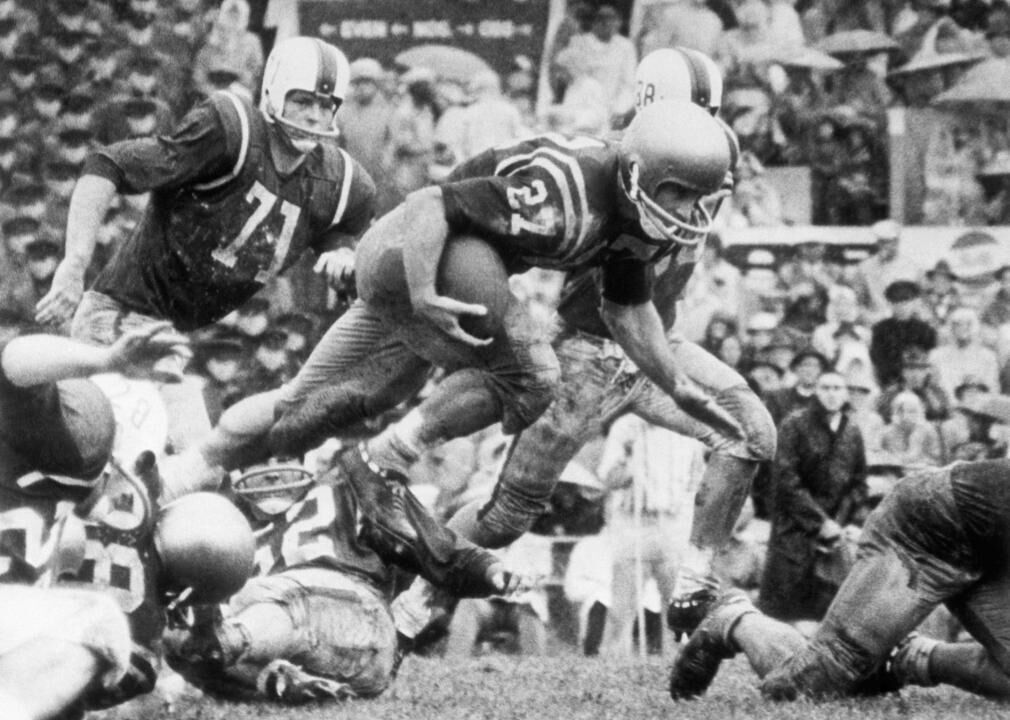
- Approximate Value score: 2
- NFL games played: 35
Joe Bellino did it all for Navy, running for 834 yards, catching 15 passes, throwing two touchdown passes and even averaging 46 yards as a punter. He also led the Midshipmen to the Orange Bowl. But after winning the Heisman in 1960, he was only drafted in the 19th round because of the Naval Academy requirement that graduates serve four years as officers. Finally entering professional football as a rusty 27-year-old, he played for the American Football League’s Boston Patriots. He was limited to 30 rushes for 64 yards in three years before exiting the league.
Bettmann // Getty Images
- Approximate Value score: 1
- NFL games played: 24
John Huarte flipped the script for Notre Dame. Starting as quarterback only in his senior year, he helped turn a 2-7 team into a 9-1 national championship team that lost only one game, a 20-17 nail-biter, to University of Southern California. That netted him the 1964 Heisman. But his professional football career went nowhere as he played for six teams in 10 years in three different leagues—the American Football League, the National Football League and the World Football League—but only started one game for the NFL’s Philadelphia Eagles and threw only 48 total passes.
Bettmann // Getty Images
- Approximate Value score: 0
- NFL games played: 5
Gary Beban is a prime example of Heisman voters getting it wrong. He was picked in 1967 after a solid season—1,359 passing yards—for the 7-2-1 UCLA Bruins. But he languished on the bench behind Hall of Famer Sonny Jurgensen during his two seasons for what's now known as the Washington Football Team, throwing only one pass in two years before leaving football behind. Side note: A running back who did go on to fame, and infamy, finished second to Beban in the Heisman voting, but O.J. Simpson did win it the next year.
Bob Peterson // Getty Images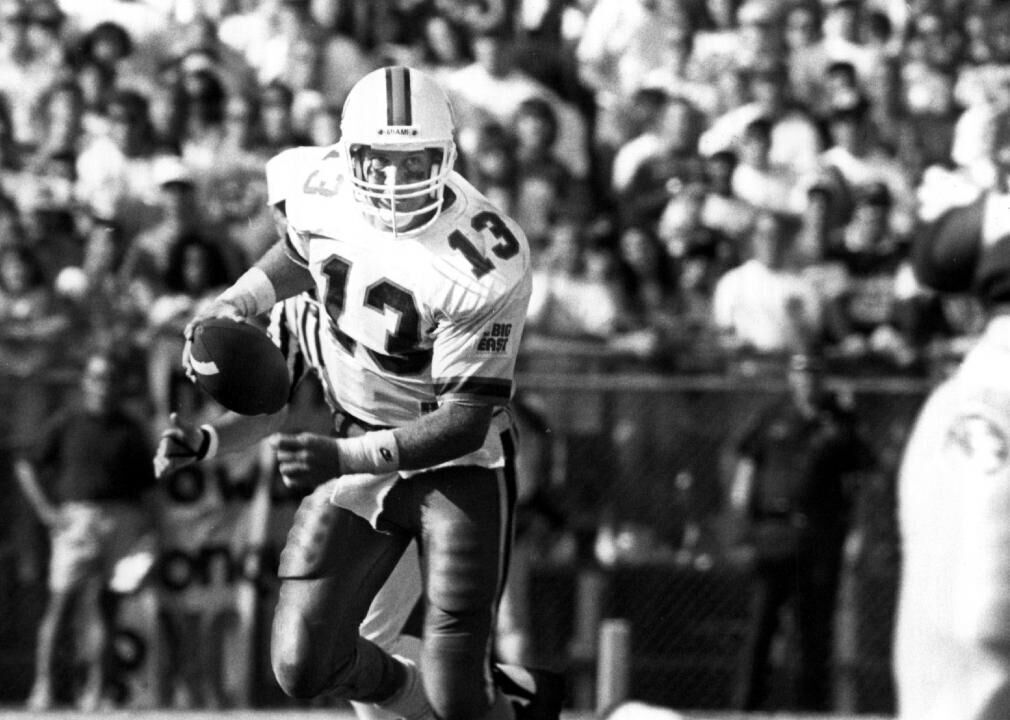
- Approximate Value score: 0
- NFL games played: 2
Gino Torretta was the real deal at the University of Miami. His 7,690 passing yards helped lead the Hurricanes to two consecutive undefeated seasons that produced national titles in 1991 and a near-miss in his 1992 Heisman-winning year. Still, largely because his final collegiate game was a stinker—a 34-13, three-interception loss to Alabama—the Minnesota Vikings only drafted him in the seventh round. He later played in only one NFL contest, a 1996 Seattle Seahawks game when he threw for 41 yards and a touchdown.
The Sporting News // Getty Images
- Never played in NFL
Eric Crouch showed he had mad skills while at the University of Nebraska, passing for 1,510 yards and rushing for 1,115 yards in 203 carries during his 2001 Heisman year. But the St. Louis Rams didn’t draft him in the third round to take over quarterback duties from Marc Bulger or Kurt Warner. Instead, he was brought in to be a wide receiver—but he was injured before ever playing in an NFL game. He did play for NFL Europe’s Hamburg Sea Devils, where he made 25 tackles as a safety in 2005, and then one season in Canada.
Elsa // Getty Images
- Never played in NFL
Jason White isn’t the only Heisman Trophy winner to flop in the NFL, but he may be the poster child. He threw for 7,922 yards in four years at the University of Oklahoma, including 40 touchdown passes during his 2003 Heisman season. He earned more Heisman votes that year than Super Bowl champion quarterback Eli Manning and future Hall of Fame receiver Larry Fitzgerald. But he played one additional year for the Sooners, which didn’t go as well, and no team drafted him. He never played a down in the NFL.
This story originally appeared on BestOdds and was produced and distributed in partnership with Stacker Studio.
Jeff Gross // Getty ImagesCeline Dion revealed on Thursday that she is suffering from a rare neurological disorder called stiff-person syndrome that is affecting her everyday life.
The iconic singer announced the news in a video posted on social media and said she has postponed her 2023 tour.
“While we’re still learning about this rare condition, we now know this is what has been causing all of the spasms I have been having,” Dion said. “Unfortunately, these spasms affect every aspect of my daily life, sometimes causing difficulties when I walk and not allowing me to use my vocal chords to sing the way I’m used to.”
The National Institute of Neurological Disorders and Stroke describes the syndrome as “a rare neurological disorder with features of an autoimmune disease.”
“SPS is characterized by fluctuating muscle rigidity in the trunk and limbs and a heightened sensitivity to stimuli such as noise, touch and emotional distress, which can set off muscle spasms,” NINDS said.
Only about one or two in a million people are affected by stiff-person syndrome, according to Johns Hopkins Medicine.
Spasms from the disorder can be triggered by “sudden movement, cold temperature or unexpected loud noises,” according to Johns Hopkins.

Celine Dion during the arrivals at the 59th Annual Grammy Awards at Staples Center in Los Angeles on Feb. 12, 2017. (Marcus Yam/Los Angeles Times/TNS)
Marcus Yam/Los Angeles Times/TNSSymptoms of stiff-muscle syndrome include “pain, muscle stiffness and aching discomfort,” according to the Cleveland Clinic.
“Over time, leg muscles become stiff and more muscles throughout your body become stiff including the arms and even the face,” the Cleveland Clinic said. “As stiffness increases, some people developed a hunched posture. In severe cases, this stiffness can make it hard to walk or move.”
Muscle spasms caused by SPS “are often very painful and usually worsen existing stiffness,” the National Organization for Rare Disorders said. These spasms, according to NORD, can last for hours.
People with the disorder are also more likely to have depression or anxiety symptoms, according to Yale Medicine.
There is no cure for stiff-person syndrome, according to Yale Medicine, but it can be treated.
“When doctors treat patients with this condition, they focus on relieving symptoms with medications such as sedatives, muscle relaxants, and steroids,” Yale Medicine said.
A study funded by NINDS showed an intravenous immunoglobulin treatment in people with SPS can reduce stiffness and lower sensitivity to noise, touch and stress.
Other treatment options include “physical therapy, massage, water therapy, heat therapy (and) acupuncture,” according to the Cleveland Clinic.
Dion did not reveal the specifics of her treatment but said she has “a great team of doctors working alongside her.”
“I have to admit it’s been a struggle,” Dion said. “All I know is singing. It’s what I’ve done all my life, and it’s what I love to do the most.”
It’s unclear when Dion will return to the stage.
“I’m doing everything I can to recuperate,” she said.
___
© Copyright 2026 Arizona Daily Star, PO Box 26887 Tucson, AZ 85726-6887
Get up-to-the-minute news sent straight to your device.