

Photos: Strategic Air Command bombers in Tucson
In 1953, the Strategic Air Command brought the jet age to Davis-Monthan Air Force Base in Tucson with dozens of Boeing B-47 Stratojet bombers as part of U.S. efforts to counter the Soviet threat of invasion. The planes could carry conventional and nuclear payloads 3,000 miles before refueling. Nearly 1,100 personnel at D-M kept the planes in the air.
The Air Force began retiring the B-47 in the mid-1960s.
Strategic Air Command in Tucson

A SAC B-47 bomber from Davis-Monthan AFB slides underneath a KC-97 tanker 15,000 feet above Southern Arizona in 1955. The jets slow to 210-250 mph to fly with the slower prop-driven tanker. The tanker transfers thousands of pounds of aviation fuel in a few minutes.
Strategic Air Command in Tucson

A KC-97 refueling tanker boom operator watches a B-47 bomber from Davis-Monthan AFB approach for refueling 15,000 feet above the Arizona desert in 1955.
Strategic Air Command in Tucson

The Job Control Room – the "brain center" of the 303rd Maintenance Squadron at Davis-Monthan AFB in 1959, where all maintenance acivities are scheduled, coordinated and monitored. They track accumlated flight hours and pull planes from active status for routine maintenance.
Strategic Air Command in Tucson

It was no small task to keep Davis-Monthan's huge fleet of B-47 bombers in the air. What it took for one plane in 1959: Row 1: Bomber's three-man flight crew. Rom 2: Crew chief and two assistants. Row 3: Maintenance supervisors, support personnel and quality control inspectors. Remaining rows: Field maintenance techs, personnel from the Armament and Electronics Squadron and Aviation Depot Squadron personnel.
Strategic Air Command in Tucson

"Operation Skywatch" at Davis-Monthan AFB in 1955. The around-the-clock aircraft tracking project used 130 civilian obeservers at posts throughout Arizona and New Mexico to track enemy aircraft.
Strategic Air Command in Tucson
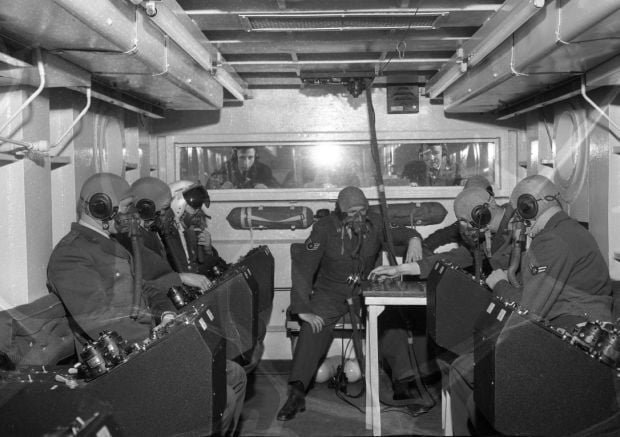
Bomber flight crews are monitored during their time in a high altitude chamber at Davis-Monthan AFB in Feb. 1955.
Strategic Air Command in Tucson

A B-47 bomber on the flightline at Davis-Monthan AFB in March, 1956.
Strategic Air Command in Tucson

The high tail of B-47 bombers at Davis-Monthan AFB in March, 1956. The aircraft had a remotely operated tail gun.
Strategic Air Command in Tucson

A massive 60-foot bulldozer at Davis-Monthan AFB in 1958. It can push a fully-loaded B-36 bomber at 200 tons off the runway in less than 20 minutes. Getting those bombers airborne fast is important in nuclear war.
Strategic Air Command in Tucson

The new nuclear bomb-proof alert center for flight crews at Davis-Monthan AFB in March, 1960. Much of the structure is below ground. Eight tunnels connect the lower rooms with emergency vehicle parking areas.
Strategic Air Command in Tucson

Pilot and co-pilot in the B-47 bomber flight simulator at Davis-Monthan AFB in October, 1954. (Water-damaged negative.)
Strategic Air Command in Tucson

Air Force technician works on the massive computer that powers the B-47 bomber flight simulator at Davis-Monthan AFB in October, 1954. (Water-damaged negative.)
Strategic Air Command in Tucson

An Air Force technician operates the controls for the B-47 bomber flight simular at Davis-Monthan AFB in October, 1954. (Water-damaged negative.)
Strategic Air Command in Tucson

An Air Force crew member tracks the location of B-47 on the flight line at Davis-Monthan AFB in Nov, 1959.
Strategic Air Command in Tucson

Citizen photo Jul. 7, 1955 Tucson-based B-47's rehearse for Monday dedication of Air Force Academy.
Strategic Air Command in Tucson

Citizen photo by Bernie Sedley Jul. 20, 1955 B47 co-pilots handle the guns on a 600-mile-an-hour Stratojet bomber and regulations call for co-pilots to practice regularly at Sahuarita Range. Rapid-fire cannon 10 mm. are radar-controlled, each turret has control room in building behind practice guns. As tiny target drone plane maneuvers in front of guns, co-pilots watch radar screens ready to blast the drone from sky. Gunners pick up target on radar scope, lock guns on target where they follow by radar and gunner presses a button every time he has target in range.
Strategic Air Command in Tucson

The height finder antenna and artic tower at the Mt. Lemmon Air Force Station in May, 1957. Sitting at 9,150-feet, it was the said to be the highest radar installation in the world.
Strategic Air Command in Tucson

Air Force staffers monitor air traffic in the Southwestern U.S. at the Mt. Lemmon Air Force Station in May, 1957, as part of an extensive array of radar stations that watched for enemy Soviet aircraft in the days before satellites. A Tucson Citizen writer said "electronic miracles of perception are performed by radar scopes and charting screens."
Strategic Air Command in Tucson

Workers from the 2704th Air Force Aircraft Storage and Disposal Group mothball the first B-47 Stratoget bomber to be retired from active service in February, 1964.

Rick Wiley
Photo editor

In 1953, the Strategic Air Command brought the jet age to Davis-Monthan Air Force Base in Tucson with dozens of Boeing B-47 Stratojet bombers …

The Heritage Flight Training course helps pilots to practice for air-show season.

Along with a vintage war planes, organizers will have restored military vehicles from the past 100 years on hand.

D-M has a good chance to land a new drone squadron or other new missions, Col. Scott C. Campbell says.
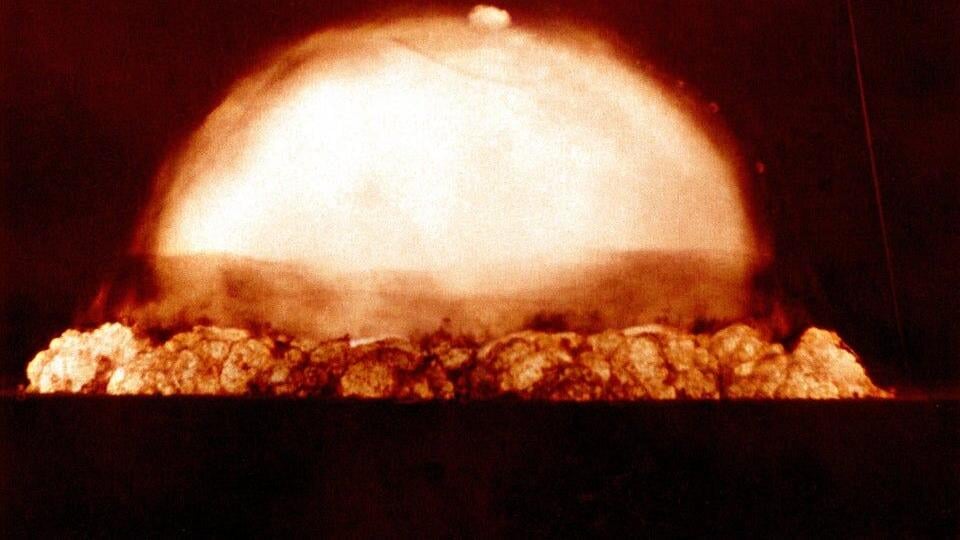
I was standing at Trinity, ground zero, where the first atomic bomb exploded at 5:30 a.m. on July 16, 1945. Seismographs in Tucson detected the explosion from 280 miles away.

Key test keeps Joint Standoff Weapon-C on track for deployment in 2019, Raytheon says.

Tucson motorists should prepare for expected travel delays during the Davis-Monthan Air Force Base's biennial air show this weekend.

Pilots with the A-10C Thunderbolt II Demonstration Team participated in practice flights over Tucson the morning of Jan. 6.