

WASHINGTON — Three years ago, U.S. Department of Agriculture employees determined that synthetic additives in organic baby formula violated federal standards and should be banned from a product carrying the federal organic label. Today, the same additives, purported to boost brainpower and vision, can be found in 90 percent of organic baby formula.
The government's turnaround, from prohibition to permission, came after a USDA program manager was lobbied by the formula makers and overruled her staff. That decision and others by a handful of USDA employees, along with an advisory board's approval of a growing list of nonorganic ingredients, have helped numerous companies win a coveted green-and-white "USDA Organic" seal on an array of products. Grated organic cheese, for example, contains wood starch to prevent clumping. Organic beer can be made from non-organic hops. Organic mock duck contains a synthetic ingredient that gives it an authentic, stringy texture.
People are also reading…
Relaxation of the federal standards and an explosion of consumer demand have helped push the organics market into a $23 billion-a-year business, the fastest-growing segment of the food industry. Half of the country's adults say they buy organic food often or sometimes, according to a survey last year by the Harvard School of Public Health. But the USDA program's shortcomings mean that consumers, who at times must pay twice as much for organic products, are not always getting what they expect: foods without pesticides and other chemicals, produced in a way that is gentle to the environment.
The market's expansion is fueling tension over whether the federal program should be governed by a strict interpretation of "organic" or broadened to include more products by allowing trace elements of nonorganic substances. The argument is not over whether the nonorganics pose a health threat but whether they weaken the integrity of the federal organic label. Agriculture Secretary Tom Vilsack has pledged to protect the label, even as he acknowledged the pressure to lower standards to let more products in.
In response to complaints, the USDA Inspector General's Office has widened an investigation of whether products carrying the label meet national standards. The probe is also looking into the department's oversight of private certifiers who are hired by farmers and food producers and inspect products to determine whether they can use the label.
Some consumer groups and members of Congress say they worry the program's lax standards are undermining the federal program and the law itself.
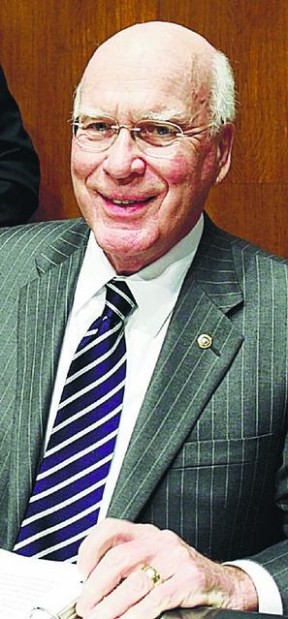
"It will unravel everything we've done if the standards can no longer be trusted," said Sen. Patrick Leahy, D-Vt., who sponsored the federal organics legislation. "If we don't protect the brand, the organic label, the program is finished. It could disappear overnight."
Organic advocates and food-marketing experts said the introduction this month of new "natural" products by an organics division of Dean Foods is the latest sign that the value of the USDA label has eroded. The yogurt and milk products will be distributed under the Horizon label and marketed as a lower-priced alternative to organic products.
Congress adopted the organics law after farmers and consumers demanded uniform standards for produce, dairy and meat. The law banned synthetics, pesticides and genetic engineering from foods that would bear a federal organic label. It also required annual testing for pesticides. And it was aimed at preventing producers from falsely claiming their foods were organic.
The USDA created the National Organic Program in 2002 to implement the law. By then, major food companies had bought up most small, independent organic companies. Kraft Foods, for example, owns Boca Foods. Kellogg owns Morningstar Farms, and Coca-Cola owns 40 percent of Honest Tea, maker of the organic beverage favored by President Obama.
That corporate firepower has added to pressure on the government to expand the definition of what is organic, in part because processed foods offered by big industry often require ingredients, additives or processing agents that either do not exist in organic form or are not available in large enough quantities for mass production.
Under the original organics law, 5 percent of a USDA-certified organic product can consist of nonorganic substances, provided they are approved by the National Organic Standards Board. That list has grown from 77 to 245 substances since it was created in 2002.


