

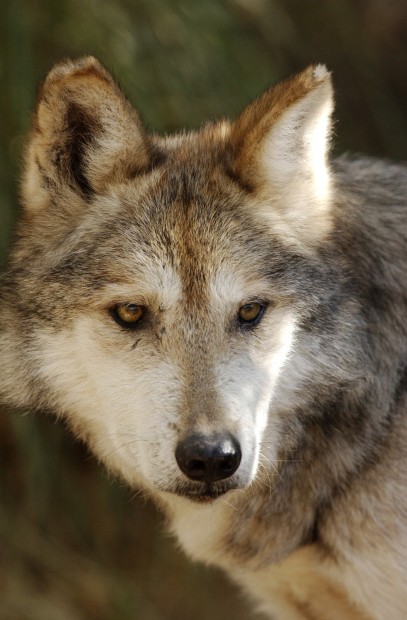
A new contest to find art of Mexican wolves on display across the Tucson area is one part warning and one part celebration.
Defenders of Wildlife, sponsor of the "Where's El Lobo?" contest, will by midday today have put 50 black paper silhouettes of Mexican wolves throughout the area.
The trick is for contestants - anyone who wants to take part - to find each piece of wolf art, then go on Defenders' whereslobo.org website and enter a number representing each location into a contest entry form. The artwork will be on display through Sept. 17.
"The purpose is partly to raise awareness of the fact that there are only 50 Mexican wolves in the wild," said Eva Sargent, Defenders' Southwest program director. "It's part a celebration that there are any at all."
A map on the website with general (but not precise) locations of the wolf art shows how they are spread all over the metro area, just as the 50 Mexican wolves are spread out over a 7,000-square-mile area of Southeast Arizona and southwest New Mexico.
People are also reading…
"See how hard it is to find 50 in Tucson and you can appreciate how precarious their situation is," Sargent said.
Actually, the sites aren't all that hard to find. Defenders will post clues daily on the national group's Facebook page.
Dig in a bit on the "Whereslobo" website and you can even find the addresses. But to enter the contest and qualify for a prize, you have to go to each site, get a number from each picture, enter each number into the entry form, and enter the name of each business or other location where you found the artwork.
The grand prize is a five-day "Apache Wilderness Journey" on the White Mountain Apache Reservation in Central Arizona, where some wolves live.
Lauren Strohacker, the Phoenix-area artist who prepared the wolf drawings, said she spent two years working on the silhouette portraits. She started by photographing Mexican wolves at the Phoenix Zoo, then making 50 drawings and finally digitally editing them on the computer.
The drawings are intended to be naturalistic, showing how wolves move, how they hide their heads at times and how their shoulders slope when they walk, she said.
"I wanted to get away from the traditional iconic wolf howling picture," Strohacker said.
From these pictures, she hopes that people will think about wolves living in the Southwest and their history, and that will rekindle an understanding of wildlife, particularly top-level predators such as wolves.
"Our urban societies are so disconnected from the natural world, I'm hoping that this kind of artwork can kind of reignite some wonder - at least get people to ask questions," Strohacker said. "We don't expect everyone to get something from it, but some people will."
Contact reporter Tony Davis at tdavis@azstarnet.com or 806-7746.


