

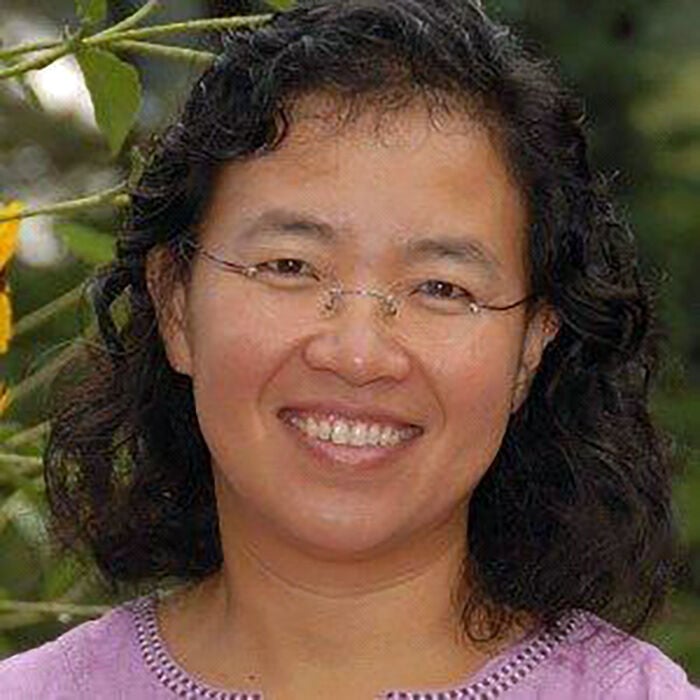
Yeon-Su Kim and her husband, Corey Allen, went missing while kayaking near Puerto Peñasco, Mexico, on Thanksgiving Day, and while the search for her husband is ongoing, Kim’s body was found Sunday.
After the sad news was released, a candlelight vigil took place later that night at Northern Arizona University, where Kim served as the executive director of the School of Forestry. She had been a part of the NAU community since 1998.
José Luis Cruz Rivera, the president of the university, released a statement on Kim’s passing, and then canceled a planned trip to Washington D.C. in favor of dropping in on faculty meetings in a forestry department still reeling from her loss.
“For so many of us, we’ve lost a close personal friend,” said James Allen, the interim dean of the forestry school. “We’ve lost a really good professional colleague. We’ve lost a leader. She has been at NAU for most of her professional career. She was very, very dedicated to this institution and its broader educational mission. She really loved NAU.”
People are also reading…
As an educator, university administrator, and expert in natural resource economics, Kim’s body of work, according to her colleagues and students, was vast and impactful.
“Dr. Allen said something about how she wasn’t a large person, but she left a big footprint,” Ryan Fitch recalled. Kim was Fitch’s Ph.D. advisor and professor at NAU.
“It was known that she was doing a lot,” he said, “but the impact that she had over there was overwhelming.”
Kim had only been the executive director of the forestry department for about a year and a half and already she was making a splash in the leadership role.
“Perhaps one of her greatest professional passions would be to encourage greater diversity in the forestry profession, because it’s not known for being very diverse,” Allen said.
At the time of her passing, she was working on a $20 million proposal to the U.S. Department of Agriculture that would support students from diverse backgrounds in pursuing careers in forestry and environmental science. According to Allen, Kim spent hours cultivating contacts at community and tribal colleges, forging partnerships to help students from minority populations to finish degrees and professional training.
She also served as the diversity chair of the National Association of University Forest Research Programs.
“She was hosting workshops, she was doing surveys. In general she was really strongly advocating with our national colleagues for greater diversity,” Allen said. “When the news got out to that organization, I started getting letters from all over the country from directors and deans all over the place, some of them just reflecting on her as a person, talking about her smile, her warmth, her very pleasant and outgoing personality. In a lot of cases, they were also commenting on this goal that she had and the progress she was making — increasing diversity and also looking at equity and inclusion.”
Kim recruited Allen — who had preceded her as the department director — to help with a collaboration she launched with a faculty member from NAU’s School of Education. It’s a forestry program for K-12 teachers on reservations aimed at helping to introduce kids to environmental science and the field of forestry at a young age.
“She led that program two summers ago. It was very successful. The director of that institute really liked it. Now we’re doing two additional programs this year. The one on the Navajo Reservation and two on Apache Reservations,” said Allen, who ended up leading the program for teachers on the White Mountain Apache and San Carlos Apache reservations.
“She also was a good ecological economist and she was published a lot,” Allen added. Some of her most recent work, published in April of this year, focused on climate-smart agroforestry and timber harvesting. She was imagining what sustainable “wood-based solutions” to poverty and climate change might look like.
“It’s very challenging to do restoration on the scale we need because it’s expensive, and there’s not a great market for low-value wood that we need to remove from some of our forests,” Allen said, noting the progress of Kim’s economy-centered research.
Kim was also involved in international research and education.
“She’s done a lot of work involving subjects like community forestry and deforestation in places like Indonesia and Thailand. She’s had graduate students in both of those countries. That’s part of her legacy: international students who are working in their profession in their home countries addressing really important forestry-related issues in those countries.”
Today, Fitch is an assistant professor at NAU in the Department of Economics, Finance and Accounting. He specialized in wildfire economics. He worked with Kim locally, studying northern Arizona’s ponderosa pine forests. The two examined the effects of forest restoration on fire suppression costs.
“There are some things out there in the world that our names are on together,” Fitch said.
The two were published together three times between 2013 and 2019.
“With Dr. Kim, I looked at wildfire suppression costs, and applied that to the Mormon Lake area specifically. I’m proud of the work we did together,” Fitch said.
Fitch also remembers Kim as a supportive teacher, the kind of mentor who offers her students a chance to shine even when they might not yet know they’re ready to catch the spotlight.
“We had this economics of wildfire symposium where we invited a bunch of colleagues from the western U.S. who were doing wildfire economics. Yeon-Su was putting this on in conjunction with the Ecological Restoration Institute. She introduced me to some tremendous minds that were working and still are working on wildfire in the western U.S.,” Fitch recalled.
Kim invited Fitch to introduce the work they were doing together in front of a panel of experts — even though he was still a Ph.D. candidate at the time.
“That idea of including some upcoming Ph.D. candidate really meant a lot to me. That she would put that kind of trust in me to get our work across to a bunch of the experts that we were essentially citing in our work? It was really cool to present and also a little intimidating … that meant a lot of me,” Fitch said.
Recalling the last conversation he had with his mentor, Fitch gets choked up.
“She asked me in one of our last meetings,” Fitch said. “Our last conversation was about further collaboration. I’m really sad that that’s not going to happen.”
The sentiment is echoed by Allen, who said Kim was just beginning to come into her own as the leader of the forestry department. The direction she was steering the department in, he said, was nothing short of inspiring.
“She was doing all these things and really having an impact. Who knows what her impact would have been if she had been in that position for a decade or so, or even a couple more years? At the rate she was making an impact, who knows what she would have accomplished. We’ll never know, but I can safely say it would have been an awful lot,” he added.
He hopes to honor her work by completing some of those unfinished projects, including that $20 million funding proposal to increase student diversity.
Kim achieved so much in a life cut short, so how will she be most remembered, with so much legacy left behind?
Perhaps it is her work in international ecology. The enduring impact on our ecosystems and environments. Perhaps it is her time as a champion for diversity in a field traditionally dominated by white men. Maybe it’s the way she guided her pupils to achievement.
For those like Fitch, it’s all of the above and more. He remembers not just what Kim accomplished on paper, but the warmth with which she approached every day.
“I would stop in from time to time, and every time I would go over there and say hi, she just lit up. A big hey, and excitement. Then a big hug, asking me about my family and how things were going. She saw me progress from this younger man 13 years ago going on random adventures as a student to taking on family life,” Fitch said. “She never lost interest in how I was doing as a person. That meant a lot.”


